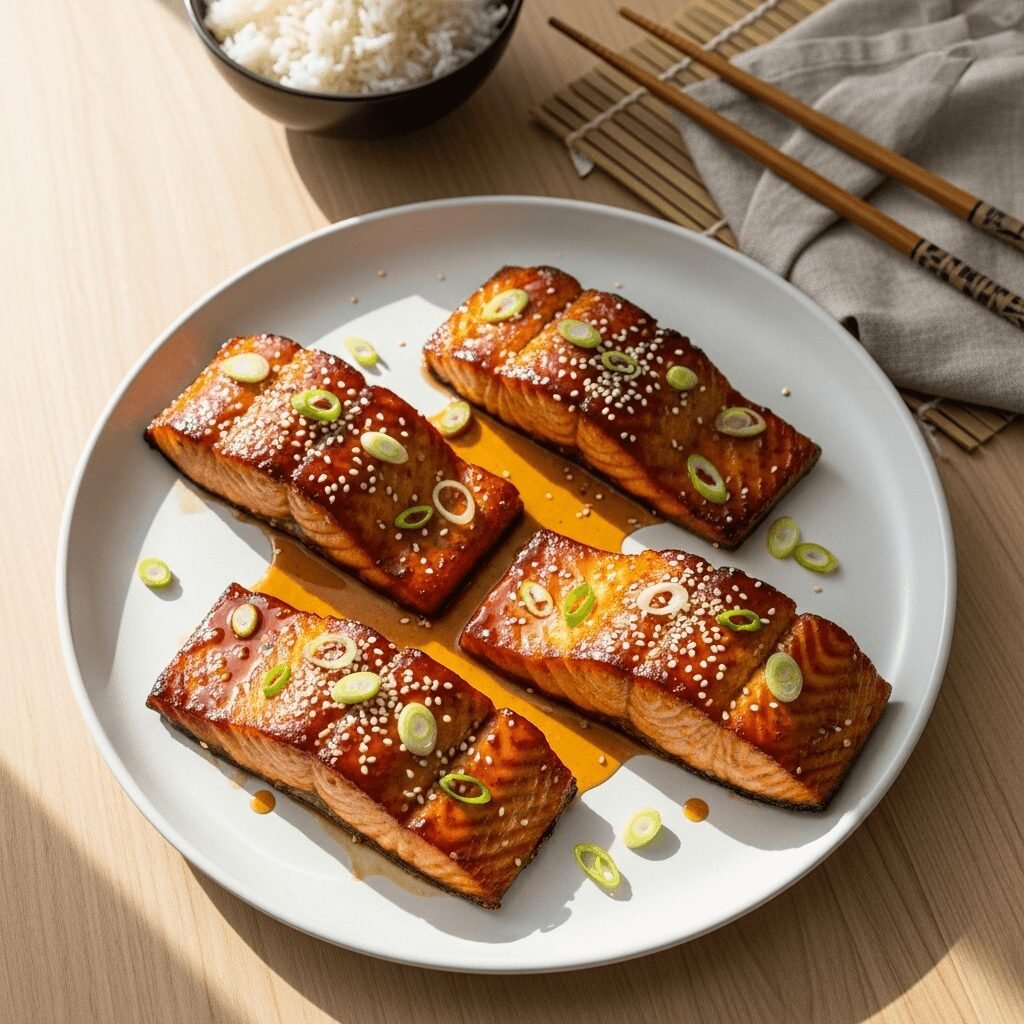

If you’re looking for a weeknight dinner that tastes like it came straight from a fancy restaurant but takes less time than ordering takeout, this Honey Soy Glazed Salmon is about to become your new best friend! This recipe features perfectly cooked salmon fillets coated in a sticky, sweet, and savory glaze that caramelizes beautifully as it cooks. The combination of honey’s natural sweetness with the umami depth of soy sauce creates an irresistible flavor that even picky eaters absolutely love.
This dish is incredibly versatile—serve it for a romantic date night at home, make it for Sunday family dinner, or meal prep it for your weekly lunches. It pairs beautifully with steamed rice, roasted vegetables, or a crisp Asian-inspired salad. The best part? From start to finish, you’ll have dinner on the table in just 20 minutes, making it perfect for busy weeknights when you want something healthy and delicious without spending hours in the kitchen.
The glossy, caramelized glaze not only looks stunning (hello, Pinterest-worthy photos!) but also adds incredible flavor to the naturally rich, buttery salmon. Whether you’re a seafood veteran or just beginning your salmon journey, this foolproof recipe will make you look like a professional chef with minimal effort.
History & Background of Honey Soy Glazed Salmon
While salmon has been a dietary staple for indigenous peoples of the Pacific Northwest for thousands of years, the honey soy glaze combination is a beautiful marriage of Eastern and Western culinary traditions. This fusion-style recipe emerged in the late 20th century as Asian flavors became increasingly popular in American home cooking.
The technique of glazing fish with sweet and savory sauces has deep roots in Japanese teriyaki cooking, where “teri” means luster and “yaki” means grilled or broiled. Chinese cooking also contributed the concept of using soy sauce as a foundational flavor builder, while honey as a cooking ingredient dates back to ancient civilizations across multiple continents.
In American restaurants during the 1980s and 1990s, chefs began experimenting with these Asian flavor profiles, adapting them to suit Western palates and readily available ingredients. The honey soy combination proved to be a winner because it balanced sweet, salty, and umami flavors in a way that appealed to a broad audience. Unlike traditional teriyaki sauce which uses mirin (a sweet rice wine), this Americanized version relies on honey, which was more accessible to home cooks and provided a distinct floral sweetness.
Today, honey soy glazed salmon has become a staple in home kitchens across America, celebrated for its simplicity, quick cooking time, and universal appeal. It represents the best of fusion cuisine—taking inspiration from multiple culinary traditions to create something uniquely delicious and accessible to everyone.
Why You’ll Love This Honey Soy Glazed Salmon Recipe
This recipe has earned its place as a favorite in thousands of kitchens, and once you try it, you’ll understand why! It strikes the perfect balance between impressive and effortless, making it ideal whether you’re cooking for yourself, your family, or guests you want to wow.
The glaze itself is pure magic—it caramelizes beautifully under heat, creating a gorgeous shiny coating that’s sweet, savory, and slightly sticky. The natural richness of salmon pairs perfectly with these bold Asian-inspired flavors, and the fish stays incredibly moist and tender when cooked properly.
Here’s why home cooks keep coming back to this recipe:
- Super Quick: Ready in just 20 minutes from start to finish—faster than most delivery options!
- Minimal Ingredients: Uses simple pantry staples you probably already have on hand
- Restaurant-Quality Results: Tastes like a $30 restaurant dish but costs a fraction of the price
- Healthy & Nutritious: Packed with omega-3 fatty acids, protein, and wholesome ingredients
- Family-Friendly: Even kids who claim they don’t like fish will ask for seconds
- Versatile: Works with different cuts of salmon and adapts to various dietary needs
- Impressive Presentation: The glossy glaze makes it look absolutely stunning on the plate
- Minimal Cleanup: Can be made in one pan, meaning less time scrubbing dishes
- Meal Prep Friendly: Reheats beautifully and tastes great cold in salads
- Budget-Conscious: A little salmon goes a long way with this flavorful glaze
Ingredient Notes
Understanding your ingredients helps you make smart substitutions and achieve the best results every time!
Salmon Fillets: Choose fresh or frozen salmon (thawed completely). Skin-on or skinless both work—skin-on will give you a crispy bottom if you sear it flesh-side down first. Look for wild-caught salmon when possible for the best flavor and nutrition, though farm-raised works perfectly fine. Atlantic, King, Sockeye, or Coho salmon all work beautifully.
Honey: Use pure honey for the best flavor—not the artificial honey-flavored syrup. The type of honey affects the final taste: clover honey is mild and sweet, while darker varieties like buckwheat add deeper, more robust notes. If your honey has crystallized, simply warm it gently before using.
Soy Sauce: Regular soy sauce works great, but you can use low-sodium if you’re watching your salt intake. Tamari is an excellent gluten-free substitute that tastes nearly identical. Don’t use thick, sweet soy sauce (kecap manis) as it will make the glaze too thick and overly sweet.
Garlic: Fresh minced garlic provides the best flavor, but in a pinch, use 1/2 teaspoon garlic powder per clove. Jarred minced garlic also works but may be slightly less pungent.
Fresh Ginger: This adds a warm, slightly spicy zing that balances the sweetness. Fresh is always best—peel with a spoon and grate or mince finely. If you must substitute, use 1/4 teaspoon ground ginger per teaspoon of fresh, though the flavor won’t be quite as bright.
Rice Vinegar: Adds tanginess and helps balance the sweet-savory profile. Apple cider vinegar works as a substitute, though it’s slightly more assertive. White wine vinegar also works in a pinch.
Sesame Oil: Just a small amount adds nutty depth and authentic Asian flavor. Use toasted sesame oil (darker in color) for cooking, not the light refined kind. This is optional but highly recommended for authentic flavor.
Cornstarch: Helps thicken the glaze so it clings beautifully to the salmon. Arrowroot powder works as a 1:1 substitute for a gluten-free option.
Green Onions & Sesame Seeds: These garnishes aren’t just pretty—they add fresh flavor and textural contrast to the rich, sweet glaze.
Equipment Needed
Having the right tools makes cooking so much easier! Here’s what you’ll need:
- Large Skillet or Frying Pan: A 12-inch skillet works best to fit 4 salmon fillets comfortably without crowding. Non-stick or well-seasoned cast iron is ideal.
- Small Saucepan or Bowl: For mixing and slightly heating the glaze ingredients before adding to the pan.
- Whisk or Fork: To thoroughly combine the glaze ingredients without lumps.
- Spatula: A thin, flexible fish spatula is perfect for flipping delicate salmon without it breaking apart.
- Measuring Cups and Spoons: For accurate ingredient portions.
- Instant-Read Thermometer (optional but helpful): Takes the guesswork out of checking doneness—salmon is perfect at 145°F internal temperature.
- Microplane or Fine Grater: For grating fresh ginger smoothly.
- Sharp Knife: For slicing green onions and any prep work.
- Paper Towels: To pat the salmon dry before cooking for better searing.

Honey Soy Glazed Salmon Recipe
- Total Time: 20 minutes
- Yield: 4 servings 1x
- Diet: Gluten Free
Description
This easy Honey Soy Glazed Salmon features tender, flaky salmon fillets coated in a sticky, sweet, and savory glaze that caramelizes perfectly. Ready in just 20 minutes, it’s a restaurant-quality meal that’s perfect for busy weeknights!
Ingredients
For the Salmon:
- 4 salmon fillets (6 oz each, about 1-inch thick)
- 2 tablespoons olive oil or vegetable oil
- Salt and black pepper, to taste
For the Honey Soy Glaze:
- 1/3 cup honey
- 1/4 cup soy sauce (or tamari for gluten-free)
- 3 cloves garlic, minced
- 1 tablespoon fresh ginger, grated
- 2 tablespoons rice vinegar
- 1 teaspoon sesame oil
- 1 tablespoon cornstarch
- 2 tablespoons water
For Garnish:
- 2 green onions, sliced
- 1 tablespoon sesame seeds (white or black)
- Red pepper flakes (optional, for heat)
Instructions
Step 1: Prepare the Salmon
Remove salmon from refrigerator 10 minutes before cooking to bring to room temperature. Pat fillets completely dry with paper towels—this is crucial for getting a good sear. Season both sides generously with salt and black pepper.
Step 2: Make the Glaze
In a small bowl, whisk together honey, soy sauce, minced garlic, grated ginger, rice vinegar, and sesame oil until well combined. In a separate tiny bowl, mix cornstarch with water until smooth to create a slurry—this will thicken the glaze.
Step 3: Sear the Salmon
Heat olive oil in a large skillet over medium-high heat until shimmering but not smoking. Place salmon fillets in the pan, skin-side up (or presentation side down if skinless), leaving space between each piece. Cook undisturbed for 4-5 minutes until a golden crust forms on the bottom.
Step 4: Flip and Start Glazing
Carefully flip the salmon fillets using a fish spatula. Reduce heat to medium. Pour the honey soy mixture around the salmon (not directly on top yet). Let it bubble for about 30 seconds.
Step 5: Thicken the Glaze
Add the cornstarch slurry to the pan, stirring it into the liquid around the salmon. The sauce will begin to thicken within 1-2 minutes. Gently spoon the thickening glaze over the top of each salmon fillet repeatedly.
Step 6: Finish Cooking
Continue cooking for another 3-4 minutes, constantly spooning glaze over the salmon. The salmon is done when it flakes easily with a fork and reaches an internal temperature of 145°F. The glaze should be thick, glossy, and coating the fish beautifully.
Step 7: Garnish and Serve
Remove from heat immediately to prevent overcooking. Transfer salmon to serving plates, spoon extra glaze from the pan over each fillet, and garnish with sliced green onions, sesame seeds, and red pepper flakes if desired. Serve immediately while hot!
Notes
- Don’t Overcook: Salmon continues cooking after you remove it from heat. Slightly undercooked is better than overcooked and dry.
- Glaze Consistency: If your glaze is too thin, let it bubble for an extra minute. Too thick? Add a splash of water.
- Skin-On Salmon: If using skin-on salmon and you want crispy skin, start with the skin side down first, then flip.
- Make It Spicy: Add 1-2 teaspoons of sriracha or red pepper flakes to the glaze for a sweet-spicy kick.
- Scaling Recipe: This recipe easily doubles or halves. Use a larger pan if cooking more than 4 fillets.
- Prep Time: 5 minutes
- Cook Time: 15 minutes
- Category: Dinner, Main Dish
- Method: Stovetop, Pan-Seared
- Cuisine: Asian Fusion, American
Nutrition
- Serving Size: 1 salmon fillet with glaze
- Calories: 385 kcal
- Sugar: 18g
- Sodium: 680mg
- Fat: 18g
- Saturated Fat: 3g
- Unsaturated Fat: 14g
- Trans Fat: 0g
- Carbohydrates: 22g
- Fiber: 0.5g
- Protein: 35g
- Cholesterol: 95mg
Nutrition information is approximate and based on 6-ounce salmon fillets with glaze. Values may vary based on specific ingredients used.
Tips & Variations
Spicy Honey Soy Salmon: Add 1-2 teaspoons of sriracha, gochujang (Korean chili paste), or red pepper flakes to the glaze for a sweet-heat combination that’s absolutely addictive.
Citrus Twist: Add the zest and juice of one orange or lime to the glaze for a bright, citrusy note that cuts through the richness.
Honey Garlic Version: Double the garlic and skip the ginger for a more Western-style honey garlic salmon.
Teriyaki-Style: Replace honey with brown sugar and add 2 tablespoons of mirin for a more traditional teriyaki flavor profile.
Baked Option: Place salmon on a lined baking sheet, brush with half the glaze, and bake at 400°F for 12-15 minutes. Brush with remaining glaze halfway through cooking.
Grilled Version: Oil your grill grates well and grill salmon skin-side down for 6-8 minutes, brushing with glaze during the last 3 minutes of cooking.
Low-Sugar Option: Replace honey with a sugar-free honey substitute or use only 2 tablespoons of honey and increase the soy sauce slightly.
Extra Veggies: Add snap peas, broccoli florets, or bell pepper strips to the pan around the salmon during the last 5 minutes of cooking.
Pineapple Glaze: Add 1/4 cup of crushed pineapple to the glaze for a tropical, sweet-tangy variation.
Different Proteins: This glaze works beautifully on chicken thighs, pork chops, or tofu—just adjust cooking times accordingly.
Pro Chef Tips
Temperature Matters: Bring salmon to room temperature before cooking. Cold salmon added to a hot pan cooks unevenly—the outside overcooks while the inside stays raw.
The Dry Surface Trick: Pat salmon completely dry before seasoning. Moisture is the enemy of a good sear. A dry surface browns beautifully and prevents sticking.
Don’t Move It: Once you place salmon in the pan, resist the urge to peek or move it for at least 4 minutes. This patience creates that gorgeous golden crust.
Medium-High Heat is Key: Too low and the salmon steams instead of sears; too high and the glaze burns before the fish cooks through. Medium-high creates the perfect balance.
Quality Salmon Shows: Look for vibrant color, firm flesh, and a fresh ocean smell (not fishy). The better your starting ingredient, the better your final dish.
Glaze at the Right Time: Add the glaze after flipping the salmon, not before. This prevents the sugars from burning and allows the first side to develop proper color.
Use a Fish Spatula: These thin, slotted spatulas slide under delicate fish easily and provide support when flipping, preventing that heartbreaking mid-flip break.
The Basting Technique: Constantly spooning hot glaze over the salmon while it cooks helps it cook evenly and builds layers of flavor.
Remove from Heat Early: Take salmon off heat when it’s just barely done (or even slightly underdone). Carryover cooking will finish it perfectly as it rests.
Fresh Garnishes Matter: Don’t skip the green onions and sesame seeds—they add fresh flavor and textural contrast that elevate the dish from good to great.
Common Mistakes to Avoid
Overcooking the Salmon: This is the number one mistake! Salmon should be just opaque in the center and still slightly translucent in the very middle. Overcooked salmon becomes dry and chalky. Aim for 145°F internal temperature, but many chefs prefer pulling it at 135-140°F for a more tender, buttery texture.
Crowding the Pan: If fillets touch, they steam instead of sear. Leave at least an inch between each piece. If your pan isn’t big enough, cook in batches or use two pans.
Burning the Glaze: Adding the glaze too early or cooking over too-high heat causes the sugars to burn, creating a bitter taste. Always reduce heat to medium after flipping, and add glaze at the right moment.
Not Thickening the Glaze Properly: Forgetting the cornstarch slurry or not mixing it smoothly creates a thin, watery sauce that slides off the fish instead of clinging beautifully. Always mix cornstarch with cold water first to prevent lumps.
Skipping the Room Temperature Step: Cold salmon from the fridge hits a hot pan and contracts, cooking unevenly. Let it sit out for 10 minutes before cooking for more even results.
Using Low-Quality Soy Sauce: Not all soy sauces are created equal. Cheap, overly salty versions can overpower the dish. Use a quality brand like Kikkoman for balanced flavor.
Flipping Too Early: If you try to flip the salmon before it’s ready, it will stick and tear. Wait until it releases easily from the pan—this means a crust has formed.
Storage & Meal Prep
Refrigerator Storage: Store leftover salmon in an airtight container in the refrigerator for up to 3 days. Keep the extra glaze in a separate small container. The salmon will firm up when cold but remains delicious.
Reheating: The best method is to reheat gently in a covered pan over low heat with a splash of water or extra glaze for 3-4 minutes until warmed through. Alternatively, microwave on 50% power in 30-second intervals until just warm. Avoid overheating, which dries out the fish.
Shelf Life: Cooked salmon should be consumed within 3 days for best quality and safety. Always smell before eating—fresh fish should never smell strongly fishy.
Meal Prep Strategy: Cook the salmon fully, then portion into individual containers with your chosen sides. When reheating for lunch, the salmon tastes great even at room temperature on a salad, so you can skip reheating entirely if you prefer.
Glaze Storage: Extra glaze keeps in the refrigerator for up to 1 week in an airtight container. It will thicken when cold—just warm gently before using again.
Make-Ahead & Freezer Notes
Prep-Ahead Options: You can mix the glaze ingredients (except cornstarch slurry) up to 2 days in advance and store in the refrigerator. Bring to room temperature before using. You can also marinate the salmon in half the glaze for 30 minutes to 2 hours before cooking for extra flavor penetration.
Freezing Raw Salmon: If you buy salmon in bulk, portion into individual servings, wrap tightly in plastic wrap, then place in freezer bags with all air removed. Freeze for up to 3 months. Thaw overnight in the refrigerator before cooking.
Freezing Cooked Salmon: While possible, we don’t recommend it as the texture suffers. If you must freeze cooked salmon, do so without the glaze, wrapped tightly, for up to 2 months. Thaw in the refrigerator overnight and make fresh glaze when reheating.
Batch Cooking: This recipe doubles or triples easily. Make extra glaze and cook multiple batches of salmon for the week. Store in separate containers to maintain freshness.
Best Reheating from Frozen: Thaw cooked salmon in the refrigerator overnight, then reheat gently in a pan with a little fresh glaze. Never refreeze previously frozen and cooked salmon.
Serving Suggestions
This honey soy glazed salmon is incredibly versatile and pairs beautifully with so many sides!
Rice & Grains: Serve over fluffy jasmine rice, brown rice, coconut rice, or quinoa to soak up that delicious glaze. Fried rice also makes a fantastic accompaniment.
Vegetables: Roasted broccoli, steamed bok choy, sautéed green beans, roasted Brussels sprouts, or stir-fried snap peas all complement the Asian-inspired flavors perfectly.
Salads: Place on top of a crisp Asian chopped salad with cabbage, carrots, and mandarin oranges, or serve alongside a simple cucumber salad dressed with rice vinegar.
Noodles: Pair with soba noodles, rice noodles, or even simple sesame noodles for a more substantial meal.
Potatoes: While not traditional, roasted baby potatoes or mashed sweet potatoes create a comforting, fusion-style meal.
Fresh Elements: Add fresh cucumber slices, pickled vegetables, or a squeeze of lime to brighten the rich flavors.
Bread: Serve with steamed bao buns or garlic bread to mop up every last drop of that incredible glaze.
Beverages: Pair with crisp white wine like Sauvignon Blanc or Riesling, green tea, or sparkling water with lemon.
Frequently Asked Questions (FAQs)
Can I use frozen salmon?
Absolutely! Just make sure to thaw it completely in the refrigerator overnight (never at room temperature). Pat it very dry before cooking, as frozen salmon releases extra moisture. The cooking time and method remain exactly the same.
How do I know when salmon is done?
Salmon is perfectly cooked when it flakes easily with a fork and reaches an internal temperature of 145°F. It should be opaque throughout with just a slightly translucent center. If you prefer it more well-done, cook until completely opaque, but be careful not to overcook.
Can I make this without cornstarch?
Yes! You can use arrowroot powder as a 1:1 substitute, or simply let the glaze reduce naturally by cooking it longer. Without a thickener, the glaze will be thinner and more sauce-like rather than sticky and clingy, but it will still taste delicious.
Is this recipe gluten-free?
It can be! Simply substitute tamari or coconut aminos for regular soy sauce. Check that all other ingredients are certified gluten-free, and you’re good to go. The flavor remains virtually identical.
Can I bake this instead of pan-searing?
Definitely! Place salmon on a parchment-lined baking sheet, brush with half the glaze, and bake at 400°F for 12-15 minutes. In the last few minutes, brush with remaining glaze and switch to broil for 1-2 minutes to caramelize the top. Watch carefully to prevent burning.
What can I substitute for honey?
Maple syrup works beautifully and adds a different but equally delicious sweetness. Agave nectar also works. For a lower-sugar option, use a sugar-free honey substitute, though the flavor will be slightly different.
My glaze is too thin/thick, what do I do?
If too thin, let it simmer and reduce for an extra 1-2 minutes. If too thick, add a tablespoon of water or chicken broth and stir to thin it out. The glaze should coat the back of a spoon but still be pourable.
Can I use salmon with skin on?
Yes! Start with the skin side down if you want crispy skin, cook for 5-6 minutes, then flip and add the glaze. Or start flesh-side down for a better sear on the presentation side (our recipe method), and the skin will still cook through perfectly.
Conclusion
And there you have it—the ultimate Honey Soy Glazed Salmon that’s about to become your new weeknight hero! This recipe proves that cooking restaurant-quality meals at home doesn’t have to be complicated or time-consuming. With just 20 minutes and a handful of simple ingredients, you can create a dish that’s healthy, delicious, and impressive enough to serve to guests.
The beauty of this recipe lies in its perfect balance of sweet honey and savory soy sauce, all caramelized to glossy perfection on tender, flaky salmon. Whether you’re cooking for your family, meal-prepping for the week ahead, or planning a romantic dinner at home, this honey soy glazed salmon delivers every single time.
We’d absolutely love to hear how your salmon turns out! Did you try any of the variations? Did your family ask for seconds? Leave a comment below and let us know! And if you loved this recipe, please share it on Pinterest so other home cooks can discover it too. Don’t forget to snap a photo of your beautiful creation and tag us—we love seeing your kitchen creations come to life!
Happy cooking, and here’s to many more delicious, stress-free dinners ahead! 🍯🐟✨