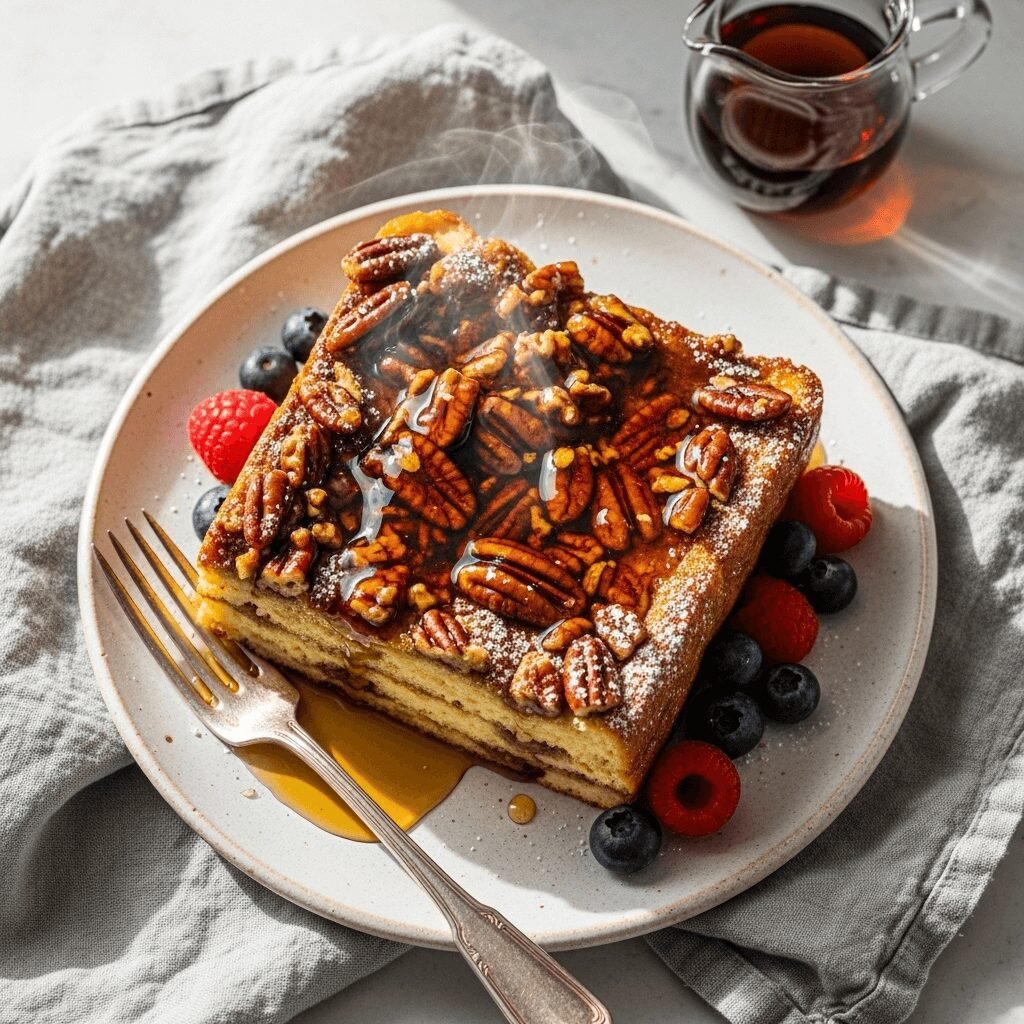
There’s something magical about waking up to the warm, cinnamon-spiced aroma of French toast baking in the oven—especially when you didn’t have to lift a finger that morning! This Maple Pecan French Toast Bake is the ultimate breakfast casserole that transforms simple ingredients into a show-stopping brunch centerpiece. It’s essentially all the deliciousness of classic French toast, but baked together in one gorgeous dish and topped with crunchy, caramelized pecans and a luscious maple glaze.
This recipe is perfect for lazy weekend mornings, holiday brunches, Christmas breakfast, Mother’s Day, or anytime you’re hosting overnight guests and want to serve something special without the morning stress. The best part? You can assemble everything the night before, pop it in the fridge, and simply bake it fresh in the morning. It’s like having a personal breakfast chef, except that chef is your past self being incredibly thoughtful!
Whether you call it baked French toast, French toast casserole, or overnight French toast bake, this dish delivers crispy edges, custardy centers, nutty pecan crunch, and pure maple sweetness in every single bite. It feeds a crowd easily, looks absolutely stunning on the table, and tastes like you spent hours in the kitchen when really, you were probably sleeping.
History / Background
French toast itself has a fascinating history that stretches back centuries and crosses multiple continents. Despite its name, French toast wasn’t actually invented in France. The dish dates back to ancient Roman times, where it appeared in a cookbook called “Apicius” under the name “Pan Dulcis.” Romans would soak bread in a mixture of milk and eggs before frying it—sound familiar?
The term “French toast” didn’t appear in English until the 17th century, and there are various theories about how it got its name. Some believe it was named after Joseph French, an American innkeeper who created the dish in 1724 but forgot to add the apostrophe (it should have been “French’s toast”). Others suggest it simply came from the French dish “pain perdu,” which literally means “lost bread”—a clever way to rescue stale bread from being wasted.
The casserole or baked version of French toast is a much more modern American invention, gaining popularity in the 1980s and 1990s as home cooks sought easier ways to feed families and brunch guests. The overnight method became especially beloved because it solved the age-old breakfast dilemma: wanting something special but not wanting to wake up at dawn to make it happen.
The addition of maple syrup and pecans is a distinctly North American twist that celebrates two ingredients native to the continent. Pecans are indigenous to North America and have been cultivated for thousands of years, while maple syrup production was taught to European settlers by Indigenous peoples. Together, they create a flavor combination that feels both comforting and celebratory—the essence of American comfort food at its finest.
Why You’ll Love This Recipe
This Maple Pecan French Toast Bake is about to become your go-to breakfast for every special occasion, and here’s why: it combines incredible flavor with minimal morning effort, making you look like a culinary genius while you’re actually still in your pajamas. The custard-soaked bread creates pockets of creamy richness, while the top bakes up golden and slightly crispy. The pecans toast beautifully in the oven, adding crunch and nutty depth, and the maple syrup caramelizes into pure liquid gold.
Here’s what makes this recipe absolutely irresistible:
- Make-ahead magic – Assemble it the night before and bake fresh in the morning with zero stress
- Feeds a crowd – One 9×13 pan serves 8-10 people, perfect for family gatherings or brunch parties
- Minimal hands-on time – Only 15 minutes of prep, then the oven does all the work
- Uses simple ingredients – Everything you need is probably already in your pantry and fridge
- Customizable – Swap add-ins, adjust sweetness, make it dairy-free or use different nuts
- Budget-friendly – Uses everyday bread and affordable ingredients to create an impressive dish
- Kid-approved – Even picky eaters love this slightly sweet, cinnamon-scented breakfast
- Looks impressive – Presents beautifully at the table, perfect for Instagram and Pinterest
- Better than restaurant brunch – Homemade flavor that beats any expensive brunch spot
- Leftovers reheat beautifully – Enjoy delicious breakfast all week long
Ingredient Notes
Let’s talk about what goes into this dreamy breakfast casserole and why each ingredient matters:
Bread – The foundation of any great French toast bake. Use thick-sliced bread like challah, brioche, French bread, or Texas toast. Day-old or slightly stale bread actually works better because it absorbs the custard without getting too soggy. Avoid thin sandwich bread, which will turn mushy. If your bread is fresh, cube it and let it sit out for a few hours or toast it lightly.
Eggs – These create the custardy base that makes French toast so rich and satisfying. Large eggs work best, and you’ll need plenty to properly soak a whole loaf of bread.
Milk and Heavy Cream – The combination creates the perfect custard texture—not too heavy, not too light. You can use all milk if you prefer a lighter version, or substitute with half-and-half. For dairy-free, use full-fat coconut milk or oat milk.
Maple Syrup – Use real, pure maple syrup for the best flavor, not pancake syrup (which is corn syrup with maple flavoring). Grade A amber or dark maple syrup both work beautifully. The maple flavor intensifies during baking, creating those gorgeous caramelized notes.
Pecans – These add essential crunch and nutty richness. Toast them beforehand for even deeper flavor, or use them raw and let them toast while baking. Substitute with walnuts, almonds, or make it nut-free by omitting.
Brown Sugar – Adds molasses depth and helps create that irresistible caramelized pecan topping. Light or dark brown sugar both work fine.
Butter – Enriches the custard and helps create the praline-like pecan topping. Use unsalted so you can control the salt level.
Cinnamon and Vanilla Extract – These warm spices make your kitchen smell like a bakery and add classic French toast flavor. Use pure vanilla extract, not imitation, for best results.
Salt – Just a pinch balances the sweetness and enhances all the other flavors.
Equipment Needed
Here’s everything you’ll need to make this recipe successfully:
- 9×13-inch baking dish – Glass or ceramic works best; make sure it’s at least 2 inches deep
- Large mixing bowl – For whisking together the custard mixture
- Whisk – To properly blend eggs, milk, and spices
- Measuring cups and spoons – For accurate ingredient measurements
- Bread knife – For cutting bread into even cubes
- Small saucepan – For melting butter and making the pecan topping
- Aluminum foil – To cover the dish during the first part of baking
- Wooden spoon or spatula – For stirring the pecan mixture
- Cooking spray or butter – For greasing the baking dish
- Oven mitts – Safety first when handling hot dishes!

Maple Pecan French Toast Bake Recipe
- Total Time: 9 hours
- Yield: 10 servings 1x
- Diet: Vegetarian
Description
This make-ahead Maple Pecan French Toast Bake transforms ordinary bread into an extraordinary breakfast casserole. Custardy, cinnamon-spiced bread is topped with caramelized pecans and maple syrup, then baked to golden perfection. Prepare it the night before for stress-free morning entertaining!
Ingredients
For the French Toast Base:
- 1 large loaf French bread or challah (about 16 ounces), cut into 1-inch cubes
- 8 large eggs
- 2 cups whole milk
- ½ cup heavy cream
- ½ cup pure maple syrup
- 1 tablespoon vanilla extract
- 1 tablespoon ground cinnamon
- ¼ teaspoon ground nutmeg
- ¼ teaspoon salt
For the Pecan Topping:
- ½ cup unsalted butter
- 1 cup packed light brown sugar
- 2 tablespoons pure maple syrup
- 2 cups pecan halves or chopped pecans
- ¼ teaspoon salt
For Serving (optional):
- Extra maple syrup
- Powdered sugar for dusting
- Fresh berries
- Whipped cream
Instructions
- Prepare the baking dish: Grease a 9×13-inch baking dish generously with butter or cooking spray. Arrange the cubed bread evenly in the dish, filling it completely.
- Make the custard mixture: In a large mixing bowl, whisk together eggs, milk, heavy cream, maple syrup, vanilla extract, cinnamon, nutmeg, and salt until completely smooth and well combined. The mixture should be uniform in color with no streaks of egg white.
- Soak the bread: Pour the custard mixture evenly over the bread cubes, making sure to coat all pieces. Use a spatula or your hands to gently press the bread down into the liquid, ensuring every piece gets soaked. Some bread will float to the top, and that’s perfectly fine.
- Refrigerate overnight: Cover the baking dish tightly with plastic wrap or aluminum foil. Refrigerate for at least 8 hours or overnight. This allows the bread to fully absorb the custard, creating that perfect custardy texture.
- Prepare the pecan topping: When ready to bake, remove the casserole from the refrigerator and let it sit at room temperature while you preheat the oven. In a small saucepan over medium heat, melt the butter. Stir in brown sugar, maple syrup, and salt. Bring to a gentle simmer, stirring constantly for 2-3 minutes until the sugar dissolves and the mixture is smooth and bubbly. Remove from heat and stir in the pecans.
- Add the topping: Spoon the pecan mixture evenly over the top of the soaked bread, spreading it to cover the surface as much as possible. The pecans and syrup will create a gorgeous caramelized layer as it bakes.
- Preheat and prepare: Preheat your oven to 350°F (175°C). Cover the baking dish with aluminum foil, tenting it slightly so it doesn’t touch the pecan topping.
- Bake covered: Place the covered dish in the preheated oven and bake for 30 minutes. This allows the custard to set without the top getting too dark.
- Bake uncovered: Remove the foil and continue baking for an additional 15-20 minutes, until the top is golden brown, the pecans are toasted, and the center is set (it should not jiggle when you gently shake the pan). A knife inserted in the center should come out mostly clean.
- Rest and serve: Remove from the oven and let the French toast bake rest for 5-10 minutes before serving. This allows it to set up properly so it slices cleanly. Serve warm with extra maple syrup, a dusting of powdered sugar, fresh berries, or whipped cream.
Notes
- Bread matters: Slightly stale bread works best because it absorbs the custard without becoming too soggy. If using fresh bread, cut it into cubes and let it dry out for a few hours or lightly toast it.
- Don’t skip the overnight soak: This step is crucial for proper texture. The bread needs time to fully absorb the custard.
- Check for doneness: The center should be set and not jiggly. If the top is browning too quickly, tent with foil and continue baking until the center is done.
- Make it ahead: You can prepare this up to 24 hours in advance. Add the pecan topping just before baking.
- Scaling: This recipe easily doubles for a crowd or halves for a smaller family. Adjust baking time accordingly for smaller pans.
- Prep Time: 15 minutes
- Cook Time: 45 minutes
- Category: Breakfast/Brunch
- Method: Baking
- Cuisine: American
Nutrition
- Serving Size: 1 slice (1/10 of recipe)
- Calories: 485
- Sugar: 34g
- Sodium: 380mg
- Fat: 26g
- Saturated Fat: 10g
- Unsaturated Fat: 14g
- Trans Fat: 0g
- Carbohydrates: 54g
- Fiber: 3g
- Protein: 11g
- Cholesterol: 180mg
Nutrition information is approximate and based on standard ingredients. Values may vary based on specific brands and substitutions used.
Tips & Variations
Flavor Variations:
- Stuffed French Toast Bake: Layer cream cheese cubes or Nutella between the bread pieces before adding custard
- Berry Bliss: Fold in fresh or frozen blueberries, raspberries, or sliced strawberries
- Chocolate Lover’s: Add chocolate chips and use chocolate milk in the custard
- Apple Cinnamon: Layer thin apple slices throughout and add extra cinnamon
- Pumpkin Spice: Add ½ cup pumpkin puree and pumpkin pie spice to the custard
- Banana Foster: Slice bananas over the bread and add a splash of rum extract
- Coconut Pecan: Use coconut milk and add shredded coconut to the pecan topping
Dietary Adaptations:
- Dairy-Free: Use coconut milk or oat milk instead of dairy milk and cream, and vegan butter
- Gluten-Free: Substitute gluten-free bread (make sure it’s sturdy)
- Nut-Free: Omit pecans and add granola or streusel topping instead
- Lower Sugar: Reduce maple syrup in custard and use sugar-free syrup for serving
- Egg-Free: This is tricky, but you can try using egg replacer products (results will vary)
Texture Tweaks:
- For extra crispy top: Broil for 1-2 minutes at the end of baking
- For softer texture: Add an extra ½ cup of milk to the custard
- For more custardy center: Use brioche or challah bread
Pro Chef Tips
Bread selection is everything: Professional bakers know that the right bread makes or breaks French toast. Choose a dense, rich bread with structure—challah, brioche, or artisan French bread. Avoid pre-sliced sandwich bread, which turns to mush. Day-old bread is actually ideal because moisture has evaporated, allowing it to soak up more custard without falling apart.
Toast your nuts separately for deeper flavor: While the pecans will toast somewhat in the oven, toasting them beforehand in a dry skillet for 3-4 minutes intensifies their nutty flavor and ensures even browning. This small step makes a noticeable difference in the final dish.
Temperature matters for custard: Take your eggs and dairy out of the refrigerator 30 minutes before making the custard. Room temperature ingredients blend more smoothly, creating a silkier custard that distributes evenly throughout the bread.
The overnight rest is non-negotiable: Resist the temptation to shortcut this step. The long refrigeration allows the bread to fully saturate with custard, ensuring every bite is perfectly creamy, not dry and eggy in spots.
Use real maple syrup, not pancake syrup: Pure maple syrup has complex, nuanced flavor that intensifies during baking, creating beautiful caramelization. Artificial pancake syrup is mostly corn syrup and can’t replicate this depth of flavor.
Control your oven temperature: Bake at 350°F—no higher. Too hot and the edges will burn before the center sets. Too low and it takes forever and won’t develop that gorgeous golden top. An oven thermometer ensures accuracy.
Let it rest before cutting: That 5-10 minute rest after baking allows the custard to set fully. Cut too soon and you’ll have a messy, runny casserole instead of neat, beautiful slices.
Common Mistakes to Avoid
Using fresh, soft bread: Fresh, pillowy bread turns to mush when soaked in custard. Always use day-old bread or intentionally dry out fresh bread before using. If you only have fresh bread, cube it and let it sit out uncovered for several hours, or toast it lightly in a 300°F oven for 10 minutes.
Not soaking long enough: Rushing the overnight soak is the most common mistake. If you don’t allow at least 8 hours, the bread won’t fully absorb the custard, resulting in dry spots and uneven texture. Some pieces will be dry while others are soggy—not what you want!
Overbaking or underbaking: The sweet spot is when the center is just set and no longer jiggles, with a golden-brown top. Insert a knife in the center—it should come out mostly clean with just a few moist crumbs. Overbake and it becomes dry and rubbery; underbake and it’s eggy and liquidy.
Skipping the foil cover: Covering for the first half of baking prevents the top from burning while allowing the center to cook through. Without this step, you’ll get a burnt top and raw middle—the worst of both worlds.
Cutting cubes too small or too large: One-inch cubes are ideal. Smaller pieces get too soggy and lose their structure. Larger pieces don’t absorb enough custard and remain dry. Take the time to cut evenly for consistent results throughout the dish.
Storage & Meal Prep
Refrigerator Storage: Leftover French toast bake keeps beautifully! Let it cool completely, then cover tightly with plastic wrap or transfer individual portions to airtight containers. Store in the refrigerator for up to 4 days. The flavors actually deepen slightly as it sits, making leftovers just as delicious as day one.
Reheating Instructions: For best results, reheat in the oven at 350°F for 10-15 minutes until warmed through. Cover with foil to prevent drying out. You can also microwave individual portions for 60-90 seconds, though the texture won’t be quite as crispy. If you want to revive that crispy top, pop it under the broiler for 1-2 minutes after reheating.
Room Temperature: Don’t leave French toast bake at room temperature for more than 2 hours due to the egg and dairy content. If serving at a brunch buffet, use a warming tray or chafing dish to keep it at safe temperatures.
Portion Prep: Cut the entire casserole into individual servings and store them separately in meal prep containers. This makes grabbing breakfast on busy mornings incredibly easy—just reheat one portion and go!
Make-Ahead & Freezer Notes
Advance Preparation: This recipe is specifically designed for make-ahead convenience! Prepare the entire casserole (without the pecan topping) up to 24 hours in advance. Keep it covered in the refrigerator. Make the pecan topping just before baking—it only takes 5 minutes and ensures it doesn’t separate or crystallize during storage.
Freezing Before Baking: You can freeze the unbaked casserole for up to 2 months. Prepare everything through step 4, then wrap the baking dish extremely well with plastic wrap, then aluminum foil to prevent freezer burn. When ready to bake, thaw overnight in the refrigerator, add the pecan topping, and bake as directed. You may need to add 5-10 minutes to the baking time if it’s still cold.
Freezing After Baking: Baked French toast casserole freezes well for up to 3 months. Let it cool completely, cut into portions, and wrap each piece individually in plastic wrap, then place in a freezer bag. Thaw overnight in the refrigerator and reheat as directed above.
Best Reheating Method from Frozen: For individual frozen portions, you can reheat from frozen in the microwave for 2-3 minutes, or in a 350°F oven for 20-25 minutes covered with foil. For best texture, always finish with a quick broil to crisp the top.
Pro Tip: Label your freezer packages with the date and reheating instructions so you don’t have to remember later!
Serving Suggestions
This Maple Pecan French Toast Bake is a complete breakfast on its own, but here are ways to make your brunch spread even more spectacular:
Protein Sides:
- Crispy bacon strips or thick-cut bacon
- Savory breakfast sausage links or patties
- Canadian bacon or ham slices
- Scrambled eggs or veggie frittata for a heartier spread
Fresh Fruit:
- Mixed berry salad with mint
- Fresh fruit salad with citrus dressing
- Sliced strawberries and bananas
- Grilled peaches or pineapple
- Citrus segments (grapefruit, orange, blood orange)
Beverage Pairings:
- Freshly brewed coffee or espresso
- Hot chocolate with marshmallows
- Fresh-squeezed orange juice
- Mimosas or bellinis for adults
- Chai tea lattes
- Apple cider (hot or cold depending on season)
Additional Toppings:
- Real maple syrup warmed slightly
- Bourbon maple syrup for adults
- Salted caramel sauce
- Fresh whipped cream
- Greek yogurt for a healthier option
- Cream cheese glaze
- Powdered sugar dusted on top
- Cinnamon butter
Complete Brunch Menu Ideas: Pair this French toast bake with a light spinach and feta quiche, fresh fruit platter, and mimosas for an elegant Mother’s Day brunch. Or serve it alongside scrambled eggs, bacon, and hash browns for a hearty family breakfast that satisfies everyone.
FAQs Section
Can I use different types of bread? Absolutely! While French bread, challah, and brioche work best, you can use Texas toast, sourdough, cinnamon raisin bread, croissants (for extra richness!), or even Hawaiian sweet bread. Just avoid thin sandwich bread. Gluten-free bread works too, though it may need less soaking time. The key is choosing bread with structure that won’t fall apart when soaked.
Do I have to refrigerate it overnight, or can I bake it immediately? For best results, the overnight soak is highly recommended. However, if you’re short on time, let it soak for at least 2 hours at room temperature before baking. The texture won’t be quite as custardy and uniform, but it will still be delicious. The longer soak really does make a difference in achieving that perfect consistency throughout.
Can I make this dairy-free? Yes! Substitute the milk and cream with full-fat coconut milk, oat milk, or almond milk (though coconut milk gives the richest result). Use vegan butter for the pecan topping. The texture will be slightly different but still absolutely delicious. Just make sure you’re using full-fat non-dairy milk for the best custard consistency.
My French toast bake turned out soggy in the middle. What went wrong? This usually happens for one of three reasons: (1) The bread wasn’t stale enough and absorbed too much custard, (2) You didn’t bake it long enough for the center to fully set, or (3) You used too much custard for the amount of bread. Make sure the center doesn’t jiggle when you shake the pan, and a knife inserted should come out mostly clean. Try baking 5-10 minutes longer next time.
Can I leave out the pecans if I have a nut allergy? Definitely! Simply make the brown sugar topping without the nuts, or substitute with granola, coconut flakes, or a simple streusel topping (flour, butter, sugar crumble). You can also skip the topping entirely and just dust with powdered sugar before serving. The French toast base is delicious on its own.
How do I know when it’s done baking? The casserole is done when the center is set and doesn’t jiggle when you gently shake the pan, the top is golden brown, and a knife inserted in the center comes out mostly clean with just a few moist crumbs. The internal temperature should reach 165°F. If the top is browning too quickly but the center isn’t set, tent with foil and continue baking.
Can I halve this recipe for a smaller family? Yes! Use an 8×8-inch or 9×9-inch baking dish and halve all ingredients. The baking time will be slightly shorter—check for doneness around 35-40 minutes total. This is perfect for a family of 4 or for meal prepping breakfast for the week.
Conclusion
This Maple Pecan French Toast Bake is more than just breakfast—it’s a warm hug on a plate, a celebration in casserole form, and proof that the best things in life are worth waking up for. The beauty of this recipe lies in its flexibility: it’s fancy enough for special occasions yet simple enough for any weekend you want to treat yourself and your loved ones.
The combination of custardy bread, crunchy caramelized pecans, and pure maple sweetness creates a symphony of textures and flavors that rivals any upscale brunch restaurant. Yet you made it yourself, in your own kitchen, with ingredients you already had on hand. That’s the magic of home cooking—turning everyday ingredients into extraordinary memories.
I truly hope you’ll try this recipe and experience that wonderful moment when you pull a golden, bubbling, pecan-topped masterpiece from your oven. Your kitchen will smell incredible, your family will think you’re a breakfast hero, and you’ll have the satisfaction of knowing you prepared something genuinely special.
Ready to make mornings magical? Prepare this Maple Pecan French Toast Bake tonight, bake it fresh tomorrow morning, and watch it disappear from the table! Don’t forget to snap a photo before everyone digs in—it’s too pretty not to share. Pin this recipe to your breakfast board so you’ll always have it handy for special mornings, and drop a comment below to let me know how yours turned out! I love hearing about your experiences and any creative variations you tried.
Happy baking, and here’s to many delicious mornings ahead! 🍁🥐✨