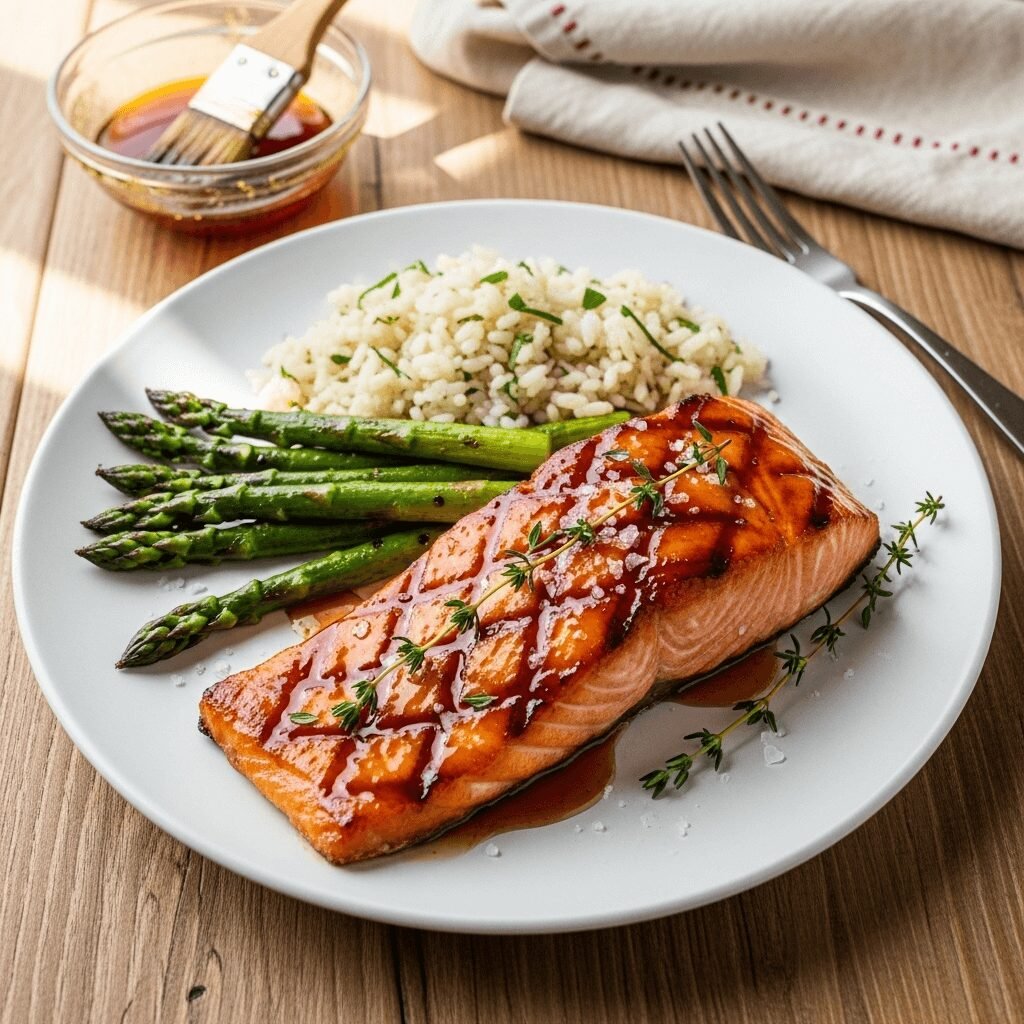
There’s something magical about the combination of rich, buttery salmon and the warm sweetness of pure maple syrup. This Maple Glazed Salmon Fillet Recipe is one of those meals that looks absolutely restaurant-worthy but comes together so quickly, you’ll wonder why you ever ordered takeout. The sticky-sweet glaze caramelizes beautifully on the salmon, creating crispy, golden edges while keeping the fish tender and flaky inside.
Whether you’re planning a romantic dinner for two, hosting a fancy weekend brunch, or simply want to elevate your weeknight dinner game, this maple glazed salmon is your answer. It’s naturally gluten-free, packed with heart-healthy omega-3s, and delivers that perfect balance of sweet and savory that keeps everyone coming back for seconds. Plus, it’s done in under 20 minutes – yes, really! The maple glaze requires just five simple ingredients you probably already have in your pantry, and the cooking method is so straightforward that even beginner cooks can nail it on the first try.
History & Background of Maple Glazed Salmon
The tradition of pairing salmon with maple syrup is deeply rooted in North American culinary history, particularly in the Pacific Northwest and Eastern Canada. Indigenous peoples were the first to perfect salmon preservation and cooking techniques, often using natural sweeteners like maple sap during the spring harvest season. When European settlers arrived, they brought refined cooking techniques that combined with these indigenous traditions to create fusion dishes that celebrated local ingredients.
Maple syrup, often called “liquid gold,” has been harvested for over 300 years in North America. The practice of tapping maple trees originated with Indigenous communities who discovered that the sap could be collected and boiled down into a concentrated sweetener. When this prized ingredient met the abundant wild salmon from cold northern waters, it was a match made in culinary heaven.
Today, maple glazed salmon represents the best of modern North American cuisine – it honors traditional ingredients while embracing contemporary cooking methods. The recipe gained mainstream popularity in the 1990s and 2000s when food magazines and celebrity chefs began showcasing how simple ingredients could create sophisticated flavors. What makes this dish particularly special is its versatility; it works equally well for a casual family dinner as it does for an elegant dinner party. The natural sugars in the maple syrup caramelize during cooking, creating a glossy, lacquered finish that’s both beautiful and delicious.
Why You’ll Love This Maple Glazed Salmon Recipe
This isn’t just another salmon recipe – it’s the salmon recipe you’ll bookmark, make on repeat, and proudly serve to guests. The combination of flavors is absolutely divine, with the natural richness of salmon perfectly complemented by sweet maple notes and a hint of tang from Dijon mustard and soy sauce.
Here’s why this recipe is a total winner:
- Lightning-fast cooking time – Ready in just 20 minutes from start to finish, making it perfect for busy weeknights when you want something special without the stress
- Minimal ingredients – Just 8 simple ingredients create an incredibly flavorful glaze that tastes like you spent hours in the kitchen
- Naturally healthy – Packed with protein and omega-3 fatty acids, this dish is as nutritious as it is delicious
- Foolproof technique – The pan-searing method ensures perfectly cooked salmon every single time, with no fancy equipment needed
- Impressive presentation – The glossy maple glaze makes this dish look like it came straight from a high-end restaurant
- Family-friendly flavor – The sweetness appeals to kids while being sophisticated enough for adult palates
- Budget-conscious elegance – Salmon fillets are affordable yet feel luxurious, making this perfect for special occasions without breaking the bank
- Meal prep friendly – Leftovers reheat beautifully and taste amazing in salads, grain bowls, or eaten cold
Whether you’re a confident home cook or just starting your culinary journey, this recipe will make you feel like a professional chef.
Ingredient Notes
Understanding your ingredients is the first step to cooking success. Here’s what you need to know about each component in this maple glazed salmon recipe:
Salmon Fillets – The star of the show! Look for fresh, wild-caught salmon if possible (sockeye, coho, or king salmon work beautifully), but farm-raised Atlantic salmon is perfectly fine and often more budget-friendly. Each fillet should be about 6 ounces and roughly the same thickness for even cooking. The skin can be left on or removed – keeping it on helps the fish hold together during cooking and gets delightfully crispy.
Pure Maple Syrup – This is non-negotiable – you need real maple syrup, not pancake syrup or maple-flavored syrup. Grade A Dark Amber or Grade A Very Dark have the most robust maple flavor that stands up to the richness of the salmon. The natural sugars caramelize beautifully, creating that signature glossy finish. If you’re in a pinch, honey can substitute, but you’ll lose that distinctive maple flavor.
Soy Sauce – Adds savory depth and umami that balances the sweetness. Use low-sodium soy sauce to control the salt level, or substitute with tamari for a gluten-free option. Coconut aminos work well for those avoiding soy entirely.
Dijon Mustard – This secret ingredient adds tang and helps the glaze cling to the salmon. It also acts as an emulsifier, keeping the glaze smooth and glossy. Regular yellow mustard can work in a pinch, but Dijon provides a more sophisticated flavor profile.
Garlic – Fresh garlic is best for maximum flavor impact. Minced garlic or garlic paste adds aromatic depth to the glaze. Garlic powder can substitute in emergencies (use 1/2 teaspoon).
Olive Oil or Butter – Used for searing the salmon. Olive oil has a higher smoke point, but butter adds incredible richness. Many chefs use a combination of both for the best of both worlds.
Salt and Black Pepper – Simple seasonings that enhance all the other flavors without competing.
Optional: Fresh Herbs – Chopped fresh thyme, rosemary, or parsley make beautiful garnishes and add fresh, bright notes to the finished dish.
Equipment Needed
You don’t need a fancy kitchen to make restaurant-quality maple glazed salmon. Here’s what you’ll need:
- Large oven-safe skillet (cast iron or stainless steel works best) – Nonstick can work but won’t give you the same beautiful caramelization
- Small saucepan – For preparing the maple glaze
- Whisk – To combine glaze ingredients smoothly
- Tongs or fish spatula – For flipping salmon without breaking it apart
- Measuring cups and spoons – Precision matters with glazes
- Paper towels – For patting salmon dry before cooking
- Meat thermometer (optional but recommended) – Takes the guesswork out of determining doneness
- Baking sheet (if finishing in the oven) – Line with parchment paper for easy cleanup
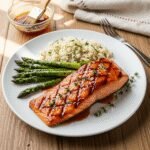
Maple Glazed Salmon Fillet Recipe
- Total Time: 20 minutes
- Yield: 4 servings 1x
- Diet: Gluten Free
Description
This Maple Glazed Salmon Fillet Recipe delivers restaurant-quality results in just 20 minutes! Pan-seared salmon fillets are coated in a sweet and savory maple glaze made with pure maple syrup, soy sauce, and Dijon mustard. The result is perfectly flaky salmon with a glossy, caramelized exterior that’s absolutely irresistible. Perfect for weeknight dinners or special occasions!
Ingredients
- 4 salmon fillets (6 oz each, skin-on or skinless)
- 2 tablespoons olive oil or butter
- Salt and black pepper to taste
For the Maple Glaze:
- 1/3 cup pure maple syrup
- 2 tablespoons soy sauce (or tamari for gluten-free)
- 1 tablespoon Dijon mustard
- 2 cloves garlic, minced
- 1/4 teaspoon black pepper
- Optional: 1 tablespoon butter for extra richness
- Fresh thyme or parsley for garnish
Instructions
- Prepare the salmon: Remove salmon from refrigerator 15 minutes before cooking to bring to room temperature. Pat fillets completely dry with paper towels – this is crucial for getting a good sear. Season both sides generously with salt and black pepper.
- Make the maple glaze: In a small saucepan over medium heat, whisk together maple syrup, soy sauce, Dijon mustard, minced garlic, and black pepper. Bring to a gentle simmer and cook for 3-4 minutes, stirring occasionally, until the glaze thickens slightly and reduces by about one-third. It should coat the back of a spoon. Remove from heat and set aside.
- Preheat your skillet: Heat a large oven-safe skillet over medium-high heat. Add olive oil or butter and let it heat until shimmering (but not smoking). The pan should be hot enough that a drop of water sizzles immediately.
- Sear the salmon: Place salmon fillets skin-side up (or presentation side down) in the hot skillet. Don’t move them! Let them sear undisturbed for 4-5 minutes until a golden-brown crust forms and the salmon releases easily from the pan. You should see the flesh turning opaque about halfway up the sides.
- Flip and glaze: Carefully flip the salmon using a fish spatula or tongs. Immediately brush or spoon half of the maple glaze generously over the seared side of each fillet. Reduce heat to medium and cook for another 3-4 minutes.
- Apply final glaze: Brush the remaining glaze over the salmon fillets. For extra caramelization, you can transfer the skillet to a preheated 400°F oven for 2-3 minutes, or simply let the glaze cook and caramelize on the stovetop.
- Check for doneness: Salmon is done when it reaches an internal temperature of 145°F and flakes easily with a fork. The flesh should be opaque and slightly translucent in the very center for medium doneness. Remove from heat when it’s just barely done, as it will continue cooking from residual heat.
- Rest and serve: Let the salmon rest for 2-3 minutes. This allows the juices to redistribute, ensuring moist, tender fish. Garnish with fresh herbs if desired and serve immediately with any remaining glaze drizzled over the top.
Notes
- Salmon thickness matters: If your fillets vary in thickness, adjust cooking time accordingly. Thicker pieces need an extra minute or two per side.
- Don’t overcook: Salmon continues cooking after you remove it from heat. Pull it just before it’s completely opaque in the center for perfect, moist results.
- Glaze consistency: If your glaze is too thin, simmer it longer. Too thick? Add a splash of water to thin it out.
- Crispy skin lovers: If you kept the skin on, make sure to cook skin-side down for most of the time to get it extra crispy.
- Spicy variation: Add 1/4 teaspoon red pepper flakes or a drizzle of sriracha to the glaze for a sweet-heat combination.
- Prep Time: 5 minutes
- Cook Time: 15 minutes
- Category: Dinner
- Method: Pan-Seared
- Cuisine: American, Canadian-Inspired
Nutrition
- Serving Size: 1 salmon fillet (6 oz) with glaze
- Calories: 385
- Sugar: 13g
- Sodium: 520mg
- Fat: 18g
- Saturated Fat: 3g
- Unsaturated Fat: 14g
- Trans Fat: 0g
- Carbohydrates: 16g
- Fiber: 0g
- Protein: 38g
- Cholesterol: 95mg
Note: Nutrition facts are approximate and will vary based on specific ingredients used and portion sizes.
Tips & Variations
One of the best things about this maple glazed salmon recipe is how easily you can customize it to suit your tastes or dietary needs:
Spicy Maple Salmon: Add 1/4 teaspoon cayenne pepper or red pepper flakes to the glaze, or brush salmon with sriracha before applying the maple glaze for a sweet and spicy kick.
Asian-Inspired Twist: Add 1 teaspoon fresh grated ginger and 1/2 teaspoon sesame oil to the glaze. Garnish with sesame seeds and sliced green onions.
Citrus Maple Salmon: Add the zest and juice of one orange to the glaze for bright, fresh notes that cut through the richness.
Bourbon Maple Glaze: Add 2 tablespoons of bourbon to the glaze for a sophisticated, caramelized depth of flavor (the alcohol cooks off).
Herb-Crusted Version: After the first flip, press chopped fresh herbs (thyme, rosemary, or dill) onto the glazed side before continuing to cook.
Balsamic Addition: Add 1 tablespoon balsamic vinegar to the glaze for extra tang and complexity.
Healthy Lighter Version: Use less maple syrup (reduce to 1/4 cup) and add a touch of apple cider vinegar for acidity without extra sugar.
Grilled Maple Salmon: This recipe adapts beautifully to the grill. Cook salmon on a cedar plank or directly on oiled grates, brushing with glaze during the last few minutes of cooking.
Pro Chef Tips
Want to take your maple glazed salmon from great to absolutely extraordinary? Here are insider secrets from professional chefs:
1. Temperature is everything: Always bring salmon to room temperature before cooking. Cold fish hitting a hot pan causes uneven cooking and sticking. Let it sit out for 15-20 minutes.
2. Dry equals crispy: The driest salmon surface gets the best sear. Pat fillets with paper towels until completely dry, then let them air-dry for a few minutes before seasoning.
3. Choose thick, even fillets: Look for center-cut salmon pieces that are at least 1 inch thick and uniform in size. This ensures even cooking and prevents thin edges from overcooking.
4. Don’t skip the sear: A proper sear creates incredible flavor through the Maillard reaction. Resist the urge to move or flip the salmon too early – let that crust develop!
5. Use a hot pan, medium-high heat: The pan should be hot enough to sear immediately, but not so hot that the glaze burns. Medium-high heat gives you the sweet spot.
6. The 90/10 rule: Cook salmon 90% of the time on the first side, then just kiss the second side for 10% of the time. This gives you the best crust while keeping the fish moist.
7. Double-glaze technique: Apply glaze in two stages – once after flipping, then again near the end. This creates layers of flavor and that gorgeous lacquered finish.
8. Slightly undercook: Salmon continues cooking after it leaves the heat. Pull it when it’s just barely translucent in the center for perfect, moist fish.
9. Let it rest: Just like steak, salmon benefits from a 2-3 minute rest. This allows juices to redistribute, preventing them from running out when you cut into it.
10. Taste your glaze: Before it goes on the salmon, taste your glaze and adjust. Too sweet? Add more soy sauce or a splash of vinegar. Too salty? Balance with more maple syrup.
Common Mistakes to Avoid
Even simple recipes can go wrong. Here’s how to sidestep the most common pitfalls:
1. Cooking salmon straight from the fridge: Cold salmon won’t cook evenly. The outside overcooks before the center reaches the right temperature. Always let it come to room temperature for 15-20 minutes first.
2. Overcooking the fish: This is the number one mistake home cooks make with salmon. Overcooked salmon is dry, chalky, and disappointing. Remember, salmon continues cooking after you remove it from heat, so pull it slightly before it’s completely done. The internal temperature should reach 145°F, but many chefs prefer 130-135°F for medium doneness.
3. Not drying the salmon properly: Wet fish won’t sear properly – it will steam instead, leaving you with a gray, soggy surface instead of a beautiful golden crust. Pat it dry thoroughly with paper towels.
4. Using imitation maple syrup: Pancake syrup or maple-flavored syrup contains corn syrup and artificial flavors. Real maple syrup has complex flavor notes that make all the difference in this recipe. Don’t skimp here!
5. Flipping too early or too often: When salmon hits the hot pan, it will stick initially. Let it cook undisturbed until it naturally releases (about 4-5 minutes). If you try to flip too early, you’ll tear the flesh and ruin the crust.
6. Crowding the pan: If fillets are touching, they’ll steam rather than sear. Leave at least an inch between pieces, or cook in batches if necessary.
7. Burning the glaze: Maple syrup contains natural sugars that can burn quickly. If your heat is too high or you apply the glaze too early, it will burn and turn bitter. Apply glaze after the initial sear, and watch it carefully.
Storage & Meal Prep
Refrigerator Storage:
Store leftover maple glazed salmon in an airtight container in the refrigerator for up to 3 days. Let it cool to room temperature before sealing and refrigerating to prevent condensation, which can make the fish soggy.
Reheating:
The best way to reheat salmon is gently to avoid drying it out. Place fillets in a baking dish, cover with foil, and warm in a 275°F oven for about 10-15 minutes until just heated through. Alternatively, reheat in a covered skillet over low heat with a splash of water or broth. Microwave works in a pinch (use 50% power in 30-second intervals), but it can make the texture rubbery.
Eating Cold:
Honestly, maple glazed salmon is delicious cold! Flake it over salads, add it to grain bowls, or make salmon wraps. The sweet-savory flavor profile works beautifully in cold applications.
Shelf Life:
Fresh cooked salmon should be consumed within 3 days for best quality and food safety. If it smells off or has a slimy texture, discard it.
Make-Ahead & Freezer Notes
Make-Ahead Tips:
You can prepare the maple glaze up to 3 days in advance. Store it in an airtight container in the refrigerator and gently rewarm before using. The salmon itself is best cooked fresh, but you can season the fillets and keep them covered in the refrigerator for up to 4 hours before cooking.
Freezing Cooked Salmon:
While salmon can be frozen after cooking, the texture may become slightly less flaky. If you want to freeze leftovers, wrap individual portions tightly in plastic wrap, then in aluminum foil, and store in a freezer bag for up to 2 months. Thaw overnight in the refrigerator before reheating.
Freezing Raw Salmon:
If you bought fresh salmon but want to cook it later, you can freeze raw fillets. Wrap them individually in plastic wrap and store in freezer bags for up to 3 months. Thaw in the refrigerator overnight before cooking. Note: Don’t refreeze salmon that was previously frozen at the store.
Glaze Freezing:
The maple glaze freezes beautifully! Pour into ice cube trays and freeze, then transfer cubes to a freezer bag. Each cube is roughly 2 tablespoons – perfect for portioning. Thaw and warm as needed.
Best Method for Make-Ahead Dinners:
For busy weeknights, prep your glaze and portion your salmon on Sunday. Store separately in the fridge. When ready to cook, it’s just a quick sear and glaze application – dinner in 15 minutes!
Serving Suggestions
Maple glazed salmon is versatile and pairs beautifully with so many sides. Here are some winning combinations:
Classic Pairings:
- Roasted vegetables – Brussels sprouts, asparagus, or green beans tossed with olive oil and sea salt complement the sweet glaze perfectly
- Mashed potatoes – Creamy, buttery mashed potatoes balance the salmon’s richness
- Rice pilaf – The nutty flavors and fluffy texture make an ideal base for the glazed salmon
- Quinoa – A healthy, protein-packed option that soaks up the extra glaze beautifully
Fresh & Light Sides:
- Arugula salad with lemon vinaigrette – The peppery greens cut through the richness
- Cucumber avocado salad – Cool, refreshing, and requires no cooking
- Citrus slaw – Bright, crunchy, and adds textural contrast
- Steamed broccoli – Simple, healthy, and lets the salmon shine
Heartier Options:
- Roasted sweet potatoes – The natural sweetness echoes the maple glaze
- Garlic butter green beans – Classic steakhouse side that works perfectly here
- Wild rice blend – Earthy, nutty flavors complement the salmon
- Creamy polenta – Rich and comforting, especially for cooler weather
Bread & Grains:
- Crusty sourdough bread – Perfect for soaking up extra glaze
- Dinner rolls – Warm, buttery, and always crowd-pleasing
- Couscous – Quick-cooking and absorbs flavors beautifully
Beverage Pairings:
- White wine: Pinot Grigio, Chardonnay, or Riesling (the slight sweetness of Riesling is particularly nice)
- Rosé: Dry rosé provides beautiful balance
- Beer: A light wheat beer or amber ale
- Non-alcoholic: Sparkling water with lemon, iced green tea, or apple cider
Frequently Asked Questions
Q: Can I use frozen salmon for this recipe?
A: Yes! Just make sure to thaw it completely in the refrigerator overnight. Never thaw salmon at room temperature or in hot water, as this affects texture and food safety. Pat thawed salmon very dry with paper towels before cooking, as it tends to release more moisture than fresh.
Q: What if I don’t have an oven-safe skillet?
A: No problem! You can cook the entire dish on the stovetop. After the initial sear and flip, reduce heat to medium-low, apply the glaze, and cover the pan with a lid for the last 3-4 minutes. This creates a gentle steaming effect that finishes cooking the salmon while preventing the glaze from burning.
Q: How do I know when salmon is done?
A: The most reliable method is using an instant-read thermometer – salmon is done at 145°F (though many prefer 130-135°F for medium). Visually, the flesh should be opaque and flake easily with a fork. It’s okay if the very center is slightly translucent. Remember, it continues cooking after you remove it from heat, so err on the side of slightly underdone.
Q: Can I make this recipe with other types of fish?
A: Absolutely! This maple glaze works wonderfully with other fatty fish like Arctic char, steelhead trout, or even thick white fish like halibut or cod. Just adjust cooking times based on thickness – delicate fish like cod may need gentler handling and slightly less time.
Q: My glaze is too thick/too thin. How do I fix it?
A: If your glaze is too thick and syrupy, simply whisk in a tablespoon of water or chicken broth to thin it out. If it’s too thin and won’t coat the salmon properly, return it to the stove and simmer for another 2-3 minutes until it reduces further. The perfect consistency coats the back of a spoon but isn’t gloopy.
Q: Can I make this recipe dairy-free?
A: Yes! Simply use olive oil or avocado oil instead of butter for cooking, and skip the optional butter in the glaze. The recipe is already naturally dairy-free with this simple swap.
Q: Why did my salmon stick to the pan?
A: Salmon sticks for three main reasons: (1) the pan wasn’t hot enough, (2) the salmon wasn’t dry enough, or (3) you tried to flip it too early. Make sure your pan is properly preheated, pat salmon completely dry, and wait until a golden crust forms before attempting to flip. The salmon will release naturally when it’s ready.
Q: Can I double this recipe for a crowd?
A: Definitely! The glaze recipe scales up perfectly. However, don’t overcrowd your pan when cooking the salmon – cook in batches if necessary to ensure proper searing. Keep cooked salmon warm in a 200°F oven on a baking sheet while you finish the remaining fillets.
Conclusion
There you have it – the ultimate guide to making perfect Maple Glazed Salmon that rivals anything you’d get at a fancy restaurant! This recipe proves that impressive, delicious, and healthy dinners don’t have to be complicated or time-consuming. With just a handful of pantry staples and 20 minutes of your time, you can create a meal that looks stunning and tastes absolutely incredible.
The beauty of this dish lies in its simplicity and versatility. Whether you’re cooking for picky kids who love a touch of sweetness, hosting a dinner party where you want to impress, or meal-prepping healthy lunches for the week, this maple glazed salmon delivers every single time. The sweet and savory glaze, the perfectly seared exterior, the tender flaky fish – it all comes together in perfect harmony.
I hope this recipe becomes a regular in your dinner rotation! Once you master the basic technique, you’ll find yourself experimenting with the variations and making it your own. Don’t forget to save this recipe to Pinterest so you can find it easily whenever that salmon craving hits.
Now it’s your turn! I’d love to hear how your maple glazed salmon turned out. Did you try any of the variations? What sides did you serve it with? Drop a comment below and let me know, and if you share your creation on social media, tag me so I can see your beautiful plates! And please, hit that Pinterest save button to keep this recipe handy – your future self will thank you when you need a quick, impressive dinner idea.
Happy cooking, and enjoy every delicious bite! 🍁✨