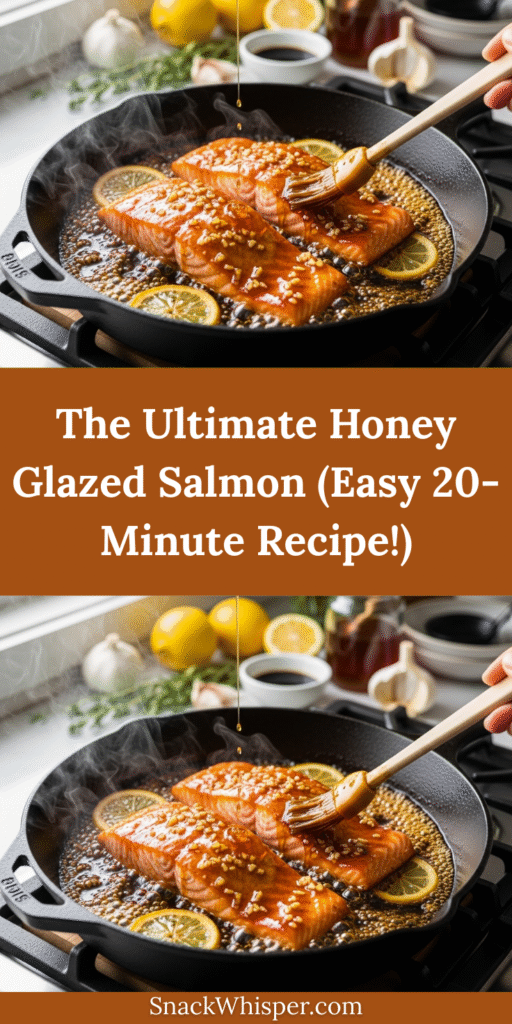
If you’re looking for a healthy, impressive dinner that takes just 20 minutes from start to finish, this Honey Glazed Salmon is about to become your new favorite go-to recipe. Imagine perfectly cooked, tender salmon fillets with a gorgeous caramelized honey glaze that’s sweet, savory, and slightly tangy all at once. The combination of rich, buttery salmon with that sticky, glossy glaze is absolutely irresistible.
This recipe has taken Pinterest by storm because it delivers restaurant-quality results with minimal effort and ingredients you probably already have in your pantry. The honey glaze creates a beautiful golden coating on the salmon that not only looks stunning but tastes incredible—sweet enough to satisfy without being dessert-like, with just the right balance of saltiness and acidity.
Honey Glazed Salmon is perfect for so many occasions. Serve it for an easy weeknight dinner when you want something quick but special, impress guests with minimal stress since it looks and tastes fancy, make it for meal prep—the salmon stays delicious all week long, or enjoy it for a healthy date night at home that feels romantic without the restaurant prices. It pairs beautifully with rice, roasted vegetables, salads, or quinoa, making it one of those versatile recipes that works year-round. Plus, salmon is packed with omega-3 fatty acids and protein, so you’re getting amazing nutrition along with incredible flavor. Whether you’re a seafood lover or trying to eat more fish for health reasons, this foolproof recipe will have you cooking salmon on repeat.
History / Background
The pairing of honey with fish might seem modern, but it actually has ancient roots spanning multiple cultures. Honey has been used as a cooking ingredient for over 8,000 years, with evidence of its culinary use found in ancient Egyptian, Greek, Roman, and Chinese cuisines. These early civilizations understood that honey wasn’t just a sweetener—its natural enzymes and sugars create beautiful caramelization and help preserve food.
Salmon itself has been a prized protein source for thousands of years, particularly in the Pacific Northwest of North America, Scandinavia, Scotland, and Russia, where wild salmon runs have sustained communities for millennia. Indigenous peoples of the Pacific Northwest, including the Chinook, Tlingit, and Salish tribes, developed sophisticated methods for catching, preserving, and preparing salmon, considering it both a crucial food source and a sacred gift from nature.
The specific combination of honey and salmon likely emerged from Asian culinary traditions, where sweet and savory flavor profiles have long been embraced. Chinese cuisine has ancient traditions of glazing fish and meats with honey-based sauces, while Japanese teriyaki (which often includes honey or mirin) represents a similar sweet-glazed approach to cooking fish. These techniques spread through trade routes and cultural exchange over centuries.
In Western cuisine, honey-glazed preparations gained popularity during the latter half of the 20th century as global flavors became more accessible and home cooks began experimenting with Asian-inspired cooking techniques. The rise of health-conscious eating in the 1990s and 2000s brought salmon to the forefront as a “superfood” rich in omega-3 fatty acids, and recipes like honey glazed salmon became popular for being both nutritious and delicious.
Today’s honey glazed salmon represents a beautiful fusion of ancient techniques and modern convenience. It’s inspired by Asian glazing methods but simplified for busy American home cooks who want quick, healthy, impressive meals. The recipe has become a Pinterest and food blog favorite precisely because it bridges the gap between everyday cooking and special occasion dining—simple enough for a Tuesday night but impressive enough for entertaining.
The dish’s enduring popularity also reflects our cultural moment where we value foods that are both healthy and indulgent, quick but not “fast food,” and simple yet sophisticated. Honey glazed salmon checks all these boxes perfectly.
Why You’ll Love This Recipe
This Honey Glazed Salmon truly is one of those magical recipes that makes you look like a culinary genius with almost no effort. The salmon comes out perfectly cooked—flaky, moist, and tender—while that gorgeous honey glaze creates a sticky, caramelized coating that’s absolutely addictive. Every bite delivers rich, buttery salmon flavor enhanced by the sweet-savory glaze.
What makes this recipe particularly wonderful is how forgiving it is. Even if you’ve never cooked salmon before, you’ll get beautiful results. The honey glaze does so much of the heavy lifting, adding flavor, moisture, and that restaurant-quality appearance that makes everyone think you spent hours in the kitchen when you really only needed 20 minutes.
Here’s why this will become your favorite way to cook salmon:
- Lightning fast – Ready in just 20 minutes from start to finish
- Simple ingredients – Only 6 basic ingredients you probably have on hand
- Restaurant-quality results – Looks and tastes like a $30 restaurant entrée
- Naturally healthy – Packed with omega-3s, protein, and nutrients
- Gluten-free friendly – Naturally gluten-free with a simple substitution
- Keto and low-carb adaptable – Easy to modify for various diets
- Meal prep champion – Makes excellent leftovers throughout the week
- Kid-approved – The sweet glaze makes it appealing even to picky eaters
- Impressive for guests – Looks fancy enough for dinner parties
- One-pan cooking – Minimal cleanup after dinner
- Budget-friendly – More affordable than dining out
- Versatile serving options – Works with countless side dishes
- Foolproof technique – Hard to mess up, easy to perfect
Ingredient Notes
Let’s break down what goes into this delicious dish and why each component matters for the best results.
Salmon Fillets: You’ll want skin-on salmon fillets if possible—the skin helps hold the fish together and gets wonderfully crispy. Look for fillets that are about 6 ounces each and roughly equal thickness (about 1 inch thick) for even cooking. Wild-caught salmon (like Sockeye, Coho, or King) has a richer, more complex flavor, while farm-raised Atlantic salmon is milder, fattier, and more budget-friendly. Both work beautifully in this recipe. Fresh or frozen (thawed) salmon work equally well—frozen is often better quality since it’s flash-frozen right after harvest.
Honey: The star of the glaze! Use good quality honey for the best flavor. Wildflower, clover, or orange blossom honey all work wonderfully. The honey provides sweetness, helps the glaze caramelize beautifully, and adds a subtle floral complexity. Raw or regular honey both work fine. Avoid artificial honey or “honey blend” products as they won’t caramelize properly.
Soy Sauce: Adds essential saltiness and umami depth that balances the sweetness of honey. Use regular soy sauce, low-sodium (if watching salt intake), or tamari for gluten-free. Coconut aminos work too for paleo/Whole30 diets, though the flavor is slightly sweeter and less salty.
Garlic: Fresh minced garlic adds aromatic depth that makes the glaze absolutely irresistible. Don’t use jarred minced garlic or garlic powder here—fresh makes a noticeable difference. You’ll need 2-3 cloves depending on how much you love garlic.
Lemon or Lime Juice: Fresh citrus juice adds brightness and acidity that cuts through the richness of the salmon and balances the sweetness of honey. Always use fresh-squeezed rather than bottled for the best, most vibrant flavor. Lemon is traditional, but lime adds a nice tropical twist.
Butter or Oil: Butter adds richness and helps the glaze become glossy and thick, while olive oil keeps it lighter and slightly healthier. You can use either or a combination. For dairy-free, stick with olive oil or avocado oil.
Optional Add-ins: Red pepper flakes add a nice spicy kick, fresh ginger creates an Asian-inspired flavor profile, sesame seeds make a beautiful garnish, and fresh herbs like cilantro or parsley add color and freshness.
Equipment Needed
This simple recipe requires minimal equipment—nothing fancy needed!
- Large oven-safe skillet (cast iron, stainless steel, or oven-safe non-stick) – 12-inch is ideal
- Small bowl or measuring cup – For mixing the honey glaze
- Whisk or fork – For combining glaze ingredients
- Baking sheet with foil – Alternative to skillet method
- Spatula – For flipping salmon carefully
- Meat thermometer – Optional but helpful for perfect doneness (145°F)
- Measuring spoons – For accurate ingredient portions
- Pastry brush (optional) – For brushing glaze on salmon
- Sharp knife – For mincing garlic and preparing fish
- Cutting board – For prep work
- Paper towels – Essential for patting salmon dry
- Tongs – Helpful for handling salmon without breaking it
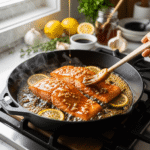
Honey Glazed Salmon Recipe
- Total Time: 17 minutes
- Yield: 4 servings 1x
- Diet: Gluten Free
Description
Perfectly cooked salmon fillets with a sweet and savory honey glaze that caramelizes beautifully. This restaurant-quality dish comes together in just 20 minutes and works perfectly for busy weeknights or impressive dinner parties.
Ingredients
For the Salmon:
- 4 salmon fillets (about 6 ounces each, skin-on preferred)
- 1 tablespoon olive oil or butter
- Salt and black pepper to taste
For the Honey Glaze:
- 1/4 cup honey
- 3 tablespoons soy sauce (or tamari for gluten-free)
- 3 cloves garlic, minced
- 2 tablespoons fresh lemon juice (about 1 lemon)
- 1 tablespoon butter (optional, for extra richness)
- 1/4 teaspoon red pepper flakes (optional, for heat)
For Garnish:
- Fresh parsley or cilantro, chopped
- Sesame seeds (optional)
- Lemon wedges
Instructions
- Prep the salmon: Remove salmon from refrigerator 10 minutes before cooking to bring to room temperature. Pat fillets completely dry with paper towels—this is crucial for getting a good sear. Season both sides generously with salt and black pepper. If your fillets have skin, score the skin lightly with a sharp knife to prevent curling.
- Preheat oven: Set your oven to 400°F (200°C) so it’s hot and ready.
- Make the honey glaze: In a small bowl, whisk together honey, soy sauce, minced garlic, lemon juice, and red pepper flakes if using. Set aside. The glaze will seem thin but will thicken as it cooks.
- Sear the salmon: Heat olive oil or butter in a large oven-safe skillet over medium-high heat. Once hot and shimmering (but not smoking), add salmon fillets skin-side up. Sear for 3-4 minutes without moving them until a golden crust forms on the bottom. The salmon should release easily when it’s ready to flip—if it’s sticking, give it another minute.
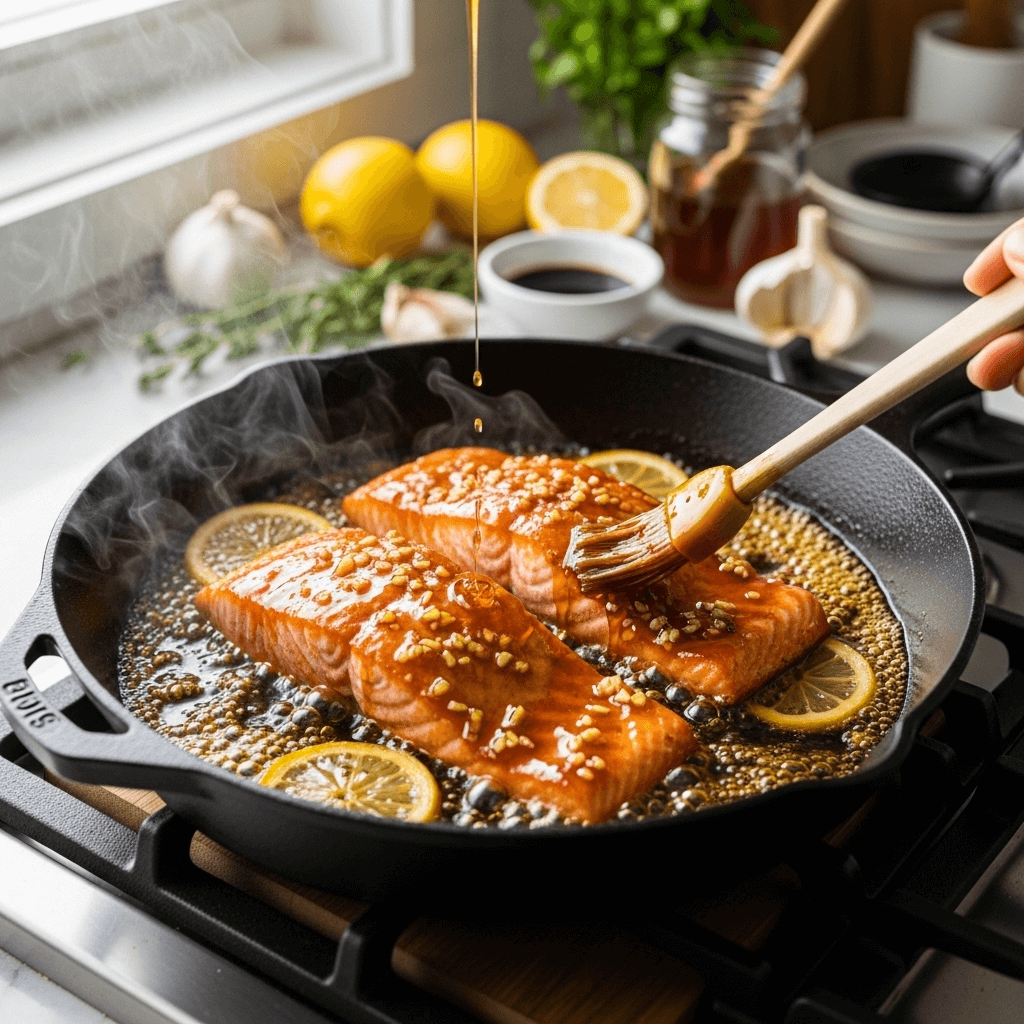
- Flip and add glaze: Carefully flip the salmon skin-side down using a spatula. Pour the honey glaze over and around the salmon fillets, making sure each fillet gets coated. Use a spoon to baste the salmon with the glaze from the pan.
- Finish in oven: Transfer the skillet to the preheated oven. Bake for 5-7 minutes (depending on thickness) until the salmon is cooked through and flakes easily with a fork. The internal temperature should reach 145°F for fully cooked, or 130-135°F if you prefer it medium-rare in the center. The glaze will thicken and caramelize during this time.
- Baste and rest: Remove from oven (remember the handle is HOT—use an oven mitt!). Spoon the thickened glaze over the salmon several times. If you want an even thicker glaze, place the skillet back on the stovetop over medium heat for 1-2 minutes, basting constantly. Let salmon rest for 2-3 minutes.
- Serve: Transfer salmon to plates, drizzle with the remaining glaze from the pan, and garnish with fresh herbs, sesame seeds, and lemon wedges. Serve immediately.
Notes
- Don’t overcook: Salmon continues cooking after you remove it from heat, so pull it slightly before you think it’s done. It should still be slightly translucent in the center for perfect doneness.
- Skin-on vs. skinless: Skin-on fillets hold together better and the skin gets crispy, but skinless works too—just be extra gentle when flipping.
- Glaze thickness: If your glaze is too thin after cooking, transfer salmon to plates and simmer the glaze on the stovetop for 1-2 minutes until thickened.
- For extra caramelization: Switch oven to broil for the last 1-2 minutes, watching carefully to prevent burning.
- Frozen salmon: Thaw completely in the refrigerator overnight, then pat very dry before cooking.
- Prep Time: 5 minutes
- Cook Time: 12 minutes
- Category: Dinner
- Method: Baking
- Cuisine: Asian-inspired, American
Nutrition
- Serving Size: 1 salmon fillet with glaze (about 200g)
- Calories: 340
- Sugar: 18g
- Sodium: 620mg
- Fat: 16g
- Saturated Fat: 3g
- Unsaturated Fat: 11g
- Trans Fat: 0g
- Carbohydrates: 19g
- Fiber: 0g
- Protein: 34g
- Cholesterol: 95mg
Nutrition information is approximate and based on 6-ounce salmon fillets with the honey glaze. Values will vary based on specific ingredients and portion sizes.
Tips & Variations
This versatile recipe adapts beautifully to different tastes and dietary needs. Here are some delicious ways to customize it:
Asian-Inspired Variations:
- Sesame Ginger Glaze: Add 1 tablespoon grated fresh ginger and 1 teaspoon sesame oil to the glaze. Garnish with sesame seeds and green onions.
- Teriyaki Style: Add 1 tablespoon mirin or rice vinegar to the glaze for authentic teriyaki flavor.
- Spicy Asian: Increase red pepper flakes to 1/2 teaspoon or add sriracha to taste.
Western Variations:
- Garlic Butter: Double the garlic and butter for a richer, more indulgent version.
- Herb-Crusted: Before baking, sprinkle salmon with fresh thyme or rosemary.
- Dijon Honey: Add 1 tablespoon Dijon mustard to the glaze for tangy complexity.
Dietary Adaptations:
- Keto/Low-Carb: Reduce honey to 2 tablespoons or use a sugar-free honey substitute. Still delicious with less sweetness!
- Paleo/Whole30: Use coconut aminos instead of soy sauce and omit butter or use ghee.
- Gluten-Free: Simply use tamari or coconut aminos instead of regular soy sauce.
- Dairy-Free: Use olive oil instead of butter throughout.
Flavor Boosts:
- Add fresh grated ginger for an aromatic kick
- Include orange juice and zest instead of lemon for citrus variation
- Stir in a splash of rice vinegar for extra tang
- Add a pinch of Chinese five-spice powder for depth
- Use maple syrup instead of honey for different sweetness
Different Proteins: This glaze works wonderfully with chicken breasts, pork chops, shrimp, or even tofu for a vegetarian option.
Pro Chef Tips
Want restaurant-level perfection? These professional techniques will elevate your salmon game:
Room temperature matters: Take salmon out of the fridge 10-15 minutes before cooking. Cold fish takes longer to cook, meaning the outside can overcook before the inside is done. Room temperature fish cooks more evenly.
Dry the surface thoroughly: This is THE most important step for getting that beautiful golden crust. Use paper towels to pat the salmon completely dry on all surfaces. Any moisture will cause steaming instead of searing.
Score the skin: If using skin-on salmon, use a sharp knife to make 3-4 shallow diagonal cuts through the skin. This prevents the fillet from curling up during cooking and helps render the fat for crispy skin.
Start with the prettier side: Sear the presentation side (flesh side) first while your pan is at its hottest and cleanest. This gives you the most beautiful golden crust for plating.
Don’t move the fish: Once you place salmon in the pan, resist the urge to fiddle with it. Let it sear undisturbed for the full 3-4 minutes. Moving it prevents crust formation and can cause sticking.
Use the finger test for doneness: Gently press the thickest part of the salmon. It should feel firm but still have slight give, like pressing the fleshy part of your palm below your thumb. If it’s very firm, it’s overcooked.
Aim for 130-135°F for perfect salmon: While USDA recommends 145°F for safety, most chefs prefer 130-135°F for optimal texture. At this temperature, salmon is cooked through but still moist and slightly translucent in the center.
Carry-over cooking is real: Salmon continues cooking for 3-5 minutes after you remove it from heat. Pull it from the oven when it’s 5 degrees below your target temperature.
Baste, baste, baste: Spooning that hot glaze over the salmon repeatedly during cooking ensures even coating and maximum flavor penetration.
Rest before serving: Let salmon rest for 2-3 minutes after cooking. This allows juices to redistribute throughout the fish, keeping it moist when you cut into it.
Control your heat: If the glaze is browning too quickly, reduce oven temperature to 375°F. If it’s not caramelizing enough, switch to broil for the last minute.
Fresh is best: Use fresh garlic and fresh-squeezed citrus juice. The flavor difference is significant and worth the minimal extra effort.
Common Mistakes to Avoid
Even straightforward salmon recipes can go wrong. Here’s how to prevent common issues:
Overcooking the salmon: This is mistake number one. Overcooked salmon becomes dry, chalky, and loses its buttery texture. Use a thermometer and aim for 130-135°F internal temperature (or 145°F if you prefer fully cooked). Remember it continues cooking after you remove it from heat, so pull it slightly early.
Not drying the salmon properly: Wet salmon won’t sear—it will steam and turn gray instead of developing that beautiful golden crust. Take the time to thoroughly pat it dry with paper towels, even the skin side.
Cooking salmon straight from the fridge: Cold salmon has a temperature gradient issue—the outside overcooks before the inside warms up. Always let it sit at room temperature for 10-15 minutes before cooking.
Using too high heat: While you want a hot pan for searing, excessive heat will burn the glaze and char the outside before the inside cooks. Medium-high heat is perfect for salmon. If your glaze is burning, reduce heat immediately.
Burning the garlic: Raw garlic in the glaze can burn quickly in a hot pan, turning bitter. Adding the glaze after flipping the salmon (when the pan has cooled slightly) helps prevent this. If garlic does burn, wipe the pan and make fresh glaze.
Not checking for pin bones: Run your fingers over the salmon fillet before cooking. If you feel any pin bones, remove them with clean tweezers or needle-nose pliers. Nobody wants to bite into a bone!
Flipping too early: If the salmon is sticking to the pan, it’s not ready to flip. It will release naturally once a proper crust forms. Forcing it too early will tear the fish.
Using old or low-quality salmon: Salmon should smell like the ocean—fresh and clean. If it smells “fishy” or has a strong odor, it’s not fresh. Good quality makes all the difference in taste.
Storage & Meal Prep
Honey glazed salmon stores beautifully and makes fantastic meal prep for healthy lunches and quick dinners throughout the week.
Refrigerator Storage: Allow the salmon to cool to room temperature (but don’t leave out longer than 2 hours). Transfer to an airtight container with any remaining glaze drizzled over top. Refrigerate for up to 3 days. The salmon will firm up when cold, which is completely normal.
Reheating Instructions: Salmon can dry out quickly if reheated improperly. The best method is to reheat gently in a 275°F oven for 10-12 minutes until just warmed through. You can also microwave at 50% power in 30-second intervals, but the texture won’t be quite as good. Many people actually prefer leftover salmon cold or at room temperature—it’s delicious in salads, grain bowls, or on top of greens.
Meal Prep Tips: This recipe is perfect for Sunday meal prep! Cook 4-6 fillets, let them cool, then portion into containers with your choice of sides (rice, quinoa, roasted vegetables). The honey glaze acts as a protective coating that keeps the salmon moist throughout the week. The flavors actually deepen and improve after a day in the fridge.
Cold Uses: Leftover honey glazed salmon is fantastic cold! Flake it over salads, add it to grain bowls, make salmon salad sandwiches, top avocado toast, or eat it straight as a high-protein snack.
Storing the Glaze: If you have extra glaze, store it separately in an airtight container in the fridge for up to 5 days. Use it to glaze more salmon, brush on chicken, or as a sauce for vegetables.
Make-Ahead & Freezer Notes
Planning ahead? Here’s how to prep this dish for maximum convenience:
Make-Ahead Options:
- Marinate the salmon: Combine the glaze ingredients and marinate the salmon in a sealed bag or container for 2-4 hours (or up to overnight) before cooking. This adds even more flavor!
- Prep the glaze: Make the honey glaze up to 3 days ahead and store in the fridge. Give it a good whisk before using since honey may crystallize.
- Prep sides first: Make your rice, quinoa, or roasted vegetables ahead, then the salmon takes just 15 minutes to cook when you’re ready to eat.
Freezing Cooked Salmon:
While technically possible, cooked salmon doesn’t freeze as well as raw because the texture becomes softer when thawed. However, if you need to:
- Let the cooked salmon cool completely.
- Wrap each fillet tightly in plastic wrap, then aluminum foil.
- Place in a freezer-safe container or bag.
- Freeze for up to 2 months.
- Thaw overnight in the refrigerator.
- Reheat gently or use cold in salads.
Better Freezer Method – Freeze Raw:
The best approach is to freeze raw salmon with the glaze:
- Place raw salmon fillets in a freezer-safe bag.
- Pour the honey glaze over the salmon.
- Press out air, seal, and lay flat to freeze.
- Freeze for up to 3 months.
- Thaw overnight in the refrigerator.
- Pat dry and cook according to recipe instructions.
Quick Thawing: If you forgot to thaw overnight, place the sealed bag in cold water for 30-60 minutes, changing the water every 15 minutes. Never thaw salmon at room temperature or in hot water.
Serving Suggestions
This versatile salmon pairs beautifully with countless sides. Here are delicious ways to complete your meal:
Grains & Starches:
- White or brown rice – Classic pairing that soaks up the glaze perfectly
- Quinoa – Protein-packed and nutritious
- Cauliflower rice – Low-carb option that’s light and healthy
- Rice pilaf – Adds more flavor and elegance
- Couscous – Quick-cooking and absorbs sauce wonderfully
- Mashed potatoes – Creamy comfort food pairing
- Sweet potato – Roasted or mashed for complementary sweetness
Vegetables:
- Roasted asparagus – Classic elegant pairing
- Steamed broccoli – Simple and nutritious
- Brussels sprouts – Roasted until caramelized
- Green beans – Sautéed with garlic
- Glazed carrots – The sweetness complements the honey
- Bok choy – Stir-fried for Asian flair
- Roasted zucchini and bell peppers – Colorful and delicious
Salads:
- Simple mixed greens – With lemon vinaigrette
- Asian slaw – Cabbage with sesame dressing
- Cucumber salad – Light and refreshing
- Spinach salad – With mandarin oranges and almonds
- Quinoa salad – With vegetables and herbs
Complete Meal Ideas:
- Serve over coconut rice with roasted asparagus for a complete dinner
- Pair with garlic green beans and mashed sweet potatoes
- Make a grain bowl with quinoa, roasted vegetables, and avocado
- Serve Asian-style with steamed rice, bok choy, and edamame
- Create a salad bowl with mixed greens, cucumbers, and flaked salmon
Beverages:
- White wine – Chardonnay, Pinot Grigio, or Sauvignon Blanc
- Rosé – Perfect for summer dinners
- Sake – For an Asian-inspired pairing
- Sparkling water – With lemon or lime
- Green tea – Hot or iced
FAQs Section
Should I remove salmon skin before or after cooking? Cook salmon with the skin on if possible—it helps hold the fish together and gets wonderfully crispy. The skin also acts as a protective barrier against overcooking. If you don’t want to eat the skin, it’s easy to remove after cooking by simply sliding a spatula between the flesh and skin. If you must use skinless fillets, that works too—just be extra gentle when flipping.
How do I know when salmon is done? Salmon is done when it flakes easily with a fork and is opaque throughout (or slightly translucent in the center if you prefer medium-rare). Internal temperature should be 145°F for fully cooked, or 130-135°F for medium-rare. The flesh should feel firm but still have slight give when gently pressed. Overcooked salmon looks dry and feels very firm.
Can I use frozen salmon? Yes! Just make sure it’s completely thawed and very well drained. Thaw overnight in the refrigerator, then pat extremely dry with paper towels before cooking. Frozen salmon often releases more moisture, so the extra drying step is crucial for getting a good sear.
Why is my glaze burning? The honey in the glaze can burn if the heat is too high or if it’s exposed to direct heat for too long. Use medium-high heat (not high) for searing, and add the glaze after flipping the salmon when the pan has cooled slightly. If using the broiler method, watch carefully and only broil for 1-2 minutes. If glaze burns, reduce oven temperature to 375°F.
Can I make this without soy sauce? Yes! For gluten-free, use tamari or coconut aminos. For soy-free, try Worcestershire sauce (check label for gluten), balsamic vinegar, or simply use extra lemon juice with a pinch of salt. The flavor will be different but still delicious. Coconut aminos are the closest substitute to soy sauce flavor.
What if I don’t have an oven-safe skillet? No problem! Start the salmon in a regular skillet, flip it, add the glaze, then transfer everything to a foil-lined baking sheet to finish in the oven. Or use the baking-only method: skip the stovetop searing and bake the salmon at 400°F for 12-15 minutes with the glaze brushed on top.
Is this recipe really keto-friendly? The full-sugar version has 19g carbs per serving, which may be too high for strict keto. To make it keto-friendly, reduce honey to 2 tablespoons or use a sugar-free honey substitute. You’ll still get great flavor with fewer carbs. Alternatively, use the glaze more sparingly.
Can I grill this salmon instead? Absolutely! Preheat your grill to medium-high, oil the grates well, and place salmon skin-side down. Grill for 4-5 minutes, brush with glaze, flip, brush again, and grill another 3-4 minutes. Keep the glaze nearby to baste frequently. The only challenge is the glaze can drip and cause flare-ups, so watch carefully.
Conclusion
And there you have it—a foolproof Honey Glazed Salmon recipe that turns simple ingredients into something truly spectacular! This dish proves that healthy eating doesn’t mean sacrificing flavor or settling for boring meals. The combination of tender, perfectly cooked salmon with that gorgeous sweet and savory glaze creates something that’s both nutritious and absolutely crave-worthy.
What I love most about this recipe is how it makes you look like a pro chef without requiring any advanced skills or fancy equipment. It’s one of those reliable recipes that works beautifully every single time, whether you’re cooking for yourself on a busy weeknight, meal prepping for the week ahead, or impressing dinner guests who think you spent hours in the kitchen.
The versatility is another huge bonus—this salmon works with so many different sides and dietary preferences. You can keep it simple with rice and vegetables, make it fancy with a quinoa salad, or go low-carb with cauliflower rice. However you serve it, you’re getting incredible flavor and amazing nutrition in under 30 minutes.