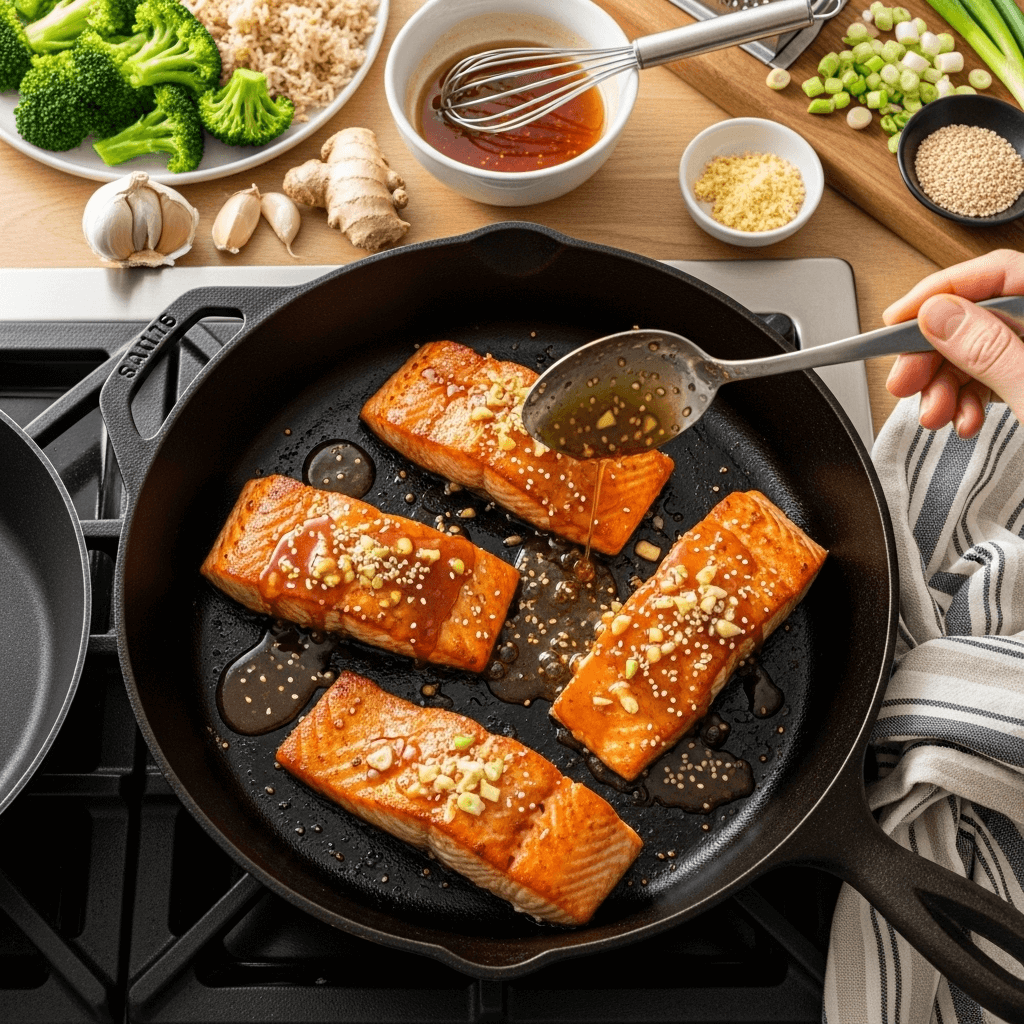
Picture this: perfectly cooked salmon fillets with caramelized edges, glazed in a sticky-sweet honey garlic sauce that’s equal parts savory and indulgent. This Honey Garlic Glazed Salmon is the kind of dish that looks fancy enough for a dinner party but is secretly simple enough for a Tuesday night when you’re tired but still want something special. The glaze creates this beautiful lacquered coating that’s sweet from honey, pungent from garlic, with just the right amount of tang to balance everything out.
If you’ve been intimidated by cooking fish at home, this recipe is your gateway to seafood confidence. Salmon is forgiving, flavorful, and cooks quickly—meaning you’re 20 minutes away from a restaurant-quality meal. The honey garlic glaze is pure magic: it transforms simple salmon into something memorable, creating those gorgeous caramelized bits on top while keeping the fish moist and tender inside. Whether you’re meal prepping for the week, cooking a healthy weeknight dinner, or trying to impress someone special, this recipe delivers every single time. Plus, it’s naturally gluten-free, loaded with omega-3s, and pairs beautifully with just about any side dish you can imagine. This is the salmon recipe you’ll make over and over again.
History / Background
The combination of honey and fish has ancient roots spanning multiple cultures. Archaeological evidence suggests that humans have been sweetening foods with honey for at least 8,000 years, and the practice of glazing fish with sweet sauces dates back centuries across Asian, European, and Middle Eastern cuisines.
In Asian cooking, particularly Chinese and Japanese traditions, glazing fish with sweet and savory sauces has been standard practice for thousands of years. The Chinese developed complex glazes using honey, soy sauce, and aromatics during the Han Dynasty (206 BCE – 220 CE). These techniques emphasized balance—the concept of yin and yang in cooking, where sweet complements savory, creating harmony on the palate. Teriyaki, the famous Japanese glazing technique, follows similar principles, though traditionally it used a mirin and soy sauce base rather than honey.
Garlic’s journey as a culinary staple is equally ancient. Native to Central Asia, garlic spread along trade routes and became essential in Mediterranean, Asian, and eventually global cuisines. The pairing of honey and garlic specifically gained popularity in Chinese-American cuisine during the mid-20th century, when restaurants began adapting traditional Chinese cooking methods to American tastes. Dishes like honey garlic chicken and honey garlic shrimp became takeout favorites, and the flavor combination proved so universally appealing that it transcended its origins.
Salmon itself has been a crucial food source for millennia, particularly for indigenous peoples of the Pacific Northwest, where salmon runs were celebrated and the fish held deep cultural significance. The tradition of cooking salmon over cedar planks with various glazes and seasonings originated with these communities. When European settlers arrived in North America, they adopted salmon into their diets, and it eventually became one of the most popular fish in American cuisine.
The specific honey garlic glazed salmon we enjoy today is a modern fusion creation—it takes the Asian technique of sweet-savory glazing, combines it with Western cooking methods, and applies it to salmon, a fish prized worldwide. This style of preparation gained massive popularity in the 2000s and 2010s as home cooks discovered how quickly and easily salmon could be transformed into something special with just a few simple ingredients. It represents modern home cooking at its best: drawing from global traditions while remaining accessible and achievable for anyone with a skillet and 20 minutes.
Why You’ll Love This Recipe
This Honey Garlic Glazed Salmon is everything you want in a weeknight dinner—quick, healthy, absolutely delicious, and with that wow factor that makes you feel like a culinary genius. It’s the kind of recipe that becomes part of your regular rotation because it checks every single box.
Here’s why this recipe will become your new go-to:
- Lightning fast – From start to finish, you’re looking at just 20 minutes total, making this perfect for busy weeknights
- Incredibly flavorful – The honey garlic glaze is addictively good—sweet, savory, garlicky, with beautiful caramelized edges
- Foolproof cooking – Salmon is forgiving and cooks quickly, so even beginners can nail this
- Restaurant quality – This tastes like a $30 entrée from an upscale restaurant but costs a fraction to make at home
- Healthy and nutritious – Packed with omega-3 fatty acids, protein, and nutrients without feeling like “diet food”
- Naturally gluten-free – No modifications needed for gluten-free diets (just check your soy sauce)
- Low-carb and keto-friendly – With minimal adjustments, this fits perfectly into low-carb eating plans
- Minimal cleanup – Just one pan from start to finish means you’re not stuck washing dishes all night
- Impressive but easy – Looks fancy enough for guests but simple enough for a regular Tuesday
- Kid-approved – The sweet glaze makes fish appealing even to picky eaters
- Meal prep champion – Makes perfect leftovers that actually taste good cold or reheated
- Versatile pairing – Works with countless side dishes from rice to vegetables to salads
Ingredient Notes
Let’s break down what makes this honey garlic glazed salmon so irresistible. Understanding each ingredient helps you make smart choices and substitutions.
Salmon Fillets: Fresh, skin-on salmon fillets are ideal—the skin protects the delicate flesh during cooking and crisps up beautifully. Look for fillets that are about 1-inch thick for even cooking. Wild-caught salmon (like sockeye or coho) has deeper flavor and firmer texture, while farm-raised Atlantic salmon is milder, fattier, and more affordable. Both work perfectly. Check for freshness: the flesh should be firm, moist, and smell like clean ocean water, not fishy. If using frozen, thaw completely in the refrigerator overnight.
Honey: This is the star of your glaze, providing sweetness and creating that gorgeous caramelized coating. Use good quality honey—raw or pure honey has the best flavor. Different honey varieties (wildflower, clover, orange blossom) offer subtle flavor variations, so feel free to experiment. Avoid artificial honey or corn syrup blends. For a refined-sugar-free option, honey works perfectly, though maple syrup can substitute if needed.
Garlic: Fresh garlic is essential for that pungent, aromatic punch. You’ll need 4-5 cloves, minced. The garlic mellows as it cooks in the glaze, becoming sweet and fragrant rather than harsh. Don’t use jarred minced garlic—fresh makes a significant difference in this recipe where garlic is a primary flavor.
Soy Sauce: Adds umami depth and saltiness that balances the honey’s sweetness. Use low-sodium soy sauce so you control the salt level. For gluten-free, use tamari or coconut aminos. Regular soy sauce works but can make the glaze quite salty, so reduce the amount slightly. The soy sauce also adds that beautiful glossy, dark color to the glaze.
Fresh Ginger: Grated fresh ginger adds warmth and a subtle spicy note that complements both the honey and garlic. It also helps cut through the richness of the salmon. Fresh ginger is vastly superior to ground ginger powder for this application. If you absolutely must substitute, use 1/4 teaspoon ground ginger, but fresh is really worth it.
Rice Vinegar: Provides acidity that brightens the glaze and balances the sweetness. Rice vinegar is milder than white vinegar or apple cider vinegar, making it perfect for Asian-inspired dishes. In a pinch, apple cider vinegar or white wine vinegar work, but use slightly less as they’re more acidic.
Sesame Oil: Just a small amount of toasted sesame oil adds nutty, aromatic depth that makes the glaze taste complex and restaurant-quality. Don’t skip this—it’s a small ingredient that makes a big impact. Use toasted (dark) sesame oil, not light sesame oil, for maximum flavor.
Red Pepper Flakes: Optional but recommended for a subtle kick of heat that balances the sweetness. Just a pinch adds complexity without making it spicy. Adjust to your heat preference or omit entirely for kid-friendly versions.
Olive Oil or Vegetable Oil: For searing the salmon. Use an oil with a high smoke point—regular olive oil, avocado oil, or vegetable oil all work well. Extra virgin olive oil can smoke at the higher temperatures needed for searing.
Green Onions and Sesame Seeds: These are garnishes that add fresh flavor, crunch, and visual appeal. Totally optional but make the dish look professional and add nice textural contrast.
Equipment Needed
This recipe requires minimal equipment, making it perfect for any kitchen:
- Large skillet or sauté pan (12-inch is ideal) – Non-stick or well-seasoned cast iron works best for preventing the salmon from sticking. The pan should be large enough to fit all fillets without crowding.
- Small mixing bowl or measuring cup – For mixing the glaze ingredients together
- Whisk or fork – For combining the glaze
- Spatula (thin, flexible metal or fish spatula is ideal) – For flipping the salmon without breaking it
- Tongs – Helpful for handling the salmon fillets
- Instant-read thermometer – Optional but helpful for perfectly cooked salmon (145°F internal temperature)
- Measuring cups and spoons – For accurate ingredient amounts
- Microplane or fine grater – For grating fresh ginger
- Garlic press or sharp knife – For mincing garlic
- Paper towels – For patting salmon dry before cooking
That’s it! No fancy equipment needed—just basic kitchen tools that produce restaurant-quality results.
Print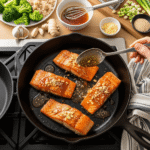
Honey Garlic Glazed Salmon Recipe
- Total Time: 20 minutes
- Yield: 4 servings 1x
- Diet: Gluten Free
Description
Tender, flaky salmon fillets seared to perfection and glazed with a sticky-sweet honey garlic sauce. This restaurant-quality dish comes together in just 20 minutes with simple ingredients and minimal cleanup, making it perfect for healthy weeknight dinners.
Ingredients
For the Salmon:
- 4 salmon fillets (6 ounces each, about 1-inch thick, skin-on or skinless)
- 2 tablespoons olive oil or vegetable oil
- Salt and black pepper to taste
For the Honey Garlic Glaze:
- ⅓ cup honey
- 4-5 cloves garlic, minced (about 2 tablespoons)
- 3 tablespoons low-sodium soy sauce (or tamari for gluten-free)
- 1 tablespoon rice vinegar
- 1 teaspoon fresh ginger, grated
- 1 teaspoon sesame oil
- ¼ teaspoon red pepper flakes (optional, adjust to taste)
- 1 tablespoon water (to thin if needed)
For Garnish:
- 2 green onions, sliced
- 1 tablespoon sesame seeds (white or black)
- Fresh cilantro or parsley (optional)
Instructions
- Prepare the salmon: Pat the salmon fillets completely dry with paper towels—this is crucial for getting a good sear. Season both sides generously with salt and black pepper. Let the salmon sit at room temperature for 10 minutes while you prepare the glaze (this ensures even cooking).
- Make the glaze: In a small bowl, whisk together the honey, minced garlic, soy sauce, rice vinegar, grated ginger, sesame oil, and red pepper flakes (if using) until well combined. Set aside. The glaze will be thick but pourable.
- Heat the pan: Heat the oil in your large skillet over medium-high heat. The pan should be hot enough that a drop of water sizzles immediately, but not smoking. This usually takes 2-3 minutes.
- Sear the salmon: Place the salmon fillets skin-side up (or presentation-side down if skinless) in the hot pan. Don’t move them! Let them cook undisturbed for 4-5 minutes until golden brown on the bottom with crispy edges. The salmon should release easily from the pan when it’s ready to flip—if it’s sticking, it needs more time.
- Flip carefully: Using a thin spatula, carefully flip each fillet. If you’re using skin-on salmon and want crispy skin, flip to skin-side down. Cook for another 3-4 minutes on the second side. The salmon should be about 80% cooked through at this point.
- Add the glaze: Reduce heat to medium-low. Pour the honey garlic glaze over and around the salmon fillets. The glaze will bubble immediately—this is good! Let it cook for 2-3 minutes, spooning the glaze over the salmon repeatedly to coat it evenly. The glaze will thicken and become sticky as the honey caramelizes.
- Check for doneness: The salmon is done when it flakes easily with a fork and reaches an internal temperature of 145°F (medium), or 125°F for medium-rare (many prefer salmon slightly underdone in the center for maximum moisture). The glaze should be thick, sticky, and coating the salmon beautifully.
- Rest briefly: Remove from heat and let the salmon rest for 2 minutes. This allows the juices to redistribute and the glaze to set slightly, creating that perfect glossy coating.
- Garnish and serve: Transfer salmon to plates, drizzle with any remaining glaze from the pan, and garnish with sliced green onions and sesame seeds. Serve immediately while hot.
Notes
- Salmon thickness matters: If your fillets are thinner than 1 inch, reduce cooking time by 1-2 minutes per side. Thicker fillets need an extra minute or two.
- Skin-on vs. skinless: Both work! Skin-on salmon has more flavor and the skin crisps beautifully. Skinless is easier to eat and more kid-friendly.
- Glaze thickness: If your glaze is too thick and starting to burn before the salmon is cooked, add 1-2 tablespoons of water to thin it out.
- Don’t overcook: Salmon continues cooking after you remove it from heat. Pull it just before it’s completely done—carryover cooking will finish it perfectly.
- Gluten-free option: Use tamari or coconut aminos instead of soy sauce.
- Lower sugar option: Reduce honey to 3 tablespoons for a less sweet glaze (it will still caramelize nicely).
- Pan variations: This also works beautifully in a cast iron skillet or even on a grill (use a grill basket for easier flipping).
- Prep Time: 5 minutes
- Cook Time: 15 minutes
- Category: Dinner
- Method: Stovetop
- Cuisine: Asian-American
Nutrition
- Serving Size: 1 salmon fillet (6 ounces) with glaze
- Calories: 385
- Sugar: 18g
- Sodium: 520mg
- Fat: 16g
- Saturated Fat: 2.5g
- Unsaturated Fat: 12g
- Trans Fat: 0g
- Carbohydrates: 20g
- Fiber: 0g
- Protein: 40g
- Cholesterol: 95mg
Nutrition information is approximate and will vary based on specific ingredients and salmon size used.
Tips & Variations
The basic recipe is fantastic, but here are some ways to customize it to your taste:
Spicy Version: Double the red pepper flakes, add sriracha to the glaze, or drizzle with chili oil before serving. For serious heat, add fresh sliced jalapeños to the pan when you add the glaze.
Citrus Twist: Add the zest and juice of one orange or lime to the glaze for bright, citrusy notes. Orange honey glaze is particularly delicious with salmon.
Teriyaki Style: Add 1 tablespoon of mirin to the glaze and increase soy sauce slightly for a more traditional teriyaki flavor profile.
Herb Infusion: Stir fresh chopped herbs like cilantro, basil, or mint into the glaze at the very end for fresh, bright flavor.
Asian Five-Spice: Add ½ teaspoon of Chinese five-spice powder to the glaze for warm, complex flavor.
Maple Glazed: Substitute pure maple syrup for honey for a different sweetness profile with deeper, caramelized notes.
Bourbon Glaze: Add 2 tablespoons of bourbon to the glaze for sophisticated depth (the alcohol cooks off).
Pineapple Addition: Add ¼ cup of pineapple juice to the glaze and garnish with grilled pineapple chunks for tropical vibes.
Lighter Version: Use only 3 tablespoons of honey and increase the rice vinegar to balance. This reduces sugar while maintaining flavor.
Different Proteins: This glaze works beautifully on chicken thighs, pork chops, shrimp, or even tofu. Adjust cooking times accordingly.
Pro Chef Tips
Want to take your honey garlic salmon from great to absolutely phenomenal? Here are professional techniques:
Dry the salmon thoroughly: This is the single most important step for a perfect sear. Moisture is the enemy of browning. Pat with paper towels until completely dry, then let it sit for a few minutes so any remaining moisture evaporates.
Room temperature fish: Taking salmon out of the fridge 15-20 minutes before cooking allows it to cook more evenly. Cold fish goes into a hot pan, the outside overcooks while the inside stays cold. Room temperature fish cooks uniformly.
Score the skin: If cooking skin-on, make a few shallow diagonal cuts through the skin (not into the flesh). This prevents the skin from curling and ensures it crisps evenly.
Hot pan, patient hands: The fish will stick initially, then release naturally when a good sear forms. Trying to flip it too early tears the flesh. Wait until it releases easily on its own—this means the crust is formed.
Control the heat: Too high and the glaze burns before the salmon cooks; too low and you won’t get caramelization. Medium to medium-high is ideal, then reduce when adding glaze.
Baste constantly: Once you add the glaze, use a spoon to continuously pour the bubbling glaze over the salmon. This creates even coating and beautiful color.
Use a fish spatula: These thin, flexible, slotted spatulas are designed specifically for delicate fish. They slide under easily without breaking the fillet.
Aim for medium doneness: Professional chefs typically cook salmon to 125-130°F internal temperature (medium-rare to medium). The center should still be slightly translucent pink. This keeps it moist and tender. Salmon cooked to 145°F (FDA recommendation) is drier but safe for those concerned about undercooked fish.
Fresh glaze ingredients: Don’t use old, crystallized honey or stale garlic. Fresh, high-quality ingredients make a noticeable difference in a simple recipe like this.
Deglaze the pan: After plating the salmon, add a splash of water or wine to the hot pan and scrape up all the caramelized bits. This creates extra glaze to drizzle over the fish and vegetables.
Common Mistakes to Avoid
Even simple recipes can go wrong. Here’s what to watch out for:
Overcooking the salmon: This is the #1 mistake. Overcooked salmon is dry, chalky, and unpleasant. Remember that salmon continues cooking after you remove it from heat (carryover cooking). Pull it from the pan when it’s just barely done or even slightly underdone in the very center—it will be perfect after resting.
Not drying the fish: Wet salmon won’t sear properly—it’ll steam instead, resulting in pale, rubbery fish with no caramelization. Those few extra seconds patting it completely dry make all the difference between mediocre and magnificent.
Moving the fish too soon: Salmon sticks when first placed in the pan, then naturally releases when a proper crust forms. Trying to flip it prematurely tears the flesh. Be patient—when it’s ready, the spatula will slide underneath easily.
Burning the glaze: Honey burns easily. If your heat is too high when you add the glaze, it will scorch and taste bitter instead of caramelizing beautifully. Reduce to medium or medium-low before adding the glaze, and watch it carefully.
Using low-quality honey: Artificial “honey” or corn syrup-based products don’t caramelize properly and lack the complex flavor of real honey. Invest in pure, real honey for this recipe.
Crowding the pan: If fillets are touching, they’ll steam rather than sear. Use a large enough pan or cook in batches. Each fillet needs space for hot air circulation.
Skipping the rest: Cutting into salmon immediately after cooking causes all the juices to flood out onto the plate. Those 2 minutes of resting keep the fish moist and perfect.
Storage & Meal Prep
Good news—this honey garlic salmon is excellent for meal prep and leftovers!
Refrigerator Storage: Store cooled salmon in an airtight container in the refrigerator for up to 3 days. The glaze will firm up when cold but softens again when gently reheated. For best results, store any extra glaze separately and drizzle fresh when serving.
Reheating Tips: Salmon is delicate and dries out easily when reheated. Best methods: (1) Gentle oven reheating—place salmon in a baking dish, cover with foil, heat at 275°F for 10-15 minutes, (2) Microwave at 50% power in 30-second intervals until just warmed through, or (3) Enjoy it cold! Honey garlic salmon is actually delicious cold on salads or grain bowls.
Meal Prep Strategy: Cook salmon on Sunday and portion with your chosen sides (rice, quinoa, vegetables) into meal prep containers. The honey garlic glaze keeps the salmon moist even after a few days in the fridge. When ready to eat, reheat gently or eat cold—both are delicious.
Cold Preparations: Leftover honey garlic salmon flakes beautifully over salads, makes excellent salmon bowls, can be turned into salmon cakes, or eaten straight from the fridge as a high-protein snack.
Texture Changes: Reheated salmon won’t have that crispy exterior of fresh, but the flavor remains excellent. The honey glaze actually helps keep it moist during storage.
Make-Ahead & Freezer Notes
Planning ahead? Here’s how to prep this recipe in advance:
Glaze Ahead: Make the honey garlic glaze up to 3 days in advance. Store in a jar in the refrigerator. Give it a good stir before using as ingredients may separate slightly.
Marinating: You can marinate the salmon in half the glaze for 30 minutes to 2 hours before cooking (don’t go longer or the acid will start “cooking” the fish). Pat dry before searing, then use fresh glaze for cooking.
Partial Prep: Measure and mix your glaze ingredients, portion and season your salmon, and store everything separately in the fridge. When ready to cook, you’re just 15 minutes from dinner.
Freezing Raw Salmon: Fresh salmon freezes well. Wrap tightly in plastic wrap, then aluminum foil, and freeze for up to 3 months. Thaw in the refrigerator overnight before using. Don’t refreeze previously frozen salmon.
Freezing Cooked Salmon: While possible, cooked salmon’s texture suffers when frozen. If you must freeze leftovers, wrap tightly and freeze for up to 1 month. Thaw in the refrigerator and reheat very gently, or eat cold.
Best Make-Ahead Strategy: For optimal results, prep the glaze ahead but cook the salmon fresh. Salmon only takes 15 minutes to cook, and the texture and flavor are significantly better when freshly made.
Freezing the Glaze: The honey garlic glaze freezes beautifully for up to 3 months. Freeze in ice cube trays for perfect single-serving portions, then transfer to a freezer bag. Thaw and use as needed.
Serving Suggestions
This honey garlic glazed salmon pairs beautifully with countless sides. Here’s how to build a complete, balanced meal:
Grain Options: Jasmine rice, brown rice, coconut rice, quinoa, or wild rice all complement the sweet-savory glaze. The grains soak up any extra glaze perfectly. Cauliflower rice works for low-carb eaters.
Vegetable Sides: Roasted asparagus, steamed broccoli, sautéed bok choy, roasted Brussels sprouts, green beans with garlic, or stir-fried snow peas all pair wonderfully. Asian-style vegetables work particularly well given the flavor profile.
Salads: A fresh, crunchy salad provides contrast to the rich salmon. Try Asian sesame cucumber salad, simple mixed greens with ginger dressing, seaweed salad, or cabbage slaw.
Noodles: Serve over rice noodles, soba noodles, or even regular pasta for a fusion twist. The honey garlic glaze coats noodles beautifully.
Potatoes: Roasted baby potatoes, mashed sweet potatoes, or even regular mashed potatoes provide comfort food vibes.
Complete Bowl Meals: Build Buddha bowls or grain bowls with salmon, rice or quinoa, steamed edamame, cucumber, avocado, shredded carrots, and a drizzle of extra glaze.
Beverages: Crisp white wines like Sauvignon Blanc, Pinot Grigio, or Riesling complement the sweet glaze. For non-alcoholic options, try iced green tea, ginger lemonade, or sparkling water with lime.
Dinner Menu Ideas:
- Weeknight Simple: Honey garlic salmon, steamed rice, roasted broccoli
- Meal Prep: Salmon with quinoa, roasted vegetables, and edamame
- Date Night: Salmon with mashed sweet potatoes, asparagus, white wine
- Asian-Inspired: Salmon over rice noodles with bok choy and sesame cucumber salad
FAQs Section
How do I know when salmon is done?
Salmon is done when it reaches an internal temperature of 145°F (FDA recommendation) and flakes easily with a fork. However, many people prefer salmon cooked to 125-130°F for a more moist, slightly translucent center. The flesh should be opaque and separate into flakes when gently pressed. If white albumin (protein) starts oozing out, you’ve slightly overcooked it—still safe to eat but may be drier.
Can I use frozen salmon?
Absolutely! Just thaw it completely first. The best method is overnight in the refrigerator. For quicker thawing, seal the salmon in a plastic bag and submerge in cold water, changing the water every 30 minutes until thawed (takes 1-2 hours). Never thaw at room temperature or use hot water. Pat thawed salmon very dry before cooking.
Do I have to use skin-on salmon?
No! Skinless works perfectly. Skin-on salmon has advantages—the skin protects the delicate flesh during cooking and crisps up beautifully if you cook it skin-side down. But skinless is easier to eat and more kid-friendly. Choose based on your preference.
Can I bake this instead of pan-searing?
Yes! Preheat oven to 425°F. Place salmon on a lined baking sheet, brush with half the glaze, and bake for 10-12 minutes. Remove from oven, brush with remaining glaze, and broil for 2-3 minutes until caramelized (watch carefully—broilers vary!). The texture will be different (no crispy seared crust) but still delicious.
Is it okay if the center is still pink?
Yes! Perfectly cooked salmon has a slightly translucent pink center. This is actually preferred by most chefs and keeps the fish moist and tender. As long as it reaches 125-130°F internal temperature, it’s safe to eat. If you prefer it fully cooked through, go to 145°F, but it will be drier.
Can I make this for a crowd?
Definitely! The recipe scales easily. For larger quantities, you may need to work in batches (don’t overcrowd the pan) or use multiple skillets. You can also finish the salmon in a 400°F oven after searing—sear both sides in the pan, transfer to a baking sheet, brush with glaze, and bake 5-7 minutes until done.
What if I don’t have rice vinegar?
Apple cider vinegar or white wine vinegar work, but use only 2 teaspoons instead of 1 tablespoon since they’re more acidic. Lemon juice (about 1 tablespoon) also works beautifully and adds nice citrus notes.
Conclusion
And there you have it—your new secret weapon for quick, healthy, absolutely delicious dinners that’ll make you look like a culinary genius! This Honey Garlic Glazed Salmon proves that restaurant-quality meals don’t require hours in the kitchen or complicated techniques. With just 20 minutes, a handful of simple ingredients, and one pan, you can create something truly special that’s both impressive and nourishing.
The beauty of this recipe lies in its perfect balance—sweet yet savory, simple yet sophisticated, quick yet memorable. Whether you’re cooking for picky kids who need the sweetness to embrace fish, meal prepping for healthy lunches all week, or whipping up an impressive date-night dinner, this honey garlic salmon delivers on every level. And once you’ve mastered the basic technique, the variations are endless—spice it up, add citrus, try different glazes, or experiment with sides.
I’d absolutely love to hear about your honey garlic salmon success stories! Did you add extra garlic because you’re obsessed like me? Try it with the spicy variation? Serve it over coconut rice? Drop a comment below and share your experience. And if this becomes a regular in your dinner rotation (which I’m confident it will!), please pin it to your Pinterest boards so you can find it easily whenever you need a reliable, healthy dinner solution. Share it with your friends who are trying to eat more fish or anyone who needs foolproof weeknight recipes—they’ll thank you!
Now grab that salmon, heat up your skillet, and get ready to impress yourself with how easy it is to make something this good. Your kitchen is about to smell amazing, and dinner is going to be absolutely spectacular!