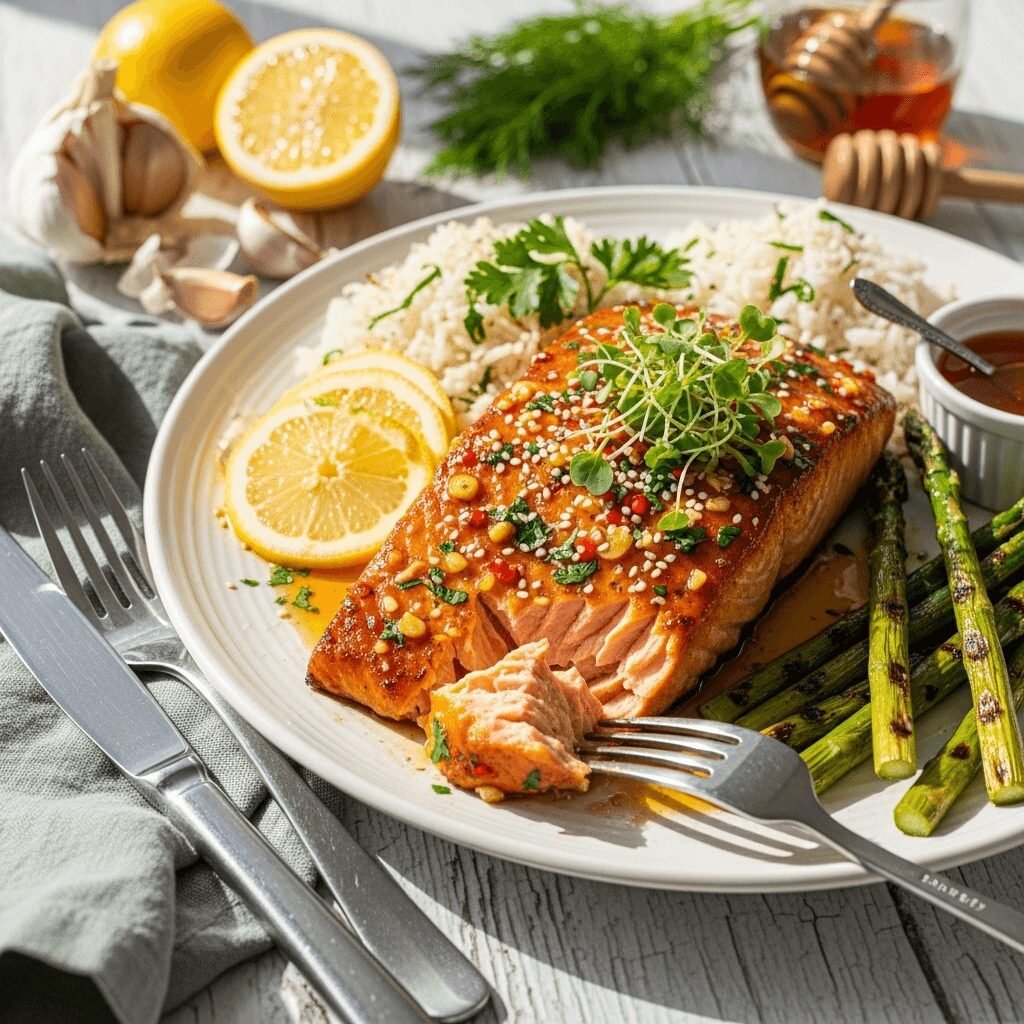
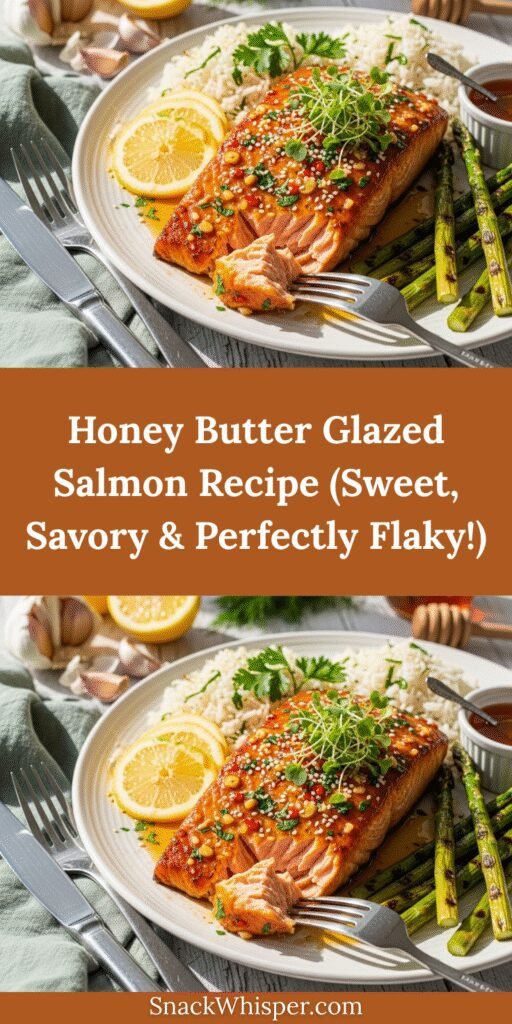
If you’re looking for a dinner recipe that’s equal parts elegant and effortless, this Honey Butter Glazed Salmon is about to become your go-to seafood dish! Imagine perfectly flaky, tender salmon fillets coated in a luscious sweet-and-savory glaze made with golden honey, rich butter, and aromatic garlic. The glaze caramelizes beautifully under the broiler or in the oven, creating a gorgeous golden crust while keeping the salmon moist and succulent inside.
This recipe is perfect for busy weeknights when you need something impressive in under 20 minutes, romantic date nights at home when you want restaurant-quality food without the price tag, special occasions when you’re entertaining but don’t want to stress in the kitchen, or healthy meal prep sessions when you need protein-packed lunches for the week. The combination of honey’s natural sweetness with butter’s richness creates a glaze that’s absolutely irresistible, complementing salmon’s naturally rich, buttery flavor without overpowering it.
What makes this recipe truly special is its simplicity—just a handful of ingredients transform into something that looks and tastes like it came from an upscale restaurant. The honey caramelizes into a beautiful golden-brown glaze, the butter adds luxurious richness and helps the salmon stay incredibly moist, and a hint of garlic and lemon brings everything into perfect balance. Plus, salmon is one of the healthiest proteins you can eat, packed with omega-3 fatty acids, high-quality protein, and essential nutrients. Whether you serve it over rice, with roasted vegetables, alongside a fresh salad, or with creamy mashed potatoes, this honey butter glazed salmon delivers impressive flavor with minimal effort every single time!
History / Background
Honey-glazed salmon represents a beautiful convergence of ancient cooking techniques and modern culinary innovation. While there’s no single origin story for this specific preparation, it draws from multiple culinary traditions that span continents and centuries.
Salmon itself has been a crucial food source for thousands of years, particularly for indigenous peoples of the Pacific Northwest, Alaska, and Northern Europe. Native American tribes along the Columbia River and Pacific Coast developed sophisticated methods for catching, preserving, and cooking salmon long before European contact. Traditional preparations often included cedar plank grilling and smoking, techniques that are still celebrated today.
The use of honey as both a preservative and flavor enhancer dates back to ancient civilizations. Egyptians, Greeks, and Romans all used honey to glaze meats and fish, discovering that honey’s natural sugars caramelize beautifully when exposed to heat, creating complex flavors and appealing textures. In medieval European cooking, honey-based glazes were common for both savory and sweet dishes, often combined with spices and herbs.
The specific combination of honey and butter as a glaze reflects modern American and European cooking styles that emerged in the latter half of the 20th century. As home cooks became more adventurous with flavors and techniques, the marriage of sweet and savory became increasingly popular. Honey butter glazes gained particular prominence in the 1980s and 1990s as restaurant chefs began showcasing salmon as an upscale menu item, moving it from special-occasion food to mainstream favorite.
The Pacific Northwest, particularly Seattle and Portland, played a significant role in popularizing honey-glazed salmon preparations. With abundant access to fresh wild salmon and a growing foodie culture, chefs in these regions experimented with Asian-inspired sweet glazes (think teriyaki and miso) alongside European butter-based techniques. The result was a fusion approach that highlighted salmon’s natural richness while adding layers of complementary flavor.
Today, honey butter glazed salmon has become a Pinterest sensation and a weeknight dinner staple for home cooks across America. It represents everything modern home cooking aspires to be: quick, healthy, elegant, and absolutely delicious. The recipe proves that sophisticated flavors don’t require complicated techniques—sometimes the best dishes come from simple, quality ingredients treated with care!
Why You’ll Love This Recipe
This Honey Butter Glazed Salmon isn’t just another fish recipe—it’s a complete game-changer that will make you excited about cooking seafood at home. It’s the kind of dish that impresses everyone while keeping you completely stress-free in the kitchen.
Here’s why this recipe will become your favorite way to cook salmon:
- Ready in 15 Minutes – From start to finish, this complete meal comes together faster than ordering takeout
- Restaurant-Quality Results – Tastes like something you’d pay $30 for at a fancy seafood restaurant
- Incredibly Easy – Perfect for beginners with foolproof instructions that guarantee success every time
- Naturally Healthy – Packed with omega-3s, high-quality protein, and essential nutrients with no refined ingredients
- Sweet & Savory Perfection – The honey-butter combination creates an addictive flavor that appeals to everyone, even seafood skeptics
- Beautiful Presentation – That caramelized glaze looks absolutely stunning, making it perfect for entertaining
- Diet-Friendly – Naturally gluten-free, low-carb, keto-friendly, and easily adaptable for various dietary needs
- Kid-Approved – The sweet glaze makes this appealing even to picky eaters who usually resist fish
- Budget-Conscious – While salmon isn’t the cheapest protein, this recipe stretches it beautifully with simple pantry ingredients
- Versatile Serving – Pairs with countless side dishes from vegetables to grains to potatoes
- Meal Prep Champion – Makes excellent leftovers and reheats beautifully for lunches all week
- No Fishy Smell – The honey butter glaze eliminates any strong fish odors, keeping your kitchen smelling amazing
- Minimal Cleanup – Just one baking sheet or pan, making cleanup a breeze
Ingredient Notes
Let’s break down each ingredient and understand what makes this dish so incredibly delicious:
Salmon Fillets – The star of the show! Use center-cut salmon fillets (6-8 oz each) for best results. Look for wild-caught Alaskan or Pacific salmon when possible for superior flavor and sustainability, though farmed Atlantic salmon works well too. Skin-on or skinless both work—skin-on stays more moist and the skin crisps up beautifully. Fresh is ideal, but high-quality frozen salmon (fully thawed) works perfectly.
Honey – Provides natural sweetness and creates that gorgeous caramelized glaze. Use pure, good-quality honey—the flavor really shines through. Different varieties like clover, wildflower, or orange blossom will add subtle flavor variations. Avoid artificial honey or honey blends. For a slightly different flavor profile, maple syrup can substitute, though it will be less viscous.
Butter – Adds luxurious richness, helps the glaze coat the salmon, and keeps the fish incredibly moist. Unsalted butter is preferred so you can control the seasoning. The butter also helps achieve that golden-brown caramelization. For dairy-free, use ghee or high-quality plant-based butter (though the flavor will be slightly different).
Garlic – Fresh minced garlic adds aromatic depth and savory complexity that balances the sweetness. Use 2-3 cloves depending on your garlic love level. Fresh is essential here—don’t substitute with garlic powder as it won’t integrate into the glaze properly. The garlic mellows as it cooks, becoming sweet and fragrant.
Soy Sauce – Adds umami depth, saltiness, and a subtle Asian-inspired note that complements salmon beautifully. Use regular or low-sodium soy sauce depending on your salt preference. For gluten-free, substitute with tamari or coconut aminos. This ingredient is what transforms the glaze from simply sweet to complex and savory.
Fresh Lemon – Lemon juice adds brightness and acidity that cuts through the richness and prevents the glaze from tasting too sweet. Lemon zest adds even more citrus punch if you want extra flavor. Always use fresh lemon—bottled juice tastes artificial and won’t provide the same fresh brightness.
Dijon Mustard (Optional) – Just a touch adds tangy complexity and helps the glaze emulsify, creating a smoother texture. It’s subtle enough that you won’t taste “mustard” but it adds important depth. Can be omitted if you don’t have it.
Red Pepper Flakes (Optional) – A pinch adds subtle warmth without making the dish spicy. Perfect for adults while still keeping it kid-friendly. Adjust to your heat preference or omit entirely.
Fresh Herbs – Fresh parsley, dill, or chives for garnish add color, freshness, and a slight herbal note. Dill is particularly traditional with salmon. Fresh thyme or rosemary also work beautifully.
Salt & Black Pepper – Essential for seasoning the salmon before cooking. Don’t skip this step—it builds foundational flavor.
Equipment Needed
You’ll need just a few basic kitchen tools:
- Rimmed Baking Sheet – For oven-baked salmon. Line with parchment paper or aluminum foil for easy cleanup.
- OR Large Oven-Safe Skillet – If using the stovetop-to-oven method. Cast iron works beautifully.
- Small Saucepan or Microwave-Safe Bowl – For making the honey butter glaze.
- Whisk or Fork – To combine the glaze ingredients smoothly.
- Basting Brush or Spoon – For applying glaze to the salmon.
- Sharp Knife – For mincing garlic and slicing lemon.
- Cutting Board – For prep work.
- Measuring Cups & Spoons – For accurate ingredient measurements.
- Paper Towels – For patting salmon dry before cooking (crucial for proper searing if pan-searing).
- Spatula or Fish Turner – For serving the delicate salmon without breaking it.
- Instant-Read Thermometer (optional but helpful) – Ensures salmon is cooked to perfect doneness at 145°F.

Honey Butter Glazed Salmon Recipe
- Total Time: 17 minutes
- Yield: 4 servings 1x
- Diet: Gluten Free
Description
Tender, flaky salmon fillets coated in a sweet and savory honey butter glaze that caramelizes into a gorgeous golden crust. This restaurant-quality dish comes together in just 17 minutes with simple pantry ingredients—perfect for easy weeknight dinners or impressive entertaining!
Ingredients
For the Salmon:
- 4 salmon fillets (6-8 oz each, about 1-1½ inches thick)
- ½ teaspoon salt
- ¼ teaspoon black pepper
- 1 tablespoon olive oil (if pan-searing)
For the Honey Butter Glaze:
- ¼ cup honey
- 3 tablespoons unsalted butter
- 3 cloves garlic, minced
- 2 tablespoons soy sauce (or tamari for gluten-free)
- 1 tablespoon fresh lemon juice
- 1 teaspoon Dijon mustard (optional, but recommended)
- ¼ teaspoon red pepper flakes (optional, for subtle heat)
For Garnish:
- 2 tablespoons fresh parsley or dill, chopped
- Lemon wedges
- Sesame seeds (optional)
- Extra lemon zest (optional)
Instructions
Step 1: Prepare the Salmon
Preheat your oven to 400°F (200°C). Line a rimmed baking sheet with parchment paper or lightly greased aluminum foil. Pat the salmon fillets completely dry with paper towels—this is important for proper browning. Season both sides with salt and black pepper. Arrange salmon on the prepared baking sheet, skin-side down if using skin-on fillets, spacing them at least 2 inches apart.
Step 2: Make the Honey Butter Glaze
In a small saucepan over medium-low heat, melt the butter. Add the minced garlic and sauté for 30-45 seconds until fragrant but not browned. Remove from heat and whisk in the honey, soy sauce, lemon juice, Dijon mustard (if using), and red pepper flakes. Whisk until smooth and well combined. The glaze should be pourable but slightly thick. Set aside about 2 tablespoons of glaze for serving (to avoid cross-contamination with raw fish).
Step 3: Glaze the Salmon
Using a basting brush or spoon, generously coat the top of each salmon fillet with about half of the honey butter glaze. Make sure the entire surface is covered—the glaze will caramelize beautifully as it cooks.
Step 4: Bake the Salmon
Place the baking sheet in the preheated oven and bake for 8-10 minutes, depending on thickness. After 8 minutes, brush the salmon with more glaze (from the portion that touched raw fish). Continue baking for another 2-4 minutes until the salmon is just cooked through and flakes easily with a fork. The internal temperature should reach 145°F on an instant-read thermometer. Don’t overcook—salmon should still be slightly translucent in the very center when you remove it from the oven; carryover cooking will finish it perfectly.
Step 5: Optional Broiler Finish
For extra caramelization and a gorgeous golden-brown glaze, turn your oven to broil (high setting) and broil for 1-2 minutes, watching carefully to prevent burning. The glaze should bubble and darken slightly, creating a beautiful caramelized crust. This step is optional but highly recommended for that restaurant-quality appearance!
Step 6: Rest and Serve
Remove from the oven and let the salmon rest for 2-3 minutes. The glaze will thicken slightly as it cools. Drizzle with the reserved clean glaze, garnish with fresh chopped herbs, lemon wedges, and sesame seeds if desired. Serve immediately with your favorite sides!
Notes
- Thickness matters: Adjust cooking time based on fillet thickness. Thinner fillets (¾ inch) need only 8-10 minutes total; thicker fillets (1½ inches) may need 12-14 minutes.
- Don’t overcook: Salmon continues cooking after you remove it from heat. Take it out when it’s slightly underdone in the center.
- Skin-on vs. skinless: Both work! Skin helps protect the fish from drying out and crisps up beautifully. If using skinless, watch cooking time closely.
- Pan-searing method: Heat oil in an oven-safe skillet over medium-high heat. Sear salmon skin-side up for 3 minutes, flip, brush with glaze, then transfer skillet to oven for 6-8 minutes.
- Make extra glaze: Double the glaze recipe if you love extra sauce for drizzling over rice or vegetables.
- Glaze consistency: If your glaze is too thick, thin with a teaspoon of water. If too thin, simmer for 1-2 minutes to reduce.
- Check doneness: Salmon is done when it flakes easily and the internal temperature reaches 145°F. It should be opaque on the outside but can have a slightly translucent center for perfect moistness.
- Prep Time: 5 minutes
- Cook Time: 12 minutes
- Category: Dinner, Main Course
- Method: Baking (or Pan-Searing)
- Cuisine: American, Asian-Inspired
Nutrition
- Serving Size: 1 salmon fillet with glaze
- Calories: 385
- Sugar: 17g
- Sodium: 620mg
- Fat: 21g
- Saturated Fat: 7g
- Unsaturated Fat: 12g
- Trans Fat: 0g
- Carbohydrates: 19g
- Fiber: 0g
- Protein: 34g
- Cholesterol: 105mg
Nutritional values are approximate and may vary based on specific salmon type and portion sizes. Values include the full glaze amount.
Tips & Variations
Flavor Variations:
- Asian-Inspired: Add 1 teaspoon sesame oil to glaze and garnish with sesame seeds and sliced green onions
- Spicy Honey: Add 1-2 teaspoons sriracha or gochujang to the glaze for a spicy kick
- Maple Bourbon: Replace honey with maple syrup and add 1 tablespoon bourbon for sophisticated depth
- Citrus Herb: Add orange juice and zest with fresh thyme for a bright, herby version
- Ginger Honey: Add 1 tablespoon freshly grated ginger to the glaze for warming spice
- Balsamic Honey: Add 1 tablespoon balsamic vinegar for tangy complexity
Cooking Method Variations:
- Grilled: Brush glaze on salmon and grill over medium-high heat for 4-5 minutes per side
- Air Fryer: Cook at 400°F for 8-10 minutes, brushing with glaze halfway through
- Stovetop Only: Pan-sear on both sides, reduce heat, add glaze, cover, and cook 3-4 minutes
- Cedar Plank: Soak cedar plank, place salmon on it, brush with glaze, and grill for 12-15 minutes
Protein Swaps:
- Chicken: Use chicken breasts or thighs (increase cooking time to 20-25 minutes)
- Pork Chops: Works beautifully with thick-cut pork chops
- Shrimp: Use for quick-cooking shrimp (reduce time to 6-8 minutes total)
- Cod or Halibut: Any firm white fish works (may need slightly longer cooking)
Dietary Modifications:
- Sugar-Free: Use sugar-free honey alternative or monk fruit sweetener
- Dairy-Free: Replace butter with olive oil, coconut oil, or ghee
- Paleo: Use coconut aminos instead of soy sauce
- Whole30: Use coconut aminos, omit honey (or use compliant sweetener)
- Low-Sodium: Use low-sodium soy sauce and reduce added salt
Pro Chef Tips
1. Dry Fish = Better Searing: The single most important step for restaurant-quality salmon is starting with completely dry fish. Pat both sides thoroughly with paper towels and let sit for 5 minutes before cooking. Surface moisture creates steam instead of caramelization, preventing that gorgeous golden crust.
2. Room Temperature Fish Cooks Evenly: Remove salmon from the refrigerator 15-20 minutes before cooking and let it come to room temperature. Cold salmon thrown into a hot oven cooks unevenly—the outside overcooks while the center stays raw. Room temperature salmon cooks uniformly throughout.
3. Choose Similar-Sized Fillets: When buying salmon, select fillets that are similar in thickness so they cook at the same rate. If your fillets vary significantly, check the thinner ones a few minutes earlier to prevent overcooking.
4. Don’t Fear Slight Undercooking: Salmon continues cooking from residual heat after you remove it from the oven (called carryover cooking). Pull it out when it’s 90% done—still slightly translucent in the very center. It will finish cooking to perfection as it rests and stay incredibly moist.
5. Use a Meat Thermometer: For perfect results every time, use an instant-read thermometer. Salmon is technically done at 145°F according to FDA guidelines, but many chefs prefer 125-130°F for medium-rare (moist and tender) or 135-140°F for medium (still juicy but more cooked through). Find your personal preference!
6. Make Glaze in Advance: The honey butter glaze can be made up to 3 days ahead and refrigerated. Simply reheat gently before using. This saves time on busy weeknights and allows flavors to meld even more.
7. Save That Glaze: Any glaze that hasn’t touched raw fish can be drizzled over the cooked salmon or used as a sauce for vegetables and rice. Reserve some in a separate bowl before brushing on raw fish to avoid cross-contamination.
8. Watch the Broiler Like a Hawk: If you’re using the broiler to caramelize the glaze, stay right there and watch it carefully. Honey burns quickly, and the difference between beautifully caramelized and burnt happens in seconds. 1-2 minutes is usually perfect—you want bubbling, golden-brown glaze, not black char.
Common Mistakes to Avoid
1. Overcooking the Salmon: This is the number one mistake people make with salmon! Overcooked salmon becomes dry, chalky, and loses its beautiful buttery texture. Salmon cooks quickly—usually 10-12 minutes total depending on thickness. Remove it when it’s barely done in the center; carryover cooking will finish it perfectly.
2. Not Patting the Salmon Dry: Wet salmon won’t brown properly and the glaze won’t adhere well. Always thoroughly pat both sides with paper towels before seasoning and cooking. This simple step makes a huge difference in the final texture and appearance.
3. Using Too Much Heat: Salmon is delicate and cooks best at moderate temperatures. Too high heat causes the outside to overcook before the inside is done, and honey glazes burn easily at high temperatures. Stick to 400°F for baking and medium heat for stovetop cooking.
4. Burning the Garlic: When making the glaze, garlic burns easily and becomes bitter. Always cook garlic on medium-low heat for just 30-45 seconds until fragrant, then immediately add the other glaze ingredients to stop the cooking. If you see the garlic browning quickly, it’s too hot!
5. Skipping the Resting Period: Just like steak, salmon needs a few minutes to rest after cooking. This allows the juices to redistribute throughout the fillet. If you cut into it immediately, all those delicious juices run out onto the plate instead of staying in the fish.
6. Crowding the Pan: If baking multiple fillets, leave at least 2 inches of space between them. Crowding causes steam buildup, which prevents proper browning and makes the glaze soggy instead of caramelized. Use a larger pan or bake in batches if necessary.
7. Using Low-Quality Salmon: Salmon quality matters significantly. Old or poor-quality salmon has a strong “fishy” smell and taste that no glaze can mask. Choose fresh, high-quality salmon from a reputable source. It should smell like the ocean—clean and fresh—never “fishy” or sour.
Storage & Meal Prep
Refrigerator Storage:
Store leftover honey butter glazed salmon in an airtight container in the refrigerator for up to 3 days. The salmon stays delicious and the flavors actually deepen overnight as the glaze continues to season the fish. Keep any extra glaze in a separate container and drizzle over when serving.
Reheating Instructions:
The best reheating method preserves moisture: preheat your oven to 275°F, place salmon on a baking sheet, cover loosely with foil, and warm for 10-15 minutes until just heated through. Don’t overheat or the salmon will dry out. You can also reheat gently in the microwave at 50% power for 60-90 seconds, though the texture won’t be quite as good. For cold preparations, leftover salmon is delicious served chilled over salads!
Meal Prep Tips:
This recipe is excellent for weekly meal prep! Cook a batch on Sunday and portion into individual containers with your choice of sides (rice, quinoa, roasted vegetables). The salmon reheats beautifully and makes healthy, protein-packed lunches. Store the glaze separately and add just before eating for best texture.
Cold Salmon Uses:
Leftover salmon is versatile served cold! Flake it over salads, make salmon salad (like tuna salad), add to grain bowls, stuff into wraps, or serve on bagels with cream cheese. The honey butter flavor works surprisingly well in these cold applications.
Portioning for Meal Prep:
If meal prepping, consider portioning individual fillets rather than one large piece. Individual portions reheat more evenly and make grab-and-go lunches easier. Store each fillet with its own serving of vegetables and grain for complete, balanced meals.
Make-Ahead & Freezer Notes
Make-Ahead Preparation:
You can prepare components in advance: make the honey butter glaze up to 3 days ahead and refrigerate (reheat gently before using), season the salmon and refrigerate covered for up to 24 hours. When ready to cook, let salmon sit at room temperature for 15 minutes, then proceed with glazing and baking. The actual cooking is so quick (17 minutes) that full advance cooking usually isn’t necessary.
Marinating the Salmon:
For even more flavor, you can marinate the salmon in half the glaze for 30 minutes to 2 hours before cooking. This infuses the fish with flavor throughout. Pat dry before baking and use fresh glaze for brushing during cooking.
Freezing Raw Salmon:
Fresh salmon can be frozen with or without the glaze. To freeze with glaze: place salmon in a freezer bag, add uncooked glaze, remove air, and freeze flat for up to 3 months. Thaw overnight in refrigerator, then cook as directed. The marinade helps protect the fish from freezer burn and adds incredible flavor.
Freezing Cooked Salmon:
Cooked honey butter glazed salmon freezes reasonably well for up to 2 months, though the texture won’t be quite as perfect as fresh. Let cool completely, wrap tightly in plastic wrap, then aluminum foil, or use freezer-safe containers. The glaze helps keep the salmon moist during freezing.
Best Reheating from Frozen:
For best results with frozen cooked salmon, thaw overnight in the refrigerator before reheating gently in a 275°F oven for 12-15 minutes. You can also reheat from frozen—add 5-10 minutes to the reheating time and cover with foil to prevent drying. Brush with a bit of extra honey butter glaze before reheating to restore moisture.
Serving Suggestions
This versatile honey butter glazed salmon pairs beautifully with so many different sides! Here are some delicious serving ideas:
Rice & Grains:
- White or Brown Rice – Classic pairing that soaks up the extra glaze perfectly
- Coconut Rice – Slightly sweet rice complements the honey glaze beautifully
- Quinoa – Nutty, protein-packed grain for a healthy base
- Rice Pilaf – Herbed rice adds elegance to the meal
- Cauliflower Rice – Low-carb, keto-friendly alternative
Vegetables:
- Roasted Asparagus – Classic upscale pairing with lemon
- Garlic Green Beans – Simple, fresh, and complementary
- Roasted Brussels Sprouts – Caramelized edges match the glazed salmon
- Honey Roasted Carrots – Double down on the honey sweetness
- Broccoli – Steamed or roasted, always a healthy choice
- Zucchini Noodles – Light, fresh, low-carb option
Potatoes:
- Garlic Mashed Potatoes – Creamy, comforting classic
- Roasted Baby Potatoes – Crispy outside, fluffy inside
- Sweet Potato Mash – Natural sweetness complements the glaze
- Potato Wedges – Casual, family-friendly side
Salads:
- Arugula Salad with Lemon Vinaigrette – Peppery greens cut through richness
- Asian Cucumber Salad – Cool, refreshing, tangy contrast
- Simple Green Salad – Light and fresh
- Spinach Salad with Strawberries – Fruity sweetness works surprisingly well
- Kale Caesar Salad – Robust, flavorful green
Complete Meal Ideas:
- Serve over coconut rice with roasted asparagus and a side salad for elegant dinner
- Plate with garlic mashed potatoes, green beans, and dinner rolls for comfort food feast
- Create an Asian-inspired bowl with white rice, edamame, cucumber, and sesame seeds
- Make it Mediterranean with quinoa, roasted vegetables, and tzatziki
- Keep it simple with zucchini noodles and cherry tomatoes for light, healthy meal
Beverage Pairings:
- White Wine: Chardonnay, Sauvignon Blanc, or Pinot Grigio all pair beautifully
- Rosé: Dry rosé complements the sweet-savory balance
- Sparkling Water with Lemon: Refreshing and palate-cleansing
- Iced Tea: Unsweetened or lightly sweetened works well
FAQs Section
Q: Can I use frozen salmon for this recipe?
A: Absolutely! Just make sure to thaw it completely first. The best method is thawing overnight in the refrigerator on a plate to catch any drips. In a pinch, you can thaw sealed salmon in cold water for 30-60 minutes. Pat completely dry before cooking—frozen salmon releases more moisture, so thorough drying is especially important.
Q: How do I know when salmon is done?
A: Salmon is perfectly cooked when it reaches 145°F internal temperature (125-135°F for medium-rare if you prefer). Visually, it should be opaque on the outside and can be slightly translucent in the very center. It should flake easily when gently pressed with a fork. The flesh should look moist, not dry or chalky. When in doubt, slightly underdone is better than overdone!
Q: Can I make this without butter (dairy-free)?
A: Yes! Replace butter with olive oil, avocado oil, coconut oil, or ghee (if you tolerate ghee). The flavor will be slightly different but still delicious. Coconut oil adds a subtle tropical note that works surprisingly well. You can also use high-quality plant-based butter alternatives.
Q: My glaze seems too thin/thick—what should I do?
A: Glaze consistency can vary based on honey type and temperature. If too thin, simmer the glaze for 1-2 minutes to reduce and thicken, or add an extra teaspoon of honey. If too thick, thin with a teaspoon of water, lemon juice, or broth. The glaze should be pourable but coat the back of a spoon.
Q: Can I use this glaze on other proteins?
A: Absolutely! This honey butter glaze is incredibly versatile. It works beautifully on chicken breasts or thighs (increase cooking time to 25-30 minutes), pork chops (20-25 minutes), shrimp (6-8 minutes), or even tofu for a vegetarian option. The cooking times will vary, but the glaze works universally well.
Q: What’s the best type of salmon to use?
A: Wild-caught Alaskan or Pacific salmon (sockeye, coho, king) has the best flavor and is more sustainable, though it’s pricier. Farmed Atlantic salmon is more affordable and widely available—it works perfectly well and has a milder flavor. Choose center-cut fillets for the most even thickness and cooking. Avoid tail pieces which are thinner and cook unevenly.
Q: Can I prepare the glaze ahead of time?
A: Yes! The honey butter glaze can be made up to 3 days in advance and stored in an airtight container in the refrigerator. It will solidify when cold (butter does that), so gently reheat in the microwave for 15-20 seconds or in a small saucepan over low heat, stirring until smooth and pourable again.
Q: Why is my glaze burning in the oven?
A: Honey contains natural sugars that caramelize and can burn at high temperatures. Make sure your oven isn’t running too hot (use an oven thermometer to verify). If using the broiler, watch it constantly—the difference between caramelized and burnt happens in seconds. Position the rack in the center of the oven, not too close to the heat source. If your glaze consistently burns, reduce oven temperature to 375°F and cook slightly longer.
Conclusion
And there you have it—your complete guide to making the most spectacular Honey Butter Glazed Salmon that rivals any restaurant! This recipe proves that elegant, healthy, delicious dinners don’t have to be complicated or time-consuming. With just a handful of simple ingredients and less than 20 minutes, you can create a meal that looks stunning, tastes incredible, and nourishes your body with high-quality protein and healthy omega-3 fats.
The magic of this dish lies in that perfect sweet-savory balance—the honey caramelizes into a gorgeous golden glaze, the butter keeps everything luxuriously moist and rich, and the hint of garlic and lemon brings all the flavors into perfect harmony. It’s comfort food that happens to be healthy, and fancy food that’s actually easy. That’s exactly the kind of recipe that earns a permanent spot in your dinner rotation!
I hope you’re as excited to make this as I am to share it with you! This honey butter glazed salmon has saved countless weeknight dinners in my house, impressed more guests than I can count, and converted several “I don’t like fish” people into salmon lovers. The best part? It gets easier every time you make it, and soon you’ll be whipping it up from memory!