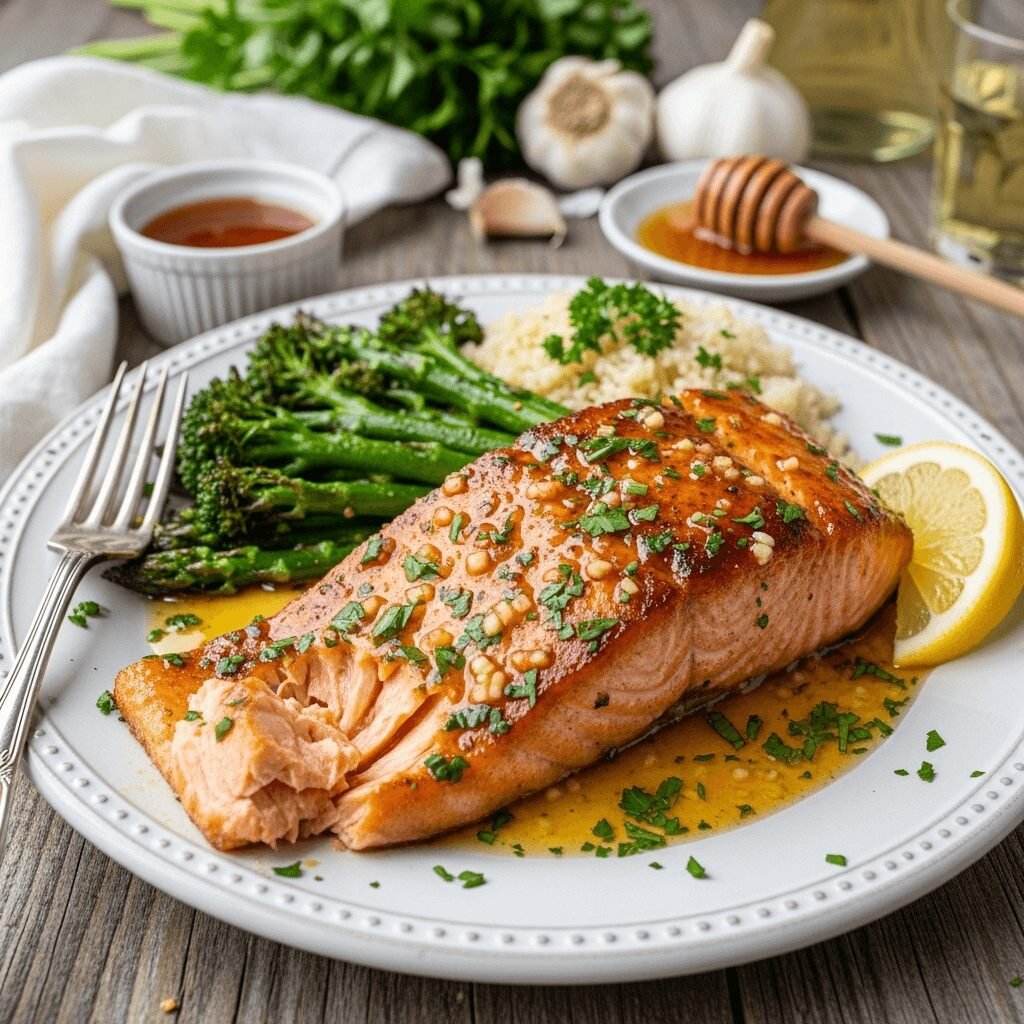
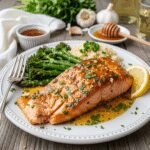
Get ready to fall in love with the easiest, most flavorful salmon recipe you’ll ever make! This Honey Butter Garlic Salmon is a show-stopping dinner that combines tender, flaky salmon fillets with a luscious sweet and savory glaze that’s absolutely irresistible. Imagine perfectly cooked salmon with a caramelized, golden crust, bathed in a buttery sauce that balances the natural sweetness of honey with aromatic roasted garlic and a hint of brightness from fresh lemon.
This recipe has become a weeknight staple in kitchens across America, and for good reason. It’s fancy enough to serve at dinner parties or special occasions, yet simple enough to prepare on a busy Tuesday night when you want something nutritious and delicious without spending hours in the kitchen. The entire dish comes together in just 20 minutes from start to finish, making it perfect for those evenings when you need a quick, impressive meal that doesn’t compromise on flavor.
The magic of this honey butter garlic salmon lies in its perfect balance of flavors. The rich, buttery salmon provides a luxurious base, while the honey adds natural sweetness that caramelizes beautifully during cooking. Fresh garlic brings aromatic depth and savory notes, and a squeeze of lemon brightens everything up, cutting through the richness and adding a restaurant-quality finish. The result? Salmon that’s crispy on the outside, tender and moist on the inside, with a glaze so good you’ll want to drizzle it over everything on your plate.
Whether you’re looking to impress guests, feed your family a healthy and delicious dinner, or simply treat yourself to something special, this honey butter garlic salmon delivers on every level. It pairs beautifully with rice, roasted vegetables, salad, or crusty bread—basically anything that can soak up that incredible sauce. Once you try this recipe, it’ll become your go-to salmon preparation!
History / Background
While this specific combination of honey, butter, and garlic salmon is a modern creation, it draws inspiration from various culinary traditions that have celebrated salmon for thousands of years. Salmon has been a prized food source across multiple cultures, particularly among indigenous peoples of the Pacific Northwest, Scandinavian countries, and Northern Europe, where salmon runs were abundant and formed the backbone of local diets and economies.
The Pacific Northwest indigenous tribes, including the Chinook, Tlingit, and Salish peoples, have harvested and celebrated salmon for over 10,000 years. They developed sophisticated techniques for catching, preserving, and cooking salmon, often using cedar planks for smoking or roasting—methods that influenced modern cooking techniques still used today. Salmon wasn’t just food; it was central to their culture, spirituality, and way of life.
In Scandinavian countries, particularly Norway, Sweden, and Denmark, salmon has been a dietary staple since ancient times. Nordic cuisine traditionally prepared salmon through smoking, curing (gravlax), or simply pan-frying with butter and herbs. The Scandinavian tradition of butter-based fish preparations influenced European cooking broadly, establishing butter as the ideal fat for cooking delicate fish.
The use of honey as a glaze for proteins has ancient roots across multiple cultures. Honey was one of the first sweeteners available to humanity, prized not only for its flavor but also for its preservative properties. Ancient Romans used honey glazes on meats, and this tradition continued through medieval European cooking. Asian cuisines, particularly Chinese and Japanese, developed their own honey-glazed fish preparations, often combining honey with soy sauce and ginger.
Garlic, cultivated for over 7,000 years, has been a fundamental flavoring ingredient in Mediterranean, Middle Eastern, and Asian cuisines. The French in particular mastered butter-and-garlic sauces (like beurre blanc), creating the foundation for countless modern recipes. Italian cooking brought garlic and butter together with seafood in dishes like shrimp scampi, establishing this combination as a classic pairing.
The modern honey butter garlic salmon as we know it emerged in American home cooking during the late 20th and early 21st centuries, as home cooks began experimenting with fusion flavors and quick, healthy meals. The rise of food blogging and Pinterest in the 2010s accelerated its popularity, as home cooks shared their variations and the recipe spread virally due to its photogenic appeal and incredible flavor.
This recipe represents the best of contemporary American cooking—taking quality ingredients from various culinary traditions and combining them in new, accessible ways that deliver maximum flavor with minimal fuss. It’s comfort food that feels special, health-conscious without sacrificing richness, and quick enough for busy lifestyles while impressive enough for entertaining.
Why You’ll Love This Recipe
This honey butter garlic salmon is about to become your new favorite way to prepare fish, and here’s exactly why it deserves a permanent spot in your dinner rotation. First and foremost, it’s incredibly easy—even if you’re intimidated by cooking fish, this foolproof recipe removes all the guesswork. The straightforward technique and short cooking time mean you’ll achieve perfect results every single time.
Here’s why this recipe will become your go-to salmon dinner:
- Lightning Quick: Ready in just 20 minutes from start to finish—perfect for busy weeknights when you need dinner fast
- Restaurant-Quality: Tastes like something from an upscale seafood restaurant but costs a fraction and can be made in your own kitchen
- Incredibly Flavorful: The honey-butter-garlic combination creates layers of sweet, savory, and aromatic flavor that’s absolutely addictive
- Healthy & Nutritious: Salmon is packed with omega-3 fatty acids, protein, and essential nutrients—this is guilt-free indulgence
- Foolproof Method: The simple pan-searing technique ensures perfectly cooked salmon with a golden, caramelized exterior and tender interior
- Minimal Ingredients: Requires just 7 basic ingredients you likely have on hand—no special shopping trips needed
- One-Pan Wonder: Everything cooks in a single skillet, meaning minimal cleanup and less time washing dishes
- Impressive Presentation: The glossy, golden glaze looks stunning—perfect for entertaining or special occasions
- Family-Friendly: The mild sweetness appeals to picky eaters and children while being sophisticated enough for adult palates
- Versatile Serving: Pairs beautifully with virtually any side dish from rice to vegetables to salad
- Diet-Friendly: Naturally gluten-free, low-carb, keto-friendly, and pescatarian—fits multiple eating styles
- Budget-Conscious: While salmon can be pricey, this recipe makes a little go a long way, and the simple ingredients keep costs down
- Meal Prep Champion: Makes excellent leftovers for lunch and reheats surprisingly well for fish
The texture of this salmon is absolutely perfect—the outside gets beautifully caramelized from the honey in the glaze, creating a slightly crispy, golden crust, while the inside stays moist, tender, and flaky. The buttery sauce is so good you’ll want to spoon it over your entire plate, and the garlic provides that aromatic backbone that makes every bite irresistible. This is the kind of recipe that converts people who think they don’t like fish!
Ingredient Notes
Let’s break down what makes this honey butter garlic salmon so deliciously special and why each ingredient plays such an important role:
Salmon Fillets: The star of the show! Choose skin-on or skinless fillets based on preference—skin-on helps hold the fish together during cooking. Look for wild-caught when possible (like Alaskan or sockeye) for superior flavor, though farmed Atlantic salmon works perfectly too. Aim for fillets about 6 ounces each and 1-inch thick for even cooking. Substitution: Arctic char, steelhead trout, or even thick white fish like halibut work beautifully with this glaze.
Butter: Unsalted butter creates the rich, luxurious base for the sauce and adds incredible flavor while helping achieve that golden, caramelized exterior. Butter also conducts heat well, ensuring even cooking. Substitution: Ghee for a nuttier, lactose-free option, or use olive oil for dairy-free (though you’ll lose some richness).
Honey: Provides natural sweetness that caramelizes during cooking, creating that gorgeous golden glaze and slightly crispy exterior. Honey also balances the savory garlic and rich butter perfectly. Use pure, raw honey for best flavor. Substitution: Maple syrup, agave nectar, or brown sugar dissolved in a tablespoon of water.
Garlic: Fresh garlic is absolutely essential for that aromatic, savory depth. Minced garlic infuses the butter sauce with robust flavor that defines this dish. Don’t skimp! Substitution: Garlic powder in a true emergency (use 1 teaspoon), but fresh garlic is vastly superior and really makes the recipe shine.
Soy Sauce: Adds salty, umami-rich depth that amplifies all the other flavors. It also helps balance the sweetness of the honey and adds complexity. Use low-sodium if watching salt intake. Substitution: Tamari for gluten-free, coconut aminos for soy-free, or Worcestershire sauce for different flavor profile.
Lemon: Fresh lemon juice brightens the entire dish, cutting through the richness and adding essential acidity that balances the butter and honey. It also complements the natural flavor of salmon beautifully. Substitution: Fresh lime juice works well, or use a splash of white wine vinegar in a pinch.
Fresh Parsley: Adds a pop of color and fresh, herbaceous flavor that makes the dish feel light and restaurant-quality. It’s the perfect finishing touch. Substitution: Fresh dill (classic with salmon), fresh basil, cilantro, or chives all work wonderfully.
Optional Additions: Red pepper flakes for heat, fresh thyme or rosemary for herbaceous notes, or a splash of white wine for extra depth. These additions can customize the flavor profile to your preferences.
Equipment Needed
This recipe requires minimal equipment, and you likely have everything already:
- Large Oven-Safe Skillet (10-12 inches): Cast iron or stainless steel works best. The skillet needs to withstand high heat and ideally go from stovetop to oven. Non-stick works but won’t achieve quite as good a sear.
- Fish Spatula or Wide Spatula: Essential for flipping delicate salmon fillets without breaking them. The thin, flexible blade slides under fish easily.
- Small Bowl: For mixing the honey butter garlic sauce before adding to the pan
- Whisk or Fork: For combining sauce ingredients thoroughly
- Measuring Cups and Spoons: For accurate ingredient portions
- Sharp Knife: For mincing garlic and chopping fresh herbs
- Cutting Board: For prep work
- Paper Towels: Crucial for patting salmon dry before cooking (ensures proper searing)
- Meat Thermometer (optional but recommended): For checking doneness—salmon is perfectly cooked at 145°F internal temperature
- Tongs (optional): Helpful for handling salmon fillets if you’re uncomfortable with a spatula
That’s it! This is a simple, straightforward recipe that doesn’t require any specialized equipment or gadgets. If you have a good skillet and a spatula, you’re ready to make restaurant-quality salmon!
Honey Butter Garlic Salmon Recipe
- Total Time: 20 minutes
- Yield: 4 servings 1x
- Diet: Gluten Free
Description
Tender, flaky salmon fillets pan-seared to golden perfection and glazed with an irresistible honey butter garlic sauce. This restaurant-quality dish comes together in just 20 minutes with simple ingredients, delivering incredible flavor that’ll have everyone asking for seconds. The sweet and savory glaze caramelizes beautifully, creating a dish that’s both healthy and absolutely delicious.
Ingredients
- 4 salmon fillets (about 6 oz each, skin-on or skinless, about 1-inch thick)
- 4 tablespoons unsalted butter, divided
- 3 tablespoons honey
- 4 cloves garlic, minced (about 1 tablespoon)
- 2 tablespoons soy sauce (or tamari for gluten-free)
- 1 tablespoon fresh lemon juice (about ½ lemon)
- Salt and black pepper, to taste
- ¼ teaspoon red pepper flakes (optional, for subtle heat)
- 2 tablespoons fresh parsley, chopped (for garnish)
- Lemon wedges (for serving)
Instructions
- Prepare the Salmon: Remove salmon from refrigerator 10-15 minutes before cooking to bring to room temperature. Pat fillets completely dry with paper towels on all sides—this is crucial for achieving a good sear. Season both sides generously with salt and black pepper.
- Make the Sauce: In a small bowl, whisk together honey, soy sauce, minced garlic, and lemon juice until well combined. Set aside. The honey may not fully dissolve yet—that’s okay, it will when heated.
- Sear the Salmon: Heat a large oven-safe skillet over medium-high heat. Add 2 tablespoons of butter and let it melt, swirling to coat the pan. Once the butter is sizzling and fragrant (but not browned), carefully place salmon fillets in the pan, skin-side up if using skin-on salmon. Cook undisturbed for 4-5 minutes until a golden-brown crust forms on the bottom.
- Flip and Continue: Using a fish spatula, carefully flip each fillet. The salmon should release easily from the pan when ready—if it’s sticking, give it another minute. Cook the second side for 3-4 minutes until salmon is nearly cooked through but still slightly translucent in the very center.
- Add the Glaze: Reduce heat to medium-low. Add the remaining 2 tablespoons of butter to the pan around the salmon (not directly on top). Once melted, pour the honey-garlic sauce mixture over and around the salmon fillets. The sauce will bubble and start to caramelize immediately.
- Baste and Finish: Using a spoon, continuously baste the salmon with the bubbling honey butter sauce for 2-3 minutes. Tilt the pan slightly to pool the sauce, making basting easier. The sauce will thicken and become glossy, and the salmon will finish cooking through. The internal temperature should reach 145°F for perfectly cooked salmon, or 130-135°F if you prefer it slightly rare in the center (my personal preference).
- Rest and Serve: Remove from heat and let the salmon rest in the pan for 1-2 minutes. The residual heat will finish cooking it gently. Transfer salmon to serving plates, spoon the remaining honey butter garlic sauce generously over each fillet, and garnish with freshly chopped parsley and lemon wedges. Serve immediately while hot.
Notes
- Salmon Thickness: If your fillets are thinner than 1 inch, reduce cooking time by 1-2 minutes per side to avoid overcooking.
- Skin-On vs. Skinless: Skin-on salmon holds together better during cooking. If using skinless, handle more gently when flipping.
- Don’t Overcook: Salmon continues cooking after removing from heat. It’s better to slightly undercook than overcook—the center should be just barely opaque or slightly translucent for the juiciest results.
- Sauce Consistency: If the sauce seems too thin, let it bubble for an extra minute. If too thick, add a splash of water or lemon juice.
- Oven Method: Alternatively, sear both sides on stovetop, add sauce, then transfer the oven-safe skillet to a 400°F oven for 5-7 minutes to finish cooking.
- Watch the Garlic: Minced garlic can burn in the hot butter. If it starts browning too quickly, reduce heat immediately.
- Prep Time: 5 minutes
- Cook Time: 12-15 minutes
- Category: Dinner, Main Course, Seafood
- Method: Stovetop, Pan-Seared
- Cuisine: American / French
Nutrition
- Serving Size: 1 salmon fillet with sauce (about 6 oz)
- Calories: 385
- Sugar: 13g
- Sodium: 485mg
- Fat: 22g
- Saturated Fat: 9g
- Unsaturated Fat: 11g
- Carbohydrates: 14g
- Fiber: 0g
- Protein: 34g
- Cholesterol: 125mg
Nutrition information is approximate and calculated per serving. Actual values may vary based on specific ingredients used, salmon type, and portion sizes. Salmon is an excellent source of omega-3 fatty acids, vitamin D, and B vitamins.
Tips & Variations
This versatile recipe adapts beautifully to different tastes and dietary needs! Here are fantastic ways to customize it:
Asian-Inspired Version: Replace soy sauce with 3 tablespoons of teriyaki sauce, add 1 teaspoon of fresh grated ginger with the garlic, and garnish with sliced green onions and sesame seeds instead of parsley for an Asian fusion twist.
Spicy Honey Garlic Salmon: Double the red pepper flakes to ½ teaspoon, add 1-2 teaspoons of sriracha to the sauce, or drizzle with chili garlic sauce before serving. The heat complements the honey beautifully.
Lemon Herb Version: Increase lemon juice to 2 tablespoons and add 1 tablespoon of fresh lemon zest to the sauce. Use fresh dill instead of parsley for a classic, bright flavor combination.
Maple Bourbon Glaze: Replace honey with pure maple syrup and add 2 tablespoons of bourbon to the sauce for a sophisticated, adult version with deep, complex flavors.
Dijon Mustard Variation: Add 1 tablespoon of Dijon mustard to the sauce for tangy, complex flavor that pairs wonderfully with the honey and garlic.
Balsamic Glaze: Add 1 tablespoon of balsamic vinegar to the sauce for a sweet-tart Italian-inspired twist that’s absolutely delicious.
Herb-Crusted: After searing both sides, press a mixture of panko breadcrumbs, Parmesan, and fresh herbs onto the top of each fillet before adding the glaze for a crunchy topping.
Brown Butter Version: Take the butter to the next level by cooking it until it browns and becomes nutty before adding salmon. The brown butter adds incredible depth and complexity.
Orange-Glazed: Replace lemon juice with fresh orange juice and add 1 teaspoon of orange zest for a sweeter, citrusy variation.
Coconut Aminos: For paleo or Whole30-friendly, use coconut aminos instead of soy sauce and coconut oil instead of butter.
Pro Chef Tips
Want to elevate your honey butter garlic salmon from delicious to absolutely restaurant-perfect? These professional techniques make all the difference:
Bring Salmon to Room Temperature: Remove salmon from the refrigerator 15-20 minutes before cooking. Cold fish hitting a hot pan causes uneven cooking—the exterior overcooks before the interior is done. Room-temperature salmon cooks evenly and develops a better crust.
Pat Completely Dry: This cannot be overstated! Moisture is the enemy of a good sear. Use paper towels to pat every surface of the salmon until it feels tacky, not wet. Dry fish = beautiful golden crust. Wet fish = pale, steamed texture.
Season Generously: Don’t be shy with salt and pepper. Salmon is a thick, meaty fish that needs proper seasoning. Season both sides right before cooking—not too far in advance as salt can draw out moisture.
Get Your Pan Hot: Preheat your skillet properly before adding butter. The pan should be hot enough that butter sizzles immediately but doesn’t burn instantly. This ensures proper searing and prevents sticking.
Don’t Move the Salmon: Once you place salmon in the pan, resist the urge to peek, move, or flip it prematurely. Let it sit undisturbed for the full 4-5 minutes. It will release naturally from the pan when a proper crust forms. If it’s sticking, it’s not ready to flip yet.
Use a Fish Spatula: This thin, flexible, slightly offset spatula is a game-changer for delicate fish. It slides under the fillet easily without breaking it. If you cook fish regularly, invest in one—they’re inexpensive and make a huge difference.
Check Doneness Properly: Insert an instant-read thermometer into the thickest part of the fillet horizontally (from the side, not top-down). You want 145°F for FDA-recommended doneness, or 125-130°F for medium-rare (my preference—salmon stays incredibly moist and tender). The fish will continue cooking 5-10 degrees after removing from heat.
Baste Continuously: During the final 2-3 minutes, keep spooning that hot honey butter sauce over the salmon. This bastes the top surface, adds flavor, and creates that gorgeous glossy glaze. Tilt your pan to pool the sauce for easier basting.
Let It Rest: Like meat, salmon benefits from a brief rest after cooking. Let it sit in the warm pan for 1-2 minutes before serving. This allows juices to redistribute, ensuring every bite is moist and flavorful.
Sauce Consistency Matters: The sauce should coat the back of a spoon but still flow easily. Too thick? Add a splash of water or lemon juice. Too thin? Let it bubble for another minute to reduce and thicken.
Choose Quality Salmon: The better your salmon, the better your results. Look for firm, bright-colored fillets that smell fresh and ocean-like, never fishy. Wild-caught generally has superior flavor and texture, though good farmed salmon works beautifully too.
Common Mistakes to Avoid
Even this straightforward recipe can go wrong without proper technique. Here’s how to sidestep the most common pitfalls:
Mistake #1: Overcooking the Salmon – This is the number one error that turns tender, moist salmon into dry, chalky disappointment. Salmon cooks quickly and continues cooking after removing from heat. Pull it from the pan when it’s just barely opaque in the center or when it reaches 130-135°F internally (it’ll climb to 140-145°F as it rests). Overcooked salmon cannot be fixed, so err on the side of slight undercooking. The salmon should flake easily but still be moist and slightly translucent in the very center.
Mistake #2: Not Drying the Salmon – Wet salmon will steam instead of sear, resulting in a pale, rubbery exterior instead of that beautiful golden crust. Take the time to thoroughly pat dry all surfaces with paper towels. Wait a minute, then pat dry again. This one step dramatically improves texture and appearance.
Mistake #3: Moving the Salmon Too Soon – When you place salmon in the hot pan, it initially sticks. Many cooks panic and try to move or flip it immediately, which tears the flesh and ruins the crust. Be patient! Let it cook undisturbed for the full 4-5 minutes. The salmon will naturally release from the pan once a proper crust forms. If it’s sticking stubbornly, it needs another 30-60 seconds.
Mistake #4: Burning the Garlic – Garlic burns easily and becomes bitter when burned. If you add minced garlic to very hot butter, it can scorch within seconds. The key is timing and temperature control. Make sure your pan isn’t screaming hot when adding the sauce, and stir constantly once garlic hits the pan. If garlic starts browning too quickly, immediately remove the pan from heat.
Mistake #5: Using Low-Quality Honey – Not all honey is created equal. Cheap, processed honey often contains corn syrup or other additives and lacks the complex flavor of pure, raw honey. Use good-quality, pure honey—you’ll taste the difference in the final glaze. Locally sourced or raw honey provides the best flavor.
Mistake #6: Cooking Straight from the Fridge – Cold salmon hitting a hot pan causes the exterior to overcook before the interior warms through, resulting in unevenly cooked fish. Always let salmon sit at room temperature for 15-20 minutes before cooking for even, edge-to-edge doneness.
Mistake #7: Skipping the Basting Step – Those final 2-3 minutes of spooning hot honey butter sauce over the salmon are crucial. This step adds flavor, creates the glossy glaze, and ensures the top surface gets coated. Don’t skip it—this is what transforms good salmon into great salmon.
Storage & Meal Prep
While salmon is always best enjoyed fresh, you can store and reheat leftovers with proper care:
Refrigerator Storage: Transfer cooled salmon to an airtight container, spooning any remaining sauce over the top. Store for up to 2 days in the refrigerator. Note that fish quality declines more quickly than other proteins, so consume within 48 hours for best results.
Reheating Instructions:
- Oven Method (Best): Preheat oven to 275°F. Place salmon in a baking dish, spoon a little extra sauce, butter, or water over it to add moisture, cover tightly with foil, and heat for 10-15 minutes until warmed through. Low, gentle heat prevents drying out.
- Stovetop: Place salmon in a covered skillet over low heat with a tablespoon of water or butter. Heat gently for 4-5 minutes, flipping once, until warmed through. Keep heat low to prevent overcooking.
- Microwave (Quick but Not Ideal): Place in a microwave-safe dish, cover with a damp paper towel, and heat at 50% power in 30-second intervals until warmed. Microwaving tends to dry out salmon and make it tough.
Cold Options: Honestly, leftover salmon is excellent served cold! Flake it over salads, make salmon salad sandwiches, or enjoy it straight from the fridge. The honey garlic flavors are still delicious cold.
Food Safety Notes:
- Never leave cooked salmon at room temperature for more than 2 hours (1 hour if room temperature exceeds 90°F).
- Cooked salmon should be consumed within 2 days when properly refrigerated.
- If salmon smells overly fishy or off, discard it—trust your nose.
- Always reheat to at least 145°F internal temperature for food safety.
Meal Prep Considerations: While you can prep components ahead (see Make-Ahead section), salmon really is best cooked fresh. It only takes 20 minutes, so consider this a “cook and serve” recipe rather than a make-ahead dish.
Make-Ahead & Freezer Notes
Planning ahead? Here’s what works (and what doesn’t) for this recipe:
Make-Ahead Options:
- Sauce Prep: Whisk together the honey, soy sauce, garlic, and lemon juice up to 2 days ahead. Store in an airtight container in the refrigerator. Bring to room temperature before using.
- Season Salmon: Pat salmon dry, season with salt and pepper, and store covered in the refrigerator for up to 4 hours before cooking. This actually helps develop flavor and allows the seasoning to penetrate.
- Marinate: For deeper flavor, marinate salmon in half the honey-garlic sauce for 30 minutes to 2 hours before cooking (no longer or the acid will start “cooking” the fish). Pat dry before searing.
Freezing Raw Salmon:
- Fresh salmon can be frozen for up to 3 months when properly wrapped. Wrap tightly in plastic wrap, then aluminum foil, or use freezer bags with air pressed out.
- Thaw frozen salmon overnight in the refrigerator, never at room temperature.
- Pat completely dry after thawing before proceeding with the recipe.
- If salmon was previously frozen when you purchased it (most is), don’t refreeze it.
Freezing Cooked Salmon (Not Recommended):
- While technically possible, I don’t recommend freezing cooked salmon. The delicate texture becomes mushy and dry when frozen and reheated.
- If you must freeze leftovers, wrap tightly and freeze for up to 1 month. Thaw in refrigerator and reheat gently, but expect significant texture changes.
Freezing the Sauce:
- The honey butter garlic sauce can be frozen in ice cube trays or small containers for up to 3 months.
- Thaw and reheat gently to use with freshly cooked salmon.
Best Practice: Since this recipe is so quick (just 20 minutes!), I strongly recommend cooking it fresh rather than relying on make-ahead or freezing. The minimal time investment ensures optimal texture and flavor that simply can’t be matched with frozen and reheated versions.
Serving Suggestions
This honey butter garlic salmon pairs beautifully with countless side dishes! Here are winning combinations:
Classic Pairings:
- Fluffy White or Brown Rice: The perfect vehicle for soaking up that incredible honey butter garlic sauce
- Roasted Asparagus: Classic, elegant, and the flavors complement each other perfectly
- Garlic Mashed Potatoes: Creamy potatoes balance the sweet-savory salmon beautifully
- Steamed Broccoli: Simple, healthy, and gets delicious when drizzled with the salmon sauce
Lighter Options:
- Quinoa or Cauliflower Rice: Healthy, low-carb bases that work wonderfully with the glazed salmon
- Mixed Green Salad: Fresh greens with lemon vinaigrette provide refreshing contrast to the rich salmon
- Zucchini Noodles (Zoodles): Low-carb, fresh, and perfect for soaking up the sauce
- Cucumber Salad: Cool, crisp cucumber with rice vinegar and sesame seeds offers textural contrast
Vegetable Sides:
- Roasted Brussels Sprouts: Caramelized and slightly crispy, they echo the sweet-savory profile
- Sautéed Green Beans: Simple preparation lets the salmon shine while adding color and nutrition
- Honey-Glazed Carrots: The honey in both dishes creates a cohesive flavor theme
- Grilled Corn on the Cob: Sweet corn complements the honey glaze perfectly
Starch Options:
- Couscous: Light, fluffy, and cooks in just 5 minutes—perfect for weeknights
- Wild Rice Pilaf: Nutty, textured rice adds sophistication to the meal
- Roasted Baby Potatoes: Crispy outside, fluffy inside, and perfect with butter sauce
- Pasta: Angel hair or linguine tossed with a bit of the honey butter sauce makes this a complete meal
Bread & Grains:
- Crusty French Bread: Essential for soaking up every last drop of that amazing sauce
- Garlic Bread: Echoes the garlic in the sauce for a cohesive flavor experience
- Dinner Rolls: Soft, buttery rolls are perfect for mopping up sauce
Complete Meal Ideas:
- Date Night: Salmon + roasted asparagus + garlic mashed potatoes + white wine
- Family Dinner: Salmon + rice + steamed broccoli + dinner rolls
- Healthy Weeknight: Salmon + quinoa + mixed green salad + roasted vegetables
- Dinner Party: Salmon + wild rice pilaf + roasted Brussels sprouts + Caesar salad + Chardonnay
Beverage Pairings:
- White Wine: Chardonnay, Sauvignon Blanc, or Pinot Grigio all pair beautifully
- Rosé: Light, refreshing, and complements the sweet-savory flavors
- Light Beer: Wheat beer or pilsner won’t overpower the delicate fish
- Iced Tea: Unsweetened or lightly sweetened provides refreshing balance
FAQs Section
Q: How do I know when salmon is perfectly cooked?
A: Perfectly cooked salmon is opaque throughout but still moist and tender, never dry or chalky. The best way to check is with an instant-read thermometer inserted into the thickest part—145°F is FDA-recommended for fully cooked, though many chefs prefer 125-135°F for medium-rare (my preference). Visually, the salmon should flake easily with a fork but still hold together, and the center can be slightly translucent for optimal moistness. If you press the thickest part gently, it should feel firm but still give slightly, not mushy or rock-hard.
Q: Can I use frozen salmon for this recipe?
A: Yes! Most salmon sold as “fresh” was actually previously frozen anyway. Just make sure to thaw it completely before cooking—ideally overnight in the refrigerator. Once thawed, pat the salmon extremely dry with paper towels multiple times, as frozen salmon releases more moisture. Properly thawed and dried frozen salmon works perfectly in this recipe and you won’t be able to tell the difference from “fresh.” Never cook salmon directly from frozen for this recipe, as it won’t sear properly and will release too much moisture.
Q: Should I remove the skin before cooking?
A: That’s entirely up to personal preference! Skin-on salmon holds together better during cooking and the skin becomes beautifully crispy when seared properly. If using skin-on, place it skin-side up for the first sear, then flip to skin-side down—the skin will crisp up nicely. Many people love eating the crispy skin (it’s nutritious too!). If you prefer skinless, that works perfectly fine—just handle the fillets more gently when flipping as they’re more delicate. The recipe works equally well either way.
**Q: My honey butter sauce
is too thick/too thin. How do I fix it?**
A: Easy fixes for both situations! If the sauce is too thick and syrupy, simply add water, lemon juice, or chicken broth one tablespoon at a time while stirring until you reach the desired consistency. The sauce should coat the back of a spoon but still flow easily. If it’s too thin and runny, let it simmer in the pan for an extra 1-2 minutes to reduce and thicken naturally. The honey will caramelize and concentrate, creating a glossier, thicker glaze. You can also add an extra teaspoon of honey which will thicken as it cooks.
Q: Can I make this recipe in the oven instead of on the stovetop?
A: Absolutely! For an oven-baked version, preheat your oven to 400°F. Sear the salmon in an oven-safe skillet on the stovetop for 2-3 minutes per side to develop color, then pour the honey butter garlic sauce over the fillets and transfer the entire skillet to the oven. Bake for 5-8 minutes (depending on thickness) until salmon reaches 145°F internally. This method is great when cooking for a crowd or if you want more hands-off cooking. The salmon won’t get quite as caramelized as the stovetop method, but it’s still delicious and foolproof.
Q: What’s the best type of salmon to use for this recipe?
A: Any salmon variety works beautifully! Wild-caught Alaskan, sockeye, or coho salmon have superior flavor, firmer texture, and deeper color—they’re my top choice when available and budget allows. King (Chinook) salmon is the richest and fattiest, absolutely luxurious in this recipe. Atlantic salmon (usually farmed) is most commonly available, more affordable, and still delicious with a milder flavor and softer texture. Avoid very thin tail pieces as they overcook easily—look for center-cut fillets about 1-inch thick for the most even cooking. The honey butter garlic glaze is so flavorful it works wonderfully with any variety!
Q: How do I prevent the salmon from sticking to the pan?
A: Sticking happens for three main reasons, all easily fixable: First, make sure your salmon is completely dry—moisture causes sticking. Second, ensure your pan is properly preheated and the butter is hot and sizzling before adding salmon. A properly hot pan creates immediate searing that prevents sticking. Third, don’t flip too early! Salmon will naturally release from the pan once a proper crust forms. If it’s sticking, it needs another 30-60 seconds. Using a well-seasoned cast iron skillet or quality stainless steel pan also helps. Non-stick pans work but won’t achieve quite as good a sear.
Q: Can I substitute the honey with something else?
A: Yes! While honey provides the best flavor and caramelization, several substitutes work well: Pure maple syrup creates a slightly different but equally delicious flavor profile with beautiful caramelization. Brown sugar dissolved in a tablespoon of water provides sweetness and caramelizes nicely. Agave nectar works for a lower glycemic option. For sugar-free versions, try a liquid sugar substitute designed for cooking, though it won’t caramelize the same way. Each substitution will slightly change the flavor profile, but the recipe remains delicious!
Conclusion
And there you have it—your complete guide to making the most incredible Honey Butter Garlic Salmon that tastes like it came straight from a high-end restaurant’s kitchen! This recipe proves that restaurant-quality seafood doesn’t require complicated techniques, expensive ingredients, or hours of preparation. With just 20 minutes, a handful of simple ingredients, and one skillet, you can create something truly spectacular that delivers on flavor, nutrition, and visual appeal.
The beauty of this honey butter garlic salmon lies in its perfect balance of flavors and foolproof technique. The sweet honey caramelizes into a gorgeous golden glaze, the butter creates luxurious richness, the garlic adds aromatic depth, and the lemon brightens everything up. Meanwhile, the salmon itself stays incredibly moist, tender, and flaky—never dry or overcooked. It’s the kind of dish that makes you feel like a professional chef while being accessible enough for absolute beginners.
What I love most about this recipe is its incredible versatility. Serve it for a special date night at home, prepare it on busy weeknights when you need something quick and healthy, or plate it elegantly for dinner guests who’ll be completely impressed. It pairs with virtually any side dish, fits multiple dietary preferences (gluten-free, keto, low-carb, pescatarian), and appeals to both adults and children. Plus, it’s packed with omega-3s and protein, making it as nutritious as it is delicious.
Remember, the keys to success are simple: pat your salmon dry, don’t move it around in the pan, watch the cooking time carefully to avoid overcooking, and don’t skip the basting step with that glorious honey butter sauce. Follow these guidelines, and you’ll be rewarded with salmon that looks magazine-worthy and tastes absolutely divine every single time.
Now it’s time to head to your kitchen and experience this amazing salmon for yourself! I promise you’ll be blown away by how quickly it comes together and how restaurant-quality the results are. The hardest part will be not eating it straight from the pan!
I’d love to hear how your honey butter garlic salmon turns out! Drop a comment below and let me know—did you add any creative variations? What sides did you serve it with? How did your family react? And if you’re as obsessed with this recipe as I am, please pin it to your favorite Pinterest board so you can find it easily whenever that salmon craving hits (which will be often!). Share it with friends who love delicious, easy dinners, and help spread the word about this incredible recipe!
Happy cooking, friends! May your salmon always be perfectly cooked, your glaze beautifully caramelized, and your dinner guests thoroughly impressed!