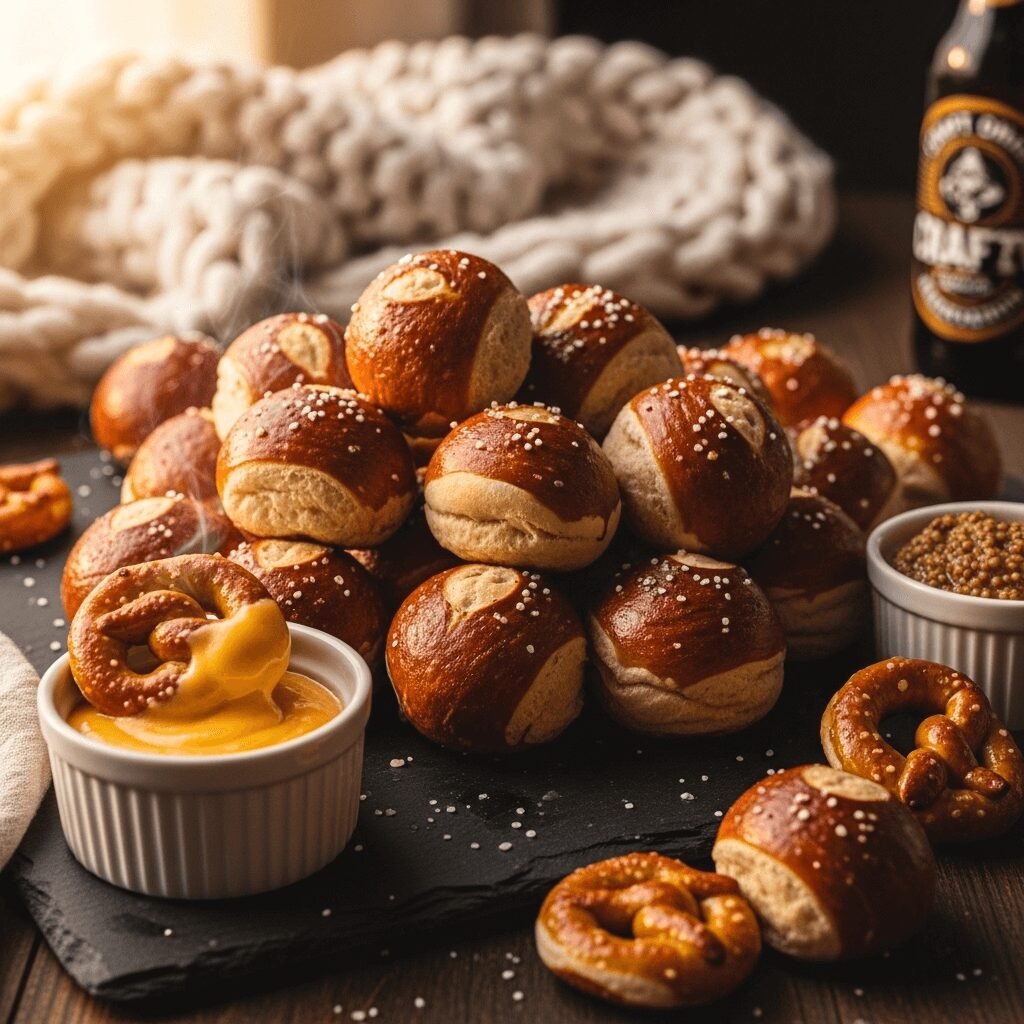

There’s something absolutely magical about warm, golden-brown soft pretzel bites fresh from the oven – that perfect chewy exterior with a pillowy soft interior, brushed with melted butter and sprinkled with coarse salt. These homemade soft pretzel bites are the ultimate crowd-pleaser, whether you’re hosting game day, planning a movie night, or just craving a delicious snack that’ll make your kitchen smell like a bakery.
What makes pretzel bites so irresistible is their perfect bite-sized nature. Unlike full-sized pretzels, these little nuggets of joy are ideal for dipping, sharing, and popping into your mouth one after another (trust me, you won’t be able to stop at just one!). They’re incredibly versatile too – serve them as an appetizer, a party snack, or even as a fun dinner side. Pair them with cheese sauce, honey mustard, or classic yellow mustard, and you’ve got yourself a snack that’ll disappear faster than you can say “pass the dip!”
The best part? Making soft pretzel bites at home is easier than you might think. Yes, there’s a special step involving a baking soda bath that gives these bites their signature pretzel flavor and beautiful mahogany color, but don’t let that intimidate you. This recipe breaks down every step so clearly that even beginner bakers can achieve bakery-quality results. Once you taste these warm, buttery pretzel bites made in your own kitchen, you’ll never want the mall food court version again.
History / Background
The beloved soft pretzel has a fascinating history that dates back over a thousand years! The pretzel’s origin story is steeped in European tradition, with most historians agreeing that pretzels were first created by European monks around 610 AD in Southern France or Northern Italy. Legend has it that monks created these twisted bread snacks as rewards for children who learned their prayers. The distinctive pretzel shape, with its three holes, was said to represent the Holy Trinity, and the crossed arms symbolized children in prayer.
The word “pretzel” itself comes from the Latin word “bracellae,” meaning “little arms,” which evolved into “bretzel” in German and eventually “pretzel” in English. German and Austrian immigrants brought soft pretzels to America in the early 1700s, with Pennsylvania becoming the epicenter of American pretzel culture. The city of Philadelphia quickly became known as the nation’s pretzel capital, where pretzel vendors would walk the streets selling their wares from baskets.
Traditional soft pretzels were always boiled in a lye solution before baking, which gave them their distinctive brown crust and unique flavor. However, home bakers discovered that a baking soda bath creates a similar (though slightly milder) effect, making pretzel-making accessible for home kitchens without handling caustic lye.
The evolution from full-sized pretzels to pretzel bites is a more modern American innovation. As appetizer culture grew in the 1980s and 1990s, restaurants began serving bite-sized versions of popular foods, and pretzel bites became a stadium and restaurant favorite. Today, soft pretzel bites represent the perfect fusion of ancient baking tradition and modern snacking convenience – all the delicious pretzel flavor in a perfectly poppable, shareable format!
Why You’ll Love This Recipe
This homemade soft pretzel bites recipe is about to become your new favorite go-to snack! Imagine pulling warm, golden pretzel bites from your oven, the aroma of freshly baked bread filling your kitchen, and that first bite revealing the perfect chewy-yet-tender texture that makes soft pretzels so addictive. You’ll love how these pretzel bites rival anything you’d find at a fancy food hall or sports stadium, but they’re made right in your own kitchen with simple ingredients you probably already have.
Here’s why this recipe deserves a permanent spot in your collection:
- Surprisingly Simple: Despite looking impressive, this recipe uses basic pantry ingredients and straightforward techniques that any home baker can master
- Budget-Friendly: Make dozens of pretzel bites for a fraction of what you’d pay at a restaurant or pretzel shop
- Perfect for Entertaining: These bites are guaranteed crowd-pleasers at parties, game days, movie nights, and family gatherings
- Kid-Approved: Children absolutely love helping to shape these bites, and they’ll devour them just as quickly
- Customizable: From cinnamon-sugar to everything bagel seasoning, you can flavor these bites a hundred different ways
- Make-Ahead Friendly: Prep the dough in advance or freeze baked bites for easy snacking anytime
- Bakery-Quality Results: Achieve that authentic pretzel shop flavor and texture without any special equipment or hard-to-find ingredients
- Quick to Bake: Unlike some bread recipes that require hours of rising, these come together in about an hour from start to finish
- Versatile Serving Options: Serve them savory with cheese dip, sweet with icing, or classic with coarse salt and mustard
Whether you’re a seasoned baker or someone who rarely ventures beyond store-bought snacks, these soft pretzel bites will make you feel like a kitchen rockstar!
Ingredient Notes
Understanding your ingredients is the secret to pretzel perfection! Let’s break down what goes into these delicious bites and why each component matters.
Active Dry Yeast: This is the leavening agent that makes your pretzel bites soft and fluffy. Make sure your yeast is fresh (check the expiration date!) and proof it in warm water between 105-110°F. Water that’s too hot will kill the yeast, while water that’s too cold won’t activate it properly. You can substitute instant yeast in equal amounts without proofing.
All-Purpose Flour: The foundation of your pretzel dough. All-purpose flour provides the right protein content for that characteristic chewy texture. You can use bread flour for an even chewier bite, but all-purpose works beautifully. Avoid cake or pastry flour as they lack the necessary structure.
Granulated Sugar: Feeds the yeast and helps with browning. The small amount of sugar doesn’t make the pretzels sweet; it just enhances flavor and helps activate the yeast. Honey can be substituted for a slightly different flavor profile.
Salt: Essential for flavor! Don’t skip the salt in the dough – it balances the flavors and strengthens the gluten structure. The coarse salt topping is what gives pretzels their signature look and taste. Look for pretzel salt or kosher salt for the best topping.
Butter: Adds richness and flavor to the dough and creates that glossy, delicious finish when brushed on after baking. Use unsalted butter so you can control the salt level. Don’t substitute with oil in the dough as butter provides superior flavor and texture.
Baking Soda: This is the secret ingredient that makes pretzels taste like pretzels! The alkaline bath created by boiling water and baking soda gives pretzels their distinctive flavor, deep brown color, and slightly crispy exterior. Don’t skip this step – it’s what transforms regular bread dough into authentic pretzel bites.
Warm Water: The liquid that brings everything together. Temperature is crucial – too hot kills yeast, too cold won’t activate it. Aim for about 110°F, which should feel warm but comfortable to the touch, like bathwater.
Equipment Needed
Having the right tools makes pretzel-making a breeze! Here’s everything you’ll need:
- Large Mixing Bowl: For combining and kneading the dough
- Measuring Cups and Spoons: Accurate measurements ensure consistent results
- Kitchen Thermometer: To check water temperature for proofing yeast (optional but helpful)
- Clean Kitchen Towel or Plastic Wrap: To cover dough while rising
- Large Pot or Dutch Oven: For the baking soda bath (needs to hold at least 8 cups of water)
- Slotted Spoon or Spider Strainer: To safely remove pretzel bites from the boiling water
- Two Large Baking Sheets: Lined with parchment paper or silicone baking mats
- Parchment Paper or Silicone Baking Mats: Prevents sticking and makes cleanup easy
- Sharp Knife or Pizza Cutter: For cutting dough into bite-sized pieces
- Pastry Brush: For brushing melted butter on finished pretzel bites
- Wire Cooling Rack: For cooling baked bites (optional)
- Stand Mixer with Dough Hook (Optional): Makes kneading easier, but hand-kneading works perfectly fine

Homemade Soft Pretzel Bites Recipe
- Total Time: 1 hour 5 minutes
- Yield: 60 pretzel bites (about 12 servings) 1x
- Diet: Vegetarian
Description
These homemade soft pretzel bites are perfectly chewy on the outside and pillow-soft on the inside, just like your favorite mall pretzel shop! Boiled in a baking soda bath for that authentic pretzel flavor and topped with coarse salt and melted butter, these bite-sized snacks are irresistible. Perfect for game day, parties, or anytime snacking with your favorite dipping sauces!
Ingredients
For the Pretzel Dough:
- 1½ cups warm water (110-115°F)
- 2¼ teaspoons (1 packet) active dry yeast
- 2 tablespoons granulated sugar
- 4½ cups all-purpose flour, plus more for dusting
- 2 teaspoons salt
- 4 tablespoons unsalted butter, melted
For the Baking Soda Bath:
- 10 cups water
- ⅔ cup baking soda
For Topping:
- 4 tablespoons unsalted butter, melted
- Coarse sea salt or pretzel salt, for sprinkling
Instructions
- Proof the Yeast: In a large mixing bowl, combine warm water (110-115°F), yeast, and sugar. Stir gently and let sit for 5-10 minutes until the mixture becomes foamy and bubbly. This means your yeast is active and ready to work its magic!
- Make the Dough: Add the flour, salt, and melted butter to the yeast mixture. Stir with a wooden spoon until a shaggy dough forms. Turn the dough out onto a lightly floured surface and knead for 8-10 minutes until smooth, elastic, and slightly tacky. Alternatively, use a stand mixer with the dough hook attachment on medium speed for 5-6 minutes.
- First Rise: Shape the dough into a ball and place it in a lightly greased bowl, turning once to coat all sides. Cover with a clean kitchen towel or plastic wrap. Let rise in a warm, draft-free spot for 30 minutes, or until nearly doubled in size.
- Prepare for Baking: While the dough rises, preheat your oven to 425°F (220°C). Line two large baking sheets with parchment paper or silicone baking mats. Set aside.
- Shape the Pretzel Bites: Once risen, punch down the dough and turn it out onto a clean work surface (no flour needed). Divide the dough into 8 equal pieces. Roll each piece into a long rope about 16-18 inches long and ¾ inch thick. Cut each rope into 1-inch pieces to create your pretzel bites. You should have about 60 bites total.
- Prepare the Baking Soda Bath: In a large pot or Dutch oven, bring 10 cups of water to a rolling boil. Once boiling, carefully add the baking soda (it will foam up, so add it slowly!). Reduce heat to maintain a gentle boil.
- Boil the Pretzel Bites: Working in batches of 10-15 bites, carefully drop the dough pieces into the boiling baking soda water. Boil for 20-30 seconds, flipping halfway through if they don’t flip on their own. The bites will puff up slightly and float to the surface.
- Transfer to Baking Sheets: Using a slotted spoon or spider strainer, remove the boiled pretzel bites from the water, letting excess water drip off. Place them on the prepared baking sheets, spacing them about 1 inch apart. They won’t spread much during baking.
- Add Salt: While the pretzel bites are still wet from the boiling bath, immediately sprinkle them generously with coarse sea salt. The salt sticks best when the surface is moist.
- Bake to Perfection: Bake in the preheated oven for 12-15 minutes, or until the pretzel bites are deep golden brown. Rotate the baking sheets halfway through for even browning. The pretzels should have a beautiful mahogany color.
- Butter Finish: Remove from the oven and immediately brush the hot pretzel bites generously with melted butter. This adds incredible flavor and creates that signature glossy finish. Serve warm!
Notes
- Water Temperature: Make sure your water is between 110-115°F when proofing yeast. Too hot will kill the yeast; too cold won’t activate it.
- Baking Soda Safety: The baking soda bath will foam vigorously when added to boiling water. Add it slowly and carefully to prevent overflow.
- Don’t Skip the Bath: The baking soda bath is essential for authentic pretzel flavor and color. Without it, you’ll just have regular bread bites.
- Salt Timing: Apply coarse salt immediately after removing bites from the water bath, while they’re still wet. This helps the salt stick.
- Even Browning: Rotate baking sheets halfway through baking to ensure all pretzel bites brown evenly.
- Serving Temperature: These are absolutely best served warm! If making ahead, reheat before serving for that fresh-baked experience.
- Prep Time: 20 minutes
- Cook Time: 15 minutes
- Category: Appetizer, Snack
- Method: Baking
- Cuisine: American, German-inspired
Nutrition
- Serving Size: 5 pretzel bites
- Calories: 185
- Sugar: 2g
- Sodium: 890mg
- Fat: 5g
- Saturated Fat: 3g
- Unsaturated Fat: 2g
- Trans Fat: 0g
- Carbohydrates: 30g
- Fiber: 1g
- Protein: 5g
- Cholesterol: 12mg
Nutrition information is approximate and calculated per serving based on 12 servings total. Values may vary depending on specific ingredients used and portion sizes.
Tips & Variations
Make these pretzel bites your own with these creative twists and customizations!
Sweet Variations:
- Cinnamon Sugar Pretzel Bites: Skip the coarse salt topping. Instead, brush with melted butter and immediately toss in a mixture of ½ cup granulated sugar and 1 tablespoon cinnamon. Serve with cream cheese frosting or vanilla icing for dipping!
- Everything Pretzel Bites: Replace coarse salt with everything bagel seasoning for a savory, aromatic twist
- Garlic Parmesan: Mix 2 tablespoons grated Parmesan cheese and 1 teaspoon garlic powder into the melted butter before brushing
Stuffed Pretzel Bites:
- Press a small cube of sharp cheddar, mozzarella, or pepper jack cheese into the center of each dough piece before boiling
- Add a small piece of cooked hot dog or smoky sausage for pretzel pigs in a blanket
Dipping Sauce Pairings:
- Classic yellow mustard or spicy brown mustard
- Warm cheese sauce (cheddar or beer cheese)
- Honey mustard (mix equal parts honey and Dijon mustard)
- Ranch dressing or garlic aioli
- Cream cheese frosting (for sweet cinnamon sugar version)
- Pizza sauce with mozzarella pretzel bites
Texture Modifications:
- For extra-soft pretzels, reduce baking time by 2-3 minutes
- For crunchier exterior, increase baking time by 2 minutes and spray with cooking spray before baking
- Add 2 tablespoons vital wheat gluten to the flour for chewier pretzel bites
Dietary Adaptations:
- Whole Wheat: Substitute up to half of the all-purpose flour with whole wheat flour for added fiber (may need slightly more water)
- Vegan: Use vegan butter or coconut oil instead of butter; the recipe is naturally dairy-free except for the butter
- Lower Sodium: Use less salt in the dough and lighter application of coarse salt on top
Pro Chef Tips
Take your pretzel game to the next level with these professional techniques!
Temperature Control is Everything: Professional bakers know that yeast is finicky about temperature. Invest in an instant-read thermometer to ensure your water is exactly 110-115°F. Too hot (over 120°F) kills yeast; too cold (under 100°F) leaves yeast dormant. This one step prevents most pretzel-making failures.
The Windowpane Test: To know if you’ve kneaded enough, perform the windowpane test. Pinch off a small piece of dough and gently stretch it between your fingers. If it stretches thin enough to see light through without tearing, your gluten is properly developed. This ensures chewy, not tough, pretzel bites.
Don’t Fear the Baking Soda: Many home cooks are nervous about the baking soda bath, but it’s actually quite forgiving. The key is maintaining a gentle boil rather than a rolling boil – too vigorous and your pretzel bites might break apart. The 20-30 second bath is perfect; any longer and they become too alkaline with an almost soapy taste.
Work Quickly After Boiling: Once your pretzel bites come out of the baking soda bath, work efficiently. The surface dries quickly, and you want to salt them while they’re still glistening wet. This is when salt adheres best. Have your baking sheets, slotted spoon, and salt all ready before you start boiling.
The Secret to Deep Brown Color: That gorgeous mahogany color comes from the Maillard reaction between the alkaline surface (from baking soda) and the sugars in the dough. Don’t be afraid of deep golden-brown color – that’s where the flavor lives! Pale pretzels taste bland by comparison.
Double Butter for Maximum Flavor: Here’s a pro trick – brush once with melted butter immediately when they come out of the oven, then brush again after they’ve cooled for 2-3 minutes. The first coating soaks in; the second creates that signature glossy, buttery finish you see in pretzel shops.
Steam for Softer Bites: Want even softer interiors? Create steam in your oven by placing a metal pan on the bottom rack and adding 1 cup of hot water just before baking. The steam keeps the exterior from setting too quickly, allowing for maximum rise and a tender crumb.
Common Mistakes to Avoid
Learn from others’ missteps to ensure pretzel perfection every time!
Using Water That’s Too Hot: This is the number one killer of pretzel dough. Water over 120°F will kill your yeast on contact, and you’ll end up with dense, flat pretzel bites that never rise properly. Always test water temperature – it should feel warm to the touch but not hot, like a comfortable bath. When in doubt, go slightly cooler rather than hotter; yeast will still work, just more slowly.
Skipping or Rushing the Rise: Patience pays off! Some bakers try to speed things up by putting dough in a too-hot environment or skipping the rise entirely. Your dough needs that 30-minute rest to develop flavor and proper texture. However, don’t let it over-rise either – dough that rises longer than 45 minutes may become too puffy and lose structure during boiling.
Not Using Enough Baking Soda: Some recipes skimp on baking soda, but you need that full ⅔ cup for authentic pretzel flavor and color. Less baking soda means pale, bland pretzels that taste more like bread than pretzels. The high alkalinity is what creates the chemical reaction that makes pretzels special.
Overcrowding the Boiling Bath: Dropping too many pretzel bites into the pot at once lowers the water temperature dramatically, resulting in gummy, pale pretzels. Work in manageable batches of 10-15 bites, allowing the water to return to a boil between batches if needed. Yes, this takes longer, but the results are worth it.
Under-Baking: Many home cooks pull their pretzels out too early, afraid of over-browning. Pretzel bites should be a deep, rich brown – almost mahogany. That deep color indicates proper Maillard reaction and flavor development. Pale golden pretzels will taste bland and doughy. Trust your recipe’s timing and don’t be afraid of color!
Forgetting to Salt While Wet: This might seem minor, but timing matters! Coarse salt only sticks properly when the pretzel surface is still wet from the boiling bath. If you wait until after baking, the salt will fall right off. Salt them immediately after placing on the baking sheet, while they’re glistening.
Not Brushing with Butter: The butter brush at the end isn’t optional – it’s what gives pretzel bites that glossy, professional finish and adds crucial flavor. Skipping this step leaves you with dry, matte pretzels that lack that signature richness.
Storage & Meal Prep
Keep your pretzel bites fresh and delicious with these storage solutions!
Short-Term Storage (1-2 Days): Store completely cooled pretzel bites in an airtight container or resealable plastic bag at room temperature. They’re best consumed within 24 hours for optimal texture. After that, they’ll still be safe to eat but may become slightly tougher. Before serving, warm them in a 350°F oven for 5 minutes to refresh that just-baked softness.
Refrigerator Storage (3-5 Days): While you can refrigerate pretzel bites in an airtight container, refrigeration actually speeds up the staling process. Only refrigerate if your kitchen is very warm or humid. Always reheat refrigerated pretzel bites before eating – they’ll be hard and chewy straight from the fridge. Pop them in a 350°F oven for 5-7 minutes until warmed through.
Freezer Storage (Up to 3 Months): Pretzel bites freeze beautifully! Let them cool completely, then arrange in a single layer on a baking sheet and freeze for 1-2 hours until solid (this prevents them from sticking together). Transfer to a freezer-safe bag or container, pressing out excess air. Label with the date. Frozen pretzel bites maintain quality for up to 3 months.
Reheating Methods:
- Oven (best method): Preheat to 350°F. Arrange pretzel bites on a baking sheet and warm for 5-7 minutes for room temperature bites, or 10-12 minutes for frozen (no need to thaw). Brush with additional melted butter after heating for renewed freshness.
- Microwave (quick but softer texture): Place 6-8 pretzel bites on a microwave-safe plate and heat for 20-30 seconds. They’ll be soft but won’t regain the slightly crispy exterior. Spritz with water before microwaving to prevent drying out.
- Air Fryer: Heat at 350°F for 3-4 minutes for a crispy-on-the-outside, soft-on-the-inside result that’s almost like freshly baked!
Storing Dipping Sauces: Cheese sauce should be refrigerated in an airtight container for up to 5 days and reheated gently on the stovetop or microwave. Mustard-based dips keep for weeks in the refrigerator.
Make-Ahead & Freezer Notes
Make pretzel bites fit your schedule with these prep-ahead strategies!
Make-Ahead Dough: You can prepare the pretzel dough up to 24 hours in advance. After the first rise, punch down the dough, wrap tightly in plastic wrap, and refrigerate. The cold fermentation actually improves flavor! When ready to use, let the dough sit at room temperature for 30 minutes, then proceed with shaping, boiling, and baking. The dough may take slightly longer to come to room temperature, but the results are worth the wait.
Freeze Unbaked Pretzel Bites: Shape the pretzel bites as directed but don’t boil them yet. Arrange on a parchment-lined baking sheet and freeze until solid (about 2 hours). Transfer to a freezer bag for up to 2 months. When ready to bake, boil the frozen bites directly from the freezer (add 10 extra seconds to the boiling time), then bake as directed. They may need 1-2 extra minutes in the oven.
Freeze Baked Pretzel Bites: This is the most convenient option for busy schedules. Bake the pretzel bites completely, let cool, then freeze as described in the storage section. They’re grab-and-go ready! Simply reheat in the oven or air fryer whenever a pretzel craving strikes. This method is perfect for meal prep – make a double batch, freeze half, and you’ll have homemade pretzel bites ready in minutes for weeks to come.
Party Prep Timeline: Planning a party? Here’s your game plan:
- 2 days before: Make and bake pretzel bites; freeze
- 4 hours before party: Remove from freezer
- 30 minutes before serving: Reheat in 350°F oven for 8-10 minutes, brush with fresh melted butter
- Just before serving: Arrange on a platter with warm dipping sauces
Dough Can’t Be Frozen Before Rising: Important note – don’t freeze raw dough before the first rise. Freezing kills some of the yeast and prevents proper rising. Always let dough rise once before freezing, or freeze after shaping and before boiling.
Serving Suggestions
Create the ultimate pretzel experience with these pairing ideas!
Classic Dipping Sauces:
- Beer Cheese Sauce: Warm, creamy, and tangy – the quintessential pretzel companion
- Spicy Honey Mustard: Sweet heat that perfectly balances the salty pretzel
- Classic Yellow Mustard: Simple, tangy, and traditional
- Warm Queso Dip: Creamy Mexican-style cheese dip with a kick
- Garlic Aioli: Luxurious and garlicky for a sophisticated twist
Sweet Accompaniments (for cinnamon-sugar pretzel bites):
- Cream cheese frosting
- Vanilla icing or glaze
- Caramel sauce
- Chocolate ganache
- Nutella or peanut butter
Beverage Pairings:
- Ice-cold beer (naturally!) – especially lagers and wheat beers
- Hard cider or craft sodas
- Hot chocolate or apple cider for cozy fall gatherings
- Lemonade or iced tea for summer parties
- Coffee for breakfast pretzel bites
Complete Snack Spread Ideas:
- Game Day Platter: Pretzel bites, buffalo chicken dip, cheese sauce, celery sticks, and carrot sticks
- Oktoberfest Theme: Pretzel bites, German beer cheese, bratwurst, sauerkraut, and spicy mustard
- Movie Night: Pretzel bites, popcorn, nachos with cheese sauce, and candy
- Brunch Board: Cinnamon-sugar pretzel bites, fresh fruit, yogurt parfaits, and breakfast sausage links
Meal Integration:
- Serve alongside tomato soup or chili instead of crackers
- Add to a salad bar as a crunchy topping
- Use as dinner rolls with pasta dishes
- Create pretzel bite sliders with mini burger patties
- Pair with a German-style dinner of schnitzel and potato salad
These pretzel bites truly shine when served warm with a variety of dipping options – set out 2-3 different sauces and watch your guests mix and match their way through the platter!
FAQs Section
Can I use instant yeast instead of active dry yeast?
Absolutely! Instant yeast (also called rapid-rise or bread machine yeast) can be substituted 1:1 for active dry yeast. The main difference is that instant yeast can be mixed directly into dry ingredients without proofing, though I still recommend proofing it in this recipe to ensure it’s active. Instant yeast may work slightly faster, so your dough might rise a bit quicker.
Why did my pretzel bites turn out tough or chewy?
The most common causes are over-kneading the dough, using too much flour, or over-baking. Knead just until smooth and elastic (8-10 minutes by hand). When rolling out dough ropes, avoid adding too much flour to your work surface – the dough should be slightly tacky. Also, make sure you’re not over-boiling the bites; 20-30 seconds is plenty. Finally, check your oven temperature with an oven thermometer, as baking too long at too high a temperature creates tough pretzels.
Can I make these without the baking soda bath?
Technically yes, but I strongly advise against it! The baking soda bath is what makes pretzels taste like pretzels. Without it, you’ll have bread bites with salt on top – still tasty, but lacking that distinctive pretzel flavor, dark mahogany color, and slightly crispy exterior. The alkaline bath creates a chemical reaction that’s essential to authentic pretzel character. If you really can’t do the bath, at least brush unbaked bites with a mixture of 2 tablespoons baking soda dissolved in ¼ cup water before baking.
My pretzel bites came out pale instead of brown. What happened?
Pale pretzels indicate insufficient alkalinity or under-baking. Make sure you’re using the full ⅔ cup of baking soda in the boiling water. The water should be at a rolling boil before you add the baking soda. Also, don’t be afraid to bake until deeply golden brown – they should be closer to mahogany than blonde. If your oven runs cool, increase temperature by 25°F or bake a few minutes longer. Using older yeast can also result in less browning since the sugars get consumed slower.
How do I know when the dough has risen enough?
The dough should nearly double in size and look puffy. Gently press two fingers about ½ inch into the dough – if the indentation slowly springs back but leaves a slight impression, it’s perfectly risen. If it springs back quickly and completely, it needs more time. If it doesn’t spring back at all and stays indented, it’s over-proofed (this is rare in just 30 minutes). Environmental factors like room temperature affect rising time; cooler rooms need 40-45 minutes while warm kitchens might only need 25 minutes.
Can I make pretzel bites in different shapes?
Definitely! While bites are super popular, you can shape this dough into traditional pretzel twists, pretzel sticks, pretzel knots, or even mini pretzel rolls. Just adjust boiling and baking times accordingly – larger pretzels need longer (30-45 seconds boiling, 15-18 minutes baking). Pretzel sticks are particularly fun for kids and great for dipping!
Do I have to use coarse salt, or can I use regular table salt?
Coarse salt (pretzel salt, kosher salt, or coarse sea salt) is really worth seeking out. Table salt has a much finer grain and will over-salt your pretzels while also lacking that signature sparkly pretzel appearance. Coarse salt provides concentrated pockets of salty flavor rather than overwhelming saltiness. Kosher salt works in a pinch, though pretzel salt or coarse sea salt is ideal. You can find pretzel salt online or in specialty stores, and one bag lasts for dozens of batches.
Conclusion
There you have it – your complete guide to making irresistible homemade soft pretzel bites that’ll have everyone asking for the recipe! These golden, buttery, perfectly salted bites are so much more than just a snack; they’re an experience. Whether you’re serving them at your next game day gathering, movie night, or just because it’s Tuesday and you deserve something delicious, these pretzel bites deliver bakery-quality results right from your own kitchen.
The beauty of this recipe is how forgiving and adaptable it is. Once you’ve mastered the basic technique, you can customize these bites in endless ways – savory, sweet, stuffed, or plain. The dough freezes beautifully, the bites reheat like a dream, and the whole process is genuinely fun, especially if you get kids or friends involved in the shaping process.
Don’t be intimidated by the baking soda bath or any step in this recipe. I’ve walked you through every detail because I want you to feel confident creating these pretzel bites again and again. After your first batch, you’ll realize it’s easier than you thought, and by your second batch, you’ll be a pretzel pro!
So what are you waiting for? Head to your kitchen, gather those simple ingredients, and get ready to fill your home with the intoxicating aroma of fresh-baked pretzels. Your friends and family will think you’ve opened a pretzel shop in your kitchen!
Happy baking, and get ready to become everyone’s favorite person when you show up with a platter of warm, homemade soft pretzel bites! 🥨✨