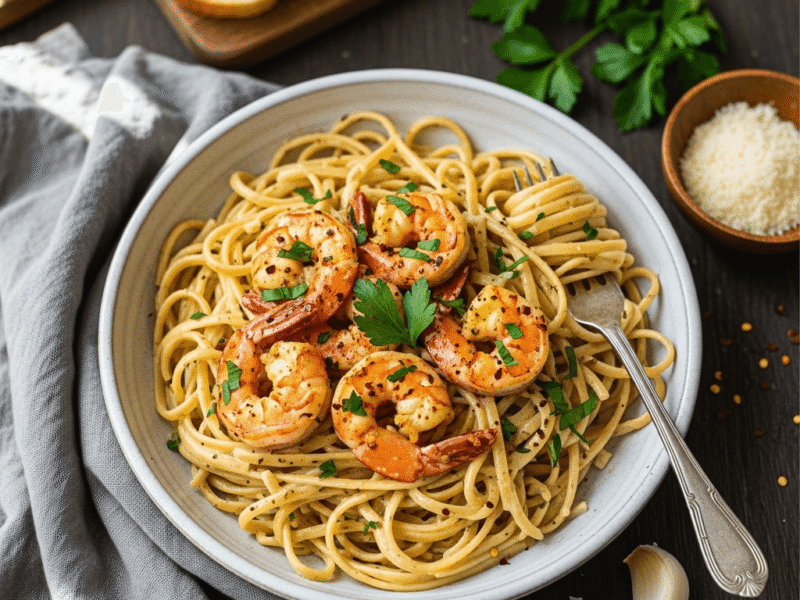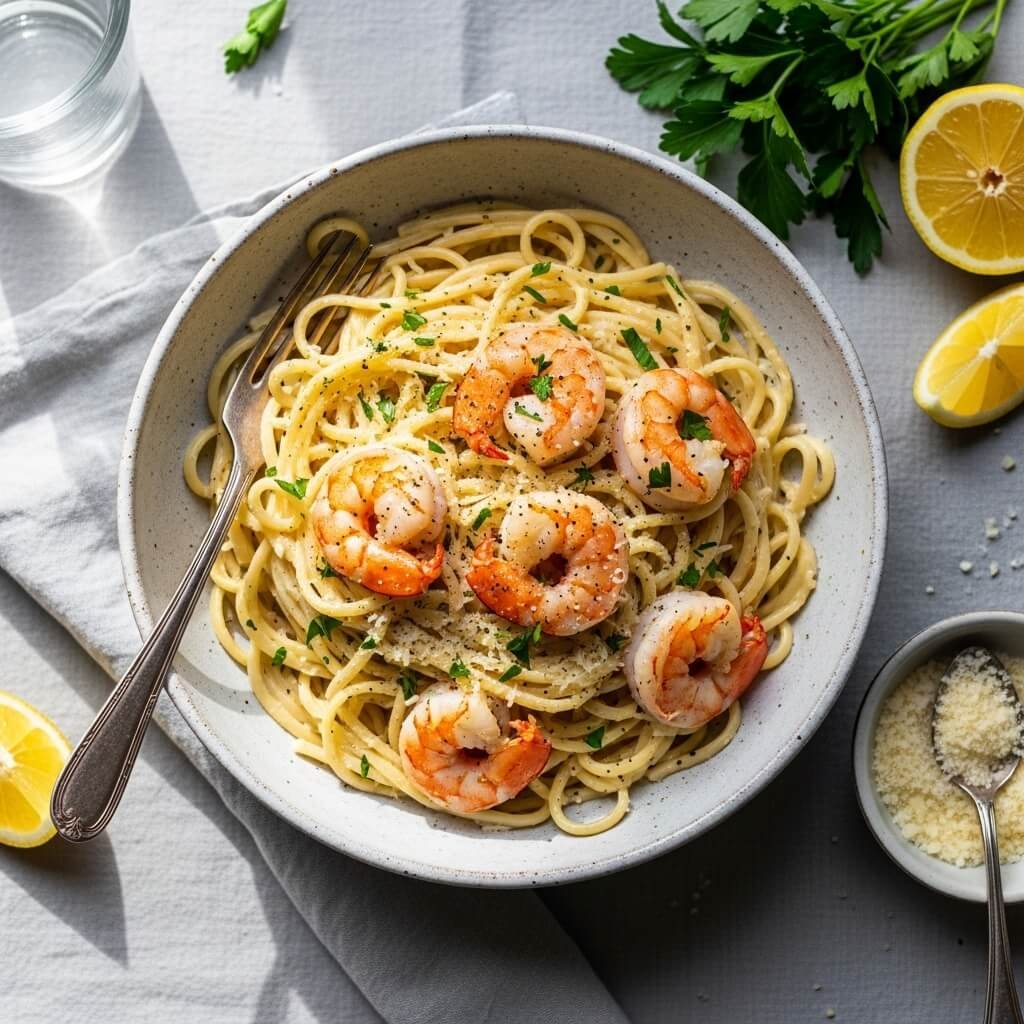
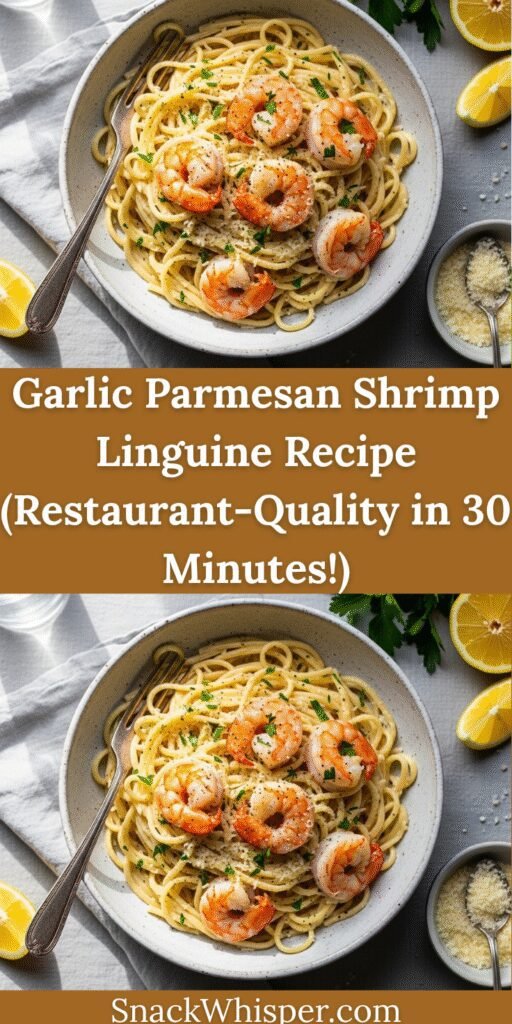
Get ready to fall in love with this Garlic Parmesan Shrimp Linguine—a restaurant-quality pasta dish that comes together in just 30 minutes but tastes like you spent hours perfecting it. This isn’t your average weeknight pasta; it’s an elegant, flavor-packed meal featuring plump, succulent shrimp sautéed in butter and garlic, tossed with perfectly cooked linguine, and coated in a luscious Parmesan cream sauce that clings to every strand of pasta. It’s the kind of dish that makes you feel like a gourmet chef while being surprisingly simple to execute.
What makes this garlic Parmesan shrimp pasta so irresistible is the perfect balance of flavors and textures. The shrimp are seasoned and seared until just cooked through with beautiful golden edges, then bathed in aromatic garlic butter that permeates every bite. The Parmesan sauce is rich and creamy but not heavy, with just enough body to coat the linguine without drowning it. Fresh parsley and a squeeze of lemon brighten everything up, cutting through the richness and adding a fresh, restaurant-quality finish that elevates this from simple to sublime.
This recipe is perfect for date nights when you want to impress without stress, special occasions that call for something elegant yet achievable, or those weeknights when you’re craving something more exciting than your usual rotation. It’s also fantastic for entertaining—you can have most components prepped ahead, then bring it all together quickly while your guests enjoy appetizers. Whether you’re celebrating an anniversary, treating yourself to something special, or just want to bring a little luxury to Tuesday night, this garlic shrimp linguine delivers every single time.
History & Background: Italian-American Love Affair
The story of Garlic Parmesan Shrimp Linguine is a beautiful example of Italian-American fusion cuisine—taking classic Italian techniques and ingredients, then adapting them to American tastes and available seafood. To understand this dish, we need to look at both its Italian roots and its American evolution.
In Italy, pasta with seafood has ancient roots, particularly in coastal regions where fresh catch meets pasta-making traditions. The classic “pasta alle vongole” (pasta with clams) from Naples and “spaghetti ai frutti di mare” (seafood spaghetti) showcase Italy’s approach to seafood pasta: simple preparations that highlight the natural flavors of fresh seafood with minimal ingredients—usually just garlic, olive oil, white wine, and parsley. Traditional Italian cooking philosophy emphasizes “less is more,” allowing quality ingredients to shine.
However, authentic Italian seafood pasta rarely includes cream or cheese. In fact, there’s an Italian culinary rule that cheese and seafood don’t mix (formaggio e pesce non si mescolano). This stems from the belief that cheese’s strong flavor overwhelms delicate seafood, and regional tradition simply didn’t combine them. Coastal Italian dishes focused on the brininess of the sea, not rich dairy.
Enter Italian-American cuisine, which emerged in the late 19th and early 20th centuries as Italian immigrants adapted their traditional recipes to American ingredients, tastes, and expectations. Americans loved rich, creamy sauces and generous portions, so Italian-American restaurants began creating dishes that married Italian techniques with American preferences. Cream sauces became popular additions to pasta, even with seafood, because American diners expected and enjoyed that richness.
Shrimp became a natural choice for Italian-American seafood pasta because it was widely available, affordable (at certain times), and universally loved in America. Unlike some Italian seafood that Americans found unfamiliar, shrimp was already popular. The addition of Parmesan cream sauce broke traditional Italian rules but created something Americans adored—rich, satisfying, and indulgent.
This dish likely evolved in Italian-American restaurants during the 1980s and 1990s when cream-based pasta dishes reached peak popularity. Restaurants like Olive Garden popularized dishes like “Shrimp Scampi” and various creamy seafood pastas, making them household names. Home cooks began recreating these restaurant favorites, and recipes for garlic Parmesan shrimp pasta became staples in American kitchens.
Today, this dish represents the best of Italian-American fusion—it honors Italian techniques of proper pasta cooking and simple flavor building while embracing the American love of rich, creamy comfort food. It’s become a modern classic that bridges both culinary traditions beautifully.
Why You’ll Love This Garlic Parmesan Shrimp Linguine
This recipe is the perfect intersection of impressive and achievable—it looks and tastes like something from an upscale Italian restaurant, but it comes together faster than ordering delivery. The combination of tender shrimp, al dente pasta, and that dreamy garlic Parmesan sauce creates a meal that feels special without requiring advanced cooking skills or hard-to-find ingredients.
Here’s why this shrimp linguine will become your go-to special occasion recipe:
- Restaurant-Quality at Home: Tastes like an expensive Italian restaurant dish but costs a fraction and you control the ingredients
- Quick and Easy: Ready in just 30 minutes from start to finish—perfect for busy weeknights or last-minute dinner guests
- Impressive Presentation: Looks elegant and sophisticated, making it perfect for date nights and entertaining
- Minimal Cleanup: Essentially a one-pot meal (plus the pasta pot), meaning less time scrubbing and more time enjoying
- Crowd-Pleaser: Everyone loves shrimp pasta—it appeals to seafood lovers and pasta enthusiasts alike
- Flexible for Dietary Needs: Easily adaptable for gluten-free diets with pasta substitutes
- Budget-Friendly Elegance: Uses affordable ingredients to create an upscale dining experience
- Garlic Lover’s Dream: Packed with aromatic garlic flavor in the best possible way
- Perfect Protein Portions: Shrimp cooks quickly and provides lean protein that feels indulgent
- Date Night Worthy: Romantic, special, and sophisticated enough for anniversaries or Valentine’s Day
- Kid-Approved: The creamy, mild sauce appeals even to younger palates (adjust garlic as needed)
- Meal Prep Friendly: Makes great leftovers for easy lunches throughout the week
Ingredient Notes: Building Restaurant Flavor
Understanding your ingredients helps you achieve the best results and make smart substitutions. Here’s what goes into this delicious garlic Parmesan shrimp linguine and why each component matters:
Large Shrimp: Use 1 to 1½ pounds of large shrimp (16-20 count or 21-25 count per pound), peeled and deveined. Larger shrimp stay juicier and have better texture. Fresh or frozen work equally well—just thaw frozen shrimp completely and pat very dry. Leave tails on for presentation or remove for easier eating.
Linguine Pasta: This flat pasta shape is perfect for cream sauces because it has more surface area than spaghetti, allowing sauce to cling beautifully. Fettuccine, angel hair, or spaghetti can substitute. Use good-quality dried pasta for best texture.
Garlic: Fresh minced garlic is absolutely essential—this is a garlic-forward dish! Use at least 6 cloves, or more if you’re a garlic lover. Jarred minced garlic or garlic powder won’t deliver the same aromatic punch and fresh flavor.
Parmesan Cheese: Use authentic Parmigiano-Reggiano or good-quality Parmesan, freshly grated from a block. Pre-shredded cheese contains anti-caking agents that prevent smooth melting and create grainy sauce. Pecorino Romano can substitute for sharper, saltier flavor.
Heavy Cream: Creates the rich, silky sauce base. Heavy cream (not half-and-half) has enough fat content to create proper sauce consistency without breaking. For lighter versions, you can use half heavy cream and half whole milk, though sauce will be thinner.
Butter: Unsalted butter is preferred so you control salt levels. It adds richness and helps create the sauce foundation. Olive oil alone won’t give the same luxurious mouthfeel.
White Wine: Dry white wine like Pinot Grigio, Sauvignon Blanc, or Chardonnay adds acidity and depth. The alcohol cooks off, leaving subtle complexity. Chicken broth can substitute if you prefer no alcohol.
Lemon: Fresh lemon juice brightens the rich sauce and complements shrimp beautifully. It cuts through the cream and adds restaurant-quality freshness. Bottled lemon juice doesn’t compare—use fresh!
Italian Seasoning: A blend of dried herbs (oregano, basil, thyme, rosemary) adds complexity. You can use individual herbs, but the blend is convenient and well-balanced.
Red Pepper Flakes: Optional but highly recommended for subtle warmth that balances the richness. Adjust to your heat preference.
Fresh Parsley: Flat-leaf (Italian) parsley adds color, freshness, and herbaceous notes that elevate the dish. It’s worth buying fresh—dried parsley doesn’t provide the same impact.
Equipment Needed
You’ll need these kitchen tools to create this restaurant-quality shrimp linguine:
- Large pot (for boiling pasta, at least 6-quart capacity)
- Large skillet or sauté pan (12-inch, preferably with high sides)
- Colander (for draining pasta)
- Sharp knife and cutting board (for mincing garlic and chopping parsley)
- Tongs or pasta fork (for tossing pasta)
- Wooden spoon or silicone spatula (for stirring)
- Measuring cups and spoons
- Box grater or microplane (for fresh Parmesan)
- Large serving bowl or platter (for presenting the finished dish)
- Citrus juicer or reamer (optional, for extracting lemon juice)
- Paper towels (for drying shrimp—very important!)
-
Print

Garlic Parmesan Shrimp Linguine Recipe (Restaurant-Quality in 30 Minutes!)
- Total Time: 30 minutes
- Yield: 4 servings 1x
- Diet: Gluten Free
Description
This Garlic Parmesan Shrimp Linguine features tender, perfectly cooked shrimp in a creamy garlic Parmesan sauce tossed with al dente linguine. It’s restaurant-quality Italian-American comfort food that’s ready in just 30 minutes—perfect for date nights, special occasions, or impressive weeknight dinners!
Ingredients
ScaleFor the Shrimp:
- 1¼ lbs large shrimp (16-20 count), peeled and deveined
- 2 tablespoons olive oil
- 1 teaspoon Italian seasoning
- ½ teaspoon salt
- ¼ teaspoon black pepper
- ¼ teaspoon red pepper flakes (optional)
For the Pasta:
- 12 oz linguine pasta
- 1 tablespoon salt (for pasta water)
For the Sauce:
- 4 tablespoons unsalted butter
- 6 cloves garlic, minced (about 2 tablespoons)
- ½ cup dry white wine (or chicken broth)
- 1 cup heavy cream
- 1 cup freshly grated Parmesan cheese
- ½ teaspoon Italian seasoning
- ¼ teaspoon red pepper flakes (adjust to taste)
- Salt and black pepper to taste
- 2 tablespoons fresh lemon juice
- ¼ cup fresh parsley, chopped
For Serving:
- Extra Parmesan cheese
- Fresh parsley
- Lemon wedges
- Red pepper flakes
Instructions
- Prep and Season Shrimp: Pat shrimp completely dry with paper towels (this is crucial for good searing!). In a medium bowl, toss shrimp with 2 tablespoons olive oil, 1 teaspoon Italian seasoning, ½ teaspoon salt, ¼ teaspoon black pepper, and ¼ teaspoon red pepper flakes if using. Set aside while you start the pasta.
- Cook the Pasta: Bring a large pot of water to a rolling boil. Add 1 tablespoon salt. Add linguine and cook according to package directions until al dente (usually 9-11 minutes). Before draining, reserve 1 cup of pasta cooking water. Drain pasta in colander and set aside.
- Sear the Shrimp: While pasta cooks, heat a large skillet over medium-high heat. Once hot, add seasoned shrimp in a single layer (work in batches if needed to avoid overcrowding). Cook for 2 minutes without moving them—let them develop a nice golden sear. Flip and cook another 1-2 minutes until pink and just cooked through (they’ll curl into a “C” shape). Don’t overcook or they’ll become rubbery! Transfer cooked shrimp to a plate and set aside.
- Build the Sauce Base: In the same skillet, reduce heat to medium. Add butter and let it melt completely. Add minced garlic and sauté for 1 minute until fragrant and golden, stirring constantly to prevent burning. The garlic should smell amazing but not brown.
- Deglaze with Wine: Pour in white wine (or chicken broth), scraping up any browned bits from the bottom of the pan with a wooden spoon. Let it simmer for 2-3 minutes until reduced by about half. The alcohol will cook off, leaving rich flavor.
- Create the Creamy Sauce: Pour in heavy cream and stir to combine. Add ½ teaspoon Italian seasoning and ¼ teaspoon red pepper flakes. Bring to a gentle simmer and cook for 2-3 minutes, stirring occasionally, until the sauce begins to thicken slightly.
- Add Parmesan: Reduce heat to low. Gradually add grated Parmesan cheese in three additions, stirring constantly and allowing each addition to melt completely before adding more. The sauce should become smooth and creamy. If it seems too thick, add a splash of reserved pasta water to thin it.
- Combine Everything: Add the drained linguine to the skillet with the sauce. Using tongs, toss the pasta to coat every strand evenly with the creamy garlic Parmesan sauce. Add the cooked shrimp back to the pan and toss gently to combine and warm through. Stir in fresh lemon juice and chopped parsley. Taste and adjust seasoning with salt and pepper as needed.
- Serve Immediately: Transfer to a large serving platter or divide among individual plates. Garnish with extra Parmesan cheese, fresh parsley, red pepper flakes, and lemon wedges. Serve immediately while hot—pasta waits for no one!
Notes
- Dry Shrimp are Key: Moisture prevents proper searing and creates steaming instead. Pat shrimp very dry before seasoning for best caramelization.
- Don’t Overcook Shrimp: They cook very quickly! Remove from heat as soon as they turn pink and opaque. They’ll continue cooking slightly from residual heat.
- Fresh Parmesan Only: Pre-shredded cheese won’t melt smoothly due to anti-caking additives. Grate from a block for silky sauce.
- Pasta Water Magic: The starchy pasta water helps the sauce cling to the linguine. Don’t skip reserving it!
- Serve Immediately: Cream sauces and pasta are best enjoyed right away. The pasta absorbs sauce as it sits, so leftovers will be less saucy (still delicious though!).
- Gluten-Free Option: Use your favorite gluten-free linguine and cook according to package directions.
- Prep Time: 10 minutes
- Cook Time: 20 minutes
- Category: Main Dish / Dinner
- Method: Stovetop
- Cuisine: Italian-American
Nutrition
- Serving Size: Approximately 2 cups
- Calories: 685
- Sugar: 3g
- Sodium: 850mg
- Fat: 32g
- Saturated Fat: 17g
- Unsaturated Fat: 13g
- Trans Fat: 0g
- Carbohydrates: 58g
- Fiber: 3g
- Protein: 38g
- Cholesterol: 265mg
-
Nutrition information is approximate and calculated based on standard ingredient measurements. Values will vary depending on specific brands used and modifications made to the recipe.
Tips & Variations: Make It Your Own
Seafood Variations:
- Use scallops instead of shrimp for an elegant twist—sear the same way
- Mix shrimp with scallops for a luxurious seafood medley
- Add lump crab meat in the final step for extra decadence
- Try lobster tails for special occasions (remove meat and cut into chunks)
- Use crawfish tails for a Southern-inspired version
Vegetable Additions:
- Add fresh baby spinach—it wilts perfectly in the hot sauce
- Toss in sun-dried tomatoes for tangy sweetness and color
- Include cherry tomatoes (halved) for fresh bursts of acidity
- Add asparagus tips for spring elegance (blanch first)
- Mix in roasted red peppers for sweetness and color
- Include artichoke hearts for Mediterranean flair
Pasta Alternatives:
- Use fettuccine for a slightly wider noodle
- Try angel hair for a more delicate presentation
- Substitute penne or rigatoni for sauce-catching tubes
- Use zucchini noodles (zoodles) for low-carb/keto option
- Try spaghetti squash for a lighter, vegetable-based version
Sauce Modifications:
- Extra Garlicky: Increase garlic to 8-10 cloves for garlic lovers
- Lighter Version: Use half heavy cream and half whole milk (sauce will be thinner)
- Extra Lemony: Add lemon zest along with juice for brighter flavor
- Wine-Free: Substitute with chicken or seafood broth
- Spicier: Double the red pepper flakes or add diced jalapeños
- Herb Variations: Try fresh basil or oregano instead of parsley
Protein Substitutes:
- Use grilled chicken breast (sliced) for a non-seafood option
- Try Italian sausage (removed from casings and crumbled) for heartier flavor
- Make it vegetarian with chickpeas or white beans instead of shrimp
- Use firm tofu (pressed and cubed) for a plant-based version
Make it Healthier:
- Use whole wheat linguine for added fiber
- Reduce cream to ½ cup and add ½ cup low-sodium chicken broth
- Use less butter (2 tablespoons instead of 4)
- Increase shrimp and reduce pasta for more protein, fewer carbs
Pro Chef Tips: Restaurant-Quality Results
- Pat Shrimp Completely Dry: This is the most important step for perfect shrimp! Excess moisture creates steam instead of a beautiful golden sear. Use paper towels to thoroughly pat each shrimp dry before seasoning. Dry shrimp = caramelized, flavorful crust.
- Don’t Overcrowd the Pan: When searing shrimp, give them space. If they’re touching or overlapping, they’ll steam rather than sear. Work in batches if your pan isn’t large enough. The extra minute is worth it for properly caramelized shrimp.
- Salt Your Pasta Water Generously: It should taste like the sea! This is your only opportunity to season the pasta itself. Well-salted pasta water makes a huge difference in the final dish’s flavor.
- Reserve Pasta Water Before Draining: That starchy water is liquid gold! It helps the sauce emulsify and cling to the pasta. Always reserve at least 1 cup before draining—you can always not use it, but you can’t get it back once poured down the drain.
- Add Parmesan Gradually Over Low Heat: High heat causes Parmesan to clump and become grainy. Add it in batches over low heat, stirring constantly until each addition melts completely. Patience creates silky-smooth sauce.
- Finish Pasta in the Sauce: Don’t just top pasta with sauce—toss them together in the pan over low heat. This allows the pasta to absorb flavors and the sauce to cling properly. Use tongs to gently lift and turn the pasta.
- Adjust Consistency with Pasta Water: If your sauce seems too thick, add reserved pasta water a tablespoon at a time. The starch helps bind everything together while thinning to perfect consistency.
- Fresh Lemon at the End: Add lemon juice after removing from heat. Cooking lemon juice makes it bitter and dull. Fresh squeeze at the end provides bright, vibrant acidity that cuts through richness beautifully.
Common Mistakes to Avoid
Overcooking the Shrimp: This is the #1 mistake! Shrimp cook incredibly fast—usually just 2-3 minutes total. They’re done when they turn pink and opaque, curling into a “C” shape. If they curl into tight “O” shapes, they’re overcooked and will be rubbery and tough. Remove from heat immediately when pink.
Using Pre-Grated Parmesan: Pre-shredded cheese contains cellulose (anti-caking agent) that prevents it from melting smoothly into the sauce. The result is grainy, clumpy sauce instead of silky cream. Always grate fresh Parmesan from a block—it makes a dramatic difference in texture.
Not Reserving Pasta Water: If you forget to reserve pasta water before draining, you’ve lost the secret ingredient that helps create restaurant-quality sauce. That starchy water is crucial for proper consistency and helping sauce cling to pasta. Set your measuring cup by the sink as a reminder!
Adding Cheese Over High Heat: When heat is too high, Parmesan proteins seize up and separate, creating a grainy, broken sauce instead of creamy perfection. Always reduce to low heat before adding cheese, and add it gradually while stirring constantly.
Not Seasoning in Layers: Seasoning only at the end creates flat flavor. Season the shrimp before cooking, salt the pasta water generously, and taste the sauce before serving, adjusting as needed. Building flavor throughout the cooking process creates depth that last-minute seasoning can’t achieve.
Letting the Dish Sit: This pasta dish is meant to be served immediately! The hot pasta continues absorbing sauce as it sits, and cream sauces don’t reheat as beautifully as they taste fresh. Have your table set and everyone ready to eat before you finish the dish.
Storage & Meal Prep: Keeping It Delicious
Refrigerator Storage: Store leftover garlic Parmesan shrimp linguine in an airtight container in the refrigerator for up to 3 days. Note that the pasta will absorb much of the sauce as it sits, so leftovers will be less creamy than when freshly made—still delicious, just drier.
Reheating Instructions:
- Stovetop Method (Best): Place pasta in a skillet over medium-low heat. Add 2-3 tablespoons of heavy cream, milk, or chicken broth per serving to refresh the sauce. Heat gently, stirring frequently, for 3-5 minutes until warmed through. This method best restores the creamy texture.
- Microwave Method: Place in a microwave-safe bowl, add a splash of cream or milk, cover with a damp paper towel, and heat in 1-minute intervals, stirring between, until hot. Be careful not to overheat the shrimp or they’ll become rubbery.
- Add Fresh Elements: When reheating, consider adding fresh parsley, a squeeze of lemon, and extra Parmesan to brighten the flavors.
Meal Prep Considerations: While this dish tastes best fresh, you can prep components ahead:
- Clean and devein shrimp up to 24 hours ahead, store in fridge
- Mince garlic and grate Parmesan up to 2 days ahead, store separately in airtight containers
- Chop parsley the morning of serving
- Measure out all ingredients so cooking goes quickly
However, I don’t recommend making the complete dish ahead for meal prep, as cream-based pasta dishes don’t hold up as well as other meals. This is best enjoyed fresh or within 2-3 days.
Make-Ahead & Freezer Notes
Make-Ahead Options: While this dish is best served fresh, you can prep components in advance to make cooking faster:
Option 1 – Prep Ingredients:
- Clean, devein, and season shrimp up to 24 hours ahead; refrigerate covered
- Mince garlic, grate Parmesan, and chop parsley; store separately in the fridge
- Measure out all other ingredients so you can cook quickly when ready
Option 2 – Partial Cooking: You can cook the pasta to al dente, drain, and toss with a tiny bit of olive oil to prevent sticking. Store in the fridge for up to 1 day. When ready to serve, refresh the pasta briefly in boiling water (30 seconds), then proceed with making the sauce and combining.
Freezing Instructions: Honestly, I don’t recommend freezing this dish. Cream-based sauces often separate and become grainy when frozen and thawed, and shrimp can become rubbery with freezing. Additionally, pasta texture degrades significantly in the freezer.
If You Must Freeze:
- Cool completely and freeze in airtight containers for up to 1 month
- Thaw overnight in refrigerator
- Expect texture changes—the sauce will likely separate and pasta will be softer
- Reheat very gently on stovetop, whisking vigorously to try to bring sauce back together
- Add fresh cream and Parmesan to help restore creaminess
- Accept that it won’t be quite the same as fresh
Best Practice: Since this dish comes together so quickly (30 minutes), I recommend making it fresh rather than freezing. The superior taste and texture are worth the minimal extra effort.
Serving Suggestions: Complete Your Italian Feast
This rich, creamy garlic Parmesan shrimp linguine pairs beautifully with lighter sides that complement rather than compete with the indulgent pasta:
Perfect Side Dishes:
- Classic Caesar salad with crisp romaine and homemade croutons
- Simple arugula salad with lemon vinaigrette
- Roasted asparagus with lemon and Parmesan
- Garlic roasted Brussels sprouts
- Steamed or sautéed green beans with garlic
- Caprese salad with fresh mozzarella, tomatoes, and basil
- Grilled or roasted zucchini
Bread Options:
- Crusty Italian bread or ciabatta for soaking up sauce
- Garlic bread or garlic knots (can never have too much garlic!)
- Homemade focaccia bread
- Warm breadsticks brushed with garlic butter
- Cheesy garlic bread
Wine Pairings:
- White Wine: Pinot Grigio, Sauvignon Blanc, or Chardonnay (whatever you cooked with!)
- Light Red: Pinot Noir if you prefer red wine
- Sparkling: Prosecco or Champagne for celebrations
- Rosé: A dry rosé works beautifully with shrimp
Non-Alcoholic Beverages:
- Sparkling water with lemon
- Italian lemon soda
- Iced tea (unsweetened or lightly sweetened)
- Sparkling grape juice for special occasions
Perfect Occasions:
- Romantic date nights at home
- Anniversary dinners
- Valentine’s Day celebrations
- Special birthday dinners
- Impressive weeknight meals
- Dinner parties with friends
- Any time you want to feel fancy!
Complete Menu Ideas:
- Appetizer: Bruschetta or caprese skewers
- Main: Garlic Parmesan Shrimp Linguine
- Side: Caesar salad and garlic bread
- Dessert: Tiramisu or panna cotta
Frequently Asked Questions
Can I use frozen shrimp? Absolutely! Frozen shrimp work perfectly well. Thaw them completely in the refrigerator overnight or in a bowl of cold water for 20-30 minutes. The crucial step is patting them completely dry with paper towels before cooking—frozen shrimp retain more moisture, so drying is even more important for achieving a good sear.
What size shrimp should I buy? Large shrimp (16-20 count or 21-25 count per pound) work best. They’re substantial enough to stay juicy and not overcook while searing. Smaller shrimp cook so quickly that they’re easy to overcook, and jumbo shrimp take longer and may not cook evenly. The “count” refers to how many shrimp per pound—lower numbers mean bigger shrimp.
Can I make this without wine? Yes! Substitute the white wine with low-sodium chicken broth or seafood stock. You’ll miss some of the subtle complexity wine provides, but the dish will still be delicious. Add an extra tablespoon of lemon juice to compensate for the acidity wine provides.
Why did my sauce turn grainy? Grainy sauce usually results from adding cheese over too-high heat or using pre-shredded cheese with anti-caking agents. Always reduce heat to low before adding Parmesan, add it gradually, and use freshly grated cheese from a block. If your sauce does turn grainy, try whisking in a tablespoon of cream over very low heat.
Can I make this ahead for a dinner party? This dish is best served immediately for optimal texture and creaminess. However, you can prep all ingredients in advance (cleaned shrimp, minced garlic, grated cheese, chopped parsley) so assembly goes quickly. Cook the pasta while guests enjoy appetizers, then execute the dish in about 15 minutes. The fresh-made quality is worth it!
My shrimp turned out rubbery. What happened? Rubbery shrimp are overcooked. Shrimp cook incredibly fast—just 2-3 minutes total. They’re done when they turn pink and curl into a “C” shape. If they curl tightly into an “O,” they’re overcooked. Remove from heat immediately when pink and opaque. They’ll continue cooking slightly from residual heat.
Can I use a different type of pasta? Definitely! While linguine is traditional, fettuccine, spaghetti, angel hair, or even penne work well. Choose based on your preference—long pasta (linguine, fettuccine) is elegant, while tube pasta (penne, rigatoni) captures more sauce inside. Just cook according to package directions.
How do I know when the sauce is thick enough? The sauce should coat the back of a spoon but still flow easily. It will look thinner than you expect—remember, it will thicken slightly as it cools and as the pasta absorbs it. If it seems too thin, simmer uncovered for 2-3 more minutes. Too thick? Add pasta water a tablespoon at a time.
Conclusion: Your New Favorite Date Night Dinner
This Garlic Parmesan Shrimp Linguine is more than just another pasta recipe—it’s your ticket to restaurant-quality dining in the comfort of your own home. The combination of perfectly seared shrimp, aromatic garlic, rich Parmesan cream sauce, and tender linguine creates a meal that’s both comforting and elegant, familiar yet special. It’s the kind of dish that makes ordinary nights feel like celebrations and turns special occasions into unforgettable memories.
What makes this recipe truly invaluable is how it delivers maximum impact with minimal effort. In just 30 minutes, using ingredients you can find at any grocery store, you can create something that rivals expensive Italian restaurants. The technique is straightforward, the ingredients are simple, yet the results are consistently impressive. Whether you’re a confident home cook or just starting your culinary journey, this recipe sets you up for success.
The beauty of this shrimp linguine lies not just in how it tastes, but in what it represents—taking time to make something special, whether for someone you love or just for yourself. It’s proof that restaurant-quality doesn’t require professional training or exotic ingredients; it just requires good technique, quality ingredients, and a little care. This is the recipe that transforms weeknight dinners into occasions worth remembering.
Ready to bring restaurant elegance to your dinner table? Make this Garlic Parmesan Shrimp Linguine tonight! Your taste buds (and your dinner guests) will thank you. Don’t forget to snap a photo of your beautiful creation and share it on Pinterest—I’d love to see how yours turns out! Drop a comment below with your favorite variation or how you served it, and save this recipe so you can make it whenever you need something special. Happy cooking!