If you’re searching for a pasta recipe that’s incredibly simple yet absolutely bursting with flavor, this Garlic Parmesan Pasta is about to become your new go-to weeknight dinner. This dish features perfectly cooked pasta tossed in a luxurious, creamy sauce made with butter, fresh garlic, and loads of freshly grated Parmesan cheese. It’s the kind of meal that tastes like you ordered it from an Italian restaurant but comes together in just 15 minutes using ingredients you probably already have in your kitchen.
What makes this Garlic Parmesan Pasta truly special is its beautiful simplicity. We’re not talking about a complicated recipe with a mile-long ingredient list—instead, this is all about letting a few high-quality ingredients shine. The combination of nutty, salty Parmesan cheese, aromatic garlic sautéed in butter, and a splash of starchy pasta water creates a silky sauce that coats every strand of pasta in pure deliciousness. It’s comfort food at its finest, proving that sometimes the simplest recipes are the most satisfying.
This recipe is incredibly versatile and works beautifully for so many situations. It’s perfect for those busy weeknights when you need dinner on the table fast, ideal as a simple side dish to accompany grilled chicken or fish, wonderful for picky eaters who love familiar flavors, and elegant enough to serve to guests when paired with a protein and fresh salad. Whether you’re cooking for kids who devour anything with cheese, teenagers with endless appetites, or adults who appreciate good Italian-inspired cooking, this Garlic Parmesan Pasta consistently delivers comfort and satisfaction in every bite.
The Rich History Behind Garlic and Parmesan Pasta
To understand this beloved dish, we need to look at the traditions of Italian cucina povera—the “poor kitchen” philosophy that created some of Italy’s most iconic pasta dishes. For centuries, Italian cooks have known that you don’t need expensive or elaborate ingredients to create something absolutely delicious. Some of the most beloved Italian pasta dishes—like cacio e pepe (cheese and pepper), aglio e olio (garlic and oil), and pasta al burro (pasta with butter)—prove that magic happens when simple, quality ingredients are treated with respect and proper technique.
Garlic Parmesan Pasta draws inspiration from several classic Italian preparations, particularly “aglio e olio” (garlic and oil) from Southern Italy and “pasta al burro e parmigiano” (pasta with butter and Parmesan) from Northern regions. In Naples and throughout Southern Italy, aglio e olio became a staple because garlic, olive oil, and pasta were affordable, shelf-stable ingredients that could create a satisfying meal even in the leanest times. Meanwhile, in Northern Italy, particularly in Emilia-Romagna (the home of Parmigiano-Reggiano cheese), simple butter and Parmesan pasta was considered the height of elegant simplicity.
The combination of garlic with Parmesan is actually a more modern, Italian-American fusion that brings together the best of both traditions. When Italian immigrants came to America in the late 19th and early 20th centuries, they adapted their traditional recipes with the ingredients available to them. Butter became more common in Italian-American cooking than it was in many parts of Italy, and generous amounts of Parmesan cheese—which was more affordable in America than back home—became a hallmark of Italian-American cuisine.
This Garlic Parmesan Pasta represents that beautiful evolution of Italian cooking traditions—honoring the simplicity and technique of authentic Italian pasta-making while embracing the abundance and accessibility that Italian-American cooking celebrates. It’s a dish that respects its roots while being perfectly adapted for modern home kitchens, where quick, delicious, and reliable recipes are always in demand.
Why You’ll Love This Garlic Parmesan Pasta
This recipe is an absolute winner that checks every box for what makes a great meal. Once you taste that first forkful of pasta coated in creamy, garlicky, cheese-laden sauce, you’ll understand why this dish has become such a beloved staple. The combination of simple ingredients creates something far greater than the sum of its parts.
Here’s why this Garlic Parmesan Pasta will become your favorite recipe:
- Lightning Fast: Ready in just 15 minutes from start to finish—perfect for those hectic evenings when time is tight
- Pantry-Friendly: Uses basic ingredients you likely already have on hand, making it perfect for last-minute meals
- Kid-Approved: The familiar flavors of butter, garlic, and cheese make this a hit with even the pickiest eaters
- Budget-Friendly: Costs just a few dollars to make but tastes like a million bucks
- Foolproof: Even beginner cooks can master this recipe—it’s nearly impossible to mess up
- Vegetarian-Friendly: Perfect for meatless Monday or vegetarian guests without feeling like you’re missing anything
- Infinitely Customizable: Easy to add proteins, vegetables, or adjust flavors to suit your preferences
- Impressive Simplicity: Looks and tastes elegant enough to serve to guests despite being incredibly easy
- One-Pot Wonder: Minimal dishes to clean—just a pot for pasta and a pan for the sauce
- Amazing Base Recipe: Works as a delicious meal on its own or as a foundation for more elaborate dishes
Ingredient Notes: What You’ll Need and Why
Understanding your ingredients is key to achieving the best results. Let’s break down what makes this dish so delicious.
Pasta: Any long pasta works beautifully here—spaghetti, linguine, fettuccine, or angel hair are all excellent choices. You’ll need about 1 pound to serve 4-6 people. Long pasta shapes work best because they coat beautifully with the sauce. Short pasta like penne or rigatoni can work, but the sauce doesn’t cling quite as well.
Parmesan Cheese: This is absolutely crucial—use genuine Parmigiano-Reggiano or good-quality Parmesan, and always grate it fresh from a block. Pre-grated cheese contains anti-caking agents that prevent it from melting smoothly and don’t deliver the same flavor. You’ll need about 1½ cups freshly grated, plus extra for serving. Don’t skimp here—quality Parmesan makes a huge difference.
Garlic: Fresh garlic is non-negotiable for the best flavor. You’ll need 6-8 large cloves, minced or thinly sliced. This might seem like a lot, but cooking mellows garlic’s bite while intensifying its aromatic sweetness. Don’t substitute with garlic powder—it’s not the same.
Butter: Real, high-quality unsalted butter creates richness and helps emulsify the sauce. You’ll need about 4-6 tablespoons. Unsalted gives you control over the salt level. European-style butter with higher fat content creates an even more luxurious sauce.
Olive Oil: Used in combination with butter to prevent burning while adding its own flavor. You’ll need 2-3 tablespoons of good-quality extra virgin olive oil.
Pasta Water: This is your secret weapon! The starchy cooking water helps create a silky, cohesive sauce. Always reserve at least 1-2 cups before draining your pasta.
Heavy Cream (optional): A splash of heavy cream (about ¼ cup) creates an even richer, creamier sauce. This is optional—the recipe works beautifully without it for a lighter version.
Fresh Herbs: Fresh parsley adds color and freshness, though it’s optional. Fresh basil also works beautifully if you prefer it.
Seasonings: Salt for the pasta water, black pepper for seasoning, and red pepper flakes for optional heat.
Equipment Needed
Having the right tools makes this recipe even easier. Here’s what you’ll need:
- Large pot for boiling pasta (at least 6 quarts)
- Large skillet or sauté pan (12-inch is ideal)
- Colander for draining pasta
- Tongs or pasta fork for tossing and serving
- Sharp knife and cutting board for prepping garlic
- Box grater or microplane for grating Parmesan
- Measuring cups and spoons
- Ladle or measuring cup for reserving pasta water
- Wooden spoon or spatula for stirring
- Serving bowls or plates
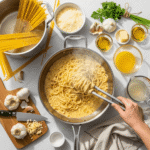
Garlic Parmesan Pasta Recipe
- Total Time: 15 minutes
- Yield: 4-6 servings 1x
- Diet: Gluten Free
Description
This Easy Garlic Parmesan Pasta features perfectly cooked pasta tossed in a creamy, buttery sauce with loads of fresh garlic and Parmesan cheese. Ready in just 15 minutes, it’s the ultimate quick weeknight dinner that tastes like restaurant-quality Italian food.
Ingredients
For the Pasta:
- 1 pound pasta (spaghetti, linguine, or fettuccine)
- 1 tablespoon salt (for pasta water)
- 1-2 cups reserved pasta water
For the Garlic Parmesan Sauce:
- 4 tablespoons unsalted butter
- 3 tablespoons extra virgin olive oil
- 8 cloves garlic, minced or thinly sliced
- ¼ cup heavy cream (optional, for extra creaminess)
- 1½ cups freshly grated Parmesan cheese, plus more for serving
- ½ teaspoon black pepper
- ¼ teaspoon red pepper flakes (optional, for heat)
- Salt to taste
- ¼ cup fresh parsley, chopped (optional, for garnish)
- 2 tablespoons fresh lemon juice (optional, for brightness)
Instructions
- Boil the Pasta: Bring a large pot of water to a rolling boil. Add 1 tablespoon of salt—the water should taste like the sea. Add pasta and cook according to package directions until al dente (usually 8-10 minutes). Before draining, reserve 2 cups of pasta water. This starchy water is essential for creating a silky sauce.
- Start the Sauce: While pasta cooks, heat a large skillet over medium heat. Add butter and olive oil. The combination prevents burning while adding flavor from both fats.
- Cook the Garlic: Once butter melts and starts to foam, add the minced garlic. Sauté for 1-2 minutes, stirring constantly, until fragrant and just beginning to turn golden. Be careful not to burn the garlic—it goes from perfect to burnt quickly and will taste bitter.
- Add Pasta Water: Add about ½ cup of the reserved pasta water to the skillet. The water will bubble vigorously—this is good! The starch in the water helps emulsify the sauce. If using heavy cream, add it now and stir to combine.
- Add Cheese Gradually: Reduce heat to medium-low. Add the grated Parmesan cheese about ⅓ cup at a time, stirring constantly and allowing each addition to melt before adding more. This gradual method prevents clumping and creates a smooth, creamy sauce.
- Create the Sauce: Continue stirring and add more pasta water as needed, a little at a time, until the sauce reaches a creamy, silky consistency that coats the back of a spoon. The sauce should be slightly thinner than you want in the final dish—it will thicken when tossed with pasta.
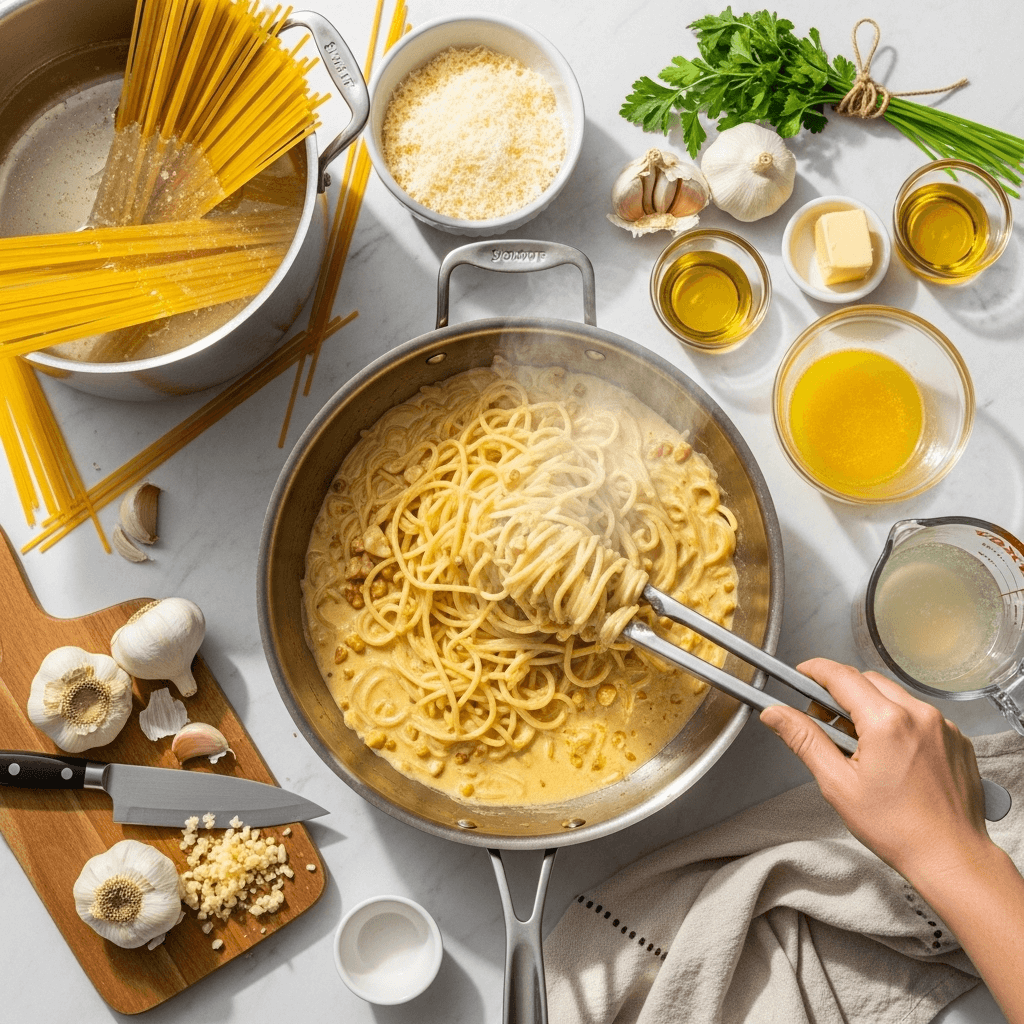
- Combine Pasta and Sauce: Using tongs or a pasta fork, transfer the drained pasta directly to the skillet with the sauce (or pour the sauce over the pasta if your skillet isn’t large enough). Toss vigorously for 1-2 minutes, adding more pasta water as needed. The pasta should be evenly coated with a glossy, creamy sauce.
- Season and Finish: Add black pepper and taste for salt (you may not need much since Parmesan is salty). If using, add red pepper flakes and lemon juice. Toss again to combine.
- Add Fresh Herbs: Remove from heat and toss in fresh chopped parsley if using. The residual heat will wilt the herbs and release their aroma.
- Serve Immediately: Transfer to serving bowls or plates. Top with additional grated Parmesan cheese and a drizzle of good olive oil if desired. Serve immediately while hot—pasta waits for no one!
Notes
- Fresh Parmesan is Essential: Pre-grated cheese won’t melt properly and contains additives that prevent a smooth sauce.
- Reserve Extra Pasta Water: Always reserve more than you think you need. It’s your best tool for adjusting sauce consistency.
- Don’t Rinse Pasta: Never rinse cooked pasta—the surface starch helps the sauce adhere.
- Serve Immediately: This pasta is best enjoyed right away. The sauce thickens as it sits, though you can loosen it with pasta water when reheating.
- Adjust Consistency: If sauce is too thick, add more pasta water. If too thin, add more cheese or simmer longer.
- Watch the Garlic: Burnt garlic is bitter. If it starts to brown too quickly, add pasta water immediately to stop cooking.
- Prep Time: 5 minutes
- Cook Time: 10 minutes
- Category: Dinner, Main Course, Side Dish
- Method: Stovetop, Boiling
- Cuisine: Italian-American
Nutrition
- Serving Size: About 1½ cups (based on 6 servings)
- Calories: 428
- Sugar: 2g
- Sodium: 487mg
- Fat: 18g
- Saturated Fat: 9g
- Unsaturated Fat: 7g
- Trans Fat: 0g
- Carbohydrates: 52g
- Fiber: 2g
- Protein: 16g
- Cholesterol: 38mg
Nutrition information is calculated automatically and should be used as an estimate only. Values vary based on specific ingredients and portion sizes.
Tips & Variations to Make It Your Own
One of the best things about this recipe is how easily you can customize it. Here are some delicious variations:
Add Protein: Toss in grilled chicken breast, sautéed shrimp, crispy bacon, or pan-seared scallops for a heartier meal. Cook proteins separately and add at the end.
Vegetable Additions: Stir in sautéed mushrooms, roasted cherry tomatoes, wilted spinach, steamed broccoli, or roasted asparagus for extra nutrition and color.
Lemon Garlic Version: Add 2 tablespoons fresh lemon juice and 1 teaspoon lemon zest for a bright, citrusy variation that’s incredibly fresh.
Spicy Garlic Parmesan Pasta: Increase red pepper flakes to ½-1 teaspoon, or add a splash of hot sauce for those who like heat.
Creamy Alfredo-Style: Double the cream and add cream cheese for an ultra-rich, Alfredo-like sauce.
Herb Variations: Try fresh basil, thyme, or oregano instead of parsley. Each herb creates a different flavor profile.
Sun-Dried Tomato Addition: Add chopped sun-dried tomatoes for a sweet-tart element that pairs beautifully with garlic and Parmesan.
White Wine Upgrade: Deglaze the pan with ¼ cup white wine before adding pasta water for sophisticated depth.
Gluten-Free Option: Use your favorite gluten-free pasta. The sauce works perfectly with any pasta type.
Pro Chef Tips for Restaurant-Quality Results
Want to elevate this simple dish to restaurant quality? Here are professional techniques:
Salt Your Pasta Water Generously: The water should taste like seawater (about 1-2 tablespoons salt per gallon). This is your only chance to season the pasta from within.
Cook Pasta One Minute Under: Cook pasta 1 minute less than package directions suggest, then finish cooking in the sauce. This allows it to absorb flavors while reaching perfect texture.
Use the Right Pasta-to-Sauce Ratio: Don’t drown your pasta in sauce. It should be lightly coated, not swimming. You can always add more sauce, but you can’t remove it.
Toast the Garlic Properly: Let garlic sizzle in the fat for 1-2 minutes until it’s fragrant and just starting to color. This mellows the harsh bite and creates sweet, nutty flavors.
Emulsify Like a Pro: The vigorous tossing motion while adding pasta water creates an emulsion—this is what makes restaurant pasta so glossy and cohesive.
Room Temperature Cheese: Let Parmesan come to room temperature before grating. It melts more smoothly and incorporates better.
Finish with Cold Butter: Adding a tablespoon of cold butter at the very end (called “mounting” the sauce) creates incredible glossiness and richness.
Use Good Olive Oil: Finish with a drizzle of high-quality extra virgin olive oil just before serving for a flavor boost.
Pasta Water is Gold: The starchy water is your secret ingredient. It helps bind the sauce and creates that silky texture. Don’t skip it!
Common Mistakes to Avoid
Even simple recipes can go wrong. Here’s what to watch out for:
Using Pre-Grated Parmesan: Pre-grated cheese contains cellulose (an anti-caking agent) that prevents smooth melting and creates a grainy sauce. Always grate fresh from a block for creamy, smooth results.
Not Reserving Enough Pasta Water: This is the #1 mistake! Always reserve at least 1-2 cups before draining. You might not use it all, but you can’t get it back once it’s poured down the drain.
Rinsing the Pasta: Never rinse cooked pasta unless making a cold pasta salad. The surface starch helps the sauce adhere and contributes to sauce consistency.
Burning the Garlic: Garlic burns quickly once it hits hot fat. Use medium heat, stir constantly, and add liquid immediately if it starts browning too fast. Burnt garlic is irredeemably bitter.
Adding Cheese to Boiling Sauce: If your sauce is boiling when you add cheese, it can separate and become grainy. Always reduce to low heat before adding cheese.
Letting It Sit Too Long: This pasta is best served immediately. The sauce thickens as it cools, and while you can loosen it with pasta water, it’s never quite as good as when freshly made.
Storage & Meal Prep
While this pasta is definitely best fresh, here’s how to handle leftovers:
Refrigerator Storage: Store cooled pasta in an airtight container in the refrigerator for up to 3 days. The sauce will thicken considerably as it cools—this is normal.
Reheating Instructions: Reheat gently in a skillet over medium-low heat with a generous splash of water, broth, or cream. Stir frequently until heated through and the sauce loosens. Microwave reheating works too—use 50% power and stir every 30 seconds, adding liquid to loosen the sauce.
Meal Prep Strategy: This isn’t ideal for traditional meal prep since pasta is best fresh, but you can prep ingredients ahead: mince garlic, grate cheese, and measure everything out. Then cooking takes just 15 minutes when ready.
Sauce Separation: The sauce may separate slightly when stored. Simply stir vigorously while reheating and add liquid to bring it back together.
Texture Changes: Reheated pasta won’t have quite the same silky texture as fresh, but it’s still delicious. The key is adding enough liquid to recreate that creamy consistency.
Make-Ahead & Freezer Notes
Given the 15-minute cooking time, this recipe is best made fresh rather than frozen or made ahead:
Component Prep: Prep all ingredients up to 24 hours ahead: mince garlic and store in olive oil in the fridge, grate cheese and refrigerate covered, measure out all ingredients. Then final cooking takes just minutes.
Freezing Cooked Pasta: I don’t recommend freezing this dish. Cream and cheese-based sauces often separate when frozen and thawed, and pasta texture suffers. If you must freeze, freeze for no more than 1 month. Thaw in refrigerator overnight and reheat gently with additional cream or pasta water.
Fresh is Best: Since this recipe is so quick to make, there’s really no need to make it ahead. Keep the ingredients on hand and you can have fresh pasta on the table in 15 minutes anytime.
Garlic Prep: Minced garlic can be prepped and frozen in ice cube trays with olive oil. Pop out a cube when needed for quick cooking.
Serving Suggestions: Complete Your Meal
This Garlic Parmesan Pasta is versatile enough to serve as a main course or side dish. Here are the best accompaniments:
Proteins: Pair with grilled chicken breast, pan-seared salmon, seared scallops, breaded chicken cutlets, or grilled shrimp for a complete meal.
Salads: A crisp Caesar salad, fresh arugula salad with lemon vinaigrette, caprese salad, or simple mixed greens balance the richness perfectly.
Vegetables: Serve alongside roasted asparagus, sautéed green beans, roasted Brussels sprouts, or steamed broccoli for added nutrition.
Bread: Crusty Italian bread, garlic bread, or focaccia is essential for soaking up any extra sauce left in the bowl.
Wine Pairing: A crisp Pinot Grigio, unoaked Chardonnay, or Sauvignon Blanc pairs beautifully with the garlic and cheese. For red wine lovers, a light Chianti works nicely.
Complete Meal Ideas: Serve with grilled chicken and Caesar salad, pair with seared salmon and roasted asparagus, or enjoy with Italian sausage and sautéed peppers.
As a Side Dish: This pasta makes an excellent side for grilled meats, roasted chicken, or baked fish when you want something more special than plain pasta.
Frequently Asked Questions
Can I use dried herbs instead of fresh?
Yes, though fresh herbs provide better flavor and color. If using dried parsley or basil, use about 1 tablespoon (one-third the amount of fresh) and add it while cooking rather than at the end.
What’s the best pasta shape for this recipe?
Long pasta shapes like spaghetti, linguine, or fettuccine work best because they coat beautifully with the sauce. Short pasta can work but doesn’t capture the sauce as well.
Can I make this without cream?
Absolutely! The cream is optional. The combination of butter, pasta water, and Parmesan creates a creamy sauce on its own through emulsification. The cream just makes it extra rich.
Why does my sauce look separated or oily?
This usually happens if the sauce got too hot, causing the cheese to break, or if you didn’t use enough pasta water to create a proper emulsion. Add more pasta water and stir vigorously off the heat to bring it back together.
Can I use garlic powder instead of fresh garlic?
Fresh garlic is really important for this recipe since it’s a primary flavor. Garlic powder won’t give you the same aromatic, complex flavor. If you must, use about 1 tablespoon garlic powder, but the results won’t be as good.
How do I prevent the garlic from burning?
Use medium (not high) heat, stir constantly while cooking, and add the pasta water as soon as the garlic becomes fragrant and starts to color. If it’s browning too quickly, immediately add liquid to stop the cooking.
Can I add vegetables directly to the pasta?
Yes! Add heartier vegetables like broccoli or asparagus to the boiling pasta water during the last 3-4 minutes of cooking. Softer vegetables like spinach can be stirred directly into the hot finished pasta.
Conclusion: Your New Favorite Easy Dinner
There you have it—the ultimate Garlic Parmesan Pasta that’s about to transform your weeknight dinners and become your most-requested recipe! This dish perfectly embodies the beauty of Italian cooking: simple, quality ingredients treated with respect and proper technique to create something absolutely delicious. The magic happens when tender pasta meets that silky, garlicky, cheese-laden sauce that makes every bite utterly satisfying.
What I love most about this recipe is how it proves that you don’t need complicated ingredients or fancy techniques to create restaurant-quality food at home. In just 15 minutes, using pantry staples, you can have a meal on the table that tastes like you spent hours cooking. Whether you’re serving it as a quick weeknight dinner, a comforting side dish, or dressing it up with proteins and vegetables for company, it consistently delivers comfort and flavor.
I truly hope this Garlic Parmesan Pasta becomes a cherished staple in your recipe collection, just as it has in mine. If you make this recipe, I’d absolutely love to hear about your experience! Leave a comment below sharing how it turned out, any creative variations you tried, or what you served alongside it. Did you add protein? Incorporate vegetables? Make it extra creamy? Your feedback and tips help our cooking community, and I genuinely enjoy reading your stories!