If you’ve been searching for a salmon recipe that’s elegant enough for company yet simple enough for a Tuesday night, this Garlic Parmesan Baked Salmon is about to become your seafood staple. Picture perfectly flaky salmon fillets topped with a golden, buttery Parmesan crust infused with fragrant garlic and herbs. The result is restaurant-quality fish that’s crispy on top, tender and moist inside, with flavor that makes everyone think you’re a gourmet chef – even though the whole thing takes just 20 minutes from start to finish.
This recipe is a lifesaver for busy home cooks who want to eat healthily without sacrificing taste or spending hours in the kitchen. Salmon is naturally rich in omega-3 fatty acids and protein, making it one of the healthiest proteins you can eat. When you combine it with the savory goodness of Parmesan cheese, butter, and garlic, you get a dish that’s both nutritious and utterly craveable. The beauty of this baked salmon is its versatility – it’s perfect for meal prep Sundays, date night dinners, family gatherings, or those evenings when you want something special but have zero energy for complicated cooking.
What makes this garlic Parmesan baked salmon particularly brilliant is that it looks and tastes impressive while being nearly foolproof. The Parmesan topping forms a delicious crust that seals in moisture, preventing the dreaded dry salmon that turns people off from cooking fish at home. Whether you’re a seafood novice or an experienced cook, this recipe delivers consistent, delicious results every single time.
History / Background
Salmon has been a prized food source for thousands of years, particularly in Pacific Northwest indigenous cultures and Nordic countries where wild salmon runs were abundant. Native American tribes along the Columbia River and Alaska developed sophisticated fishing techniques and preservation methods, recognizing salmon as a sacred food that sustained their communities. In Scandinavian countries, salmon has been central to cuisine for centuries, appearing in everything from gravlax to smoked preparations.
The tradition of baking fish with cheese and herbs has deep roots in European cuisine, particularly in Italian and French cooking. Italian cuisine has long celebrated the combination of Parmesan cheese (Parmigiano-Reggiano) with seafood, despite the old “rule” against mixing cheese and fish – Northern Italian regions near both the sea and dairy-producing areas have historically combined these ingredients with delicious results. French cuisine contributed the technique of topping fish with buttery, herb-infused crusts that protect the delicate flesh during cooking.
This particular recipe represents a beautiful fusion of Italian flavors (Parmesan and garlic) with classic American ease and convenience. As salmon farming became more widespread in the 1980s and 1990s, fresh salmon became accessible and affordable for everyday American families, no longer reserved for special occasions. Home cooks began experimenting with different preparation methods, and the simple combination of garlic, butter, and Parmesan emerged as a winning formula that elevated basic baked salmon into something special.
The popularity of this style of preparation exploded with the rise of food blogs and Pinterest in the 2010s, as home cooks shared their favorite easy, elegant salmon recipes. The garlic Parmesan combination appeals to American palates familiar with Italian-American cuisine while being gentle enough for those who find “fishy” flavors off-putting. Today, it stands as one of the most searched and pinned salmon recipes online, beloved for its perfect balance of simplicity and sophistication.
Why You’ll Love This Recipe
This Garlic Parmesan Baked Salmon strikes that rare balance of being both incredibly healthy and satisfying enough to feel like a treat. The Parmesan crust adds richness and flavor that makes the salmon taste indulgent, while the fish itself provides all those beneficial omega-3s, high-quality protein, and essential nutrients your body needs.
Here’s why this recipe deserves a permanent spot in your dinner rotation:
- Lightning Fast: Ready in just 20 minutes total, making it faster than ordering takeout and infinitely healthier
- Foolproof Method: Nearly impossible to mess up – the Parmesan crust helps prevent overcooking and keeps salmon moist
- Elegant Presentation: Looks like something from a upscale restaurant, making it perfect for entertaining or special occasions
- Minimal Cleanup: Everything bakes on one pan lined with foil or parchment, meaning easy cleanup
- Naturally Keto and Low-Carb: Perfect for those following low-carb, keto, or paleo lifestyles
- Heart-Healthy: Packed with omega-3 fatty acids that support cardiovascular health and brain function
- Budget-Conscious: Salmon can be pricey, but this recipe makes even smaller portions feel special and satisfying
- Flexible Portions: Easy to scale up or down – make one fillet for yourself or eight for a dinner party
- Kid-Approved: The mild, cheesy topping appeals to picky eaters who typically avoid fish
- No Fishy Smell: Baking with the Parmesan topping minimizes that “fishy” cooking smell that many people dislike
- Meal Prep Friendly: Holds up beautifully as leftovers and can be repurposed in multiple ways throughout the week
Ingredient Notes
Understanding your ingredients helps you shop smarter and achieve the best possible results. Here’s what you need to know about each component:
Salmon Fillets: Fresh or previously frozen salmon both work beautifully. Look for fillets that are bright in color (pink to deep red depending on variety), firm to the touch, and without a strong fishy smell. Skin-on or skinless both work – skin-on is easier to handle and the skin crisps up nicely during baking. Wild-caught salmon has a deeper flavor and firmer texture, while farm-raised tends to be milder, fattier, and more affordable. Choose center-cut fillets for even thickness and consistent cooking.
Parmesan Cheese: Freshly grated Parmesan cheese is essential here – the pre-grated stuff in the green can won’t melt properly or create the desired crust. Buy a block of Parmigiano-Reggiano or good-quality domestic Parmesan and grate it yourself using a box grater or food processor. The fresh cheese melts beautifully and has far superior flavor. In a pinch, Pecorino Romano, Asiago, or Grana Padano make excellent substitutes.
Garlic: Fresh garlic is non-negotiable for the best flavor. Three to four cloves provide robust garlic flavor without overwhelming the delicate salmon. Minced garlic from a jar can work in a pinch, but fresh delivers superior taste and aroma. For milder garlic flavor, roast whole cloves first before mincing.
Butter: Provides richness, helps the Parmesan mixture adhere to the salmon, and adds incredible flavor. Use real butter, not margarine – the flavor difference is significant. Unsalted butter gives you better control over the salt level. For dairy-free needs, olive oil works, though you’ll lose some richness.
Fresh Herbs: Parsley is classic and adds brightness, but basil, dill, or chives also work beautifully with salmon. Fresh herbs provide infinitely better flavor than dried in this recipe. If you must use dried, use one-third the amount called for in the recipe.
Lemon: Both the juice and zest add brightness that cuts through the richness of the butter and cheese while complementing the salmon beautifully. Always use fresh lemon, never bottled juice, which tastes artificial and bitter.
Breadcrumbs: Panko breadcrumbs create the best texture – light, crispy, and golden. Regular breadcrumbs work but won’t be quite as crispy. For gluten-free needs, use gluten-free panko or finely ground almonds for a similar texture with great flavor.
Equipment Needed
Having the right tools makes this already-easy recipe even simpler. Here’s what you’ll need:
- Rimmed Baking Sheet or Baking Dish: A standard half-sheet pan (18×13 inches) or a 9×13-inch baking dish works perfectly. The rim prevents any juices from dripping into your oven.
- Aluminum Foil or Parchment Paper: Lines your baking sheet for truly easy cleanup. Both work equally well, though parchment is slightly more eco-friendly.
- Small Mixing Bowl: For combining the Parmesan topping ingredients.
- Box Grater or Food Processor: For grating fresh Parmesan cheese. A Microplane grater also works beautifully.
- Garlic Press or Sharp Knife: For mincing garlic quickly and efficiently.
- Measuring Cups and Spoons: For accurate ingredient proportions.
- Spatula: For serving the salmon without breaking the fillets.
- Zester or Microplane: For removing lemon zest without the bitter white pith.
- Instant-Read Thermometer (optional but recommended): Takes the guesswork out of doneness – you’re looking for 145°F internal temperature.
- Pastry Brush (optional): Helpful for brushing any melted butter over the salmon before adding the topping, though a spoon works fine too.

Garlic Parmesan Baked Salmon Recipe
- Total Time: 22-25 minutes
- Yield: 4 servings 1x
- Diet: Gluten Free
Description
Tender, flaky salmon fillets topped with a golden garlic Parmesan crust. This easy baked salmon recipe is ready in just 20 minutes and delivers restaurant-quality results with minimal effort. Perfect for healthy weeknight dinners or elegant entertaining.
Ingredients
For the Salmon:
- 4 salmon fillets (6 oz each, about 1-inch thick)
- 2 tablespoons olive oil or melted butter
- Salt and black pepper, to taste
- ½ teaspoon paprika (optional)
For the Garlic Parmesan Topping:
- ½ cup freshly grated Parmesan cheese
- 3 tablespoons melted butter
- 3-4 cloves garlic, minced
- ¼ cup panko breadcrumbs (or regular breadcrumbs)
- 2 tablespoons fresh parsley, finely chopped
- 1 tablespoon fresh lemon juice
- 1 teaspoon lemon zest
- ½ teaspoon Italian seasoning
- ¼ teaspoon black pepper
- Pinch of salt
For Serving:
- Lemon wedges
- Fresh parsley or dill for garnish
- Extra Parmesan (optional)
Instructions
- Preheat and Prep: Preheat your oven to 400°F (200°C). Line a rimmed baking sheet with aluminum foil or parchment paper and lightly grease it with cooking spray or a bit of olive oil. This prevents sticking and makes cleanup effortless.
- Prepare the Salmon: Pat the salmon fillets completely dry with paper towels – this is crucial for getting the topping to adhere properly. Place salmon fillets skin-side down (if using skin-on) on the prepared baking sheet, spacing them a few inches apart. Brush or drizzle with olive oil or melted butter, then season generously with salt, black pepper, and paprika if using.
- Make the Parmesan Topping: In a small bowl, combine the grated Parmesan cheese, melted butter, minced garlic, panko breadcrumbs, chopped parsley, lemon juice, lemon zest, Italian seasoning, black pepper, and a pinch of salt. Mix thoroughly until the mixture resembles wet sand and holds together when pressed. The butter should coat all the ingredients evenly.
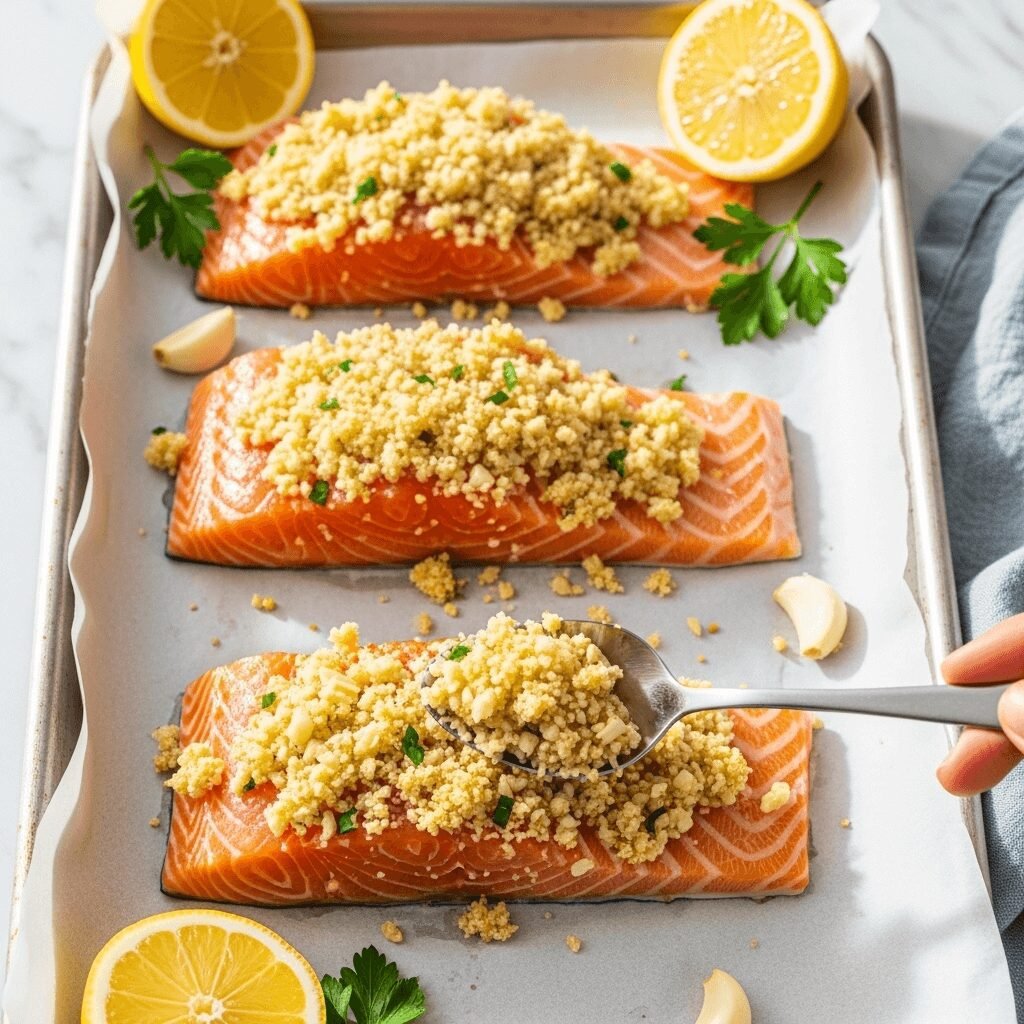
- Apply the Topping: Divide the Parmesan mixture evenly among the four salmon fillets, pressing it gently onto the top of each piece with your fingers or the back of a spoon. Create an even layer that covers the entire top surface of each fillet. Press firmly so the topping adheres well – don’t worry about being too gentle, salmon is sturdy.
- Bake: Place the baking sheet in the preheated oven and bake for 12-15 minutes, depending on the thickness of your fillets. The salmon is done when it flakes easily with a fork and reaches an internal temperature of 145°F. The Parmesan topping should be golden brown and crispy. For thicker fillets (over 1 inch), you may need an additional 2-3 minutes.
- Optional Broiling Step: For an extra-crispy, golden-brown topping, switch your oven to broil during the last 2-3 minutes of cooking. Watch carefully to prevent burning – you want deep golden brown, not charred. This step is optional but creates an irresistibly crispy crust.
- Rest and Serve: Remove the salmon from the oven and let it rest for 2-3 minutes. This allows the juices to redistribute, ensuring moist, tender fish. Use a spatula to carefully transfer each fillet to serving plates. Garnish with fresh parsley or dill, serve with lemon wedges on the side, and sprinkle with additional Parmesan if desired.
Notes
- Thickness Matters: Cooking time varies based on fillet thickness. Thinner fillets (¾ inch) need only 10-12 minutes, while thicker cuts (1½ inches) may need 15-18 minutes. Always check internal temperature for best results.
- Skin-On vs Skinless: Both work great. If using skin-on, the skin won’t get crispy since it’s against the pan, but it helps hold the fillet together and can be easily removed before serving if desired.
- Don’t Overbake: Salmon continues cooking slightly after removal from the oven (carryover cooking). Remove it when it’s just done or even slightly underdone in the very center for the moistest results.
- Gluten-Free Option: Simply substitute gluten-free panko breadcrumbs or omit breadcrumbs entirely for a gluten-free version. The topping will be slightly less crispy but still delicious.
- Make It Spicier: Add ¼ teaspoon red pepper flakes or a pinch of cayenne to the Parmesan mixture for subtle heat that complements the garlic beautifully.
- Prep Time: 10 minutes
- Cook Time: 12-15 minutes
- Category: Dinner
- Method: Baking
- Cuisine: American, Italian-Inspired
Nutrition
- Serving Size: 1 salmon fillet (6 oz) with topping
- Calories: 425
- Sugar: 0g
- Sodium: 420mg
- Fat: 28g
- Saturated Fat: 10g
- Unsaturated Fat: 16g
- Trans Fat: 0g
- Carbohydrates: 6g
- Fiber: 0g
- Protein: 38g
- Cholesterol: 115mg
Nutrition information is approximate and will vary based on specific salmon type and exact ingredients used.
Tips & Variations
This versatile recipe adapts beautifully to different tastes and dietary preferences. Here are some delicious ways to customize it:
Herb Variations: Swap the parsley for fresh dill (amazing with salmon!), basil for an Italian twist, or cilantro for something unexpected. Fresh thyme or tarragon also pair beautifully with salmon and Parmesan.
Different Cheeses: Try a blend of Parmesan and Asiago for nuttier flavor, or use Pecorino Romano for a sharper, saltier profile. Gruyère creates a more sophisticated, mild flavor that melts beautifully.
Add Vegetables: Arrange asparagus spears, cherry tomatoes, or green beans around the salmon on the baking sheet. They’ll roast alongside the fish, creating a complete one-pan meal. Brush vegetables with olive oil and season with salt and pepper.
Crispy Skin Lovers: If you want crispy skin, start with skin-on fillets placed skin-side up, bake for 6-8 minutes, carefully flip, then add the topping and finish baking. The skin will crisp during the initial baking.
Mediterranean Style: Add sun-dried tomatoes, capers, and olives to the Parmesan mixture. Use oregano instead of Italian seasoning and add extra lemon zest for bright Mediterranean flavors.
Creamy Version: Mix 2 tablespoons of mayonnaise or sour cream into the Parmesan topping for extra richness and moisture. This creates a creamier, more decadent crust.
Spicy Garlic Parmesan: Add ½ teaspoon red pepper flakes, ¼ teaspoon cayenne, or a tablespoon of sriracha to the topping mixture for a spicy kick that balances the rich cheese beautifully.
Almond-Crusted: Replace panko breadcrumbs with finely ground almonds or almond flour for a nutty, grain-free version that’s equally crispy and adds healthy fats.
Asian-Inspired Twist: Add 1 teaspoon sesame oil to the topping, replace Italian seasoning with ginger powder, and garnish with sesame seeds and sliced green onions.
Pro Chef Tips
These professional techniques will elevate your salmon from great to absolutely extraordinary:
Start with Room Temperature Fish: Remove salmon from the refrigerator 15-20 minutes before cooking. Room temperature fish cooks more evenly than cold fish straight from the fridge, preventing overcooked exteriors with raw centers.
Check for Pin Bones: Run your fingers along the salmon fillet to feel for any remaining pin bones. Use clean tweezers or needle-nose pliers to remove them by pulling at a slight angle. This small step makes eating much more pleasant.
Pat Dry Thoroughly: This cannot be overstated. Moisture on the salmon surface prevents proper browning and causes the topping to slide off. Use paper towels and press firmly to remove all surface moisture. Let the fish air-dry for a few minutes after patting if possible.
Use Fresh Parmesan Only: Pre-grated Parmesan contains anti-caking agents that prevent proper melting and crust formation. Always grate your own from a block – it takes two minutes and makes an enormous difference in texture and flavor.
Season the Salmon Itself: Don’t rely solely on the topping for flavor. Season the salmon with salt and pepper before adding the Parmesan mixture. This ensures the fish itself is well-seasoned, not just the crust.
Press the Topping Firmly: Don’t be shy about pressing the Parmesan mixture onto the salmon. A firmly pressed topping adheres better during baking and creates a more cohesive crust. Use your hands or the back of a spoon to pack it down.
Know Your Oven: Oven temperatures vary wildly. If your oven runs hot, reduce temperature to 375°F. If it runs cool, increase to 425°F. An oven thermometer is a worthwhile investment for consistent results.
Use the Poke Test: Gently press the thickest part of the salmon with your finger. When it flakes easily and the flesh is opaque, it’s done. The center should still have a slightly translucent jewel-like quality for perfectly moist salmon. Overcooked salmon feels firm and looks chalky.
Save the Drippings: The buttery, garlicky juices that collect on the baking sheet are liquid gold. Drizzle them over your salmon, rice, or vegetables before serving for extra flavor.
Common Mistakes to Avoid
Even simple recipes can go wrong if you’re not aware of common pitfalls. Here’s what to watch out for:
Overcooking the Salmon: This is the single biggest mistake home cooks make with salmon. Overcooked salmon is dry, chalky, and disappointing. Remove salmon when it’s just done or even slightly underdone in the very center – it will continue cooking from residual heat. The FDA recommends 145°F, but many chefs prefer 125-130°F for medium-rare salmon that’s incredibly moist and tender. At minimum, don’t exceed 145°F or you’ll have dry fish.
Using Pre-Grated Parmesan: The convenience isn’t worth it. Pre-grated Parmesan contains cellulose (wood pulp) as an anti-caking agent, which prevents proper melting and creates a grainy, sandy texture instead of a golden crust. Always grate your own from a block – it only takes a couple of minutes.
Not Drying the Salmon: Wet salmon prevents the topping from adhering properly and creates steam instead of allowing the fish to properly bake. This results in a soggy topping that slides off. Take the extra 30 seconds to thoroughly pat the salmon dry with paper towels – this one step makes a huge difference.
Crowding the Pan: If salmon fillets are touching or too close together, they’ll steam rather than bake, preventing the topping from crisping properly. Leave at least 2 inches between fillets for proper air circulation and even cooking.
Skipping the Foil/Parchment: While not catastrophic, baking salmon directly on the pan creates a cleanup nightmare. The fish sticks, and the combination of baked-on butter, cheese, and fish is difficult to remove. Save yourself the hassle and always line your pan – cleanup will take seconds instead of scrubbing.
Adding Topping Too Early: If you prepare the Parmesan mixture more than a few minutes before using it, the butter solidifies and breadcrumbs absorb moisture, making it difficult to spread. Mix the topping just before applying to the salmon for best results.
Storage & Meal Prep
This garlic Parmesan baked salmon is excellent for meal prep and makes delicious leftovers when stored properly.
Refrigerator Storage: Store leftover cooked salmon in an airtight container in the refrigerator for up to 3 days. Keep the salmon separate from any sides to prevent moisture transfer. The Parmesan crust will soften slightly in storage but remains flavorful.
Reheating Methods: The best way to reheat salmon while maintaining quality is in a 275°F oven for 10-15 minutes until just warmed through. This gentle reheating prevents further cooking and drying. Cover loosely with foil to retain moisture. You can also reheat in the microwave on 50% power in 30-second intervals, though this won’t keep the topping as crispy. For a quick method, reheat in a covered skillet over medium-low heat with a splash of water or broth for 3-5 minutes.
Cold Leftovers: Honestly, this salmon is delicious cold straight from the refrigerator. Flake it over salads, make salmon salad sandwiches, or add it to grain bowls – no reheating necessary. The Parmesan topping adds great flavor even when cold.
Meal Prep Strategy: This recipe is perfect for Sunday meal prep. Cook 4-6 fillets, let cool completely, then divide into individual containers with your chosen sides. You’ll have ready-to-eat lunches or quick dinners for several days. The salmon actually tastes even better the next day as the garlic and Parmesan flavors develop.
Preventing Dryness: If you know you’ll be eating salmon as leftovers, slightly undercook it initially (remove at 140°F instead of 145°F). This accounts for the additional cooking that happens during reheating, resulting in perfectly moist leftover salmon.
Make-Ahead & Freezer Notes
Planning ahead makes weeknight dinners even easier. Here’s how to prep this recipe in advance:
Preparing the Topping Ahead: The Parmesan mixture can be prepared up to 2 days in advance and stored in an airtight container in the refrigerator. The butter will solidify when cold, so let it sit at room temperature for 15-20 minutes before using, then stir well to recombine before spreading on salmon.
Freezing Raw Salmon with Topping: You can absolutely freeze raw salmon with the Parmesan topping already applied for ultimate convenience. Place topped salmon fillets on a parchment-lined baking sheet and freeze until solid (about 2 hours), then transfer to freezer bags, removing as much air as possible. Freeze for up to 2 months. When ready to cook, bake directly from frozen at 375°F for 20-25 minutes, adding a few extra minutes as needed until the salmon reaches 145°F.
Freezing Cooked Salmon: Cooked salmon can be frozen, though the texture suffers slightly upon thawing. If you do freeze cooked salmon, wrap individual portions tightly in plastic wrap, then place in freezer bags. Freeze for up to 2 months. Thaw overnight in the refrigerator and reheat gently.
Best Thawing Method: For frozen raw salmon, the safest method is thawing in the refrigerator overnight. Place the wrapped salmon on a plate to catch any drips. For faster thawing, seal salmon in a waterproof bag and submerge in cold water, changing the water every 30 minutes until thawed (usually 1-2 hours for fillets).
Not Recommended for Freezing: Salmon that was previously frozen (which most grocery store salmon is) should not be refrozen raw. Cook it first, then freeze if needed. Check with your fishmonger about whether the salmon has been frozen previously.
Serving Suggestions
This versatile garlic Parmesan salmon pairs beautifully with countless sides and accompaniments. Here are some delicious serving ideas:
Vegetable Sides: Roasted asparagus with lemon is a classic pairing. Roasted Brussels sprouts, sautéed green beans with garlic, steamed broccoli with butter, or grilled zucchini and squash all complement the rich salmon beautifully. For something different, try roasted rainbow carrots or balsamic-glazed roasted vegetables.
Starch Sides: Creamy garlic mashed potatoes are divine with the buttery salmon. Roasted baby potatoes, rice pilaf, quinoa, or couscous work wonderfully for soaking up any pan juices. For low-carb options, try cauliflower rice or cauliflower mash. Buttery orzo or angel hair pasta make this feel extra special.
Salad Pairings: A crisp Caesar salad provides nice contrast to the rich salmon. A simple arugula salad with lemon vinaigrette, Greek salad with feta and olives, or spinach salad with strawberries and balsamic dressing all work beautifully. The freshness balances the richness perfectly.
Grain Bowls: Create a complete bowl with the salmon over brown rice or quinoa, add roasted vegetables, a dollop of tzatziki or lemon-herb yogurt sauce, and garnish with fresh herbs and lemon. This makes fantastic meal prep.
Bread Options: Serve with crusty artisan bread, garlic bread, or dinner rolls to soak up the delicious pan juices. A warm baguette with herb butter is particularly nice for a more elegant presentation.
Complete Meal Ideas: For an easy weeknight dinner, serve with roasted asparagus and wild rice. For entertaining, pair with creamy mashed potatoes, sautéed green beans, and a mixed greens salad. For a Mediterranean feast, serve with Greek lemon potatoes, roasted vegetables, and tzatziki sauce.
Wine Pairings: White wines work best with salmon. Try Sauvignon Blanc, Pinot Grigio, or Chardonnay (especially with the buttery Parmesan topping). For those who prefer reds, a light Pinot Noir complements salmon nicely.
Sauce Options: While the salmon is flavorful on its own, it’s also delicious with lemon-dill sauce, hollandaise, garlic aioli, or a simple lemon-butter sauce drizzled over the top.
FAQs Section
Can I use frozen salmon for this recipe?
Absolutely! You can either thaw the salmon first (preferred method for even cooking) or bake directly from frozen, adding 5-7 minutes to the cooking time. If cooking from frozen, pat away any ice crystals, season, add the topping, and bake at 400°F for 18-22 minutes until the salmon reaches 145°F. The topping may brown faster than the salmon cooks through, so tent with foil if needed.
How do I know when salmon is done?
Salmon is done when it reaches an internal temperature of 145°F in the thickest part. Visually, the flesh should be opaque and flake easily with a fork. The center may still have a slightly translucent jewel-like quality, which is perfect – it will finish cooking from residual heat. If you don’t have a thermometer, insert a butter knife into the thickest part and hold it there for 3 seconds, then touch it to your lower lip. If it’s warm, the salmon is done.
What if I don’t have panko breadcrumbs?
Regular breadcrumbs work fine, though the topping won’t be quite as crispy. You can also use crushed crackers (Ritz work beautifully), crushed cornflakes, or finely ground almonds for a gluten-free, grain-free option with great texture and flavor. In a pinch, you can omit breadcrumbs entirely and just use Parmesan and herbs – it won’t be as crispy but will still taste delicious.
Can I make this dairy-free?
Yes, with some modifications. Replace the butter with olive oil or vegan butter, and use nutritional yeast instead of Parmesan cheese (about ⅓ cup). Nutritional yeast provides a cheesy, nutty flavor and helps create a golden crust. The texture will be slightly different, but it’s still delicious.
My topping burned before the salmon was cooked – what happened?
This usually means your oven temperature is too high or the salmon was placed too close to the heating element. Try reducing oven temperature to 375°F and positioning the rack in the center of the oven. If the topping browns too quickly, loosely tent it with foil for the remaining cooking time. Very thin salmon fillets (under ¾ inch) can also cause this issue since they cook so quickly.
Can I use salmon with skin on?
Definitely! Place the salmon skin-side down on the baking sheet and proceed with the recipe as written. The skin won’t get crispy since it’s against the pan, but it helps hold the fillet together during cooking and transfers easily to plates. You can peel the skin off before serving if desired – it should come away cleanly. Some people love crispy salmon skin, in which case you’d need to start with it skin-side up.
Is it safe to eat salmon that’s still a little pink in the middle?
Yes! Unlike chicken, salmon is safe to eat at medium or even medium-rare (125-130°F internal temperature). In fact, many chefs prefer salmon this way because it’s incredibly moist and tender. The FDA recommends 145°F for food safety, at which point the salmon is fully cooked but should still be moist and slightly translucent in the very center. Fully opaque, flaky salmon throughout is actually overcooked, though still safe to eat.
Conclusion
This Garlic Parmesan Baked Salmon proves that healthy eating doesn’t have to be bland or boring. The golden, crispy Parmesan crust transforms simple salmon into something truly special – elegant enough for company yet easy enough to make any night of the week. With just 20 minutes from start to finish and minimal cleanup, this recipe removes every excuse for not cooking fish at home.
Whether you’re trying to eat more omega-3s, looking for quick weeknight dinner solutions, or wanting to impress guests without stress, this garlic Parmesan salmon delivers on all fronts. The recipe is endlessly adaptable to different tastes and dietary needs, making it a true workhorse in any home cook’s repertoire. Once you master this simple technique, you’ll find yourself making salmon far more often – and actually looking forward to it.
I’d love to hear how this recipe works for you! What sides did you serve? Did you try any of the variations? Drop a comment below sharing your experience and rating the recipe. If this garlic Parmesan baked salmon becomes a favorite in your household like it has in mine, please save it to your Pinterest boards and share it with friends who love easy, delicious, healthy dinners. Here’s to more simple, spectacular meals that make you feel like a kitchen rock star! Happy cooking!