If there’s one recipe that deserves a permanent place in your cooking repertoire, it’s this Garlic Herb Roasted Vegetables! This vibrant, colorful medley of perfectly caramelized vegetables tossed with aromatic garlic, fresh herbs, and a kiss of olive oil is the ultimate side dish that somehow manages to be both incredibly simple and impressively elegant. The high heat of the oven works its magic, transforming ordinary vegetables into tender, golden-brown bites with crispy edges and sweet, concentrated flavors that make even veggie-skeptics come back for seconds.
What makes this recipe truly special is its remarkable versatility and foolproof nature. Whether you’re planning a cozy weeknight family dinner, prepping healthy meals for the week ahead, hosting an elegant dinner party, or looking for that perfect Thanksgiving side dish, these roasted vegetables rise to every occasion. The combination of earthy root vegetables, sweet bell peppers, tender zucchini, and aromatic seasonings creates a symphony of flavors and textures that complements virtually any main course – from roasted chicken and grilled steak to baked salmon and vegetarian mains.
The beauty lies in the simplicity: chop your vegetables, toss them with garlic, herbs, and olive oil, spread them on a baking sheet, and let the oven do all the work. In about 30-40 minutes, you’ll have a gorgeous, Instagram-worthy side dish that’s packed with nutrients, bursting with flavor, and requires minimal hands-on effort. It’s healthy eating that doesn’t taste like you’re sacrificing anything – in fact, it’s so delicious that you might find yourself making extra just to have leftovers! This is the recipe that proves vegetables can absolutely steal the show at dinner.
History / Background
Roasting vegetables is one of humanity’s oldest cooking techniques, dating back thousands of years to when our ancestors first discovered that cooking food over fire not only made it safer to eat but also dramatically improved its flavor. Archaeological evidence suggests that roasting vegetables over open flames was practiced as early as 250,000 years ago, making it one of the foundational cooking methods that shaped human cuisine.
The specific style of herb-roasted vegetables we enjoy today has particularly strong roots in Mediterranean and European cooking traditions. In ancient Rome, vegetables were often roasted with olive oil and herbs like rosemary, thyme, and oregano – ingredients that grew abundantly throughout the Mediterranean region. These same flavor combinations have been passed down through generations and remain the gold standard for roasted vegetables today. French cuisine elevated vegetable roasting to an art form, with techniques like “rôtir” becoming fundamental to classical cooking education.
During the Middle Ages and Renaissance periods in Europe, roasted root vegetables were dietary staples, especially during winter months when fresh produce was scarce. Carrots, turnips, parsnips, and onions stored well and provided essential nutrition through cold seasons. These vegetables were often roasted in the same ovens used for baking bread, taking advantage of residual heat – an early example of efficient, practical cooking that’s still relevant today.
The American approach to roasted vegetables evolved significantly in the late 20th century as the farm-to-table movement gained momentum and home cooks became more adventurous with vegetable preparations. The 1980s and 1990s saw a shift away from boiled, bland vegetables toward roasting methods that highlighted natural flavors and created appealing textures. Celebrity chefs like Ina Garten popularized simple, elegant roasted vegetable recipes that demonstrated how minimal seasoning and proper technique could transform humble produce into restaurant-quality dishes.
Today’s garlic herb roasted vegetables represent a beautiful fusion of these historical traditions with modern health consciousness. We now understand that roasting vegetables at high heat triggers the Maillard reaction – the chemical process that creates those irresistible caramelized, slightly crispy edges while concentrating natural sugars and deepening flavors. This cooking method preserves more nutrients than boiling while creating textures and tastes that make vegetables genuinely crave-worthy. It’s become a cornerstone of healthy eating movements, meal prep culture, and home cooking traditions, proving that the simplest preparations often endure because they’re simply the best.
Why You’ll Love This Recipe
This isn’t just another vegetable side dish – it’s the recipe that transforms “eating your vegetables” from a chore into something you genuinely look forward to! The high-heat roasting method creates an irresistible combination of tender interiors and crispy, caramelized edges that makes each bite interesting and delicious. The garlic becomes sweet and mellow as it roasts, while fresh herbs infuse every vegetable with aromatic flavor that’s anything but boring.
Here’s why this recipe will become your go-to vegetable preparation:
- Ridiculously Simple – Literally just chop, toss, and roast; there’s no complicated technique or special skills required
- Incredibly Versatile – Use whatever vegetables you have on hand or whatever’s in season; the method works with almost anything
- Naturally Healthy – Packed with vitamins, minerals, and fiber; vegan, vegetarian, paleo, keto-friendly, and Whole30 compliant
- Budget-Friendly – Uses affordable seasonal vegetables; perfect for stretching your grocery budget without sacrificing nutrition or flavor
- Perfect for Meal Prep – Make a huge batch on Sunday and enjoy healthy sides all week long
- Kid-Approved – The natural sweetness from caramelization makes vegetables more appealing even to picky eaters
- Minimal Cleanup – Everything happens on one or two baking sheets; just line with parchment for even easier cleanup
- Impressive Presentation – Those golden-brown, colorful vegetables look like something from a gourmet restaurant
- Flexible Timing – Can sit in a warm oven for 10-15 minutes after cooking without suffering, making dinner timing stress-free
- Customizable – Adjust herbs, add spice, change vegetables seasonally, or modify for dietary preferences
- Works Year-Round – Use hearty root vegetables in winter, lighter options in summer; always seasonally appropriate
- Crowd-Pleaser – Universally loved; perfect for potlucks, holidays, and dinner parties
- Nutrient-Dense – Roasting concentrates nutrients while making vegetables more digestible and their nutrients more bioavailable
Ingredient Notes
Let’s talk about what makes these roasted vegetables absolutely spectacular and how each component contributes to the final dish:
Root Vegetables (Carrots, Potatoes, Sweet Potatoes): These hearty vegetables form the foundation of the dish. They take longer to cook, which is why we often cut them slightly smaller or add them to the pan first. Carrots develop incredible sweetness when roasted, their natural sugars caramelizing beautifully. Potatoes (Yukon Gold, red, or russet) become crispy outside and fluffy inside. Sweet potatoes add natural sweetness and beautiful color. All can be substituted based on preference – parsnips, turnips, or rutabaga work wonderfully too.
Bell Peppers: Add sweetness, vibrant color, and slight char that’s absolutely delicious. Red and yellow peppers are sweeter than green, which can be slightly bitter. They release moisture as they cook, which helps prevent other vegetables from drying out. Can be omitted if you’re not a fan, or substitute with poblano peppers for mild heat.
Zucchini and Summer Squash: These cook faster than root vegetables and add tender texture. They release moisture, so don’t crowd them on the pan or they’ll steam rather than roast. Yellow squash can substitute for zucchini seamlessly. In winter, substitute with Brussels sprouts or cauliflower.
Red Onion: Becomes incredibly sweet and slightly crispy when roasted. The purple color fades but adds beautiful depth to the dish. Yellow or white onions work equally well. Shallots are a more delicate, elegant alternative.
Garlic: Fresh garlic cloves are non-negotiable for the best flavor. As they roast, they become sweet, mellow, and almost buttery – nothing like raw garlic’s sharp bite. Minced garlic can burn easily, so whole or halved cloves work best. For easier eating, smash the cloves with the flat of your knife before adding.
Olive Oil: The medium for flavor delivery and the key to achieving those crispy, caramelized edges. Extra virgin olive oil provides the best flavor, though regular olive oil works too. Avocado oil is an excellent high-heat alternative with a neutral flavor.
Fresh Herbs: Rosemary and thyme are classics – woody herbs that withstand high heat and infuse vegetables with aromatic flavor. Fresh parsley, oregano, or sage also work beautifully. Dried herbs can substitute (use one-third the amount), though fresh provides brighter, more vibrant flavor.
Salt and Pepper: Essential for bringing out vegetables’ natural flavors. Don’t be shy with seasoning – vegetables need more salt than you might think. Freshly ground black pepper adds subtle heat and complexity.
Optional Additions: Balsamic vinegar (add in the last 5 minutes for tanginess), lemon zest (brightens everything), red pepper flakes (for heat), or Parmesan cheese (sprinkle after roasting for umami richness).
Equipment Needed
This recipe requires minimal equipment, making it perfect for any kitchen:
- Two large rimmed baking sheets – Half-sheet pans (18×13 inches) are ideal; having two prevents overcrowding which causes steaming instead of roasting
- Parchment paper or silicone baking mats – Optional but makes cleanup incredibly easy and prevents sticking; aluminum foil works but vegetables may stick slightly
- Large mixing bowl – For tossing vegetables with oil and seasonings; a big bowl prevents vegetables from falling out as you toss
- Sharp chef’s knife – Essential for efficiently cutting vegetables into uniform pieces
- Cutting board – Large one gives you plenty of workspace
- Measuring cups and spoons – For oil and seasoning measurements
- Wooden spoon or spatula – For tossing vegetables and stirring halfway through roasting
- Garlic press – Optional but convenient; alternatively, use your knife to smash and chop garlic
- Vegetable peeler – For carrots and any vegetables that need peeling
- Kitchen timer – To remind you when to stir and when vegetables are done
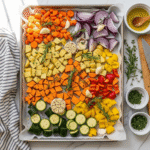
Garlic Herb Roasted Vegetables Recipe
- Total Time: 50 minutes
- Yield: 4-8 servings 1x
- Diet: Vegetarian
Description
A vibrant medley of seasonal vegetables roasted to caramelized perfection with aromatic garlic and fresh herbs. This healthy, versatile side dish pairs beautifully with any main course and makes meal prep effortless!
Ingredients
Vegetables:
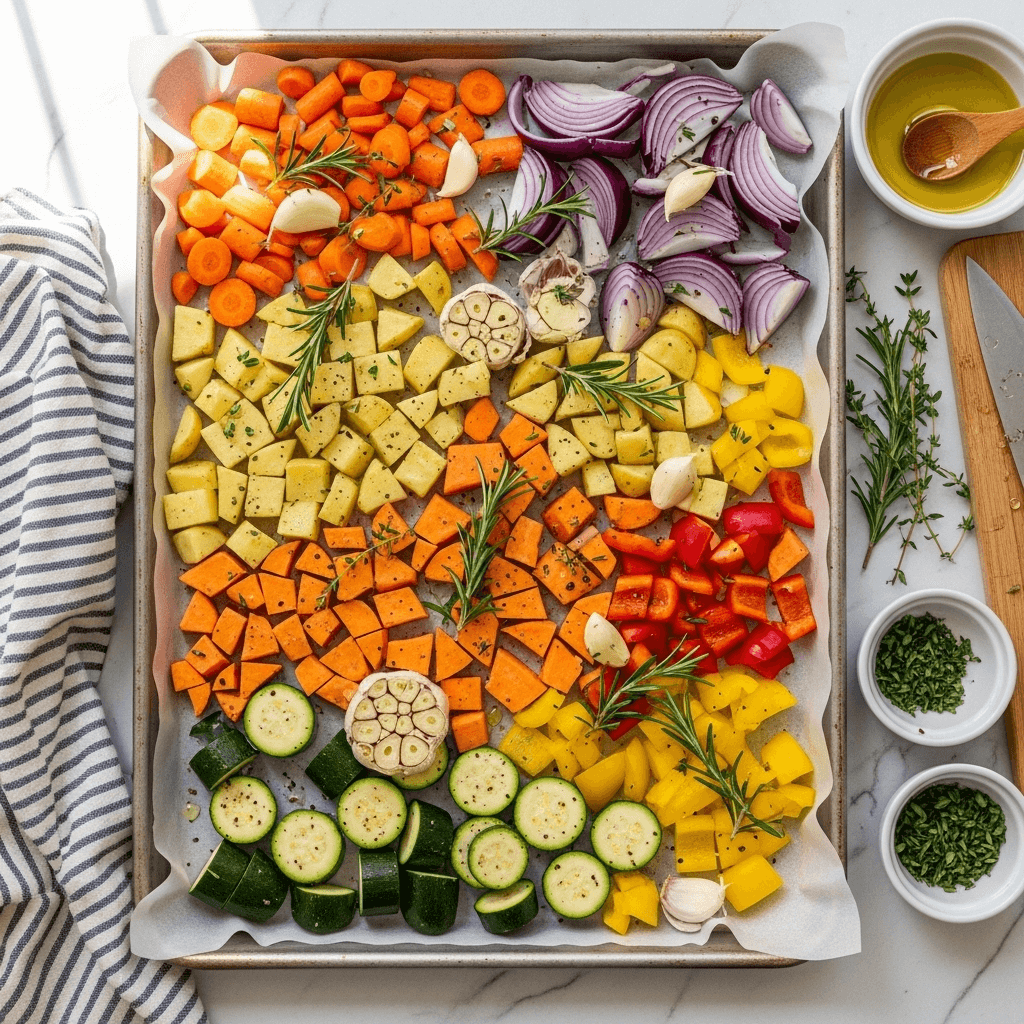
- 3 medium carrots, peeled and cut into 1-inch pieces
- 2 medium Yukon Gold potatoes, cut into 1-inch cubes (about 2 cups)
- 1 large sweet potato, peeled and cut into 1-inch cubes (about 2 cups)
- 1 large red bell pepper, cut into 1-inch pieces
- 1 large yellow or orange bell pepper, cut into 1-inch pieces
- 2 medium zucchini, cut into 1-inch half-moons
- 1 medium red onion, cut into wedges
- 8-10 Brussels sprouts, halved (optional)
- 1 cup broccoli or cauliflower florets (optional)
Seasoning:
- 1/4 cup extra virgin olive oil (plus more if needed)
- 6 cloves garlic, smashed or roughly chopped
- 2 tablespoons fresh rosemary, chopped (or 2 teaspoons dried)
- 2 tablespoons fresh thyme leaves (or 2 teaspoons dried)
- 1 tablespoon fresh oregano, chopped (or 1 teaspoon dried) – optional
- 1 1/2 teaspoons salt (or to taste)
- 3/4 teaspoon freshly ground black pepper
- 1/2 teaspoon garlic powder
- 1/2 teaspoon onion powder
- 1/4 teaspoon red pepper flakes (optional, for heat)
Optional Finishing Touches:
- 2 tablespoons balsamic vinegar
- Fresh lemon juice from half a lemon
- Fresh parsley, chopped for garnish
- Grated Parmesan cheese
Instructions
- Preheat Your Oven: Position oven racks in the upper and lower thirds of your oven. Preheat to 425°F (220°C). This high temperature is crucial for achieving caramelization and crispy edges. Line two large rimmed baking sheets with parchment paper or lightly grease with olive oil.
- Prep the Vegetables: Wash and dry all vegetables thoroughly – wet vegetables will steam rather than roast. Cut all vegetables into uniform 1-inch pieces for even cooking. Keep similar-cooking vegetables together: root vegetables (carrots, potatoes, sweet potatoes) in one group, and faster-cooking vegetables (zucchini, peppers, onions) in another.
- Season the Vegetables: Place all vegetables in a very large mixing bowl. Drizzle with olive oil, ensuring all pieces are lightly coated. Add the smashed garlic cloves, fresh rosemary, thyme, oregano (if using), salt, pepper, garlic powder, onion powder, and red pepper flakes (if using). Toss everything together thoroughly using your hands or a large spoon, making sure every vegetable piece is evenly coated with oil and seasoning. Don’t be afraid to really get in there with your hands – it’s the best way to ensure even coating!
- Arrange on Baking Sheets: Spread vegetables in a single layer across both prepared baking sheets. This is critical – don’t overcrowd! Vegetables should have space around them. If they’re touching too much, they’ll steam instead of roast and won’t develop those delicious crispy edges. If needed, use three baking sheets rather than crowding everything onto two. Place harder vegetables like potatoes and carrots toward the center and edges where heat is more intense.
- Roast: Place both baking sheets in the preheated oven, one on each rack. Roast for 20 minutes without disturbing them – this allows the bottom to caramelize properly.
- Stir and Rotate: After 20 minutes, remove pans from the oven. Use a spatula to gently flip and stir the vegetables, scraping up any browned bits stuck to the pan (that’s pure flavor!). Rotate the pans – switch their positions (top to bottom) and turn them 180 degrees. This ensures even cooking and browning.
- Continue Roasting: Return pans to the oven and roast for an additional 15-20 minutes, until vegetables are tender when pierced with a fork and have golden-brown, caramelized edges. Smaller or thinner pieces may be done at 15 minutes, while larger, denser pieces might need the full 20 minutes. Check for doneness by tasting – vegetables should be tender but not mushy.
- Optional Finishing: If using balsamic vinegar, drizzle it over the vegetables during the last 5 minutes of cooking for a tangy glaze. For a fresh, bright finish, squeeze lemon juice over the hot vegetables immediately after removing from the oven.
- Rest and Serve: Let the vegetables rest on the baking sheets for 2-3 minutes after removing from the oven. This allows them to finish cooking with residual heat and makes them easier to transfer. Transfer to a serving platter or bowl, garnish with fresh chopped parsley and grated Parmesan if desired, and serve hot or warm.
Notes
- Size Matters: Cut all vegetables to roughly the same size (1-inch pieces) for even cooking. Denser vegetables like carrots can be cut slightly smaller than softer ones like zucchini.
- Don’t Overcrowd: This is the number one mistake! Overcrowded vegetables steam instead of roast. Use multiple pans if necessary.
- Temperature: Don’t reduce the oven temperature thinking it will prevent burning. High heat (425°F) is what creates those delicious caramelized edges.
- Customize: Use whatever vegetables you have or prefer. Root vegetables, cruciferous vegetables, and most firm vegetables work wonderfully.
- Herb Options: Feel free to use whatever fresh herbs you have. Basil, sage, and tarragon are also delicious, though add delicate herbs like basil after roasting.
- Oil Amount: If vegetables look dry after tossing, add another tablespoon of olive oil. They should glisten but not be swimming in oil.
- Prep Time: 15 minutes
- Cook Time: 35 minutes
- Category: Side Dish
- Method: Roasting
- Cuisine: Mediterranean-American
Nutrition
- Serving Size: 1 cup (approximately 1/8 of recipe)
- Calories: 156
- Sugar: 6g
- Sodium: 448mg
- Fat: 7g
- Saturated Fat: 1g
- Unsaturated Fat: 6g
- Trans Fat: 0g
- Carbohydrates: 22g
- Fiber: 4g
- Protein: 3g
- Cholesterol: 0mg
Nutrition information is approximate and will vary based on specific vegetables used and portion sizes.
Tips & Variations
Mediterranean Style: Add Kalamata olives, sun-dried tomatoes, and crumbled feta cheese in the last 5 minutes of roasting. Finish with a drizzle of balsamic glaze and fresh basil.
Asian-Inspired: Toss vegetables with sesame oil, fresh ginger, and a splash of soy sauce instead of herbs. Finish with sesame seeds and sliced green onions.
Mexican-Spiced: Season with cumin, chili powder, smoked paprika, and lime zest. Serve with fresh cilantro, cotija cheese, and lime wedges.
Fall Harvest: Use butternut squash, Brussels sprouts, parsnips, and apples. Season with cinnamon, nutmeg, and sage for a cozy autumn side.
Lemon Herb: Add lemon zest before roasting and fresh lemon juice after. Extra fresh herbs like dill and parsley make it bright and springy.
Spicy Version: Add 1/2 teaspoon cayenne pepper, extra red pepper flakes, or toss with harissa paste before roasting. Top with jalapeño slices.
Balsamic Roasted: Drizzle with balsamic vinegar during the last 5-10 minutes of roasting. The vinegar caramelizes and creates a sweet-tangy glaze.
Italian Style: Add cherry tomatoes in the last 15 minutes, and finish with fresh basil, Parmesan, and a drizzle of aged balsamic.
Root Vegetable Focus: Use only root vegetables (carrots, parsnips, turnips, beets, rutabaga) for a heartier, more winter-appropriate version.
Lighter Summer Version: Use mostly zucchini, yellow squash, bell peppers, cherry tomatoes, and asparagus for a lighter, faster-cooking option.
Cheese Lovers: Sprinkle grated Parmesan, Asiago, or Pecorino Romano over vegetables during the last 5 minutes, or immediately after removing from the oven.
Pro Chef Tips
Uniform Cutting is Everything: Professional kitchens obsess over uniform vegetable cuts for good reason – it ensures everything cooks at the same rate. Take an extra two minutes to cut vegetables to similar sizes. Use a ruler if you need to at first; your eye will develop over time.
Dry Vegetables Thoroughly: After washing vegetables, lay them out on clean kitchen towels and pat completely dry. Moisture is the enemy of caramelization. Wet vegetables steam rather than roast, resulting in soggy rather than crispy edges. This single step makes a dramatic difference.
High Heat is Non-Negotiable: Don’t be tempted to lower the oven temperature thinking it will prevent burning. The high heat (425°F or even 450°F) is what triggers the Maillard reaction – the chemical process that creates those irresistible caramelized, slightly crispy edges and concentrated flavors. Trust the process!
The One-Inch Rule: Professional chefs typically cut roasting vegetables to one-inch pieces. Smaller pieces burn before the interior tenderizes; larger pieces stay raw inside while the outside overcooks. One inch is the sweet spot for most vegetables.
Oil as a Carrier: Oil serves two purposes – it helps vegetables caramelize and it carries fat-soluble flavors from herbs and garlic throughout the dish. Don’t be stingy, but don’t drown them either. Vegetables should glisten and look well-coated, not dripping.
Strategic Pan Placement: Place harder, denser vegetables (potatoes, carrots, beets) in the center and edges of the pan where heat is most intense. Put quicker-cooking vegetables (zucchini, peppers) toward the corners and less direct heat areas. This maximizes even cooking.
The First Flip Timing: Resist the urge to stir or flip vegetables before 20 minutes. They need that undisturbed contact time with the hot pan to develop a proper caramelized crust. Stirring too early prevents browning and creates steamed vegetables.
Finishing with Acid: Professional chefs almost always finish roasted vegetables with a bright acidic element – lemon juice, lime juice, or good vinegar. This simple touch balances the richness, brightens flavors, and makes the dish taste “complete.” Add it right before serving.
Fresh Herbs at the End: While woody herbs (rosemary, thyme) can withstand roasting, delicate herbs (basil, cilantro, parsley) should be added after cooking. They provide a fresh, aromatic layer that contrasts beautifully with caramelized vegetables.
Common Mistakes to Avoid
Overcrowding the Pan: This is the single biggest mistake home cooks make! When vegetables are crowded, they release steam that has nowhere to escape, causing them to steam rather than roast. The result? Soggy, pale vegetables instead of caramelized, crispy-edged perfection. If vegetables are touching extensively, you need another pan. Give them space to breathe!
Cutting Vegetables Unevenly: When carrots are cut into one-inch pieces while zucchini is in two-inch chunks, you’ll end up with some vegetables burnt to a crisp while others remain practically raw. Take the extra time to cut everything uniformly. Your patience will be rewarded with perfectly cooked vegetables across the board.
Not Using Enough Salt: Vegetables need more seasoning than most people realize. Under-seasoned roasted vegetables taste flat and boring, no matter how perfectly they’re cooked. Salt enhances natural flavors and helps draw out moisture for better caramelization. Season generously – you can always add less next time, but under-seasoned vegetables are disappointing.
Opening the Oven Too Frequently: Every time you open the oven door, the temperature drops significantly and heat escapes. This extends cooking time and prevents proper caramelization. Trust your timer, and only open the oven when it’s actually time to stir (around the 20-minute mark). Use the oven light and window to check progress.
Using the Wrong Temperature: Some home cooks lower the temperature thinking it will prevent burning, but this backfires completely. Lower temperatures (350°F or below) essentially steam vegetables rather than roasting them. You’ll end up with soft, pale vegetables that lack any of that delicious caramelized flavor and texture. Stick with 400-450°F for best results.
Adding Delicate Vegetables Too Early: Tomatoes, leafy greens, and very thin-cut vegetables cook much faster than root vegetables. Adding everything at once results in some vegetables turning to mush while others are still undercooked. Add quicker-cooking items during the last 10-15 minutes of roasting.
Forgetting to Preheat: Putting vegetables into a cold oven means they’ll start releasing moisture before the temperature is high enough to caramelize them, resulting in soggy vegetables. Always fully preheat your oven before the vegetables go in.
Storage & Meal Prep
Refrigerator Storage: Once completely cooled to room temperature, transfer roasted vegetables to airtight containers or resealable bags. They’ll stay fresh in the refrigerator for 4-5 days. The vegetables may soften slightly during storage but remain delicious. Separate any particularly watery vegetables (like zucchini or tomatoes) to prevent them from making everything else soggy.
Best Reheating Methods: The oven method preserves texture best – spread vegetables on a baking sheet and reheat at 400°F for 8-10 minutes until warmed through and edges crisp up again. For quicker reheating, microwave on high for 1-2 minutes, stirring halfway, though this won’t restore crispness. A skillet over medium-high heat for 3-4 minutes works wonderfully and can even re-crisp the edges.
Meal Prep Strategy: This recipe is phenomenal for weekly meal prep! Roast a double or triple batch on Sunday, then portion into meal prep containers with your protein of choice and grains. The vegetables stay delicious all week and make healthy eating effortless. They’re perfect cold in salads, warmed as sides, or incorporated into other dishes.
Maintaining Quality: Store vegetables loosely packed rather than compressed – this prevents them from becoming mushy. If they seem dry after storage, drizzle with a tiny bit of olive oil before reheating. A squeeze of fresh lemon juice after reheating brightens flavors that may have dulled.
Using Leftovers Creatively: Leftover roasted vegetables are incredibly versatile. Chop and add to omelets, frittatas, or scrambled eggs. Toss with pasta and Parmesan. Blend into soup. Add to grain bowls, wraps, or quesadillas. Purée with broth for instant vegetable soup. Top pizza or flatbreads. The possibilities are endless!
Portion Control: For meal prep, portion vegetables into individual containers (about 1 to 1.5 cups per serving). This makes grabbing healthy sides throughout the week completely mindless.
Make-Ahead & Freezer Notes
Advance Preparation: You can prep vegetables up to 24 hours in advance. Cut all vegetables, toss with olive oil and seasonings, and store in an airtight container in the refrigerator. When ready to cook, spread on baking sheets and roast as directed. They may need an extra 5 minutes in the oven since they’re starting cold.
Partial Pre-Roasting: For entertaining, you can partially roast vegetables (about 20 minutes) several hours ahead, then finish roasting (15-20 minutes more) right before serving. This ensures they’re hot and fresh while minimizing last-minute work.
Freezing Roasted Vegetables: While fresh is always best, roasted vegetables can be frozen for up to 3 months. Cool completely, then freeze in a single layer on a baking sheet until solid (about 2 hours). Transfer to freezer bags, removing as much air as possible. Note that texture will soften somewhat after freezing – they’re best used in soups, stews, casseroles, or pasta dishes rather than as standalone sides.
Freezing Raw Prepared Vegetables: Alternatively, you can freeze vegetables raw after cutting and seasoning. This works particularly well with heartier vegetables like carrots, potatoes, Brussels sprouts, and cauliflower. Freeze flat in bags, then roast directly from frozen, adding 10-15 minutes to cooking time.
Reheating from Frozen: Spread frozen roasted vegetables on a baking sheet and reheat at 400°F for 15-20 minutes, stirring once, until heated through and edges re-crisp. They can also be added frozen directly to soups, stews, or stir-fries.
Holiday Make-Ahead Strategy: For Thanksgiving or other big meals, prep vegetables the day before and store in the refrigerator. Roast them while the turkey or main dish rests. This timing works perfectly and frees up oven space during the busiest cooking times.
Serving Suggestions
These versatile roasted vegetables complement virtually any main course and work for any season or occasion:
Perfect Protein Pairings: Serve alongside roasted chicken, grilled or pan-seared steak, baked or grilled salmon, pork chops, lamb chops, or meatloaf. The vegetables’ sweetness and herbs complement both simple and complex main dishes beautifully.
Vegetarian & Vegan Meals: Serve over quinoa, farro, or brown rice with chickpeas or white beans for complete protein. Top with tahini sauce, hummus, or cashew cream. Add to Buddha bowls with avocado, greens, and your favorite dressing.
Holiday Tables: These roasted vegetables are Thanksgiving and Christmas table perfection. They’re colorful, impressive, and appeal to both vegetarians and meat-eaters. Serve alongside turkey, ham, prime rib, or any festive main dish.
Grain Bowls: Create nourishing grain bowls with farro, quinoa, or brown rice as the base, topped with roasted vegetables, protein of choice, and drizzled with tahini, pesto, or balsamic glaze.
Pasta Dishes: Toss roasted vegetables with cooked pasta, olive oil, garlic, and Parmesan for an easy vegetarian dinner. They’re especially good with penne, rigatoni, or orecchiette.
Breakfast & Brunch: Serve roasted vegetables alongside eggs any style, in omelets, frittatas, or breakfast burritos. They add nutrition and flavor to morning meals.
Sandwiches & Wraps: Layer roasted vegetables in sandwiches, panini, wraps, or pita pockets with hummus, cheese, or your favorite spread.
Salad Toppers: Let vegetables cool to room temperature and add to salads for heartiness and flavor. They’re particularly good on grain salads, arugula salads, or mixed green salads.
Appetizer Style: Serve at room temperature as part of an antipasto platter with cheese, olives, cured meats, and crusty bread.
Beverage Pairings: These vegetables pair beautifully with medium-bodied red wines like Pinot Noir or Sangiovese, crisp white wines like Sauvignon Blanc, or sparkling water with lemon. For non-alcoholic options, herbal tea or sparkling cider complement the herbs nicely.
FAQs Section
What vegetables roast best together?
The key is grouping vegetables with similar cooking times or adjusting their sizes accordingly. Root vegetables (carrots, potatoes, sweet potatoes, parsnips, beets, turnips) work beautifully together as they all take 30-40 minutes. Cruciferous vegetables (broccoli, cauliflower, Brussels sprouts) are also similar. Softer vegetables like zucchini, bell peppers, and asparagus cook faster (20-25 minutes), so either add them to the pan later or cut root vegetables smaller so everything finishes together. The recipe provided accounts for this by mixing vegetables strategically.
Can I use frozen vegetables for roasting?
Fresh vegetables work best for roasting because they have less moisture content, which allows for better caramelization. Frozen vegetables contain excess ice crystals that release water during cooking, often resulting in steaming rather than roasting and producing softer, less crispy results. If you must use frozen vegetables, thaw them completely, press out as much moisture as possible with paper towels, and increase oven temperature to 450°F to help evaporate excess moisture quickly.
Why are my roasted vegetables soggy instead of crispy?
This usually comes down to three main culprits: overcrowding the pan (vegetables steam when they’re too close together), too much moisture on the vegetables before roasting (always pat dry), or oven temperature that’s too low. Make sure you’re using 425°F or higher, spacing vegetables with room between them, and starting with dry vegetables. Also, resist the urge to stir too early – let them sit undisturbed for at least 20 minutes to develop a proper crust.
How do I prevent vegetables from sticking to the pan?
Use parchment paper or silicone baking mats for the easiest release – vegetables practically never stick. If using bare pans, make sure they’re well-oiled or use non-stick cooking spray. Don’t flip vegetables too early; they’ll naturally release from the pan once a proper caramelized crust forms (usually after 20 minutes). Metal spatulas work better than plastic for releasing stuck vegetables.
Can I roast vegetables at different temperatures?
Yes, but timing and results will vary. At 400-450°F (the ideal range), vegetables caramelize beautifully in 30-40 minutes with crispy edges and tender interiors. At 350-375°F, they’ll take 45-60 minutes and won’t develop as much caramelization or crispy edges – they’ll be softer and more steamed in texture. At 475-500°F, cooking time shortens to 20-30 minutes but requires closer watching to prevent burning. The 425°F sweet spot in this recipe provides the best balance of caramelization, tenderness, and reliability.
Should I use fresh or dried herbs?
Both work, but they’re used differently. Fresh woody herbs (rosemary, thyme, oregano, sage) withstand high heat and infuse beautiful flavor throughout roasting – they’re ideal for this recipe. Use dried herbs if that’s what you have, but reduce the amount to one-third (dried herbs are more concentrated). For delicate herbs like basil, cilantro, parsley, or dill, add them after roasting as they burn easily and lose flavor at high heat. A combination of roasted woody herbs plus fresh delicate herbs added at the end provides the most complex, layered flavor.
How can I add more flavor to roasted vegetables?
Beyond the basic olive oil, garlic, and herbs, try these flavor boosters: finish with acid (lemon juice, lime juice, balsamic vinegar) right before serving;
add spices like smoked paprika, cumin, or curry powder; drizzle with flavored oils (truffle oil, chili oil); toss with grated Parmesan or feta after roasting; add aromatics like fresh ginger or lemongrass; finish with compound butter; or drizzle with honey for sweet-savory contrast. Also, don’t underestimate the power of generous seasoning – vegetables need more salt than you think!
Conclusion
There you have it – everything you need to know to create absolutely perfect Garlic Herb Roasted Vegetables every single time! This recipe proves that healthy eating doesn’t have to be complicated, time-consuming, or boring. With just a few simple ingredients, a hot oven, and minimal effort, you can transform ordinary vegetables into something truly extraordinary that everyone at your table will love.
The beauty of this recipe lies in its flexibility and reliability. Whether you’re cooking for picky kids, meal prepping for busy weekdays, hosting an elegant dinner party, or simply trying to eat more vegetables, this method delivers consistently delicious results. Once you master the basic technique, you’ll find yourself roasting vegetables constantly – switching up combinations based on what’s in season, what’s on sale, or simply what sounds good that day.
I hope this becomes your go-to method for preparing vegetables, just like it has for countless home cooks! Don’t forget to pin this recipe to your Pinterest board so it’s always at your fingertips when you need it. And if you try it, I’d absolutely love to hear about your experience – leave a comment below letting me know how it turned out, what vegetables you used, or any creative variations you discovered. Happy roasting, friends, and here’s to making vegetables the star of the show!