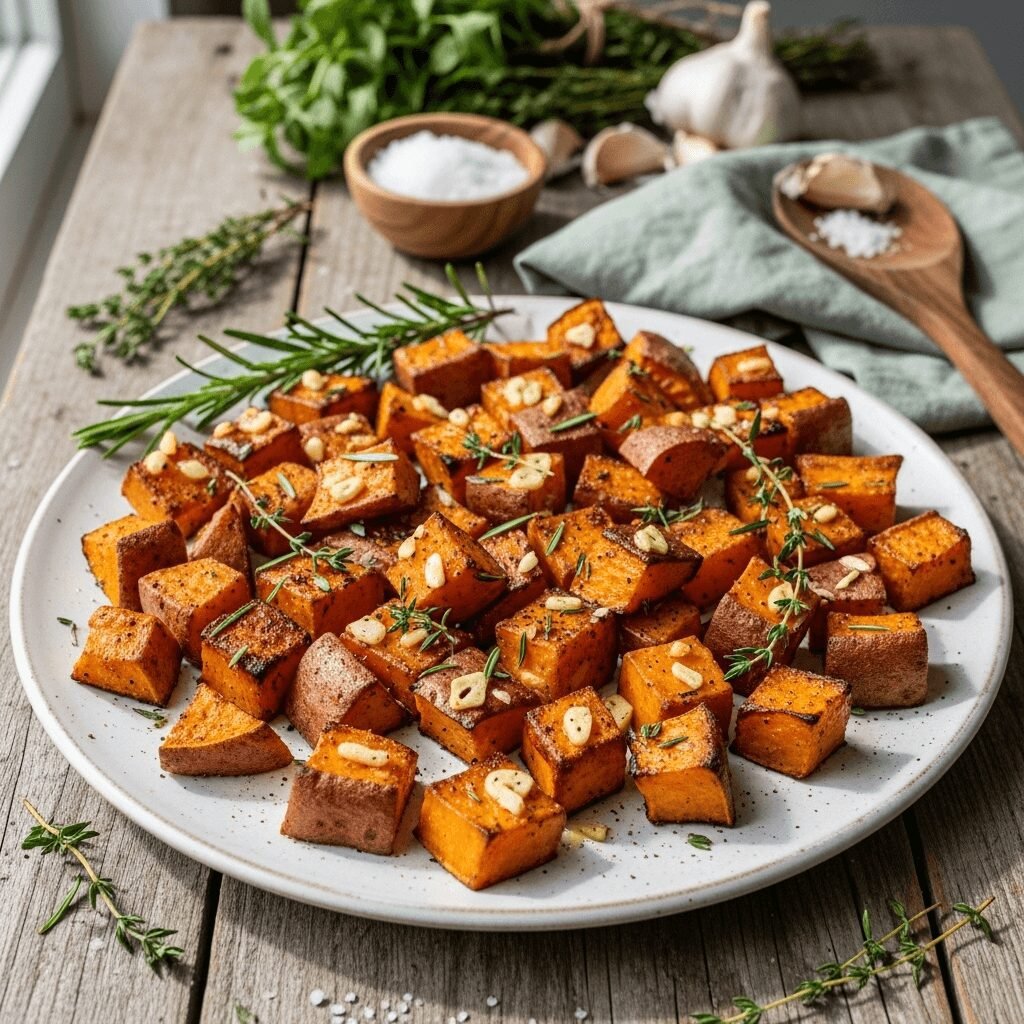
If you’re looking for a side dish that’s both incredibly delicious and ridiculously easy to make, these Garlic Herb Roasted Sweet Potatoes are about to become your new kitchen staple. Imagine tender, caramelized sweet potato cubes with crispy, golden edges, infused with aromatic garlic and a medley of fresh herbs. Every bite delivers that perfect combination of natural sweetness balanced with savory garlic and herbs that makes you reach for just one more piece.
This isn’t your average baked sweet potato. This recipe transforms humble sweet potatoes into something truly special—a side dish that’s impressive enough for holiday dinners and Thanksgiving feasts, yet simple enough for busy weeknight meals. The high-heat roasting technique creates those coveted crispy edges while keeping the centers soft and creamy, while the garlic and herbs add layers of flavor that complement everything from roasted chicken to grilled steak.
These roasted sweet potatoes work beautifully year-round, but they’re especially perfect during fall and winter when you’re craving warm, comforting foods. They’re naturally gluten-free, vegan-friendly (when using oil instead of butter), packed with nutrients, and loved by both kids and adults. Whether you’re meal prepping for the week, hosting a dinner party, or looking for a healthy side dish that doesn’t taste “healthy,” this garlic herb roasted sweet potatoes recipe checks all the boxes.
History / Background
Sweet potatoes have a rich history that spans thousands of years and multiple continents. Native to Central and South America, sweet potatoes were cultivated as early as 5,000 years ago and quickly became a staple crop throughout the Americas. When Christopher Columbus encountered sweet potatoes in the Caribbean in 1492, he brought them back to Europe, where they eventually spread to Africa and Asia through various trade routes.
Interestingly, sweet potatoes aren’t actually potatoes at all—they belong to the morning glory family, while regular potatoes are part of the nightshade family. This botanical distinction didn’t stop sweet potatoes from becoming beloved worldwide, adapting to different cuisines and cooking methods across cultures.
In the United States, sweet potatoes have deep roots in Southern cuisine, where they’ve been a staple since colonial times. The tradition of candied yams or sweet potato casserole topped with marshmallows became particularly popular in the mid-20th century, especially during holiday meals. However, the modern trend has shifted toward simpler, more savory preparations that highlight the natural sweetness of the vegetable without overwhelming it with added sugars.
The technique of roasting vegetables at high heat to achieve caramelization became increasingly popular in American home cooking during the 1990s and 2000s, as chefs like Ina Garten and Ina Barefoot Contessa popularized simple, elegant vegetable preparations. This method allows the natural sugars in vegetables to caramelize while creating crispy, browned edges—a technique that works particularly well with sweet potatoes.
The addition of garlic and herbs to roasted sweet potatoes represents a Mediterranean influence, bringing savory depth that balances the vegetable’s natural sweetness. This fusion of New World ingredients with Old World seasonings creates a dish that feels both comforting and sophisticated, bridging traditional and contemporary cooking styles.
Why You’ll Love This Recipe
These garlic herb roasted sweet potatoes strike that magical balance between being healthy and absolutely crave-worthy. They’re the kind of side dish that disappears from the serving platter first, with everyone going back for seconds and thirds.
Here’s why this recipe will become a regular in your meal rotation:
- Incredibly easy with minimal prep – Just cube, toss, and roast. No complicated techniques or special skills required
- Naturally nutritious – Packed with vitamin A, fiber, and antioxidants without any guilt
- Budget-friendly – Sweet potatoes are affordable and available year-round in every grocery store
- Versatile for any meal – Perfect alongside breakfast eggs, lunch bowls, or dinner entrées
- Meal prep friendly – Makes great leftovers and reheats beautifully for quick weekday meals
- Dietary-inclusive – Naturally gluten-free, vegan (with oil), paleo, and Whole30 compliant
- Kid-approved – The natural sweetness appeals to picky eaters, while parents love the nutrition
- Holiday-worthy – Impressive enough for Thanksgiving, Christmas, and special occasions
- Customizable flavors – Easily adapt the herbs and seasonings to match any cuisine or preference
- Hands-off cooking – Once in the oven, you’re free to prepare other dishes or relax
- Creates the perfect texture – Crispy, caramelized edges with tender, creamy centers
- No special ingredients needed – Uses pantry staples you likely already have on hand
The beauty of this recipe is how it transforms an everyday vegetable into something people actually get excited about eating. You’re not just serving sweet potatoes—you’re serving perfectly seasoned, restaurant-quality roasted vegetables that happen to be incredibly good for you.
Ingredient Notes
Quality ingredients make all the difference in simple recipes like this. Here’s what you need and why each component matters:
Sweet Potatoes – Look for firm sweet potatoes with smooth, unblemished skin. In the US, you’ll typically find orange-fleshed sweet potatoes (often labeled as “yams” in stores, though they’re not true yams). These have a naturally sweet flavor and creamy texture when cooked. For this recipe, medium-sized sweet potatoes work best as they’re easier to cube uniformly. If you can only find very large ones, just use fewer. You can substitute with regular white potatoes, but you’ll lose the natural sweetness and that beautiful orange color.
Olive Oil – Extra virgin olive oil is ideal for its flavor and health benefits. It has a smoke point around 375-410°F, which works perfectly for roasting at 425°F. You can substitute with avocado oil (higher smoke point, more neutral flavor), melted coconut oil (adds subtle sweetness), or melted butter for richer flavor (no longer vegan). Use about 3 tablespoons for 2 pounds of sweet potatoes—enough to coat them well without making them greasy.
Fresh Garlic – Fresh garlic cloves provide the best flavor. You’ll need 4-5 cloves, minced or finely chopped. The garlic roasts alongside the sweet potatoes, becoming sweet and mellow rather than harsh. Avoid garlic powder here—fresh garlic browns and caramelizes beautifully, adding both flavor and visual appeal. Pre-minced jarred garlic can work in a pinch but won’t have quite the same impact.
Fresh Herbs – A combination of fresh rosemary and thyme is classic and pairs beautifully with sweet potatoes. Rosemary adds a piney, aromatic quality, while thyme brings earthy, slightly floral notes. Use about 1 tablespoon each, finely chopped. Fresh herbs are strongly preferred over dried here, but if you must substitute, use 1 teaspoon dried for every tablespoon of fresh, and add them after roasting to prevent burning.
Salt and Pepper – Kosher salt or sea salt works best for even seasoning. The salt enhances the natural sweetness rather than masking it. Freshly cracked black pepper adds a subtle heat and complexity. Don’t skip the salt—it’s crucial for bringing out all the flavors.
Optional Add-ins – A pinch of smoked paprika adds depth and a hint of smokiness. Red pepper flakes bring gentle heat. A drizzle of honey or maple syrup in the last 5 minutes of roasting creates extra caramelization. Fresh lemon zest or a squeeze of lemon juice at the end brightens everything up.
Equipment Needed
Having the right tools makes this recipe even easier. Here’s what you’ll need:
- Large rimmed baking sheet (half-sheet pan, 18×13 inches) – The rimmed edges prevent oil from dripping while the large surface area allows proper spacing for crispy edges
- Parchment paper or silicone baking mat (optional but recommended) – Prevents sticking and makes cleanup effortless
- Sharp chef’s knife – For cubing the sweet potatoes uniformly
- Cutting board – A stable work surface for safe chopping
- Vegetable peeler (optional) – If you prefer peeled sweet potatoes, though skin is edible and nutritious
- Large mixing bowl – For tossing the sweet potatoes with oil and seasonings
- Measuring spoons – For accurate seasoning measurements
- Spatula or tongs – For flipping the sweet potatoes halfway through roasting
- Kitchen timer – To track roasting time accurately
Pro tip: If you’re making a double batch, use two baking sheets rather than crowding one. Overcrowding creates steam instead of crispy, caramelized edges.

Garlic Herb Roasted Sweet Potatoes Recipe
- Total Time: 40 minutes
- Yield: 6 servings 1x
- Diet: Gluten Free
Description
Crispy Garlic Herb Roasted Sweet Potatoes feature perfectly caramelized cubes with golden edges, infused with fresh garlic, rosemary, and thyme. This easy, healthy side dish is naturally gluten-free and pairs beautifully with any meal from casual weeknights to holiday feasts.
Ingredients
- 2½ pounds sweet potatoes (about 3-4 medium)
- 3 tablespoons extra virgin olive oil
- 4-5 cloves garlic, minced
- 1 tablespoon fresh rosemary, finely chopped
- 1 tablespoon fresh thyme leaves, stems removed
- 1 teaspoon kosher salt (or ¾ teaspoon table salt)
- ½ teaspoon freshly ground black pepper
- ¼ teaspoon smoked paprika (optional)
- Pinch of red pepper flakes (optional)
- Fresh parsley for garnish (optional)
- 1 tablespoon honey or maple syrup (optional, for extra caramelization)
Instructions
- Preheat your oven: Set the oven to 425°F (220°C). Position the rack in the middle of the oven. Line a large rimmed baking sheet with parchment paper or lightly grease it with oil.
- Prepare the sweet potatoes: Scrub the sweet potatoes thoroughly under running water to remove any dirt. Pat them completely dry with a kitchen towel. You can leave the skin on (it’s nutritious and becomes crispy) or peel them if you prefer. Cut off both ends, then cut each sweet potato in half lengthwise. Place each half flat-side down and cut into ½-inch to ¾-inch thick slices, then cut those slices into cubes. Try to keep the pieces relatively uniform in size so they cook evenly.
- Season the sweet potatoes: Place the cubed sweet potatoes in a large mixing bowl. Drizzle with olive oil, then add the minced garlic, chopped rosemary, thyme leaves, salt, pepper, and smoked paprika (if using). Use your hands or a large spoon to toss everything together, ensuring every piece is well-coated with oil and seasonings. Take your time with this step—proper coating is key to maximum flavor.
- Arrange on the baking sheet: Spread the seasoned sweet potato cubes in a single layer on your prepared baking sheet. Make sure they’re not touching or overlapping—overcrowding leads to steaming rather than roasting. If necessary, use two baking sheets. Leave some space between each cube for air circulation and maximum crispiness.
- Roast: Place the baking sheet in the preheated oven and roast for 15 minutes without disturbing them. This allows the bottoms to get nice and golden.
- Flip and continue roasting: After 15 minutes, remove the pan from the oven and use a spatula or tongs to flip each piece over, exposing a new side to direct heat. Return to the oven and roast for another 15-20 minutes, until the sweet potatoes are tender when pierced with a fork and have golden-brown, caramelized edges. The total roasting time will be 30-35 minutes depending on the size of your cubes and your oven.
- Optional caramelization step: If using honey or maple syrup, drizzle it over the sweet potatoes during the last 5 minutes of roasting. This creates extra caramelization and a beautiful glaze.
- Finish and serve: Remove from the oven when the sweet potatoes are golden and crispy on the edges. Taste and adjust seasoning with additional salt if needed. Garnish with fresh chopped parsley for a pop of color. Serve immediately while hot and crispy.
Notes
- For maximum crispiness, make sure sweet potato cubes are thoroughly dried before tossing with oil, and don’t overcrowd the pan
- Sweet potatoes can vary in size—adjust quantities as needed, but maintain the ratio of about 1 tablespoon of oil per pound of sweet potatoes
- Cooking time may vary by 5-10 minutes depending on your oven and the size of your cubes
- For meal prep, slightly undercook them by 5 minutes so they don’t get mushy when reheated
- If you prefer softer sweet potatoes without as much crispiness, reduce oven temperature to 400°F and roast for 35-40 minutes
- Fresh herbs can burn if pieces are too small or if they’re exposed on top—mixing them with the oil before tossing helps protect them
- Prep Time: 10 minutes
- Cook Time: 30 minutes
- Category: Side Dish
- Method: Roasting
- Cuisine: American
Nutrition
- Serving Size: About 1 cup (1/6 of recipe)
- Calories: 162
- Sugar: 7g
- Sodium: 425mg
- Fat: 7g
- Saturated Fat: 1g
- Unsaturated Fat: 6g
- Trans Fat: 0g
- Carbohydrates: 24g
- Fiber: 4g
- Protein: 2g
- Cholesterol: 0mg
Nutrition information is approximate and calculated without optional ingredients. Values may vary based on specific brands and exact measurements used.
Tips & Variations
This versatile recipe can be adapted in countless ways to suit your preferences or what you have in the pantry:
Make it spicy: Add ½ teaspoon cayenne pepper, chipotle powder, or a generous pinch of red pepper flakes for heat. Drizzle with hot honey after roasting for sweet-and-spicy perfection.
Different herb combinations: Try sage and oregano for an Italian twist, or use curry powder and cumin for Indian-inspired flavors. Fresh cilantro and lime added after roasting creates a Mexican vibe.
Add other vegetables: Toss in red onion wedges, Brussels sprouts, or bell pepper chunks. They’ll roast alongside the sweet potatoes beautifully. Just keep the pieces similar in size.
Make it a complete meal: Add cubed chicken breast, chickpeas, or crumbled sausage for protein. Roast everything together for an easy sheet pan dinner.
Sweet and savory version: Drizzle with maple syrup and add a sprinkle of cinnamon along with the savory herbs for a holiday-worthy side dish.
Mediterranean style: Use oregano and basil instead of rosemary and thyme. Add crumbled feta cheese and a squeeze of lemon juice after roasting.
Asian-inspired: Toss with sesame oil, fresh ginger, and garlic. Finish with sesame seeds and sliced green onions.
Loaded sweet potatoes: Top the finished roasted sweet potatoes with crumbled bacon, sour cream (or Greek yogurt), chives, and shredded cheese.
Make them extra crispy: Toss the cubes with 1 tablespoon of cornstarch along with the oil and seasonings. This creates an ultra-crispy exterior.
Add nuts: Toss with chopped pecans or walnuts in the last 5 minutes of roasting for added crunch and richness.
Pro Chef Tips
These professional techniques will take your roasted sweet potatoes from good to exceptional:
Size matters for even cooking: Cut your sweet potato cubes as uniformly as possible—aim for ½ to ¾ inch cubes. Inconsistent sizing means some pieces will burn while others remain undercooked. It’s worth taking an extra minute to be precise with your knife work.
Don’t skip the drying step: After washing, thoroughly pat your sweet potatoes dry. Water creates steam in the oven, which prevents proper browning and crisping. Dry vegetables roast better, period.
High heat is your friend: The 425°F temperature is crucial for caramelization. Lower temperatures will cook the sweet potatoes but won’t create those delicious crispy, browned edges. Make sure your oven is fully preheated before the pan goes in.
Space is crucial: This cannot be overstated—crowded vegetables steam instead of roast. Each piece needs its own space with air circulation all around. If you’re doubling the recipe, use two pans rather than cramming everything onto one.
The first 15 minutes are hands-off: Resist the urge to flip or stir during the initial roasting period. Leaving them undisturbed allows the sugars to caramelize and creates that golden crust. If you move them too early, they’ll stick and the bottoms won’t brown properly.
Use parchment for easy cleanup and better browning: Parchment paper prevents sticking without creating a barrier to heat like aluminum foil does. It also makes cleanup effortless. Silicone baking mats work too, though parchment tends to produce slightly crispier results.
Toast your garlic but don’t burn it: Minced garlic can burn quickly at high temperatures. Mixing it with the oil before tossing helps protect it. You can also add the garlic halfway through cooking if your oven runs hot.
Add delicate herbs at the end: While heartier herbs like rosemary and thyme can handle high heat, delicate herbs like parsley, cilantro, or basil should be added after roasting to preserve their bright flavor and prevent burning.
The flip is important: That halfway flip exposes new surfaces to direct heat, creating crispy edges on multiple sides. Use a sturdy metal spatula to get under the pieces and flip them confidently.
Let them develop color: Don’t pull them out too early. Sweet potatoes are done when they’re fork-tender AND have golden-brown, caramelized edges. The color equals flavor—those browned bits are where the magic happens.
Common Mistakes to Avoid
Even a simple recipe like roasted sweet potatoes can go wrong. Here’s how to avoid the most common pitfalls:
Cutting pieces too large or too small: Pieces larger than 1 inch take forever to cook through and may burn on the outside before the centers are tender. Pieces smaller than ½ inch can dry out and become shriveled. That ½ to ¾ inch sweet spot (pun intended) is ideal for tender centers with crispy exteriors.
Overcrowding the pan: This is the number one mistake people make with roasted vegetables. When pieces touch, they trap moisture and steam instead of roast. The result? Soggy, pale sweet potatoes instead of crispy, caramelized ones. Give them space to breathe!
Not using enough oil: Skimping on oil in an attempt to make the dish “healthier” backfires—you need enough fat to carry the flavors and promote browning. Three tablespoons for 2½ pounds of sweet potatoes is the right ratio. Too little oil means bland vegetables that stick to the pan.
Opening the oven door repeatedly: Every time you open the oven door, you lose heat and interrupt the roasting process. Trust your timer for that first 15 minutes, and only open it to flip. Constant peeking leads to uneven cooking and longer cooking times.
Using wet or damp sweet potatoes: Moisture is the enemy of crispiness. If you wash your sweet potatoes (which you should), dry them thoroughly. Even a little water will cause them to steam rather than roast, and you’ll end up with mushy results instead of crispy ones.
Not preheating the oven: Putting sweet potatoes into a cold or not-fully-heated oven extends cooking time and prevents proper caramelization. Wait for your oven to reach 425°F before the baking sheet goes in.
Forgetting to season adequately: Sweet potatoes need generous seasoning to balance their natural sweetness. Underseasoned roasted vegetables taste bland no matter how perfectly they’re cooked. Don’t be shy with the salt, and taste before serving to adjust.
Storage & Meal Prep
These roasted sweet potatoes are fantastic for meal prep and keep beautifully for easy weekday meals:
Refrigerator storage: Let the roasted sweet potatoes cool completely to room temperature, then transfer them to an airtight container. They’ll keep refrigerated for 4-5 days. The texture will soften slightly in storage, but they’re still delicious.
Reheating for best results: The oven method produces the crispiest reheated sweet potatoes. Spread them on a baking sheet and reheat at 400°F for 8-10 minutes until heated through and the edges crisp up again. For quicker reheating, microwave in 30-second intervals until warm, though they won’t be as crispy. An air fryer is perfect for reheating—just 3-4 minutes at 375°F brings back that fresh-roasted texture.
Meal prep strategy: Roast a big batch on Sunday and portion into meal prep containers. They’re perfect for adding to breakfast hash, lunch bowls, or quick dinner sides throughout the week. Pair with different proteins and vegetables each day for variety.
Serving cold: These sweet potatoes are also delicious cold or at room temperature, making them great for packed lunches or picnics. Toss cold roasted sweet potatoes into salads for a hearty addition.
Best practices: Store in shallow containers rather than deep ones so they cool quickly and evenly, which prevents bacterial growth and maintains better texture. Don’t store while still hot—this creates condensation that makes them soggy.
Make-Ahead & Freezer Notes
Planning ahead? Here’s how to prep these sweet potatoes in advance:
Advance prep (24 hours ahead): Cut the sweet potatoes into cubes and store them in a bowl of cold water in the refrigerator to prevent browning. Drain and dry them thoroughly before roasting. You can also prep all your seasonings and garlic ahead, storing them in a small container.
Par-cooking method: Roast the sweet potatoes for 20 minutes instead of the full 30-35 minutes. Let them cool, then refrigerate. When ready to serve, roast for an additional 10-15 minutes at 425°F to finish cooking and crisp them up. This works great when entertaining—most of the work is done ahead, and you just need a quick finish before serving.
Freezing roasted sweet potatoes: While the texture won’t be quite as crispy, frozen roasted sweet potatoes are still tasty and convenient. Let them cool completely, then spread in a single layer on a baking sheet and freeze until solid (about 2 hours). Transfer the frozen pieces to a freezer bag or container, removing as much air as possible. They’ll keep for up to 3 months.
Reheating from frozen: You don’t need to thaw frozen roasted sweet potatoes. Spread them on a baking sheet and roast at 400°F for 12-15 minutes, stirring halfway through. They won’t be quite as crispy as fresh, but they’re still delicious and much better than most frozen vegetables.
What doesn’t freeze well: The fresh herbs lose their vibrant flavor in the freezer, so if you’re planning to freeze your roasted sweet potatoes, add fresh herbs only after reheating.
Best use for frozen: Frozen roasted sweet potatoes are perfect for adding to soups, stews, grain bowls, or tacos where the slightly softer texture won’t be as noticeable.
Serving Suggestions
These versatile garlic herb roasted sweet potatoes pair beautifully with countless main dishes and complement various cuisines:
Classic protein pairings: Serve alongside roasted chicken, grilled steak, baked salmon, pork chops, or lamb. The sweet and savory flavors complement nearly any protein beautifully.
Holiday table: These are perfect for Thanksgiving, Christmas, or Easter dinner. They’re more sophisticated than traditional candied yams and appeal to both sweet potato lovers and skeptics.
Breakfast additions: Add to a breakfast hash with eggs, serve alongside omelets, or include in a breakfast burrito bowl with scrambled eggs and avocado.
Bowl meals: Create nourishing grain bowls with quinoa or rice, roasted sweet potatoes, your choice of protein, greens, and tahini or avocado dressing.
Salad toppers: Add warm or cold roasted sweet potatoes to kale salads, spinach salads, or mixed green salads for heartiness and flavor.
Complementary sides: Pair with other roasted vegetables like Brussels sprouts or green beans, fresh salads with vinaigrette, crusty bread, or wild rice pilaf.
Sandwich filling: Stuff roasted sweet potatoes into pitas or wraps with hummus, greens, and feta cheese for a satisfying vegetarian meal.
Taco filling: Use as a vegetarian taco filling with black beans, avocado, salsa, and lime crema.
Beverage pairings: These sweet potatoes pair nicely with medium-bodied red wines like Pinot Noir or Merlot, crisp white wines like Sauvignon Blanc, or autumn-inspired cocktails with bourbon or apple cider.
Complete fall dinner: Serve with roasted turkey or pork tenderloin, cranberry sauce, and sautéed green beans for a cozy autumn meal.
FAQs Section
Do I need to peel sweet potatoes before roasting? No, the skin is completely edible and becomes wonderfully crispy when roasted. Sweet potato skins are also nutritious, containing fiber and additional vitamins. Just scrub them well to remove any dirt. However, if you prefer peeled sweet potatoes or find the skin texture unpleasant, feel free to peel them first—the recipe works either way.
Can I use dried herbs instead of fresh? Yes, but the flavor will be less vibrant. If using dried herbs, use about 1 teaspoon of dried for each tablespoon of fresh called for in the recipe. Add dried herbs after roasting or in the last 5 minutes to prevent burning, as dried herbs scorch more easily than fresh at high temperatures.
Why aren’t my roasted sweet potatoes crispy? The most common reason is overcrowding the pan, which creates steam instead of allowing proper roasting. Other causes include: using wet sweet potatoes, not using enough oil, oven temperature that’s too low, or cutting pieces too large. Make sure you’re following the spacing guidelines and using a hot oven for best results.
Can I roast regular potatoes the same way? Absolutely! This recipe works beautifully with regular white potatoes, Yukon Gold potatoes, or red potatoes. Regular potatoes may take 5-10 minutes longer to cook through since they’re denser than sweet potatoes. The seasonings pair wonderfully with any potato variety.
How do I know when they’re done? Sweet potatoes are done when they’re easily pierced with a fork and have golden-brown, caramelized edges. The interior should be tender and creamy, not hard or crunchy. They should also be starting to brown around the edges—that caramelization is key to flavor. Total cooking time is typically 30-35 minutes at 425°F.
Can I add other vegetables to the pan? Yes! Vegetables with similar cooking times work well—try Brussels sprouts, bell peppers, red onions, or carrots. Keep the pieces roughly the same size as the sweet potato cubes so everything cooks evenly. Avoid adding quick-cooking vegetables like zucchini or tomatoes, as they’ll turn mushy by the time the sweet potatoes are done.
What’s the difference between sweet potatoes and yams? In the US, what we typically call “yams” in grocery stores are actually orange-fleshed sweet potatoes. True yams are a completely different species, starchier and less sweet, and are rarely found in American supermarkets outside of specialty stores. For this recipe, use the orange-fleshed sweet potatoes commonly available in any grocery store—they may be labeled as either sweet potatoes or yams.
Can I make these in an air fryer? Yes! Air fryers work wonderfully for roasted sweet potatoes. Cook at 400°F for 15-18 minutes, shaking the basket every 5 minutes for even cooking. You may need to work in batches to avoid overcrowding, which is even more important in an air fryer than in an oven.
Conclusion
There you have it—your complete guide to making the most incredible Garlic Herb Roasted Sweet Potatoes! This recipe proves that simple ingredients, when treated with a little care and the right technique, can create something truly special. These aren’t just a side dish—they’re the kind of vegetables that people get excited about, the ones that disappear first from the serving platter, and the dish that friends and family ask you to bring to every gathering.
The beauty of this recipe lies in its versatility and reliability. Whether you’re cooking for a Tuesday night dinner or a holiday feast, whether you’re a beginner cook or a seasoned pro, these roasted sweet potatoes deliver every single time. They’re healthy enough for everyday eating but delicious enough for special occasions. They’re simple enough for busy weeknights but impressive enough for entertaining.
I love how this recipe brings people together around wholesome, nourishing food that doesn’t sacrifice flavor for health. When vegetables taste this good, getting everyone to eat their veggies becomes effortless—even the pickiest eaters tend to reach for seconds.
Now it’s your turn! Head to your kitchen, grab some sweet potatoes, and experience the magic of perfectly roasted vegetables with crispy edges and tender centers. I promise you’ll be amazed at how something so simple can taste so incredible.
After you make these Garlic Herb Roasted Sweet Potatoes, I’d love to hear how they turned out! Drop a comment below sharing your experience, any creative variations you tried, or what you served them alongside. And if you loved this recipe as much as I think you will, please share it on Pinterest so other home cooks can discover it too! Let’s spread the love for vegetables that actually taste amazing. Happy roasting, friends!