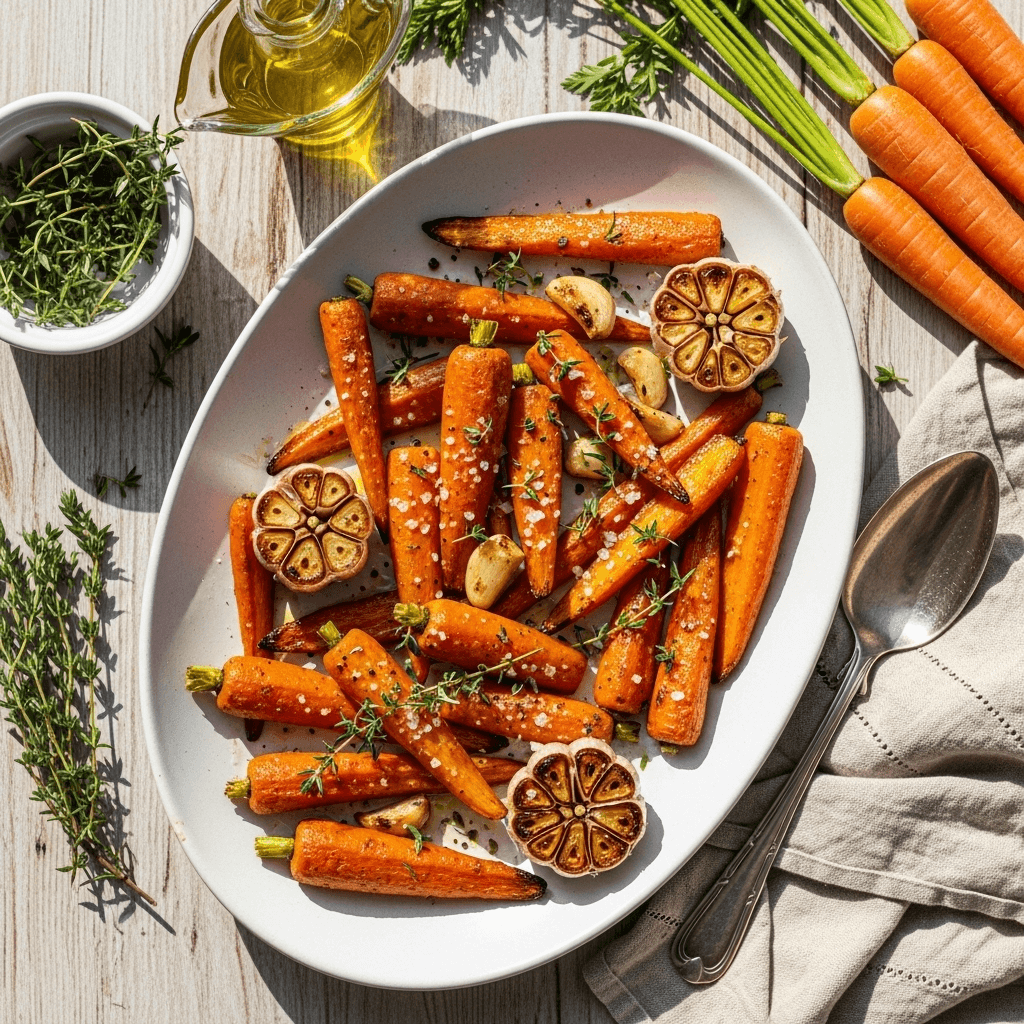
Get ready to transform humble carrots into the star of your dinner table with these Garlic Herb Roasted Carrots that are so delicious, even veggie-skeptical kids will ask for seconds! Imagine perfectly tender carrots with caramelized, golden-brown edges, infused with aromatic garlic and fresh herbs, all achieved with minimal effort and maximum flavor. This simple yet elegant side dish elevates any meal from ordinary to extraordinary in just 30 minutes.
What makes these roasted carrots truly special is the way high-heat roasting concentrates their natural sweetness while creating those irresistible crispy, caramelized edges that add incredible texture. The garlic infuses every bite with savory depth, while fresh herbs like thyme, rosemary, or parsley add brightness and sophistication. A drizzle of olive oil and a sprinkle of salt and pepper are all you need to unlock flavors that taste like they came from a high-end restaurant kitchen.
This versatile recipe works for absolutely any occasion—serve it alongside your weeknight roasted chicken, present it as part of your holiday feast, pack it for meal prep lunches, or feature it as a healthy side for Sunday dinner. Whether you’re cooking for picky eaters, health-conscious family members, or dinner party guests, these garlic herb roasted carrots never disappoint. They’re naturally vegan, gluten-free, paleo-friendly, and whole30-compliant, making them the perfect crowd-pleaser that accommodates nearly every dietary preference. Best of all, they’re so simple that beginner cooks will feel like kitchen pros, yet elegant enough to serve at your most special gatherings.
History / Background
Roasted vegetables have been a cornerstone of human cuisine since our ancestors first discovered that cooking root vegetables over fire made them sweeter, more digestible, and infinitely more delicious. Carrots specifically have a rich culinary history spanning thousands of years, originally cultivated in Persia and Afghanistan around the 10th century. Interestingly, these ancient carrots were purple and yellow—the familiar orange carrot we know today was developed much later by Dutch growers in the 17th century.
The technique of roasting carrots with herbs and garlic draws from several European culinary traditions, particularly French and Mediterranean cooking. In French cuisine, roasted root vegetables (légumes rôtis) are considered essential accompaniments to roasted meats, valued for their ability to complement rich proteins while adding color and nutrition to the plate. The French technique of roasting at high heat to achieve caramelization while maintaining tenderness has influenced home cooking worldwide.
Mediterranean cooking traditions, especially those from Italy and Greece, have long celebrated the combination of olive oil, garlic, and fresh herbs with seasonal vegetables. This flavor profile—which forms the foundation of our garlic herb roasted carrots—is central to the Mediterranean diet, recognized globally as one of the healthiest eating patterns in the world. The use of generous amounts of olive oil isn’t just for flavor; it helps the body absorb fat-soluble vitamins and antioxidants present in carrots, particularly beta-carotene.
In American home cooking, roasted carrots experienced a renaissance in recent decades as the farm-to-table movement and health-conscious eating gained momentum. Home cooks discovered that simple roasting techniques could transform affordable, everyday vegetables into dishes worthy of celebration. The rise of food blogs and Pinterest in the 2010s further popularized roasted vegetable recipes, with garlic herb roasted carrots becoming one of the most pinned and shared side dishes.
Today, this recipe represents the best of modern home cooking—taking inspiration from classical techniques while keeping things simple, healthy, and accessible for busy families. It’s proof that the most satisfying dishes often come from honoring quality ingredients and straightforward cooking methods.
Why You’ll Love This Recipe
These Garlic Herb Roasted Carrots aren’t just another vegetable side dish—they’re a game-changing recipe that will make you genuinely excited about eating your vegetables. The high-heat roasting method transforms ordinary carrots into caramelized, tender perfection with crispy edges that provide the most satisfying textural contrast.
Here’s why this recipe deserves a permanent spot in your weekly rotation:
- Ridiculously simple – Just 5 basic ingredients and virtually no prep work required; perfect for busy weeknights
- Naturally healthy – Packed with vitamins, fiber, and antioxidants while being low in calories and incredibly satisfying
- Budget-friendly – Carrots are inexpensive year-round, making this an economical side dish that looks and tastes expensive
- Hands-off cooking – Once in the oven, they require minimal attention, freeing you to focus on other meal components
- Caramelized perfection – High-heat roasting creates those coveted golden-brown, slightly crispy edges everyone loves
- Universally appealing – Even confirmed veggie haters become carrot converts after trying these
- Meal prep champion – Makes excellent leftovers and can be prepared in advance for the week
- Dietary-friendly – Naturally vegan, gluten-free, paleo, keto-friendly, and Whole30-compliant
- Versatile and customizable – Works with any fresh herbs you have on hand and accepts countless flavor variations
- Restaurant-quality presentation – Looks impressive on the plate, making everyday dinners feel special
- Year-round availability – Carrots are always in season, so you can enjoy this recipe any time of year
- Kid-approved – The natural sweetness from caramelization makes these a hit with children who typically resist vegetables
Ingredient Notes
Understanding your ingredients is the foundation of great cooking. Here’s what you need to know about each component and how to make smart substitutions.
Carrots: The star of our show. Look for fresh, firm carrots with bright orange color and smooth skin. Medium-sized carrots (about 1 inch in diameter) work best as they roast evenly. You can use regular carrots, rainbow carrots for visual appeal, or baby carrots for convenience, though they tend to be less flavorful. Avoid limp or rubbery carrots—fresh is essential. One pound feeds 3-4 people as a side dish.
Fresh Garlic: Absolutely crucial for that aromatic, savory flavor that makes these carrots irresistible. Use 4-6 whole cloves that roast alongside the carrots, becoming sweet and mellow. Fresh garlic is far superior to pre-minced jarred garlic or garlic powder for this recipe. If you love garlic, add more—roasted garlic becomes wonderfully mild and almost buttery.
Olive Oil: Use good-quality extra virgin olive oil for the best flavor. Olive oil helps achieve caramelization, prevents sticking, and carries the herb flavors throughout the dish. It also helps your body absorb the fat-soluble vitamins in carrots. In a pinch, avocado oil or melted coconut oil work, though they’ll change the flavor slightly. Plan on about 2-3 tablespoons per pound of carrots.
Fresh Herbs: Fresh thyme and rosemary are classic choices that pair beautifully with roasted carrots. Thyme is delicate and slightly floral, while rosemary is more robust and piney. Fresh parsley, oregano, or sage also work wonderfully. If using dried herbs, reduce the quantity to one-third since dried herbs are more concentrated. Fresh herbs can be added before or after roasting—both methods work.
Salt and Pepper: Essential for bringing out the natural sweetness of the carrots. Use kosher salt or sea salt for even distribution. Freshly ground black pepper adds a subtle heat that complements the sweetness. Don’t skimp on seasoning—vegetables need more salt than you might think to taste their best.
Optional Add-ins: A drizzle of honey or maple syrup before roasting enhances caramelization. A squeeze of fresh lemon juice after roasting adds brightness. Balsamic vinegar creates a sweet-tangy glaze. Parmesan cheese adds umami richness. Red pepper flakes provide gentle heat.
Equipment Needed
Having the right tools makes cooking more efficient and enjoyable. Here’s what you’ll need:
- Large rimmed baking sheet (half-sheet pan, 18×13 inches) – Essential for giving carrots space to roast rather than steam; dark pans promote better browning
- Parchment paper or aluminum foil (optional) – Makes cleanup easier, though direct contact with the pan creates better caramelization
- Sharp chef’s knife or vegetable peeler – For peeling and cutting carrots evenly
- Cutting board – Large enough to comfortably prep all your carrots
- Large mixing bowl – For tossing carrots with oil, herbs, and seasonings
- Measuring spoons – For accurate oil and seasoning quantities
- Tongs or spatula – For flipping carrots halfway through roasting
- Oven mitts – To safely handle hot pans
- Kitchen timer – To ensure perfect timing and prevent overcooking
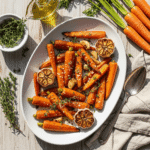
Garlic Herb Roasted Carrots Recipe
- Total Time: 35 minutes
- Yield: 4 servings 1x
- Diet: Gluten Free
Description
These Garlic Herb Roasted Carrots are perfectly caramelized, tender, and bursting with flavor from fresh garlic and aromatic herbs. Ready in just 35 minutes with minimal prep, they’re the ultimate easy and healthy side dish that elevates any meal from weeknight dinners to holiday feasts.
Ingredients
- 2 lbs carrots (about 8-10 medium carrots), peeled
- 3 tablespoons extra virgin olive oil
- 4-6 whole garlic cloves, peeled
- 2 teaspoons fresh thyme leaves (or 1 teaspoon fresh rosemary, chopped)
- 1 teaspoon kosher salt (or to taste)
- ½ teaspoon freshly ground black pepper
- Optional: 1 tablespoon fresh parsley, chopped (for garnish)
- Optional: 1 teaspoon honey or maple syrup (for extra caramelization)
- Optional: squeeze of fresh lemon juice (for brightness)
Instructions
- Preheat your oven: Set oven to 425°F (220°C) and position the rack in the center. This high temperature is key to achieving caramelization and crispy edges. Let the oven fully preheat for at least 10 minutes—an under-heated oven won’t caramelize properly.
- Prepare the carrots: Peel the carrots using a vegetable peeler. Cut them into uniform pieces for even cooking—aim for sticks about 3-4 inches long and ½ inch thick. If your carrots are very thick, cut them in half lengthwise first, then into pieces. Consistent sizing ensures everything finishes cooking at the same time.
- Season the carrots: Place the cut carrots in a large mixing bowl. Add olive oil, whole garlic cloves, fresh thyme (or rosemary), salt, and pepper. If using honey or maple syrup for extra caramelization, add it now. Toss everything together with your hands or a spoon until every piece is evenly coated with oil and seasonings.
- Arrange on baking sheet: Spread the seasoned carrots in a single layer on a large rimmed baking sheet. Make sure they’re not crowded or overlapping—give them space to breathe. Crowded carrots will steam instead of roast, preventing those delicious caramelized edges from forming. Use two pans if necessary.
- Roast the carrots: Place the baking sheet in the preheated oven and roast for 12-15 minutes undisturbed. This initial roasting period allows the bottom to caramelize beautifully.
- Flip and continue roasting: After 12-15 minutes, remove the pan from the oven and use tongs or a spatula to flip the carrots, exposing the other side. Return to the oven and roast for another 10-12 minutes until the carrots are tender when pierced with a fork and have gorgeous golden-brown, caramelized edges.
- Check for doneness: Insert a fork into the thickest carrot—it should slide in easily with just slight resistance. The carrots should be tender but not mushy, with visible caramelization on the edges.
- Finish and serve: Remove from the oven and transfer to a serving dish. If desired, squeeze fresh lemon juice over the top for brightness, sprinkle with fresh chopped parsley, or drizzle with a touch more olive oil. The roasted garlic cloves will be sweet and spreadable—serve them alongside or mash them into the carrots. Serve immediately while hot.
Notes
- Carrot size matters: Cut all pieces to similar sizes so they cook evenly. Thinner pieces may finish faster than thick ones.
- Don’t skip preheating: A fully preheated oven is essential for proper caramelization. Don’t rush this step.
- Spacing is crucial: Overcrowding causes steaming instead of roasting. Give carrots room to breathe for the best texture.
- Oven variations: All ovens cook differently. Start checking at 20 minutes total time and adjust as needed.
- Fresh vs. dried herbs: If using dried herbs, use only ⅔ teaspoon as they’re more concentrated than fresh.
- Customize the garlic: Roasted whole garlic becomes sweet and mild. For stronger garlic flavor, add minced garlic during the last 5 minutes of roasting.
- Sweetness level: Carrots vary in natural sweetness. Taste and adjust seasoning after roasting if needed.
- Prep Time: 10 minutes
- Cook Time: 25 minutes
- Category: Side Dish
- Method: Roasting, Oven-Baked
- Cuisine: American, Mediterranean-Inspired
Nutrition
- Serving Size: About ½ lb carrots (¼ of recipe)
- Calories: 145
- Sugar: 7g
- Sodium: 480mg
- Fat: 11g
- Saturated Fat: 1.
- Unsaturated Fat: 9g
- Trans Fat: 0g
- Carbohydrates: 14g
- Fiber: 4g
- Protein: 1g
- Cholesterol: 0mg
Nutrition information is calculated based on the ingredients listed and is an estimate. Actual values may vary based on specific ingredients used and modifications made. Carrots are excellent sources of vitamin A (over 400% daily value), vitamin K, potassium, and antioxidants.
Tips & Variations
Make this recipe your own with these creative twists and helpful modifications:
Honey Balsamic Roasted Carrots: Toss carrots with 1 tablespoon balsamic vinegar and 1 tablespoon honey before roasting. The result is sweet, tangy, and absolutely addictive. Drizzle with extra balsamic reduction after roasting for restaurant-style presentation.
Spiced Moroccan Carrots: Add 1 teaspoon cumin, ½ teaspoon coriander, ½ teaspoon cinnamon, and a pinch of cayenne before roasting. Garnish with fresh cilantro and toasted almonds for an exotic twist.
Maple Glazed Carrots: Replace olive oil with melted butter and add 2 tablespoons pure maple syrup. These taste like candy but are still vegetables—kids go crazy for them!
Parmesan Herb Carrots: Sprinkle freshly grated Parmesan cheese over the carrots during the last 5 minutes of roasting. The cheese creates a crispy, golden crust that’s utterly irresistible.
Rainbow Roasted Carrots: Use a mix of orange, purple, yellow, and white carrots for a stunning, colorful presentation. They all roast at the same rate and taste slightly different—a fun way to add visual interest.
Asian-Inspired Carrots: Toss with sesame oil instead of olive oil, add fresh grated ginger, and finish with sesame seeds and sliced green onions. Drizzle with a touch of soy sauce or tamari after roasting.
Lemon Herb Carrots: Add lemon zest before roasting and squeeze fresh lemon juice over the finished carrots. The citrus brightness cuts through the sweetness beautifully.
Spicy Roasted Carrots: Add ½ teaspoon red pepper flakes or a pinch of cayenne before roasting for gentle heat. Or toss with harissa paste for North African flair.
Herb Variations: Try different fresh herbs based on what you have—dill, tarragon, oregano, or sage all work beautifully. Mix and match to complement your main dish.
Pro Chef Tips
Elevate your Garlic Herb Roasted Carrots from good to absolutely phenomenal with these professional techniques:
Cut on the diagonal: Instead of cutting straight across, cut carrots at a 45-degree angle. This creates more surface area for caramelization and gives a more elegant, professional appearance.
Room temperature matters: Let carrots sit at room temperature for 15-20 minutes before roasting if they’ve been refrigerated. Cold vegetables hitting a hot oven take longer to caramelize and can cook unevenly.
The dry-surface trick: After peeling and cutting, pat carrots completely dry with paper towels or a clean kitchen towel. Surface moisture creates steam that prevents browning. Dry carrots = better caramelization.
Toss with sugar: Professional chefs sometimes add just ½ teaspoon of sugar to the oil mixture. The sugar helps jumpstart caramelization and creates deeper, more complex browning. It’s subtle but makes a difference.
Use a dark pan: Dark-colored baking sheets absorb more heat than light or shiny ones, promoting better browning and caramelization. If you only have light pans, increase roasting time by 3-5 minutes.
The two-temperature technique: Start roasting at 450°F for 10 minutes to jumpstart caramelization, then reduce to 400°F for the remaining time. This prevents burning while still achieving gorgeous browning.
Finish with butter: After roasting, toss the hot carrots with 1-2 tablespoons of cold butter. It melts into a glossy glaze that adds richness and creates restaurant-level shine.
Fresh herbs at the end: While adding herbs before roasting is convenient, tossing roasted carrots with fresh herbs at the very end preserves their bright color and fresh flavor. Do both for layered herb flavor.
The spacing rule: Carrots should have at least ½ inch of space between pieces. If they’re touching, they’ll steam. When in doubt, use a second pan.
Common Mistakes to Avoid
Learn from these frequent errors to ensure perfect roasted carrots every single time:
Mistake #1: Cutting carrots unevenly. When pieces are different sizes, smaller ones burn while larger ones remain undercooked. Take an extra minute to cut uniform pieces—it makes all the difference. Aim for consistency within ¼ inch.
Mistake #2: Overcrowding the pan. This is the number one mistake home cooks make. Crowded carrots steam instead of roast, becoming limp and bland instead of caramelized and crispy. They need space for air circulation. If using more than 2 pounds of carrots, use two pans.
Mistake #3: Not using enough oil. Carrots need adequate fat to caramelize properly and prevent sticking. Skimping on olive oil results in dry, unevenly cooked vegetables. Use at least 1½ tablespoons of oil per pound of carrots.
Mistake #4: Roasting at too low a temperature. Temperatures below 400°F won’t achieve proper caramelization—you’ll get soft carrots without those delicious crispy edges. High heat (425°F) is essential for the Maillard reaction that creates complex flavors.
Mistake #5: Forgetting to flip halfway through. Flipping ensures even browning on multiple sides and prevents burning. Set a timer for the halfway point and don’t skip this step. The extra minute is worth it for perfectly caramelized carrots.
Storage & Meal Prep
Make your life easier with proper storage and smart meal prep strategies:
Refrigerator Storage: Let roasted carrots cool completely to room temperature, then transfer to an airtight container. Store in the refrigerator for up to 5 days. The carrots will soften slightly as they sit but remain delicious. They’re excellent in meal prep bowls with grains and proteins.
Reheating Instructions: For best results, reheat in a 350°F oven for 8-10 minutes until warmed through. This method helps restore some of the crispy edges. Alternatively, reheat in a skillet over medium heat with a small drizzle of olive oil for 3-5 minutes. Microwave reheating works but creates softer texture—use 50% power in 1-minute intervals.
Meal Prep Strategy: Roast a double or triple batch on Sunday and use throughout the week. Add them to grain bowls, salads, wraps, pasta dishes, or serve as quick sides. They’re incredibly versatile and save time on busy weeknights.
Preventing Sogginess: Store carrots without additional liquid in the container. If condensation forms, crack the lid slightly to allow moisture to escape. Pat dry before reheating for better texture.
Cold Carrot Uses: Leftover roasted carrots are delicious cold in salads, added to sandwiches, blended into hummus, or chopped into grain bowls. Don’t feel obligated to always reheat them.
Make-Ahead & Freezer Notes
Plan ahead and enjoy these delicious carrots on your schedule:
Make-Ahead Options: You can prep carrots up to 24 hours in advance. Peel and cut them, then store in a container of cold water in the refrigerator to prevent drying out. Drain completely and pat dry before tossing with oil and seasonings. You can also fully roast the carrots up to 3 days ahead, then reheat when needed.
Freezing Roasted Carrots: Yes, they freeze well! Cool completely, then freeze in a single layer on a baking sheet until solid (about 2 hours). Transfer frozen carrots to freezer bags, removing as much air as possible. They’ll keep for up to 3 months. Frozen roasted carrots work best in soups, stews, or casseroles where texture changes matter less.
Freezing Raw Prepared Carrots: You can also freeze raw, cut carrots for future roasting. Blanch them in boiling water for 2 minutes, plunge into ice water, drain thoroughly, and freeze in portions. When ready to use, roast directly from frozen, adding 5-10 minutes to cooking time.
Thawing Instructions: For best texture, thaw frozen roasted carrots in the refrigerator overnight. Reheat in a 350°F oven for 10-12 minutes. You can also reheat directly from frozen—increase time to 15-18 minutes and stir halfway through.
Best Practices: While freezing is convenient, roasted carrots are best enjoyed fresh or within 5 days of roasting. The texture becomes slightly softer after freezing, though flavor remains excellent.
Serving Suggestions
Complete your meal with these perfectly paired accompaniments:
Protein Pairings: Roasted carrots complement virtually any protein. Serve alongside roasted chicken, grilled steak, baked salmon, pork tenderloin, lamb chops, or turkey for a complete dinner. They’re also perfect with plant-based proteins like crispy tofu or tempeh.
Holiday Menus: These carrots are holiday showstoppers—serve them at Thanksgiving, Christmas, or Easter dinner alongside turkey, ham, prime rib, or roasted vegetables. Their vibrant color adds beauty to holiday spreads.
Grain Bowls: Build nourishing bowls with roasted carrots, quinoa or brown rice, leafy greens, chickpeas, avocado, and tahini dressing. They add sweetness and substance to grain-based meals.
Salad Toppers: Add warm or cold roasted carrots to salads for extra flavor, texture, and nutrition. They’re especially good on kale salads, spinach salads with goat cheese, or grain salads with feta.
Complete Meal Ideas:
- Serve with roasted chicken, mashed potatoes, and steamed green beans for classic Sunday dinner
- Pair with grilled salmon, quinoa pilaf, and a side salad for a healthy weeknight meal
- Add to holiday tables with turkey, stuffing, cranberry sauce, and green bean casserole
Other Side Dish Pairings: Roasted carrots work beautifully alongside roasted Brussels sprouts, garlic mashed potatoes, creamy polenta, wild rice pilaf, or crusty bread for soaking up pan juices.
Wine Pairings: The natural sweetness of roasted carrots pairs nicely with medium-bodied whites like Chardonnay or Viognier, or light reds like Pinot Noir.
FAQs Section
Q: Do I have to peel the carrots?
A: It’s recommended for the best texture and appearance. Carrot skins can be bitter and tough, and they don’t soften much during roasting. However, if you’re using organic carrots and prefer a more rustic approach, you can scrub them thoroughly instead of peeling. Baby carrots typically don’t need peeling.
Q: Can I use baby carrots instead of regular carrots?
A: Yes, though whole carrots typically have better flavor. If using bagged baby carrots, note that they’re often less sweet and can be drier since they’re actually cut from larger carrots and mechanically peeled. They also tend to take slightly less time to roast—start checking around 18-20 minutes.
Q: Why aren’t my carrots getting caramelized?
A: The most common reasons are: oven temperature too low (needs to be at least 425°F), overcrowded pan preventing air circulation, too much moisture on the carrots before roasting, or not roasting long enough. Make sure your oven is fully preheated and carrots have space between them.
Q: Can I roast carrots with other vegetables?
A: Absolutely! Carrots pair well with Brussels sprouts, parsnips, sweet potatoes, potatoes, or beets. Just be aware that different vegetables have different roasting times. Choose vegetables with similar cooking times, or cut denser vegetables smaller and softer ones larger to even out cooking.
Q: How do I know when carrots are done?
A: Insert a fork into the thickest part of a carrot—it should slide in easily with slight resistance. The carrots should be tender but not mushy, and you should see golden-brown caramelized edges. Visual cues matter as much as tenderness.
Q: My carrots burned on the outside but are still hard inside. What happened?
A: This usually means your oven was too hot or the carrots were cut too thick. Try reducing temperature to 400°F and cutting carrots into smaller, more uniform pieces. Also ensure they’re arranged in a single layer without overlapping.
Q: Are roasted carrots healthy?
A: Very much so! Carrots are packed with vitamin A, fiber, and antioxidants. Roasting with olive oil actually helps your body absorb the fat-soluble nutrients better. While roasting adds some calories from oil, it’s a nutritious cooking method that doesn’t require cream, butter, or heavy sauces.
Conclusion
There you have it—the ultimate guide to making perfect Garlic Herb Roasted Carrots that will transform the way you think about vegetables! This simple recipe proves that you don’t need complicated techniques or fancy ingredients to create something absolutely delicious. With just a handful of pantry staples, proper technique, and about 35 minutes, you’ll have a side dish that rivals anything from a high-end restaurant.
The beauty of these roasted carrots lies in their incredible versatility and universal appeal. Whether you’re a busy parent trying to get more vegetables into your family’s diet, a health-conscious cook looking for nutritious sides, a meal prepper planning your week, or someone who loves entertaining with impressive yet easy dishes, this recipe delivers on every level. The caramelized edges, tender interior, and aromatic garlic-herb flavor create a combination that makes vegetables feel like a treat rather than an obligation.