Get ready to discover the easiest, most delicious weeknight dinner that will make you feel like a gourmet chef without breaking a sweat. This Garlic Herb Butter Shrimp is a restaurant-quality dish featuring plump, juicy shrimp sautéed in rich, aromatic butter infused with fresh garlic and fragrant herbs that create an absolutely intoxicating aroma in your kitchen.
What makes this recipe so incredibly popular among home cooks is its remarkable simplicity paired with sophisticated flavors. The combination of butter, garlic, and herbs is a classic French technique that transforms simple shrimp into something truly special. Each shrimp gets coated in that luscious, golden butter sauce that’s bursting with garlicky goodness and herbal brightness—it’s the kind of dish that looks and tastes impressive but requires minimal effort and just one pan.
This versatile recipe works beautifully for so many occasions. Serve it as an elegant main course for date night at home, toss it with pasta for a quick family dinner, present it as an upscale appetizer at your next dinner party, or add it to salads and grain bowls for healthy meal prep. The best part? From start to finish, you’ll have this gorgeous dish ready in just 15 minutes, making it perfect for those busy weeknights when you want something delicious without spending hours in the kitchen.
History / Background
Garlic butter shrimp, while seemingly simple, has fascinating culinary roots that blend French cooking techniques with coastal seafood traditions from around the world. The use of butter as a cooking medium and flavor base is quintessentially French—the technique of cooking seafood in butter with garlic and herbs is part of a broader French culinary tradition called “à la meunière,” which translates to “in the style of the miller’s wife.”
This cooking method became popular in the 18th and 19th centuries in France, particularly in coastal regions like Brittany and Normandy where butter was abundant and seafood was fresh. French cooks discovered that butter’s rich flavor and ability to conduct heat evenly made it perfect for quickly cooking delicate seafood while creating a simple yet luxurious sauce.
As French culinary techniques spread globally, particularly through the influence of classical French cuisine on American cooking in the mid-20th century, these butter-based seafood preparations became increasingly popular. In the United States, shrimp cooked in garlic butter became a staple at upscale steakhouses and seafood restaurants, often served as “shrimp scampi” when paired with white wine and lemon.
The Mediterranean influence also plays a role in this dish’s evolution. Italian, Spanish, and Greek coastal cuisines all feature similar preparations where fresh seafood is quickly sautéed with abundant garlic, olive oil or butter, and fresh herbs. The combination of these European influences created the garlic herb butter shrimp we know and love today.
What’s particularly special about this dish is its democratic nature—it brings restaurant-quality flavors into home kitchens using accessible ingredients and simple techniques. In the 1990s and 2000s, as home cooks became more interested in recreating restaurant dishes, recipes like this one gained popularity for delivering impressive results with minimal fuss. Today, it represents the perfect balance between sophisticated flavors and everyday cooking, making it a modern classic that fits seamlessly into contemporary busy lifestyles while still feeling special enough for celebrations.
Why You’ll Love This Recipe
This Garlic Herb Butter Shrimp isn’t just another quick dinner—it’s a game-changing recipe that will become your secret weapon for impressing anyone, including yourself. The buttery, garlicky sauce that coats each perfectly cooked shrimp creates those restaurant-quality flavors that make you wonder why you ever bother with takeout.
Here’s why this recipe deserves a permanent spot in your cooking rotation:
- Lightning Fast: Seriously, 15 minutes from refrigerator to table—faster than ordering delivery and infinitely better
- Minimal Ingredients: Uses simple, accessible ingredients you can find at any grocery store—no specialty items required
- One-Pan Wonder: Everything cooks in a single skillet, meaning minimal cleanup and maximum flavor
- Restaurant-Worthy: Tastes like something you’d order at an upscale restaurant, but costs a fraction of the price
- Naturally Low-Carb: Keto-friendly and naturally gluten-free, fitting perfectly into various dietary lifestyles
- Impressive but Easy: Looks sophisticated and tastes complex, but the technique is simple enough for beginners
- Incredibly Versatile: Works as a main dish, appetizer, pasta topping, salad protein, or grain bowl component
- Budget-Friendly: Shrimp goes on sale regularly, and when it does, this affordable recipe delivers big value
- Elegant Presentation: The golden butter sauce and bright herbs make for a gorgeous, Instagram-worthy plate
- Foolproof Technique: Hard to mess up—even cooking novices consistently get perfect results
Ingredient Notes
Understanding your ingredients ensures the best possible results and helps you make smart substitutions when needed. Here’s what you need to know:
Shrimp: Large or jumbo shrimp (21-30 count per pound) work best for this recipe as they’re substantial and stay juicy. Buy them peeled and deveined to save time—frozen works just as well as “fresh” (most grocery store shrimp were previously frozen anyway). Look for shrimp without added preservatives like sodium tripolyphosphate when possible for the best flavor and texture.
Butter: Unsalted butter is essential so you can control the salt level in your dish. Real butter (not margarine) provides that rich, luxurious flavor and silky texture that makes this dish special. The butter serves as both the cooking medium and the sauce base, so quality matters here. European-style butter with higher fat content creates an even richer sauce.
Garlic: Fresh garlic is absolutely non-negotiable for this recipe. You’ll need about 5-6 large cloves, minced or thinly sliced. The garlic is a starring ingredient, not just a supporting player, so jarred minced garlic won’t deliver the same aromatic punch and fresh flavor. The amount might seem like a lot, but trust me—it’s perfect.
Fresh Herbs: A combination of fresh parsley and basil creates the best flavor profile, though you can use whatever herbs you prefer or have on hand. Parsley adds freshness and color, while basil brings a slightly sweet, aromatic note. Fresh thyme, oregano, dill, or chives all work beautifully too. Dried herbs can substitute but use one-third the amount.
Lemon: Fresh lemon juice adds brightness and acidity that cuts through the richness of the butter and enhances the shrimp’s natural sweetness. The zest adds even more lemony flavor without additional liquid. Always use fresh lemons—bottled juice tastes flat and artificial in comparison.
White Wine (optional): A splash of dry white wine adds depth and sophistication to the sauce. Sauvignon Blanc, Pinot Grigio, or any dry white you’d actually drink works great. If you prefer not to use wine, chicken broth or additional lemon juice works as a substitute.
Red Pepper Flakes: Just a pinch adds subtle warmth and complexity without making the dish spicy. It enhances the other flavors rather than overwhelming them. Omit if you’re sensitive to heat or cooking for kids.
Olive Oil: A small amount of olive oil mixed with butter prevents the butter from burning during the high-heat cooking while adding its own subtle flavor. Use regular olive oil, not extra virgin, as the higher smoke point is better for sautéing.
Equipment Needed
Having the right tools makes this simple recipe even easier to execute flawlessly. Here’s what you’ll need:
- Large Skillet: A 12-inch skillet is ideal for cooking shrimp in a single layer without crowding. Stainless steel or cast iron work beautifully for getting a nice sear on the shrimp.
- Sharp Chef’s Knife: For mincing garlic and chopping fresh herbs
- Cutting Board: Preferably one designated for produce to avoid cross-contamination
- Measuring Spoons: For precise butter, oil, and seasoning measurements
- Tongs or Large Spatula: For flipping shrimp easily without breaking them
- Microplane or Zester: For zesting the lemon to capture those aromatic oils
- Citrus Juicer: Makes extracting lemon juice much easier and more efficient
- Paper Towels: Essential for patting shrimp completely dry before cooking
- Serving Platter: To present your beautiful shrimp attractively
- Garlic Press (optional): If you prefer pressed garlic over minced, though minced is better for texture
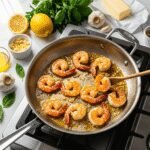
Garlic Herb Butter Shrimp Recipe
- Total Time: 15 minutes
- Yield: 4 servings 1x
- Diet: Gluten Free
Description
This Garlic Herb Butter Shrimp is a quick, elegant dish featuring succulent shrimp sautéed in rich butter with aromatic garlic and fresh herbs. Ready in just 15 minutes, it’s perfect for weeknight dinners or impressive entertaining!
Ingredients
- 1½ lbs large shrimp, peeled and deveined (21-30 count)
- 4 tablespoons unsalted butter, divided
- 1 tablespoon olive oil
- 6 cloves garlic, minced
- ¼ cup dry white wine (optional, or use chicken broth)
- Juice and zest of 1 large lemon
- ¼ cup fresh parsley, chopped
- 2 tablespoons fresh basil, chopped (or additional parsley)
- ½ teaspoon salt
- ¼ teaspoon black pepper
- ¼ teaspoon red pepper flakes (optional)
- Lemon wedges for serving
Instructions
- Prep the Shrimp: Pat the shrimp completely dry with paper towels—this is crucial for getting a good sear. Season both sides with salt and pepper. Having dry shrimp prevents steaming and ensures beautiful browning.
- Heat the Pan: Heat a large skillet over medium-high heat. Add 1 tablespoon of butter and the olive oil. Let the butter melt completely and become foamy. The combination prevents the butter from burning at high heat.
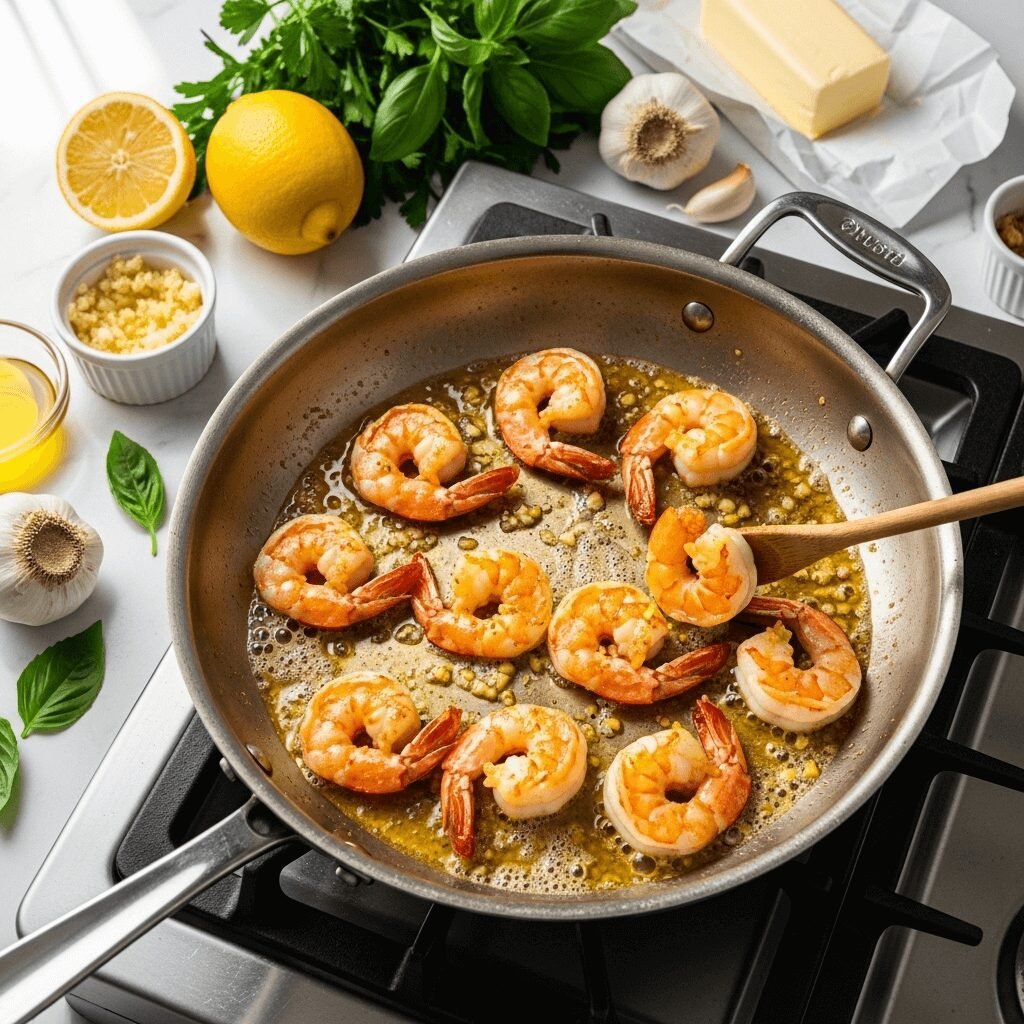
- Sear the Shrimp: Add the shrimp in a single layer, making sure they’re not touching or overlapping. Cook for 2 minutes without moving them—resist the urge to flip early. This develops that gorgeous golden color.
- Flip and Continue: Flip the shrimp and cook for another 1-2 minutes until they’re pink and just cooked through. The shrimp should form a “C” shape—if they curl into a tight “O,” they’re overcooked. Transfer shrimp to a plate and set aside.
- Make the Garlic Butter Sauce: Reduce heat to medium. Add the remaining 3 tablespoons of butter to the same skillet. Once melted, add the minced garlic and cook for 30-45 seconds until fragrant but not browned, stirring constantly. Garlic burns quickly, so watch carefully.
- Add Wine and Lemon: Pour in the white wine (if using) and lemon juice. Let it bubble and reduce for about 1 minute, scraping up any browned bits from the bottom of the pan. These bits add incredible flavor to your sauce.
- Combine and Finish: Return the shrimp to the skillet along with any accumulated juices. Add the lemon zest, fresh herbs, and red pepper flakes (if using). Toss everything together for 1 minute until the shrimp are coated in the sauce and heated through.
- Serve Immediately: Transfer to a serving platter, drizzle with all the garlic butter sauce from the pan, and serve with lemon wedges. This dish is best enjoyed hot and fresh!
Notes
- Don’t Overcook: Shrimp cook incredibly fast—usually 3-4 minutes total. Overcooked shrimp become rubbery.
- Dry Shrimp = Better Sear: Moisture prevents browning. Always pat completely dry before cooking.
- Single Layer: If your shrimp don’t fit in one layer, cook in two batches to prevent steaming.
- Wine Substitute: Chicken broth or additional lemon juice works if you prefer not to use wine.
- Fresh Herbs: Use fresh herbs for best flavor. Dried herbs won’t provide the same bright taste.
- Serving Size: This serves 4 as a main course or 6-8 as an appetizer.
- Prep Time: 5 minutes
- Cook Time: 10 minutes
- Category: Dinner / Appetizer
- Method: Stovetop
- Cuisine: French-American
Nutrition
- Serving Size: ¼ of recipe (approximately 6 oz shrimp with sauce)
- Calories: 285
- Sugar: 1g
- Sodium: 685mg
- Fat: 16g
- Saturated Fat: 9g
- Unsaturated Fat: 6g
- Trans Fat: 0g
- Carbohydrates: 4g
- Fiber: 0g
- Protein: 29g
- Cholesterol: 295mg
Nutrition information is approximate and will vary based on specific ingredients used. Calculated with butter, wine, and herbs as listed.
Tips & Variations
The beauty of this recipe lies in its versatility—here are some delicious ways to customize it to your taste:
Spicy Version: Double or triple the red pepper flakes, add minced fresh jalapeño with the garlic, or finish with a drizzle of sriracha or hot honey for those who love heat. Cajun seasoning also creates a fantastic spicy variation.
Mediterranean Twist: Add sun-dried tomatoes, capers, and kalamata olives to the sauce. Use oregano and thyme instead of basil for a more Mediterranean herb profile. Finish with crumbled feta cheese.
Creamy Garlic Butter Shrimp: Stir in ¼ cup heavy cream or half-and-half after reducing the wine for a luscious, creamy sauce. A tablespoon of cream cheese also creates wonderful richness.
Asian-Inspired: Replace butter with sesame oil, add fresh ginger with the garlic, use soy sauce instead of wine, and finish with green onions and sesame seeds instead of Italian herbs.
Italian-Style: Add halved cherry tomatoes and a handful of spinach to the pan after cooking the shrimp. Toss until the spinach wilts. Top with freshly grated Parmesan cheese.
Lighter Version: Use half the amount of butter and increase olive oil for fewer calories and less saturated fat. The flavor is slightly different but still delicious.
Smoky Variation: Add ½ teaspoon smoked paprika with the seasonings for a subtle smoky note that adds depth and complexity.
With Vegetables: Add asparagus, zucchini, or bell peppers to the pan after searing the shrimp. Sauté until tender-crisp, then proceed with the sauce.
Pro Chef Tips
These professional techniques will elevate your shrimp from good to absolutely restaurant-worthy:
The Dry Shrimp Secret: This is the single most important tip. Pat shrimp bone-dry with paper towels and let them air-dry for 5 minutes if possible. Moisture is the enemy of a good sear—wet shrimp will steam instead of caramelize, resulting in a pale, rubbery texture.
Temperature Control: Start with high heat for searing the shrimp, then reduce to medium for the sauce. This prevents burning the garlic while still getting that gorgeous color on the shrimp. A properly heated pan should sizzle immediately when shrimp hit the surface.
Don’t Crowd the Pan: Shrimp need space to sear properly. If they’re touching, they’ll steam in their own moisture. Cook in batches if necessary—it’s worth the extra few minutes for perfect texture.
The Flip Timing: Cook shrimp 2 minutes per side as a general rule, but watch for visual cues. Shrimp are done when they form a “C” shape and are opaque. A tight “O” means overcooked—they continue cooking slightly off heat, so remove just before they’re completely done.
Bloom the Garlic: When adding garlic to butter, let it sizzle for 30-45 seconds until fragrant but before it browns. This “blooms” the garlic, developing its flavor while removing any harsh raw taste. Burnt garlic is bitter and ruins the dish.
Deglaze for Depth: When you add wine or broth, use a wooden spoon to scrape up the browned bits (fond) from the bottom of the pan. These caramelized proteins add incredible depth and complexity to your sauce.
Fresh Herb Timing: Add herbs at the very end so they stay bright green and maintain their fresh flavor. Cooking herbs too long makes them taste dull and turns them an unappealing olive color.
The Butter Swirl: After removing from heat, swirl in one final tablespoon of cold butter. This technique, called “monter au beurre” in French cooking, creates a glossy, emulsified sauce that clings beautifully to the shrimp.
Common Mistakes to Avoid
Learning what not to do is just as important as knowing the proper technique. Here are the most common pitfalls:
Overcooking the Shrimp: This is the number one mistake. Shrimp cook incredibly fast—usually 3-4 minutes total. They go from perfectly cooked to rubbery in seconds. Remove them when they’re slightly underdone; residual heat will finish the job.
Skipping the Drying Step: Wet shrimp won’t brown properly. They’ll release water into the pan, lowering the temperature and causing them to steam instead of sear. This creates a pale, rubbery texture instead of that gorgeous golden exterior.
Burning the Garlic: Garlic burns in seconds and becomes acrid and bitter, ruining the entire dish. Always cook garlic over medium (not high) heat, and add it after reducing the temperature from the initial shrimp sear. If it starts browning too quickly, immediately add the liquid.
Using Pre-Cooked Shrimp: Those pink shrimp from the deli counter are already cooked and will become rubbery and dry if you cook them again. Always start with raw shrimp for this recipe.
Overcrowding the Pan: When shrimp are packed tightly together, the pan temperature drops and they steam instead of sear. You’ll end up with pale, rubbery shrimp swimming in liquid instead of beautifully caramelized shrimp with a golden crust.
Not Having Everything Ready: This dish cooks so fast that you don’t have time to prep as you go. Have all ingredients measured, chopped, and ready to go before you start cooking (mise en place). Once you begin, it’s a quick 10-minute sprint to the finish.
Storage & Meal Prep
While this dish is best served fresh, here’s how to handle leftovers and prep ahead:
Refrigerator Storage: Store cooked shrimp with the butter sauce in an airtight container in the refrigerator for up to 2 days. The butter will solidify when cold—this is completely normal and doesn’t affect quality.
Reheating Instructions: The best method is to reheat gently in a skillet over low heat for 2-3 minutes, adding a tablespoon of butter or olive oil to refresh the sauce. You can also microwave at 50% power for 30-second intervals, but this often overcooks the edges.
Texture Changes: Reheated shrimp will never be quite as tender as freshly cooked. They tend to become slightly tougher after refrigeration and reheating. For best quality, only cook what you’ll eat in one sitting.
Meal Prep Strategy: If meal prepping, cook the shrimp slightly less than you normally would since they’ll be reheated later. Store with extra sauce to keep them moist. Alternatively, prep all ingredients ahead and cook fresh for each meal—it only takes 15 minutes.
Sauce Storage: You can make the garlic herb butter sauce ahead and store it separately in the fridge for up to 3 days. Reheat the sauce and cook shrimp fresh for the best texture.
Make-Ahead & Freezer Notes
This recipe is so quick that making it fresh is usually best, but here are your options for advance preparation:
Prep-Ahead Strategy: The best make-ahead approach is to prep all ingredients—peel and devein shrimp, mince garlic, chop herbs, measure butter—and store everything separately in the fridge. When ready to cook, everything comes together in 10 minutes. This works great for entertaining.
Freezing Raw Shrimp: If you bought more shrimp than you need, freeze them raw. Pat completely dry, place in a single layer on a baking sheet until frozen solid, then transfer to a freezer bag. They’ll keep for 3 months. Thaw in the refrigerator overnight before using.
Freezing Cooked Shrimp: Not recommended. Cooked shrimp become rubbery and lose their tender texture when frozen and reheated. The butter sauce also separates when frozen, creating an unappealing texture.
Day-of Preparation: You can cook this up to 2 hours ahead and keep at room temperature (not longer due to food safety). Reheat gently before serving. This works for dinner parties where timing matters.
Garlic Butter Compound: Make herb garlic butter ahead by mixing softened butter with minced garlic, lemon zest, and herbs. Roll into a log in parchment paper and freeze for up to 3 months. Slice off medallions to use for this dish or other recipes.
Serving Suggestions
Transform this versatile dish into a complete meal with these delicious serving ideas:
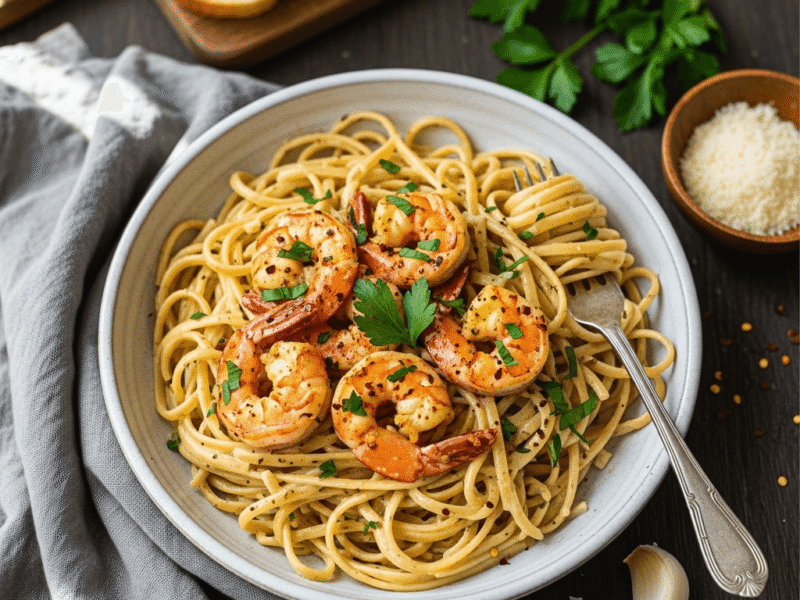
Over Pasta: Toss with linguine, fettuccine, angel hair, or spaghetti. The buttery sauce coats the pasta beautifully. Add pasta cooking water to thin the sauce if needed.
With Rice or Grains: Serve over white rice, cauliflower rice, quinoa, or risotto. The sauce soaks into the grains creating the perfect bite. Lemon herb rice pairs especially well.
Crusty Bread: Serve with warm French bread, garlic bread, or dinner rolls for soaking up every drop of that incredible garlic butter sauce. Don’t let any of that liquid gold go to waste!
Vegetable Pairings: Roasted asparagus, steamed broccoli, sautéed green beans, or grilled zucchini complement the rich shrimp beautifully. The vegetables provide color and nutritional balance.
Salad Accompaniment: A simple arugula salad with lemon vinaigrette, Caesar salad, or Greek salad provides a fresh, crisp contrast to the rich, buttery shrimp.
As an Appetizer: Serve with toothpicks on a platter with lemon wedges for an elegant party appetizer. Provide small plates and crusty bread for a passed appetizer that feels upscale.
Wine Pairings: A crisp white wine like Sauvignon Blanc, Pinot Grigio, or Chardonnay pairs perfectly. The wine’s acidity cuts through the butter while complementing the seafood. Prosecco or Champagne also works beautifully for special occasions.
Complete Meal Ideas: Start with a caprese salad, serve shrimp over pasta as the main, and finish with tiramisu or panna cotta for an Italian-inspired dinner. Or go French with a green salad, these shrimp, and crème brûlée.
FAQs Section
Can I use frozen shrimp for this recipe?
Absolutely! Most grocery store “fresh” shrimp were previously frozen anyway. Buy frozen shrimp and thaw them properly—ideally overnight in the refrigerator. In a pinch, place them in a colander under cold running water for 10-15 minutes. Never use warm water as it partially cooks them unevenly. Pat completely dry before cooking.
How do I know when shrimp are done cooking?
Perfectly cooked shrimp turn pink and opaque, forming a “C” shape. They should feel firm but still slightly tender when pressed. Overcooked shrimp curl into a tight “O” shape and feel rubbery. Since they cook so quickly (3-4 minutes total), watch them carefully and err on the side of slightly underdone.
Can I make this without wine?
Yes! Substitute chicken broth, seafood stock, or additional lemon juice for the wine. You’ll lose some depth of flavor, but the dish will still be delicious. Some people use a splash of white wine vinegar diluted with water for a similar acidic note.
What’s the best size shrimp to use?
Large or jumbo shrimp (21-30 count per pound or 16-20 count) work best. They’re substantial, easier to cook without overdoing, and make a more impressive presentation. Smaller shrimp cook so quickly they’re easy to overcook. Whatever size you choose, buy them peeled and deveined to save time.
Why is my garlic burning?
Garlic burns easily because of its sugar content. Make sure to reduce heat to medium before adding garlic, never high. Cook for only 30-45 seconds until fragrant, then immediately add the liquid ingredients. If your garlic starts browning too quickly, remove the pan from heat and add wine or broth immediately.
Can I use dried herbs instead of fresh?
Yes, but the flavor will be different—less bright and fresh. Use one-third the amount of dried herbs compared to fresh (so about 1½ tablespoons total dried herbs). Add dried herbs earlier in cooking to allow their flavors to bloom, unlike fresh herbs which go in at the end.
Is this dish spicy?
As written, this recipe has very minimal heat from a small amount of red pepper flakes. Most people don’t find it spicy at all—it just adds subtle warmth and depth. If you’re sensitive to spice or cooking for children, simply omit the red pepper flakes entirely.
Conclusion
This Garlic Herb Butter Shrimp represents everything a great recipe should be—quick, delicious, versatile, and accessible to cooks of all skill levels. The combination of tender shrimp and that luscious, garlicky butter sauce creates restaurant-quality flavors that will have everyone at your table thinking you spent hours cooking when you really only spent 15 minutes.
Whether you’re rushing through a busy weeknight, planning an elegant date night at home, or entertaining guests for a special occasion, this recipe rises to meet the moment. It’s proof that you don’t need complicated techniques or exotic ingredients to create something truly memorable—just quality basics prepared with care and attention.
The versatility of this dish means you’ll never tire of it. Serve it over pasta one night, with rice the next, in a salad later in the week, and as an appetizer at your next gathering. Each preparation feels fresh and exciting while maintaining that core deliciousness that makes this recipe so special.
Now it’s your turn to experience the magic! I can’t wait to hear how these turn out in your kitchen. When you make them, please drop a comment below letting me know what you think—and share any creative variations you tried. Don’t forget to save this recipe to your Pinterest boards so you can find it whenever you need a quick, impressive dinner solution (which, let’s be honest, is probably going to be often!).
Happy cooking, and here’s to many more delicious dinners that make you feel like a culinary superstar!