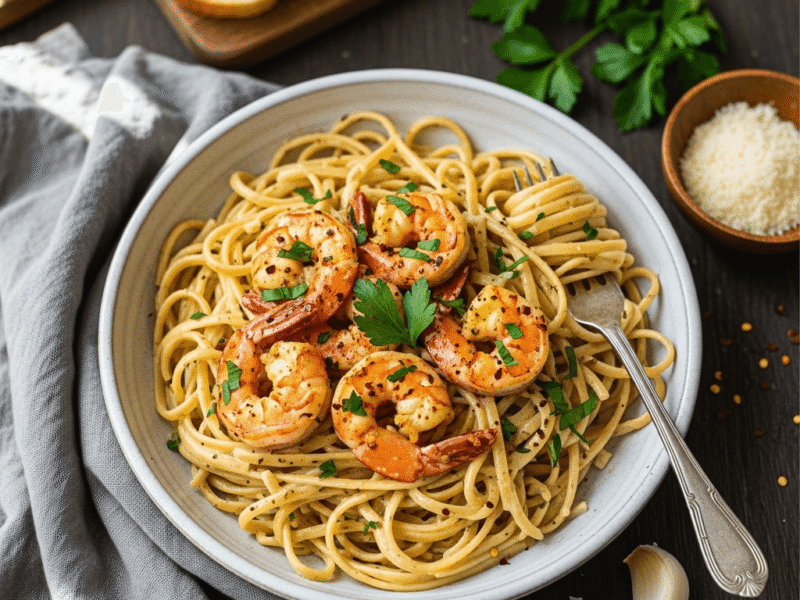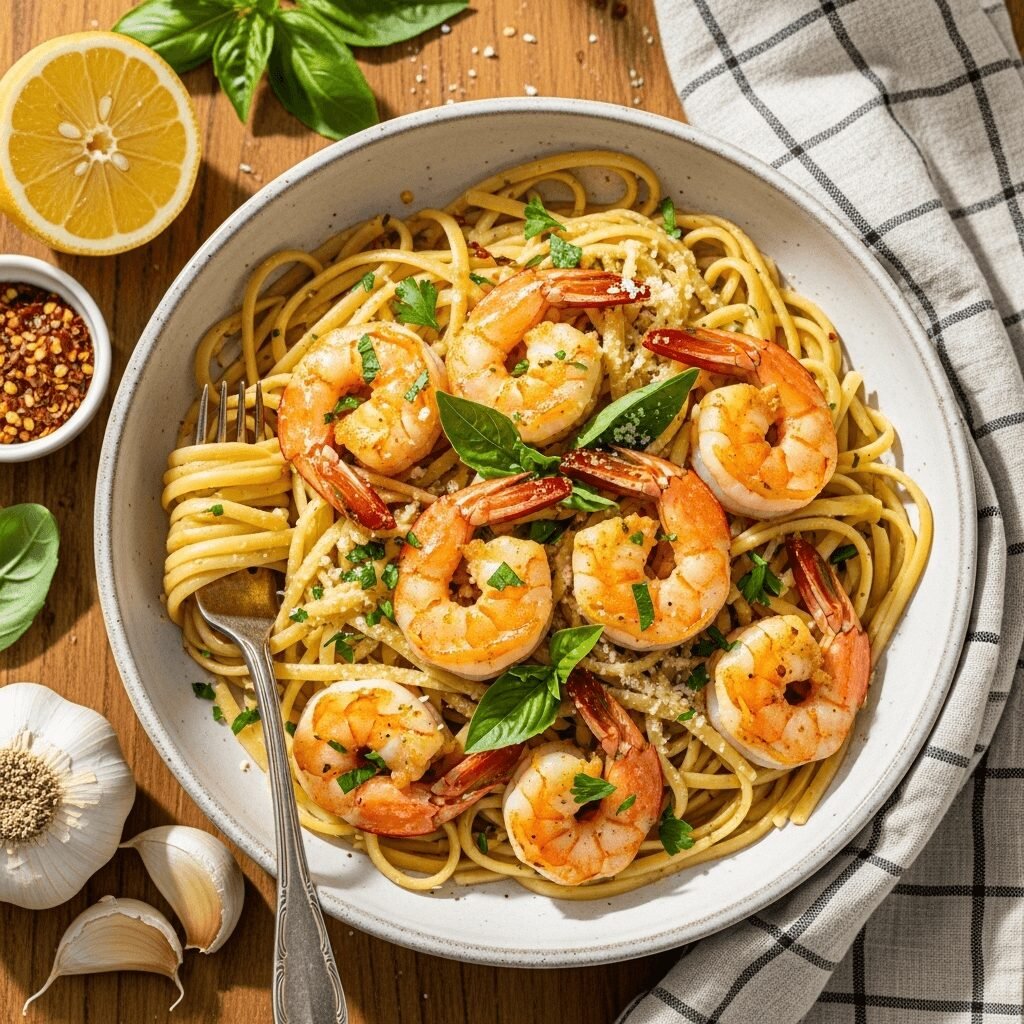
There’s something undeniably magical about twirling perfectly cooked pasta coated in garlicky herb butter with plump, juicy shrimp nestled throughout. This Garlic Herb Butter Shrimp Pasta is the kind of recipe that makes weeknight dinners feel like a restaurant experience, yet it’s surprisingly simple to pull off at home.
Whether you’re looking for a quick date night meal, a dish to impress unexpected guests, or simply craving something comforting yet elegant, this garlic butter shrimp pasta delivers on all fronts. The combination of tender shrimp, al dente pasta, fresh herbs, and rich butter creates a symphony of flavors that’s both sophisticated and deeply satisfying. Best of all? You can have this stunning dish on the table in just 20 minutes from start to finish.
This recipe is perfect for busy weeknights when you want something special without spending hours in the kitchen. It’s also fantastic for entertaining because it looks and tastes impressive while being incredibly forgiving for home cooks of all skill levels. The simple ingredients come together to create something truly memorable, proving that sometimes the best recipes are the ones that let quality ingredients shine without unnecessary complications.
History / Background
Garlic butter shrimp pasta represents a beautiful marriage of Italian pasta traditions and coastal seafood preparations that have been refined over centuries. While pasta itself has deep roots in Italian cuisine dating back hundreds of years, the combination of pasta with quickly sautéed shrimp in garlic butter became particularly popular in Italian-American cuisine during the mid-20th century.
The dish draws inspiration from classic Italian preparations like “scampi” – a cooking method that traditionally referred to small lobsters cooked in garlic, butter, and white wine. When Italian immigrants came to America and couldn’t always find the same seafood they used back home, they adapted their recipes using readily available shrimp, which were plentiful along American coastlines. The term “shrimp scampi” became synonymous with this garlic-butter preparation style, even though technically “scampi” refers to a different type of crustacean.
The herb butter element adds a French-inspired touch, as compound butters (beurre composé) have long been a cornerstone of French cooking. By combining fresh herbs like parsley, basil, or thyme with butter, cooks could create an instant flavor boost that elevated simple ingredients into something special.
Today, garlic herb butter shrimp pasta has become a beloved staple in home kitchens across America and beyond. It represents the best of fusion cooking – taking time-honored techniques from multiple culinary traditions and creating something accessible, delicious, and perfectly suited to modern home cooking. The dish has also become incredibly popular on social media and Pinterest, where its visual appeal and quick preparation time make it ideal for busy home cooks who refuse to compromise on flavor.
Why You’ll Love This Recipe
This garlic herb butter shrimp pasta recipe is about to become your new go-to weeknight dinner, and here’s why: it combines restaurant-quality flavors with home-kitchen simplicity, creating a dish that feels indulgent without requiring advanced cooking skills or hours of preparation.
Here’s what makes this recipe absolutely irresistible:
- Lightning-fast preparation – From raw ingredients to plated perfection in just 20 minutes, making it perfect for busy weeknights or last-minute dinner plans
- Simple, everyday ingredients – No specialty items or hard-to-find ingredients required; everything can be found at your local grocery store
- Restaurant-quality results – Tastes like something you’d order at an upscale Italian restaurant, but costs a fraction of the price to make at home
- Impressive presentation – Looks absolutely stunning when plated, making it perfect for date nights or entertaining guests
- Flexible and customizable – Easy to adjust spice levels, swap herbs, or add vegetables based on your preferences or what you have on hand
- One-pan friendly – Minimal cleanup required, with most of the cooking happening in a single skillet
- Protein-packed and satisfying – Shrimp provides lean protein while the pasta offers satisfying carbohydrates for a balanced meal
- Kid-friendly option – The mild, buttery flavors appeal to picky eaters when you go light on garlic and red pepper flakes
- Budget-conscious – Shrimp is often on sale, and when combined with inexpensive pasta, this feeds a family affordably
- Endlessly adaptable – Works with different pasta shapes, various herbs, and can easily be made spicy, creamy, or kept light and fresh
Ingredient Notes
Understanding your ingredients is the key to cooking success, so let’s break down what makes each component of this garlic herb butter shrimp pasta so special and discuss smart substitutions when needed.
Large Shrimp (1 pound): Look for 16-20 count shrimp (meaning 16-20 shrimp per pound) for the perfect bite-sized pieces. You can use fresh or frozen shrimp – just ensure frozen shrimp are fully thawed and patted completely dry before cooking. Already deveined and peeled shrimp save significant prep time. If you can only find smaller shrimp, they’ll work fine but cook even faster, so watch carefully. For sustainability, look for wild-caught American shrimp when possible.
Pasta (12 ounces): Linguine is traditional and perfect for catching that buttery sauce, but spaghetti, fettuccine, angel hair, or even penne work beautifully. The key is cooking it to true al dente – it should have a slight bite when you test it. Reserve at least one cup of pasta cooking water before draining; that starchy water is liquid gold for adjusting sauce consistency.
Butter (6 tablespoons): Real butter is essential here – it’s a primary flavor component, not just a cooking fat. European-style butter with higher fat content creates an even richer sauce. If you need a dairy-free option, use high-quality olive oil instead, though the flavor profile will shift slightly. Don’t substitute margarine; it simply won’t provide the same depth of flavor.
Garlic (6 cloves): Fresh garlic is non-negotiable for the best flavor. Minced garlic from a jar works in a pinch, but use about half the amount since jarred garlic has a stronger, sharper taste. Slicing garlic thinly rather than mincing creates a mellower flavor, while mincing or pressing creates a more intense garlic punch – choose based on your preference.
Fresh Herbs (1/4 cup total): A combination of fresh parsley and basil provides the perfect balance of bright, fresh flavor. Flat-leaf Italian parsley has better flavor than curly parsley. Fresh herbs are strongly preferred over dried for this recipe since they’re stirred in at the end and provide a fresh burst of flavor. If you must use dried, use one-third the amount and add them during cooking rather than at the end.
White Wine (1/2 cup, optional): A dry white wine like Pinot Grigio, Sauvignon Blanc, or Chardonnay adds wonderful acidity and depth. If you prefer not to cook with alcohol, substitute with chicken broth mixed with a tablespoon of fresh lemon juice for similar brightness.
Lemon (1 large): Fresh lemon juice and zest brighten the entire dish and cut through the richness of the butter. Always zest before juicing, and use a microplane for the finest zest that distributes flavor without adding texture. Never use bottled lemon juice – the fresh stuff is essential here.
Red Pepper Flakes: Just a pinch adds subtle warmth without making the dish spicy. Omit entirely for young children or add more if you love heat.
Salt and Black Pepper: Season the pasta water generously (it should taste like seawater), and season the shrimp and sauce thoughtfully. Freshly cracked black pepper is noticeably better than pre-ground.
Equipment Needed
Having the right tools makes cooking this garlic butter shrimp pasta even easier. Here’s what you’ll need:
- Large pot (6-8 quarts) – For boiling pasta with plenty of room to move around
- Large skillet or sauté pan (12-inch) – Wide surface area is important for properly searing shrimp without overcrowding; stainless steel or non-stick both work well
- Colander – For draining pasta (remember to save that pasta water first!)
- Tongs or pasta fork – For tossing pasta with sauce and serving
- Chef’s knife and cutting board – For prepping garlic and herbs
- Microplane or zester – For getting fine lemon zest
- Measuring cups and spoons – For accurate ingredient portions
- Paper towels – Essential for patting shrimp dry before cooking
- Large mixing bowl (optional) – Helpful for tossing everything together if your skillet isn’t large enough
- Garlic press (optional) – Makes quick work of garlic prep if you prefer pressed over minced
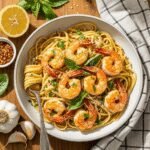
Garlic Herb Butter Shrimp Pasta Recipe
- Total Time: 20 minutes
- Yield: 4 servings 1x
- Diet: Gluten Free
Description
Tender shrimp and al dente pasta tossed in a luxurious garlic herb butter sauce that comes together in just 20 minutes for an impressive weeknight dinner or special occasion meal.
Ingredients
For the Pasta:
- 12 ounces linguine or spaghetti
- 1 tablespoon salt (for pasta water)
For the Shrimp:
- 1 pound large shrimp (16-20 count), peeled and deveined
- 1/2 teaspoon salt
- 1/4 teaspoon black pepper
- 1/4 teaspoon paprika (optional, for color)
For the Garlic Herb Butter Sauce:
- 6 tablespoons unsalted butter, divided
- 6 cloves garlic, minced
- 1/4 teaspoon red pepper flakes (adjust to taste)
- 1/2 cup dry white wine (or chicken broth with 1 tablespoon lemon juice)
- 2 tablespoons fresh lemon juice
- 1 teaspoon lemon zest
- 1/4 cup fresh parsley, chopped
- 2 tablespoons fresh basil, chopped (or additional parsley)
- 1/4 cup reserved pasta water (or as needed)
- Salt and pepper to taste
- Grated Parmesan cheese for serving (optional)
Instructions
- Prepare the pasta: Bring a large pot of water to a rolling boil over high heat. Add 1 tablespoon of salt (the water should taste like seawater). Add pasta and cook according to package directions until al dente, usually 8-10 minutes. Before draining, reserve 1 cup of pasta cooking water. Drain pasta and set aside.
- Prep the shrimp: While pasta cooks, pat shrimp completely dry with paper towels (this is crucial for proper browning). Season both sides with salt, pepper, and paprika if using. Set aside on a plate.
- Cook the shrimp: Heat a large skillet over medium-high heat. Add 2 tablespoons of butter and let it melt until foaming. Add shrimp in a single layer, working in batches if necessary to avoid overcrowding. Cook for 1-2 minutes per side until pink and just cooked through (they’ll curl into a “C” shape when done). Transfer cooked shrimp to a plate and set aside.
- Make the garlic butter sauce: In the same skillet, reduce heat to medium. Add remaining 4 tablespoons of butter. Once melted, add minced garlic and red pepper flakes. Sauté for 30-45 seconds until fragrant, stirring constantly to prevent burning.
- Deglaze and build sauce: Pour in white wine (or broth mixture), scraping up any browned bits from the bottom of the pan with a wooden spoon. Let simmer for 2-3 minutes until slightly reduced. Add lemon juice and lemon zest. Stir to combine.
- Combine everything: Return shrimp to the skillet along with any accumulated juices. Add drained pasta to the skillet. Toss everything together using tongs, adding reserved pasta water a little at a time until you achieve your desired sauce consistency (it should lightly coat the pasta, not pool in the bottom).
- Finish with herbs: Remove from heat and stir in chopped parsley and basil. Toss well to distribute herbs throughout. Taste and adjust seasoning with additional salt and pepper as needed.
- Serve immediately: Divide pasta among serving plates or bowls. Top with additional fresh herbs, a sprinkle of Parmesan cheese if desired, and an extra wedge of lemon on the side. Serve hot and enjoy!
Notes
- Shrimp size matters: Smaller shrimp cook faster (1 minute per side), while jumbo shrimp may need 3 minutes per side. Adjust cooking time accordingly.
- Don’t overcook shrimp: They’ll go from perfect to rubbery in seconds. Remove from heat when they just turn opaque.
- Pasta water is magic: The starchy cooking water helps emulsify the butter and creates a silky sauce that clings to pasta. Don’t skip this step!
- Fresh herbs at the end: Adding herbs after removing from heat preserves their bright, fresh flavor and vibrant color.
- Wine substitution: If using chicken broth instead of wine, add a splash of white wine vinegar or extra lemon juice for acidity.
- Make it creamy: Stir in 1/4 cup heavy cream or cream cheese after step 5 for a richer, creamier sauce.
- Gluten-free option: Use your favorite gluten-free pasta and ensure all other ingredients are certified GF.
- Prep Time: 10 minutes
- Cook Time: 10 minutes
- Category: Dinner, Main Course
- Method: Stovetop
- Cuisine: Italian-American
Nutrition
- Serving Size: 1/4 of recipe (approximately 2 cups)
- Calories: 485
- Sugar: 3g
- Sodium: 680mg
- Fat: 20g
- Saturated Fat: 11g
- Unsaturated Fat: 7g
- Trans Fat: 0g
- Carbohydrates: 46g
- Fiber: 3g
- Protein: 28g
- Cholesterol: 215mg
Nutrition information is calculated automatically and should be used as an estimate only.
Tips & Variations
The beauty of this garlic herb butter shrimp pasta is how easily you can customize it to suit your taste preferences or dietary needs. Here are some delicious ways to make this recipe your own:
Spicy Garlic Shrimp Pasta: Double or triple the red pepper flakes, or add a diced fresh jalapeño when cooking the garlic. A drizzle of hot honey over the finished dish adds a sweet heat that’s absolutely addictive.
Creamy Version: Stir in 1/3 cup heavy cream, half-and-half, or even cream cheese after deglazing with wine. For a lighter creamy option, use Greek yogurt stirred in off the heat.
Mediterranean Twist: Add halved cherry tomatoes, sliced Kalamata olives, crumbled feta cheese, and fresh oregano instead of basil. Swap butter for olive oil for an even more Mediterranean profile.
Lemon Lovers: Double the lemon zest and juice, and add thin lemon slices that cook with the shrimp for an extra punch of citrus.
Vegetable-Packed: Toss in fresh spinach, halved cherry tomatoes, diced bell peppers, or blanched asparagus. Spinach can be stirred in at the very end and will wilt from residual heat.
Different Proteins: This garlic butter sauce works beautifully with scallops, chunks of firm white fish, chicken breast strips, or even a combination of seafood for a frutti di mare version.
Herb Variations: Try fresh dill and chives for a different flavor profile, or use cilantro and lime instead of basil and lemon for a Latin-inspired twist.
Add Some Crunch: Top finished plates with toasted pine nuts, slivered almonds, or homemade garlic breadcrumbs for textural contrast.
Pro Chef Tips
Take your garlic butter shrimp pasta from good to absolutely spectacular with these professional techniques:
Temperature control is everything: Start with a hot pan for the shrimp to get that beautiful golden sear, then reduce to medium heat for the garlic. Garlic burns easily and becomes bitter, so that temperature drop is crucial.
Pat shrimp bone-dry: This is the number one secret to getting a gorgeous caramelized exterior on your shrimp. Any moisture will cause steaming instead of searing, leaving you with pale, rubbery shrimp instead of beautifully browned ones.
Save more pasta water than you think you need: That starchy water is your secret weapon for adjusting sauce consistency. Save at least a cup – you might not need it all, but better to have extra than to wish you’d saved more.
Use a pasta fork or tongs, not a spoon: Tossing pasta with tongs helps coat every strand evenly with sauce and prevents breaking delicate pasta shapes. Lift and toss rather than stirring in circles.
Finish pasta in the sauce: Let the drained pasta spend a minute in the simmering sauce before serving. This allows the pasta to absorb flavors and helps the sauce cling better to each strand.
Butter temperature matters: Cold butter whisked into hot liquid at the end creates an emulsified, silky sauce. If your butter is melted before adding, you’ll get a greasier, less cohesive sauce.
Fresh garlic technique: Mince garlic just before using – pre-minced garlic loses pungency and develops off-flavors. For the most even cooking, make sure all pieces are the same size.
Don’t rinse pasta: That surface starch helps sauce cling. Rinsing washes away this crucial element and cools your pasta down unnecessarily.
Common Mistakes to Avoid
Even simple recipes can go wrong if you’re not careful. Here are the most common pitfalls and how to avoid them:
Overcooking the shrimp: This is the number one mistake. Shrimp cook incredibly fast – usually just 1-2 minutes per side depending on size. They’re done when they turn pink and opaque, curling into a loose “C” shape. Overcooked shrimp curl tightly into an “O” shape and develop a rubbery texture. When in doubt, undercook slightly; residual heat will finish the job.
Burning the garlic: Garlic goes from perfectly golden to bitter and burnt in seconds. Always add garlic to medium or medium-low heat, never high heat. Stir constantly and if it starts taking on color too quickly, immediately add your liquid to stop the cooking process. If you do burn it, start over – there’s no saving burnt garlic.
Not salting pasta water enough: Undersalted pasta water means bland pasta that no amount of sauce can fix. The water should taste like the ocean – saltier than you think necessary. This is your only opportunity to season the pasta itself from the inside out.
Letting the sauce separate: If your butter sauce breaks and looks greasy rather than cohesive, it’s usually because the pan was too hot or you didn’t add enough starchy pasta water to create an emulsion. Fix it by adding a splash of pasta water and vigorously tossing everything together off the heat.
Using pre-grated Parmesan or dried herbs: Fresh is best here. Pre-grated cheese contains anti-caking agents that prevent smooth melting, and dried herbs simply can’t match the bright, fresh flavor of herbs added at the end. If you must use dried, use them earlier in cooking and reduce quantity by two-thirds.
Storage & Meal Prep
While this dish is best enjoyed fresh, life happens and sometimes you need to store leftovers or plan ahead. Here’s how to handle storage:
Refrigerator Storage: Transfer cooled leftovers to an airtight container and refrigerate for up to 2 days. Note that pasta continues absorbing sauce as it sits, so leftovers will be less saucy than freshly made. The shrimp also become firmer when chilled but remain safe to eat.
Reheating Instructions: The stovetop method works best. Add leftovers to a skillet with 2-3 tablespoons of water, chicken broth, or additional butter. Heat over medium-low, tossing frequently, until warmed through (about 5 minutes). Microwave reheating works but can make shrimp rubbery – if using this method, heat in 30-second intervals at 50% power, stirring between intervals. Add a splash of liquid to prevent drying out.
Quality Changes: Reheated pasta won’t be quite as tender as fresh, and the bright herb flavors will fade. Consider stirring in fresh herbs after reheating to perk up the flavors. The garlic butter sauce may separate upon reheating but will come back together with vigorous stirring and a splash of liquid.
Meal Prep Considerations: This isn’t an ideal make-ahead meal since it’s so quick to prepare fresh. However, you can prep components: devein and season shrimp up to 24 hours ahead, mince garlic and chop herbs up to 8 hours ahead (store separately in airtight containers), and measure out other ingredients in advance.
Make-Ahead & Freezer Notes
While freshly prepared garlic butter shrimp pasta is ideal, here’s what you need to know about advance preparation:
Make-Ahead Strategy: This recipe is so quick that making it ahead isn’t really necessary, but if you’re entertaining, you can prep all components in advance. Prepare shrimp (clean, devein, season), chop herbs, mince garlic, and measure everything out up to 4 hours before cooking. Store each component separately in the refrigerator. This way, actual cooking becomes a simple 15-minute process.
Partially Cook Method: For dinner parties, you can cook pasta until just before al dente, drain, toss with a tiny bit of olive oil, and refrigerate for up to 4 hours. When ready to serve, cook the shrimp and sauce as directed, then add the pasta and let it finish cooking in the sauce, which actually works wonderfully.
Freezing Cooked Pasta: Not recommended. The texture of pasta deteriorates significantly when frozen and reheated. Shrimp also becomes very rubbery when frozen in a cooked dish. The butter sauce will separate and become grainy.
Freezing Components: You can freeze raw, seasoned shrimp for up to 2 months. Portion into individual servings before freezing for easier use. Thaw overnight in the refrigerator before cooking, and pat very dry before adding to the hot pan.
Best Reheating Method: If you must freeze leftovers, thaw overnight in the refrigerator, then reheat gently in a skillet over medium-low heat with added butter or olive oil and a splash of pasta water or broth. Expect texture changes – it won’t be quite as good as fresh but remains edible.
Serving Suggestions
This garlic butter shrimp pasta is a star on its own, but pairing it with complementary sides turns it into a complete, restaurant-worthy meal:
Salads: A simple arugula salad with lemon vinaigrette provides peppery freshness that cuts through the richness. Classic Caesar salad offers creamy, garlicky notes that complement the pasta. A Mediterranean chopped salad with cucumbers, tomatoes, and feta adds refreshing crunch and acidity.
Bread: Crusty Italian bread or a warm baguette is essential for sopping up every drop of that incredible garlic butter sauce. Homemade or store-bought garlic bread adds even more garlic goodness (if that’s possible!). Focaccia with rosemary and sea salt offers herbal notes that echo the pasta’s flavors.
Vegetables: Roasted asparagus with lemon, grilled zucchini, or sautéed broccolini make excellent green vegetable sides. Roasted cherry tomatoes on the vine add sweetness and visual appeal. For something heartier, try roasted Brussels sprouts with balsamic glaze.
Wine Pairings: The same dry white wine you used for cooking works beautifully for drinking – try Pinot Grigio, Sauvignon Blanc, or unoaked Chardonnay. For special occasions, a crisp Prosecco or Champagne elevates the meal even further. If you prefer red, choose a light-bodied option like Pinot Noir.
Complete Meal Ideas: Start with bruschetta or caprese skewers as an appetizer, serve the pasta as the main course alongside Caesar salad and garlic bread, and finish with lemon panna cotta or tiramisu for a full Italian-inspired menu.
Casual Pairing: For weeknight simplicity, this pasta pairs perfectly with a bagged Caesar salad kit and some frozen garlic bread – no judgment here! Sometimes easy is best.
FAQs
Can I use frozen shrimp for this recipe?
Absolutely! Frozen shrimp work perfectly well. Just ensure they’re fully thawed before cooking – the best method is overnight in the refrigerator. Never cook shrimp from frozen as they’ll release too much water and won’t brown properly. Pat them very dry with paper towels before seasoning and cooking. Frozen shrimp are often flash-frozen on the boat, making them sometimes fresher than “fresh” shrimp at the store.
What’s the best pasta shape for garlic butter shrimp?
Long, thin pasta shapes work best because they coat evenly with the butter sauce and twirl beautifully with the shrimp. Linguine is traditional and ideal, but spaghetti, angel hair, fettuccine, or bucatini all work wonderfully. Short pasta like penne or rigatoni can work too, though they don’t create quite the same elegant presentation. Choose pasta with texture or ridges to help sauce cling better.
How can I tell when shrimp are perfectly cooked?
Properly cooked shrimp will be pink and opaque throughout with no translucent gray areas remaining. They’ll curl into a loose “C” shape – this is perfect. If they curl tightly into an “O” shape, they’re overcooked. Shrimp cook very quickly: 1-2 minutes per side for medium shrimp, up to 3 minutes per side for jumbo. The moment they turn pink and opaque, remove them from heat.
Can I make this recipe dairy-free?
Yes! Replace the butter with high-quality extra virgin olive oil or a dairy-free butter substitute. The flavor profile will shift slightly – olive oil creates a lighter, more Mediterranean taste while butter is richer and more indulgent. Use about the same quantity of oil as butter called for. If using dairy-free butter, choose one that browns well for best results. Skip the Parmesan at the end, or use a dairy-free alternative.
My sauce looks greasy and separated. What went wrong?
This happens when the butter sauce “breaks,” usually because the heat was too high or there wasn’t enough starchy pasta water to create an emulsion. To fix it, remove the pan from heat and vigorously stir in 2-3 tablespoons of reserved pasta water. The starch acts as an emulsifier, bringing the sauce back together. Toss everything vigorously with tongs or a pasta fork. Prevention: always use medium or medium-low heat for the butter sauce stage.
Can I substitute chicken broth if I don’t want to use wine?
Definitely! Use low-sodium chicken broth mixed with 1 tablespoon of lemon juice or white wine vinegar to replicate the acidity that wine provides. The acidity is important for balance and helps cut through the richness of the butter. Vegetable broth works too, though chicken broth typically has a richer flavor that complements seafood well.
How do I keep leftover shrimp pasta from drying out?
Store leftovers in an airtight container with any remaining sauce. When reheating, always add additional liquid – a few tablespoons of butter, olive oil, chicken broth, or even water. Heat gently over medium-low on the stovetop, tossing frequently. The pasta absorbs sauce as it sits, so leftovers always need extra moisture. Adding a pat of butter and a handful of fresh herbs when reheating really helps revive the flavors.
Conclusion
There you have it – everything you need to create absolutely spectacular Garlic Herb Butter Shrimp Pasta that rivals any Italian restaurant, right in your own kitchen! This recipe proves that impressive dinners don’t require complicated techniques or hours of preparation. With quality ingredients, proper technique, and just 20 minutes of your time, you can serve up a dish that looks beautiful, tastes incredible, and satisfies everyone at your table.
The combination of tender, succulent shrimp, perfectly cooked pasta, and that irresistible garlic herb butter sauce creates something truly special that’s somehow both comforting and elegant. Whether you’re cooking for your family on a busy Tuesday night, planning a romantic dinner for two, or entertaining friends on the weekend, this recipe delivers every single time.
I hope this recipe becomes a regular rotation in your kitchen like it has in mine. The beauty of this dish is that once you master the basic technique, you can customize it endlessly to suit your mood, the season, or whatever ingredients you have on hand. Each time you make it, you’ll gain more confidence and might discover your own favorite variations.
Now it’s your turn! I’d absolutely love to hear how your Garlic Herb Butter Shrimp Pasta turns out. Did you add any creative twists? Did your family devour it? Drop a comment below and let me know! If you loved this recipe, please share it with your friends and save it to your Pinterest boards so you can find it again when that pasta craving hits.
Don’t forget to snap a photo of your beautiful creation and tag me on social media – I genuinely get so excited seeing your kitchen successes! And if you’re looking for more quick and delicious dinner ideas, make sure to subscribe to the blog for weekly recipe inspiration delivered straight to your inbox.
Happy cooking, friend! May your pasta always be perfectly al dente and your shrimp never overcooked. 🍤🍝