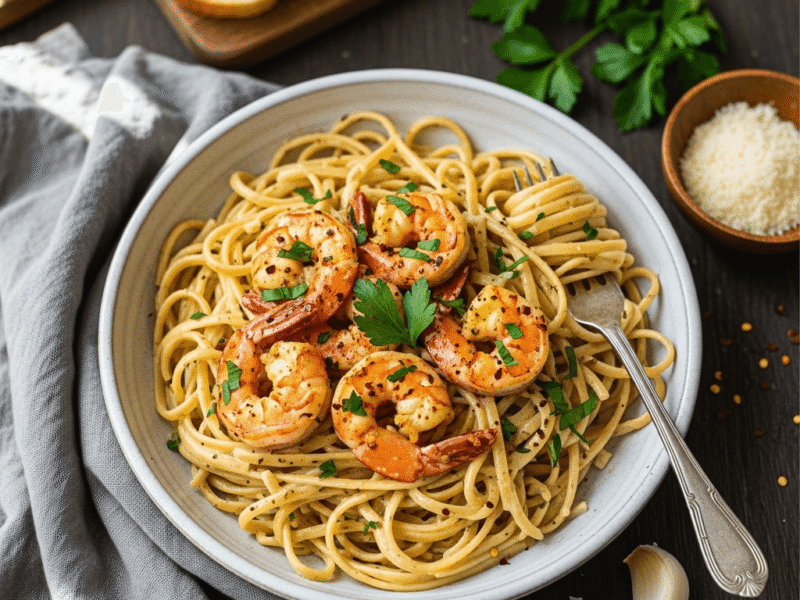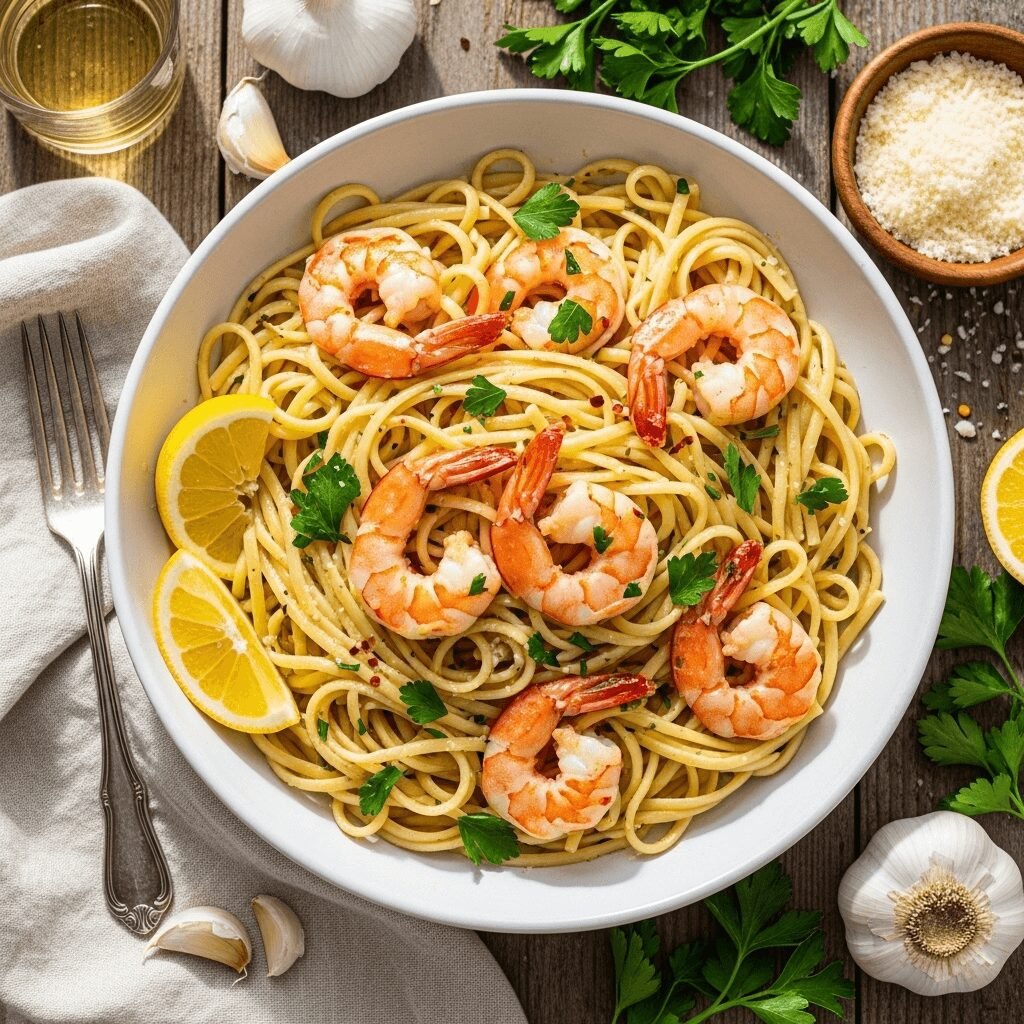
Picture this: silky strands of linguine tossed in golden garlic butter, plump shrimp seared to perfection, and a hint of white wine that makes everything taste like you ordered it from an Italian trattoria. That’s exactly what you get with this Garlic Butter Shrimp Linguine recipe, and the best part? It takes less time to make than ordering takeout.
This restaurant-quality pasta dish has become a weeknight staple in homes across America, and for good reason. It’s elegant enough to serve for date night or when you’re entertaining guests, yet simple enough to whip up on a busy Tuesday evening when you need dinner on the table fast. The combination of succulent shrimp, aromatic garlic, butter, and fresh pasta creates a meal that feels indulgent without requiring advanced cooking skills or exotic ingredients.
Whether you’re a college student learning to cook, a busy parent juggling schedules, or someone who simply loves good food, this recipe delivers maximum flavor with minimal effort. It’s one of those dishes that makes you look like a culinary genius while secretly being incredibly forgiving and straightforward. Plus, with just one pot and one pan, cleanup is a breeze—something we can all appreciate after a long day.
History / Background
Garlic Butter Shrimp Linguine represents a beautiful fusion of Italian-American culinary traditions. While pasta with seafood has been a cornerstone of Italian coastal cuisine for centuries, particularly in regions like Liguria, Campania, and Sicily, the garlic butter preparation we know and love today is distinctly Italian-American in character.
In traditional Italian cooking, seafood pasta dishes often feature olive oil, white wine, tomatoes, and fresh herbs, with butter being less commonly used in southern Italian regions. However, when Italian immigrants arrived in America in the late 19th and early 20th centuries, they adapted their recipes to incorporate more readily available and affordable ingredients. Butter became more prominent, and the generous use of garlic—which was sometimes considered overpowering in certain parts of Italy—became a signature of Italian-American cooking.
The shrimp and linguine pairing gained particular popularity in the 1960s and 1970s as American seafood distribution improved and frozen shrimp became widely available across the country. Restaurants in Italian-American neighborhoods began featuring variations of this dish, and it quickly spread to home kitchens through cookbooks and family recipes.
Today, Garlic Butter Shrimp Linguine stands as a testament to culinary evolution—honoring Italian traditions while embracing American abundance and practicality. It’s a dish that connects us to both Old World techniques and New World innovation, making it a truly special recipe that continues to bring families together around the dinner table.
Why You’ll Love This Recipe
This Garlic Butter Shrimp Linguine isn’t just another pasta recipe—it’s about to become your go-to meal when you want something that feels special but doesn’t require hours in the kitchen. The rich, buttery sauce clings to every strand of pasta while the shrimp adds that perfect protein punch that makes this a complete, satisfying meal.
Here’s why this recipe will become your new favorite:
- Lightning-fast cooking time – Ready in just 20 minutes from start to finish, making it perfect for busy weeknights
- Restaurant-quality results – Tastes like you spent hours in the kitchen or ordered from an upscale Italian restaurant
- Simple ingredient list – Uses pantry staples and ingredients you can find at any grocery store
- One-pot wonder – Minimal dishes to wash means more time enjoying your meal and less time scrubbing pans
- Versatile and customizable – Easily adapt with different proteins, add vegetables, or adjust the spice level to your preference
- Crowd-pleaser guaranteed – Even picky eaters love this combination of buttery pasta and tender shrimp
- Budget-friendly elegance – Looks expensive but costs a fraction of dining out
- Perfect for any occasion – Works equally well for date night, family dinner, or entertaining guests
- Leftovers taste amazing – Reheats beautifully, so you can meal prep or enjoy it the next day
- Beginner-friendly – No advanced techniques required; if you can boil water and sauté, you can make this dish
Ingredient Notes
Understanding your ingredients is the key to cooking success. Here’s what you need to know about each component of this delicious dish:
Linguine Pasta: This flat, narrow pasta is traditional for seafood dishes because its shape holds sauce beautifully. The wide surface area allows the garlic butter to coat every bite. You can substitute with fettuccine, spaghetti, or angel hair if needed, though cooking times may vary slightly. For a healthier option, whole wheat linguine works wonderfully, and gluten-free pasta can be used following package directions.
Shrimp: Fresh or frozen large shrimp (16-20 count per pound is ideal) work equally well. Make sure they’re peeled and deveined for convenience. Wild-caught shrimp tends to have better flavor and firmer texture, but good-quality farm-raised shrimp is perfectly acceptable. Avoid tiny shrimp as they can overcook quickly and become rubbery.
Butter: Use real, unsalted butter for the best flavor and control over seasoning. European-style butter with higher fat content creates an even richer sauce. Don’t substitute with margarine, as it won’t give you the same luxurious taste and texture.
Garlic: Fresh garlic is non-negotiable here—it’s the star of the show. Pre-minced jarred garlic doesn’t have the same aromatic punch. Plan on using 6-8 cloves for proper garlic butter flavor. Don’t be afraid of the amount; it mellows beautifully when cooked.
White Wine: Dry white wines like Pinot Grigio, Sauvignon Blanc, or unoaked Chardonnay work best. The wine adds acidity and depth that balances the richness of the butter. If avoiding alcohol, substitute with low-sodium chicken broth with a squeeze of lemon juice.
Red Pepper Flakes: Just a pinch adds warmth without overwhelming heat. Adjust to your preference or omit entirely for a milder dish.
Fresh Parsley: Italian flat-leaf parsley is preferred for its robust flavor, but curly parsley works in a pinch. This isn’t just garnish—it adds freshness that cuts through the richness.
Lemon: Fresh lemon juice brightens the entire dish and enhances the shrimp’s natural sweetness. Always use fresh, never bottled lemon juice.
Olive Oil: Extra virgin olive oil is used for sautéing the shrimp and adds a fruity complexity to the butter sauce.
Salt and Black Pepper: Kosher salt and freshly ground black pepper season throughout. Taste and adjust at the end for perfect seasoning.
Equipment Needed
Having the right tools makes cooking easier and more enjoyable. Here’s everything you’ll need for this recipe:
- Large pot (6-8 quarts) – For boiling the linguine pasta
- Large skillet or sauté pan (12-inch) – For cooking the shrimp and making the sauce; must be large enough to toss pasta
- Colander – For draining the pasta
- Tongs or pasta fork – For tossing and serving the linguine
- Sharp knife – For mincing garlic and chopping parsley
- Cutting board – For prep work
- Measuring cups and spoons – For accurate ingredient portions
- Small bowl – For holding prepped ingredients
- Wooden spoon or silicone spatula – For stirring sauce
- Microplane or garlic press – Optional, for mincing garlic quickly
- Pasta serving bowls – For presenting your beautiful creation
- Ladle or measuring cup – To reserve pasta water before draining
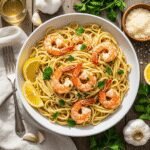
Garlic Butter Shrimp Linguine Recipe
- Total Time: 20 minutes
- Yield: 4 servings 1x
- Diet: Gluten Free
Description
This Garlic Butter Shrimp Linguine features perfectly cooked shrimp tossed with al dente pasta in a luscious garlic butter sauce with white wine, lemon, and fresh herbs. Restaurant-quality flavor in just 20 minutes makes this the ultimate weeknight dinner winner!
Ingredients
- 1 pound linguine pasta
- 1½ pounds large shrimp (16-20 count), peeled and deveined, tails removed
- 6 tablespoons unsalted butter, divided
- ¼ cup extra virgin olive oil, divided
- 8 cloves garlic, minced
- ½ cup dry white wine (Pinot Grigio or Sauvignon Blanc)
- ½ teaspoon red pepper flakes (adjust to taste)
- ¾ teaspoon kosher salt, plus more for pasta water
- ½ teaspoon freshly ground black pepper
- Juice of 1 large lemon (about 3 tablespoons)
- ⅓ cup fresh Italian parsley, finely chopped
- ½ cup reserved pasta water
- Lemon wedges, for serving
- Freshly grated Parmesan cheese, optional for serving
Instructions
- Cook the linguine: Bring a large pot of salted water to a rolling boil (water should taste like the sea). Add linguine and cook according to package directions until al dente, usually 8-10 minutes. Before draining, reserve ½ cup of pasta water. Drain pasta and set aside.
- Prep the shrimp: While pasta cooks, pat shrimp completely dry with paper towels. Season both sides with ¼ teaspoon salt and ¼ teaspoon black pepper. Dry shrimp ensures a beautiful golden sear.
- Sear the shrimp: Heat 2 tablespoons butter and 2 tablespoons olive oil in a large skillet over medium-high heat. Once butter is melted and sizzling, add shrimp in a single layer (work in batches if necessary to avoid overcrowding). Cook for 2 minutes per side until pink and opaque with golden edges. Transfer shrimp to a plate and set aside.
- Build the sauce: In the same skillet, reduce heat to medium and add remaining 2 tablespoons olive oil and 2 tablespoons butter. Add minced garlic and red pepper flakes, stirring constantly for 30-45 seconds until fragrant but not browned (burned garlic is bitter).
- Deglaze with wine: Pour in white wine and increase heat to medium-high. Scrape up any browned bits from the bottom of the pan with a wooden spoon. Let wine simmer for 2-3 minutes until reduced by half.
- Finish the sauce: Reduce heat to medium-low. Add remaining 2 tablespoons butter, lemon juice, remaining ½ teaspoon salt, and ¼ teaspoon black pepper. Stir until butter melts and sauce becomes glossy and emulsified.
- Combine everything: Add cooked linguine to the skillet along with ¼ cup reserved pasta water. Toss everything together using tongs, adding more pasta water as needed to create a silky sauce that coats the pasta (not too thick, not too watery).
- Add shrimp and finish: Return cooked shrimp to the pan along with chopped parsley. Toss gently for 1 minute to heat shrimp through and combine all flavors. Taste and adjust seasoning if needed.
- Serve immediately: Divide pasta among serving bowls. Garnish with additional fresh parsley, lemon wedges, and freshly grated Parmesan cheese if desired. Serve right away while hot!
Notes
- Pasta water is crucial: The starchy pasta water helps emulsify the butter and oil into a cohesive sauce that clings to the noodles. Don’t skip reserving it!
- Don’t overcook shrimp: Shrimp cook incredibly fast. They’re done when they turn pink and opaque, which takes just 2 minutes per side. Overcooked shrimp become rubbery and tough.
- Wine substitution: If you prefer not to use wine, substitute with ½ cup low-sodium chicken broth plus 1 tablespoon extra lemon juice for acidity.
- Make it spicier: Double the red pepper flakes or add a dash of hot sauce for extra heat.
- Fresh ingredients matter: Use fresh garlic, fresh lemon juice, and fresh parsley for the best flavor. Pre-minced or dried versions won’t deliver the same vibrant taste.
- Timing is everything: Have all ingredients prepped before you start cooking, as this recipe moves quickly once you begin.
- Prep Time: 10 minutes
- Cook Time: 10 minutes
- Category: Dinner, Main Course
- Method: Stovetop
- Cuisine: Italian-American
Nutrition
- Serving Size: 1 plate (about 2 cups)
- Calories: 620
- Sugar: 3g
- Sodium: 680mg
- Fat: 26g
- Saturated Fat: 11g
- Unsaturated Fat: 13g
- Trans Fat: 0g
- Carbohydrates: 58g
- Fiber: 3g
- Protein: 38g
- Cholesterol: 275mg
Nutrition information is approximate and calculated per serving without optional Parmesan cheese topping.
Tips & Variations
Make it creamy: Stir in ½ cup heavy cream or half-and-half with the butter for a richer, creamier sauce reminiscent of Alfredo.
Add vegetables: Toss in halved cherry tomatoes, baby spinach, sun-dried tomatoes, or asparagus tips during the last few minutes of cooking for added nutrition and color.
Protein swaps: Replace shrimp with scallops, chunks of white fish, chicken breast strips, or even lobster for special occasions. For vegetarian options, use chickpeas or white beans.
Spicy kick: Add diced jalapeños, extra red pepper flakes, or a few dashes of your favorite hot sauce to turn up the heat.
Herb variations: Try fresh basil, oregano, or a combination of Italian herbs instead of parsley for different flavor profiles.
Gluten-free option: Use your favorite gluten-free pasta brand, following package directions for cooking times.
Lighter version: Reduce butter to 3 tablespoons total and increase olive oil slightly. The dish will be less rich but still delicious.
Cajun-style: Season shrimp with Cajun seasoning before cooking for a Louisiana-inspired twist.
Mediterranean flair: Add Kalamata olives, capers, and crumbled feta cheese for Greek-inspired flavors.
Extra garlicky: If you’re a true garlic lover, increase to 10-12 cloves—you can never have too much garlic in this dish!
Pro Chef Tips
Bring shrimp to room temperature: Let shrimp sit out for 10-15 minutes before cooking. Cold shrimp takes longer to cook and can result in uneven texture.
Season in layers: Don’t just season at the end. Season the shrimp before cooking, season the sauce while building it, then taste and adjust at the finish. This creates depth of flavor.
Toast your garlic properly: Garlic should be fragrant and just beginning to turn golden—not brown. Watch it carefully as it goes from perfect to burned in seconds.
Use the pasta water strategically: Add pasta water gradually, not all at once. You can always add more, but you can’t take it away. The goal is a glossy, clingy sauce, not soup.
Finish with cold butter: Adding the final butter off heat or on very low heat creates a better emulsion and prevents the sauce from separating.
Don’t rinse your pasta: Never rinse cooked pasta. The starch on the surface helps the sauce adhere and is essential for proper texture.
Rest your shrimp: After cooking, let shrimp rest briefly on the plate. They’ll continue cooking slightly from residual heat, ensuring they’re perfect when you add them back.
Taste before serving: Always taste your final dish and adjust seasoning. Every batch of pasta, shrimp, and butter is slightly different, so trust your palate.
Fresh lemon at the end: Add half the lemon juice with the butter, and the other half right before serving for a bright, fresh finish that doesn’t get cooked away.
Serve immediately: Pasta dishes are best enjoyed right away. The pasta continues absorbing sauce as it sits, so timing is everything for the perfect consistency.
Common Mistakes to Avoid
Overcooking the shrimp: This is the number one mistake. Shrimp should be just opaque and pink. If they’re curled into tight circles, they’re overdone. Cook 2 minutes per side maximum.
Undersalting the pasta water: Your pasta water should taste salty like seawater. Under-seasoned pasta means a bland final dish, even with a flavorful sauce. Use at least 1-2 tablespoons of salt per pound of pasta.
Crowding the pan: When cooking shrimp, give them space. Overcrowding creates steam instead of a sear, resulting in gray, rubbery shrimp instead of golden, caramelized ones.
Burning the garlic: Adding garlic to oil that’s too hot or cooking it too long creates bitter, acrid flavors that ruin the entire dish. Medium heat and constant stirring are key.
Draining all the pasta water: Many home cooks forget to reserve pasta water before draining. This liquid gold is essential for creating a proper sauce consistency. Set aside at least ½ cup before you drain.
Using old dried herbs: Fresh parsley isn’t optional—it’s essential. Dried parsley has almost no flavor and won’t give you the bright, fresh finish this dish needs.
Skipping the wine deglaze: The white wine isn’t just for flavor; it deglazes the pan, picking up all those caramelized bits that add depth. Don’t skip this step or you’ll miss important flavor.
Storage & Meal Prep
Refrigerator storage: Store leftover Garlic Butter Shrimp Linguine in an airtight container in the refrigerator for up to 3 days. The pasta will absorb more sauce as it sits, so it may seem drier when you reheat it.
Reheating instructions: The best method is on the stovetop. Place pasta in a skillet over medium-low heat with 2-3 tablespoons of water, chicken broth, or extra butter. Toss gently until heated through, about 3-4 minutes. You can also microwave individual portions for 1-2 minutes, stirring halfway through, though the texture won’t be quite as good.
Avoid freezing cooked pasta: Unfortunately, this dish doesn’t freeze well once assembled. The pasta becomes mushy and the shrimp rubbery upon thawing and reheating. It’s best enjoyed fresh or refrigerated as leftovers.
Storing components separately: If you know you’ll have leftovers, consider keeping the cooked shrimp separate from the pasta. This allows you to reheat them individually for better texture control.
Reviving leftovers: Add a splash of fresh lemon juice, a pat of butter, or a drizzle of olive oil when reheating to refresh the flavors and add moisture back to the pasta.
Room temperature caution: Don’t leave this dish at room temperature for more than 2 hours. Both pasta and seafood are perishable and can develop harmful bacteria if left out too long.
Make-Ahead & Freezer Notes
Partial prep ahead: You can prep ingredients several hours in advance. Peel and devein shrimp, mince garlic, chop parsley, and measure out ingredients. Store everything separately in the refrigerator until ready to cook.
Marinating shrimp: For extra flavor, toss raw shrimp with a bit of olive oil, minced garlic, salt, and pepper up to 2 hours before cooking. Keep refrigerated until ready to use.
Cooking pasta ahead: If you must cook pasta in advance (not recommended but sometimes necessary), undercook it by 2 minutes, toss with a bit of olive oil to prevent sticking, and store in the refrigerator for up to 4 hours. Finish cooking in the sauce.
Freezing uncooked shrimp: Raw, peeled, and deveined shrimp freezes beautifully for up to 3 months. Thaw overnight in the refrigerator before cooking. Never refreeze thawed shrimp.
Sauce base preparation: You can make the garlic butter wine sauce base ahead and refrigerate for up to 2 days. Gently reheat, then cook fresh pasta and shrimp to combine.
Best practice for meal prep: This is truly a “cook and serve immediately” dish for best results. If meal prepping, consider making the components separately and combining them freshly each day rather than storing the complete dish.
Reheating from cold: If pasta and shrimp have been refrigerated together, add the mixture to a skillet with 3-4 tablespoons of chicken broth or water over medium heat. Cover and steam for 3-4 minutes, stirring occasionally, until heated through.
Serving Suggestions
Perfect pairings: This rich pasta dish pairs wonderfully with lighter sides that provide contrast in texture and flavor.
Side salads: A crisp Caesar salad, simple arugula salad with lemon vinaigrette, or classic Italian Caprese salad with fresh mozzarella and tomatoes cuts through the richness beautifully.
Bread options: Serve with warm, crusty Italian bread, garlic bread (though you already have garlic in the pasta!), or focaccia for soaking up every drop of that buttery sauce.
Vegetable sides: Roasted asparagus, sautéed broccolini, grilled zucchini, or roasted Brussels sprouts add color and nutrition to your plate.
Wine pairings: The same dry white wine you use in the recipe makes an excellent pairing. Pinot Grigio, Sauvignon Blanc, or unoaked Chardonnay complement the garlic butter and seafood beautifully. For red wine lovers, a light Pinot Noir works surprisingly well.
Complete dinner menu: Start with a light soup like Italian Wedding Soup or Minestrone, serve the linguine as the main course, and finish with a simple dessert like Tiramisu or lemon sorbet.
Lunch presentation: Serve smaller portions for a sophisticated lunch, accompanied by sparkling water with lemon and a side of mixed olives.
Family-style serving: Present the pasta in a large, shallow serving bowl garnished with extra parsley and lemon wedges, letting everyone help themselves at the table.
Garnishing for guests: Elevate the presentation with freshly grated Parmesan, extra red pepper flakes on the side, high-quality olive oil for drizzling, and lemon wedges on every plate.
FAQs Section
Can I use frozen shrimp for this recipe?
Absolutely! Frozen shrimp works perfectly well. Thaw them overnight in the refrigerator or place them in a colander under cold running water for about 15 minutes. Pat them completely dry with paper towels before cooking to ensure proper browning. Avoid using pre-cooked shrimp as they’ll become tough and rubbery when reheated.
What if I don’t have white wine?
No problem! Substitute with low-sodium chicken broth or vegetable broth plus 1-2 tablespoons of fresh lemon juice to mimic the acidity that wine provides. You can also use dry vermouth as a 1:1 substitute. Avoid using sweet wines or cooking wine with added salt.
How do I know when the shrimp are perfectly cooked?
Shrimp are done when they turn pink and opaque throughout, with a slight curl (C-shape, not a tight O-shape). The internal temperature should reach 120°F. They typically take just 2 minutes per side. Overcooked shrimp become rubbery, so watch them carefully and remove from heat as soon as they’re opaque.
Can I make this dish dairy-free?
Yes, though the butter is a key flavor component. Use dairy-free butter substitute or increase the olive oil to 6 tablespoons total and skip the butter. The sauce will be lighter but still delicious. You can also try ghee if you tolerate it, as it has a rich, buttery flavor.
What’s the best type of pasta to use?
Linguine is traditional and ideal because its flat shape holds the sauce beautifully. However, fettuccine, spaghetti, angel hair, bucatini, or even penne will work. The key is using a pasta shape that can grab and hold onto the garlic butter sauce. Cook any substitute pasta according to package directions.
My sauce is too thin/too thick. How do I fix it?
If your sauce is too thin, simmer it for another minute or two to reduce and thicken, or add a tablespoon of butter to help it emulsify. If it’s too thick, add reserved pasta water one tablespoon at a time, tossing continuously, until you reach the desired silky consistency.
Can I add vegetables to this recipe?
Definitely! Cherry tomatoes, baby spinach, asparagus, peas, broccoli, or sun-dried tomatoes all work beautifully. Add heartier vegetables like asparagus or broccoli when cooking the shrimp. Delicate greens like spinach can be stirred in at the very end, allowing residual heat to wilt them.
Is this recipe suitable for meal prep?
While it’s best served fresh, you can meal prep it with some adjustments. Store pasta and shrimp separately if possible, and keep the sauce in a separate container. Combine and reheat gently on the stovetop with a splash of liquid. Quality will be best if consumed within 2-3 days.
Conclusion
There you have it—your new favorite weeknight dinner that tastes like you spent hours in a fancy Italian restaurant! This Garlic Butter Shrimp Linguine proves that impressive, restaurant-quality meals don’t have to be complicated or time-consuming. With simple ingredients, straightforward techniques, and just 20 minutes of your time, you can create a dish that’ll have everyone at your table asking for seconds.
The beauty of this recipe lies not just in its incredible flavor, but in its versatility. Whether you’re cooking for yourself on a quiet Tuesday evening, preparing a romantic dinner for two, or feeding a hungry family, this dish delivers every single time. And once you’ve mastered the basic technique, you can customize it endlessly with your favorite vegetables, proteins, or flavor additions.
I hope this recipe becomes a staple in your cooking rotation like it has in mine. There’s something deeply satisfying about twirling buttery, garlicky pasta around your fork and knowing you created something this delicious from scratch. Your kitchen will smell amazing, your family will be impressed, and you’ll feel like a culinary rockstar—and honestly, you are.
Now it’s your turn to get cooking! Try this Garlic Butter Shrimp Linguine tonight and let me know how it turns out. I’d love to hear about any variations you tried or tips you discovered along the way. Drop a comment below, snap a photo of your beautiful creation, and don’t forget to save this recipe to your Pinterest boards so you can find it again and again. Happy cooking, and enjoy every delicious bite!