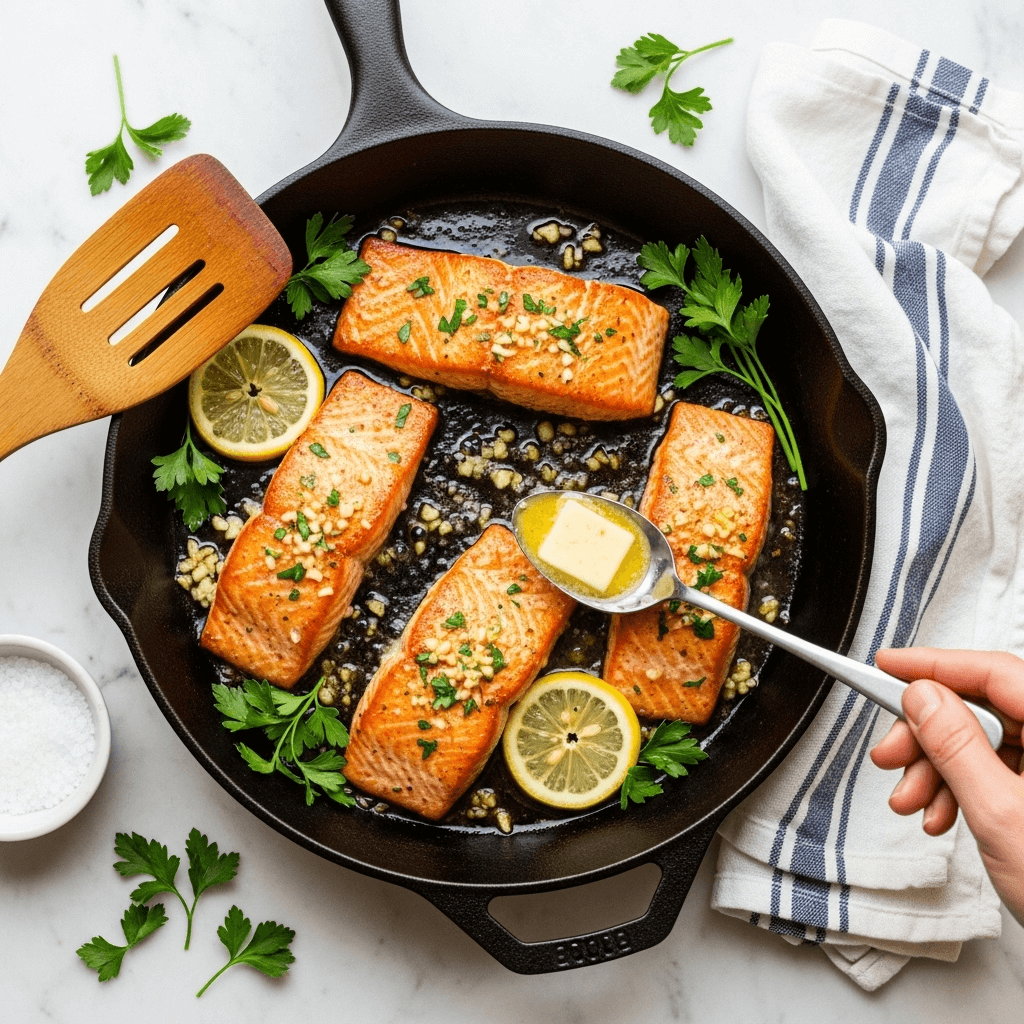
If you’re looking for a restaurant-quality dinner that comes together in less than 20 minutes, this Garlic Butter Salmon Recipe is about to become your new weeknight hero. Imagine perfectly seared salmon fillets with a golden, crispy exterior giving way to tender, flaky fish inside, all bathed in a luxurious garlic butter sauce that’s so good you’ll want to drizzle it over everything on your plate.
This recipe is ideal for busy weeknights when you want something special without the fuss, romantic date nights at home, or even weekend meal prep when you’re planning ahead. Salmon is naturally elegant and impressive, but this preparation keeps things beautifully simple. The combination of butter, fresh garlic, lemon, and herbs creates a sauce that enhances the salmon’s natural richness without overpowering it. Whether you’re cooking for picky eaters, health-conscious family members, or dinner guests you want to impress, this garlic butter salmon hits all the right notes.
History / Background
Salmon has been a prized protein for thousands of years, particularly among Indigenous peoples of the Pacific Northwest and communities throughout Northern Europe and Scandinavia. The tradition of pairing salmon with butter and aromatics has deep roots in French cuisine, where “meunière” style preparations featuring butter, lemon, and parsley have been classic since the 19th century.
The modern garlic butter salmon we know today represents a beautiful fusion of culinary traditions. French technique meets American convenience cooking, with influences from Mediterranean flavors where garlic, olive oil, and fresh herbs reign supreme. In the 1980s and 90s, as home cooks became more adventurous and salmon became more widely available in American supermarkets, quick-cooking salmon recipes exploded in popularity.
What makes this particular preparation so special is its accessibility. You don’t need fancy culinary training or hard-to-find ingredients. The genius lies in the simplicity—high-quality salmon, a handful of pantry staples, and a single pan. This recipe honors salmon’s natural flavor while elevating it with the classic combination of butter and garlic that humans have loved for centuries. It’s comfort food that feels fancy, which is perhaps why it’s become such a Pinterest favorite among home cooks looking to make something delicious without spending hours in the kitchen.
Why You’ll Love This Recipe
This Garlic Butter Salmon isn’t just another fish recipe—it’s the kind of dish that makes you feel like a culinary genius even if you’re still mastering the basics of home cooking. The magic happens when that butter starts sizzling in the pan and the garlic releases its intoxicating aroma. You’ll understand why this recipe has thousands of five-star reviews from home cooks just like you.
Here’s what makes this recipe absolutely irresistible:
- Lightning-fast preparation – From fridge to table in just 15 minutes, making it perfect for hectic weeknights
- One-pan wonder – Minimal cleanup means more time relaxing and less time scrubbing dishes
- Restaurant-quality results – Achieve that perfect golden crust and buttery sauce that rivals your favorite steakhouse
- Foolproof for beginners – Even if you’ve never cooked salmon before, the simple technique guarantees success
- Naturally healthy – Packed with omega-3 fatty acids, protein, and nutrients without feeling like “diet food”
- Budget-friendly elegance – Salmon is often on sale, and this recipe stretches it beautifully with the flavorful sauce
- Incredibly versatile – Works with any salmon variety and adapts easily to different flavor profiles
- Family-approved – Even picky eaters love the mild, buttery flavor without any “fishy” taste
- Make-ahead friendly – Perfect for meal prep or entertaining when you want to minimize last-minute cooking
- Impressive presentation – Looks like you spent hours when you actually spent minutes
Ingredient Notes
Let’s talk about what goes into this delicious dish and why each ingredient matters. Understanding your ingredients helps you make smart substitutions and adjustments based on what’s in your kitchen.
Salmon Fillets: The star of the show! Look for fillets that are about 6 ounces each and 1 to 1.5 inches thick for even cooking. Wild-caught salmon has a more pronounced flavor and firmer texture, while farm-raised Atlantic salmon is milder, fattier, and more affordable. Both work beautifully here. Skin-on or skinless is your choice—skin adds extra crispiness if you sear it properly. If your fillets have pin bones, run your fingers along the flesh and remove them with tweezers or pliers.
Butter: We’re using real butter here because it creates that signature rich, velvety sauce. Unsalted butter gives you better control over the seasoning. The butter also helps achieve that gorgeous golden crust on the salmon. In a pinch, you can use half butter and half olive oil, but you’ll lose some of that luxurious mouthfeel.
Garlic: Fresh garlic is non-negotiable for the best flavor. You’ll want 4-5 large cloves, minced or finely chopped. The garlic gets briefly sautéed in the butter, releasing its aromatic compounds without burning. Pre-minced jarred garlic can work in a pinch, but fresh is noticeably better here.
Lemon: Fresh lemon juice brightens the entire dish and cuts through the richness of the butter. You’ll need about one large lemon for both juice and zest. The acidity also helps balance the salmon’s natural oils. Bottled lemon juice lacks the fresh, vibrant flavor, so squeeze it fresh if possible.
Fresh Herbs: Parsley is classic, but you can also use dill, thyme, or chives. Fresh herbs add color, freshness, and a layer of flavor that dried herbs simply can’t match. If you must use dried, use about one-third the amount and add them earlier in the cooking process.
Seasonings: Simple salt and black pepper are all you really need. The salmon, butter, and garlic create plenty of flavor on their own. Kosher salt or sea salt works best for even seasoning.
Optional White Wine: A splash of dry white wine adds depth and helps create more sauce. You can substitute with chicken broth or simply skip it and use a bit more lemon juice.
Equipment Needed
You don’t need a fancy kitchen to make this recipe, but having the right tools makes the process smoother and more enjoyable. Here’s what you’ll want to have ready:
- Large skillet or frying pan – A 12-inch pan is ideal for cooking 4 fillets without crowding. Cast iron, stainless steel, or non-stick all work well. Cast iron gives the best sear, while non-stick is most beginner-friendly.
- Spatula – A wide, thin spatula (preferably metal for non-stick pans or fish spatula for others) helps you flip the delicate salmon without breaking it.
- Sharp knife – For mincing garlic and chopping fresh herbs cleanly.
- Cutting board – One for your garlic and herbs, separate from where you prep the salmon to avoid cross-contamination.
- Measuring spoons – For accurate butter and seasoning measurements.
- Citrus juicer (optional) – Makes getting every drop of lemon juice easier, but you can also squeeze by hand.
- Microplane or zester (optional) – For getting beautiful lemon zest without the bitter white pith.
- Paper towels – Essential for patting the salmon dry, which is the secret to getting that crispy exterior.
- Tongs or fork – For safely handling the hot salmon fillets.
- Instant-read thermometer (optional but helpful) – Takes the guesswork out of doneness; salmon is perfect at 125-130°F for medium-rare or 135-140°F for medium.
📋 Recipe Card
Prep Time: 5 minutes
Cook Time: 10 minutes
Total Time: 15 minutes
Yield: 4 servings
Category: Dinner, Main Course
Method: Stovetop, Pan-Seared
Cuisine: American, French-Inspired
Diet: Gluten-Free, Low-Carb, Keto-Friendly, Pescatarian
Description:
This Garlic Butter Salmon Recipe delivers restaurant-quality results in just 15 minutes. Perfectly seared salmon fillets are bathed in a luxurious garlic butter sauce with fresh lemon and herbs. It’s an easy, elegant dinner that’s perfect for busy weeknights or special occasions.
Ingredients
- 4 salmon fillets (6 oz each, about 1 inch thick)
- 4 tablespoons unsalted butter, divided
- 4-5 cloves garlic, minced
- 1 large lemon (juice and zest)
- 2 tablespoons fresh parsley, chopped
- 1 tablespoon olive oil
- Salt and black pepper to taste
- Optional: ¼ cup dry white wine
- Optional: ½ teaspoon red pepper flakes for heat
- Optional: fresh dill or thyme instead of parsley
Instructions
- Prepare the salmon: Remove salmon from the refrigerator 10-15 minutes before cooking to bring it closer to room temperature. Pat the fillets completely dry with paper towels—this is crucial for achieving a beautiful golden crust. Season both sides generously with salt and black pepper.
- Heat the pan: Place your skillet over medium-high heat and add the olive oil along with 1 tablespoon of butter. Let it heat until the butter melts and starts to shimmer, but don’t let it smoke or turn brown. The pan should be hot but not screaming hot.
- Sear the salmon: Carefully place the salmon fillets in the pan, skin-side up if they have skin. Don’t move them! Let them cook undisturbed for 4-5 minutes. You should see the edges starting to turn opaque and a golden crust forming on the bottom. The salmon will naturally release from the pan when it’s ready to flip.
- Flip and continue cooking: Using a wide spatula, gently flip each fillet. Cook for another 3-4 minutes on the second side, depending on thickness. The salmon is done when it flakes easily with a fork and reaches an internal temperature of 125-145°F (depending on your preferred doneness).
- Remove and rest: Transfer the cooked salmon to a serving plate and tent loosely with foil to keep warm while you make the sauce. This resting period allows the juices to redistribute throughout the fish.
- Make the garlic butter sauce: Reduce heat to medium-low. Add the remaining 3 tablespoons of butter to the same pan. Once melted, add the minced garlic and sauté for 30-60 seconds until fragrant but not browned. If using wine, add it now and let it simmer for 1 minute.
- Finish the sauce: Remove the pan from heat and stir in the fresh lemon juice, lemon zest, and chopped parsley. Taste and adjust seasoning with salt and pepper if needed. The sauce should be bright, garlicky, and buttery.
- Serve: Spoon the warm garlic butter sauce generously over each salmon fillet. Garnish with extra fresh herbs and lemon wedges if desired. Serve immediately while hot.
Notes
- Doneness guide: For rare salmon, cook to 110°F; for medium-rare, 125°F; for medium, 135°F; for well-done, 145°F. Most people prefer salmon somewhere between medium-rare and medium for the best texture.
- Skin crisping tip: If your salmon has skin, start with the skin side down first to render the fat and crisp it up beautifully before flipping.
- Preventing sticking: Make sure your pan and oil are hot enough before adding the salmon, and resist the urge to move the fish before it’s ready.
- Sauce consistency: If your sauce seems too thin, let it simmer for an extra 30 seconds. If it’s too thick, add a splash of white wine, broth, or water.
- Fresh vs. frozen salmon: Frozen salmon works great if properly thawed in the refrigerator overnight. Never thaw at room temperature.
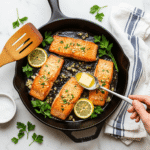
Garlic Butter Salmon Recipe
- Total Time: 15 minutes
- Yield: 4 servings 1x
- Diet: Gluten Free
Description
This Garlic Butter Salmon Recipe delivers restaurant-quality results in just 15 minutes. Perfectly seared salmon fillets are bathed in a luxurious garlic butter sauce with fresh lemon and herbs. It’s an easy, elegant dinner that’s perfect for busy weeknights or special occasions.
Ingredients
- 4 salmon fillets (6 oz each, about 1 inch thick)
- 4 tablespoons unsalted butter, divided
- 4-5 cloves garlic, minced
- 1 large lemon (juice and zest)
- 2 tablespoons fresh parsley, chopped
- 1 tablespoon olive oil
- Salt and black pepper to taste
- Optional: ¼ cup dry white wine
- Optional: ½ teaspoon red pepper flakes for heat
- Optional: fresh dill or thyme instead of parsley
Instructions
- Prepare the salmon: Remove salmon from the refrigerator 10-15 minutes before cooking to bring it closer to room temperature. Pat the fillets completely dry with paper towels—this is crucial for achieving a beautiful golden crust. Season both sides generously with salt and black pepper.
- Heat the pan: Place your skillet over medium-high heat and add the olive oil along with 1 tablespoon of butter. Let it heat until the butter melts and starts to shimmer, but don’t let it smoke or turn brown. The pan should be hot but not screaming hot.
- Sear the salmon: Carefully place the salmon fillets in the pan, skin-side up if they have skin. Don’t move them! Let them cook undisturbed for 4-5 minutes. You should see the edges starting to turn opaque and a golden crust forming on the bottom. The salmon will naturally release from the pan when it’s ready to flip.
- Flip and continue cooking: Using a wide spatula, gently flip each fillet. Cook for another 3-4 minutes on the second side, depending on thickness. The salmon is done when it flakes easily with a fork and reaches an internal temperature of 125-145°F (depending on your preferred doneness).
- Remove and rest: Transfer the cooked salmon to a serving plate and tent loosely with foil to keep warm while you make the sauce. This resting period allows the juices to redistribute throughout the fish.
- Make the garlic butter sauce: Reduce heat to medium-low. Add the remaining 3 tablespoons of butter to the same pan. Once melted, add the minced garlic and sauté for 30-60 seconds until fragrant but not browned. If using wine, add it now and let it simmer for 1 minute.
- Finish the sauce: Remove the pan from heat and stir in the fresh lemon juice, lemon zest, and chopped parsley. Taste and adjust seasoning with salt and pepper if needed. The sauce should be bright, garlicky, and buttery.
- Serve: Spoon the warm garlic butter sauce generously over each salmon fillet. Garnish with extra fresh herbs and lemon wedges if desired. Serve immediately while hot.
Notes
- Doneness guide: For rare salmon, cook to 110°F; for medium-rare, 125°F; for medium, 135°F; for well-done, 145°F. Most people prefer salmon somewhere between medium-rare and medium for the best texture.
- Skin crisping tip: If your salmon has skin, start with the skin side down first to render the fat and crisp it up beautifully before flipping.
- Preventing sticking: Make sure your pan and oil are hot enough before adding the salmon, and resist the urge to move the fish before it’s ready.
- Sauce consistency: If your sauce seems too thin, let it simmer for an extra 30 seconds. If it’s too thick, add a splash of white wine, broth, or water.
- Fresh vs. frozen salmon: Frozen salmon works great if properly thawed in the refrigerator overnight. Never thaw at room temperature.
- Prep Time: 5 minutes
- Cook Time: 10 minutes
- Category: Dinner, Main Course
- Method: Stovetop, Pan-Seared
- Cuisine: American, French-Inspired
Nutrition
- Serving Size: 1 salmon fillet with sauce (approximately 7 oz)
- Calories: 385
- Sugar: 0g
- Sodium: 420mg
- Fat: 26g
- Saturated Fat: 11g
- Unsaturated Fat: 13g
- Trans Fat: 0g
- Carbohydrates: 2g
- Fiber: 0g
- Protein: 35g
- Cholesterol: 125mg
Nutrition information is approximate and calculated based on standard ingredients. Values may vary based on specific products used and portion sizes.
Tips & Variations
The beauty of this recipe is how easily it adapts to your preferences, dietary needs, and whatever ingredients you have on hand. Here are some delicious ways to customize your garlic butter salmon:
For a Mediterranean twist, add sun-dried tomatoes, capers, and olives to the garlic butter sauce. Swap parsley for fresh basil and add a pinch of oregano. This version pairs beautifully with couscous or orzo pasta.
Going spicy? Add red pepper flakes to the butter sauce, or drizzle with sriracha honey (mix equal parts sriracha and honey) before serving. You can also include sliced jalapeños in the pan while the sauce cooks.
Asian-inspired variation: Replace half the butter with sesame oil, add grated ginger along with the garlic, use lime instead of lemon, and garnish with cilantro and sesame seeds. A splash of soy sauce in the pan adds umami depth.
Creamy version: After making the garlic butter sauce, stir in 2-3 tablespoons of heavy cream or cream cheese for a richer, more decadent sauce that’s almost Tuscan-style.
Herb garden explosion: Mix in multiple fresh herbs like dill, chives, tarragon, and basil along with the parsley. Each herb brings its own personality to the dish.
Extra vegetables: Toss cherry tomatoes, baby spinach, or asparagus spears into the pan during the last few minutes of cooking to create a complete one-pan meal.
Crispy capers: Add rinsed capers to the butter sauce for briny pops of flavor and interesting texture contrast.
Cajun-style: Season the salmon with Cajun or blackening seasoning before cooking for a spicier, more assertive flavor profile.
Pro Chef Tips
Taking your salmon from good to absolutely exceptional comes down to these professional techniques that restaurant chefs use every single day:
Temperature is everything: The biggest mistake home cooks make is cooking salmon straight from the refrigerator. Cold fish won’t sear properly and will cook unevenly. Let it sit at room temperature for 15-20 minutes before cooking, and you’ll notice a dramatic improvement in texture and even doneness throughout the fillet.
Dry surface equals crispy crust: Professional kitchens obsess over surface moisture because wet protein steams instead of sears. Pat your salmon with paper towels until the surface feels almost tacky—not slimy or damp. This single step transforms your results more than almost anything else.
Don’t crowd the pan: Give each fillet at least an inch of space. Overcrowding drops the pan temperature, causing the salmon to steam and preventing that coveted golden crust from forming. If your pan isn’t large enough, cook in batches or use two pans simultaneously.
Listen for the sizzle: When you place salmon in the pan, you should hear an immediate, satisfying sizzle. If you don’t, your pan isn’t hot enough yet. Wait another minute and try again. That sizzle means the Maillard reaction is happening—the chemical process that creates delicious browning and complex flavors.
The hands-off approach: Once you place the salmon in the pan, resist every urge to peek, poke, or move it. Let it cook completely undisturbed. The fish will naturally release from the pan when a proper crust has formed. If you try to flip too early and it’s sticking, it’s not ready yet.
Use the spoon basting technique: In the last minute of cooking, tilt the pan slightly and use a spoon to continuously scoop up the hot butter and drizzle it over the top of the salmon. This restaurant technique, called “arroser” in French cooking, ensures even cooking and adds extra richness.
Don’t overcook: Salmon continues cooking from residual heat after you remove it from the pan. Take it off when it’s slightly underdone to your preference—it’ll reach perfect doneness during the resting period. The center should still be slightly translucent for beautifully moist fish.
Butter temperature matters: Add your butter in stages. Start with oil and just a bit of butter for searing (higher smoke point), then add the remaining butter at lower heat for the sauce. This prevents the butter from burning while still achieving that nutty, brown butter flavor.
Common Mistakes to Avoid
Even experienced cooks can stumble with salmon if they’re not careful. Here are the most common pitfalls and how to avoid them:
Using a cold pan: Putting salmon into a cold or barely warm pan guarantees sticking, steaming, and sad, gray fish instead of that gorgeous golden crust. Always preheat your pan properly—it should take 2-3 minutes over medium-high heat. Test by flicking a tiny drop of water into the pan; it should sizzle and evaporate immediately.
Flipping too early or too often: This is perhaps the number one mistake. When you try to flip salmon before it’s ready, it tears apart and sticks to the pan. The fish will tell you when it’s ready—the fillet will release easily when properly seared. Only flip once! Multiple flips break up the delicate flesh and prevent even cooking.
Burning the garlic: Garlic goes from perfectly golden to bitter and burnt in seconds. Always add garlic after reducing the heat and after the salmon is out of the pan. Watch it carefully, stirring constantly, and remove from heat as soon as it becomes fragrant. Burnt garlic ruins the entire sauce.
Overcooking the salmon: Dry, chalky salmon is the fastest way to convince someone they “don’t like salmon.” Remember that salmon continues cooking after leaving the pan. The FDA recommends 145°F for safety, but many chefs and diners prefer 125-135°F for that tender, buttery texture. Use an instant-read thermometer to take the guesswork out.
Not seasoning properly: Salmon has a mild flavor that needs proper seasoning to shine. Don’t be timid—season both sides generously with salt and pepper before cooking. Under-seasoned salmon tastes bland no matter how good your technique is. The salt also helps draw out moisture for better browning.
Storage & Meal Prep
Knowing how to properly store and reheat your garlic butter salmon means you can enjoy this recipe throughout the week or prep it in advance for stress-free entertaining.
Refrigerator storage: Store leftover cooked salmon in an airtight container in the refrigerator for up to 3 days. Keep the salmon separate from the garlic butter sauce if possible, storing the sauce in a small jar or container. This prevents the fish from getting soggy and makes reheating easier. Make sure your salmon has cooled to room temperature before refrigerating, but don’t leave it out for more than 2 hours.
Reheating cooked salmon: The challenge with reheating salmon is avoiding overcooking it further. The best method is low and slow: Preheat your oven to 275°F, place the salmon in a baking dish with a splash of water or broth, cover with foil, and heat for 10-15 minutes until just warmed through. You can also reheat gently in a covered skillet over low heat with a little extra butter. Avoid the microwave if possible, as it tends to dry out the fish, but if you must, use 50% power in 30-second increments.
Cold salmon is delicious too: Don’t overlook the option of enjoying leftover salmon cold or at room temperature. Flake it over a salad, make salmon salad sandwiches, or serve it on bagels with cream cheese. The garlic butter flavor is still wonderful when chilled.
Raw salmon storage: If you’ve brought salmon home from the store but aren’t cooking it immediately, keep it in the coldest part of your refrigerator (usually the back of the bottom shelf) in its original packaging or wrapped tightly in plastic wrap. Use within 1-2 days for the best quality and safety.
Batch cooking: This recipe scales beautifully. Cook multiple batches for meal prep, letting each batch rest on a baking sheet in a 200°F oven to keep warm while you cook the rest. Make a double batch of sauce since it keeps well and can transform simple vegetables or pasta into something special throughout the week.
Make-Ahead & Freezer Notes
Planning ahead makes weeknight dinners infinitely easier, and this salmon recipe is wonderfully prep-friendly with a few smart strategies.
Freezing raw salmon: Raw salmon freezes exceptionally well if you do it correctly. Wrap individual fillets tightly in plastic wrap, then place them in a freezer-safe zip-top bag, removing as much air as possible. Properly frozen raw salmon keeps for up to 3 months. Label with the date and any seasonings you’ve added. For the best texture, thaw salmon slowly in the refrigerator overnight—never at room temperature or in hot water.
Freezing cooked salmon: While possible, frozen cooked salmon won’t be quite as good as fresh. If you do freeze it, undercook it slightly (to about 120°F) since it’ll continue cooking when reheated. Wrap tightly in plastic wrap and foil, then freeze for up to 2 months. The texture will be slightly drier after freezing and reheating, so plan to use it in dishes where that matters less—like pasta, fried rice, or salmon cakes.
Don’t freeze the sauce: The garlic butter sauce doesn’t freeze well because the butter separates and the texture becomes grainy when thawed. Instead, make the sauce fresh when you’re ready to serve. It only takes 3 minutes anyway!
Make-ahead for dinner parties: Here’s a pro strategy for entertaining: Season your salmon and have it ready on a plate in the refrigerator up to 4 hours before cooking. Mince your garlic, chop your herbs, and measure out your butter and lemon juice in advance. When guests arrive, you can have this impressive dinner on the table in 15 minutes flat with zero stress.
Marinating option: While this recipe doesn’t require marinating, you can season the salmon with the garlic, lemon zest, salt, and pepper up to 2 hours ahead. Cover and refrigerate, then bring to room temperature for 15 minutes before cooking. This builds even more flavor into the fish itself.
Best reheating method for frozen cooked salmon: Thaw completely in the refrigerator overnight, then reheat gently in a covered skillet with a tablespoon of butter over medium-low heat. This adds moisture back and helps restore some of that original texture and flavor.
Serving Suggestions
While garlic butter salmon is absolutely delicious on its own, pairing it with the right sides transforms it into a complete, restaurant-quality meal. Here are my favorite accompaniments that complement the rich, buttery salmon without competing with its flavors:
Classic sides: Creamy mashed potatoes or roasted fingerling potatoes are always a winner—they soak up that delicious garlic butter sauce beautifully. Steamed rice, particularly jasmine or basmati, provides a neutral base that lets the salmon shine. For something lighter, try cauliflower rice or quinoa for a healthier grain alternative that still offers satisfying texture.
Vegetable pairings: Roasted asparagus with lemon is perhaps the most classic pairing with salmon—the vegetables can even cook in the oven while you prepare the fish. Roasted Brussels sprouts, green beans almondine, or sautéed spinach with garlic all work beautifully. For something fresh and light, serve a crisp arugula salad with a simple lemon vinaigrette that echoes the brightness of your salmon sauce.
Bread options: Crusty French bread, garlic bread, or warm dinner rolls are perfect for soaking up every last drop of that incredible sauce. You could also serve this over creamy polenta or alongside buttery egg noodles for a more substantial meal.
Complete dinner ideas: Create a full seafood feast by serving the salmon alongside roasted potatoes and a Caesar salad. Or go Mediterranean with couscous, roasted cherry tomatoes, and tzatziki sauce on the side. For a lighter summer meal, pair with grilled vegetables and a fresh cucumber tomato salad.
Wine pairings: A crisp Sauvignon Blanc, unoaked Chardonnay, or dry Rosé complement the richness of the butter and the delicate salmon flavor perfectly. If you prefer red wine, a light Pinot Noir works surprisingly well with salmon.
Family-style serving: Present the salmon on a large platter, drizzled with all that garlic butter sauce, and surrounded by lemon wedges and fresh herbs. Let everyone serve themselves—it creates a beautiful, inviting presentation that makes even a weeknight dinner feel special.
FAQs Section
Q: How do I know when salmon is done cooking?
A: The most reliable method is using an instant-read thermometer inserted into the thickest part of the fillet. Salmon is safe to eat at 145°F (FDA recommendation), but many people prefer it at 125-135°F for a more tender, moist texture. Visually, the salmon should be opaque throughout with just a slightly darker center, and it should flake easily with a fork. The flesh will have changed from translucent to opaque pink. If you see white albumin (protein) oozing out, you’ve likely overcooked it slightly, though it’s still safe and edible.
Q: Should I remove the skin before or after cooking?
A: This is entirely your preference! Cooking salmon with the skin on provides a protective barrier that helps prevent overcooking and keeps the fillet intact when flipping. The skin also gets wonderfully crispy when seared properly, and some people love eating it. If you don’t enjoy salmon skin, cook it skin-side down first, then simply slide a spatula between the flesh and skin after cooking—the cooked salmon lifts right off, leaving the skin in the pan. Removing the skin before cooking makes the salmon slightly more delicate to handle but allows the seasonings to penetrate from both sides.
Q: Can I use frozen salmon for this recipe?
A: Absolutely! Frozen salmon is often flash-frozen on the boat immediately after being caught, making it incredibly fresh. The key is proper thawing—place the frozen salmon in the refrigerator 12-24 hours before cooking. Never thaw at room temperature or under hot water, as this affects texture and can create food safety issues. Once thawed, pat it very dry with paper towels (thawed salmon releases moisture) and cook exactly as you would fresh salmon. The results will be just as delicious.
Q: What if my salmon sticks to the pan?
A: Sticking usually happens for one of three reasons: the pan wasn’t hot enough, you didn’t use enough oil/butter, or you tried to flip too early. Always preheat your pan for 2-3 minutes, use adequate fat, and wait for the fish to release naturally. If your salmon is sticking, it’s not ready to flip yet—wait another 30-60 seconds. Using a good quality non-stick pan can help, or try stainless steel with proper heating. Cast iron needs to be well-seasoned. A thin, flexible fish spatula is also incredibly helpful for gently releasing the salmon from the pan.
Q: Can I make this recipe with other types of fish?
A: Yes! This garlic butter preparation works beautifully with many types of fish. Arctic char is the closest substitute to salmon with similar flavor and texture. Sea bass, halibut, mahi-mahi, or cod all work wonderfully, though you may need to adjust cooking times based on thickness. Delicate fish like tilapia or sole need gentler handling and shorter cooking times. Firmer fish like swordfish or tuna can handle slightly higher heat. The key is adjusting your cooking time based on the thickness and density of whatever fish you choose—generally 4-5 minutes per half-inch of thickness.
Q: Why does my salmon have a white stuff coming out of it?
A: That white substance is albumin, a protein that naturally exists in salmon. When salmon is cooked, especially at higher temperatures or for too long, the albumin coagulates and is pushed out of the muscle fibers. While it’s completely harmless and safe to eat, it’s not particularly attractive. To minimize albumin, brine your salmon in salt water for 10 minutes before cooking, pat it very dry, and avoid cooking at excessively high heat. Cooking salmon to a lower internal temperature (around 125-130°F) also significantly reduces albumin appearance.
Q: Can I prep this recipe ahead for meal prep?
A: Definitely! This salmon is excellent for meal prep. Cook your salmon according to the recipe and let it cool completely. Store in airtight containers in the refrigerator for up to 3 days. Keep the garlic butter sauce separate if possible. You can enjoy the salmon cold over salads, reheat it gently, or flake it into pasta, grain bowls, or wraps throughout the week. The flavors actually develop and intensify slightly after a day in the refrigerator. For make-ahead entertaining, you can season the salmon up to 4 hours in advance and keep it refrigerated until you’re ready to cook.
Conclusion
There you have it—a Garlic Butter Salmon Recipe that’s destined to become one of your most-requested dinners! Whether you’re a complete beginner learning to cook fish for the first time or an experienced home cook looking for a reliable weeknight recipe, this preparation delivers impressive results every single time.
The beauty of this dish lies in its simplicity and versatility. With just a handful of ingredients and 15 minutes of your time, you’re creating something that tastes like it came from an upscale restaurant. The combination of perfectly seared salmon with that luxurious, garlicky butter sauce is truly irresistible, and the fact that it’s naturally healthy, packed with protein and omega-3s, makes it feel like you’re doing something good for yourself and your family.
I hope you love this recipe as much as my family does! We make it at least twice a month, and it never gets old. The garlic butter sauce is so good that we often make extra just to drizzle over our vegetables and potatoes. Don’t forget to customize it with your favorite herbs, add a little heat if you’re feeling spicy, or pair it with whatever sides you have on hand.