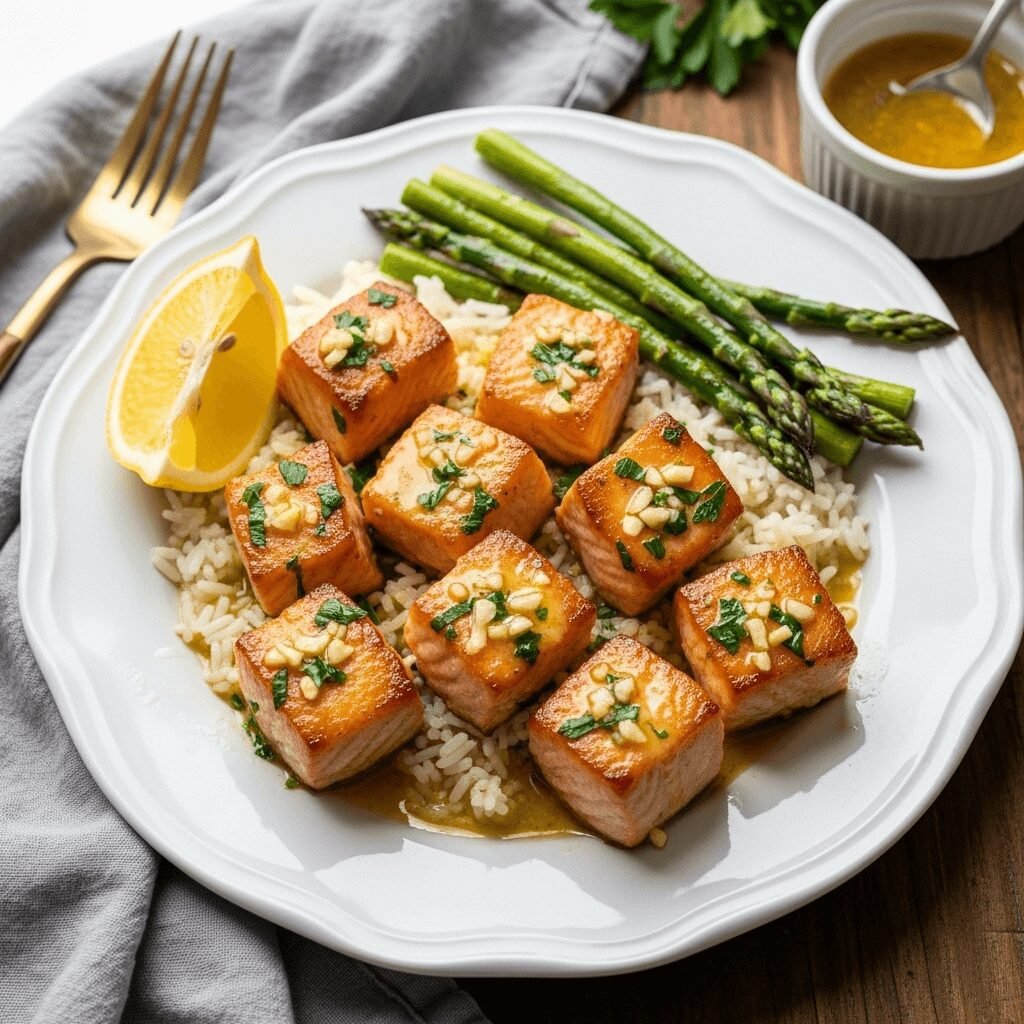
If you’ve been searching for a quick, elegant, and absolutely delicious weeknight dinner that feels special without requiring hours in the kitchen, these Garlic Butter Salmon Bites are about to become your new obsession. Imagine tender, flaky chunks of salmon seared to golden perfection and bathed in a rich, garlicky butter sauce that’s so good you’ll want to drizzle it over everything on your plate. This recipe delivers restaurant-quality flavor in just 15 minutes, making it perfect for those busy evenings when you want something nutritious and impressive without the stress.
What makes these salmon bites truly irresistible is the combination of simplicity and sophistication. The bite-sized pieces cook quickly and evenly, developing a beautiful golden crust while staying incredibly moist inside. The garlic butter sauce isn’t just a topping – it’s a flavor bomb that elevates the naturally rich taste of salmon into something truly extraordinary. Whether you’re cooking for a romantic date night, impressing dinner guests, or just treating yourself to something special on a Tuesday evening, these salmon bites hit the sweet spot between effortless and elegant.
This recipe is incredibly versatile too. Serve it over fluffy rice or creamy mashed potatoes to soak up that amazing sauce, toss it with pasta for a quick seafood dinner, or pile it on top of a fresh salad for a lighter meal. Parents love it because even picky eaters tend to enjoy salmon when it’s cut into fun, bite-sized pieces and coated in buttery goodness. It’s also perfect for meal prep, date nights, or even as an impressive appetizer at your next gathering.
History / Background
While salmon has been a dietary staple for thousands of years, particularly among Pacific Northwest indigenous peoples and Scandinavian cultures, the concept of “salmon bites” is a more modern culinary innovation that speaks to our contemporary love of quick, flavorful cooking methods. Salmon itself has an incredible history – it’s been revered across cultures, from the Native American tribes who built their entire economies around salmon runs, to the Nordic countries where gravlax and smoked salmon became cultural treasures.
The garlic butter preparation draws inspiration from classic French cuisine, where “beurre blanc” and other butter-based sauces have been cornerstones of fine dining for centuries. The French mastered the art of using butter to enhance the natural flavors of quality ingredients, and this recipe carries that tradition forward in a more accessible, home-cook-friendly format. The combination of garlic and butter specifically became incredibly popular in American cooking during the mid-20th century, when garlic went from being viewed as an ethnic ingredient to a beloved staple in kitchens across the country.
The “bites” format reflects our modern eating preferences – smaller portions that cook faster, are easier to share, and feel less intimidating than cooking a whole salmon fillet. This preparation method became particularly popular with the rise of social media food culture, where beautiful, bite-sized foods photograph beautifully and feel more approachable to home cooks who might be nervous about working with fish. It’s also a technique borrowed from Asian cooking traditions, where cutting proteins into smaller pieces ensures even cooking and maximum flavor absorption.
Today, salmon is one of the most popular fish in America, prized not just for its rich, buttery flavor but also for its incredible nutritional benefits. Wild-caught salmon from Alaska and farm-raised salmon from responsible sources have made this once-luxury ingredient accessible to everyday home cooks, and recipes like these celebrate salmon’s versatility and natural deliciousness.
Why You’ll Love This Recipe
These Garlic Butter Salmon Bites are going to revolutionize your weeknight dinner routine, and once you experience how easy and delicious they are, you’ll find yourself making them again and again. This recipe strikes that perfect balance between quick enough for a weeknight but special enough for company, which is exactly what busy home cooks need.
Here’s why this recipe deserves a permanent spot in your rotation:
- Lightning-fast cooking time – From fridge to table in just 15 minutes, making it perfect for those hectic evenings when you need dinner done quickly
- Restaurant-quality results at home – The golden-seared exterior and tender, flaky interior rival anything you’d pay $30 for at a fancy seafood restaurant
- Minimal cleanup – Everything cooks in one skillet, which means less time scrubbing dishes and more time enjoying your evening
- Packed with omega-3s – Salmon is one of the healthiest proteins you can eat, loaded with heart-healthy fats, protein, and essential nutrients
- Naturally gluten-free and keto-friendly – Perfect for various dietary needs without requiring special substitutions
- Kid-approved – The bite-sized format and buttery flavor makes it less intimidating for children who might be hesitant about fish
- Budget-conscious luxury – Salmon feels indulgent but is often on sale, and this recipe uses minimal ingredients to let the fish shine
- Incredibly versatile – Serve it a hundred different ways, from rice bowls to salads to pasta dishes
- Foolproof technique – Even if you’ve never cooked salmon before, this method is nearly impossible to mess up
- Meal prep friendly – Make a double batch and have protein ready for quick lunches and dinners all week
- Impressive presentation – Those golden, glistening bites look like something from a cooking show with virtually no effort
Ingredient Notes
Understanding your ingredients is key to cooking success, and this recipe uses simple, high-quality components that work together beautifully. Here’s everything you need to know about what goes into these incredible salmon bites.
Salmon: Fresh, skinless salmon fillets are ideal here – look for bright, firm flesh with no fishy smell. Wild-caught Alaskan salmon offers the best flavor and sustainability, but quality farm-raised Atlantic salmon works beautifully too. You’ll need about 1.5 pounds, which will yield generous servings. Choose center-cut portions when possible as they’re the most uniform thickness. If your salmon has skin, you can easily remove it by sliding a sharp knife between the flesh and skin while holding the skin taut.
Butter: Unsalted butter is essential because it allows you to control the seasoning perfectly. You’ll need about 4 tablespoons – don’t skimp here, as the butter creates that luscious sauce. European-style butter with higher fat content makes an even richer sauce if you want to go all out. The butter should be cold when you add it to the pan, which helps create an emulsified sauce rather than separated, greasy one.
Garlic: Fresh garlic is non-negotiable for the best flavor – you’ll need 5-6 large cloves, minced finely. The garlic infuses the butter with incredible aroma and flavor. Jarred minced garlic works in a pinch, but fresh garlic provides that bright, pungent bite that makes this dish special. Take care not to burn the garlic, as burnt garlic turns bitter and ruins the sauce.
Lemon: Fresh lemon juice brightens the rich butter sauce and cuts through the salmon’s natural fattiness. You’ll need juice from one lemon plus zest if you want extra citrus punch. The acidity also helps the salmon’s flavors pop. Never use bottled lemon juice – the fresh stuff makes a world of difference.
Olive Oil: A high-quality olive oil or neutral oil like avocado oil for searing. You need an oil with a decent smoke point since you’re cooking over medium-high heat. The oil prevents sticking and helps achieve that beautiful golden crust.
Seasonings: Salt, black pepper, and paprika form your base seasoning. Paprika adds a subtle sweetness and beautiful color. Some cooks like adding red pepper flakes for heat or Italian seasoning for herbaceous notes.
Optional Fresh Herbs: Parsley is traditional and adds brightness and color. Fresh dill, basil, or chives also work beautifully and give different flavor profiles to experiment with.
Equipment Needed
Having the right tools makes cooking these salmon bites even easier. Here’s everything you’ll need:
- Large skillet or frying pan – A 12-inch skillet gives you plenty of room to cook the salmon without overcrowding. Cast iron holds heat beautifully, but nonstick makes cleanup easier
- Sharp chef’s knife – For cutting salmon into even, bite-sized pieces
- Cutting board – Preferably one designated for raw proteins
- Paper towels – For patting salmon dry, which is crucial for achieving a good sear
- Spatula or fish turner – A thin, flexible spatula makes flipping the salmon bites easier
- Measuring spoons – For accurate seasoning and butter measurements
- Garlic press or microplane – For mincing garlic quickly and evenly
- Small bowl – For mixing seasonings
- Tongs – Helpful for turning salmon pieces if you prefer them to a spatula
- Lemon squeezer – Makes juicing lemons easier and keeps seeds out

Garlic Butter Salmon Bites Recipe
- Total Time: 15 minutes
- Yield: 4 servings 1x
- Diet: Gluten Free
Description
These Garlic Butter Salmon Bites are tender, flaky chunks of perfectly seared salmon coated in a rich, garlicky butter sauce. Ready in just 15 minutes, this restaurant-quality dish is perfect for busy weeknights or impressive dinner parties!
Ingredients
For the Salmon:
- 1½ pounds skinless salmon fillet, cut into 1.5-inch cubes
- 2 tablespoons olive oil (or avocado oil)
- 1 teaspoon salt
- ½ teaspoon black pepper
- ½ teaspoon paprika
- ¼ teaspoon garlic powder
For the Garlic Butter Sauce:
- 4 tablespoons unsalted butter
- 5-6 large garlic cloves, minced (about 2 tablespoons)
- 2 tablespoons fresh lemon juice
- 1 teaspoon lemon zest (optional)
- ¼ teaspoon red pepper flakes (optional, for heat)
- 2 tablespoons fresh parsley, chopped
- Extra salt and pepper to taste
Instructions
- Prepare the Salmon: Pat the salmon fillet completely dry with paper towels – this is crucial for getting a good sear. Cut the salmon into roughly 1.5-inch cubes, trying to keep them as uniform as possible for even cooking. Place the salmon cubes in a bowl.
- Season the Salmon: In a small bowl, combine salt, black pepper, paprika, and garlic powder. Sprinkle this seasoning mixture over the salmon cubes and gently toss to coat all sides evenly. Let the salmon sit at room temperature for 5 minutes while you prepare your other ingredients.
- Heat the Pan: Place your large skillet over medium-high heat and add the olive oil. Let it heat for about 1-2 minutes until shimmering but not smoking. You want the pan hot enough to sear the salmon quickly without overcooking it.
- Sear the Salmon (First Side): Working in a single layer without overcrowding, place the salmon cubes in the hot skillet, leaving space between each piece. If necessary, cook in two batches. Let the salmon cook undisturbed for 2-3 minutes until a golden-brown crust forms on the bottom. Resist the urge to move them around – the crust needs time to develop.
- Flip and Continue Cooking: Using a spatula or tongs, carefully flip each salmon cube to another uncooked side. Cook for an additional 2 minutes, then flip to a third side if desired. Total cooking time should be about 6-8 minutes for medium doneness. The salmon should be golden on the outside and slightly translucent in the very center (it will continue cooking from residual heat).
- Remove Salmon: Transfer the cooked salmon bites to a clean plate and tent loosely with foil to keep warm. Don’t worry if there are some browned bits stuck to the pan – those are flavor!
- Make the Garlic Butter Sauce: Reduce the heat to medium-low. Add the minced garlic to the same skillet and sauté for 30-45 seconds, stirring constantly until fragrant. Be careful not to burn it – if the pan is too hot, remove it from heat while adding garlic.
- Add Butter and Lemon: Add the butter to the skillet with the garlic, stirring as it melts. Once the butter is melted, add the lemon juice, lemon zest if using, and red pepper flakes if you want heat. Stir everything together and let it bubble for about 30 seconds to combine the flavors.
- Combine and Finish: Return the salmon bites to the skillet, gently tossing them in the garlic butter sauce to coat completely. Cook for just 30 seconds to warm everything through. Remove from heat.
- Garnish and Serve: Sprinkle the fresh chopped parsley over the salmon bites and give one final gentle toss. Taste and add more salt, pepper, or lemon juice if needed. Serve immediately while hot and enjoy!
Notes
- Salmon Doneness: For medium-rare salmon (which many prefer), cook just until the center is slightly translucent. For well-done, cook an additional 1-2 minutes.
- Batch Cooking: If your skillet isn’t large enough for all the salmon without overcrowding, cook in two batches. Overcrowding creates steam instead of a sear.
- Frozen Salmon: If using frozen salmon, thaw completely in the refrigerator overnight and pat very dry before cooking.
- Skin-On Salmon: If your salmon has skin, remove it before cutting into cubes, or ask your fishmonger to do it for you.
- Make It Creamier: Add 2 tablespoons of heavy cream to the butter sauce for an extra-luxurious finish.
- Spicy Version: Increase red pepper flakes or add a dash of hot sauce to the butter for kick.
- Prep Time: 5 minutes
- Cook Time: 10 minutes
- Category: Dinner
- Method: Stovetop
- Cuisine: American
Nutrition
- Serving Size: About 6 oz salmon with sauce (¼ of recipe)
- Calories: 340
- Sugar: 0g
- Sodium: 650mg
- Fat: 23g
- Saturated Fat: 9g
- Unsaturated Fat: 12g
- Trans Fat: 0g
- Carbohydrates: 2g
- Fiber: 0g
- Protein: 34g
- Cholesterol: 105mg
Nutrition information is approximate and will vary based on specific ingredients and portion sizes.
Tips & Variations
The beauty of this recipe is how easily you can customize it to match your mood, dietary needs, or what you have in your pantry. Here are some delicious ways to make this recipe your own:
Asian-Inspired Version: Add 2 tablespoons soy sauce, 1 tablespoon honey, and 1 teaspoon sesame oil to the butter sauce. Top with sesame seeds and sliced green onions instead of parsley. This creates a sweet-savory glaze that’s absolutely addictive.
Mediterranean Style: Add sun-dried tomatoes, Kalamata olives, and capers to the garlic butter. Fresh oregano or basil instead of parsley gives it that Mediterranean flair. A splash of white wine in the sauce adds elegant acidity.
Creamy Garlic Version: Stir in ¼ cup heavy cream or coconut cream after melting the butter for a richer, more indulgent sauce. This makes it perfect for serving over pasta or rice.
Cajun-Spiced: Replace the paprika with Cajun seasoning and add extra cayenne to the butter sauce. This gives you a spicy, Southern-style preparation that’s packed with flavor.
Herb-Crusted: Mix minced fresh herbs (parsley, dill, thyme) with the seasonings before coating the salmon for an extra-herby crust that’s restaurant-worthy.
Honey Garlic: Add 1-2 tablespoons honey to the butter sauce for a sweet and savory combination that caramelizes beautifully.
Add Vegetables: Toss asparagus spears, cherry tomatoes, or zucchini chunks into the pan alongside the salmon for a complete one-pan meal.
Pro Chef Tips
Taking your salmon bites from good to absolutely phenomenal comes down to these professional techniques:
Dry is Key: The number one secret to perfectly seared salmon is starting with completely dry fish. After patting with paper towels, let the salmon sit uncovered in the refrigerator for 30 minutes if you have time. This air-drying creates an even drier surface that sears beautifully.
Room Temperature Matters: Let your salmon sit at room temperature for 10-15 minutes before cooking. Cold fish dropped into a hot pan cooks unevenly – the outside overcooks before the inside warms through.
Don’t Overcrowd the Pan: Each piece of salmon needs space around it for proper searing. When pieces touch, they steam instead of sear, preventing that golden crust from forming. Cook in batches if necessary.
The Right Pan Temperature: Your pan should be hot enough that a drop of water sizzles and evaporates within 2 seconds, but not so hot that the oil smokes. Medium-high heat is usually perfect.
Hands Off! Once you place the salmon in the pan, resist all temptation to move, poke, or flip it before at least 2-3 minutes have passed. The crust needs time to develop, and it will naturally release from the pan when ready.
Cold Butter for Sauce: Adding cold butter (not melted) to the pan and stirring as it melts creates an emulsified sauce that coats beautifully. This technique is called “mounting” the sauce with butter.
Fresh Garlic Timing: Garlic burns easily and turns bitter. Add it after removing the salmon and reduce the heat slightly. It should just become fragrant, not brown.
Resting Time: Let the salmon rest for 2-3 minutes after cooking before tossing in the sauce. This allows juices to redistribute, keeping the bites moist and tender.
Common Mistakes to Avoid
Even experienced home cooks can run into trouble with salmon. Here’s how to sidestep the most common pitfalls:
Overcooking the Salmon: Salmon continues cooking from residual heat even after leaving the pan, so slightly underdone is better than overdone. The center should be just barely opaque or slightly translucent for perfect, moist salmon. Overcooked salmon becomes dry, chalky, and loses its buttery texture. Use a thermometer if needed – 125°F for medium-rare, 135°F for medium.
Wet Salmon Won’t Sear: Moisture is the enemy of a good crust. If your salmon is wet when it hits the pan, it will steam instead of sear, leaving you with gray, sad-looking fish instead of beautiful golden pieces. Always pat completely dry with paper towels, and if you marinated the salmon, pat it dry again before cooking.
Moving It Too Soon: When salmon sticks to the pan, it’s not ready to flip yet. Properly seared salmon will naturally release from the pan when a crust has formed. If you try to flip too early and it sticks, you’ll tear the flesh and lose that beautiful crust. Be patient and wait the full 2-3 minutes before attempting to flip.
Burning the Garlic: Raw garlic goes from perfectly fragrant to burnt and bitter in seconds. Always reduce your heat before adding garlic, and keep it moving in the pan. Burnt garlic ruins the entire sauce, so if it happens, wipe out the pan and start the sauce over with fresh garlic.
Using the Wrong Salmon: Thin tail pieces cook in half the time of thick center-cut pieces, leading to uneven cooking. Choose pieces of uniform thickness, or save thinner portions for another use. Similarly, avoid previously frozen salmon that’s been sitting at the seafood counter for days – it will have lost moisture and won’t have that fresh flavor.
Storage & Meal Prep
These salmon bites are fantastic for meal prep, making them perfect for busy weeks when you want healthy, delicious meals ready to go.
Refrigerator Storage: Allow the cooked salmon bites to cool to room temperature, then transfer to an airtight container. They’ll keep in the refrigerator for up to 3 days. Store the salmon and any remaining sauce together so the fish stays moist. If you’ve served it over rice or with vegetables, store those components separately.
Reheating from Refrigerated: The biggest challenge with reheating salmon is preventing it from drying out or overcooking. The best method is gentle reheating in a skillet over medium-low heat with a splash of water or extra butter for about 2-3 minutes, just until warmed through. You can also microwave on 50% power in 30-second intervals, though this risks uneven heating. For the best texture, serve cold or room temperature in salads rather than reheating.
Meal Prep Serving Ideas: These salmon bites are incredibly versatile for meal prep bowls. Portion them into containers with quinoa or rice, roasted vegetables, and extra garlic butter sauce on the side. They’re also perfect on grain bowls, Buddha bowls, or chopped into salads throughout the week.
Raw Prep: You can cut and season the raw salmon cubes up to 24 hours ahead. Store in an airtight container in the refrigerator, then bring to room temperature for 10 minutes before cooking. This saves precious time on busy evenings.
Make-Ahead & Freezer Notes
Planning ahead makes weeknight dinners so much easier, and salmon is more freezer-friendly than you might think.
Make-Ahead Raw Prep: Cut the salmon into cubes and season them up to 24 hours in advance. Store covered in the refrigerator. You can also prep all your ingredients – mince the garlic, juice the lemon, measure out seasonings – and keep everything ready to go. When it’s time to cook, you’ll have dinner on the table in 10 minutes.
Freezing Cooked Salmon: While salmon is best fresh, you can freeze cooked salmon bites for up to 2 months. Cool completely, then arrange in a single layer on a parchment-lined baking sheet and freeze until solid. Transfer to a freezer bag, removing as much air as possible. The texture won’t be quite as perfect as fresh, but it’s still good for adding to pastas, salads, or grain bowls.
Freezing Raw Salmon: Fresh salmon freezes beautifully when done correctly. Cut into cubes, pat very dry, and freeze in a single layer on a parchment-lined sheet until solid. Transfer to freezer bags with all air removed. Properly frozen raw salmon keeps for up to 3 months. Thaw overnight in the refrigerator, never at room temperature.
Best Thawing Method: Always thaw frozen salmon gradually in the refrigerator overnight. Quick-thawing in water or the microwave can partially cook the exterior while the inside stays frozen, leading to uneven cooking. Plan ahead for best results.
Reheating Frozen Cooked Salmon: Thaw overnight in the refrigerator, then reheat gently in a skillet with a bit of butter or serve cold in salads. The texture will be slightly softer than fresh, but the flavor remains excellent.
Serving Suggestions
These versatile salmon bites pair beautifully with so many sides and can be served in countless ways. Here are some delicious serving ideas:
Classic Pairings: Serve over fluffy white rice, jasmine rice, or cauliflower rice to soak up that incredible garlic butter sauce. Creamy mashed potatoes or roasted baby potatoes also complement the richness perfectly. Add steamed broccoli, roasted asparagus, or sautéed green beans for a complete, balanced meal.
Pasta Dishes: Toss the salmon bites with linguine, fettuccine, or penne and extra garlic butter sauce for an elegant pasta dinner. Add cherry tomatoes and spinach for color and nutrition. The butter sauce naturally coats the pasta beautifully.
Grain Bowls: Build gorgeous bowls with quinoa, farro, or brown rice as the base. Add roasted vegetables like Brussels sprouts, sweet potatoes, or carrots. Top with salmon bites, drizzle with extra sauce, and add avocado slices and a sprinkle of seeds.
Fresh Salads: Arrange salmon bites over mixed greens, arugula, or spinach with cucumber, tomatoes, and red onion. The warm salmon slightly wilts the greens and the butter sauce doubles as dressing. Add nuts, dried cranberries, or crumbled feta for extra texture and flavor.
Low-Carb Options: Serve over zucchini noodles, spaghetti squash, or alongside cauliflower mash. Roasted Brussels sprouts or a simple cucumber salad keeps things light and fresh.
Bread for Sauce Soaking: Crusty French bread, garlic bread, or warm dinner rolls are essential for soaking up every drop of that delicious garlic butter. Don’t let any of that liquid gold go to waste!
Appetizer Style: Serve on small plates with toothpicks as an elegant appetizer at parties. Provide lemon wedges and extra sauce for dipping.
Wine Pairings: These salmon bites pair beautifully with Chardonnay, Pinot Grigio, Sauvignon Blanc, or even a light Pinot Noir. For non-alcoholic options, sparkling water with lemon or iced green tea complement the flavors nicely.
FAQs Section
Can I use frozen salmon for this recipe?
Yes, absolutely! Just make sure to thaw it completely in the refrigerator overnight before cooking. Frozen salmon often releases extra moisture during thawing, so it’s especially important to pat it very dry with paper towels before cutting and seasoning. Squeeze gently between several layers of paper towels to remove as much moisture as possible. The dryer your salmon, the better your sear will be. Quality frozen salmon can actually be fresher than “fresh” salmon that’s been sitting at the counter for days.
What’s the best type of salmon to use?
Wild-caught Alaskan salmon (sockeye, coho, or king) offers the best flavor and firmness for searing, but it’s more expensive. Farm-raised Atlantic salmon is more affordable, widely available, and works perfectly well – just look for responsibly farmed options. Sockeye has the deepest color and richest flavor, while king salmon is the fattiest and most buttery. Coho offers a nice middle ground. Whatever you choose, look for bright, firm flesh with no fishy smell.
How do I know when the salmon is done?
The salmon is perfectly cooked when it flakes easily with a fork and reaches an internal temperature of 125-130°F for medium-rare or 135-140°F for medium. The color should transition from translucent to opaque, though many prefer salmon slightly translucent in the very center. Remember that salmon continues cooking from residual heat after removing from the pan, so slightly underdone is better than overcooked. When in doubt, use an instant-read thermometer inserted into the thickest part of a salmon cube.
Can I make this recipe with other types of fish?
Definitely! Firm, meaty fish work best for this bite-sized preparation. Try halibut, cod, mahi-mahi, or swordfish cut into cubes. Adjust cooking time based on the fish – delicate fish like tilapia or flounder are too soft for this method and will fall apart. Shrimp also works wonderfully with this garlic butter sauce – just reduce cooking time to 2-3 minutes total. Scallops are another excellent option that pairs beautifully with garlic butter.
Why did my salmon stick to the pan?
Salmon sticks for several reasons: the pan wasn’t hot enough, the salmon wasn’t dry enough, or you tried to flip too early. Make sure your pan is properly preheated (you should see the oil shimmer), pat the salmon completely dry, and use enough oil. Most importantly, wait the full 2-3 minutes before flipping – the salmon will naturally release when a proper crust forms. If using stainless steel, the fish will stick initially but release once seared. Cast iron and nonstick pans make this easier for beginners.
Can I make this dairy-free?
Yes! Replace the butter with ghee (clarified butter, which is lactose-free) or use a combination of olive oil and coconut oil for a completely dairy-free version. For the sauce, use extra olive oil or a plant-based butter substitute. The flavor will be slightly different but still delicious. Add a bit more lemon juice to compensate for the richness you lose without butter.
How do I prevent the garlic from burning?
Reduce your heat to medium or medium-low before adding garlic, and keep it moving constantly in the pan. Garlic should cook for only 30-45 seconds until just fragrant, not until it browns. If your pan is too hot when you add garlic, remove it from the heat entirely while stirring the garlic. Adding a splash of lemon juice or wine immediately after the garlic helps prevent burning. If the garlic does burn, discard it, wipe the pan, and start the sauce over – burnt garlic will make the entire dish taste bitter.
Conclusion
And there you have it – everything you need to create the most incredible, restaurant-worthy Garlic Butter Salmon Bites right in your own kitchen! This recipe proves that impressive, delicious, and healthy dinners don’t have to be complicated or time-consuming. In just 15 minutes, you can have tender, flaky salmon with a golden crust and the most mouthwatering garlic butter sauce that will have everyone at your table asking for seconds.
The versatility of these salmon bites is what makes them truly special. Whether you’re meal prepping for busy workweek lunches, impressing guests at a dinner party, or just treating yourself to something delicious on a random Wednesday, this recipe delivers every single time. And the best part? Once you’ve nailed the basic technique, you can customize it endlessly with different seasonings, sauces, and serving styles to keep things interesting week after week.
I can’t wait to hear how your Garlic Butter Salmon Bites turn out! Did you serve them over rice or with pasta? Did you try any of the flavor variations? Maybe your kids actually asked for seconds of fish? Drop a comment below and share your experience – I love hearing from readers and seeing how you make these recipes your own. And if you loved this recipe as much as I think you will, please save it to your Pinterest boards so you can find it again easily and help other home cooks discover it too!
Now grab that gorgeous piece of salmon, fire up your skillet, and get ready to make dinner magic happen. Happy cooking, friends!