Description
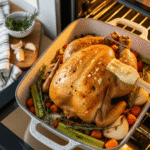
A succulent whole roasted chicken coated in rich garlic herb butter, producing golden-crispy skin and juicy, flavorful meat. This classic recipe is perfect for Sunday dinners, special occasions, or impressive weeknight meals that require minimal effort.
Ingredients
Scale
For the Chicken:
- 1 whole chicken (4-5 pounds)
- 6 tablespoons unsalted butter, softened to room temperature
- 6-8 cloves garlic, minced (about 2 tablespoons)
- 2 tablespoons fresh parsley, finely chopped
- 1 tablespoon fresh rosemary, finely chopped
- 1 tablespoon fresh thyme leaves
- 1 tablespoon olive oil
- 1 large lemon (halved)
- 2 teaspoons kosher salt
- 1 teaspoon black pepper
- ½ teaspoon paprika (optional, for color)
For the Roasting Pan:
- 1 large onion, quartered
- 2 large carrots, cut into chunks
- 2 celery stalks, cut into chunks
- 4-5 garlic cloves, smashed (optional)
- 1 cup chicken broth or water
Instructions
- Prep the chicken: Remove the chicken from the refrigerator 30 minutes before cooking to bring it to room temperature—this ensures even cooking. Remove the giblets and neck from the cavity (save these for stock if desired). Pat the entire chicken completely dry with paper towels, inside and out. This is crucial for crispy skin—moisture is the enemy of crispiness. Season the cavity generously with salt and pepper.
- Make the garlic butter: In a small bowl, combine the softened butter, minced garlic, chopped parsley, rosemary, thyme, olive oil, and a pinch of salt and pepper. Mix thoroughly until everything is evenly distributed and you have a fragrant, herb-flecked compound butter.
- Prepare for roasting: Preheat your oven to 425°F (220°C). If using vegetables, arrange the onion quarters, carrot chunks, and celery pieces in the bottom of your roasting pan. These create a natural roasting rack and add flavor to your pan drippings. Pour the chicken broth into the bottom of the pan—this prevents drippings from burning and creates steam for moisture.
- Butter the chicken: Using your hands (the best tool!), gently loosen the skin from the breast meat by carefully sliding your fingers between the skin and meat, starting at the cavity opening and working toward the neck. Be careful not to tear the skin. Spread about one-third of the garlic butter directly onto the breast meat under the skin. This ensures maximum flavor penetration. Rub another third of the butter all over the outside of the chicken, making sure to coat the legs, thighs, wings, and breast. Use the remaining butter to coat the inside of the cavity.
- Add aromatics: Stuff the cavity with the lemon halves (squeeze them slightly first to release some juice), and a few sprigs of fresh herbs if you have extra. This infuses the meat from the inside with subtle flavor.
- Truss the chicken (optional but recommended): Using kitchen twine, tie the legs together and tuck the wing tips under the body. This helps the chicken cook evenly and creates a more attractive presentation. If you don’t have twine, simply tuck the wings under.
- Season the outside: Sprinkle the entire outside of the chicken with the kosher salt, black pepper, and paprika (if using). Don’t be shy—the skin needs generous seasoning.
- Roast: Place the chicken breast-side up on the vegetables (or on your roasting rack). Roast in the preheated oven for 15 minutes at 425°F to get the skin started crisping. Then reduce the temperature to 375°F (190°C) and continue roasting for about 60-70 minutes, or until the internal temperature reaches 165°F in the thickest part of the thigh (not touching bone). Baste the chicken with the pan drippings every 20-25 minutes for extra flavor and moisture.
- Check for doneness: Insert your instant-read thermometer into the thickest part of the thigh without touching the bone. It should read 165°F. The juices should run clear when you cut between the leg and thigh. If the chicken is getting too brown but isn’t cooked through, tent it loosely with aluminum foil.
- Rest the chicken: This step is crucial! Remove the chicken from the oven and transfer it to a cutting board. Tent loosely with foil and let it rest for 10-15 minutes. This allows the juices to redistribute throughout the meat, ensuring every bite is moist and tender. Resting also makes carving easier.
- Make pan gravy (optional): While the chicken rests, strain the pan drippings and skim off excess fat. Pour the drippings into a small saucepan, bring to a simmer, and reduce slightly. You can thicken with a cornstarch slurry (1 tablespoon cornstarch mixed with 2 tablespoons water) if desired.
- Carve and serve: Carve the chicken, arrange on a platter, and drizzle with some of the pan drippings or gravy. Serve immediately while hot and glorious.
Notes
- Temperature is key: Don’t rely on timing alone—always use a meat thermometer. Ovens vary, and chicken sizes differ. The only reliable indicator of doneness is internal temperature.
- Crispy skin secrets: Dry skin + high initial heat = crispy skin. Make sure the chicken is completely dry before seasoning.
- Butter placement: Putting butter under the skin is what makes the breast meat incredibly juicy. Don’t skip this step!
- Resting is not optional: Cutting into the chicken immediately causes all those beautiful juices to run out onto the cutting board instead of staying in the meat.
- Pan size matters: Don’t use a pan that’s too large or the drippings will burn. The pan should fit the chicken with a little room around the edges.
- Dark meat safety: While breast meat is safe at 165°F, many prefer dark meat cooked to 175°F for better texture. The breast will stay safe and moist while the thighs reach this higher temperature.
- Prep Time: 15 minutes
- Cook Time: 75 minutes
- Category: Dinner
- Method: Roasting
- Cuisine: American
Nutrition
- Serving Size: 4-5 ounces chicken (about ¼ of the bird)
- Calories: 385
- Sugar: 0g
- Sodium: 520mg
- Fat: 24g
- Saturated Fat: 9g
- Unsaturated Fat: 13g
- Trans Fat: 0g
- Carbohydrates: 1g
- Fiber: 0g
- Protein: 38g
- Cholesterol: 145mg