Imagine breaking into tender, succulent lobster tail meat bathed in luxurious garlic butter—this is the kind of indulgence that makes any meal feel like a celebration. These Garlic Butter Lobster Tails are surprisingly simple to prepare at home, delivering restaurant-quality results that will absolutely impress your dinner guests. The sweet, delicate lobster meat pairs perfectly with rich, aromatic garlic butter, creating a flavor combination that’s both elegant and incredibly satisfying.
This recipe is perfect for special occasions like anniversaries, Valentine’s Day, birthday dinners, or holiday celebrations when you want to create something truly memorable. But here’s the secret—lobster tails are so easy to prepare that you don’t need to save them only for special occasions. A romantic date night at home, a fancy Friday dinner, or even a “just because” treat all deserve this kind of deliciousness. The preparation takes less than 30 minutes from start to finish, making gourmet dining at home completely achievable even on a weeknight.
History / Background
Lobster has long been considered a luxury food in American cuisine, but its history tells a fascinating story of transformation. In colonial New England, lobsters were so abundant that they were considered peasant food and even used as fertilizer. Servants and prisoners ate lobster so frequently that some contracts specifically limited how often it could be served. How times have changed!
The shift in lobster’s status began in the mid-19th century when railway dining cars started serving it to wealthy travelers as an exotic delicacy. This marketing repositioned lobster as a premium food, and by the early 20th century, it had become the symbol of fine dining it remains today. Maine lobster, in particular, became world-renowned for its sweet, tender meat and superior quality.
The tradition of serving lobster with drawn butter has roots in French cuisine, where “beurre fondu” (melted butter) was a classic accompaniment to delicate seafood. American coastal restaurants adopted and adapted this practice, eventually adding garlic to create the irresistible garlic butter we know today. This combination became a steakhouse staple in the 1950s and 60s, when surf and turf dinners represented the pinnacle of upscale American dining.
Today, frozen lobster tails have made this once-regional delicacy accessible nationwide. While fresh Maine lobster is still prized, high-quality frozen tails from cold-water sources deliver excellent results and allow home cooks everywhere to create restaurant-worthy dishes in their own kitchens.
Why You’ll Love This Recipe
This Garlic Butter Lobster Tails recipe takes the intimidation out of cooking seafood at home. You’ll discover that creating an elegant, gourmet meal is much easier than you thought, and the results taste like something from a high-end restaurant. The garlic butter enhances the natural sweetness of the lobster without overpowering it, creating perfect harmony on your plate.
Here’s why this recipe deserves a spot in your special-occasion repertoire:
- Restaurant-Quality at Home – Save money by creating a steakhouse-quality dish in your own kitchen at a fraction of the cost
- Surprisingly Simple – Despite its fancy reputation, lobster tails are incredibly easy to prepare with minimal ingredients
- Quick Cooking Time – Ready in under 30 minutes from prep to plate, perfect when you want impressive results fast
- Naturally Elegant – The presentation looks stunning with minimal effort, making you look like a culinary expert
- Special Occasion Perfect – Ideal for romantic dinners, holidays, anniversaries, and celebrations
- Keto and Low-Carb Friendly – Pure protein and healthy fats make this perfect for various dietary preferences
- Customizable Flavors – Easy to adjust seasonings and add your favorite herbs and spices
- Minimal Cleanup – One baking sheet or broiler pan means easy cleanup after your luxurious meal
- Impressive Yet Approachable – Wow your guests without spending all day in the kitchen
Ingredient Notes
Understanding your ingredients ensures perfect results every time you make this show-stopping dish.
Lobster Tails – Look for cold-water lobster tails (from Maine, Canada, or similar cold regions) as they have sweeter, more tender meat than warm-water varieties. Sizes typically range from 4-10 ounces per tail. Plan on one 6-8 ounce tail per person for a main course. If buying frozen (most common), thaw overnight in the refrigerator for best results.
Butter – Unsalted butter is essential here so you can control the salt level. The butter serves as both the cooking medium and the luxurious sauce. It should be high-quality since it’s a star ingredient. For a dairy-free version, ghee works beautifully and adds a slightly nutty flavor.
Garlic – Fresh garlic cloves provide the best, most vibrant flavor. Minced garlic should be finely chopped or pressed to distribute evenly throughout the butter. Don’t substitute with garlic powder here—fresh garlic is crucial for that authentic, aromatic garlic butter experience.
Lemon Juice – Fresh lemon juice adds brightness and cuts through the richness of the butter. It also enhances the natural sweetness of the lobster. Always use fresh-squeezed rather than bottled for the best flavor. You’ll also want lemon wedges for serving.
Fresh Parsley – While optional, fresh parsley adds color, freshness, and a subtle herbaceous note that complements the rich butter. Flat-leaf (Italian) parsley has better flavor than curly parsley.
Paprika – A light sprinkle adds beautiful color and subtle sweetness. Sweet paprika is standard, but smoked paprika adds an interesting depth. Use sparingly to avoid overpowering the delicate lobster.
Salt and White Pepper – White pepper is traditional in fine dining because it’s less visible than black pepper in light-colored sauces, but black pepper works perfectly well. Season lightly, as lobster is naturally flavorful.
Optional Additions – Fresh thyme, tarragon, or a pinch of cayenne pepper for heat can elevate the flavor profile even further.
Equipment Needed
Having the right tools makes preparing lobster tails foolproof and enjoyable.
- Kitchen Shears or Heavy-Duty Scissors – Essential for cutting through the lobster shell cleanly
- Baking Sheet or Broiler Pan – A rimmed baking sheet lined with foil for easy cleanup
- Small Saucepan – For melting butter and infusing it with garlic
- Basting Brush – Silicone or natural bristle brush for applying garlic butter
- Sharp Knife – For mincing garlic and any additional prep work
- Meat Thermometer (Optional but recommended) – To check for perfect doneness (140-145°F)
- Measuring Spoons – For accurate seasoning and butter measurements
- Mixing Spoon – For stirring the garlic butter
- Serving Platter – For presenting your beautiful lobster tails
- Tongs – For handling hot lobster tails safely
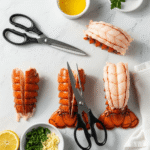
Garlic Butter Lobster Tails Recipe
- Total Time: 22-25 minutes
- Yield: 4 servings 1x
- Diet: Gluten Free
Description
Succulent lobster tails butterflied and broiled to perfection, then generously brushed with aromatic garlic butter. This restaurant-quality dish is surprisingly easy to make at home and perfect for special occasions or whenever you want to treat yourself to something extraordinary.
Ingredients
- 4 lobster tails (6-8 ounces each), thawed if frozen
- 6 tablespoons unsalted butter
- 4 cloves garlic, minced (about 1 tablespoon)
- 2 tablespoons fresh lemon juice
- 2 tablespoons fresh parsley, finely chopped
- 1/2 teaspoon paprika
- 1/4 teaspoon salt
- 1/4 teaspoon white or black pepper
- Lemon wedges for serving
- Additional melted garlic butter for serving (optional)
Instructions
- Prepare the Oven: Position your oven rack about 6 inches from the broiler element. Preheat the broiler to high. Line a baking sheet with aluminum foil for easy cleanup and lightly spray with cooking spray.
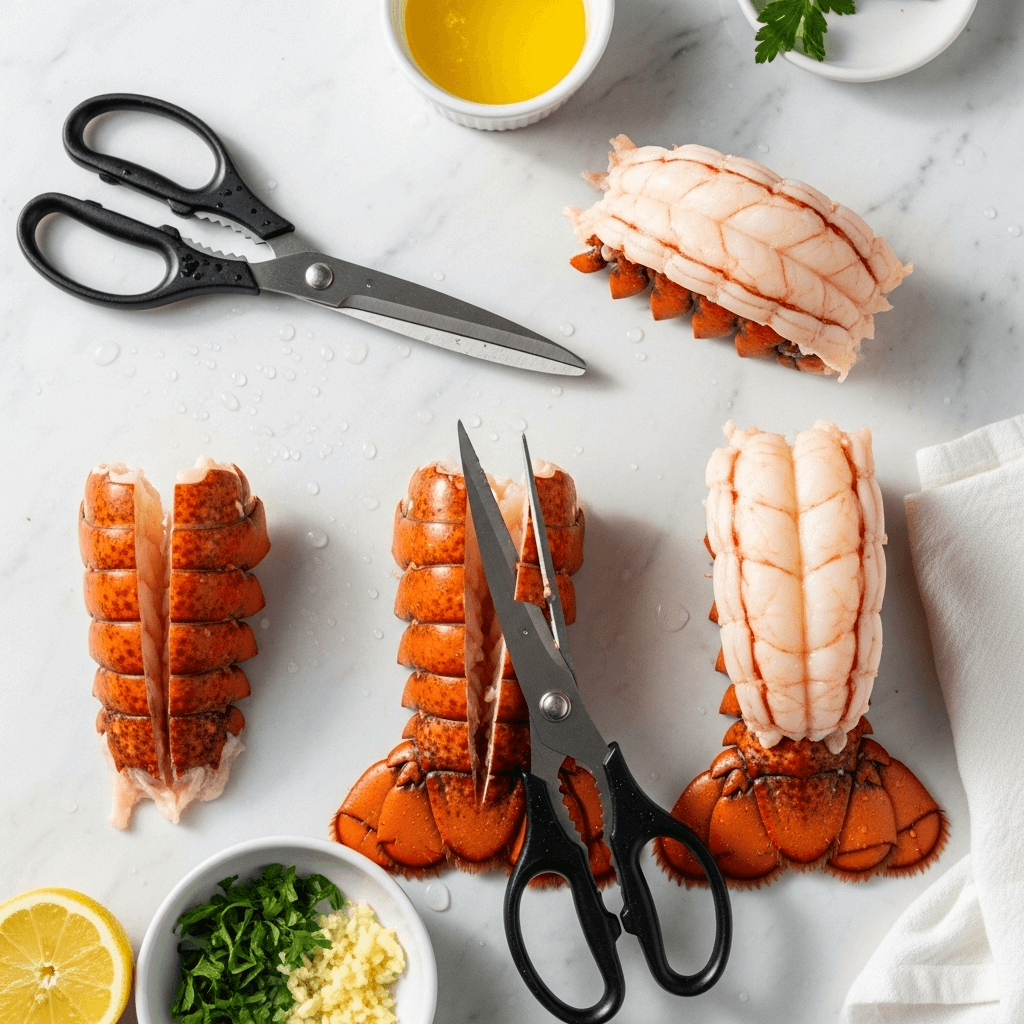
- Butterfly the Lobster Tails: Using kitchen shears, cut through the top shell of each lobster tail lengthwise down the center, stopping at the tail fin. Be careful not to cut through the bottom shell. Gently pull the shell apart slightly and use your fingers to carefully loosen the meat from the sides of the shell, keeping it attached at the base. Lift the meat up and out of the shell, then rest it on top of the shell (this is called “butterflying”). The meat should sit elevated on top of the shell halves, creating an attractive presentation.
- Arrange on Baking Sheet: Place the butterflied lobster tails on your prepared baking sheet, meat side up. Pat the lobster meat dry with paper towels—this helps achieve better caramelization.
- Make the Garlic Butter: In a small saucepan over medium-low heat, melt the butter completely. Add the minced garlic and cook gently for 1-2 minutes until fragrant but not browned (burnt garlic tastes bitter). Remove from heat and stir in the lemon juice, half of the chopped parsley, salt, and pepper. Mix well.
- First Butter Application: Generously brush about two-thirds of the garlic butter mixture over the exposed lobster meat, getting into all the crevices. Sprinkle lightly with paprika for color.
- Broil the Lobster: Place the baking sheet under the preheated broiler. Broil for 8-10 minutes for 6-ounce tails (add 2-3 minutes for larger tails). The lobster is done when the meat is opaque throughout and reaches an internal temperature of 140-145°F. The surface should have some golden-brown caramelization, and the meat should be firm but tender.
- Final Butter Baste: Remove from the oven and immediately brush the remaining garlic butter over the lobster tails. The residual heat will create a beautiful glossy finish.
- Garnish and Serve: Sprinkle with the remaining fresh parsley and serve immediately with lemon wedges and extra melted garlic butter on the side for dipping.
Notes
- Watch carefully during broiling as cooking times vary based on tail size and broiler intensity. Check at 8 minutes to prevent overcooking.
- Lobster meat turns from translucent to opaque white when cooked. Overcooked lobster becomes tough and rubbery, so err on the side of slightly underdone.
- If you don’t have a broiler or prefer a different method, you can bake at 425°F for 12-15 minutes or grill over medium-high heat for 5-6 minutes per side.
- For extra-rich flavor, add 1 tablespoon of white wine to the garlic butter.
- Cold-water lobster tails are sweeter and more tender than warm-water varieties—check labels when purchasing.
- Prep Time: 10 minutes
- Cook Time: 12-15 minutes
- Category: Dinner
- Method: Broiling
- Cuisine: American
Nutrition
- Serving Size: 1 lobster tail (6-8 oz) with garlic butter
- Calories: 340
- Sugar: 0g
- Sodium: 720mg
- Fat: 20g
- Saturated Fat: 12g
- Unsaturated Fat: 7g
- Trans Fat: 0g
- Carbohydrates: 2g
- Fiber: 0g
- Protein: 37g
- Cholesterol: 245mg
Nutrition information is approximate and may vary based on lobster tail size and exact ingredients used.
Tips & Variations
Herb Butter Variation: Add fresh thyme, tarragon, or basil to the garlic butter for different flavor profiles. Tarragon is particularly elegant with lobster.
Spicy Garlic Butter Lobster: Add 1/2 teaspoon of red pepper flakes or a dash of cayenne pepper to the butter for a spicy kick. A drizzle of sriracha also works beautifully.
Lemon Herb Lobster: Increase lemon juice to 3 tablespoons and add lemon zest for bright, citrusy flavor. Add fresh dill for a summery twist.
Wine-Infused Version: Add 2 tablespoons of dry white wine or champagne to the garlic butter for sophisticated depth.
Asian-Inspired Twist: Replace half the butter with sesame oil, add minced ginger along with the garlic, and finish with a drizzle of soy sauce and sesame seeds.
Cheese Lover’s Lobster: After broiling, sprinkle with freshly grated Parmesan cheese and return to the broiler for 30 seconds until the cheese melts.
Healthier Option: Reduce butter to 4 tablespoons and add 2 tablespoons of olive oil. The flavor will be slightly lighter but still delicious.
Pro Chef Tips
Thaw Properly: Never thaw lobster tails at room temperature or in hot water. Slow thawing in the refrigerator overnight maintains the best texture. For quicker thawing, seal in a plastic bag and submerge in cold water for 30-60 minutes.
Remove the Digestive Tract: After butterflying, look for a dark vein running along the back of the tail meat. Gently pull it out or rinse it away—this is the digestive tract and removing it ensures the cleanest flavor.
Prevent Curling: Lobster tails naturally curl when cooking due to muscle contraction. To prevent this, you can insert a metal skewer lengthwise through the tail before cooking, or press down firmly on the tail to crack the joints underneath before butterflying.
Perfect Timing: The general rule is to cook lobster for about 1 minute per ounce when broiling. A 6-ounce tail needs approximately 6-8 minutes, while an 8-ounce tail needs 8-10 minutes.
Butter Temperature Matters: Let the garlic cook gently in the butter—high heat burns garlic quickly, creating bitter flavors. The butter should bubble gently, not sizzle aggressively.
Rest Before Serving: Let the lobster rest for 2-3 minutes after cooking. This allows the juices to redistribute, ensuring every bite is moist and flavorful.
Quality Matters: Invest in high-quality cold-water lobster tails. The difference in flavor and texture is significant. Maine, Canadian, or Australian cold-water tails are your best options.
Create Compound Butter: Make your garlic butter ahead and let the flavors meld in the refrigerator for even better taste. Bring to room temperature before using.
Common Mistakes to Avoid
Overcooking the Lobster: This is the number one mistake when cooking lobster. Overcooked lobster becomes tough, rubbery, and dry. Watch timing carefully and use a thermometer—lobster is perfectly done at 140-145°F. The meat should be opaque white with slight translucency in the very center.
Buying the Wrong Type: Warm-water lobster tails (often labeled as “Brazilian” or “Caribbean”) are significantly less flavorful and more mushy than cold-water varieties. Always choose cold-water tails from Maine, Canada, Australia, or New Zealand for the best results.
Not Drying the Meat: Moisture on the surface of the lobster prevents proper caramelization and creates steam instead of the desirable slight char. Always pat the meat thoroughly dry with paper towels before applying butter and broiling.
Forgetting to Watch During Broiling: Broilers vary significantly in temperature and intensity. What takes 10 minutes in one oven might take only 6 minutes in another. Check your lobster at the 6-minute mark the first time you make this to gauge your specific oven.
Using Too Much Heat: While you want the surface to caramelize, extremely high heat can burn the butter and garlic before the lobster cooks through. If you notice excessive browning, move the rack farther from the heat source.
Skipping the Butterflying Step: While you can cook lobster tails without butterflying, this technique ensures even cooking, better butter absorption, and stunning presentation. Take the extra few minutes—it’s worth it.
Storage & Meal Prep
Refrigerator Storage: Store leftover cooked lobster meat (removed from shells) in an airtight container covered with the remaining garlic butter for up to 2 days. The quality diminishes quickly, so lobster is best enjoyed fresh.
Reheating Instructions: Reheat gently to avoid toughening the meat. The best method is to place lobster meat in a covered dish with a tablespoon of butter or white wine, then warm in a 300°F oven for 5-7 minutes. You can also reheat gently in the microwave in 20-second intervals, being extremely careful not to overheat.
Not Ideal for Traditional Meal Prep: Unlike many proteins, lobster doesn’t benefit from advance cooking. The texture and flavor are best when served immediately after cooking. However, you can prep all ingredients in advance and cook just before serving.
Using Leftovers Creatively: Leftover lobster meat is fantastic in lobster rolls, lobster mac and cheese, seafood pasta, lobster bisque, or lobster salad. These applications can actually be better suited to leftover lobster than reheating and serving the tails whole.
Food Safety: Never leave cooked lobster at room temperature for more than 2 hours. Refrigerate promptly to prevent bacterial growth.
Make-Ahead & Freezer Notes
Advance Preparation: You can butterfly the lobster tails up to 4 hours in advance. Keep them covered and refrigerated until ready to cook. The garlic butter can be prepared up to 3 days ahead and stored in the refrigerator—just rewarm gently before using.
Buying Frozen Tails: Most lobster tails are sold frozen and thawed in the store. Buying them frozen yourself ensures maximum freshness. Check that they’re solidly frozen with no ice crystals or freezer burn, which indicates repeated thawing and refreezing.
Can You Refreeze?: Never refreeze raw lobster tails that have already been thawed—this significantly degrades quality. However, you can freeze cooked lobster meat for up to 2 months, though texture will suffer somewhat.
Best Practices for Freezing Cooked Lobster: Remove meat from shells, place in airtight containers covered with melted butter (which acts as a protective barrier), and freeze. Thaw overnight in the refrigerator before gently reheating.
Quick-Thaw Method: If you forgot to thaw overnight, place sealed lobster tails in a bowl of cold water, changing the water every 30 minutes. Tails should thaw in 30-60 minutes depending on size. Never use warm or hot water.
Marinating Option: While not traditional, you can brush the butterflied tails with melted garlic butter and let them sit covered in the refrigerator for 1-2 hours before cooking. This infuses extra flavor into the meat.
Serving Suggestions
These luxurious Garlic Butter Lobster Tails deserve equally impressive accompaniments that complement without competing.
Classic Steakhouse Sides: Pair with a perfectly cooked filet mignon for the ultimate surf and turf, along with loaded baked potatoes, creamed spinach, and sautéed mushrooms. Add a Caesar salad to complete the steakhouse experience at home.
Elegant Vegetable Sides: Serve with roasted asparagus, grilled broccolini, garlic herb roasted Brussels sprouts, or butter-braised green beans. These lighter sides balance the richness of the lobster without overwhelming the palate.
Starch Companions: Garlic mashed potatoes, wild rice pilaf, risotto, or buttery angel hair pasta all work beautifully. For a lighter option, try cauliflower mash or zucchini noodles.
Bread for Soaking: Fresh crusty bread, garlic bread, or warm dinner rolls are essential for soaking up every drop of that precious garlic butter. Don’t let any go to waste!
Seafood Feast: Create an impressive seafood spread with these lobster tails alongside grilled shrimp, scallops, clams, corn on the cob, and red potatoes for a New England-style feast.
Light and Fresh: For a summer meal, serve with caprese salad, grilled vegetables, quinoa salad, and grilled lemon wedges for a lighter but still luxurious dinner.
Wine Pairings: Chardonnay is the classic choice—its buttery notes complement the garlic butter perfectly. Other excellent options include Sauvignon Blanc, Pinot Grigio, champagne, or a light Pinot Noir for red wine lovers. For non-alcoholic options, sparkling water with lemon or a crisp white grape juice work nicely.
Complete Meal Suggestion: Start with a light soup or salad, serve the lobster tails with two sides (one vegetable, one starch), and finish with a decadent chocolate dessert or crème brûlée.
FAQs Section
How do I know when lobster tails are fully cooked?
The meat should be opaque white (no longer translucent) and firm to the touch, with an internal temperature of 140-145°F. The shell will turn bright red, and the meat will have pulled slightly away from the shell. If you notice any remaining gray or translucent areas, cook for 1-2 minutes longer.
Can I use warm-water lobster tails instead of cold-water?
While you can use warm-water tails (usually less expensive), the flavor and texture won’t be as good. Cold-water lobster from Maine, Canada, or Australia has sweeter, firmer, more flavorful meat. Warm-water tails tend to be mushier and less sweet, but they’ll still work in a pinch.
What if I don’t have a broiler?
You have several alternatives! Bake at 425°F for 12-15 minutes, grill over medium-high heat (shell-side down first) for 5-6 minutes per side, or even use an air fryer at 380°F for 7-9 minutes. All methods work—broiling just provides the best caramelization.
Why did my lobster turn out tough and rubbery?
This is almost always from overcooking. Lobster cooks quickly and becomes tough when exposed to heat for too long. Use a meat thermometer and pull the lobster when it reaches 140-145°F. Remember that carryover cooking will continue for a few minutes after removing from heat.
Do I really need to butterfly the lobster tails?
While not absolutely necessary, butterflying creates better presentation, allows for more even cooking, and gives the butter better access to the meat. You can cook tails without butterflying by simply cutting the top shell and pulling the meat slightly up, but butterflying is worth the extra minute of effort.
Can I make this recipe with whole lobsters instead of tails?
Yes, but the cooking method changes significantly. Whole lobsters are typically boiled or steamed rather than broiled. If you want to broil, you’ll need to split the lobster in half lengthwise and adjust cooking time based on size—typically 10-15 minutes for a 1.5-2 pound lobster.
How do I prevent the lobster from curling during cooking?
Insert a metal skewer lengthwise through the center of each tail before cooking, or press down firmly on the raw tail to crack the joints underneath. Both methods help the tail stay flat and cook more evenly.
Conclusion
These Garlic Butter Lobster Tails prove that fine dining at home is not only possible but surprisingly simple. With minimal ingredients and straightforward techniques, you can create an impressive, luxurious meal that rivals anything you’d find at an upscale restaurant. The combination of sweet, tender lobster meat and rich, aromatic garlic butter is simply unbeatable—a classic for good reason.
Whether you’re celebrating a special occasion, planning a romantic dinner, or simply treating yourself to something extraordinary, this recipe delivers wow-factor results without the stress. Once you see how easy it is to prepare restaurant-quality lobster at home, you’ll find yourself making it far more often than just once a year.