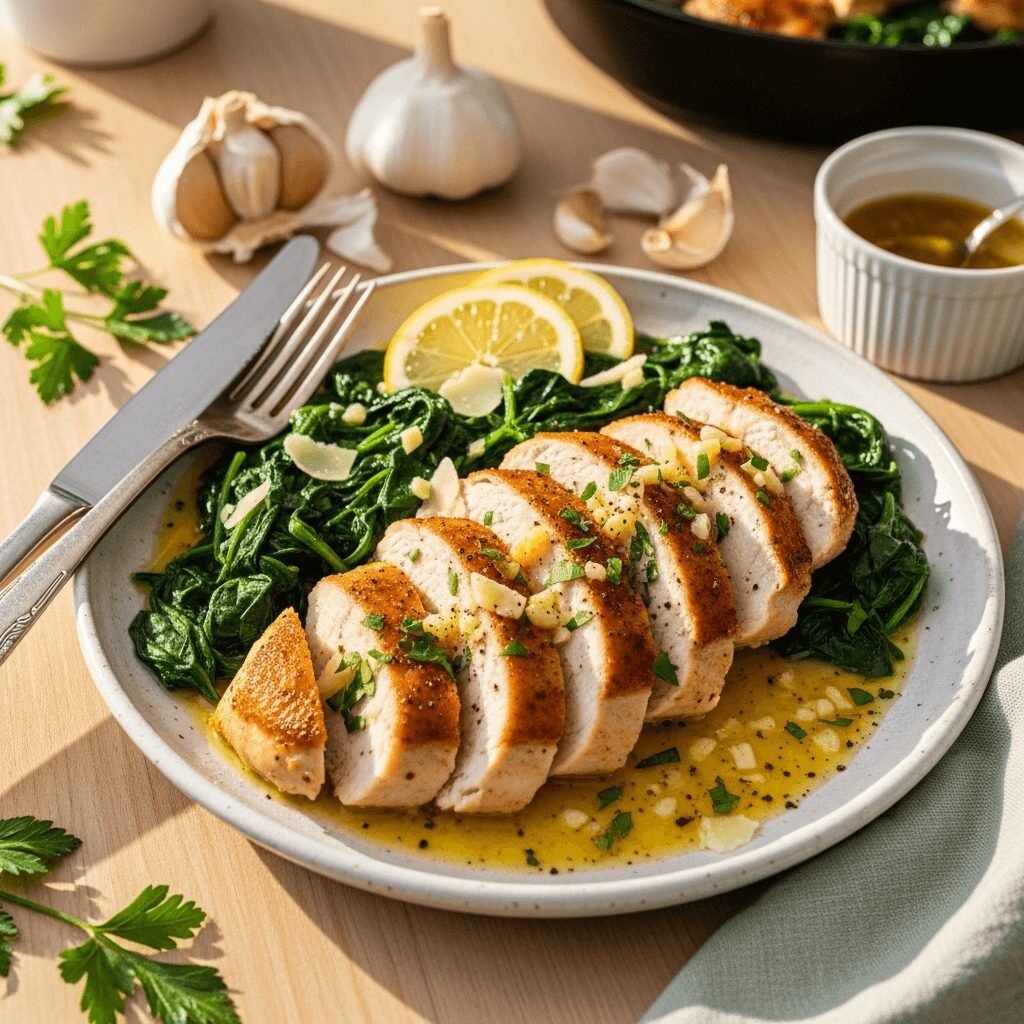

If you’re looking for a dinner recipe that’s equal parts delicious, elegant, and effortless, this Garlic Butter Chicken and Spinach is about to become your new weeknight hero! Imagine tender, juicy chicken breasts swimming in a rich, velvety garlic butter sauce, studded with vibrant fresh spinach that wilts perfectly into the silky sauce. It’s restaurant-quality comfort food that comes together in just one pan in under 30 minutes.
This recipe is perfect for busy weeknights when you need dinner on the table fast but still want something special, romantic date nights at home when you want to impress without stress, meal prep sessions for healthy lunches throughout the week, or any time you’re craving something satisfying yet light. The combination of buttery garlic sauce and nutrient-packed spinach creates a dish that feels indulgent while actually being quite healthy—packed with protein, vitamins, and minerals without any heavy cream or excess calories.
What makes this recipe truly irresistible is how the garlic butter sauce brings everything together. The butter adds richness and silkiness, the garlic provides aromatic depth, and the spinach contributes earthy freshness that cuts through the richness perfectly. Every bite delivers that satisfying combination of savory, buttery goodness with just enough brightness from a squeeze of lemon at the end. Plus, it’s naturally low-carb, gluten-free, and keto-friendly, making it suitable for just about any eating plan. Whether you serve it over pasta, rice, cauliflower rice, or with crusty bread for soaking up that incredible sauce, this garlic butter chicken and spinach will have everyone asking for seconds!
History / Background
Garlic butter chicken represents a beautiful marriage of French cooking techniques and modern American home cooking sensibilities. While there’s no single origin story for this specific dish, it draws inspiration from several classic culinary traditions that have shaped how we cook today.
The use of garlic and butter as a flavor foundation has deep roots in French cuisine, particularly in dishes like “poulet à l’ail” (garlic chicken) and the classic technique of finishing sauces with butter to create that silky, luxurious texture known as “monter au beurre” (mounting with butter). French cooks have long understood that butter isn’t just fat—it’s a flavor carrier and texture enhancer that transforms simple ingredients into something extraordinary.
The addition of spinach to chicken dishes became popular in Italian-American cooking, where “pollo alla fiorentina” (Florentine-style chicken) features chicken with spinach, often in a cream sauce. Florence, Italy has such a strong association with spinach dishes that anything labeled “Florentine” in culinary terms typically includes spinach. This tradition dates back to Catherine de Medici of Florence, who became Queen of France in the 16th century and allegedly brought her love of spinach with her, influencing both French and Italian cuisine.
In America, garlic butter chicken gained tremendous popularity in the 1980s and 1990s as home cooks began embracing bolder flavors and quick-cooking techniques. The rise of skillet dinners and one-pan meals aligned perfectly with busy American lifestyles, and garlic butter chicken became a staple because it delivered impressive flavor with minimal effort and cleanup.
The modern version we know today—tender chicken breasts in garlic butter sauce with fresh spinach—represents the evolution of home cooking toward lighter, healthier preparations that don’t sacrifice flavor. Unlike the heavy cream-based sauces of traditional Continental cooking, this version relies on butter and chicken broth (or sometimes a touch of cream) for richness, while fresh spinach adds nutrition, color, and a slightly earthy balance to the rich sauce.
Today, garlic butter chicken with spinach is a Pinterest sensation and a go-to recipe for home cooks who want restaurant-quality results without complicated techniques or hard-to-find ingredients. It’s proof that simple, quality ingredients treated with care can create extraordinary meals that satisfy both our taste buds and our busy schedules!
Why You’ll Love This Recipe
This Garlic Butter Chicken and Spinach isn’t just another chicken recipe—it’s a game-changing dinner solution that delivers on every level. It’s the kind of meal that makes you feel like you’re dining at a nice Italian restaurant, but you’re actually in your kitchen wearing sweatpants!
Here’s why this recipe will become part of your regular rotation:
- Ready in 25 Minutes – From raw ingredients to plated dinner in less time than delivery takes
- One-Pan Wonder – Everything cooks in a single skillet, meaning minimal cleanup and maximum convenience
- Restaurant-Quality Flavor – Tastes like something you’d pay $25 for at a nice restaurant
- Naturally Healthy – High in protein, packed with vitamins from spinach, and low in carbs
- Diet-Friendly – Naturally gluten-free, keto-friendly, and easily adaptable for various dietary needs
- Budget-Friendly – Uses simple, affordable ingredients you probably already have
- Elegant Yet Easy – Looks and tastes impressive enough for company but simple enough for Tuesday night
- Family-Approved – Even picky eaters love the garlicky, buttery flavor
- Meal Prep Champion – Makes excellent leftovers and reheats beautifully
- Versatile Serving Options – Pairs with everything from pasta to zoodles to rice to crusty bread
- Foolproof Method – Hard to mess up, even for beginner cooks
- Nutrient-Dense – Spinach adds iron, vitamins A, C, and K without adding heaviness
- No Exotic Ingredients – Everything is available at any regular grocery store
Ingredient Notes
Let’s break down each ingredient and understand what makes this dish so special:
Boneless, Skinless Chicken Breasts – The protein star of the dish! Chicken breasts are lean, cook quickly, and absorb the garlic butter sauce beautifully. For best results, choose medium-sized breasts (6-8 oz each) or pound larger ones to even thickness for uniform cooking. You can substitute chicken thighs if you prefer dark meat—they’re more forgiving and stay juicier, though they take a few minutes longer to cook.
Fresh Garlic – Absolutely essential! Fresh minced garlic provides that pungent, aromatic foundation that makes this dish irresistible. Use 5-6 cloves for robust garlic flavor (adjust to your preference). Avoid pre-minced garlic in jars for this recipe—fresh makes a noticeable difference. The garlic mellows as it cooks in butter, becoming sweet and aromatic rather than harsh.
Butter – Creates that rich, silky sauce and adds luxurious flavor. Use unsalted butter so you can control the seasoning. Real butter is preferred over margarine for authentic flavor and texture. The butter emulsifies with the chicken broth to create a glossy, restaurant-style sauce. For dairy-free, use ghee or high-quality plant-based butter.
Fresh Spinach – Baby spinach is ideal because it’s tender and doesn’t need stemming. Fresh spinach wilts down dramatically (about 5 cups fresh becomes 1 cup cooked), adding nutrients, color, and a slight earthy flavor that balances the richness. Avoid frozen spinach for this recipe—it’s too watery and doesn’t integrate as nicely into the sauce.
Chicken Broth – Adds savory depth and creates the base of the sauce. Low-sodium broth is preferred so you can control salt levels. For extra richness, use chicken stock instead of broth (stock has more gelatin and body). Vegetable broth works too if that’s what you have on hand.
White Wine (Optional) – Adds acidity and complexity to the sauce. Use a dry white wine like Sauvignon Blanc, Pinot Grigio, or Chardonnay—whatever you’d actually drink. The alcohol cooks off, leaving behind bright, fruity notes. If you don’t cook with wine, substitute with extra chicken broth plus a squeeze of lemon juice.
Heavy Cream (Optional) – Just a splash (¼ cup) adds extra richness and creates a more luxurious sauce. This is completely optional—the recipe is delicious without it and stays lighter. For dairy-free, use coconut cream or cashew cream.
Lemon – Fresh lemon juice adds brightness and acidity that cuts through the richness and makes all the flavors pop. Don’t skip this—it transforms the dish from good to great! Lemon zest adds even more citrus punch if you want it.
Italian Seasoning – A blend of dried herbs (typically oregano, basil, thyme, and rosemary) that adds aromatic complexity. You can make your own blend or use store-bought. Fresh herbs can be substituted—use about triple the amount.
Red Pepper Flakes (Optional) – Adds a subtle warmth without making the dish spicy. Completely optional but recommended for depth.
Olive Oil – Used for searing the chicken to create a golden crust. Extra virgin olive oil adds the best flavor.
Salt & Black Pepper – Essential for seasoning the chicken and sauce. Don’t skimp on properly seasoning!
Equipment Needed
You’ll need just a few basic kitchen tools:
- Large Skillet or Sauté Pan (12-inch) – Must have high sides and preferably a lid. Cast iron, stainless steel, or non-stick all work well. The pan should be large enough to fit all the chicken in a single layer without crowding.
- Sharp Chef’s Knife – For mincing garlic and trimming chicken if needed.
- Cutting Board – For all your prep work.
- Meat Mallet or Rolling Pin (optional) – For pounding chicken to even thickness if breasts are thick.
- Tongs or Spatula – For flipping chicken safely.
- Wooden Spoon or Silicone Spatula – For stirring the sauce and scraping up flavorful browned bits.
- Measuring Cups & Spoons – For accurate ingredient measurements.
- Meat Thermometer (optional but helpful) – Ensures chicken reaches safe internal temperature of 165°F.
- Garlic Press (optional) – Makes mincing garlic super quick and easy.
- Zester or Microplane (optional) – If adding lemon zest for extra brightness.

Garlic Butter Chicken and Spinach Recipe
- Total Time: 25 minutes
- Yield: 4 servings 1x
- Diet: Gluten Free
Description
Tender, juicy chicken breasts pan-seared to golden perfection and smothered in a rich garlic butter sauce with fresh wilted spinach. This elegant one-pan dinner comes together in just 25 minutes and tastes like restaurant-quality comfort food!
Ingredients
For the Chicken:
- 4 boneless, skinless chicken breasts (about 1½ lbs total, 6-8 oz each)
- 2 tablespoons olive oil
- 1 teaspoon Italian seasoning
- ¾ teaspoon salt
- ½ teaspoon black pepper
- ½ teaspoon garlic powder
- ¼ teaspoon paprika (optional, for color)
For the Garlic Butter Sauce:
- 4 tablespoons unsalted butter, divided
- 6 cloves garlic, minced (about 2 tablespoons)
- ½ cup dry white wine (or substitute with ½ cup chicken broth + 1 tablespoon lemon juice)
- 1 cup low-sodium chicken broth
- 5 cups fresh baby spinach (about 5 oz)
- ¼ cup heavy cream (optional, for extra richness)
- 1 teaspoon Italian seasoning
- ¼ teaspoon red pepper flakes (optional)
- 2 tablespoons fresh lemon juice
- Salt and black pepper to taste
For Garnish:
- 2 tablespoons fresh parsley, chopped
- Lemon wedges
- Grated Parmesan cheese (optional)
Instructions
Step 1: Prepare the Chicken
If your chicken breasts are thick or uneven, place them between two pieces of plastic wrap and gently pound to an even ¾-inch thickness using a meat mallet or rolling pin. This ensures even cooking. Pat the chicken completely dry with paper towels. Season both sides generously with Italian seasoning, salt, black pepper, garlic powder, and paprika if using. Press the seasonings into the meat.
Step 2: Sear the Chicken
Heat olive oil in a large skillet over medium-high heat until shimmering. Add the chicken breasts in a single layer (don’t overcrowd). Sear without moving for 5-6 minutes until a golden-brown crust forms on the bottom. Flip and cook the other side for 5-6 minutes until golden brown and the internal temperature reaches 165°F. Transfer chicken to a plate and tent loosely with foil to keep warm.
Step 3: Make the Garlic Butter Base
Reduce heat to medium. Add 2 tablespoons of butter to the same skillet (don’t wipe it clean—those browned bits are flavor!). Once the butter melts, add the minced garlic and sauté for 30-45 seconds until fragrant but not browned. Be careful not to burn the garlic.
Step 4: Deglaze with Wine
Pour in the white wine (or broth-lemon substitute) and scrape up all the browned bits from the bottom of the pan using a wooden spoon. This is called deglazing and adds tremendous flavor. Let the wine simmer for 2-3 minutes until reduced by about half.
Step 5: Build the Sauce
Add the chicken broth and Italian seasoning. Bring to a simmer and cook for 2-3 minutes to let the flavors meld and the sauce reduce slightly. If using heavy cream, stir it in now. Add red pepper flakes if using.
Step 6: Wilt the Spinach
Add the fresh spinach in batches, stirring as it wilts down. It will seem like a huge amount at first, but spinach reduces dramatically as it cooks. Once all the spinach is wilted (about 2-3 minutes), stir in the remaining 2 tablespoons of butter until melted and the sauce becomes glossy and smooth.
Step 7: Finish the Dish
Squeeze in the fresh lemon juice and stir. Taste and adjust seasoning with salt and pepper as needed. Return the chicken breasts (and any accumulated juices) to the skillet, nestling them into the sauce and spinach. Spoon sauce over the top of the chicken. Let everything warm together for 1-2 minutes.
Step 8: Serve
Remove from heat. Garnish with fresh chopped parsley and serve immediately with lemon wedges on the side. Sprinkle with Parmesan cheese if desired. Serve with your choice of sides—pasta, rice, mashed potatoes, or crusty bread all work beautifully!
Notes
- Even cooking: Pounding chicken to even thickness prevents dry, overcooked edges while the center finishes cooking.
- Don’t skip the sear: The golden crust adds flavor and creates those delicious browned bits (fond) that flavor the sauce.
- Garlic timing matters: Add garlic after reducing heat to prevent burning, which makes it bitter.
- Wine substitute: If you don’t use wine, the broth-lemon combo works perfectly—no alcohol needed!
- Cream is optional: The dish is delicious without cream and stays lighter. Add it for restaurant-style richness.
- Spinach shrinkage: 5 cups fresh spinach seems like a lot but wilts down to about 1 cup cooked.
- Chicken thighs: Can substitute bone-in, skinless thighs—increase cooking time to 8-10 minutes per side.
- Make it dairy-free: Use ghee or olive oil instead of butter, and omit cream (or use coconut cream).
- Prep Time: 5 minutes
- Cook Time: 20 minutes
- Category: Dinner, Main Course
- Method: Stovetop, Pan-Seared
- Cuisine: American, Italian-Inspired
Nutrition
- Serving Size: 1 chicken breast with sauce and spinach
- Calories: 340
- Sugar: 1g
- Sodium: 580mg
- Fat: 19g
- Saturated Fat: 8g
- Unsaturated Fat: 9g
- Trans Fat: 0g
- Carbohydrates: 5g
- Fiber: 1g
- Protein: 38g
- Cholesterol: 135mg
Nutritional values are approximate and calculated without heavy cream. Adding cream adds approximately 50 calories and 5g fat per serving.
Tips & Variations
Flavor Variations:
- Creamy Tuscan Style: Add ½ cup sun-dried tomatoes and use heavy cream for a richer sauce
- Lemon Herb: Double the lemon juice and add fresh thyme, rosemary, and basil
- Mushroom Garlic: Add 8 oz sliced mushrooms with the garlic for earthy richness
- Spicy Version: Increase red pepper flakes to ½ teaspoon and add a pinch of cayenne
- Parmesan Crust: After searing, sprinkle chicken with Parmesan and broil for 2 minutes
Protein Swaps:
- Chicken Thighs: Use boneless, skinless thighs for more forgiving, juicier meat
- Pork Chops: Substitute boneless pork chops—cook time remains similar
- Salmon: Use salmon fillets and reduce cooking time to 4-5 minutes per side
- Shrimp: Substitute large shrimp—cook for only 2-3 minutes total
Vegetable Additions:
- Add cherry tomatoes with the spinach for bursts of sweetness and acidity
- Stir in artichoke hearts for Mediterranean flair
- Include sun-dried tomatoes for intense, tangy flavor
- Add asparagus tips during the last 3 minutes of cooking
- Mix in roasted red peppers for sweet, smoky notes
Carb-Friendly Additions:
- Serve over pasta (linguine, fettuccine, or penne work great)
- Spoon over creamy mashed potatoes or cauliflower mash
- Serve with rice, quinoa, or orzo
- Make it a grain bowl with farro or barley
Dietary Modifications:
- Keto/Low-Carb: Serve over zucchini noodles or cauliflower rice
- Dairy-Free: Use olive oil instead of butter and omit cream
- Paleo: Use ghee instead of butter and omit cream
- Whole30: Use ghee, omit wine and cream, ensure broth is compliant
Pro Chef Tips
1. The Dry Chicken Secret: Pat chicken completely dry before seasoning and cooking. Surface moisture creates steam instead of a sear, resulting in pale, rubbery chicken instead of golden, flavorful crust. This simple step makes a massive difference.
2. Even Thickness = Even Cooking: Chicken breasts are notoriously uneven—thick at one end, thin at the other. Pound them to uniform ¾-inch thickness and you’ll avoid the dreaded dry edges while waiting for the thick part to cook through. Your chicken will be juicy from edge to edge.
3. Don’t Move the Chicken: Once you place chicken in the hot pan, resist the urge to move, flip, or peek underneath for at least 5 minutes. A proper sear needs uninterrupted contact with the hot surface. When it’s ready, the chicken will release naturally from the pan.
4. Use the Fond: Those browned bits stuck to the pan after searing chicken (called fond) are pure concentrated flavor. Don’t wipe them out! The wine or broth will dissolve them into the sauce during deglazing, creating deep, complex flavor you can’t get any other way.
5. Control Your Garlic: Garlic burns easily and becomes bitter when scorched. Always reduce heat to medium before adding garlic, and cook it for only 30-45 seconds—just until fragrant. If you’re worried about burning, add garlic with the wine instead of before it.
6. Butter at the End: Adding the final butter off heat or at the very end (a French technique called “monter au beurre”) creates a glossy, emulsified sauce with restaurant-quality sheen and silky texture. This is what separates good sauces from great ones.
7. Rest the Meat: After cooking, let chicken rest for 3-5 minutes before slicing. This allows juices to redistribute throughout the meat instead of running out onto your cutting board, keeping the chicken moist and juicy.
8. Taste and Adjust: Always taste your sauce before serving and adjust seasoning. The lemon juice can dull the salt, so you may need a pinch more. A tiny bit of salt can transform a good sauce into a great one.
Common Mistakes to Avoid
1. Overcooking the Chicken: This is the number one mistake! Chicken breasts dry out quickly when overcooked. Use a meat thermometer and remove chicken from heat at exactly 165°F internal temperature. The residual heat will finish the cooking. Overcooked chicken becomes tough, dry, and stringy no matter how good your sauce is.
2. Crowding the Pan: If your chicken breasts are touching or overlapping, they’ll steam instead of sear. This prevents that beautiful golden-brown crust from forming. Use a pan large enough to fit all pieces with space between them, or cook in batches. A proper sear is essential for both appearance and flavor.
3. Using High Heat Throughout: While you need medium-high heat for searing the chicken, you must reduce to medium before adding garlic and making the sauce. High heat will burn the garlic (making it bitter) and can cause the sauce to break or the butter to separate.
4. Burning the Garlic: Garlic goes from perfectly golden to burnt and bitter in seconds. Always add garlic to medium (not high) heat, and cook it for only 30-45 seconds—just until fragrant. If you see it browning quickly, immediately add your liquid to stop the cooking.
5. Adding Cold Chicken to the Sauce: Returning refrigerator-cold chicken to the hot sauce will cool everything down and make the sauce separate. Always let your rested chicken come closer to room temperature, or if it cooled too much, warm it gently in the sauce for just 1-2 minutes before serving.
6. Using Pre-Washed But Wet Spinach: Even “triple-washed” spinach can be quite wet. The excess water dilutes your carefully crafted sauce. If your spinach is damp, give it a spin in a salad spinner or pat it gently with paper towels before adding to the pan.
7. Skipping the Lemon: The lemon juice at the end isn’t just garnish—it’s essential! It provides the brightness and acidity that cuts through the rich butter and balances the entire dish. Without it, the sauce can taste flat and one-dimensional.
Storage & Meal Prep
Refrigerator Storage:
Store leftover garlic butter chicken and spinach in an airtight container in the refrigerator for up to 3-4 days. Keep the chicken and sauce together so the meat stays moist and absorbs more flavor. The garlic butter sauce may solidify when cold (butter does this), but it will melt beautifully when reheated.
Reheating Instructions:
The best reheating method is on the stovetop: place chicken and sauce in a skillet over medium-low heat, add a splash of chicken broth or water (2-3 tablespoons) to thin the sauce, cover, and heat gently for 5-7 minutes until warmed through. This prevents the chicken from drying out. You can also microwave individual portions at 50% power for 2-3 minutes, but the texture won’t be quite as good.
Meal Prep Tips:
This recipe is fantastic for weekly meal prep! Cook a batch on Sunday and divide into individual containers with your choice of sides (rice, pasta, or vegetables). The flavors actually improve over the first day or two as everything marinates together. When packing for lunches, store any crispy sides (like bread) separately to prevent sogginess.
Slicing for Meal Prep:
If meal prepping, slice the chicken before storing—it reheats more evenly and makes portion control easier. Keep sliced chicken in the sauce to maintain moisture.
Preventing Dry Leftovers:
To keep leftover chicken moist, make sure it’s completely submerged in the sauce before storing. If your sauce reduced too much during cooking, add a splash of chicken broth before refrigerating to ensure everything stays coated and juicy.
Make-Ahead & Freezer Notes
Make-Ahead Preparation:
You can prep components 1 day in advance: season the chicken and store covered in the refrigerator, mince the garlic and store in an airtight container, wash and dry the spinach. When ready to cook, let the chicken sit at room temperature for 15-20 minutes, then proceed with the recipe. The actual cooking is so quick (25 minutes) that full advance cooking isn’t usually necessary.
Partial Make-Ahead Method:
For maximum freshness, you can cook the chicken completely and make the sauce base (through Step 5), then refrigerate separately for up to 2 days. When ready to serve, gently reheat the sauce, add fresh spinach, and warm the chicken in the sauce for 3-4 minutes. The chicken stays juicier and the spinach is brighter using this method.
Freezing Cooked Chicken:
The cooked chicken freezes reasonably well, though the sauce may separate slightly upon thawing. Store chicken and sauce in freezer-safe containers for up to 3 months. The spinach will lose some texture when frozen, so it’s best to freeze the chicken and sauce without spinach, then add fresh spinach when reheating.
Freezing Raw Seasoned Chicken:
For the freshest results, season raw chicken breasts and freeze in a single layer in freezer bags for up to 3 months. Thaw overnight in the refrigerator, then cook fresh according to the recipe. Make the sauce fresh for best flavor and texture.
Best Reheating from Frozen:
Thaw frozen chicken and sauce overnight in the refrigerator. Reheat gently in a skillet over medium-low heat with 2-3 tablespoons of added chicken broth or cream to restore the sauce consistency. Stir frequently and heat just until warmed through—don’t boil or the sauce may break and the chicken will toughen.
Serving Suggestions
This versatile garlic butter chicken pairs beautifully with so many different sides! Here are some delicious serving ideas:
Pasta & Noodles:
- Linguine or Fettuccine – Classic pairing that soaks up the garlic butter sauce perfectly
- Angel Hair Pasta – Light and delicate, cooks in minutes
- Penne or Rigatoni – The sauce gets trapped in the tubes for maximum flavor
- Zucchini Noodles (Zoodles) – For low-carb, keto-friendly option
- Spaghetti Squash – Another light, veggie-based option
Rice & Grains:
- White or Brown Rice – Simple and perfect for soaking up sauce
- Garlic Butter Rice – Double down on that garlic butter goodness
- Risotto – Creamy Parmesan risotto makes this extra indulgent
- Quinoa – For a protein-packed, nutritious base
- Cauliflower Rice – Low-carb alternative that’s keto-friendly
Potatoes:
- Creamy Mashed Potatoes – Ultimate comfort food pairing
- Roasted Baby Potatoes – Crispy outside, fluffy inside
- Garlic Herb Smashed Potatoes – Perfectly complement the flavors
- Sweet Potato Mash – Adds sweetness that balances the garlic
Vegetables:
- Roasted Broccoli – Crispy, caramelized edges are perfect
- Green Beans Almondine – Classic, elegant side
- Roasted Asparagus – Light and sophisticated
- Sautéed Zucchini – Quick, easy, and complementary
- Roasted Brussels Sprouts – Nutty flavor pairs wonderfully
Bread:
- Garlic Bread – Because you can never have too much garlic!
- Crusty French Bread – Perfect for sopping up every drop of sauce
- Dinner Rolls – Soft, buttery, and comforting
- Focaccia – Italian flatbread adds authenticity
Salads:
- Caesar Salad – Classic pairing with creamy, tangy dressing
- Caprese Salad – Fresh tomatoes, mozzarella, and basil
- Simple Green Salad – Light vinaigrette provides fresh contrast
- Arugula Salad with Lemon – Peppery greens complement the richness
Complete Meal Ideas:
- Serve over pasta with garlic bread and Caesar salad for Italian-inspired feast
- Plate with mashed potatoes, green beans, and dinner rolls for comfort food dinner
- Create a low-carb bowl with cauliflower rice, roasted vegetables, and extra sauce
- Make it Mediterranean with couscous, roasted tomatoes, and cucumber salad
FAQs Section
Q: Can I use frozen spinach instead of fresh?
A: Fresh spinach works much better for this recipe. Frozen spinach contains too much water and tends to make the sauce watery and thin. If you must use frozen, thaw it completely, then squeeze out as much water as possible through a fine-mesh strainer or cheesecloth before adding. You’ll need about 1 cup of thawed, drained frozen spinach to replace 5 cups fresh.
Q: How do I know when the chicken is done?
A: The most reliable method is using an instant-read meat thermometer—chicken is safely cooked at 165°F internal temperature in the thickest part. Visually, the juices should run clear (not pink) when pierced, and the meat should be opaque throughout with no translucent or pinkish areas. When you press it, properly cooked chicken feels firm but still has slight give.
Q: Can I make this without wine?
A: Absolutely! Replace the wine with an equal amount of chicken broth plus 1 tablespoon of fresh lemon juice or a splash of white wine vinegar. This provides the acidity and brightness that wine contributes without any alcohol. The dish will be slightly less complex but still delicious.
Q: Why did my sauce separate or look broken?
A: Sauce separation usually happens when: (1) the heat is too high, causing the butter to separate from the liquid, or (2) the sauce boiled vigorously instead of simmering gently. To fix broken sauce, remove from heat and whisk in 1-2 tablespoons of cold butter or cream. To prevent it, always use medium or medium-low heat when making the sauce.
Q: Can I use chicken thighs instead of breasts?
A: Yes! Boneless, skinless chicken thighs work beautifully and are actually more forgiving because they’re fattier and stay juicier. Increase cooking time slightly—about 6-7 minutes per side since thighs are usually thicker and denser. They’ll take a bit longer to reach 165°F internal temperature.
Q: How do I prevent the garlic from burning?
A: Always reduce heat to medium (from medium-high) before adding garlic. Cook garlic for only 30-45 seconds—just until fragrant—then immediately add your liquid to stop the cooking. If you’re nervous about burning garlic, you can add it with the wine instead of before it, which is perfectly fine and prevents any risk of burning.
Q: Can I double this recipe?
A: Yes, but you’ll need either a very large skillet (14-inch) or two separate pans. If your pan is too crowded, the chicken won’t sear properly and will steam instead. All other steps remain the same—just make sure you have adequate pan space for proper browning.
Q: What if my chicken breasts are really thick?
A: Chicken breasts thicker than 1 inch cook unevenly—the outside overcooks before the inside reaches 165°F. Place them between plastic wrap and pound with a meat mallet or rolling pin to an even ¾-inch thickness. Alternatively, butterfly them (slice horizontally almost all the way through, then open like a book) to create thinner, more even pieces.
Conclusion
And there you have it—your complete guide to making the most delicious, restaurant-worthy Garlic Butter Chicken and Spinach right in your own kitchen! This recipe proves that incredible flavor doesn’t require complicated techniques, exotic ingredients, or hours of cooking time. With just one pan, 25 minutes, and a handful of simple ingredients, you can create a meal that looks elegant, tastes amazing, and makes everyone at the table incredibly happy.
The magic of this dish lies in its perfect balance—rich, buttery garlic sauce that’s indulgent without being heavy, tender chicken that’s juicy and flavorful, and fresh spinach that adds nutrition and brightness to every bite. It’s comfort food that doesn’t leave you feeling weighed down, and it’s healthy eating that
doesn’t taste like a sacrifice. That’s the kind of recipe that earns a permanent spot in your dinner rotation!
I hope you’re as excited to make this as I am to share it with you! This garlic butter chicken has saved countless weeknight dinners in my house, impressed more dinner guests than I can count, and never fails to get requests for seconds (and the recipe!). The best part? It gets easier every time you make it, and you’ll soon be making it from memory.
Ready to transform your dinner tonight? Give this Garlic Butter Chicken and Spinach a try and get ready for rave reviews! I’d absolutely love to hear how it turns out for you—did you serve it over pasta or with mashed potatoes? Did you add mushrooms or sun-dried tomatoes? Every cook adds their own special touch!