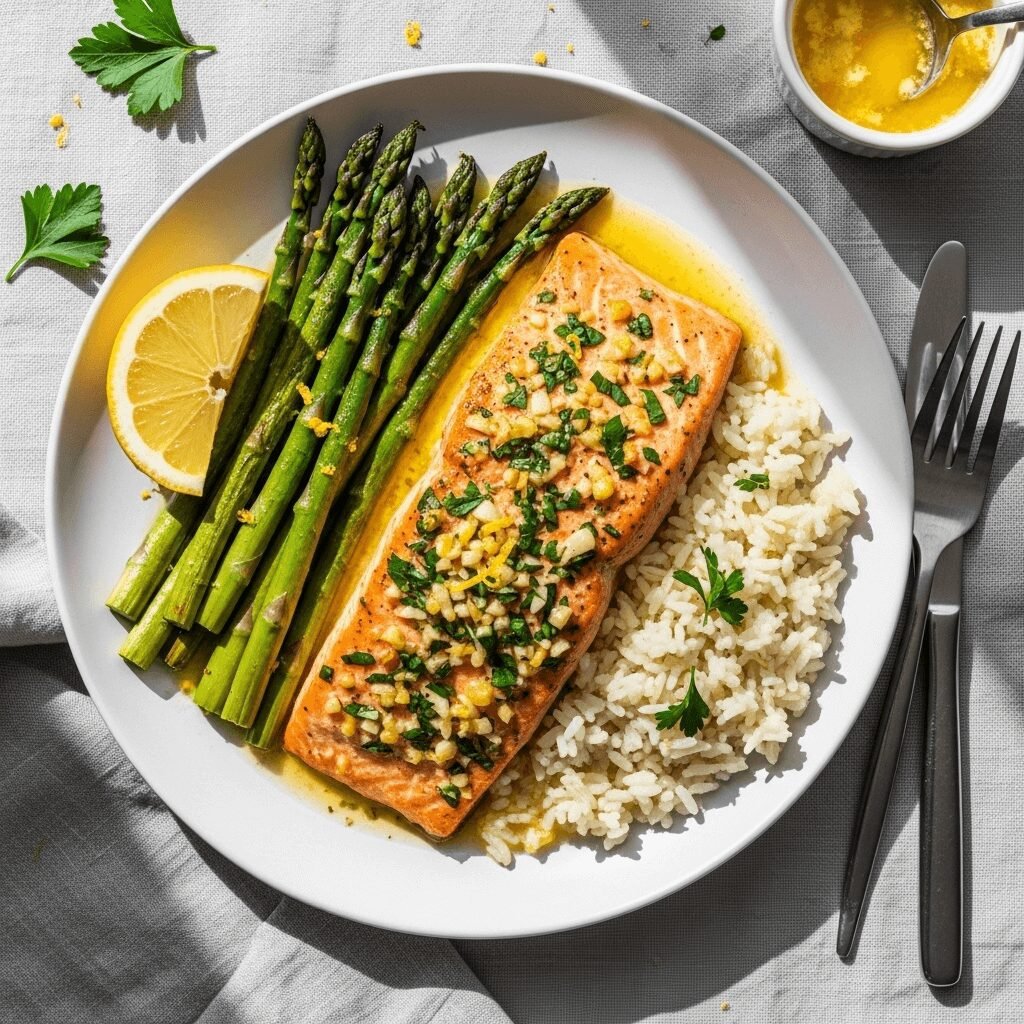

If you’re looking for a dinner recipe that’s elegant enough for date night but easy enough for a busy weeknight, this Garlic Butter Baked Salmon is exactly what you need. This dish features tender, flaky salmon fillets baked to perfection with a luscious garlic butter sauce that seeps into every bite. The best part? It takes just 30 minutes from start to finish, with minimal cleanup and maximum flavor.
This recipe is perfect for those moments when you want to impress without stress. The combination of buttery richness, aromatic garlic, and fresh herbs transforms simple salmon into something truly special. Whether you’re serving it for a romantic dinner, Sunday family meal, or meal prep for the week ahead, this garlic butter baked salmon delivers restaurant-quality results right in your home kitchen. It pairs beautifully with roasted vegetables, rice pilaf, or a crisp green salad, making it versatile for any occasion.
History / Background
Salmon has been a cornerstone of coastal cuisines around the world for thousands of years, particularly in the Pacific Northwest, Scandinavia, and indigenous cultures of North America. Native American tribes along the Columbia River have harvested and celebrated salmon for over 10,000 years, considering it a sacred food that sustained their communities through harsh winters.
The practice of baking salmon with butter and herbs has European roots, particularly in French and Scandinavian cooking traditions. French cuisine elevated salmon with rich butter sauces and delicate seasonings, while Scandinavian countries developed methods of preserving and cooking salmon that honored its natural flavor. The garlic butter preparation we love today is a beautiful fusion of these traditions – combining French technique with the American love for bold, accessible flavors.
In the 1980s and 1990s, as health experts began promoting the benefits of omega-3 fatty acids, salmon surged in popularity across American households. What was once considered a special occasion fish became a weeknight staple. The garlic butter baked method gained traction because it was foolproof for home cooks who were nervous about cooking fish. The butter keeps the salmon moist while the garlic adds depth without overwhelming the delicate flavor of the fish.
Today, this recipe represents the perfect intersection of health-conscious eating and indulgent flavor. It’s become a Pinterest favorite and home cooking staple precisely because it makes cooking salmon accessible, delicious, and nearly impossible to mess up.
Why You’ll Love This Recipe
This garlic butter baked salmon is about to become your go-to fish recipe, and here’s why: it combines simplicity with sophistication in a way that few recipes can match. The garlic butter melts into the salmon as it bakes, creating a self-basting effect that keeps every bite incredibly moist and flavorful. You don’t need fancy culinary skills or expensive equipment – just a baking dish, fresh ingredients, and 30 minutes.
Here’s what makes this recipe a winner:
- Quick & Easy – Ready in just 30 minutes with only 10 minutes of actual hands-on work
- Foolproof Method – Nearly impossible to overcook when you follow the simple timing guide
- Restaurant-Quality – Tastes like something you’d pay $30 for at a fancy seafood restaurant
- Healthy & Nutritious – Packed with omega-3 fatty acids, protein, and heart-healthy fats
- Budget-Friendly – More affordable than dining out and feeds a family beautifully
- Minimal Cleanup – One baking dish means less time scrubbing and more time enjoying
- Impressive Presentation – Looks stunning on the plate with minimal effort
- Versatile – Works with different salmon cuts and adapts to various dietary needs
- Family-Approved – Even picky eaters love the mild, buttery flavor
- Meal Prep Friendly – Makes excellent leftovers for lunch bowls and salads
Ingredient Notes
Salmon Fillets – The star of the show. Look for fresh, wild-caught salmon when possible, though high-quality farm-raised works beautifully too. Skin-on fillets stay more moist during baking, but skinless works if you prefer. Aim for fillets that are about 1 to 1.5 inches thick for even cooking. Sockeye, Coho, and Atlantic salmon all work wonderfully. If salmon is unavailable, you can substitute with Arctic char or steelhead trout.
Butter – Use real, unsalted butter for the best flavor and control over seasoning. The butter creates the sauce base and keeps the salmon incredibly moist. Salted butter works in a pinch, but reduce the added salt in the recipe. For a dairy-free option, ghee or high-quality olive oil can substitute, though you’ll lose some of that signature richness.
Fresh Garlic – Fresh garlic cloves are essential here – the minced jarred variety just doesn’t deliver the same aromatic punch. About 4-5 large cloves gives you that perfect garlic flavor without overwhelming the delicate salmon. If you’re a serious garlic lover, feel free to add an extra clove or two.
Lemon – Fresh lemon juice brightens the richness of the butter and adds a restaurant-quality finish. Both the juice and zest contribute different flavor notes – the juice provides acidity while the zest offers aromatic oils. Never substitute bottled lemon juice; fresh is non-negotiable for the best results.
Fresh Herbs – Parsley and dill are traditional choices that complement salmon beautifully. Fresh herbs are strongly preferred over dried for their vibrant flavor and visual appeal. Thyme, chives, or tarragon make excellent alternatives if you want to switch things up.
Seasonings – Simple salt, black pepper, and a pinch of paprika enhance without masking the salmon’s natural flavor. Smoked paprika adds a subtle depth that’s absolutely delicious. Red pepper flakes are optional but add a nice kick for those who like heat.
Equipment Needed
- Baking Dish – A 9×13-inch glass or ceramic baking dish works perfectly for 4 fillets
- Small Saucepan – For melting the butter and infusing it with garlic
- Sharp Knife – For mincing garlic and chopping fresh herbs
- Cutting Board – Preferably one designated for fish to avoid flavor transfer
- Measuring Spoons – For accurate seasoning and ingredient proportions
- Pastry Brush or Spoon – To coat salmon evenly with garlic butter
- Microplane or Zester – For zesting lemon (optional but recommended)
- Aluminum Foil – Optional, for tenting if salmon is browning too quickly
- Meat Thermometer – Ensures perfectly cooked salmon every time (optional but helpful)

Garlic Butter Baked Salmon Recipe
- Total Time: 30 minutes
- Yield: 4 servings 1x
- Diet: Gluten Free
Description
This Garlic Butter Baked Salmon features tender, flaky salmon fillets topped with a luxurious garlic butter sauce and fresh herbs. It’s an easy, elegant dinner that’s ready in just 30 minutes and tastes like it came from a high-end restaurant.
Ingredients
- 4 salmon fillets (6 oz each, about 1-inch thick)
- 5 tablespoons unsalted butter
- 5 large garlic cloves, minced
- 2 tablespoons fresh lemon juice
- 1 teaspoon lemon zest
- 2 tablespoons fresh parsley, chopped
- 1 tablespoon fresh dill, chopped (or 1 teaspoon dried)
- 3/4 teaspoon salt
- 1/2 teaspoon black pepper
- 1/4 teaspoon paprika (smoked paprika preferred)
- Pinch of red pepper flakes (optional)
- Lemon wedges and extra herbs for garnish
Instructions
- Preheat Your Oven – Preheat oven to 400°F (200°C). Position the rack in the center of the oven for even heat distribution. Lightly grease a 9×13-inch baking dish with cooking spray or a thin layer of butter.
- Prepare the Salmon – Pat salmon fillets completely dry with paper towels. This is crucial for getting a nice exterior and helping seasonings stick. Place salmon fillets skin-side down in the prepared baking dish, spacing them about an inch apart for even cooking.
- Season the Fillets – Season both sides of the salmon with salt, black pepper, and paprika. Be generous but not excessive – you want to enhance the salmon’s natural flavor, not mask it.
- Make the Garlic Butter – In a small saucepan over medium-low heat, melt the butter completely. Add minced garlic and cook for 1-2 minutes, stirring constantly, until fragrant but not browned. Garlic burns quickly, so watch carefully. Remove from heat and stir in lemon juice, lemon zest, fresh parsley, dill, and red pepper flakes if using.
- Coat the Salmon – Pour the warm garlic butter mixture generously over each salmon fillet, making sure to get some garlic and herbs on top of each piece. Use a pastry brush or the back of a spoon to spread it evenly. Reserve about 2 tablespoons of the butter mixture for basting halfway through cooking.
- Bake – Place the baking dish in the preheated oven and bake for 12-15 minutes, depending on thickness. At the 8-minute mark, open the oven and spoon the reserved garlic butter over the salmon. The salmon is done when it flakes easily with a fork and reaches an internal temperature of 145°F. The flesh should be opaque and slightly pink in the center.
- Rest and Serve – Remove from oven and let the salmon rest in the baking dish for 3-4 minutes. This allows the juices to redistribute throughout the fish. Transfer to serving plates, drizzle with any remaining pan juices, and garnish with fresh lemon wedges and additional chopped herbs. Serve immediately while hot.
Notes
- Don’t overbake! Salmon continues cooking after you remove it from the oven due to residual heat. Slightly underdone is better than overdone.
- If your fillets vary in thickness, check the thinner pieces first and remove them earlier if needed.
- For crispy skin, start the salmon skin-side up for the first 10 minutes, then flip for the last 5 minutes.
- The garlic butter can be made up to 2 days ahead and stored in the refrigerator. Just rewarm before using.
- Let salmon sit at room temperature for 10-15 minutes before baking for more even cooking.
- Prep Time: 10 minutes
- Cook Time: 15-20 minutes
- Category: Dinner
- Method: Baking
- Cuisine: American
Nutrition
- Serving Size: 1 fillet (6 oz) with garlic butter
- Calories: 385
- Sugar: 0g
- Sodium: 520mg
- Fat: 24g
- Saturated Fat: 11g
- Unsaturated Fat: 11g
- Trans Fat: 0g
- Carbohydrates: 2g
- Fiber: 0g
- Protein: 39g
- Cholesterol: 135mg
Tips & Variations
Spicy Garlic Butter Salmon – Add 1/2 teaspoon crushed red pepper flakes or a dash of cayenne pepper to the butter mixture. You can also drizzle with sriracha or honey chili sauce before serving.
Mediterranean Style – Replace dill with fresh oregano and add sliced cherry tomatoes, kalamata olives, and crumbled feta cheese during the last 5 minutes of baking.
Asian-Inspired – Swap the butter for sesame oil, add fresh ginger with the garlic, and finish with a drizzle of soy sauce and sesame seeds.
Lemon Herb Variation – Double the lemon juice and add fresh thyme, rosemary, and basil for a bright, herbaceous version.
Honey Garlic – Add 2 tablespoons of honey to the butter mixture for a sweet and savory glaze that caramelizes beautifully.
Parmesan Crusted – During the last 5 minutes of baking, sprinkle grated Parmesan cheese mixed with panko breadcrumbs on top and broil for 2-3 minutes until golden.
Dairy-Free – Use ghee or olive oil instead of butter. The flavor profile changes slightly but it’s still absolutely delicious.
Add Vegetables – Surround the salmon with asparagus spears, green beans, or cherry tomatoes that roast alongside the fish for a complete one-pan meal.
Pro Chef Tips
Bring Salmon to Room Temperature – Remove salmon from the refrigerator 15-20 minutes before cooking. Cold fish takes longer to cook and can result in uneven doneness with an overcooked exterior and raw center.
Pat It Bone Dry – Moisture is the enemy of good browning. Use paper towels to thoroughly dry the surface of the salmon before seasoning. This simple step makes a huge difference in texture.
Check for Pin Bones – Run your fingers along the flesh to feel for any remaining pin bones. Use clean tweezers or needle-nose pliers to remove them before cooking. This makes eating much more enjoyable.
Use an Instant-Read Thermometer – The single best way to ensure perfect salmon is using a thermometer. Insert it into the thickest part of the fillet – you’re looking for 145°F for fully cooked, or 125-130°F if you prefer it medium-rare with a slightly translucent center.
Don’t Skip the Resting Time – Just like steak, salmon benefits from a short rest after cooking. Those few minutes allow the proteins to relax and the juices to redistribute, resulting in a more moist, tender bite.
Baste for Maximum Flavor – Opening the oven halfway through to baste the salmon with the pan juices and extra garlic butter ensures every bite is incredibly flavorful and moist.
Lower Temperature for Thicker Cuts – If your fillets are particularly thick (over 1.5 inches), reduce the oven temperature to 375°F and cook a bit longer to prevent the exterior from drying out before the center is done.
Common Mistakes to Avoid
Overcooking the Salmon – This is the number one mistake. Salmon can go from perfectly moist to dry and chalky in just 2-3 minutes. Set a timer and check early. Remember, it continues cooking after you remove it from the oven.
Burning the Garlic – Garlic burns very quickly and becomes bitter. When making the garlic butter, cook it on medium-low heat just until fragrant (1-2 minutes max), not until it browns. Remove from heat immediately after it releases its aroma.
Cooking Cold Salmon – Putting ice-cold salmon directly into a hot oven leads to uneven cooking. The outside overcooks while the inside stays raw. Always let it sit at room temperature for 15-20 minutes first.
Using Wet Salmon – If the salmon is wet, it steams instead of baking, resulting in a soggy, less flavorful exterior. Always pat it completely dry with paper towels before seasoning.
Crowding the Baking Dish – Leave space between fillets so hot air can circulate evenly. Crowded fish cooks unevenly and steams instead of baking, preventing that lovely caramelization on top.
Storage & Meal Prep
Refrigerator Storage – Store leftover baked salmon in an airtight container in the refrigerator for up to 3 days. Let it cool to room temperature first, but don’t leave it out for more than 2 hours. The garlic butter sauce will solidify when cold but melts beautifully when reheated.
Reheating Instructions – The best way to reheat is in a 275°F oven for 10-15 minutes until warmed through. Cover loosely with foil to prevent drying. You can also reheat gently in the microwave at 50% power in 30-second intervals, though this can dry it out more quickly.
Freezing Cooked Salmon – While fresh salmon freezes better than cooked, you can freeze leftovers for up to 2 months. Wrap individual portions tightly in plastic wrap, then aluminum foil, and place in a freezer bag. Thaw overnight in the refrigerator before reheating.
Cold Salmon Uses – Cold leftover salmon is actually wonderful! Flake it over salads, mix it into pasta, make salmon salad sandwiches, or add it to grain bowls. The garlic butter adds amazing flavor even when served cold.
Make-Ahead & Freezer Notes
Prepare the Garlic Butter in Advance – Make the garlic butter sauce up to 3 days ahead and store it in an airtight container in the refrigerator. When ready to cook, simply melt it gently and proceed with the recipe.
Season Salmon Ahead – You can pat the salmon dry and season it up to 4 hours before baking. Cover and refrigerate, but remember to bring it back to room temperature before cooking.
Freezing Raw Salmon – If you buy salmon on sale, freeze the raw fillets individually wrapped in plastic wrap and foil for up to 3 months. Thaw overnight in the refrigerator in a bowl to catch any liquid. Do not refreeze previously frozen salmon.
Make-Ahead Dinner Strategy – Prep all your ingredients in the morning: make the garlic butter, mince herbs, season the salmon, and prep your side dishes. When dinner time arrives, you just need to pour the butter and pop it in the oven.
Best Way to Reheat from Frozen – Thaw frozen cooked salmon overnight in the refrigerator. Reheat gently in a covered baking dish at 275°F with a splash of water or extra melted butter to restore moisture.
Serving Suggestions
This garlic butter baked salmon pairs beautifully with a wide variety of sides that complement its rich, buttery flavor.
Vegetables – Roasted asparagus, garlic green beans, Brussels sprouts, roasted broccoli, or a medley of roasted Mediterranean vegetables. Steamed or sautéed spinach also works wonderfully.
Starches – Creamy mashed potatoes, rice pilaf, garlic butter rice, quinoa, couscous, or roasted baby potatoes. For a low-carb option, try cauliflower rice or mashed cauliflower.
Salads – A crisp Caesar salad, arugula salad with lemon vinaigrette, Greek salad, or simple mixed greens with balsamic dressing provide a refreshing contrast to the rich salmon.
Bread – Crusty French bread, garlic bread, or dinner rolls are perfect for soaking up that delicious garlic butter sauce left in the pan.
Wine Pairing – A crisp white wine like Chardonnay, Sauvignon Blanc, or Pinot Grigio complements the buttery richness. For red wine lovers, a light Pinot Noir works surprisingly well.
Complete Meal Ideas – Serve with lemon herb rice and roasted asparagus for an elegant dinner, or pair with mashed potatoes and green beans for a comforting family meal.
FAQs Section
How do I know when salmon is fully cooked?
Salmon is perfectly cooked when it reaches an internal temperature of 145°F and flakes easily with a fork. The flesh should be opaque throughout with just a slightly darker pink center. If you don’t have a thermometer, insert a fork into the thickest part and gently twist – if it flakes into segments easily, it’s done. The salmon will also appear more opaque and less translucent when cooked through.
Can I use frozen salmon for this recipe?
Yes, but make sure to thaw it completely first. The best method is to thaw frozen salmon overnight in the refrigerator in a bowl. Never thaw at room temperature, as this can promote bacterial growth. Pat the thawed salmon very dry with paper towels before proceeding with the recipe, as frozen salmon often releases more moisture.
Should I remove the skin before or after cooking?
It’s easier to remove the skin after cooking if you prefer skinless salmon. The skin peels right off after baking. However, cooking with the skin on helps protect the delicate flesh and keeps it more moist. The skin also crisps up nicely if you prefer to eat it. If you do want to remove it before cooking, use a sharp knife to carefully slice between the skin and flesh.
What if I don’t have fresh herbs?
You can substitute dried herbs, but use about 1/3 of the amount since dried herbs are more concentrated. So use 2 teaspoons dried parsley and 1 teaspoon dried dill instead of the fresh amounts. The flavor will be slightly different but still delicious. Add the dried herbs directly to the melted butter.
Can I cook thicker or thinner salmon fillets?
Absolutely! Adjust the cooking time based on thickness. Thinner fillets (under 1 inch) may only need 10-12 minutes, while very thick fillets (over 1.5 inches) might need 18-20 minutes. The best indicator is always internal temperature (145°F) rather than time alone.
Why is my salmon dry?
The most common reason is overcooking. Salmon can go from moist to dry very quickly. Always check your salmon a few minutes before the suggested time is up. Also make sure you’re using enough butter and not skipping the basting step halfway through cooking. Bringing the salmon to room temperature before cooking also helps prevent dryness.
Can I make this on the stovetop instead?
Yes! Sear the salmon skin-side up in an oven-safe skillet over medium-high heat for 3-4 minutes, flip, add the garlic butter, then transfer the whole skillet to a 400°F oven to finish cooking for 6-8 minutes. This method gives you a beautiful crispy seared crust.
Conclusion
This Garlic Butter Baked Salmon is proof that restaurant-quality meals don’t have to be complicated or time-consuming. With just a handful of ingredients and 30 minutes, you can create a dish that’s elegant enough to impress dinner guests yet simple enough for a busy Tuesday night. The combination of tender, flaky salmon with rich garlic butter and fresh herbs is absolutely irresistible.
The beauty of this recipe lies in its simplicity and versatility. You can dress it up for special occasions or keep it casual for weeknight dinners. It’s healthy, budget-friendly, and adaptable to countless variations based on your preferences and what you have in your pantry.
I hope you love this garlic butter baked salmon as much as my family does! It’s become one of our most-requested dinner recipes, and I have a feeling it will become a staple in your home too. The first time you taste that perfectly cooked, buttery salmon, you’ll wonder why you ever thought cooking fish was intimidating.