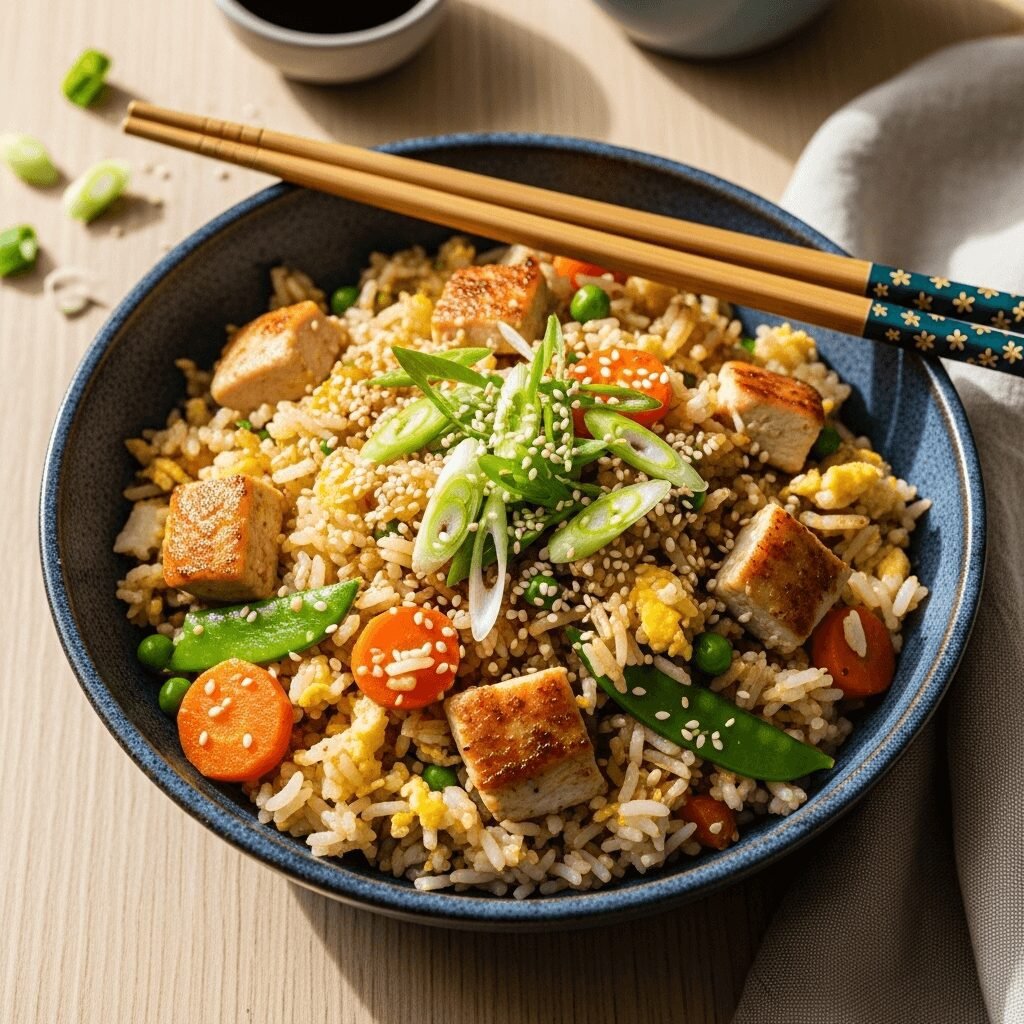
There’s something incredibly satisfying about a steaming bowl of chicken fried rice that hits all the right notes—savory, slightly sweet, packed with tender chicken, crispy vegetables, and perfectly seasoned rice that’s better than any takeout you could order. This Easy Chicken Fried Rice Bowl Recipe is about to become your new weeknight dinner hero, and I’m so excited to share it with you!
This isn’t just any fried rice recipe. It’s a complete meal in one bowl that comes together in under 30 minutes, uses simple ingredients you probably already have in your kitchen, and tastes like it came from your favorite Chinese restaurant. Whether you’re looking for a quick weeknight dinner solution, a delicious way to use up leftover rice, or simply craving that restaurant-style fried rice flavor at home, this recipe delivers every single time.
The best part? You have complete control over the ingredients, so it’s healthier, fresher, and more budget-friendly than ordering delivery. Plus, once you master this basic technique, you can customize it endlessly with your favorite proteins, vegetables, and flavor combinations. Serve it as a hearty main dish for busy weeknights, pack it for meal prep lunches, or whip it up for a casual weekend dinner with the family. This versatile chicken fried rice bowl works for breakfast, lunch, or dinner—yes, fried rice for breakfast is absolutely a thing, and you’re going to love it!
History / Background
Fried rice has been a cornerstone of Asian cuisine for over 1,500 years, with its origins tracing back to the Sui Dynasty in China (589-618 AD). The dish was born out of practicality and resourcefulness—a brilliant way to transform leftover rice and odds and ends from the kitchen into something delicious and satisfying. In Chinese culture, wasting food, especially rice, was considered disrespectful, so home cooks developed this ingenious method of reviving day-old rice with a hot wok, some oil, and whatever ingredients were on hand.
As Chinese immigrants traveled across the globe throughout the 19th and 20th centuries, they brought their culinary traditions with them, and fried rice became one of the most beloved dishes in Chinese-American cuisine. Each region developed its own variations—Yangzhou fried rice from Jiangsu province features shrimp and ham, while Cantonese fried rice is simpler and focuses on the quality of each ingredient.
The chicken fried rice we know and love today in American households is actually an adaptation that became popular in Chinese-American restaurants throughout the United States. It combined familiar proteins like chicken with the exotic flavors and techniques of traditional Chinese cooking, making it accessible and appealing to American palates. Today, chicken fried rice is one of the most ordered dishes at Chinese restaurants across the country and has become a comfort food staple in countless American homes.
What makes this dish so special is its perfect balance of textures and flavors—the slight crispiness of the rice, the tender chicken, the crunch of fresh vegetables, and that signature savory-sweet umami flavor that comes from soy sauce, sesame oil, and aromatics like garlic and ginger. It’s simple food elevated to something truly crave-worthy.
Why You’ll Love This Recipe
This Easy Chicken Fried Rice Bowl Recipe is going to change your weeknight dinner game completely. I’ve made this recipe countless times, tweaked it to perfection, and shared it with friends and family who all say the same thing: “This is better than takeout!” Let me tell you why this recipe is about to become one of your most-used kitchen staples.
Here’s what makes this chicken fried rice bowl absolutely irresistible:
- Ready in 25 minutes or less – Faster than delivery and way more satisfying! From start to finish, you’ll have a complete, restaurant-quality meal on the table in under half an hour.
- Uses simple, everyday ingredients – No exotic ingredients or hard-to-find specialty items required. Everything you need is probably already in your pantry and fridge.
- Perfect for meal prep – Make a big batch on Sunday and enjoy delicious lunches all week long. It actually tastes even better the next day as the flavors meld together.
- Budget-friendly – At a fraction of the cost of takeout, this recipe feeds a family of four for under $15. It’s an economical way to enjoy restaurant-style food at home.
- Customizable to your taste – Swap proteins, add more veggies, adjust the spice level, or make it vegetarian. This recipe is incredibly flexible and forgiving.
- Kid-approved – Even picky eaters love this dish! The mild, savory flavors appeal to children while still being interesting enough for adults.
- Great way to use leftovers – Got leftover rice from last night’s dinner? Day-old rice is actually better for fried rice because it’s drier and creates that perfect texture.
- One-pan wonder – Minimal cleanup means more time enjoying your meal and less time scrubbing dishes. Everything cooks in one large skillet or wok.
- Healthier than takeout – Control the oil, sodium, and quality of ingredients. You know exactly what’s going into your food with no mystery additives or excessive amounts of oil.
- Impressively delicious – Your family will think you spent hours on this dish, but it’s secretly one of the easiest recipes you’ll ever make!
Ingredient Notes
The beauty of chicken fried rice lies in its simplicity, but each ingredient plays an important role in creating that signature flavor and texture we all crave. Let me walk you through what you’ll need and why each component matters.
Cooked Rice (3-4 cups): This is the star of the show! Day-old, cold rice from the refrigerator works best because it’s drier and the grains separate easily, preventing mushy fried rice. Freshly cooked rice contains too much moisture and will steam rather than fry. Use long-grain white rice like jasmine or basmati for the most authentic texture. Substitution: Brown rice works well for a healthier option, though the texture will be slightly different and chewier.
Chicken Breast (1 pound): Boneless, skinless chicken breast is lean, cooks quickly, and absorbs the flavors beautifully. Cut it into small, bite-sized pieces for even cooking. Substitution: Chicken thighs are juicier and more flavorful, or use rotisserie chicken for an even faster meal. Shrimp, pork, beef, or tofu also work wonderfully.
Eggs (2-3 large): Scrambled eggs add protein, richness, and that classic fried rice texture. They create little golden pockets throughout the rice that everyone loves. Tip: Beat them well before adding to ensure they cook into tender, fluffy ribbons rather than rubbery chunks.
Mixed Vegetables (2 cups): The classic combination includes peas, carrots, and corn, but feel free to use whatever you have on hand. Frozen mixed vegetables work perfectly and save prep time. Fresh vegetables like bell peppers, broccoli, snap peas, or green beans add great texture and nutrition. Pro tip: If using frozen vegetables, there’s no need to thaw them first—just add them directly to the hot pan.
Soy Sauce (3-4 tablespoons): This provides the essential salty, umami flavor that defines fried rice. Use low-sodium soy sauce if you’re watching your salt intake. Substitution: Tamari for gluten-free, coconut aminos for soy-free, or a combination of soy sauce and oyster sauce for deeper flavor.
Sesame Oil (1-2 tablespoons): Just a small amount of toasted sesame oil adds incredible nutty, aromatic flavor that screams “restaurant-style!” This is what takes your fried rice from good to absolutely amazing. Don’t skip it! Note: Sesame oil has a low smoke point, so add it at the end of cooking rather than using it for high-heat cooking.
Garlic (3-4 cloves, minced): Fresh garlic is non-negotiable for authentic flavor. It adds aromatic depth that garlic powder simply can’t match. Tip: Mince it finely so it distributes evenly and doesn’t burn.
Fresh Ginger (1 tablespoon, minced): Ginger adds a bright, slightly spicy note that balances the richness of the dish. Fresh ginger is far superior to dried in this application. Substitution: If you absolutely must, use ½ teaspoon of ground ginger, though fresh is strongly recommended.
Green Onions (4-5 stalks): Also called scallions, these add a mild onion flavor and beautiful color. Use both the white and green parts—sauté the white parts with the aromatics and save the green parts for garnishing at the end for a fresh, bright finish.
Vegetable Oil (2-3 tablespoons): You need an oil with a high smoke point for the high-heat cooking required for proper fried rice. Vegetable, canola, or peanut oil all work well. Avoid: Olive oil or butter, which have lower smoke points and can burn at the high temperatures needed for stir-frying.
Optional seasonings: White pepper (for that authentic restaurant taste), a pinch of sugar (to balance the saltiness), and a dash of rice vinegar (for a subtle tang) can elevate your fried rice to the next level. These aren’t required, but they’re the secret touches that professional chefs use.
Equipment Needed
You don’t need a lot of fancy equipment to make restaurant-quality chicken fried rice at home, but having the right tools makes the process much easier and ensures better results. Here’s what you’ll need:
- Large skillet or wok (12-14 inches): A wide cooking surface is essential for proper fried rice. The larger the pan, the better, because you need space for the rice to spread out and get slightly crispy edges. A wok is traditional and ideal because of its high, sloped sides and concentrated heat, but a large, heavy-bottomed skillet works beautifully too.
- Wooden spoon or silicone spatula: For stirring and tossing the rice without scratching your cookware. A flat-edged wooden spatula is particularly useful for breaking up clumps of rice.
- Sharp knife and cutting board: For chopping chicken, vegetables, garlic, ginger, and green onions. Mise en place (having everything prepped and ready) is key to successful stir-frying.
- Mixing bowls (medium and small): One for beating eggs, one for marinating chicken if desired, and another for holding your prepped vegetables and aromatics.
- Measuring cups and spoons: For accurate measurements of rice, soy sauce, and sesame oil. Fried rice is forgiving, but getting the ratios right, especially for beginners, ensures success.
- Rice cooker or saucepan with lid (if cooking rice from scratch): If you’re starting with raw rice, you’ll need a way to cook it. A rice cooker takes the guesswork out, but a regular pot works just fine.
- Whisk or fork: For beating the eggs until they’re well combined and slightly frothy.
- Baking sheet (optional): If you want to spread out freshly cooked rice to cool it quickly, a baking sheet works perfectly. This helps remove excess moisture faster.
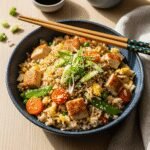
Easy Chicken Fried Rice Bowl Recipe
- Total Time: 25 minutes
- Yield: 4 servings 1x
- Diet: Gluten Free
Description
This Easy Chicken Fried Rice Bowl Recipe is a quick, delicious, and budget-friendly dinner that tastes better than takeout! With tender chicken, crisp vegetables, fluffy eggs, and perfectly seasoned rice, this one-pan meal comes together in just 25 minutes. It’s the ultimate weeknight dinner solution that the whole family will love.
Ingredients
- 3-4 cups cooked rice, preferably day-old and cold
- 1 pound boneless, skinless chicken breast, cut into small bite-sized pieces
- 2-3 large eggs, beaten
- 2 cups mixed vegetables (peas, carrots, corn—fresh or frozen)
- 3-4 tablespoons soy sauce (or tamari for gluten-free)
- 1-2 tablespoons toasted sesame oil
- 3-4 cloves garlic, minced
- 1 tablespoon fresh ginger, minced
- 4-5 green onions, white and green parts separated and sliced
- 3 tablespoons vegetable oil (divided)
- ½ teaspoon white pepper (optional, but recommended)
- ¼ teaspoon sugar (optional, to balance flavors)
- Salt and black pepper to taste
- Sesame seeds for garnish (optional)
Instructions
- Prep your ingredients: This is the most important step! Have everything chopped, measured, and ready to go before you start cooking. Fried rice cooks very quickly, so you won’t have time to prep once you start. Cut chicken into small, uniform pieces. Mince garlic and ginger. Slice green onions, keeping white and green parts separate. Beat eggs in a small bowl. If your rice is clumpy, break it up with your hands or a fork.
- Cook the chicken: Heat 1 tablespoon of vegetable oil in your large skillet or wok over medium-high heat. Once the oil is shimmering and hot, add the chicken pieces in a single layer. Season with a pinch of salt and black pepper. Cook for 5-6 minutes, stirring occasionally, until the chicken is golden brown and cooked through (internal temperature should reach 165°F). Remove chicken from the pan and set aside on a plate.
- Scramble the eggs: In the same pan, add another ½ tablespoon of oil if needed. Pour in the beaten eggs and let them sit undisturbed for about 10 seconds, then gently scramble them with your spatula, breaking them into small, soft curds. They should be just barely set, not browned. Remove from pan and set aside with the chicken.
- Sauté aromatics and vegetables: Add the remaining 1½ tablespoons of oil to the pan. Add the white parts of the green onions, minced garlic, and minced ginger. Stir-fry for about 30 seconds until fragrant—be careful not to let the garlic burn. Add your mixed vegetables and stir-fry for 2-3 minutes until they’re heated through and slightly tender. If using frozen vegetables, they may release some water; cook until most of it evaporates.
- Add the rice: Turn heat to high. Add the cold rice to the pan, breaking up any remaining clumps with your spatula. Spread it out across the pan and let it sit undisturbed for 1-2 minutes—this allows the bottom layer to get slightly crispy and develop that characteristic fried rice texture. Then toss everything together, continuing to break up clumps and mixing the rice with the vegetables.
- Season and combine: Add the soy sauce, drizzling it around the edges of the pan so it heats up before mixing with the rice. Add white pepper and sugar if using. Toss everything together thoroughly, making sure the rice is evenly coated with the sauce. Return the cooked chicken and scrambled eggs to the pan, tossing everything together to combine and heat through, about 1-2 minutes.
- Finish with aromatics: Turn off the heat. Drizzle the sesame oil over the rice and toss one final time. The residual heat will release the sesame oil’s aromatic oils without burning them. Stir in the green parts of the green onions, reserving a few for garnish.
- Serve immediately: Transfer the chicken fried rice to bowls. Garnish with the reserved green onion slices and sesame seeds if desired. Serve hot and enjoy your restaurant-quality homemade fried rice!
Notes
- The secret to perfect fried rice is cold, day-old rice. If you only have freshly cooked rice, spread it on a baking sheet and refrigerate for at least 30 minutes, or even better, let it sit uncovered in the fridge for a few hours to dry out.
- Don’t overcrowd your pan. If your pan isn’t large enough to accommodate all the rice in a relatively thin layer, cook in two batches. Overcrowding creates steam instead of the crispy, fried texture you want.
- High heat is essential. Make sure your pan is very hot before adding ingredients. This is what creates that signature “wok hei” or breath of the wok flavor that characterizes great fried rice.
- Adjust soy sauce to taste. Start with 3 tablespoons and add more if needed. Different brands vary in saltiness, so taste as you go.
- Make it your own: Add sriracha or chili garlic sauce for heat, swap in shrimp or tofu for the chicken, throw in extra vegetables like bell peppers or broccoli, or top with a fried egg for extra richness.
- Prep Time: 10 minutes
- Cook Time: 15 minutes
- Category: Dinner
- Method: Stovetop
- Cuisine: Asian-American
Nutrition
- Serving Size: 1 bowl (approximately 2 cups)
- Calories: 420
- Sugar: 4g
- Sodium: 820mg
- Fat: 14g
- Saturated Fat: 2.5g
- Unsaturated Fat: 11g
- Trans Fat: 0g
- Carbohydrates: 48g
- Fiber: 3g
- Protein: 28g
- Cholesterol: 185mg
Nutrition information is approximate and will vary based on specific ingredients used and portion sizes. These values are calculated using standard ingredients and may change if you make substitutions.
Tips & Variations
One of the best things about chicken fried rice is how incredibly versatile and forgiving it is. Once you master the basic technique, you can customize it endlessly to suit your preferences, dietary needs, or whatever ingredients you have on hand. Here are my favorite ways to switch things up:
Protein Variations:
- Shrimp Fried Rice: Substitute the chicken with 1 pound of peeled, deveined shrimp. They cook even faster than chicken—just 2-3 minutes until pink.
- Pork Fried Rice: Use diced pork tenderloin or even leftover pork chops. Ground pork is also delicious and cooks quickly.
- Beef Fried Rice: Thinly sliced flank steak or sirloin works beautifully. Marinate it briefly in soy sauce and cornstarch for extra tenderness.
- Vegetarian/Vegan: Skip the chicken and eggs entirely and load up on vegetables, edamame, and cubed tofu. Add extra soy sauce or mushroom seasoning for umami depth.
- Combo Style: Use a mix of proteins like restaurants do—chicken, shrimp, and pork together!
Vegetable Add-Ins:
- Bell peppers (any color) for sweetness and crunch
- Broccoli florets for extra nutrients
- Snap peas or snow peas for that classic Asian crunch
- Mushrooms (shiitake are particularly good) for earthy umami flavor
- Cabbage or bok choy, thinly sliced
- Bean sprouts added at the very end for crunch
- Water chestnuts for texture contrast
- Zucchini or summer squash, diced small
Flavor Boosters:
- Add 1-2 tablespoons of oyster sauce along with the soy sauce for deeper, richer flavor
- Stir in a spoonful of hoisin sauce for sweet and savory notes
- Mix in Chinese five-spice powder (just a pinch!) for complexity
- Add a splash of Shaoxing rice wine or dry sherry when cooking the chicken for restaurant-authentic flavor
- Stir in some kimchi or gochujang for a Korean-inspired twist
- Top with crispy fried shallots or onions for texture
- Drizzle with extra chili oil or sriracha if you like it spicy
Healthier Modifications:
- Use brown rice or cauliflower rice for more fiber and fewer carbs
- Reduce the oil to 1-2 tablespoons total and use a non-stick pan
- Use low-sodium soy sauce or coconut aminos
- Increase the vegetables and reduce the rice ratio
- Use egg whites instead of whole eggs to reduce cholesterol
Regional Style Variations:
- Hawaiian Style: Add diced pineapple and ham, finish with teriyaki sauce
- Thai Basil Fried Rice: Add fresh Thai basil and fish sauce, top with a fried egg
- Japanese Style: Use short-grain rice, add benishoga (pickled ginger), and drizzle with Japanese mayo
- Indonesian Nasi Goreng: Add kecap manis (sweet soy sauce) and top with a fried egg and prawn crackers
Pro Chef Tips
After making this recipe hundreds of times and learning from professional Chinese chefs, I’ve picked up some insider secrets that make all the difference between good fried rice and absolutely exceptional fried rice. Here are the pro tips that will elevate your dish:
Master the “three temperatures” technique: Your wok or pan should be screaming hot, your ingredients should be room temperature (not cold, which drops the pan temperature), but your rice must be cold. This combination creates the perfect conditions for that slightly crispy, never-mushy texture.
Use the “toss and spread” method: After adding rice, spread it across the entire surface of your pan in a thin layer and let it sit undisturbed for 30-60 seconds. This allows the rice to develop those golden, slightly crispy bits that make fried rice so addictive. Then toss, spread again, and repeat. This technique is how restaurants get that signature texture.
Season your wok or pan properly: If using carbon steel or cast iron, make sure it’s well-seasoned. This creates a natural non-stick surface and adds depth of flavor to everything you cook. Heat the empty pan until it’s smoking slightly before adding oil—this is called “longyou” or “hot wok, cold oil” technique.
Create a “flavor well”: Push all your rice to the sides of the pan, creating an empty space in the center. Drizzle your soy sauce and seasonings into this well, letting them sizzle and caramelize for 5-10 seconds before tossing them through the rice. This technique concentrates and deepens the flavors.
Add ingredients in the right order: Always cook proteins first (they take longest), then aromatics (quick but crucial), then vegetables (based on how long they take to cook), then rice, then seasonings, and finally delicate herbs and sesame oil at the very end with the heat off. This ensures everything is perfectly cooked without anything being overdone.
Don’t forget about “wok hei”: This Cantonese term literally means “breath of the wok” and refers to that slightly smoky, charred flavor you get from high-heat cooking. To achieve this at home, your pan must be very hot, work quickly, and don’t stir too frequently—let ingredients sear briefly before tossing.
Use a “pushing” motion rather than stirring: Professional Chinese chefs don’t stir fried rice—they use a scooping, pushing, and tossing motion with their spatula that folds ingredients over each other. This technique keeps the rice grains intact and separated rather than mashing them together.
Season with restraint at first: You can always add more soy sauce, but you can’t take it away. Start conservatively and taste as you go, adjusting seasoning at the end. Remember that the soy sauce flavor intensifies as it reduces on the hot rice.
The egg technique matters: Some chefs scramble eggs separately (my method), while others push the rice aside and scramble eggs directly in the pan, then mix them in. For the silkiest eggs, beat them with a tiny splash of water or stock and cook them gently without browning. For more distinct egg pieces, cook them firmer and break into larger chunks.
Finish with fresh aromatics: Always reserve some green onion tops, a handful of fresh cilantro, or Thai basil to stir in right at the end. These fresh elements brighten the dish and add a layer of complexity that cooked aromatics alone can’t provide.
Common Mistakes to Avoid
Even though fried rice seems simple, there are several common pitfalls that can turn your dish from amazing to disappointing. Here’s what to watch out for:
Using freshly cooked, hot rice: This is the number one mistake! Fresh rice contains too much moisture and will turn your fried rice into a sticky, mushy clump. The grains will steam rather than fry, and you’ll lose that signature separated, slightly crispy texture. Always use day-old rice that’s been refrigerated, or at minimum, spread freshly cooked rice on a baking sheet and cool it completely in the refrigerator for at least 30 minutes before using.
Cooking over too-low heat: Fried rice needs high heat to develop proper texture and flavor. If your pan isn’t hot enough, ingredients will steam and become soggy instead of developing that delicious caramelized exterior. Your kitchen should smell toasty and aromatic, and you should hear a satisfying sizzle when ingredients hit the pan. Don’t be afraid of high heat—just work quickly!
Overcrowding the pan: When you pack too much rice into a pan, it creates steam and prevents proper frying. The rice needs space to spread out in contact with the hot surface. If you’re doubling the recipe, either use a massive wok or cook in two batches. It’s worth the extra few minutes for vastly superior results.
Adding soy sauce too early or too much: Pour soy sauce directly over cold rice, and you’ll end up with unevenly colored, soggy rice. The sauce needs to hit the hot pan first to caramelize slightly and develop deeper flavor. Also, it’s easy to over-salt fried rice since soy sauce is quite salty. Start with less than you think you need—you can always add more, but you can’t remove it.
Not prepping everything before you start cooking: Fried rice cooks in minutes, and once you start, you won’t have time to chop garlic or dice chicken. The French term “mise en place” (everything in its place) is crucial here. Have all your ingredients measured, chopped, and arranged near your stove before you turn on the heat. This ensures smooth, stress-free cooking and prevents burnt garlic or overcooked eggs.
Stirring too frequently: I know it’s tempting to constantly stir and toss, but resist! Let the rice sit in contact with the hot pan for 30-60 seconds at a time to develop those golden, slightly crispy bits. Constant stirring creates mush. Think of it more like a quick sear between tosses rather than continuous stirring.
Skipping the sesame oil or adding it too early: Sesame oil is what gives fried rice that distinctive restaurant flavor, but it has a low smoke point and will taste bitter if it burns. Always add it at the very end with the heat turned off, allowing the residual heat to release its aromatic oils without cooking it.
Storage & Meal Prep
One of the best things about chicken fried rice is that it’s absolutely perfect for meal prep and actually tastes even better the next day as all the flavors meld together. Here’s everything you need to know about storing and reheating your fried rice:
Refrigerator Storage: Store leftover chicken fried rice in an airtight container in the refrigerator for up to 4 days. Make sure it cools to room temperature within 2 hours of cooking to prevent bacterial growth (spread it on a baking sheet if you need to cool it quickly). When properly stored, the texture and flavor hold up beautifully. In fact, many people (myself included!) prefer leftover fried rice because the flavors have had time to develop.
Reheating Methods:
- Skillet method (best): Heat a large skillet over medium-high heat with a small splash of vegetable or sesame oil. Add the refrigerated fried rice, breaking up any clumps, and stir-fry for 3-5 minutes until heated through and slightly crispy. This method restores that just-cooked texture better than any other method.
- Microwave method (fastest): Place fried rice in a microwave-safe bowl, sprinkle with 1-2 tablespoons of water or chicken broth to add moisture, cover with a damp paper towel, and microwave on high for 1-2 minutes, stirring halfway through. The rice won’t be quite as crispy, but it’s perfectly acceptable for a quick lunch.
- Oven method: Spread fried rice in an even layer on a baking sheet, cover with foil, and bake at 350°F for 15-20 minutes until heated through. Remove foil for the last 5 minutes to crisp it up slightly.
Meal Prep Tips: If you’re specifically making this for meal prep lunches, portion it into individual airtight containers (glass containers work great) along with any desired toppings or sauces on the side. You can easily prep 4-5 lunches on Sunday for the work week ahead. Add some extra vegetables, a hard-boiled egg, or some sliced cucumbers to make each lunch feel complete and balanced.
Freshness Tips: For optimal texture, avoid reheating fried rice more than once. Each time you reheat, the rice absorbs more moisture and can become mushy. If you know you’ll have leftovers, store them in portion-sized containers so you only reheat what you’ll actually eat.
Make-Ahead & Freezer Notes
Chicken fried rice is one of those wonderful dishes that actually benefits from being made ahead, making it perfect for busy families and meal prep enthusiasts. Here’s how to maximize your make-ahead and freezer storage success:
Make-Ahead Strategy: You can prepare components of this recipe in advance to make weeknight dinner even faster:
- Cook rice 1-2 days ahead: Make a big batch of rice, spread it on a baking sheet to cool quickly, then refrigerate. This gives you perfectly dried rice ready for frying whenever you want it.
- Prep proteins ahead: Dice chicken and store it in the refrigerator for up to 24 hours before cooking. You can even cook the chicken ahead, let it cool, and refrigerate for up to 3 days. Just reheat it when you add it back to the fried rice.
- Chop vegetables: Prep all your vegetables up to 2 days in advance and store them in airtight containers in the crisper drawer.
Freezer Instructions: Yes, you can absolutely freeze chicken fried rice, and it freezes remarkably well! Here’s the best method:
- Cool completely: Let your cooked fried rice cool to room temperature, then chill it in the refrigerator for about an hour. This prevents ice crystals from forming inside your storage container.
- Portion appropriately: Divide the rice into meal-sized portions in freezer-safe containers or heavy-duty freezer bags. Flatten the bags to remove excess air and allow for quicker freezing and thawing. I like to freeze in 2-cup portions, which is perfect for a single serving or lunch.
- Label and date: Write the contents and date on each container. Frozen fried rice maintains best quality for up to 3 months, though it’s technically safe indefinitely if kept at 0°F or below.
- Freeze flat: Lay bags flat in the freezer until solid, then you can stack them to save space.
Thawing and Reheating from Frozen:
- Refrigerator thawing (safest): Transfer frozen fried rice to the refrigerator 24 hours before you plan to eat it. Once thawed, reheat using the skillet method for best results.
- Microwave thawing (fastest): Place frozen fried rice in a microwave-safe dish, add 2-3 tablespoons of water or broth, cover, and microwave on 50% power for 5-7 minutes, stirring every 2 minutes, until heated through.
- Skillet from frozen (my favorite): Add frozen fried rice directly to a hot skillet with a splash of oil and a few tablespoons of water or broth. Cover and cook on medium heat for about 10 minutes, breaking up the rice as it thaws, then uncover and stir-fry until heated through and slightly crispy.
Freezing Tips for Best Quality:
- Slightly undercook vegetables if you plan to freeze, as they’ll soften more during reheating
- Don’t add garnishes like green onion tops or sesame seeds until after reheating
- Consider freezing the fried rice without eggs if you’re particularly picky about texture, and scramble fresh eggs when reheating
- Add a few drops of sesame oil when reheating to refresh the flavor
Serving Suggestions
Chicken fried rice is hearty enough to stand alone as a complete meal, but pairing it with complementary sides and accompaniments can turn it into a feast that feels like a special occasion. Here are my favorite ways to round out the meal:
Classic Asian-Inspired Sides:
- Egg drop soup or hot and sour soup: These light, flavorful soups are the perfect starter and complement the richness of the fried rice. They’re also super easy to make at home!
- Spring rolls or egg rolls: Crispy, golden rolls filled with vegetables or pork make an excellent appetizer or side. Serve with sweet chili sauce or duck sauce for dipping.
- Pot stickers or gyoza: Pan-fried dumplings add another dimension of texture and flavor. Make them ahead or keep frozen ones on hand for easy entertaining.
- Asian cucumber salad: Quick-pickled cucumbers with rice vinegar, sesame oil, and chili flakes provide a refreshing, crunchy contrast to the warm rice.
- Sautéed or steamed bok choy: This mild, tender green vegetable is the perfect healthy side that takes just minutes to prepare.
Proteins and Toppings: Even though the fried rice contains chicken, you can add extra protein or toppings to make it feel even more special:
- Fried egg: Top each bowl with a sunny-side-up or over-easy fried egg for extra richness and that gorgeous runny yolk that creates its own sauce when you break into it.
- Teriyaki chicken skewers: Serve grilled chicken skewers on the side for those who want extra protein.
- Crispy orange chicken or sesame chicken: Turn your meal into a full Chinese takeout experience by serving the fried rice alongside sweet and tangy orange chicken.
- Grilled or steamed shrimp: A few large, seasoned shrimp on top make the meal feel restaurant-fancy.
- Crispy tofu: For vegetarian guests, crispy pan-fried or baked tofu cubes make an excellent protein addition.
Fresh and Crunchy Additions:
- Sliced cucumbers and radishes: Fresh, crisp vegetables provide textural contrast and help cut through the richness.
- Kimchi: A spoonful of spicy, tangy kimchi on the side adds probiotic benefits and a flavor explosion.
- Pickled vegetables: Quick-pickled carrots, daikon, or jalapeños add brightness and acidity.
- Fresh herbs: A small plate of cilantro, Thai basil, or mint leaves allows everyone to customize their bowl with fresh aromatics.
- Lime wedges: A squeeze of fresh lime juice brightens all the flavors and adds a restaurant-quality finish.
Sauces and Condiments: Set out a selection of sauces so everyone can customize their bowl:
- Sriracha or sambal oelek for heat lovers
- Hoisin sauce for sweet and savory depth
- Chinese hot chili oil for authentic spicy kick
- Oyster sauce for umami richness
- Sweet and sour sauce for those who like a fruity-tangy flavor
- Extra soy sauce or tamari for more saltiness
Beverage Pairings:
- Hot jasmine tea or green tea: Traditional and cleansing, tea complements Asian flavors beautifully
- Iced tea with lemon: Refreshing and slightly sweet, perfect for warmer weather
- Asian beer: Light lagers like Tsingtao, Sapporo, or Asahi pair wonderfully
- Sake or plum wine: For an adult dinner party, these traditional beverages elevate the experience
- Ginger ale or sparkling water with lime: Non-alcoholic options that refresh the palate
Complete Meal Ideas: Here are some full menu suggestions for different occasions:
Casual Family Dinner: Chicken fried rice + egg drop soup + steamed edamame + fortune cookies for dessert
Date Night at Home: Chicken fried rice + spring rolls with dipping sauce + cucumber salad + sake or wine + mango sticky rice for dessert
Meal Prep Lunch: Chicken fried rice + steamed broccoli + sliced cucumbers + mandarin oranges
Party Menu: Chicken fried rice station + pot stickers + egg rolls + crab rangoon + Asian slaw + assorted dipping sauces
FAQs Section
Q: Can I use freshly cooked rice instead of day-old rice?
A: While day-old, refrigerated rice is definitely best, you can use freshly cooked rice in a pinch. The key is to remove as much moisture as possible. Spread your just-cooked rice on a large baking sheet in a thin layer and place it in the refrigerator, uncovered, for at least 30-45 minutes (an hour is even better). You can also spread it in front of a fan to speed up cooling and drying. The rice needs to be completely cool and slightly dried out for the best texture. If you skip this step, your fried rice will likely be mushy and clumpy rather than separated and slightly crispy.
Q: What’s the best type of rice to use for fried rice?
A: Long-grain white rice varieties like jasmine or basmati work best for traditional fried rice because they have less starch and stay separated and fluffy. Medium-grain rice (like calrose or sushi rice) also works but may be slightly stickier. Brown rice is a great healthy alternative that adds nuttiness and fiber, though it will have a chewier texture. Whatever rice you choose, the most important factor is that it’s cold and dry—that matters more than the specific variety. Avoid short-grain sticky rice or glutinous rice, as these are too sticky for proper fried rice.
Q: Can I make this recipe vegetarian or vegan?
A: Absolutely! To make it vegetarian, simply omit the chicken and add more vegetables, or substitute with cubed firm tofu, tempeh, or edamame for protein. Keep the eggs for vegetarian, or use egg substitute. For vegan fried rice, skip both the chicken and eggs (or use a vegan egg substitute), double up on vegetables, and add protein-rich ingredients like tofu, tempeh, edamame, or cashews. Make sure to use vegetable broth instead of chicken broth if you add any liquid, and check that your soy sauce is vegan (most are, but some contain fish). The result is just as delicious and satisfying!
Q: How do I prevent my fried rice from getting mushy?
A: Mushy fried rice usually happens for three main reasons: using rice that’s too wet (freshly cooked or warm), cooking over too-low heat, or overcrowding the pan. To avoid mushiness: always use cold, day-old rice; make sure your pan is very hot before adding ingredients; spread the rice in a thin layer so it can actually fry rather than steam; resist the urge to stir constantly—let the rice sit in contact with the hot pan for 30-60 seconds between tosses; and if necessary, cook in two batches rather than cramming everything into one pan. Following these rules will give you perfectly separated, slightly crispy rice every time.
Q: Can I add other vegetables to this recipe?
A: Yes! Fried rice is incredibly versatile and forgiving. You can add almost any vegetable you like. Great additions include: bell peppers (any color), broccoli florets, snap peas, snow peas, mushrooms, zucchini, cabbage, bok choy, bean sprouts, water chestnuts, baby corn, and edamame. Just remember to adjust cooking times based on the vegetable—harder vegetables like broccoli may need to cook a bit longer, while delicate vegetables like bean sprouts or leafy greens should be added at the very end. You can easily customize this recipe based on what’s in your refrigerator or what’s in season.
Q: My fried rice doesn’t taste like restaurant fried rice. What am I missing?
A: The “secret” to authentic restaurant-style fried rice comes down to a few key factors: First, use toasted sesame oil—this single ingredient adds that distinctive nutty, aromatic flavor. Second, cook over very high heat to develop “wok hei” (that slightly smoky, charred flavor). Third, use a combination of soy sauce and a touch of oyster sauce for deeper umami flavor. Fourth, add a tiny pinch of white pepper (not black pepper)—it’s subtle but makes a difference. Finally, restaurants often use more oil than home cooks are comfortable with, which creates richer flavor and better texture. You don’t need to go overboard, but don’t be too stingy with the oil either. Following these tips will get you much closer to that restaurant experience!
Q: How long does chicken fried rice last in the refrigerator?
A: Properly stored chicken fried rice will last 3-4 days in the refrigerator. Make sure to transfer it to an airtight container within 2 hours of cooking and refrigerate promptly. The rice should be cooled quickly—you can spread it on a baking sheet first to speed up cooling if needed. When reheating, make sure it’s heated all the way through to 165°F for food safety. If the rice smells off, has developed an odd texture, or shows any signs of mold, discard it. For longer storage, freeze portions in freezer-safe containers for up to 3 months.
Q: Can I use rotisserie chicken or other leftover chicken?
A: Absolutely! Using pre-cooked chicken (rotisserie, leftover grilled chicken, or even leftover roasted chicken) is a fantastic time-saving shortcut. Simply shred or dice the cooked chicken and add it toward the end of cooking—it just needs to be heated through since it’s already fully cooked. This cuts your cooking time significantly and is a brilliant way to use up leftovers. About 2-3 cups of shredded rotisserie chicken will replace the raw chicken breast in this recipe. This method is also perfect for meal prep since you can buy a rotisserie chicken on your way home and have dinner ready in 15 minutes!
Conclusion
There you have it—your complete guide to making the most delicious, restaurant-quality Easy Chicken Fried Rice Bowl right in your own kitchen! This recipe has truly transformed weeknight dinners in my home, and I’m so excited for you to experience how simple and satisfying it can be to make better-than-takeout fried rice from scratch.
The beauty of this dish is that once you master the basic technique—cold rice, hot pan, quick cooking—you can customize it endlessly to suit your family’s tastes. Whether you’re using up leftover rice from last night’s dinner, creating a week’s worth of meal prep lunches, or whipping up a quick dinner on a busy Tuesday evening, this chicken fried rice bowl delivers every single time.
I hope this recipe becomes as beloved in your kitchen as it is in mine. The combination of tender chicken, fluffy eggs, crisp vegetables, and perfectly seasoned rice is truly unbeatable, and knowing that you made it yourself—healthier, fresher, and more budget-friendly than ordering delivery—makes it taste even better.
Now it’s your turn! Grab your wok (or large skillet), gather your ingredients, and get ready to impress yourself and your family with this amazing homemade fried rice. I promise you won’t be disappointed.
I’d love to hear from you! After you try this recipe, please leave a comment below letting me know how it turned out. Did you add any special variations? Did your family love it? Don’t forget to rate the recipe with stars—your feedback helps other readers and helps this recipe reach more people who are looking for quick, delicious dinner solutions.
And please, please, PLEASE save this recipe to Pinterest! Use one of the pin buttons throughout this post to save it to your boards so you can find it again easily. Your saves help other home cooks discover this recipe too. Share it with friends who are always asking what’s for dinner, pin it to your meal prep boards, and bookmark it for those busy weeknights when you need dinner fast.
Happy cooking, friends! Here’s to many delicious bowls of homemade chicken fried rice in your future. 🍚❤️