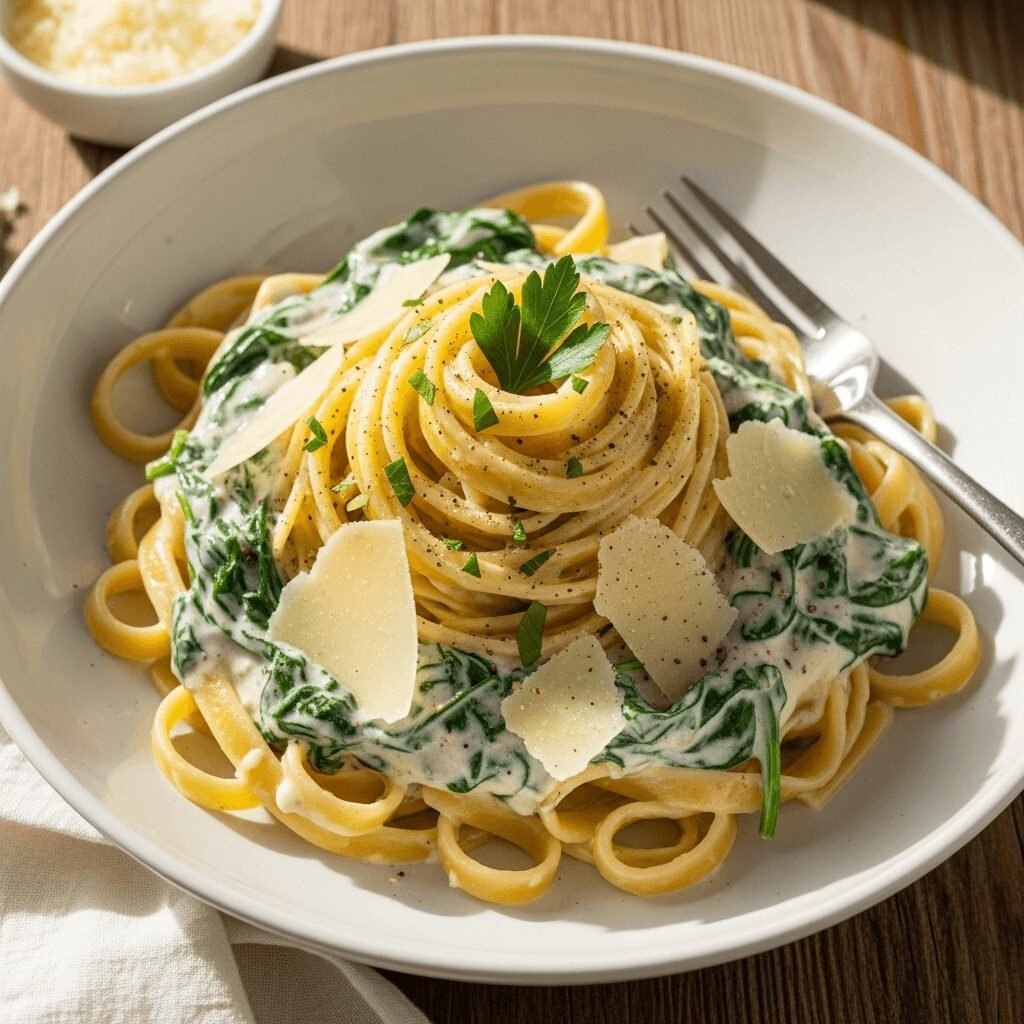
There’s something absolutely magical about twirling a fork full of silky, creamy pasta coated in rich Alfredo sauce with vibrant green spinach peeking through. This Creamy Spinach Alfredo Pasta is comfort food at its finest – luxurious enough to feel indulgent, yet simple enough to make on a busy weeknight when you’re craving something special.
This recipe combines tender pasta with a velvety homemade Alfredo sauce made from butter, cream, and Parmesan cheese, then studded with fresh spinach for a pop of color and nutrition. It’s the perfect answer to those evenings when you want a restaurant-quality meal without leaving your kitchen or spending hours cooking. In just 30 minutes, you can have a bowl of pure comfort that tastes like you’ve been slaving away all day.
Whether you’re looking for a quick weeknight dinner, a dish to impress dinner guests, or a cozy meal to curl up with on the couch, this creamy spinach Alfredo delivers every single time. It’s become one of my most-requested recipes because it hits that sweet spot between easy and impressive, healthy and indulgent, quick and absolutely delicious.
History / Background
Fettuccine Alfredo has a fascinating origin story that begins in early 20th century Rome. The dish was created by Alfredo di Lelio in 1908 when his wife had lost her appetite during pregnancy. Trying to create something she could enjoy, Alfredo prepared fresh fettuccine tossed with butter and Parmesan cheese – and the iconic dish was born.
The original Alfredo recipe was surprisingly simple, containing only three ingredients: pasta, butter, and Parmigiano-Reggiano cheese. The magic happened in the technique – the hot pasta was tossed vigorously with the butter and cheese, creating an emulsified sauce from the pasta’s starch. Alfredo opened a restaurant in Rome in 1914, and his signature dish became famous when Hollywood stars Mary Pickford and Douglas Fairbanks dined there during their honeymoon in 1920. They brought the recipe back to America, and it exploded in popularity.
As Alfredo sauce crossed the Atlantic, it evolved significantly. American versions began incorporating heavy cream to create an even richer, more stable sauce that could withstand commercial kitchen conditions. The addition of cream made the sauce more foolproof and forgiving, which is why most American Alfredo recipes today include cream as a key ingredient.
The addition of spinach to Alfredo pasta is a more modern innovation, likely emerging in the 1980s and 1990s as Americans became more health-conscious and looked for ways to incorporate vegetables into indulgent dishes. Spinach was the perfect choice – its mild flavor doesn’t compete with the rich sauce, it wilts beautifully into the hot pasta, and its vibrant green color creates a stunning visual contrast against the creamy white sauce.
Today, spinach Alfredo represents the best of Italian-American fusion cooking: taking a beloved classic and adapting it to suit modern tastes and nutritional awareness. It’s a dish that honors its Italian roots while embracing American creativity and love of vegetables.
Why You’ll Love This Recipe
This creamy spinach Alfredo pasta is about to become your new favorite dinner, and I’m not exaggerating. It’s one of those rare recipes that checks every single box – it’s quick, delicious, impressive, and surprisingly easy to make from scratch. The homemade Alfredo sauce comes together in just minutes and tastes infinitely better than anything from a jar, with a silky texture that clings perfectly to every strand of pasta.
Here’s why this recipe is absolutely irresistible:
- Ready in 30 Minutes – From start to finish, including boiling the pasta and making the sauce from scratch
- Restaurant-Quality Flavor – Tastes like expensive Italian restaurant pasta but costs a fraction of the price
- One-Pot Friendly – Can be adapted to cook everything in one pot for minimal cleanup
- Sneaks in Veggies – The spinach adds nutrition and color without overwhelming picky eaters
- Customizable – Easy to add protein, swap vegetables, or adjust the richness to your preference
- Budget-Friendly – Uses affordable, everyday ingredients you probably already have
- Kid-Approved – Even children who claim to hate vegetables will devour this creamy pasta
- Impressive Presentation – Looks stunning on the plate with minimal effort required
- Comfort Food Classic – Satisfies those cravings for something rich, warm, and cozy
- Leftover-Friendly – Reheats beautifully and tastes even better the next day
- Versatile Base – Serves as a perfect canvas for grilled chicken, shrimp, or mushrooms
Ingredient Notes
Pasta – Fettuccine is the traditional choice for Alfredo sauce because its wide, flat noodles provide maximum surface area for the sauce to cling to. However, penne, linguine, rigatoni, or even spaghetti work wonderfully. For a low-carb option, zucchini noodles or shirataki noodles can substitute, though the texture will be quite different. Use about 12 ounces for 4 generous servings.
Heavy Cream – This is the foundation of your Alfredo sauce and creates that signature velvety texture. Heavy cream (also called heavy whipping cream) has at least 36% fat content, which is essential for a stable, rich sauce that won’t break. Half-and-half can work in a pinch but may result in a thinner sauce. For a lighter version, you can use half heavy cream and half whole milk, but avoid skim or low-fat milk as they’ll create a watery sauce.
Butter – Use real, unsalted butter for the best flavor and control over seasoning. Butter adds richness and helps emulsify the sauce. European-style butter with higher fat content creates an even more luxurious sauce. Don’t substitute with margarine or oil – butter is essential to authentic Alfredo flavor.
Parmesan Cheese – Freshly grated Parmigiano-Reggiano is absolutely non-negotiable for the best results. The pre-shredded stuff in the green can contains anti-caking agents that prevent it from melting smoothly into the sauce. Buy a wedge of real Parmesan and grate it yourself using a box grater or food processor. Pecorino Romano can substitute for a sharper, saltier flavor.
Fresh Spinach – Baby spinach is preferred because it’s tender, requires no chopping, and wilts quickly into the sauce. You’ll need about 4-5 cups of fresh spinach, which seems like a lot but wilts down dramatically. Frozen spinach can substitute (use 10 ounces, thawed and squeezed completely dry), but fresh tastes better and has a more appealing texture. Avoid tough, mature spinach leaves.
Garlic – Fresh garlic cloves add aromatic depth to the sauce. Three to four cloves minced finely provide robust flavor without overwhelming the dish. Garlic powder can substitute in a pinch (use 1/2 teaspoon), but fresh is strongly preferred.
Seasonings – Salt, black pepper, and a pinch of nutmeg are the classic seasonings. Nutmeg is the secret ingredient that makes restaurant Alfredo taste so special – just a tiny pinch enhances the cream without making the dish taste like dessert. Red pepper flakes add a nice kick if you like heat.
Equipment Needed
- Large Pot – For boiling the pasta, at least 6-quart capacity
- Large Skillet or Sauté Pan – 12-inch size works perfectly for making the sauce and tossing everything together
- Colander – For draining the cooked pasta
- Box Grater or Microplane – Essential for freshly grating Parmesan cheese
- Wooden Spoon or Silicone Spatula – For stirring the sauce without scratching your pan
- Measuring Cups and Spoons – For accurate ingredient proportions
- Chef’s Knife – For mincing garlic and rough-chopping spinach if needed
- Cutting Board – For prep work
- Pasta Fork or Tongs – Makes tossing and serving much easier
- Ladle or Measuring Cup – For reserving pasta cooking water
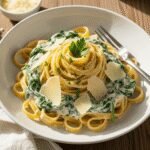
Creamy Spinach Alfredo Pasta Recipe
- Total Time: 30 minutes
- Yield: 4 servings 1x
- Diet: Gluten Free
Description
This Creamy Spinach Alfredo Pasta features tender fettuccine noodles tossed in a rich, homemade Alfredo sauce made with butter, cream, and freshly grated Parmesan cheese, then folded with fresh spinach for a restaurant-quality meal that’s ready in just 30 minutes.
Ingredients
- 12 oz fettuccine pasta (or pasta of choice)
- 3 tablespoons unsalted butter
- 4 garlic cloves, minced
- 1 1/2 cups heavy cream
- 1 1/4 cups freshly grated Parmesan cheese
- 4-5 cups fresh baby spinach (about 4 oz)
- 1/2 teaspoon salt (adjust to taste)
- 1/4 teaspoon black pepper
- 1/8 teaspoon ground nutmeg
- Pinch of red pepper flakes (optional)
- Fresh parsley for garnish (optional)
- Extra Parmesan for serving
Instructions
Pasta – Fettuccine is the traditional choice for Alfredo sauce because its wide, flat noodles provide maximum surface area for the sauce to cling to. However, penne, linguine, rigatoni, or even spaghetti work wonderfully. For a low-carb option, zucchini noodles or shirataki noodles can substitute, though the texture will be quite different. Use about 12 ounces for 4 generous servings.
Heavy Cream – This is the foundation of your Alfredo sauce and creates that signature velvety texture. Heavy cream (also called heavy whipping cream) has at least 36% fat content, which is essential for a stable, rich sauce that won’t break. Half-and-half can work in a pinch but may result in a thinner sauce. For a lighter version, you can use half heavy cream and half whole milk, but avoid skim or low-fat milk as they’ll create a watery sauce.
Butter – Use real, unsalted butter for the best flavor and control over seasoning. Butter adds richness and helps emulsify the sauce. European-style butter with higher fat content creates an even more luxurious sauce. Don’t substitute with margarine or oil – butter is essential to authentic Alfredo flavor.
Parmesan Cheese – Freshly grated Parmigiano-Reggiano is absolutely non-negotiable for the best results. The pre-shredded stuff in the green can contains anti-caking agents that prevent it from melting smoothly into the sauce. Buy a wedge of real Parmesan and grate it yourself using a box grater or food processor. Pecorino Romano can substitute for a sharper, saltier flavor.
Fresh Spinach – Baby spinach is preferred because it’s tender, requires no chopping, and wilts quickly into the sauce. You’ll need about 4-5 cups of fresh spinach, which seems like a lot but wilts down dramatically. Frozen spinach can substitute (use 10 ounces, thawed and squeezed completely dry), but fresh tastes better and has a more appealing texture. Avoid tough, mature spinach leaves.
Garlic – Fresh garlic cloves add aromatic depth to the sauce. Three to four cloves minced finely provide robust flavor without overwhelming the dish. Garlic powder can substitute in a pinch (use 1/2 teaspoon), but fresh is strongly preferred.
Seasonings – Salt, black pepper, and a pinch of nutmeg are the classic seasonings. Nutmeg is the secret ingredient that makes restaurant Alfredo taste so special – just a tiny pinch enhances the cream without making the dish taste like dessert. Red pepper flakes add a nice kick if you like heat.
Equipment Needed
- Large Pot – For boiling the pasta, at least 6-quart capacity
- Large Skillet or Sauté Pan – 12-inch size works perfectly for making the sauce and tossing everything together
- Colander – For draining the cooked pasta
- Box Grater or Microplane – Essential for freshly grating Parmesan cheese
- Wooden Spoon or Silicone Spatula – For stirring the sauce without scratching your pan
- Measuring Cups and Spoons – For accurate ingredient proportions
- Chef’s Knife – For mincing garlic and rough-chopping spinach if needed
- Cutting Board – For prep work
- Pasta Fork or Tongs – Makes tossing and serving much easier
- Ladle or Measuring Cup – For reserving pasta cooking water
📋 Recipe Card
Prep Time: 10 minutes
Cook Time: 20 minutes
Total Time: 30 minutes
Yield: 4 servings
Category: Dinner
Method: Stovetop
Cuisine: Italian-American
Diet: Vegetarian
Description: This Creamy Spinach Alfredo Pasta features tender fettuccine noodles tossed in a rich, homemade Alfredo sauce made with butter, cream, and freshly grated Parmesan cheese, then folded with fresh spinach for a restaurant-quality meal that’s ready in just 30 minutes.
Ingredients
- 12 oz fettuccine pasta (or pasta of choice)
- 3 tablespoons unsalted butter
- 4 garlic cloves, minced
- 1 1/2 cups heavy cream
- 1 1/4 cups freshly grated Parmesan cheese
- 4-5 cups fresh baby spinach (about 4 oz)
- 1/2 teaspoon salt (adjust to taste)
- 1/4 teaspoon black pepper
- 1/8 teaspoon ground nutmeg
- Pinch of red pepper flakes (optional)
- Fresh parsley for garnish (optional)
- Extra Parmesan for serving
Instructions
- Cook the Pasta – Bring a large pot of salted water to a rolling boil (use about 1 tablespoon salt per 4 quarts water). Add the fettuccine and cook according to package directions until al dente, usually 8-10 minutes. Before draining, reserve 1 cup of the starchy pasta cooking water – this is liquid gold for adjusting sauce consistency. Drain the pasta in a colander but don’t rinse it.
- Start the Sauce – While the pasta cooks, melt the butter in a large, deep skillet over medium heat. Add the minced garlic and sauté for 1-2 minutes, stirring constantly, until fragrant but not browned. The garlic should smell amazing but still be pale golden.
- Add the Cream – Pour in the heavy cream and stir to combine with the butter and garlic. Bring the mixture to a gentle simmer, then reduce heat to medium-low. Let it simmer gently for 3-4 minutes, stirring occasionally, until it starts to thicken slightly. Don’t let it come to a hard boil or the cream might break.
- Create the Alfredo Sauce – Reduce heat to low. Gradually add the freshly grated Parmesan cheese, about 1/4 cup at a time, stirring constantly in a figure-eight motion to help it melt smoothly. Wait until each addition is fully melted and incorporated before adding more. This gradual process prevents the cheese from clumping. The sauce will thicken as the cheese melts.
- Season the Sauce – Once all the Parmesan is melted and the sauce is smooth and creamy, season with salt, black pepper, and that pinch of nutmeg. Taste and adjust seasonings – remember the pasta will dilute the flavors slightly, so the sauce should taste well-seasoned at this stage.
- Wilt the Spinach – Add the fresh spinach to the Alfredo sauce and stir gently. The heat from the sauce will wilt the spinach in just 1-2 minutes. Keep stirring until all the spinach is wilted and distributed throughout the sauce. It will reduce in volume dramatically.
- Combine Pasta and Sauce – Add the drained pasta directly to the skillet with the sauce. Using tongs or a pasta fork, toss everything together, lifting and turning the pasta to coat every strand with the creamy sauce. If the sauce seems too thick, add reserved pasta water a few tablespoons at a time until you reach your desired consistency. The pasta water contains starch that helps the sauce cling to the noodles.
- Serve Immediately – Transfer to serving bowls or plates while hot. Garnish with extra freshly grated Parmesan, a crack of black pepper, and fresh parsley if desired. Serve immediately while the sauce is at its creamiest.
Notes
- Always use freshly grated Parmesan cheese, never the pre-shredded kind, for a smooth, creamy sauce without graininess.
- Reserve pasta water before draining – it’s the best tool for adjusting sauce consistency.
- The sauce will thicken as it sits, so serve immediately or thin with pasta water as needed.
- For a lighter version, use half heavy cream and half whole milk, but add 1 tablespoon flour to help stabilize the sauce.
- Frozen spinach works too: use 10 oz, thawed completely and squeezed bone-dry to remove all excess moisture.
- Add cooked chicken, shrimp, or Italian sausage to make it a heartier meal.
- Prep Time: 10 minutes
- Cook Time: 20 minutes
- Category: Dinner
- Method: Stovetop
- Cuisine: Italian-American
Nutrition
- Serving Size: 1/4 of recipe (about 2 cups)
- Calories: 685
- Sugar: 3g
- Sodium: 580mg
- Fat: 42g
- Saturated Fat: 25g
- Unsaturated Fat: 14g
- Trans Fat: 0g
- Carbohydrates: 58g
- Fiber: 3g
- Protein: 22g
- Cholesterol: 125mg
Tips & Variations
Add Protein – Transform this into a complete meal by adding 1 pound of cooked chicken breast (grilled, baked, or pan-seared and sliced), sautéed shrimp, crispy bacon pieces, or Italian sausage. Cook the protein separately and add it when tossing the pasta with sauce.
Vegetable Boost – Beyond spinach, try adding sun-dried tomatoes, roasted red peppers, sautéed mushrooms, steamed broccoli florets, or fresh cherry tomatoes. These add color, texture, and extra nutrition without overwhelming the classic Alfredo flavor.
Lightened-Up Version – Use half heavy cream and half 2% milk with 1 tablespoon of flour whisked in to stabilize it. You can also substitute half the butter with olive oil and use reduced-fat cream cheese for body with fewer calories.
Spicy Kick – Add 1/2 teaspoon red pepper flakes to the butter when sautéing garlic, or drizzle finished plates with chili oil. Calabrian chili paste is another excellent addition for complex heat.
Cajun Spinach Alfredo – Add 2 teaspoons of Cajun seasoning to the sauce and top with blackened chicken or shrimp for a Louisiana-inspired twist.
Tuscan Style – Add sun-dried tomatoes, artichoke hearts, and white beans along with the spinach for a rustic Tuscan pasta.
Different Greens – Substitute spinach with kale (remove tough stems and chop), Swiss chard, or arugula for different flavors and textures.
Cheese Variations – Mix in other cheeses like Asiago, Gruyere, or fontina along with the Parmesan for more complex flavor.
Lemon Brightness – Add the zest of one lemon and a tablespoon of fresh lemon juice at the end to cut through the richness with bright citrus notes.
Pro Chef Tips
Grate Your Own Parmesan – This cannot be stressed enough. Pre-shredded Parmesan contains cellulose (wood pulp) as an anti-caking agent, which prevents it from melting smoothly into the sauce. It will create a grainy, separated mess instead of silky smoothness. Buy a wedge of real Parmigiano-Reggiano and grate it yourself.
Temperature Control is Everything – Keep your heat low when adding cheese to prevent the sauce from breaking. High heat causes the proteins in cheese to seize up and separate from the fat, creating a greasy, grainy disaster. Low and slow wins the race with Alfredo.
Save That Pasta Water – The starchy pasta cooking water is your secret weapon for perfect sauce consistency. The starch acts as an emulsifier, helping the sauce cling to the pasta and creating a glossy, cohesive dish. Always reserve at least a cup before draining.
Fresh Nutmeg Makes a Difference – If possible, use freshly grated nutmeg rather than pre-ground. The flavor is more vibrant and aromatic. Just a tiny pinch (about 1/8 teaspoon) adds incredible depth without being identifiable.
Don’t Overcook the Pasta – Cook pasta just until al dente (firm to the bite) since it will continue cooking when tossed with the hot sauce. Overcooked pasta becomes mushy and won’t hold the sauce as well.
Work Quickly – Alfredo sauce is best when served immediately. Have everything prepped and ready to go before you start cooking, and serve as soon as the pasta is tossed with sauce. The sauce thickens as it cools.
Use a Wide Pan – A large, wide skillet provides more surface area for evaporation, helping the sauce reach the perfect consistency faster. It also makes tossing the pasta with sauce much easier than trying to do it in a small pan.
Quality Ingredients Matter – Since this recipe has so few ingredients, each one really shines through. Splurge on good butter, real heavy cream, and authentic Parmigiano-Reggiano – you’ll taste the difference.
Common Mistakes to Avoid
Using Pre-Grated Cheese – This is the most common mistake and the biggest culprit behind grainy, separated Alfredo sauce. The anti-caking agents in pre-shredded cheese prevent smooth melting. Always grate fresh Parmesan from a block for silky results.
Boiling the Sauce Too Hard – Bringing cream to a rolling boil can cause it to break or curdle. Keep it at a gentle simmer throughout the cooking process. If you see aggressive bubbling, reduce the heat immediately.
Adding Cheese Too Quickly – Dumping all the Parmesan in at once causes clumping. Add it gradually in small amounts, stirring constantly and waiting for each addition to fully melt before adding more. This patience pays off with perfectly smooth sauce.
Rinsing the Pasta – Never rinse pasta that’s going into a sauce. The starch coating helps the sauce adhere to the noodles. Rinsing washes away this valuable starch and cools the pasta, which you don’t want.
Not Seasoning Enough – Cream is a blank canvas that needs proper seasoning. Taste your sauce before adding the pasta and make sure it’s well-seasoned with salt, pepper, and that hint of nutmeg. The pasta will dilute the flavors slightly.
Letting It Sit Too Long – Alfredo sauce waits for no one. It thickens and can become gluey as it sits. Serve immediately after tossing the pasta with sauce for the best texture and flavor.
Storage & Meal Prep
Refrigerator Storage – Store leftover spinach Alfredo pasta in an airtight container in the refrigerator for up to 3-4 days. The sauce will thicken considerably as it cools because the fats solidify, but it reheats beautifully with the right technique.
Reheating on the Stovetop – This is the best method for restoring that creamy texture. Place the pasta in a skillet over medium-low heat and add 2-4 tablespoons of milk, cream, or chicken broth. Stir gently and frequently as it reheats, adding more liquid as needed until it reaches the desired consistency. The sauce will re-emulsify and become creamy again.
Reheating in the Microwave – Transfer a portion to a microwave-safe bowl and add 1-2 tablespoons of milk or cream. Cover loosely and microwave on 50% power in 30-second intervals, stirring between each interval, until heated through. Don’t overheat or the sauce may separate.
Freezing Considerations – While you can technically freeze Alfredo pasta, cream-based sauces don’t freeze particularly well. The sauce tends to separate and become grainy when thawed. If you must freeze, store in an airtight container for up to 2 months, then reheat gently on the stovetop with extra cream to help re-emulsify.
Meal Prep Tips – If meal prepping, slightly undercook the pasta and store it separate from the sauce if possible. Toss together when reheating for better texture. Add a splash of cream or milk when reheating portioned meals throughout the week.
Make-Ahead & Freezer Notes
Make the Sauce Ahead – You can prepare the Alfredo sauce up to 2 days in advance. Store it in an airtight container in the refrigerator without the pasta or spinach. When ready to serve, reheat the sauce gently over low heat, whisking in a splash of cream or milk to restore the creamy consistency, then proceed with wilting the spinach and tossing with freshly cooked pasta.
Prep Your Ingredients – Grate the Parmesan cheese up to 3 days ahead and store in an airtight container in the fridge. Wash and dry the spinach, mince the garlic, and measure out all ingredients the morning you plan to cook. This makes dinner prep lightning-fast.
Blanching Spinach Ahead – If you want to prep the spinach, quickly blanch it in boiling water for 30 seconds, shock in ice water, squeeze dry, and refrigerate for up to 2 days. Add it to the sauce at the end without wilting.
Freezing the Sauce Only – For better results, freeze just the Alfredo sauce (without pasta or spinach) in freezer-safe containers for up to 1 month. Thaw overnight in the refrigerator, then reheat gently with extra cream, add fresh spinach, and toss with freshly cooked pasta.
Assembly Tips – If you need to hold the finished dish for 15-30 minutes before serving (for a dinner party, for example), keep it warm in a slow cooker on the “warm” setting with an extra 1/4 cup of cream stirred in. This prevents it from drying out.
Serving Suggestions
This creamy spinach Alfredo pasta is rich and satisfying on its own, but pairing it with the right sides creates a complete, balanced meal that’s sure to impress.
Bread – Warm, crusty garlic bread or cheesy breadsticks are perfect for soaking up every last bit of that delicious sauce. Homemade garlic knots, focaccia, or a simple baguette toasted with butter and herbs also work beautifully.
Salads – A crisp, refreshing salad provides essential contrast to the rich pasta. Try a classic Caesar salad, Italian chopped salad with pepperoncini and olives, arugula salad with lemon vinaigrette, or a simple mixed green salad with balsamic dressing. The acidity and crunch balance the creamy pasta perfectly.
Vegetables – Roasted vegetables add color and nutrition to your plate. Consider roasted asparagus, garlic green beans, roasted cherry tomatoes, Brussels sprouts, or a medley of bell peppers and zucchini. Steamed broccoli is also a classic pairing.
Protein Additions – While the pasta is vegetarian as written, many people enjoy adding grilled chicken breast, pan-seared salmon, garlic butter shrimp, or Italian sausage to make it a heartier, more complete meal.
Wine Pairing – A crisp, acidic white wine cuts through the richness beautifully. Try Pinot Grigio, Sauvignon Blanc, or an unoaked Chardonnay. If you prefer red wine, a light-bodied Pinot Noir works surprisingly well.
Complete Menu Ideas – Serve the pasta as the main course with Caesar salad and garlic bread for a classic Italian-American dinner. Or create a lighter meal by pairing it with grilled chicken and roasted vegetables.
FAQs Section
Can I use milk instead of heavy cream?
Heavy cream is really best for authentic Alfredo sauce because its high fat content creates that signature richness and prevents the sauce from breaking. However, if you must use milk, choose whole milk and add 1 tablespoon of flour or cornstarch mixed with a bit of cold milk to help thicken and stabilize it. The result will be lighter and less rich, but still tasty. Avoid skim or low-fat milk as they’ll create a watery, thin sauce.
Why did my Alfredo sauce separate or become grainy?
This usually happens for one of three reasons: using pre-shredded Parmesan (which contains anti-caking agents), cooking the sauce over heat that’s too high, or adding the cheese too quickly. To fix a broken sauce, remove it from heat and whisk in 1-2 tablespoons of warm cream or pasta water while whisking vigorously. The extra liquid and emulsification should bring it back together.
Can I make this dairy-free or vegan?
Yes, with substitutions! Use cashew cream or full-fat coconut cream instead of heavy cream, vegan butter instead of regular butter, and nutritional yeast plus cashew-based vegan Parmesan instead of real Parmesan. The flavor will be different but still delicious. Blend 1 cup soaked cashews with 1 cup water for a creamy base.
What’s the best pasta shape for Alfredo sauce?
Fettuccine is traditional because its wide, flat surface holds sauce beautifully. However, any pasta works – penne, rigatoni, linguine, spaghetti, or even bow ties. Choose shapes with texture or crevices that catch the sauce. For a fun twist, try tortellini or ravioli.
How do I prevent the sauce from thickening too much?
Alfredo sauce naturally thickens as it sits because the fats cool and solidify. The best prevention is serving immediately after tossing with pasta. If it does thicken, simply reheat gently and whisk in pasta cooking water, cream, or milk a tablespoon at a time until you reach the desired consistency.
Can I use frozen spinach instead of fresh?
Absolutely! Use 10 ounces of frozen spinach. Thaw it completely, then squeeze it very firmly in a clean kitchen towel or through a fine-mesh strainer to remove all excess water – this is crucial. Frozen spinach holds a lot of liquid that can make your sauce watery. Add the squeezed spinach directly to the hot sauce and stir to distribute.
Why does my sauce seem thin?
If your sauce is too thin, continue simmering it gently over low heat to allow some of the liquid to evaporate and the sauce to reduce. You can also add more Parmesan cheese gradually, which will thicken it naturally. Another option is making a slurry with 1 teaspoon cornstarch mixed with 1 tablespoon cold cream, then whisking it into the sauce and simmering for 2 minutes.
Conclusion
This Creamy Spinach Alfredo Pasta is everything you want in a comfort food dinner – rich, indulgent, satisfying, and surprisingly easy to make at home. The combination of velvety Alfredo sauce with fresh spinach creates a dish that feels both decadent and somewhat virtuous at the same time. It’s proof that you don’t need to order takeout or visit an expensive restaurant to enjoy restaurant-quality pasta.
The beauty of this recipe is its versatility. Keep it simple as written for an elegant vegetarian meal, or customize it with your favorite proteins and vegetables to make it your own. Once you master this basic Alfredo technique, you’ll find yourself making it again and again, tweaking and experimenting based on what’s in your fridge or what your family is craving.
I truly hope this becomes a staple in your dinner rotation like it has in mine. There’s something deeply satisfying about creating a sauce this silky and delicious from scratch, knowing exactly what ingredients went into it. Your family and friends will be amazed that something this good came from your kitchen!