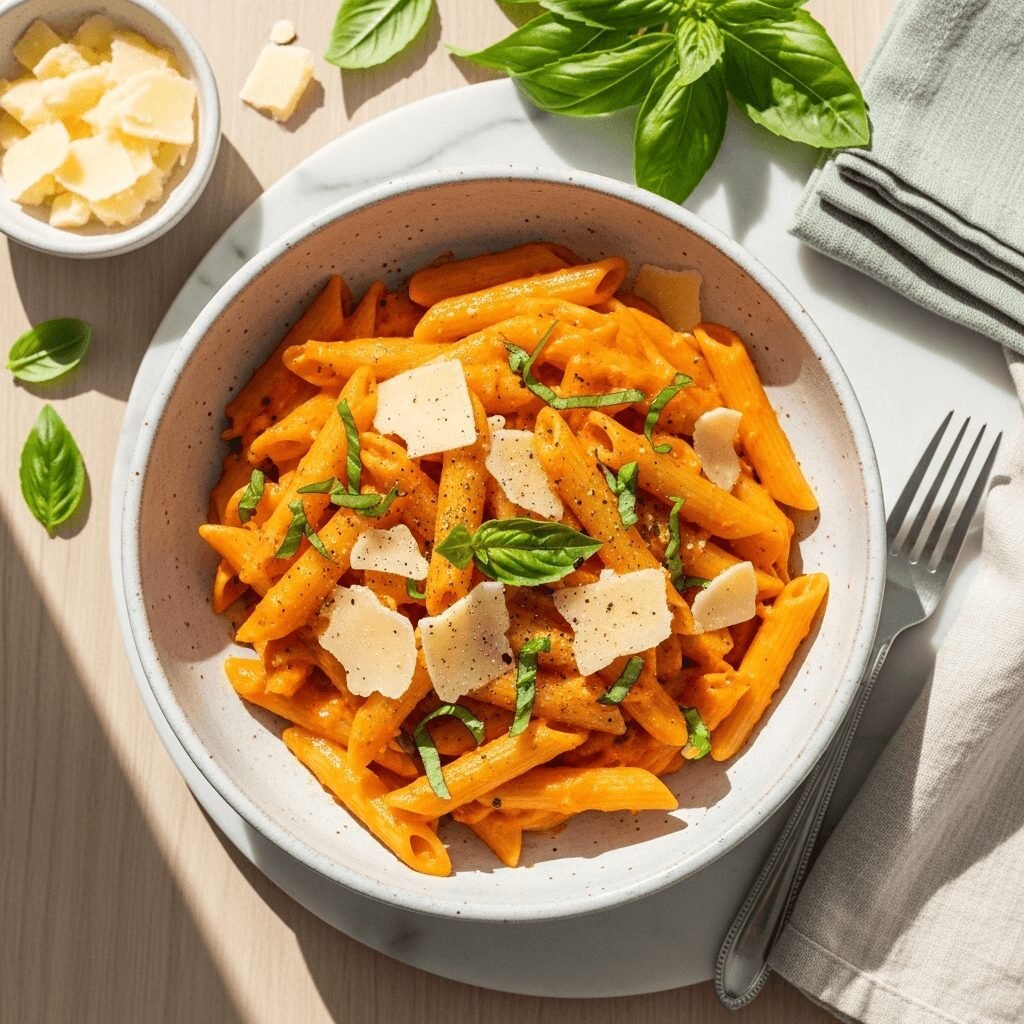
There’s something magical about a pasta dish that looks like it came from an upscale Italian restaurant but is actually simple enough to whip up on a busy weeknight. This Creamy Roasted Red Pepper Pasta is exactly that kind of recipe—a stunning, flavor-packed meal that transforms humble jarred roasted red peppers into a silky, luxurious sauce that clings to every strand of pasta.
This dish is perfect for those evenings when you want something comforting yet impressive, whether you’re cooking for your family on a Tuesday night or hosting friends for a casual dinner party. The vibrant coral-orange sauce is naturally sweetened by roasted peppers and enriched with cream and Parmesan, creating a flavor profile that’s both familiar and excitingly different from your usual pasta rotation. It’s the kind of recipe that gets saved, shared, and made over and over again—and once you taste it, you’ll understand why it’s become a Pinterest sensation among home cooks across America.
History / Background
While pasta with red pepper sauce might seem like a modern fusion creation, its roots actually trace back to traditional Italian and Spanish cooking traditions. Roasted red peppers have been a cornerstone of Mediterranean cuisine for centuries, particularly in regions like Calabria in southern Italy and throughout Spain where peppers are fire-roasted and preserved for year-round use.
The technique of blending roasted peppers into a creamy pasta sauce gained popularity in American-Italian restaurants during the 1990s and early 2000s, when chefs began experimenting with vegetable-based sauces as lighter alternatives to traditional cream sauces. This particular style of preparation—where roasted peppers are pureed with cream, garlic, and cheese—represents a beautiful marriage of Old World ingredients with New World creativity.
What makes this recipe special is how it democratizes restaurant-quality cooking. In the past, making this dish would have required roasting fresh peppers over an open flame, charring and peeling them—a time-consuming process that intimidated many home cooks. Today’s jarred roasted red peppers deliver the same sweet, smoky flavor in a fraction of the time, making this elegant dish accessible to everyone. It’s become a social media favorite because it photographs beautifully with its vibrant color, requires minimal ingredients, and delivers maximum flavor—the trifecta of Pinterest-worthy cooking.
Why You’ll Love This Recipe
This Creamy Roasted Red Pepper Pasta isn’t just another pasta recipe—it’s about to become your new go-to comfort meal that feels special every single time you make it. The sauce is naturally sweet from the roasted peppers with a subtle smokiness that adds depth, while the cream creates that restaurant-quality velvety texture we all crave.
Here’s why this recipe will earn a permanent spot in your dinner rotation:
- Ready in 30 minutes – Perfect for busy weeknights when you want something impressive without the stress
- One-pot wonder – Minimal cleanup means more time enjoying your meal and less time at the sink
- Naturally vegetarian – Packed with flavor without needing meat (though you can add it if you’d like!)
- Budget-friendly ingredients – Uses pantry staples and affordable jarred peppers instead of expensive specialty items
- Crowd-pleasing flavor – Even picky eaters love the slightly sweet, creamy sauce that’s not too spicy or overwhelming
- Meal prep friendly – Makes fantastic leftovers that actually taste better the next day
- Visually stunning – That gorgeous coral sauce photographs beautifully and looks impressive on the table
- Customizable – Easy to adjust for dietary needs or flavor preferences
- Kid-approved – The mild, creamy sauce is gentle enough for children while still sophisticated for adults
Ingredient Notes
Let’s talk about what makes this sauce so incredibly delicious and how each ingredient plays its part:
Roasted Red Peppers (Jarred): The star of the show! Look for quality jarred roasted red peppers packed in water or oil. Brands matter here—choose ones that are fire-roasted for deeper flavor. You’ll need about 12 ounces (one standard jar). Substitution: Fresh roasted peppers work beautifully if you have time, or try jarred piquillo peppers for a Spanish twist.
Heavy Cream: Creates that luxurious, velvety texture that makes the sauce cling to pasta perfectly. Don’t skimp here—the fat content is what makes everything come together. Substitution: Half-and-half works in a pinch, or use full-fat coconut cream for dairy-free (though flavor will change slightly).
Parmesan Cheese: Adds nutty, salty depth and helps thicken the sauce. Always use freshly grated for best flavor and texture—the pre-shredded stuff contains anti-caking agents that prevent smooth melting. Substitution: Pecorino Romano for sharper flavor, or nutritional yeast for vegan.
Garlic: Fresh garlic is non-negotiable here. You’ll need 4-5 cloves for robust flavor that mellows when sautéed. Substitution: Garlic paste works, but avoid garlic powder—it won’t provide the same depth.
Pasta: Any shape works, but penne, rigatoni, or fusilli are ideal because their ridges and hollows catch the sauce. Use 1 pound for 4-6 servings. Substitution: Gluten-free pasta, chickpea pasta, or even zucchini noodles for low-carb.
Olive Oil: For sautéing the garlic and adding richness. Extra virgin adds more flavor. Substitution: Butter for richer taste, or avocado oil for neutral flavor.
Vegetable or Chicken Broth: Helps thin the sauce to perfect consistency and adds savory depth. Low-sodium is best so you control the salt level. Substitution: Pasta cooking water works wonderfully and adds starch for better sauce adhesion.
Italian Seasoning: A blend of oregano, basil, and thyme that adds herbal notes. Substitution: Fresh basil at the end, or a combination of dried herbs from your spice cabinet.
Red Pepper Flakes (optional): Just a pinch adds warmth without heat. Substitution: Smoked paprika for smokiness without spice.
Salt and Black Pepper: Essential for bringing all flavors together. Season in layers—while cooking and at the end—for best results.
Equipment Needed
You don’t need a fancy kitchen to make restaurant-quality pasta! Here’s everything you’ll need:
- Large pot (for boiling pasta) – At least 6-quart capacity
- Large skillet or sauté pan (12-inch) – For making the sauce and tossing pasta
- Blender or food processor – For creating that silky-smooth sauce (immersion blender works too!)
- Colander – For draining pasta
- Wooden spoon or silicone spatula – For stirring and tossing
- Measuring cups and spoons – For accurate ingredient amounts
- Chef’s knife and cutting board – For mincing garlic and chopping garnishes
- Microplane or grater – For fresh Parmesan cheese
- Ladle or measuring cup – For reserving pasta water (pro tip!)
- Tongs or pasta fork – For tossing pasta with sauce
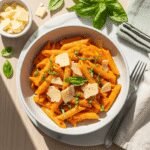
Creamy Roasted Red Pepper Pasta Recipe
- Total Time: 30 minutes
- Yield: 6 servings 1x
- Diet: Vegetarian
Description
This Creamy Roasted Red Pepper Pasta features a velvety, restaurant-quality sauce made from jarred roasted red peppers, heavy cream, and Parmesan cheese. Ready in just 30 minutes, this vibrant and flavorful pasta dish is perfect for weeknight dinners or entertaining guests. The naturally sweet and smoky sauce creates a stunning coral-colored coating that clings beautifully to every bite of pasta.
Ingredients
For the Pasta:
- 1 pound pasta (penne, rigatoni, or your favorite shape)
- 1 tablespoon salt (for pasta water)
For the Roasted Red Pepper Sauce:
- 1 jar (12 ounces) roasted red peppers, drained
- 1 cup heavy cream
- ¾ cup freshly grated Parmesan cheese, plus more for serving
- ½ cup vegetable or chicken broth (or reserved pasta water)
- 4-5 cloves garlic, minced
- 2 tablespoons olive oil
- 1 teaspoon Italian seasoning
- ½ teaspoon salt (adjust to taste)
- ¼ teaspoon black pepper
- ¼ teaspoon red pepper flakes (optional)
For Garnish:
- Fresh basil leaves, chopped
- Extra Parmesan cheese
- Fresh cracked black pepper
Instructions
- Cook the pasta: Bring a large pot of salted water to a rolling boil. Add pasta and cook according to package directions until al dente (usually 8-10 minutes). Before draining, reserve 1 cup of pasta cooking water. Drain pasta and set aside.
- Sauté the garlic: While pasta cooks, heat olive oil in a large skillet over medium heat. Add minced garlic and sauté for 1-2 minutes until fragrant and just beginning to turn golden. Be careful not to burn it—burnt garlic tastes bitter!
- Blend the sauce: In a blender or food processor, combine the drained roasted red peppers, heavy cream, Parmesan cheese, broth (or reserved pasta water), Italian seasoning, salt, black pepper, and red pepper flakes if using. Add the sautéed garlic and any oil from the pan. Blend on high speed for 60-90 seconds until completely smooth and creamy with no chunks remaining.
- Simmer the sauce: Pour the blended sauce back into the same skillet you used for garlic. Bring to a gentle simmer over medium heat, stirring occasionally. Let it simmer for 3-4 minutes to allow flavors to meld and sauce to thicken slightly. If the sauce seems too thick, add a splash of reserved pasta water to reach desired consistency.
- Combine pasta and sauce: Add the cooked, drained pasta to the skillet with the sauce. Toss well using tongs or a pasta fork, ensuring every piece of pasta is coated in that gorgeous creamy sauce. If needed, add more pasta water a tablespoon at a time until the sauce perfectly coats the pasta. Let everything warm together for 1-2 minutes, tossing frequently.
- Final touches: Taste and adjust seasoning with additional salt and pepper if needed. Remove from heat and stir in a handful of fresh basil if desired.
- Serve immediately: Divide pasta among serving bowls. Top each serving with extra grated Parmesan cheese, fresh cracked black pepper, and torn basil leaves. Serve hot with crusty bread for soaking up any extra sauce!
Notes
- Pasta water is magic: The starchy pasta water helps the sauce emulsify and cling to the pasta better than plain broth. Always reserve some before draining!
- Pepper quality matters: Use jarred peppers that are fire-roasted for best flavor. Check the ingredient list—you want peppers, water/oil, and maybe some citric acid, nothing else.
- Dairy-free option: Substitute heavy cream with full-fat coconut cream and use nutritional yeast instead of Parmesan for a dairy-free version. The flavor will be different but still delicious.
- Make it heartier: Add cooked chicken, shrimp, Italian sausage, or crispy chickpeas for extra protein.
- Leftovers: Store in an airtight container in the refrigerator for up to 4 days. The sauce may thicken when cold—add a splash of broth or water when reheating.
- Consistency control: The sauce thickens as it sits. If reheating leftovers, thin with pasta water, broth, or cream to restore creamy texture.
- Prep Time: 10 minutes
- Cook Time: 20 minutes
- Category: Dinner
- Method: Stovetop
- Cuisine: American
Nutrition
- Serving Size: 1⅓ cups (approximately 1/6 of recipe)
- Calories: 485
- Sugar: 5g
- Sodium: 520mg
- Fat: 22g
- Saturated Fat: 12g
- Unsaturated Fat: 8g
- Trans Fat: 0g
- Carbohydrates: 58g
- Fiber: 3g
- Protein: 15g
- Cholesterol: 58mg
Nutrition information is estimated and will vary based on cooking methods and specific brands of ingredients used.
Tips & Variations
The beauty of this recipe is how easily it adapts to your preferences and dietary needs. Here are some fantastic ways to customize it:
Protein Additions:
- Toss in grilled chicken breast slices or rotisserie chicken for an easy protein boost
- Add cooked shrimp during the last minute of tossing for a seafood twist
- Crumbled Italian sausage adds savory, spicy depth
- Crispy chickpeas provide plant-based protein and delightful texture
- Seared salmon or tuna steaks make this feel extra restaurant-fancy
Vegetable Boost:
- Sauté spinach, kale, or arugula and fold into the sauce for extra nutrients
- Add sun-dried tomatoes to the blender for sweet-tart complexity
- Roasted cherry tomatoes on top add freshness and acidity
- Sautéed mushrooms bring earthy, umami flavors
- Broccoli florets cooked with the pasta add color and crunch
Spice It Up:
- Double the red pepper flakes for more heat
- Add a pinch of cayenne pepper to the sauce
- Drizzle with chili oil before serving
- Mix in some ‘nduja (spicy Italian spreadable salami) for authentic Calabrian flavor
Lighter Version:
- Replace half the heavy cream with Greek yogurt stirred in at the end
- Use half-and-half instead of heavy cream
- Increase the ratio of peppers to cream for more veggie content
- Swap regular pasta for chickpea or lentil pasta for added protein and fiber
Herb Variations:
- Fresh basil is classic, but try fresh oregano or thyme
- Add a squeeze of lemon juice and lemon zest for brightness
- Stir in fresh parsley for color and freshness
- A pinch of fresh rosemary adds aromatic sophistication
Pro Chef Tips
Want to take this dish from great to absolutely restaurant-quality? Here are the insider secrets that professional chefs use:
Salt the pasta water generously. It should taste like the sea! This is your only chance to season the pasta itself from the inside out. Undersalted pasta will always taste bland no matter how flavorful your sauce is.
Save pasta water before draining. This starchy liquid is liquid gold for adjusting sauce consistency and helping it cling to pasta. The starch acts as a natural thickener and emulsifier that water or broth can’t replicate.
Don’t rinse your pasta. Rinsing washes away the surface starch that helps sauce adhere. Drain and immediately toss with sauce while pasta is still steaming hot.
Blend the sauce longer than you think. A truly silky, restaurant-quality sauce has zero graininess. Blend for a full 90 seconds on high speed until it’s as smooth as heavy cream itself.
Finish pasta IN the sauce. Don’t just pour sauce over drained pasta. Add pasta to the simmering sauce and toss for 1-2 minutes. This allows the pasta to absorb flavor and creates better sauce adhesion.
Taste and adjust. Always taste before serving and adjust seasoning. Roasted peppers vary in sweetness and salt content, so your sauce might need more salt, pepper, or even a tiny pinch of sugar to balance acidity.
Use good Parmesan. Genuine Parmigiano-Reggiano makes a noticeable difference. The nutty, complex flavor of aged Parmesan elevates this sauce from good to exceptional.
Control the heat. Keep the sauce at a gentle simmer, never a rapid boil. High heat can cause cream to break or become grainy. Low and slow creates silky perfection.
Finish with fat. A drizzle of high-quality olive oil or a pat of butter stirred in right before serving adds gloss and richness that makes the dish look professionally prepared.
Common Mistakes to Avoid
Even a simple recipe can go wrong if you’re not careful. Here’s what to watch out for:
Overcooking the pasta. Al dente means “to the tooth”—pasta should have a slight bite to it. Remember it will cook for another minute or two in the sauce, so drain it when it’s just shy of perfect. Mushy pasta ruins even the best sauce.
Burning the garlic. Garlic goes from perfect to burnt in seconds. If your garlic turns dark brown or black, it will make the entire sauce taste bitter. Start over with fresh garlic—it’s worth it. Keep the heat at medium and watch it carefully.
Making the sauce too thick. If your sauce is gloppy and doesn’t flow smoothly, you need more liquid. Add reserved pasta water or broth a tablespoon at a time until you achieve a creamy, coating consistency that’s pourable but not runny. The sauce should flow like heavy cream.
Skipping the taste test. Jarred roasted peppers vary widely in salt content and sweetness. Always taste your sauce before tossing with pasta and adjust seasoning accordingly. It should be well-seasoned and balanced, not bland or one-dimensional.
Forgetting to warm serving bowls. Cold bowls cool down your pasta too quickly. Run serving bowls under hot water for 30 seconds and dry them before plating. This small step keeps your pasta at the perfect temperature for serving.
Using pre-shredded cheese. Those convenient bags of shredded Parmesan contain cellulose (wood pulp) to prevent clumping, which prevents smooth melting and creates a grainy sauce. Always buy a block and grate it fresh for creamy, smooth results.
Not reserving enough pasta water. One cup might seem like a lot, but you’ll be surprised how much you might need to adjust consistency. Better to have extra than to need it and not have it.
Storage & Meal Prep
This Creamy Roasted Red Pepper Pasta is meal prep heaven! Here’s everything you need to know about storing and reheating:
Refrigerator Storage:
Store leftovers in an airtight container in the refrigerator for up to 4 days. The sauce will thicken considerably as it chills because the cream solidifies and the pasta absorbs more sauce. This is completely normal and easy to fix when reheating.
Reheating Instructions:
The best way to reheat is on the stovetop. Place pasta in a skillet over medium-low heat and add 2-3 tablespoons of water, broth, or cream per serving. Stir frequently until heated through and the sauce returns to its creamy consistency, about 3-4 minutes. You can also microwave individual portions: add a splash of liquid, cover loosely, and microwave in 45-second intervals, stirring between each, until hot.
Texture After Storage:
The pasta will absorb some sauce overnight, which actually intensifies the flavor. Some people think this tastes even better the next day! Just remember to add liquid when reheating to restore the creamy texture.
Sauce-Only Storage:
If you’re meal prepping, consider storing the sauce separately from the pasta. The sauce keeps for up to 5 days refrigerated and can be frozen for up to 3 months. Cook fresh pasta when you’re ready to eat for the best texture.
Portion Control:
Divide leftovers into individual portions before refrigerating. This makes grabbing lunch or dinner throughout the week easier and helps with reheating—single portions reheat more evenly than a large container.
Make-Ahead & Freezer Notes
Planning ahead? This recipe is perfect for make-ahead prep and freezing:
Make-Ahead Sauce (Recommended):
The sauce can be made up to 3 days in advance and stored in an airtight container in the refrigerator. In fact, the flavors meld and improve after a day! When ready to serve, reheat the sauce gently on the stovetop while you cook fresh pasta. This is ideal for dinner parties—you can have the hard work done ahead of time and just toss together at the last minute.
Freezing the Sauce:
The roasted red pepper sauce freezes beautifully for up to 3 months. Cool completely, then transfer to freezer-safe containers or bags. Leave about an inch of headspace for expansion. Label with the date and contents. Thaw overnight in the refrigerator, then reheat gently on the stovetop, adding a splash of cream if needed to restore texture.
Freezing Finished Pasta:
Cream-based pasta can be frozen, but the texture won’t be quite as silky after thawing. If you do freeze the complete dish, slightly undercook the pasta before tossing with sauce. Freeze in portions in airtight containers for up to 2 months. Thaw in the refrigerator overnight, then reheat on the stovetop with added cream or pasta water to revive the sauce.
Best Reheating Method from Frozen:
For frozen sauce: Thaw overnight, then reheat gently on the stovetop. For frozen complete dish: Thaw completely in the refrigerator (don’t try to reheat from frozen as cream can separate), then reheat on the stovetop over medium-low heat with additional liquid.
Batch Cooking Strategy:
Double or triple the sauce recipe and freeze in meal-sized portions. This way, you can have restaurant-quality pasta in 15 minutes anytime—just thaw sauce, cook pasta, and toss together. It’s like having your own personal chef in the freezer!
Serving Suggestions
This beautiful pasta deserves equally delicious accompaniments! Here’s how to round out your meal:
Bread:
- Warm, crusty Italian bread or garlic bread is essential for soaking up every last drop of that incredible sauce
- Cheesy garlic knots add fun and extra indulgence
- Focaccia with rosemary and sea salt brings an artisanal touch
- Simple toasted baguette slices brushed with olive oil
Salads:
- Classic Caesar salad with crispy romaine and Parmesan provides a refreshing contrast
- Simple arugula salad with lemon vinaigrette cuts through the richness beautifully
- Caprese salad with fresh mozzarella, tomatoes, and basil stays on theme
- Mixed greens with balsamic reduction keeps things light and elegant
Vegetables:
- Roasted asparagus with lemon zest
- Garlicky sautéed green beans with almonds
- Roasted broccoli with Parmesan
- Grilled zucchini with fresh herbs
Proteins (if not added to pasta):
- Simple grilled chicken breast seasoned with Italian herbs
- Pan-seared salmon with lemon and dill
- Garlic butter shrimp skewers
- Italian-style meatballs on the side
Beverages:
- Crisp white wine like Pinot Grigio or Sauvignon Blanc complements the creamy sauce
- Light red wine like Chianti or Pinot Noir for red wine lovers
- Sparkling water with lemon for a refreshing non-alcoholic option
- Homemade lemonade or iced tea for family dinners
Complete Meal Ideas:
For a romantic dinner: Serve with Caesar salad, garlic bread, white wine, and tiramisu for dessert.
For family dinner: Pair with simple mixed green salad, garlic knots, and vanilla ice cream for dessert.
For entertaining: Offer with antipasto platter beforehand, crusty bread, roasted vegetables, and Italian desserts like panna cotta or cannoli.
FAQs
Can I use fresh roasted red peppers instead of jarred?
Absolutely! Fresh roasted peppers will give you even more authentic smoky flavor. You’ll need about 3-4 large red bell peppers. Roast them over an open flame or under the broiler until charred, then place in a covered bowl for 10 minutes to steam. Peel off the skins, remove seeds, and use as you would jarred peppers. Just note this adds about 20 minutes to your prep time.
Is this recipe spicy?
Not at all! Roasted red bell peppers are naturally sweet with zero heat. The optional red pepper flakes add just a hint of warmth, not spiciness. This is a very mild, family-friendly sauce that even kids typically love. If you want it spicy, you’ll need to add hot sauce, cayenne, or extra red pepper flakes to your taste.
Can I make this dairy-free or vegan?
Yes! Replace the heavy cream with full-fat coconut cream (the thick part from a can of coconut milk) and use nutritional yeast instead of Parmesan cheese. Start with 1/3 cup nutritional yeast and add more to taste. The flavor will be different—slightly more earthy and less sharp—but still delicious. You might want to add a squeeze of lemon juice for brightness.
Why is my sauce grainy instead of smooth?
This usually happens from not blending long enough or from using pre-shredded Parmesan cheese. Blend the sauce for a full 90 seconds until it’s completely silky with no visible flecks. Always use freshly grated Parmesan from a block, as pre-shredded cheese contains anti-caking agents that prevent smooth melting. If your sauce is still grainy, strain it through a fine-mesh sieve before tossing with pasta.
Can I use a different type of pasta?
Definitely! While tube-shaped pastas like penne and rigatoni hold the sauce beautifully in their hollows, any pasta shape works. Fettuccine, spaghetti, farfalle, shells, orecchiette, or even stuffed pastas like tortellini are all excellent choices. You can also use gluten-free pasta, chickpea pasta, or vegetable noodles. Just adjust the cooking time according to your pasta’s package directions.
How do I prevent the cream from curdling?
Keep the heat at medium or medium-low when simmering the sauce. High heat can cause the cream to separate and become grainy. Never let the sauce come to a rolling boil. If you’re concerned, you can temper the sauce by adding the cream gradually while stirring constantly. Using high-quality, fresh heavy cream also helps prevent curdling.
Can I add other vegetables to this dish?
Absolutely! This sauce is incredibly versatile. Sautéed mushrooms, spinach, sun-dried tomatoes, roasted cherry tomatoes, zucchini, or artichoke hearts all pair wonderfully with the roasted red pepper sauce. Add heartier vegetables like mushrooms to the pan when you sauté the garlic, and fold in delicate greens like spinach at the very end just to wilt them.
Conclusion
There you have it—your new favorite pasta recipe that’s destined to become a regular in your dinner rotation! This Creamy Roasted Red Pepper Pasta proves that you don’t need hours in the kitchen or fancy ingredients to create something truly special. With just 30 minutes and a handful of simple ingredients, you can serve up a restaurant-quality dish that looks stunning, tastes incredible, and leaves everyone asking for seconds.
The beauty of this recipe is in its versatility. Make it exactly as written for a tried-and-true winner, or customize it with your favorite proteins, vegetables, and flavor tweaks. Whether you’re cooking for picky kids, impressing dinner guests, or just treating yourself to something delicious on a Tuesday night, this pasta delivers every single time.
So grab that jar of roasted red peppers from your pantry, put on your favorite music, and get cooking! Don’t forget to save this recipe to your Pinterest boards so you can find it again and again. And when you make it (because you absolutely should), I’d love to hear how it turned out! Drop a comment below sharing your experience, any variations you tried, or just to let me know you loved it. Your feedback helps me create more recipes you’ll actually want to make.
Happy cooking, friends! Here’s to more easy, delicious meals that bring joy to your table. 🍝❤️