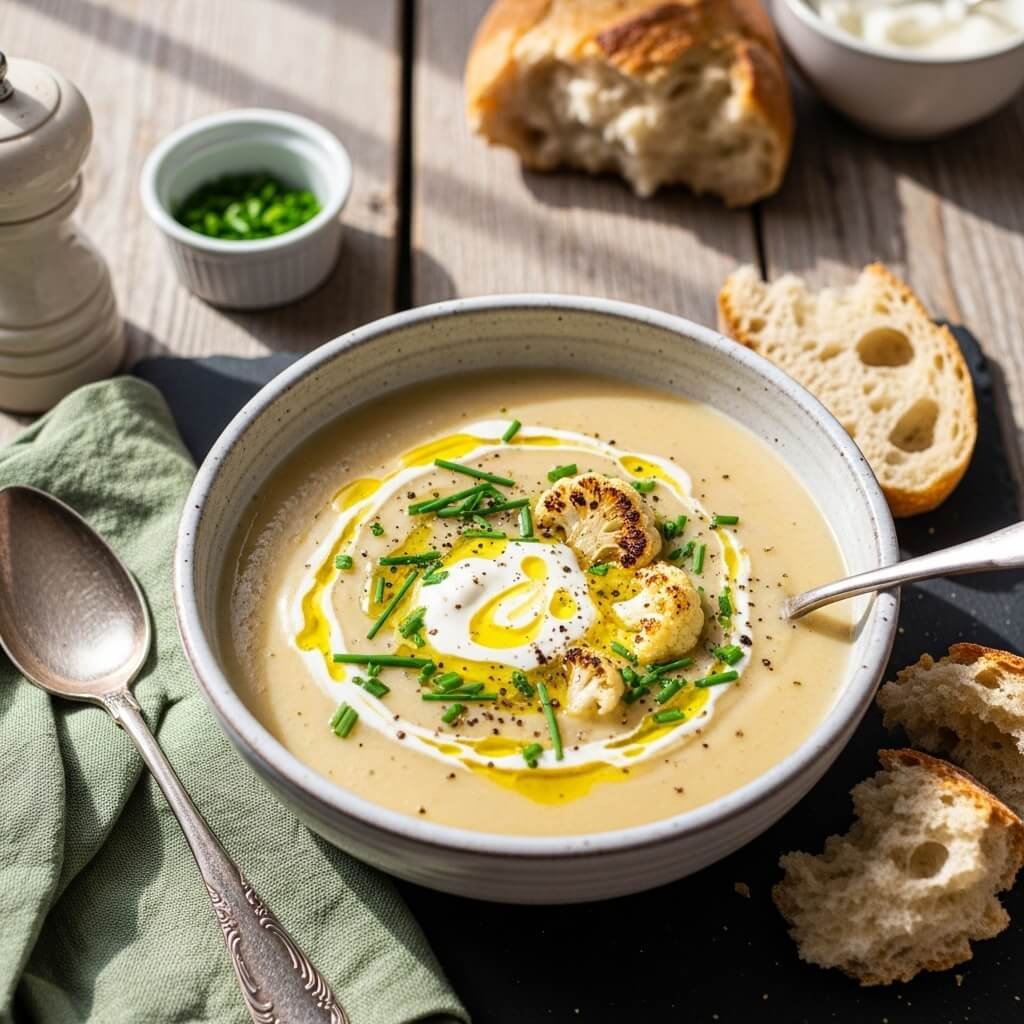
Welcome to your new favorite cozy soup recipe! This Creamy Roasted Garlic Cauliflower Soup is everything you want in a comforting bowl—silky smooth, deeply flavorful, and satisfying without being heavy. Imagine roasted cauliflower florets caramelized to golden perfection, combined with sweet, mellow roasted garlic, all blended into a luxuriously creamy soup that tastes indulgent but is actually surprisingly healthy.
What makes this roasted cauliflower soup truly special is the depth of flavor that comes from roasting rather than simply boiling the vegetables. When you roast cauliflower, it develops nutty, almost sweet notes with beautiful caramelized edges that add incredible complexity to the soup. The roasted garlic becomes soft, buttery, and mild—nothing like the sharp bite of raw garlic—infusing the entire soup with rich, aromatic sweetness that’s absolutely addictive.
This elegant soup is perfect for chilly autumn evenings, cozy winter lunches, or anytime you need something warm and nourishing. It’s impressive enough to serve at dinner parties as a sophisticated starter, yet simple enough to make on a weeknight when you’re craving comfort food. Whether you’re looking for a healthy lunch option, a vegetarian dinner that satisfies, or just want to sneak more vegetables into your diet in the most delicious way possible, this creamy cauliflower soup delivers on every level. Plus, it’s naturally gluten-free and can easily be made vegan or dairy-free!
History & Background: Cauliflower’s Journey to Soup Bowl Stardom
Cauliflower has been cultivated for over 2,000 years, originating in the Mediterranean region and mentioned in ancient writings from Turkey, Italy, and Greece. For centuries, it remained a relatively obscure vegetable in Europe, primarily grown in Italy and the Middle East. It wasn’t until the 16th century that cauliflower gained popularity in France, where it became a favorite in the court of Louis XIV, earning the nickname “the aristocrat of vegetables.”
The technique of roasting vegetables before incorporating them into soups is a cornerstone of classical European cooking, particularly in French cuisine where developing deep flavors through proper cooking technique is paramount. French chefs understood that roasting vegetables caramelizes their natural sugars, creating a foundation of flavor that simply can’t be achieved through boiling or steaming alone. This method was revolutionary, transforming humble vegetables into restaurant-worthy dishes.
Cauliflower soup itself has roots in French potage (thick soup) traditions, where vegetables would be cooked down and pureed into smooth, elegant soups served in aristocratic households. The classic French cauliflower soup, “Crème Dubarry,” named after Madame du Barry, mistress of King Louis XV, typically features cauliflower blended with cream and butter into a silky puree. This soup was considered refined dining and showcased French culinary sophistication.
In recent years, cauliflower has experienced a remarkable renaissance in American cooking, transforming from a often-maligned, overcooked vegetable into a nutritional powerhouse and culinary chameleon. The low-carb movement embraced cauliflower as a versatile substitute for everything from rice to pizza crust, bringing renewed attention to this cruciferous vegetable. Home cooks and chefs alike discovered that when prepared properly—especially through roasting—cauliflower becomes sweet, nutty, and absolutely delicious.
This modern version of roasted garlic cauliflower soup represents the perfect marriage of classical French technique with contemporary American dietary preferences. It maintains that luxurious, creamy texture we crave in comfort food while being lighter and more nutritious than traditional cream-based soups. The addition of roasted garlic—a technique popularized in American restaurants in the 1990s—adds another layer of flavor complexity that elevates this soup from simple to sublime. Today, it’s become a Pinterest favorite and dinner table staple for health-conscious home cooks who refuse to sacrifice flavor for nutrition.
Why You’ll Love This Creamy Cauliflower Soup
This soup strikes the perfect balance between healthy and indulgent, proving you don’t have to choose between nutritious and delicious. The roasting process creates layers of flavor that make this taste like you spent hours developing complexity, when really it’s quite straightforward to make. It’s the kind of soup that warms you from the inside out while making you feel good about what you’re eating.
Here’s why this roasted garlic cauliflower soup will become a regular in your recipe rotation:
- Restaurant-Quality Flavor at Home: Tastes like something from an upscale bistro, but made in your own kitchen with simple ingredients
- Naturally Healthy: Packed with vegetables, vitamins, and fiber while being naturally low in calories and carbs
- Incredibly Creamy Without Heavy Cream: Gets its silky texture from blended cauliflower and just a touch of cream or dairy-free alternative
- Dietary-Friendly: Naturally gluten-free, easily made vegan or dairy-free, and keto-friendly
- Make-Ahead Marvel: Actually tastes better the next day as flavors meld, perfect for meal prep or entertaining
- Budget-Conscious: Cauliflower is affordable and readily available year-round, making this an economical choice
- Elegant Yet Simple: Impressive presentation for dinner parties, but easy enough for weeknight cooking
- Roasted Garlic Magic: The mellow, sweet roasted garlic adds incredible depth without being overpowering
- Freezer-Friendly: Makes great leftovers and freezes beautifully for future quick meals
- Customizable: Easy to adjust consistency, richness, and add-ins to suit your preferences
- Kid-Friendly: The mild, creamy flavor appeals even to picky eaters who usually avoid vegetables
- Comforting and Cozy: Perfect for cold weather, sick days, or anytime you need a warm hug in a bowl
Ingredient Notes: Building Layers of Flavor
Understanding your ingredients helps you achieve the best results and make smart substitutions. Here’s what goes into this delicious roasted garlic cauliflower soup and why each component matters:
Cauliflower: The star of the show! One large head (about 2 pounds) provides the base and body of the soup. Choose cauliflower with tight, compact florets and fresh green leaves. When roasted, it becomes sweet and nutty. No good substitutes here—cauliflower is essential!
Garlic (Whole Head): Roasting an entire head of garlic transforms it from pungent and sharp to sweet, buttery, and mild. The roasted cloves squeeze out easily and blend seamlessly into the soup, adding incredible depth. Don’t use garlic powder or raw garlic—roasted is key to this recipe’s magic.
Onion: Yellow or white onion adds aromatic sweetness and savory depth. The onion provides a flavor foundation that complements the cauliflower beautifully. Shallots can substitute for a more delicate flavor.
Vegetable or Chicken Broth: The liquid base that creates the soup consistency. Use good-quality, low-sodium broth so you can control seasoning. Vegetable broth keeps it vegetarian/vegan; chicken broth adds extra savory depth.
Heavy Cream or Half-and-Half: Adds richness and silky texture. You can use less for a lighter soup, or substitute with coconut cream, cashew cream, or even whole milk. For dairy-free, unsweetened coconut milk or oat cream work wonderfully.
Olive Oil: For roasting the cauliflower and garlic. Extra virgin olive oil adds flavor, but regular olive oil or avocado oil work too. The oil helps caramelize the vegetables.
Fresh Thyme: This herb pairs beautifully with cauliflower and adds earthy, subtle flavor. Fresh is best, but dried thyme (use 1/3 the amount) works in a pinch. Rosemary is another lovely option.
Bay Leaves: Add subtle herbal depth while the soup simmers. Remove before blending. Optional but recommended for complexity.
Salt and White Pepper: White pepper is traditional in cream soups (no black specks), but black pepper works fine. Season generously—cauliflower needs good seasoning to shine.
Optional Garnishes: Crispy bacon bits, chives, sour cream, croutons, Parmesan cheese, or truffle oil take this soup from simple to spectacular.
Equipment Needed
You’ll need these kitchen tools to create this velvety roasted cauliflower soup:
- Large baking sheet (for roasting cauliflower and garlic)
- Parchment paper or aluminum foil (to line baking sheet)
- Large soup pot or Dutch oven (5-6 quart capacity)
- Immersion blender (easiest option for smooth soup)
- OR high-powered blender (Vitamix, Blendtec, or similar)
- OR food processor (works but may require batches)
- Sharp knife and cutting board (for chopping cauliflower and onion)
- Wooden spoon or silicone spatula (for stirring)
- Measuring cups and spoons
- Ladle (for serving)
- Small piece of aluminum foil (for wrapping garlic head)
- Fine-mesh strainer (optional, for ultra-smooth texture)
-
Print

Creamy Roasted Garlic Cauliflower Soup Recipe (Velvety & Comforting!)
- Total Time: 1 hour 5 minutes
- Yield: 6 servings 1x
- Diet: Vegetarian
Description
This Creamy Roasted Garlic Cauliflower Soup is silky smooth, deeply flavorful, and wonderfully comforting. Roasting the cauliflower and garlic creates incredible caramelized sweetness and nutty depth that makes this healthy soup taste absolutely luxurious. Perfect for cozy dinners, elegant entertaining, or healthy meal prep!
Ingredients
ScaleFor Roasting:
- 1 large head cauliflower (about 2 lbs), cut into florets
- 1 whole head garlic
- 3 tablespoons olive oil, divided
- 1 teaspoon salt
- ½ teaspoon black pepper
For the Soup:
- 2 tablespoons butter (or olive oil for dairy-free)
- 1 large yellow onion, diced
- 5 cups vegetable broth (or chicken broth), low-sodium
- 2 sprigs fresh thyme (or ½ teaspoon dried thyme)
- 2 bay leaves
- ¾ cup heavy cream (or coconut cream for dairy-free)
- Salt and white pepper to taste
- Pinch of nutmeg (optional, but wonderful)
For Garnish (Optional):
- Fresh chives, chopped
- Sour cream or Greek yogurt
- Crispy bacon bits
- Homemade croutons
- Grated Parmesan cheese
- Drizzle of truffle oil
- Toasted pumpkin seeds
Instructions
- Preheat and Prep for Roasting: Preheat your oven to 400°F (200°C). Line a large baking sheet with parchment paper. Cut cauliflower into evenly-sized florets (about 1-2 inches). Prepare the garlic by slicing off the top ¼ inch of the garlic head to expose the cloves, keeping the head intact.
- Season and Roast Cauliflower: Spread cauliflower florets on the prepared baking sheet in a single layer. Drizzle with 2 tablespoons of olive oil, sprinkle with 1 teaspoon salt and ½ teaspoon black pepper. Toss well to coat evenly. Roast for 35-40 minutes, flipping halfway through, until golden brown with caramelized edges and fork-tender.
- Roast the Garlic: While cauliflower roasts, drizzle the exposed garlic cloves with remaining 1 tablespoon olive oil. Wrap the entire head tightly in aluminum foil. Place on the baking sheet with cauliflower and roast for 35-40 minutes until cloves are soft and golden. Let cool slightly, then squeeze out the soft roasted garlic cloves from their skins. Set aside.
- Sauté Aromatics: In a large soup pot or Dutch oven, melt butter over medium heat. Add diced onion and sauté for 5-7 minutes until softened and translucent, stirring occasionally. Don’t let it brown—you want it sweet and tender.
- Build the Soup Base: Add the roasted cauliflower and roasted garlic cloves to the pot with the onions. Pour in the vegetable broth. Add fresh thyme sprigs and bay leaves. Bring to a boil, then reduce heat and simmer uncovered for 15 minutes, allowing flavors to meld together.
- Remove Herbs and Blend: Remove and discard the thyme sprigs and bay leaves. Using an immersion blender, blend the soup directly in the pot until completely smooth and velvety (this takes 2-3 minutes of blending). Alternatively, carefully transfer soup in batches to a high-powered blender (remove center cap and cover with towel to allow steam to escape) and blend until silky smooth, then return to pot.
- Add Cream and Season: Stir in the heavy cream. Taste and adjust seasoning generously with salt and white pepper (you’ll likely need 1-2 teaspoons more salt). Add a tiny pinch of nutmeg if using—it adds wonderful warmth. If soup is too thick, add more broth to reach desired consistency. If too thin, simmer uncovered for 5-10 minutes to reduce.
- Serve: Ladle the hot soup into bowls. Garnish with your choice of toppings—fresh chives, a dollop of sour cream, crispy bacon, croutons, Parmesan, or a drizzle of truffle oil. Serve immediately with crusty bread.
Notes
- Ultra-Smooth Texture: For restaurant-quality smoothness, strain the blended soup through a fine-mesh strainer, pressing with a ladle to extract all liquid.
- Roasting is Key: Don’t skip the roasting step! It’s what gives this soup its incredible depth and sweetness. Boiled cauliflower won’t deliver the same flavor.
- Consistency Control: This soup thickens as it sits. Keep extra broth handy to thin it when reheating. Start with less cream if you prefer a lighter soup.
- Dairy-Free Option: Use olive oil instead of butter, and substitute heavy cream with full-fat coconut milk or cashew cream for equally rich results.
- Make it Vegan: Use vegetable broth, olive oil, and coconut cream or cashew cream instead of dairy products.
- Flavor Boost: A squeeze of lemon juice at the end brightens all the flavors beautifully.
- Prep Time: 15 minutes
- Cook Time: 50 minutes
- Category: Soup / Appetizer
- Method: Roasting + Stovetop
- Cuisine: American / French-Inspired
Nutrition
- Serving Size: Approximately 1½ cups
- Calories: 195
- Sugar: 6g
- Sodium: 680mg
- Fat: 14g
- Saturated Fat: 7g
- Unsaturated Fat: 6g
- Trans Fat: 0g
- Carbohydrates: 15g
- Fiber: 4g
- Protein: 5g
- Cholesterol: 30mg
-
Nutrition information is approximate and calculated using heavy cream. For dairy-free versions using coconut cream, cholesterol will be 0mg and saturated fat may be slightly higher. Values vary based on specific brands and modifications.
Tips & Variations: Make It Your Own
Flavor Variations:
- Cheesy Version: Stir in 1 cup shredded sharp cheddar or Gruyère cheese after blending for extra richness
- Curry Cauliflower Soup: Add 1-2 tablespoons curry powder when sautéing onions for an Indian-inspired twist
- Truffle Cauliflower Soup: Finish with truffle oil and garnish with truffle salt for an elegant, earthy flavor
- Lemon Herb: Add fresh lemon zest and juice, plus extra fresh herbs like parsley or dill
- Smoky Version: Add ½ teaspoon smoked paprika or use smoked salt for depth
Texture Variations:
- Chunky Style: Reserve 1 cup of roasted cauliflower florets and stir them back in after blending for texture
- Rustic Version: Blend less for a slightly chunky, rustic texture instead of completely smooth
- Creamy-Dreamy: Add extra cream or a block of cream cheese for ultra-rich indulgence
Protein Additions:
- Top with crispy bacon or pancetta for smoky, salty crunch
- Stir in shredded rotisserie chicken for a heartier meal
- Add cooked Italian sausage (crumbled) for a satisfying dinner soup
- Garnish with seared scallops for an elegant presentation
Vegetable Additions:
- Roast carrots or parsnips along with the cauliflower for added sweetness
- Add a roasted potato for extra creaminess and body
- Include roasted fennel for a subtle anise flavor
- Stir in fresh baby spinach or kale after blending for added greens
Dietary Modifications:
- Keto/Low-Carb: This soup is naturally low-carb! Use heavy cream and serve without bread
- Whole30: Use coconut cream, olive oil, and ensure broth is compliant
- Paleo: Same as Whole30—coconut cream and compliant broth
- Vegan: Use vegetable broth, olive oil, and coconut or cashew cream
Pro Chef Tips: Restaurant-Quality Results
- Don’t Rush the Roasting: Deeply caramelized cauliflower is the secret to incredible flavor. The florets should have golden-brown, almost charred edges. If they’re pale, roast longer. These caramelized bits create depth you simply can’t achieve any other way.
- Cut Cauliflower Evenly: Uniform-sized florets (about 1-2 inches) ensure even roasting. Smaller pieces will burn while larger ones stay undercooked. Take the extra minute to cut them similarly sized.
- Roast Garlic Properly: The garlic should be soft enough to squeeze out like toothpaste and golden brown. Undercooked garlic will be sharp and harsh; properly roasted garlic is sweet and buttery with no bite.
- Season Aggressively: Cauliflower is naturally mild and needs generous seasoning. Season at multiple stages—before roasting, after adding broth, and after blending. Taste and adjust until the flavor pops.
- Blend Thoroughly: For that silky, restaurant-quality texture, blend for a full 2-3 minutes. The soup should be completely smooth with no graininess. A high-powered blender works better than an immersion blender, but both work with enough time.
- Control Your Consistency: Add broth gradually toward the end if soup is too thick. It should coat the back of a spoon but still pour easily. Remember it will thicken as it cools and when refrigerated.
- Finish with Fat: A final drizzle of good olive oil, pat of butter, or swirl of cream on top before serving adds luxurious richness and makes the soup look professionally finished.
- Garnish Thoughtfully: Garnishes aren’t just decoration—they add contrasting textures and flavors. Crunchy croutons against silky soup, fresh herbs against rich cream, crispy bacon against smooth purée—these contrasts elevate the eating experience.
Common Mistakes to Avoid
Boiling Instead of Roasting the Cauliflower: This is the biggest mistake! Boiled or steamed cauliflower makes bland, one-dimensional soup. Roasting caramelizes the natural sugars, creating sweetness, nuttiness, and depth that defines this recipe. Never skip the roasting step.
Not Seasoning Enough: Cauliflower is subtle and can taste flat without proper seasoning. Many home cooks under-salt soup, making it taste bland despite good ingredients. Season boldly, taste frequently, and adjust until flavors sing.
Over-Blending While Too Hot: If using a countertop blender, never fill it more than halfway with hot liquid, and always remove the center cap (covering with a towel to prevent splatters). Hot liquid expands and can explode out of a sealed blender, causing dangerous burns and a huge mess.
Adding Cream Too Early: Add cream after blending and at the end of cooking. If cream simmers too long or at too high heat, it can break or curdle, creating an unappetizing texture. Gently warm it through after adding.
Rushing the Onion Sauté: Take time to properly soften the onions until translucent and sweet. Raw or barely cooked onions taste harsh and sharp, interfering with the soup’s smooth, mellow flavor profile.
Not Adjusting Consistency: Soup continues to thicken as it sits, especially when refrigerated. What seems perfectly thick when hot will become paste-like when cold. Keep extra broth on hand for thinning when reheating.
Storage & Meal Prep: Keeping It Fresh
Refrigerator Storage: Store leftover roasted garlic cauliflower soup in an airtight container in the refrigerator for up to 5 days. The flavors actually deepen and improve after a day, making this soup even better as leftovers! The soup will thicken considerably when chilled—this is completely normal.
Reheating Instructions:
- Stovetop Method (Best): Pour soup into a saucepan over medium-low heat. Add ¼-½ cup broth or water to thin to desired consistency as it thickens when cold. Heat gently, stirring occasionally, until warmed through (about 5-7 minutes). Don’t boil or the cream may separate.
- Microwave Method: Transfer to a microwave-safe bowl, add a splash of broth, cover with a damp paper towel, and heat in 1-minute intervals, stirring between, until hot. Add more liquid as needed.
- Slow and Gentle: Always reheat gently. High heat can cause cream-based soups to separate or develop a grainy texture.
Meal Prep Tips: This soup is IDEAL for meal prep! Make a big batch on Sunday and enjoy throughout the week:
- Portion into individual containers (about 1½ cups each) for easy grab-and-go lunches
- Store garnishes separately (croutons, bacon, chives) and add fresh when serving
- Keep extra broth in a separate container to add when reheating
- Pair with pre-made sandwiches or salads for complete make-ahead lunches
- The soup actually tastes better on day 2-3 as flavors meld
Make-Ahead & Freezer Notes
Make-Ahead Instructions: This soup is perfect for advance preparation in multiple ways:
Option 1 – Roast Vegetables Ahead: Roast the cauliflower and garlic up to 2 days ahead. Store in an airtight container in the refrigerator. When ready to make soup, proceed with sautéing onions and continue with the recipe. This cuts active cooking time significantly.
Option 2 – Make Soup Completely: Prepare the entire soup up to 3 days ahead, but hold back some of the cream. Store in the refrigerator. When ready to serve, reheat gently, add remaining cream, and adjust consistency and seasoning.
Option 3 – Prepare Before Adding Cream: Make the soup through the blending step but don’t add cream. Cool and refrigerate for up to 4 days or freeze. When serving, reheat and stir in fresh cream for the best texture.
Freezer Instructions: This soup freezes beautifully for up to 3 months:
Best Method – Freeze Without Cream: Prepare soup completely but don’t add the cream. Cool soup completely (place pot in an ice bath to speed cooling). Transfer to freezer-safe containers or heavy-duty freezer bags, leaving 1 inch of headspace for expansion. Label with date and “add ¾ cup cream when reheating.”
To Freeze With Cream: While not ideal, you can freeze the finished soup. Note that cream-based soups may separate slightly when thawed. Whisk vigorously or blend briefly after reheating to restore smooth texture.
Thawing and Reheating:
- Thaw overnight in refrigerator (never at room temperature)
- Reheat gently on stovetop over medium-low heat, stirring frequently
- Add cream now if you froze without it
- Thin with additional broth to reach desired consistency
- Whisk well if soup seems separated—it will come back together
- Taste and re-season as freezing can dull flavors
Portion Freezing: Freeze in individual portions (1½-2 cups) for quick single servings. Use freezer-safe containers or bags. Thaw and reheat single portions in microwave for easy lunches.
Serving Suggestions: Complete Your Soup Experience
This elegant roasted cauliflower soup pairs beautifully with breads, salads, and light accompaniments that complement rather than compete with its creamy richness:
Perfect Bread Pairings:
- Crusty French baguette or sourdough bread
- Homemade garlic bread or garlic knots
- Buttery dinner rolls or Parker House rolls
- Focaccia bread with rosemary
- Grilled cheese sandwich (the ultimate soup companion!)
- Cheese and herb biscuits
- Soft pretzels with mustard
Salad Accompaniments:
- Simple arugula salad with lemon vinaigrette
- Classic Caesar salad
- Mixed greens with pears, walnuts, and blue cheese
- Apple and fennel slaw
- Beet and goat cheese salad
- Spinach salad with warm bacon dressing
Protein Additions:
- Grilled chicken breast sliced and served alongside
- Pan-seared salmon for an elegant dinner
- Crispy bacon crumbled on top
- Prosciutto crisps for sophisticated garnish
- Hard-boiled egg halves for extra protein
Perfect Occasions:
- Elegant dinner party starter
- Cozy fall and winter dinners
- Healthy weeknight meals
- Holiday entertaining (Thanksgiving, Christmas)
- Comfort food when you’re feeling under the weather
- Sophisticated lunch for guests
- Meal prep for the work week
Wine and Beverage Pairings:
- White Wine: Chardonnay (especially oaked), Viognier, or white Burgundy
- Light Red: Pinot Noir if you prefer red wine
- Non-Alcoholic: Sparkling apple cider, herbal tea, or sparkling water with lemon
Complete Meal Ideas:
- Lunch: Serve with half a grilled cheese sandwich and small salad
- Dinner: Start with this soup, follow with roasted chicken and vegetables
- Appetizer Course: Serve in small cups or shot glasses as an elegant passed appetizer
- Bread Bowl: Serve in hollowed-out sourdough bread bowls for rustic presentation
Frequently Asked Questions
Can I make this soup without roasting the cauliflower? Technically yes, but I strongly don’t recommend it. Roasting is what gives this soup its incredible depth, sweetness, and caramelized flavor. Boiled or steamed cauliflower makes a much blander, one-dimensional soup. The roasting step is truly the magic ingredient here—don’t skip it!
Why is my soup grainy or gritty instead of smooth? This usually happens from not blending long enough. Cauliflower needs thorough blending—at least 2-3 full minutes—to become completely smooth. A high-powered blender works better than an immersion blender. For ultra-smooth restaurant texture, strain the blended soup through a fine-mesh sieve, pressing with a ladle to extract all liquid.
Can I make this dairy-free or vegan? Absolutely! Use olive oil instead of butter for sautéing, and substitute the heavy cream with full-fat coconut milk, coconut cream, or cashew cream. These alternatives create equally rich, creamy results. Ensure your broth is vegetable-based for fully vegan soup.
How do I fix soup that’s too thick? Simply thin it with additional broth, water, or milk/cream, adding a quarter cup at a time until you reach desired consistency. Cauliflower soup thickens significantly when cooled or refrigerated, so you’ll likely need to add liquid when reheating leftovers.
Can I use frozen cauliflower instead of fresh? Yes, but fresh produces better results. If using frozen, choose plain florets (not the riced variety), thaw completely, pat very dry with paper towels, and roast at 425°F for 25-30 minutes. Frozen cauliflower contains more moisture, so drying it well is crucial for good caramelization.
My soup tastes bland. What went wrong? Under-seasoning is the most common culprit! Cauliflower needs generous salt and pepper. Season before roasting, again when building the soup, and adjust after blending. Also ensure you properly caramelized the cauliflower—pale, barely roasted cauliflower lacks the depth that makes this soup special. Don’t be shy with salt!
How do I reheat without the soup separating? Reheat gently over medium-low heat, never boiling. Add extra broth to thin the soup first, then heat slowly while stirring frequently. If the soup does separate, whisk vigorously or use an immersion blender briefly to bring it back together.
Can I add other vegetables to this soup? Yes! Roasted carrots, parsnips, or potatoes work beautifully. Add them to the baking sheet with the cauliflower. Keep the ratio of cauliflower to other vegetables at about 3:1 so the cauliflower flavor remains dominant.
Conclusion: Your New Comfort Soup Favorite
This Creamy Roasted Garlic Cauliflower Soup is more than just another recipe—it’s a warm, comforting hug in a bowl that nourishes both body and soul. The combination of caramelized roasted cauliflower, sweet roasted garlic, and silky cream creates a soup that’s sophisticated enough for entertaining yet simple enough for weeknight cooking. It proves that healthy eating doesn’t mean sacrificing flavor or satisfaction.
What makes this soup truly special is how it transforms a humble, often-overlooked vegetable into something absolutely crave-worthy. The roasting process unlocks cauliflower’s natural sweetness and nutty depth, while the roasted garlic adds layers of mellow, aromatic complexity. Together, they create a flavor profile that’s far more impressive than the simple ingredient list suggests.
Whether you’re looking to incorporate more vegetables into your diet, need an elegant starter for dinner guests, want something cozy for meal prep, or simply crave comfort food that doesn’t derail your health goals, this roasted cauliflower soup delivers on every front. It’s naturally gluten-free, easily adaptable for various dietary needs, and absolutely delicious—the kind of recipe that becomes a staple you make again and again.
Ready to experience the most delicious way to eat your vegetables? Make this Creamy Roasted Garlic Cauliflower Soup today! Don’t forget to snap a photo of your beautiful bowl and share it on Pinterest—I’d love to see your creation! Leave a comment below telling me your favorite garnish or how you customized the recipe, and save this to your soup board so you can find it whenever a cozy craving strikes. Happy cooking! 🥣✨