
There’s something absolutely magical about a perfectly cooked risotto—that silky, creamy texture, the tender rice that’s just barely firm to the bite, and the luxurious way it coats your spoon. This Creamy Mushroom Spinach Risotto takes that Italian classic and transforms it into a comforting, restaurant-quality dish you can easily make at home. Packed with earthy mushrooms, vibrant spinach, and finished with a generous shower of parmesan cheese, this risotto is pure comfort in a bowl.
While risotto has a reputation for being fussy or requiring constant attention, I promise this recipe is more approachable than you think. Yes, you’ll need to stir it regularly, but the process is actually quite meditative and relaxing. This mushroom risotto is perfect for date nights when you want to impress, cozy weekend dinners, or even as an elegant vegetarian main course for dinner parties. It’s also wonderfully versatile—serve it as a side dish alongside roasted chicken or grilled steak, or enjoy it as a satisfying meatless meal on its own.
The combination of meaty mushrooms, fresh spinach, and creamy arborio rice creates layers of flavor and texture that feel indulgent but are surprisingly nutritious. Whether you’re a risotto novice or a seasoned pro, this recipe will become your go-to for impressive, comforting Italian-inspired cooking.
History / Background
Risotto originated in Northern Italy, particularly in the Lombardy region where rice cultivation flourished thanks to the area’s abundance of water from the Po River and its tributaries. The technique of slowly cooking rice with broth dates back to the 14th century, but risotto as we know it today became popular in the 19th century. Milan’s famous Risotto alla Milanese, flavored with saffron, is often considered the “mother” of all risotto recipes.
The genius of risotto lies in its cooking method: by gradually adding warm liquid to arborio or carnaroli rice and stirring constantly, the rice releases its starches, creating that signature creamy texture without any cream at all. This technique revolutionized Italian cooking and spread throughout Italy, with each region developing its own variations using local ingredients.
Mushroom risotto, or “Risotto ai Funghi,” became particularly beloved in the regions of Piedmont and Veneto, where porcini mushrooms grow wild in the forests. Italian families would forage for mushrooms in autumn and create this earthy, luxurious dish. The addition of spinach is a more modern adaptation that adds color, nutrients, and a slight freshness that balances the richness of the dish.
Today, risotto has become a staple in restaurants worldwide, often seen as a test of a chef’s skill. The beauty of this mushroom spinach risotto is that it honors the traditional technique while being accessible to home cooks. It represents the Italian philosophy of “cucina povera”—taking simple, quality ingredients and transforming them into something extraordinary through proper technique and care.
Why You’ll Love This Recipe
This creamy mushroom spinach risotto is everything you want in a comfort food dish, and it’s surprisingly achievable even if you’ve never made risotto before. Once you master this recipe, you’ll find yourself making it on repeat.
Here’s why this risotto will become your new favorite:
- Restaurant-Quality Results: Tastes like something from a fancy Italian trattoria, but made in your own kitchen
- Impressive Yet Achievable: Looks and tastes sophisticated but uses a straightforward technique
- Vegetarian-Friendly: A satisfying meatless main that even carnivores will love
- Naturally Creamy: No heavy cream needed—the rice creates its own velvety texture
- Budget-Friendly: Uses affordable ingredients that deliver premium results
- Customizable: Easy to adapt with different mushrooms, greens, or add-ins
- Perfect for Date Night: Romantic, cozy, and impressive without being stressful
- Nutrient-Rich: Packed with vegetables, whole grains, and plenty of vitamins
- Comforting: The ultimate cozy dish for chilly evenings
- Great for Entertaining: Can be partially made ahead and finished when guests arrive
- Gluten-Free: Naturally gluten-free when made with proper broth
Ingredient Notes
Let’s break down what makes this mushroom spinach risotto so incredibly delicious. Each ingredient plays a crucial role in building those complex layers of flavor.
Arborio Rice: This is the star of the show. Arborio is a short-grain Italian rice with a high starch content that creates that signature creamy texture. Look for it in the rice or Italian section of your grocery store. Carnaroli or Vialone Nano rice are excellent alternatives—in fact, many Italians prefer Carnaroli for its slightly firmer texture. Don’t substitute with long-grain rice like jasmine or basmati; they simply won’t work.
Mixed Mushrooms: I love using a combination of cremini (baby bella), shiitake, and oyster mushrooms for complex, earthy flavor. You can also use white button mushrooms (most affordable), portobello (very meaty), or splurge on wild mushrooms like chanterelles or porcini when in season. Each variety brings its own character. If using dried porcini, rehydrate them and use the soaking liquid as part of your broth—it’s liquid gold!
Fresh Spinach: Baby spinach is ideal because it’s tender and cooks quickly. Mature spinach works too but may need chopping. In a pinch, you can use frozen spinach (thawed and squeezed dry), though fresh gives better texture and color. Kale or Swiss chard are heartier alternatives if you prefer more substantial greens.
Vegetable or Chicken Broth: This is your cooking liquid, so quality matters. Homemade is best, but good store-bought works beautifully. Avoid anything too salty, as you’ll be reducing it during cooking. For deeper flavor, use mushroom broth or a mix of vegetable and chicken broth. Always keep it warm in a separate pot—cold broth will slow down cooking.
White Wine: Dry white wine adds acidity and complexity. Pinot Grigio, Sauvignon Blanc, or Chardonnay all work well. The alcohol cooks off, leaving behind bright flavor. If you prefer not to use wine, substitute with extra broth and a squeeze of lemon juice at the end.
Parmesan Cheese: Freshly grated Parmigiano-Reggiano is essential for that nutty, salty depth. The pre-grated stuff in a can won’t melt properly and lacks flavor. Grate it yourself from a wedge—your risotto will thank you. Pecoriano Romano is a sharper, saltier alternative.
Butter: Unsalted butter is stirred in at the end (called “mantecatura” in Italian) to add richness and glossy shine. This final addition makes risotto luxuriously creamy. For a dairy-free version, use extra olive oil or vegan butter.
Shallots and Garlic: These aromatics form the flavor base. Shallots are milder and sweeter than onions, making them perfect for risotto. If you can’t find shallots, use a small yellow onion instead.
Fresh Herbs: Fresh thyme and parsley add brightness and elevate the dish. Dried thyme works in a pinch (use one-third the amount), but fresh parsley at the end is really worth having.
Equipment Needed
Risotto doesn’t require fancy equipment, but having the right tools makes the process smoother:
- Large, Heavy-Bottomed Saucepan or Dutch Oven – At least 4-quart capacity; the heavy bottom prevents scorching and distributes heat evenly
- Separate Saucepan – For keeping your broth warm
- Wooden Spoon or Silicone Spatula – For stirring (wooden spoons are traditional and don’t scratch your pan)
- Sharp Chef’s Knife and Cutting Board – For slicing mushrooms and chopping aromatics
- Ladle – For adding broth gradually (a measuring cup works too)
- Measuring Cups and Spoons – For accurate measurements
- Box Grater or Microplane – For grating fresh parmesan
- Timer – Helpful for tracking cooking time
- Large Serving Bowl – Risotto is best served in shallow bowls to showcase its creamy texture

Creamy Mushroom Spinach Risotto Recipe
- Total Time: 50 minutes
- Yield: 4-6 servings 1x
- Diet: Vegetarian
Description
This Creamy Mushroom Spinach Risotto is pure comfort food at its finest. Made with arborio rice, earthy mixed mushrooms, fresh spinach, and plenty of parmesan cheese, this Italian classic delivers restaurant-quality results right at home. The rice is cooked to creamy perfection with a tender bite, and the dish comes together in under an hour. Perfect as a vegetarian main course or elegant side dish.
Ingredients
For the Risotto:
- 1½ cups arborio rice
- 6 cups vegetable or chicken broth, warmed
- ½ cup dry white wine (such as Pinot Grigio)
- 3 tablespoons olive oil, divided
- 2 tablespoons unsalted butter, divided
- 2 large shallots, finely diced (about ½ cup)
- 4 cloves garlic, minced
- 1 pound mixed mushrooms (cremini, shiitake, oyster), sliced
- 4 cups fresh baby spinach (about 4 oz)
- ¾ cup freshly grated parmesan cheese, plus more for serving
- 2 tablespoons fresh thyme leaves (or 2 teaspoons dried)
- ¼ cup fresh parsley, chopped
- Salt and freshly ground black pepper, to taste
- Juice of ½ lemon (optional, for brightness)
Instructions
- Warm the Broth: Pour your broth into a medium saucepan and bring it to a gentle simmer over low heat. Keep it warm throughout the cooking process—this is crucial for maintaining the right cooking temperature and preventing the rice from cooling down between additions.
- Sauté the Mushrooms: Heat 2 tablespoons of olive oil in a large, heavy-bottomed saucepan or Dutch oven over medium-high heat. Add the sliced mushrooms in a single layer (work in batches if needed to avoid overcrowding). Let them cook undisturbed for 3-4 minutes until golden brown on one side, then stir and continue cooking for another 3-4 minutes. The mushrooms should be deeply caramelized and any liquid should have evaporated. Season with a pinch of salt and pepper, then transfer to a plate and set aside.
- Build the Flavor Base: In the same pan, reduce heat to medium and add the remaining tablespoon of olive oil and 1 tablespoon of butter. Once the butter melts, add the diced shallots and cook for 2-3 minutes until softened and translucent. Add the minced garlic and fresh thyme, cooking for another 30 seconds until fragrant. Don’t let the garlic brown.
- Toast the Rice: Add the arborio rice to the pan and stir constantly for 2-3 minutes. You want each grain coated with the oil and butter and slightly translucent around the edges. This toasting step adds a subtle nutty flavor and helps the rice maintain its structure during cooking. You should hear a gentle sizzling sound.
- Add the Wine: Pour in the white wine and stir continuously until it’s almost completely absorbed by the rice, about 2-3 minutes. The wine will bubble vigorously at first—this is perfect. It adds acidity and depth to balance the richness.
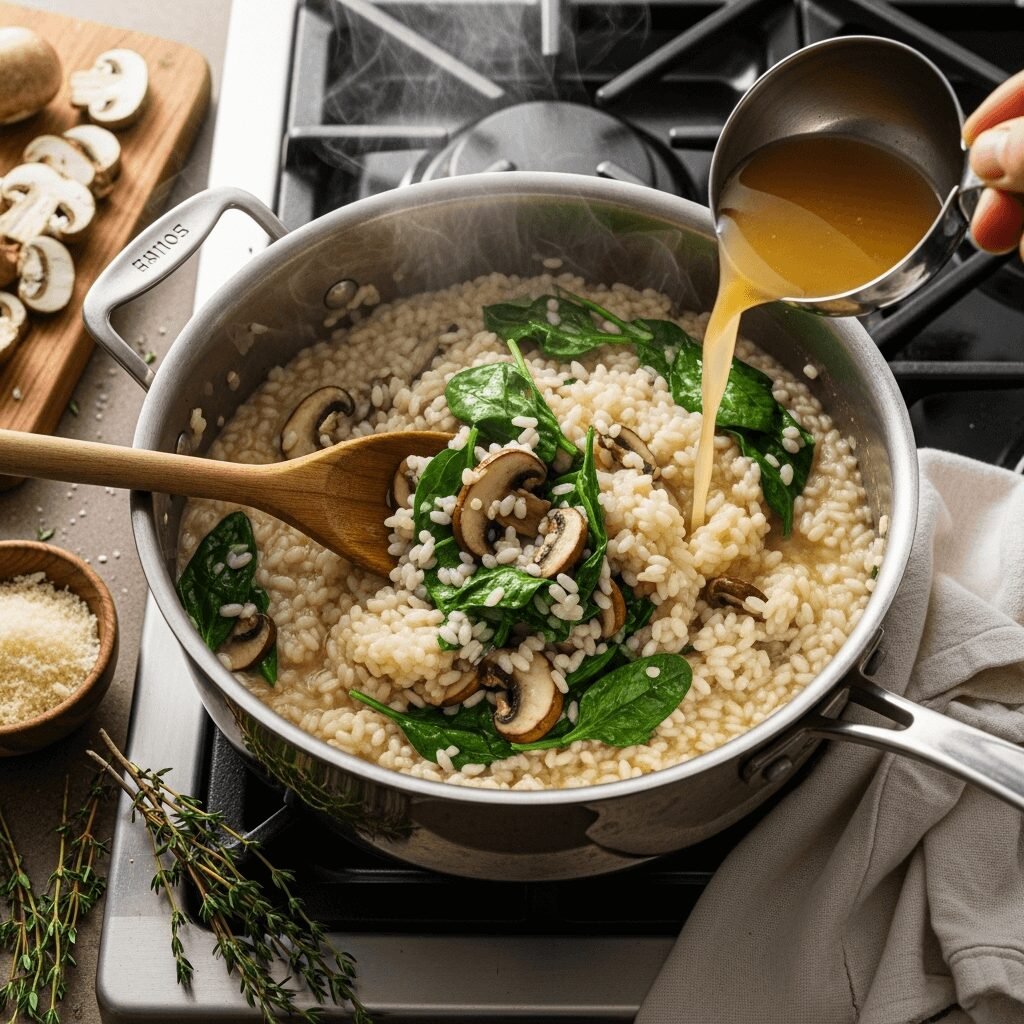
- Begin Adding Broth: Add one ladle (about ½ cup) of warm broth to the rice. Stir frequently—not constantly, but every 30 seconds or so—until the liquid is mostly absorbed. The rice should be gently bubbling. When you drag your spoon across the bottom of the pan, it should leave a trail that slowly fills back in.
- Continue the Process: Keep adding broth one ladle at a time, stirring frequently and waiting until each addition is mostly absorbed before adding the next. This gradual process takes about 18-22 minutes. Don’t rush it! The constant stirring helps release the starches that make risotto creamy. Adjust the heat as needed to maintain a gentle simmer.
- Test for Doneness: After about 18 minutes, start tasting the rice. It should be tender with just a slight firmness in the center (al dente), not crunchy or mushy. If it’s still too firm, continue adding broth and cooking. You may not need all 6 cups of broth, or you might need slightly more—every batch is different.
- Add the Vegetables: When the rice is nearly done (tender but still has a tiny bit of bite), stir in the cooked mushrooms and fresh spinach. The spinach will wilt quickly in the hot risotto. Cook for 1-2 minutes until everything is heated through and the spinach is completely wilted.
- Finish with Mantecatura: Remove the pan from heat. Stir in the remaining tablespoon of butter, the grated parmesan cheese, and a squeeze of lemon juice if desired. Stir vigorously for 30 seconds—this final step, called mantecatura, creates that luxurious, glossy, creamy texture. The risotto should be thick but still flow slowly when spooned onto a plate. If it’s too thick, add a splash more broth.
- Season and Serve: Taste and adjust seasoning with salt and pepper. Remember that parmesan is salty, so you may need less salt than you think. Garnish with fresh parsley and extra parmesan. Serve immediately in shallow bowls—risotto waits for no one!
Notes
- Consistency is Key: Proper risotto should be “all’onda” (wavy)—when you tilt the plate, it should slowly flow like lava, not sit in a stiff mound. If it’s too thick, stir in more warm broth before serving.
- Don’t Walk Away: While you don’t need to stir constantly, risotto does require regular attention. Set up your cooking station with everything within reach.
- Broth Flexibility: You might not use all 6 cups of broth, or you might need a bit more. It depends on your rice, pan size, and heat level. Keep extra broth or hot water on hand just in case.
- Wine Substitution: If avoiding alcohol, use extra broth and add 1 tablespoon of lemon juice with the last addition of broth for acidity.
- Vegan Option: Omit butter and cheese, use vegetable broth, and finish with nutritional yeast and extra olive oil for creaminess.
- Prep Time: 15 minutes
- Cook Time: 30-35 minutes
- Category: Main Dish / Side Dish
- Method: Stovetop
- Cuisine: Italian
Nutrition
- Serving Size: About 1½ cups (1/4 of recipe as a main course)
- Calories: 420
- Sugar: 4g
- Sodium: 780mg
- Fat: 14g
- Saturated Fat: 5g
- Unsaturated Fat: 8g
- Trans Fat: 0g
- Carbohydrates: 58g
- Fiber: 3g
- Protein: 14g
- Cholesterol: 20mg
Tips & Variations
Truffle Mushroom Risotto: Drizzle with truffle oil just before serving and add a few shavings of fresh truffle for an ultra-luxurious version.
Sun-Dried Tomato Addition: Stir in ⅓ cup of chopped sun-dried tomatoes with the mushrooms for a sweet-tart flavor boost.
Extra Protein: Add cooked chicken, shrimp, or Italian sausage in the last few minutes of cooking for a heartier meal.
Pea and Mint Risotto: Swap spinach for frozen peas (added in the last 2 minutes) and fresh mint for a spring variation.
Butternut Squash Risotto: Add 1 cup of roasted butternut squash cubes with the spinach for a fall-inspired version.
Lighter Version: Use less butter and cheese, and increase the lemon juice for a brighter, lighter dish that’s still satisfying.
Asparagus Risotto: Replace spinach with blanched asparagus pieces, added at the end. Top with lemon zest.
Creamy Without Dairy: For vegan risotto, replace butter with olive oil and parmesan with cashew cream or nutritional yeast. The starch from the rice still creates plenty of creaminess.
Pro Chef Tips
Keep Everything Warm: Cold broth shocks the rice and slows cooking. Keep your broth at a gentle simmer in a separate pot throughout the process. Room temperature wine is fine, but the broth must be hot.
Proper Sautéing Matters: Don’t crowd your mushrooms. If you pile them in, they’ll steam instead of caramelize. Cook in a single layer, even if it means working in batches. That golden-brown color is pure flavor.
The “Toast” is Not Optional: Taking 2-3 minutes to toast the rice before adding liquid makes a huge difference. The rice becomes slightly translucent at the edges and develops a subtle nutty flavor. This step also helps the grains maintain their structure.
Consistent Stirring, Not Constant: You don’t need to stand there stirring non-stop for 30 minutes—that’s an old myth. Stir every 30-45 seconds. This releases enough starch for creaminess while giving you time to prep garnishes or relax with a glass of that wine you opened.
Visual Cues Over Timing: Every stove, pan, and rice batch is slightly different. Look for the “trail test”—when you drag your spoon across the bottom, you should see the pan for a moment before the risotto flows back. If it flows back immediately, it’s too soupy. If it doesn’t flow back at all, add more broth.
The Power of Mantecatura: This final off-heat stirring with butter and cheese is what separates good risotto from spectacular risotto. The vigorous stirring creates an emulsion that gives risotto its signature glossy appearance and silky mouthfeel.
Serving Temperature: Risotto should be served warm, not piping hot. Let it rest for about a minute after plating—this allows the texture to settle perfectly.
Rice Quality Matters: Arborio is widely available and works great, but if you can find Carnaroli or Vialone Nano, they’re worth trying. Carnaroli is especially forgiving and produces consistently creamy results.
Common Mistakes to Avoid
Mistake #1: Using Cold Broth
This is the biggest mistake beginners make. Cold broth drops the temperature of your risotto every time you add it, leading to uneven cooking and gummy texture. Keep your broth simmering gently in a separate pot throughout the cooking process.
Mistake #2: Rushing the Process
Risotto cannot be hurried. If you try to add all the liquid at once or don’t wait for each addition to absorb, you’ll end up with soupy, unevenly cooked rice. The gradual process is what creates that creamy texture as the rice slowly releases its starches.
Mistake #3: Over-Stirring or Under-Stirring
There’s a sweet spot. Constant stirring breaks down the rice too much and makes it mushy. Not stirring enough means the rice won’t release its starches and you’ll end up with a starchy, separated dish. Aim for stirring every 30-45 seconds.
Mistake #4: Adding Cheese Too Early
If you add parmesan while the risotto is still on the heat or before it’s finished cooking, the cheese can become grainy and stringy. Always remove from heat first, then stir in the cheese vigorously for that smooth, creamy finish.
Mistake #5: Making It Too Far in Advance
Risotto is one dish that truly needs to be served immediately. It continues to absorb liquid as it sits, so what was perfectly creamy 10 minutes ago will be thick and gluey now. If you must wait, undercook slightly and add extra warm broth before serving.
Storage & Meal Prep
Refrigerator Storage: Store leftover mushroom spinach risotto in an airtight container in the refrigerator for up to 3 days. The rice will continue to absorb liquid, so it will be thicker when cold.
Reheating Risotto: The best method is on the stovetop. Place the risotto in a saucepan with a splash of broth or water (about ¼ cup per cup of risotto). Heat over medium-low, stirring frequently, until warmed through and creamy again. Add more liquid as needed. You can also microwave on 50% power in 1-minute intervals, stirring between each, though the texture won’t be quite as good.
Crispy Risotto Cakes: One of the best ways to use leftover risotto is to transform it into crispy cakes. Form cold risotto into patties, coat with breadcrumbs, and pan-fry until golden on both sides. Delicious for lunch or as an appetizer!
Arancini (Fried Risotto Balls): Another Italian tradition for leftovers. Roll cold risotto into balls, stuff with mozzarella if desired, coat in breadcrumbs, and deep fry until golden. These are addictively good.
Make-Ahead & Freezer Notes
Partial Make-Ahead: You can cook risotto about three-quarters of the way through (up to step 7), then spread it on a baking sheet to cool quickly. Refrigerate for up to 24 hours. When ready to serve, reheat gently with warm broth, finishing the cooking process and adding the spinach, mushrooms, and final butter and cheese.
Prep Components Ahead: Slice mushrooms, dice shallots, measure rice, and grate cheese up to a day ahead. Store in separate containers. When ready to cook, warm your broth and proceed with the recipe—this cuts prep time significantly.
Freezing Cooked Risotto: While possible, I don’t recommend freezing fully cooked risotto as the texture changes significantly. The rice becomes mushy and the creamy texture is lost. If you must freeze it, undercook the rice slightly and know that it’s best repurposed into arancini or risotto cakes after thawing.
Freezing Mushroom Base: You can sauté the mushrooms and aromatics, cool completely, and freeze for up to 2 months. Thaw overnight and reheat before adding to your freshly cooked risotto.
Serving Suggestions
This creamy mushroom spinach risotto is incredibly versatile and pairs beautifully with many dishes:
As a Main Course:
- Serve in shallow bowls with crusty Italian bread and a simple arugula salad
- Top with a fried egg for a luxurious brunch option
- Pair with roasted vegetables for a complete vegetarian meal
- Add grilled chicken or seared scallops on top for extra protein
As a Side Dish:
- Alongside herb-roasted chicken or turkey
- With pan-seared steak or lamb chops
- Next to grilled salmon or sea bass
- Accompanying osso buco or braised short ribs
Accompaniments:
- Crispy garlic bread or focaccia
- Caprese salad with fresh mozzarella
- Roasted Brussels sprouts or broccolini
- Sautéed green beans with almonds
- Simple mixed green salad with balsamic vinaigrette
Wine Pairings: A crisp white wine like Pinot Grigio, Vermentino, or Sauvignon Blanc complements the earthy mushrooms perfectly. For red wine lovers, a light Pinot Noir works beautifully without overwhelming the delicate flavors.
FAQs Section
Can I use instant or minute rice for risotto?
Unfortunately, no. Instant rice has been pre-cooked and won’t release the starches necessary to create risotto’s signature creamy texture. You must use short-grain Italian rice like arborio, carnaroli, or vialone nano. These varieties have high starch content that’s essential for proper risotto.
Do I really need to stir risotto constantly?
Not constantly, but regularly—about every 30-45 seconds. The stirring helps release starches gradually for that creamy texture and prevents the rice from sticking to the bottom of the pan. You can take brief breaks to sip wine or prep garnishes, but stay nearby!
Can I make risotto without wine?
Absolutely! Replace the wine with an equal amount of broth and add a tablespoon of lemon juice toward the end of cooking. The wine primarily adds acidity and depth, which the lemon can partially replicate. The risotto will still be delicious.
Why is my risotto gummy or mushy?
This usually happens from over-stirring (breaking down the rice too much), using too much liquid at once, or cooking at too high a temperature. Make sure you’re adding broth gradually, stirring regularly but not constantly, and maintaining a gentle simmer rather than a rolling boil.
Can I use frozen spinach instead of fresh?
Yes, but thaw it completely first and squeeze out all excess moisture. Frozen spinach holds a lot of water that can make your risotto watery. You’ll need about 1 cup of frozen spinach (after thawing and squeezing) to replace 4 cups of fresh.
What’s the best way to reheat leftover risotto?
Reheat gently on the stovetop with additional warm broth or water, stirring frequently. Start with ¼ cup of liquid per cup of risotto and add more as needed to restore that creamy consistency. Low and slow is the key—rushing it will make it gummy.
Can I make this risotto dairy-free?
Yes! Use olive oil instead of butter, replace the parmesan with nutritional yeast for a cheesy flavor, and add a splash of plant-based cream at the end if desired. The rice’s natural starches still create plenty of creaminess without any dairy.
Conclusion
And there you have it—the secrets to making perfect, restaurant-quality creamy mushroom spinach risotto right in your own kitchen! While risotto has a reputation for being intimidating, I hope this detailed guide shows you that it’s actually quite achievable with a little patience and the right technique. The reward is so worth it: a bowl of impossibly creamy, flavorful rice studded with earthy mushrooms and vibrant spinach that tastes like pure comfort.
This risotto is one of those recipes that makes you feel like a real chef. It’s elegant enough for special occasions but comforting enough for a quiet night in. Plus, once you master the basic technique, you can adapt it endlessly with different vegetables, proteins, and seasonings.
I’d absolutely love to hear about your risotto adventures! Did you try any of the variations? What did you serve alongside it? Drop a comment below and share your experience. And please, don’t forget to save this recipe to your Pinterest boards—you’ll want to come back to it again and again. Your kitchen is about to smell amazing! 🍄🌿