Imagine twirling your fork through silky pasta ribbons coated in the most luxurious cream sauce, studded with tender, golden-brown mushrooms and kissed with garlic and fresh herbs. This Creamy Mushroom Pasta is the definition of comfort food elegance—it tastes like something you’d order at an upscale Italian restaurant, but it comes together in your own kitchen in less time than it takes to watch your favorite show.
This recipe is pure magic for busy weeknights when you want something special without the stress. The earthy mushrooms develop incredible depth when properly sautéed, the cream sauce is velvety and rich without being heavy, and the pasta serves as the perfect canvas for all those gorgeous flavors. Whether you’re cooking for picky kids (they’ll love the creamy sauce), impressing a date, or just treating yourself after a long day, this dish delivers on every level. It’s also wonderfully versatile—completely vegetarian as written, but easy to customize with chicken, shrimp, or Italian sausage if you want to add protein. This is the kind of recipe you’ll make on repeat, the one friends will ask you to teach them, and the dish that might just become your signature.
History / Background
The pairing of mushrooms and cream in pasta dishes has deep roots in European cuisine, particularly in French and Italian cooking traditions. While pasta is quintessentially Italian, the French have long celebrated mushrooms in cream-based sauces, creating dishes like chicken or veal with mushroom cream sauce that influenced culinary traditions across borders.
In Italy, mushroom pasta dishes date back centuries, especially in regions where wild mushrooms grow abundantly. Northern Italian cuisine, particularly from areas like Piedmont and Tuscany, has a rich tradition of combining local fungi—porcini, chanterelles, and other forest mushrooms—with pasta, butter, cream, and Parmigiano-Reggiano cheese. These dishes were originally seasonal delicacies, prepared in autumn when mushrooms were freshly foraged from the forests.
The Italians call mushrooms “funghi,” and they’ve been using them in cooking since Roman times. Ancient Romans prized mushrooms as food of the gods, though they were cautious about foraging due to toxic varieties. By the Renaissance, mushrooms had become a staple in Italian cooking, featured in elaborate banquet dishes for nobility. The combination of cream and mushrooms became particularly popular in the northern regions where dairy farming flourished and cream was readily available.
The specific style of creamy mushroom pasta we enjoy today is more of a modern fusion creation—taking Italian pasta traditions and French cream sauce techniques and combining them into something universally appealing. This style of dish gained immense popularity in American-Italian restaurants during the mid-to-late 20th century, when cream-based pasta sauces like Alfredo and carbonara variations became menu staples.
What makes this dish special today is its accessibility. While traditional recipes might have called for expensive wild mushrooms available only seasonally, we can now create incredible flavor using readily available cremini or baby bella mushrooms from any grocery store. The dish represents how classic techniques and flavor combinations can be adapted for everyday home cooking while maintaining that restaurant-quality taste and presentation.
Why You’ll Love This Recipe
This Creamy Mushroom Pasta isn’t just another pasta recipe—it’s the kind of dish that makes you feel like a culinary genius with minimal effort. It hits that perfect sweet spot of being impressively delicious while remaining genuinely easy to execute.
Here’s why this recipe deserves a permanent spot in your rotation:
- Lightning-fast preparation – From start to finish, you’re looking at just 25 minutes, making it perfect for those “what’s for dinner?” panic moments
- One-pot wonder – The pasta cooks while you make the sauce, minimizing cleanup and maximizing efficiency
- Naturally vegetarian – A satisfying meatless meal that even carnivores will devour without missing the meat
- Restaurant-quality results – This tastes like a $25 restaurant dish but costs a fraction to make at home
- Pantry-friendly ingredients – No exotic ingredients or specialty store trips required
- Endlessly customizable – Add protein, swap mushroom varieties, adjust the richness—it’s incredibly versatile
- Kid-approved – The creamy sauce makes vegetables disappear from plates like magic
- Date night worthy – Elegant enough to impress without requiring culinary school skills
- Budget-friendly luxury – Mushrooms are affordable, and a little cream goes a long way
- Leftover-friendly – Actually tastes even better the next day when flavors have melded
- Easily doubled – Perfect for meal prep or feeding a crowd without extra complexity
- Sophisticated flavor – The umami-rich mushrooms, garlic, herbs, and parmesan create incredible depth
Ingredient Notes
Let’s break down what makes this creamy mushroom pasta so irresistible. Understanding your ingredients helps you make smart substitutions and achieve the best results.
Pasta: Fettuccine, linguine, or pappardelle work beautifully here—their flat, ribbon-like shape holds the cream sauce perfectly. You can also use penne, rigatoni, or any pasta shape you love. For best results, use dried pasta rather than fresh (it holds up better to the sauce). Whole wheat pasta adds nuttiness and fiber, while gluten-free pasta works perfectly if needed.
Mushrooms: This is where the magic happens. Baby bella (cremini) mushrooms are ideal—they’re affordable, widely available, and have more flavor than standard white button mushrooms. For elevated flavor, mix in shiitake, oyster, or even some dried porcini that you’ve rehydrated. Avoid pre-sliced mushrooms; whole mushrooms you slice yourself have better texture and fresher flavor. You’ll need about 1 pound—don’t skimp, as mushrooms shrink considerably when cooked.
Heavy Cream: This creates that luxurious, velvety sauce texture. Heavy cream (also called heavy whipping cream) has the highest fat content and won’t curdle when simmered. Half-and-half works in a pinch but produces a thinner sauce. For a lighter version, you can use a combination of milk and cream cheese, though the mouthfeel won’t be quite as silky.
Garlic: Fresh garlic is essential—4-5 cloves provide robust flavor without overwhelming the delicate mushrooms. The garlic gets sautéed just until fragrant, creating a sweet, aromatic base for the sauce. Jarred minced garlic lacks the punch and complexity of fresh.
White Wine: A splash of dry white wine (Pinot Grigio, Sauvignon Blanc, or Chardonnay) adds acidity and depth that balances the cream’s richness. The alcohol cooks off, leaving only complex flavor. If you prefer not to use wine, substitute with additional chicken or vegetable broth plus a squeeze of lemon juice.
Parmesan Cheese: Freshly grated Parmigiano-Reggiano is non-negotiable for the best flavor and texture. The pre-shredded stuff contains anti-caking agents that prevent smooth melting and doesn’t taste nearly as good. Real Parmesan adds nutty, salty complexity that elevates the entire dish.
Butter: Unsalted butter adds richness and helps emulsify the sauce into silky perfection. It also aids in browning the mushrooms beautifully. If you’re watching calories, you can reduce the butter slightly, but don’t eliminate it—it’s crucial for flavor development.
Fresh Herbs: Fresh thyme pairs naturally with mushrooms—its earthy, slightly minty notes complement the fungi perfectly. Fresh parsley adds brightness and color as a finishing touch. Dried thyme can substitute in a pinch (use one-third the amount), but fresh is far superior.
Chicken or Vegetable Broth: A small amount of broth helps deglaze the pan and adds savory depth to the sauce. Use low-sodium so you can control the salt level. Vegetable broth keeps the dish vegetarian, while chicken broth adds more umami.
Olive Oil: Used for sautéing the mushrooms and garlic. Extra virgin olive oil has the best flavor, but regular olive oil works too. The oil prevents butter from burning and adds its own subtle fruity notes.
Salt and Pepper: Essential for bringing out the flavors of every ingredient. Season as you go—salt the mushrooms while cooking, season the sauce, and adjust at the end. Freshly cracked black pepper adds more dimension than pre-ground.
Equipment Needed
The beauty of this recipe is its simplicity—you don’t need fancy equipment, just a few kitchen basics:
- Large pot for pasta – A 6-8 quart pot for boiling the pasta
- Large skillet or sauté pan (12-inch is ideal) – This is where all the magic happens. Make sure it’s large enough to hold the mushrooms in a single layer for proper browning, and deep enough to toss the pasta with sauce later
- Colander – For draining the pasta
- Sharp knife and cutting board – For slicing mushrooms and mincing garlic
- Wooden spoon or silicone spatula – For stirring and tossing
- Measuring cups and spoons – For accurate ingredient amounts
- Microplane or fine grater – For grating fresh Parmesan cheese
- Tongs or pasta fork – For transferring cooked pasta to the sauce (pasta water and all!)
- Ladle – Helpful for adding pasta cooking water to the sauce if needed
That’s it! No food processor, no special gadgets—just basic tools that work together to create something extraordinary.
Print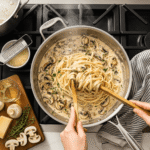
Creamy Mushroom Pasta Recipe
- Total Time: 25 minutes
- Yield: 4 servings 1x
- Diet: Vegetarian
Description
Silky pasta ribbons tossed in a luxurious cream sauce with perfectly sautéed mushrooms, garlic, and fresh herbs. This restaurant-quality vegetarian dinner comes together in just 25 minutes with simple ingredients and minimal cleanup.
Ingredients
- 12 ounces fettuccine or linguine pasta (uncooked)
- 1 pound baby bella (cremini) mushrooms, cleaned and sliced
- 1 ½ cups heavy cream
- 4-5 cloves garlic, minced
- ½ cup dry white wine (or substitute with broth)
- 1 cup freshly grated Parmesan cheese (plus extra for serving)
- 3 tablespoons unsalted butter, divided
- 2 tablespoons olive oil
- ½ cup low-sodium chicken or vegetable broth
- 2 teaspoons fresh thyme leaves (or ½ teaspoon dried)
- ¼ cup fresh parsley, chopped
- ¾ teaspoon salt (adjust to taste)
- ½ teaspoon black pepper
- ¼ teaspoon red pepper flakes (optional, for subtle heat)
- Juice of ½ lemon (optional, for brightness)
Instructions
- Cook the pasta: Bring a large pot of salted water to a boil. Add the pasta and cook according to package directions until al dente (usually 8-10 minutes). Reserve 1 cup of pasta cooking water before draining. Drain the pasta but do not rinse—the starch helps the sauce cling to the noodles.
- Prep the mushrooms: While the pasta cooks, clean the mushrooms by wiping with a damp paper towel (don’t wash them under running water as they’ll absorb too much liquid). Slice them about ¼-inch thick for even cooking.
- Sauté the mushrooms: Heat 1 tablespoon of butter and the olive oil in your large skillet over medium-high heat. Once hot and shimmering, add the sliced mushrooms in a single layer. This is important—don’t overcrowd! If your pan isn’t large enough, cook in two batches. Season with salt and pepper. Let them cook undisturbed for 3-4 minutes until golden brown on one side, then stir and cook another 3-4 minutes until deeply browned and their liquid has evaporated. The key to flavorful mushrooms is proper browning—don’t rush this step!
- Add garlic and thyme: Reduce heat to medium. Push the mushrooms to the edges of the pan and add the remaining 2 tablespoons of butter to the center. Once melted, add the minced garlic and fresh thyme. Sauté for 30-45 seconds until fragrant, stirring constantly so the garlic doesn’t burn.
- Deglaze with wine: Pour in the white wine (or broth), scraping up any delicious brown bits stuck to the bottom of the pan with your wooden spoon. Let it simmer for about 2 minutes until reduced by half. This concentrates the flavor and cooks off the alcohol.
- Create the cream sauce: Pour in the heavy cream and chicken broth. Stir to combine everything. Bring to a gentle simmer (don’t let it boil rapidly) and cook for 3-4 minutes, stirring occasionally, until the sauce thickens slightly. It should coat the back of a spoon but still be pourable.
- Add the cheese: Remove from heat and stir in the grated Parmesan cheese. The residual heat will melt it smoothly without making it grainy. Stir until completely melted and incorporated. Taste and adjust seasoning with more salt, pepper, or a squeeze of lemon juice if needed for brightness.
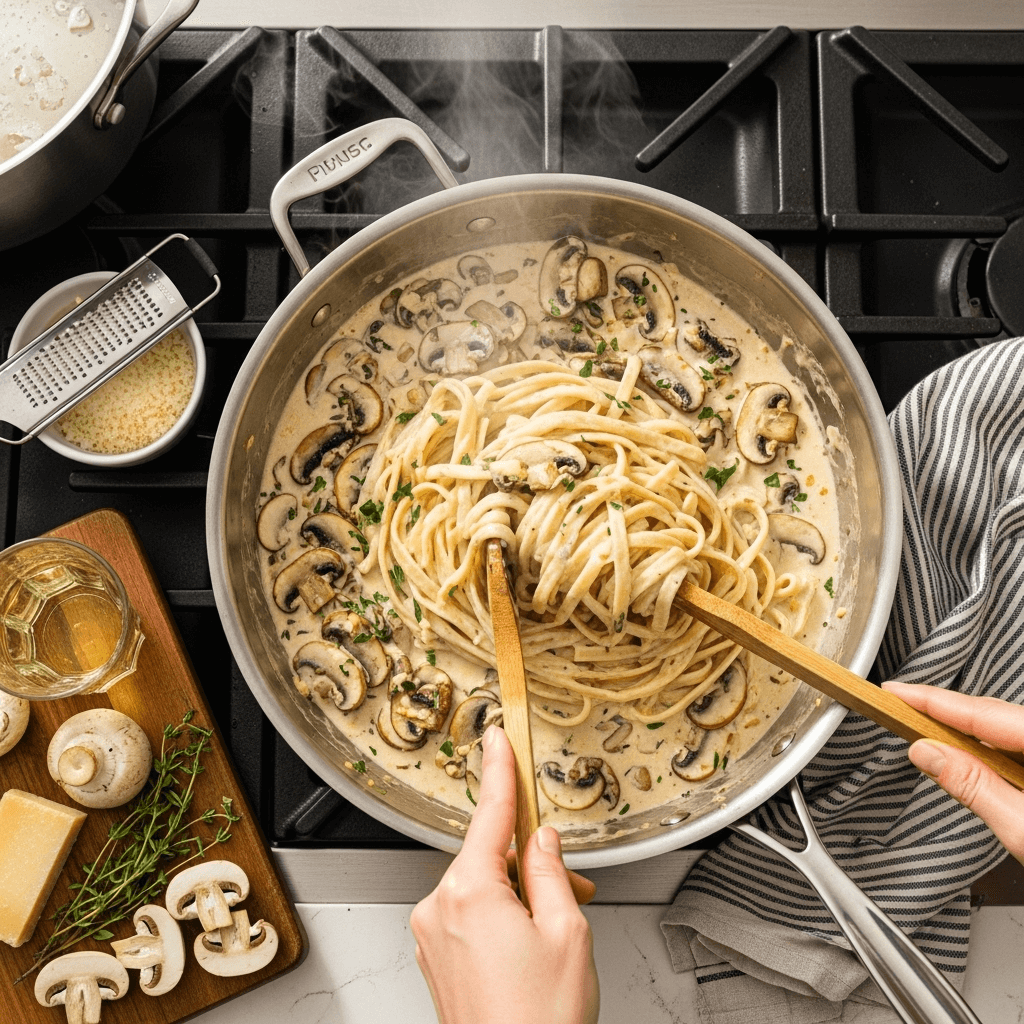
- Combine pasta and sauce: Add the drained pasta directly to the skillet with the mushroom cream sauce. Using tongs or a pasta fork, toss everything together, coating the pasta evenly. If the sauce seems too thick, add pasta cooking water a few tablespoons at a time until you reach your desired consistency. The starchy pasta water helps the sauce cling to the noodles beautifully.
- Finish and serve: Toss in the fresh chopped parsley and give everything one final toss. Taste and adjust seasoning one last time. Serve immediately in warm bowls, topped with extra Parmesan cheese, a crack of black pepper, and a drizzle of good olive oil if desired.
Notes
- Wine substitution: Replace wine with ½ cup broth plus 1 tablespoon lemon juice for acidity without alcohol.
- Mushroom varieties: Feel free to mix mushroom types—shiitake adds earthiness, oyster mushrooms add delicate texture, and rehydrated porcini add intense umami.
- Making it lighter: Use half-and-half instead of heavy cream and reduce butter to 1 tablespoon. The sauce won’t be as rich but still delicious.
- Gluten-free option: Use your favorite gluten-free pasta and ensure your broth is gluten-free.
- Adding protein: Stir in cooked, sliced chicken breast, sautéed shrimp, or crumbled Italian sausage when you add the pasta.
- Sauce consistency: The sauce will thicken as it cools. If reheating leftovers, add a splash of cream, milk, or pasta water to loosen it up.
- Prep Time: 10 minutes
- Cook Time: 15 minutes
- Category: Dinner
- Method: Stovetop
- Cuisine: Italian-American
Nutrition
- Serving Size: About 2 cups
- Calories: 635
- Sugar: 5g
- Sodium: 620mg
- Fat: 36g
- Saturated Fat: 21g
- Unsaturated Fat: 12g
- Trans Fat: 0g
- Carbohydrates: 58g
- Fiber: 4g
- Protein: 21g
- Cholesterol: 105mg
Nutrition information is approximate and will vary based on specific ingredients and brands used.
Tips & Variations
The basic recipe is fantastic, but here are some ways to customize it to your taste or dietary needs:
Add Protein: Transform this into a heartier meal by adding cooked chicken breast (sliced or diced), sautéed shrimp, pan-seared scallops, or crumbled Italian sausage. Add the cooked protein when you toss the pasta with sauce.
Truffle Luxury: Add 1-2 teaspoons of truffle oil at the very end for an upscale twist that makes this taste like a $40 restaurant entrée. A little goes a long way!
Spinach or Arugula: Wilt in 2-3 cups of fresh spinach or arugula when you add the pasta for added nutrition and a pop of color. The greens wilt perfectly in the hot sauce.
Sun-Dried Tomatoes: Add ¼ cup of chopped oil-packed sun-dried tomatoes with the garlic for tangy sweetness that complements the earthy mushrooms beautifully.
Make It Spicy: Increase the red pepper flakes to ½ teaspoon, or stir in a spoonful of calabrian chili paste for Italian-style heat.
Vegan Version: Use cashew cream or full-fat coconut milk instead of dairy cream, vegan butter, and nutritional yeast instead of Parmesan (about ½ cup). The result won’t be identical but will still be creamy and delicious.
Different Pasta Shapes: While fettuccine is classic, try this with pappardelle for elegance, penne for casual dinners, or even gnocchi for something special.
Herb Variations: Substitute or add fresh sage (divine with mushrooms), fresh rosemary (use sparingly—it’s potent), or fresh basil for a different flavor profile.
Cheese Options: Mix in some Gruyere or fontina along with the Parmesan for even more complex, nutty flavor.
Lighter Cream Sauce: Use a combination of ¾ cup cream and ¾ cup whole milk, or swap half the cream for Greek yogurt stirred in at the very end (off heat to prevent curdling).
Pro Chef Tips
Want to elevate this dish from great to absolutely spectacular? Here are professional techniques that make a real difference:
Don’t wash mushrooms: Mushrooms are like sponges and absorb water, which prevents proper browning. Instead, clean them with a damp paper towel or a soft mushroom brush. If they’re really dirty, a quick rinse is okay, but dry them thoroughly with paper towels before slicing.
Slice mushrooms uniformly: Even slices (about ¼-inch) ensure even cooking. Some pieces shouldn’t be burnt while others are still pale and undercooked.
Hot pan, patient cooking: The secret to deeply flavored mushrooms is high heat and patience. Let them sit undisturbed for several minutes to develop that beautiful golden-brown crust. Stirring too frequently releases their liquid and causes steaming instead of searing.
Season in layers: Salt the mushrooms while cooking (draws out moisture and concentrates flavor), season the sauce, then taste and adjust at the end. Building flavor throughout creates complexity.
Reserve pasta water: This starchy water is liquid gold for adjusting sauce consistency. The starch helps emulsify the sauce and makes it cling to the pasta beautifully. Always save at least 1 cup before draining.
Finish pasta in the sauce: Don’t just pour sauce over drained pasta on a plate. Tossing the pasta in the skillet with the sauce for a minute or two allows the noodles to absorb flavor and the sauce to cling properly. This is how restaurants get that perfect coating.
Cheese off heat: Adding Parmesan to boiling sauce can make it grainy and stringy. Remove from heat, let the bubbling stop, then stir in cheese for smooth, creamy results.
Taste constantly: Professional cooks taste throughout cooking. Check the mushrooms, taste the sauce before adding pasta, adjust seasoning at the end. Your palate is your best tool.
Fresh Parmesan matters: The difference between freshly grated Parmesan and the pre-shredded stuff is night and day. Invest in a block of real Parmigiano-Reggiano and grate it yourself—you’ll never go back.
Warm your bowls: This restaurant trick keeps pasta hot longer. Pop your serving bowls in a warm oven (200°F) for 5 minutes before plating, or fill them with hot water while you cook, then drain and dry before serving.
Common Mistakes to Avoid
Even simple recipes can go wrong. Here are the pitfalls to watch out for:
Overcrowding the mushrooms: When mushrooms are piled on top of each other, they steam instead of brown, releasing all their liquid and becoming soggy. Give them space! Use a large pan and cook in batches if necessary. Properly browned mushrooms are the foundation of this dish’s flavor.
Not salting the pasta water enough: Your pasta water should taste like the sea—this is your only opportunity to season the pasta itself from the inside out. Under-salted pasta tastes bland no matter how well-seasoned your sauce is.
Rinsing the pasta: Never rinse pasta after draining (unless making cold pasta salad). The starchy coating helps the sauce adhere to the noodles. Rinsing washes away this crucial element and cools the pasta down.
Boiling the cream sauce: Heavy cream can separate and look curdled if boiled too vigorously. Keep it at a gentle simmer. If you see the sauce breaking (looking oily and separated), remove from heat immediately and whisk vigorously or blend briefly with an immersion blender to re-emulsify.
Burning the garlic: Garlic goes from golden to burnt in seconds, and burnt garlic tastes acrid and bitter, ruining the entire dish. Add garlic to medium (not high) heat, stir constantly, and add liquid within a minute to stop the cooking.
Overcooking the pasta: Pasta continues cooking slightly when tossed with hot sauce, so aim for al dente (still has a slight bite). Overcooked mushy pasta won’t hold the sauce properly and has poor texture.
Not adjusting seasoning at the end: Always taste before serving. Cream dulls flavors, so you might need more salt, pepper, or a squeeze of lemon to brighten everything up.
Storage & Meal Prep
Good news for busy home cooks—this creamy mushroom pasta stores well and makes excellent meal prep material!
Refrigerator Storage: Store cooled pasta in an airtight container in the refrigerator for up to 4 days. The sauce will thicken considerably as it cools—this is completely normal. The flavors actually meld and deepen overnight, making leftovers particularly delicious.
Reheating Instructions: The stovetop method produces the best results. Place the pasta in a skillet over medium-low heat and add 2-4 tablespoons of cream, milk, or even pasta cooking water (if you saved some). Stir frequently and heat gently until warmed through, about 5-7 minutes. The added liquid refreshes the sauce beautifully. Microwave works in a pinch—heat in 1-minute intervals at 70% power, stirring between each interval, and add a splash of liquid to prevent drying.
Meal Prep Tips: This recipe is fantastic for weekly meal prep. Make it on Sunday and portion into individual containers. When ready to eat, reheat gently with a splash of cream or milk. The mushrooms and sauce hold up remarkably well for several days.
Texture Considerations: The pasta will continue absorbing sauce as it sits, so leftovers will be less saucy than freshly made. This is easily fixed by adding liquid when reheating. Some people actually prefer the texture the next day when everything has melded together.
Storing Separately: For absolute best results when meal prepping, consider storing the sauce separately from the pasta and combining when reheating. This prevents over-absorption, though it’s more labor-intensive.
Make-Ahead & Freezer Notes
Planning ahead? Here’s everything you need to know about preparing this dish in advance:
Partial Make-Ahead: You can prep all your ingredients ahead—slice mushrooms, mince garlic, grate cheese, and chop herbs. Store each in separate airtight containers in the fridge for up to 24 hours before cooking. This cuts your active cooking time to about 15 minutes.
Make the Sauce Ahead: Cook the mushroom cream sauce (steps 3-7) up to 2 days ahead. Cool completely and refrigerate. When ready to serve, gently reheat the sauce, adding a splash of cream or broth to loosen it, then cook fresh pasta and toss together. Fresh pasta always tastes better than reheated.
Freezing Considerations: Cream-based sauces don’t freeze perfectly—they can separate and become grainy when thawed. However, if you must freeze, here’s the best method: Cool the pasta and sauce completely, portion into airtight freezer containers, and freeze for up to 2 months. The texture won’t be quite as silky as fresh, but the flavor remains good.
Thawing and Reheating from Frozen: Thaw overnight in the refrigerator. Reheat gently in a skillet over low heat, stirring frequently and adding cream or milk to help re-emulsify the sauce. Be patient—low and slow prevents further separation. Whisking vigorously while reheating helps bring the sauce back together.
Best Freezer Alternative: If you love this recipe and want freezer meals, consider freezing just the sautéed mushroom mixture (before adding cream) in ice cube trays or small containers. Then make fresh sauce whenever you want by reheating the mushrooms, adding cream, and cooking fresh pasta. You get the convenience with better texture.
Reheated Quality: While this pasta is delicious reheated for leftovers, it truly shines when served fresh. If cooking for a dinner party or special occasion, make it just before serving for the best texture and presentation.
Serving Suggestions
While this creamy mushroom pasta is substantial enough to be a complete meal, thoughtful sides and accompaniments create a well-rounded, restaurant-quality dining experience:
Bread: Crusty garlic bread, homemade focaccia, or a simple baguette are essential for soaking up every drop of that luscious cream sauce. Cheesy garlic knots or rosemary olive oil bread also pair beautifully.
Salads: Balance the rich pasta with something fresh and bright. A simple arugula salad with lemon vinaigrette, classic Caesar salad, caprese salad with fresh mozzarella and tomatoes, or a crisp mixed green salad all provide refreshing contrast.
Protein Additions: While the pasta is vegetarian and satisfying on its own, you can serve it alongside grilled chicken breast, pan-seared salmon, herb-crusted pork chops, or Italian sausages if feeding meat-eaters who want more protein.
Roasted Vegetables: Roasted asparagus, broccolini, green beans with garlic, or roasted cherry tomatoes complement the earthiness of the mushrooms while adding color and nutrition to the plate.
Wine Pairing: The same wine you cook with makes an excellent drinking companion. Crisp white wines like Pinot Grigio, Sauvignon Blanc, or un-oaked Chardonnay cut through the cream beautifully. If you prefer red, go light with Pinot Noir.
Non-Alcoholic Beverages: Sparkling water with lemon, Italian soda, or a crisp iced tea work nicely. The key is something refreshing that cleanses the palate between bites of rich pasta.
Complete Dinner Menu Ideas:
- Casual Weeknight: Creamy mushroom pasta, side salad, garlic bread
- Date Night: Creamy mushroom pasta, arugula salad, crusty bread, white wine, tiramisu for dessert
- Family Dinner: Creamy mushroom pasta, Caesar salad, breadsticks, roasted broccoli, chocolate mousse
- Italian Feast: Appetizer of bruschetta, creamy mushroom pasta as main, side of roasted vegetables, Italian cookies and espresso for dessert
FAQs Section
Can I use different types of mushrooms?
Absolutely! While baby bella (cremini) mushrooms are ideal for their flavor and availability, feel free to experiment. Shiitake mushrooms add earthy, umami depth (remove the tough stems). Oyster mushrooms provide delicate texture. Portobello mushrooms offer robust, meaty flavor (remove gills if desired to prevent darkening the sauce). For luxury, mix in some rehydrated dried porcini mushrooms—their concentrated flavor is incredible. You can use white button mushrooms in a pinch, though they’re milder. Mixing varieties creates complex, layered flavor.
How do I make this dish dairy-free or vegan?
For dairy-free: Replace heavy cream with full-fat coconut cream or cashew cream (blend 1 cup raw cashews soaked overnight with ¾ cup water until silky smooth). Use vegan butter or olive oil instead of dairy butter, and substitute Parmesan with nutritional yeast (use about ½ cup for cheesy flavor). The texture and flavor will differ slightly, but you’ll still have a creamy, delicious pasta. Some brands make excellent vegan Parmesan alternatives if you prefer.
My sauce is too thick—how do I fix it?
This is easy to remedy! Simply stir in pasta cooking water (best option—the starch helps), additional cream, milk, or even chicken/vegetable broth a few tablespoons at a time until you reach your desired consistency. The sauce naturally thickens as it cools, so what looks perfect in the pan might be thick on the plate. Many people prefer adding pasta water because it helps the sauce cling to the noodles while thinning it to the right consistency.
Can I make this without wine?
Yes! Replace the wine with an equal amount of chicken or vegetable broth plus 1 tablespoon of lemon juice. The wine provides acidity and depth, and this substitution mimics those qualities. The dish will still be delicious, though the flavor profile will be slightly different. White wine adds complexity that’s hard to replicate, but the substitution works well.
How can I add protein to this vegetarian dish?
So many options! Cooked, sliced chicken breast or thighs add heartiness. Sautéed shrimp or scallops make it elegant and luxurious. Crumbled Italian sausage (cook it first, remove from pan, then proceed with the recipe) adds savory, spicy notes. Pan-seared salmon or white fish creates a restaurant-worthy meal. Crispy pancetta or bacon bits add smokiness. For vegetarian protein, add white beans, chickpeas, or even tofu. Add your chosen protein when you toss the pasta with the sauce so it heats through.
Why are my mushrooms watery and not browning?
This is one of the most common mistakes! Mushrooms release moisture when cooked, and if your pan is too crowded, that moisture can’t evaporate quickly enough, causing them to steam instead of sear. Solutions: (1) Use a large pan with plenty of surface area, (2) Don’t overcrowd—cook in batches if necessary, (3) Use medium-high heat, (4) Don’t stir too frequently—let them sit for 3-4 minutes to develop a golden crust, and (5) Make sure your mushrooms are dry before cooking (don’t wash them under running water).
Can I use milk instead of heavy cream?
You can, but the sauce won’t be as rich, thick, or velvety. If using whole milk, add 2 tablespoons of cream cheese or a tablespoon of flour to help thicken it. Half-and-half is a better middle ground—it’s lighter than heavy cream but still produces a reasonably creamy sauce. For best results with milk: use whole milk (not skim), add it slowly while stirring, and simmer gently to thicken slightly. The flavor and texture won’t be identical to the original, but it’s a workable lighter alternative.
Conclusion
There you have it—your new secret weapon for impressing family, friends, and yourself with minimal effort and maximum flavor! This Creamy Mushroom Pasta proves that restaurant-quality meals don’t require professional training or hours in the kitchen. With just a handful of simple ingredients, one pan, and about 25 minutes, you can create something truly special that tastes like it came from an upscale Italian trattoria.
The beauty of this recipe lies in its perfect balance of simplicity and sophistication. Whether you’re cooking for picky kids who’ll love the creamy sauce, hosting a dinner party where you want to look effortlessly elegant, or just treating yourself to something comforting after a long day, this pasta delivers every single time. And once you’ve mastered the basic technique, you can customize it endlessly—add your favorite proteins, experiment with different mushroom varieties, or throw in extra vegetables.
I’d absolutely love to hear about your creamy mushroom pasta adventures! Did you add truffle oil for luxury? Throw in some spinach for extra greens? Make it spicy with calabrian chili? Drop a comment below and share how it turned out. And if this recipe becomes a regular in your dinner rotation (which I’m pretty confident it will!), please pin it to your Pinterest boards so you can find it easily whenever the craving strikes. Share it with your friends who are always looking for easy, impressive dinner ideas—they’ll thank you!
Now grab that skillet and get ready for some serious pasta magic. Your kitchen is about to smell absolutely incredible, and dinner is going to be chef’s kiss!