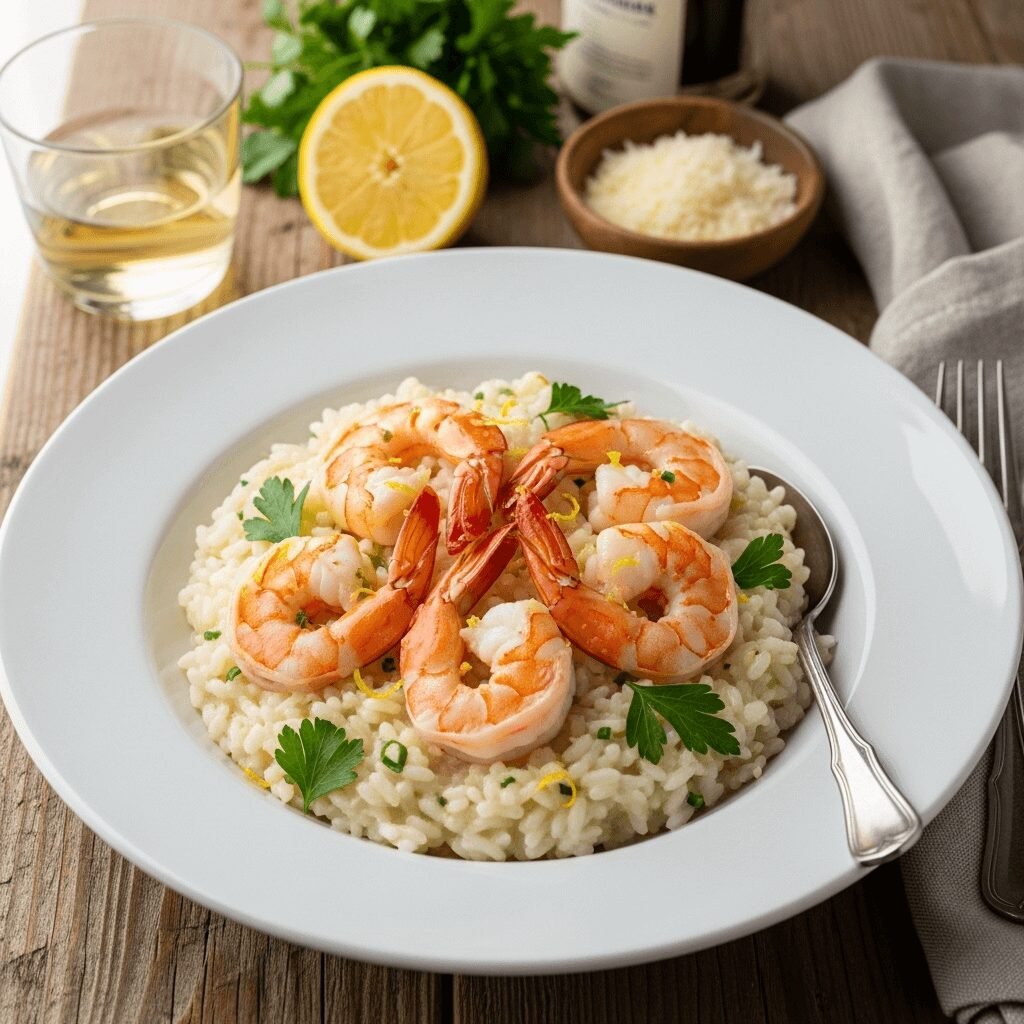
Imagine twirling your fork through luxuriously creamy risotto studded with plump, succulent shrimp, brightened by fresh lemon, and perfumed with aromatic garlic. This Creamy Lemon Garlic Shrimp Risotto is pure elegance on a plate—the kind of dish that makes you feel like you’re dining at an upscale Italian trattoria, yet it’s surprisingly achievable in your own kitchen.
Risotto has this magical ability to feel both comforting and sophisticated at the same time. The slow stirring, the gradual addition of warm broth, the transformation of humble rice grains into something silky and luxurious—it’s cooking as meditation. When you add tender shrimp, bright lemon zest, and pungent garlic to the mix, you elevate this classic Italian dish into something truly spectacular.
Perfect for date nights when you want to impress, special family dinners, or those evenings when you’re craving restaurant-quality food at home, this shrimp risotto delivers on every level. Yes, it requires some attention and stirring, but I promise the 35 minutes you invest will reward you with one of the most satisfying, creamy, flavorful dishes you’ve ever created. And here’s a secret: risotto is much easier than its fancy reputation suggests. If you can stir and be patient, you can make restaurant-worthy risotto!
History / Background
Risotto is one of Northern Italy’s greatest culinary contributions to the world, with roots stretching back to the 14th century when rice cultivation began in the Po Valley region between Milan and Venice. The word “risotto” comes from “riso,” meaning rice in Italian, and the cooking technique involves slowly coaxing starch from short-grain rice varieties like Arborio, Carnaroli, or Vialone Nano to create that signature creamy texture without any cream.
The classic risotto alla Milanese—flavored with saffron and bone marrow—is considered the grandfather of all risotto recipes. From there, Italian cooks began experimenting with regional ingredients: mushrooms in the fall, asparagus in spring, seafood along the coasts. Shrimp risotto, or “risotto ai gamberi,” became particularly popular in coastal Italian regions like Liguria, Veneto, and along the Adriatic coast, where fresh seafood was abundant and rice cultivation thrived.
The addition of lemon to seafood risotto is a more modern evolution, likely influenced by the Mediterranean tradition of pairing citrus with fish and shellfish. Lemon’s bright acidity cuts through the richness of the butter and cheese, while enhancing the natural sweetness of the shrimp—it’s a match made in culinary heaven.
In America, risotto gained popularity in the 1980s and 90s as Italian cuisine experienced a renaissance beyond red-sauce classics. Home cooks and chefs alike embraced risotto’s versatility and the impressive presentation it offers. Today, shrimp risotto represents that beautiful fusion of Italian tradition with modern American tastes—creamy, indulgent, yet balanced with fresh, bright flavors that appeal to contemporary palates.
This dish embodies the Italian philosophy of “cucina povera”—taking simple, quality ingredients and transforming them through technique and care into something extraordinary. It’s proof that you don’t need complicated recipes or exotic ingredients to create magic in the kitchen.
Why You’ll Love This Recipe
This Creamy Lemon Garlic Shrimp Risotto isn’t just another dinner recipe—it’s an experience that will make you feel like a professional chef while treating your taste buds to something truly special. The combination of creamy, perfectly cooked rice with tender shrimp and bright citrus creates layers of flavor and texture that are simply irresistible.
Here’s why this recipe will become your go-to impressive dinner:
- Restaurant-Quality at Home: Tastes like a $30 entrée from an upscale Italian restaurant but costs a fraction
- Surprisingly Manageable: Despite its elegant reputation, risotto is actually quite forgiving and straightforward
- Impressive Presentation: Looks absolutely stunning on the plate—perfect for date nights or entertaining guests
- Flavor Explosion: The combination of lemon, garlic, Parmesan, and shrimp creates a perfectly balanced taste profile
- Customizable Base: Easy to adapt with different proteins, vegetables, or seasonal ingredients
- Gluten-Free Naturally: Perfect for gluten-sensitive guests without any modifications needed
- Comfort Food Elevated: Creamy and satisfying but sophisticated enough for special occasions
- One-Pot Wonder: Most of the cooking happens in a single pan, keeping cleanup manageable
- Perfect Texture: That signature risotto creaminess is achieved through technique, not heavy cream
- Weeknight Achievable: Ready in about 35 minutes—faster than ordering takeout
- Conversation Starter: The stirring process is meditative and creates a wonderful cooking experience
- Pescatarian Friendly: A elegant option for those who eat seafood but not meat
Ingredient Notes
Understanding your ingredients transforms good risotto into extraordinary risotto. Here’s what makes this lemon garlic shrimp risotto absolutely divine, plus smart substitutions when needed:
Arborio Rice: This Italian short-grain rice is essential for authentic risotto. Its high starch content creates that signature creaminess as you stir. Arborio has a firm center and creamy exterior when cooked perfectly. Carnaroli rice is the premium alternative (even creamier!), while Vialone Nano works beautifully too. Don’t substitute with long-grain rice like basmati or jasmine—they don’t have enough starch for proper risotto texture.
Shrimp: Large or jumbo shrimp (16-20 count per pound) work best, providing substantial bites of sweet seafood. Buy them already peeled and deveined to save time, or do it yourself for cost savings. Fresh or frozen both work—just thaw frozen shrimp in cold water before using. Look for wild-caught when possible for better flavor and sustainability.
Chicken or Seafood Stock: The foundation of great risotto is flavorful stock kept warm throughout cooking. Homemade is ideal, but quality store-bought works perfectly. Seafood stock amplifies the oceanic flavors, while chicken stock is milder and more versatile. Low-sodium allows you to control salt levels. Vegetable stock works for a lighter version.
Dry White Wine: Essential for authentic risotto! Wine adds acidity and depth that water simply cannot replicate. Use something you’d actually drink—Pinot Grigio, Sauvignon Blanc, or unoaked Chardonnay all work beautifully. The alcohol cooks off, leaving complex flavor behind. If you must skip it, substitute with extra stock plus a tablespoon of white wine vinegar or lemon juice.
Parmesan Cheese: Freshly grated Parmigiano-Reggiano is non-negotiable for the best flavor. The pre-grated stuff in containers has anti-caking agents that create a grainy texture. Buy a good wedge and grate it yourself—the difference is remarkable. Pecorino Romano can substitute for a sharper, saltier flavor.
Fresh Lemon: Both zest and juice are crucial. The zest provides aromatic oils that perfume the entire dish, while juice adds bright acidity. Always zest before juicing, and never use bottled lemon juice—fresh makes all the difference.
Garlic: Fresh garlic cloves, minced or pressed, create that aromatic foundation. Five cloves might seem like a lot, but they mellow beautifully as they cook. Don’t substitute with garlic powder in this recipe—fresh is essential.
Butter and Olive Oil: Butter adds richness and that silky finish, while olive oil prevents burning during the initial sauté. Together, they create the perfect fat base. Use good quality unsalted butter so you can control seasoning.
Shallots: These mild, sweet members of the onion family are traditional in risotto. Yellow onions can substitute, but shallots provide a more refined, delicate flavor that doesn’t overpower the shrimp and lemon.
Fresh Herbs: Parsley and basil add freshness and color. Fresh herbs are strongly preferred over dried for this dish—they brighten everything right before serving.
Equipment Needed
Having the right tools makes risotto preparation so much smoother. Here’s everything you’ll need for perfect creamy lemon garlic shrimp risotto:
- Large, Heavy-Bottomed Pot or Dutch Oven: A 4-6 quart size with a wide base is ideal. Heavy bottoms distribute heat evenly, preventing scorching. Cast iron or enameled cast iron works beautifully.
- Medium Saucepan: For keeping your stock warm throughout the cooking process—crucial for proper risotto technique.
- Large Skillet: For cooking the shrimp separately to prevent overcooking.
- Wooden Spoon or Heatproof Spatula: You’ll be stirring constantly, so comfort matters. Wooden spoons are traditional and won’t scratch your pot.
- Ladle: For adding stock gradually—provides better control than pouring directly.
- Sharp Chef’s Knife: For mincing garlic and shallots finely.
- Cutting Board: Preferably separate boards for vegetables and raw shrimp.
- Microplane or Zester: For zesting lemon—this tool creates fine zest that distributes evenly.
- Measuring Cups and Spoons: Accuracy helps, especially for liquid measurements.
- Box Grater: If grating your own Parmesan (which you should!).
- Large Serving Bowl or Shallow Bowls: Risotto is best served in wide, shallow bowls that showcase its creamy texture.
- Tongs: For handling shrimp while cooking.
- Paper Towels: For patting shrimp dry before cooking.

Creamy Lemon Garlic Shrimp Risotto Recipe
- Total Time: 45 minutes
- Yield: 4 servings 1x
- Diet: Gluten Free
Description
Luxuriously creamy Italian risotto studded with tender garlic shrimp and brightened with fresh lemon. This restaurant-quality dish comes together in about 45 minutes with simple ingredients and classic technique. The perfect balance of rich, savory, and citrusy flavors makes this an unforgettable meal.
Ingredients
For the Shrimp:
- 1 pound large shrimp (16-20 count), peeled and deveined
- 2 tablespoons olive oil
- 3 cloves garlic, minced
- Salt and black pepper to taste
- 1 tablespoon fresh lemon juice
- Pinch of red pepper flakes (optional)
For the Risotto:
- 6 cups chicken or seafood stock (low-sodium)
- 3 tablespoons olive oil, divided
- 2 tablespoons butter, divided
- 2 shallots, finely minced (about 1/2 cup)
- 3 cloves garlic, minced
- 1½ cups Arborio rice
- 1/2 cup dry white wine
- 1 cup freshly grated Parmesan cheese
- Zest of 1 large lemon
- 3 tablespoons fresh lemon juice
- 2 tablespoons butter (for finishing)
- 1/4 cup fresh parsley, chopped
- 2 tablespoons fresh basil, torn or chopped
- Salt and white pepper to taste
Instructions
- Prepare Your Mise en Place: Pat shrimp completely dry with paper towels and set aside. Mince shallots and garlic. Grate Parmesan cheese. Zest and juice the lemon. Have everything measured and ready before you start cooking—risotto requires your full attention once you begin.
- Warm the Stock: In a medium saucepan, bring the stock to a gentle simmer over medium-low heat. Keep it warm throughout the cooking process—adding cold stock to risotto stops the cooking momentum and affects texture. Keep a ladle nearby.
- Cook the Shrimp: Heat 2 tablespoons olive oil in a large skillet over medium-high heat. Season shrimp with salt and pepper. When oil is shimmering, add shrimp in a single layer (work in batches if needed to avoid crowding). Cook for 1-2 minutes per side until pink and just cooked through—they should curl into a “C” shape. Add minced garlic and red pepper flakes in the last 30 seconds, tossing to coat. Drizzle with lemon juice, then transfer shrimp to a plate and set aside. Don’t overcook—they’ll warm through when added back to the risotto.
- Start the Risotto Base: In a large, heavy-bottomed pot or Dutch oven, heat 2 tablespoons olive oil and 1 tablespoon butter over medium heat. Add minced shallots and cook, stirring frequently, for 2-3 minutes until softened and translucent but not browned. Add minced garlic and cook for another 30 seconds until fragrant.
- Toast the Rice: Add Arborio rice to the pot and stir to coat each grain with the oil-butter mixture. Toast for 2-3 minutes, stirring constantly, until the edges of the rice become slightly translucent but the centers remain white. You should hear a gentle clicking sound as you stir—this toasting step is crucial for flavor and texture.
- Deglaze with Wine: Pour in the white wine and stir constantly until it’s almost completely absorbed by the rice, about 1-2 minutes. The alcohol will cook off, leaving behind wonderful depth of flavor. The kitchen will smell amazing!
- Begin Adding Stock: Add one ladle (about 1/2 cup) of warm stock to the rice. Stir frequently (not constantly—you can take short breaks!) until the liquid is almost completely absorbed. You’ll know it’s time to add more when you can draw a line through the rice with your spoon and it doesn’t immediately fill with liquid.
- Continue the Stirring Process: Continue adding stock one ladle at a time, stirring frequently and allowing each addition to be absorbed before adding the next. This gradual process releases the starch from the rice, creating that signature creaminess. This will take about 18-22 minutes total. The rice should be tender with a slight firmness in the center (al dente) and the risotto should be creamy and flow slowly when you tilt the pot.
- Test for Doneness: After about 18 minutes, start testing the rice. It should be tender but still have a slight bite in the very center. The consistency should be creamy and fluid—think flowing lava, not stiff or dry. You may not need all the stock, or you might need a bit more. Trust your judgment.
- Finish the Risotto: Remove the pot from heat. Stir in 1 cup freshly grated Parmesan cheese, 2 tablespoons butter, lemon zest, and lemon juice. Stir vigorously for about 30 seconds—this step is called “mantecatura” and creates that luxurious, glossy finish. Season with salt and white pepper to taste (go easy on salt since Parmesan is salty).
- Add Shrimp and Herbs: Gently fold in the cooked shrimp (along with any accumulated juices) and most of the fresh parsley and basil, reserving some for garnish. Let everything warm through for about 1 minute. The risotto should be loose and creamy—if it seems thick, add a splash more warm stock.
- Serve Immediately: Risotto waits for no one! Divide among warm, shallow bowls. Garnish with remaining herbs, extra Parmesan cheese, a drizzle of good olive oil, and fresh lemon zest if desired. Serve immediately while it’s at peak creaminess.
Notes
- Stock Temperature: Keep stock warm throughout cooking—cold stock shocks the rice and disrupts the cooking process.
- Stirring Frequency: Stir frequently but not constantly. Every 20-30 seconds is fine—you want to keep things moving but not exhaust yourself.
- Wine Substitution: Can’t use wine? Replace with extra stock plus 1 tablespoon white wine vinegar or lemon juice for acidity.
- Rice Amount: 1½ cups Arborio rice serves 4 as a main course, 6 as an appetizer.
- Consistency Check: Risotto should flow slowly when tilted—not stiff like rice pilaf, not soupy like porridge.
- Cheese Quality: Freshly grated Parmesan makes a massive difference—don’t skip this!
- Shrimp Size: Adjust cooking time for different shrimp sizes—smaller cook faster, jumbo need more time.
- Prep Time: 15 minutes
- Cook Time: 30 minutes
- Category: Dinner, Main Course
- Method: Stovetop
- Cuisine: Italian
Nutrition
- Serving Size: 1/4 of recipe (approximately 2 cups)
- Calories: 548
- Sugar: 3g
- Sodium: 892mg
- Fat: 21g
- Saturated Fat: 8g
- Unsaturated Fat: 11g
- Trans Fat: 0g
- Carbohydrates: 58g
- Fiber: 2g
- Protein: 31g
- Cholesterol: 198mg