There’s something absolutely magical about twirling a forkful of tender pasta coated in a silky, garlicky cream sauce studded with plump, perfectly cooked shrimp. This Creamy Lemon Garlic Shrimp Pasta is one of those special recipes that feels restaurant-fancy but comes together faster than ordering takeout. Seriously, you’re looking at just 20 minutes from start to finish!
This dish has become a weeknight hero in kitchens across America, and for good reason. It’s the perfect answer to those evenings when you want something impressive without the stress. The bright lemon cuts through the richness of the cream, the garlic adds that irresistible savory depth, and the shrimp brings a touch of elegance that makes any Tuesday feel like date night. Whether you’re cooking for your family, hosting a casual dinner party, or just treating yourself to something special, this creamy shrimp pasta delivers every single time.
I love serving this during those in-between seasons – when spring is just arriving and you want something light yet comforting, or in early fall when you’re not quite ready for heavy casseroles but want more than a salad. It’s also become my go-to recipe for impressing guests who pop over unexpectedly. The best part? They’ll think you spent hours in the kitchen, but you’ll know the truth!
History & Background of Shrimp Pasta
While creamy lemon garlic shrimp pasta isn’t a traditional dish you’ll find in centuries-old Italian cookbooks, it’s a beautiful example of Italian-American cuisine evolution. This recipe draws inspiration from classic Italian pasta dishes like pasta ai gamberi (shrimp pasta) that have been enjoyed along the coastal regions of Italy for generations, particularly in Southern Italian regions like Campania, Sicily, and Puglia where fresh seafood is abundant.
The Italian tradition of pairing seafood with pasta is ancient, but the addition of heavy cream is actually more of an American twist. In Italy, seafood pasta dishes are typically prepared with white wine, olive oil, garlic, and sometimes tomatoes – keeping things light and letting the seafood shine. When Italian immigrants brought their culinary traditions to America in the late 19th and early 20th centuries, these recipes began to evolve with locally available ingredients and American tastes.
The cream-based version we know and love today likely emerged in the mid-20th century as cream sauces became increasingly popular in American-Italian restaurants. The addition of lemon is genius – it’s actually a nod back to traditional Italian cooking, where citrus is often used to brighten seafood dishes. This recipe is the best of both worlds: it honors the Italian tradition of simple, quality ingredients while embracing the rich, indulgent American palate.
Today, creamy garlic shrimp pasta has become a staple on restaurant menus from coast to coast and a Pinterest sensation for home cooks seeking that perfect balance of impressive and achievable. It represents modern home cooking at its finest – globally inspired, adaptable, and absolutely delicious.
Why You’ll Love This Creamy Lemon Garlic Shrimp Pasta Recipe
This isn’t just another pasta recipe – it’s about to become your new obsession, and here’s why. Every time I make this dish, I’m reminded of why it’s earned its spot in my regular rotation. The combination of flavors is absolutely stunning, and the ease of preparation means you can enjoy restaurant-quality food any night of the week.
Here’s what makes this recipe absolutely irresistible:
- Lightning-fast cooking time – From pantry to plate in just 20 minutes, making it perfect for busy weeknights when you’re short on time but not on appetite
- Minimal cleanup required – Most of the cooking happens in one skillet, which means less time scrubbing dishes and more time enjoying your meal
- Restaurant-quality flavor at home – That creamy, garlicky sauce tastes like something you’d pay $25 for at a fancy Italian restaurant
- Perfectly balanced flavors – The brightness of fresh lemon cuts through the richness of the cream, while garlic adds depth and the shrimp brings sweetness
- Impressive yet approachable – Your family will think you’re a culinary genius, but you’ll know how easy it actually was
- Budget-friendly elegance – Shrimp might seem fancy, but it’s actually quite affordable, especially when compared to dining out
- Highly customizable – Easily adapt it to be spicier, lighter, or loaded with extra veggies based on your preferences
- Kid-approved – Even picky eaters tend to love this creamy, mild pasta dish (you can always adjust the garlic for sensitive palates)
- Date-night worthy – Elegant enough to serve when you’re trying to impress someone special
- Naturally pescatarian – Perfect for friends who don’t eat meat but still want a protein-packed meal
Ingredient Notes
Let’s talk about what goes into making this incredible creamy lemon garlic shrimp pasta. Each ingredient plays an important role in creating that perfect balance of flavors and textures.
Shrimp: The star of the show! I recommend using large or jumbo shrimp (16-20 count or 21-25 count per pound) for the best presentation and texture. Always buy them peeled and deveined to save time – your future self will thank you. Fresh or frozen both work beautifully; if using frozen, thaw them completely and pat dry before cooking. For the best flavor, look for wild-caught shrimp when possible.
Pasta: Linguine or fettuccine are my top choices because their long, flat shape holds the creamy sauce perfectly. Spaghetti works great too. You want something that will capture all that garlicky goodness in every bite. For a fun twist, try penne or rigatoni – the sauce gets trapped inside the tubes!
Heavy Cream: This creates that luxurious, velvety sauce we’re after. Don’t substitute with milk or half-and-half for this recipe – you need the fat content of heavy cream for proper thickness and richness. If you’re looking for a lighter option, see the tips section for alternatives.
Garlic: Fresh is absolutely essential here – don’t even think about using the jarred stuff! You’ll need about 5-6 cloves, minced finely. The garlic flavor should be prominent but not overwhelming, creating an aromatic base for the entire dish.
Lemon: Fresh lemon juice and zest are non-negotiable. Bottled lemon juice doesn’t have that bright, fresh flavor we need. You’ll typically need one large lemon, which gives you both the zest and juice. The zest contains aromatic oils that add incredible depth.
Butter: Adds richness and helps create a silky sauce. I use unsalted butter so I can control the salt level, but salted works if that’s what you have on hand – just reduce the added salt slightly.
White Wine: A dry white wine (like Pinot Grigio or Sauvignon Blanc) adds acidity and depth. If you prefer not to use wine, substitute with additional chicken broth plus a splash of extra lemon juice.
Chicken or Seafood Broth: Helps thin the sauce to the perfect consistency while adding extra flavor. Seafood broth is wonderful if you have it, but chicken broth is more readily available and works beautifully.
Parmesan Cheese: Freshly grated Parmesan adds a salty, nutty finish. Please grate it yourself from a block – the pre-grated stuff doesn’t melt as smoothly and lacks flavor.
Fresh Parsley: Adds a pop of color and fresh flavor. Italian flat-leaf parsley is preferred, but curly parsley works too.
Olive Oil: For cooking the shrimp – choose a good quality extra virgin olive oil for the best flavor.
Red Pepper Flakes: Optional, but a pinch adds a subtle warmth that really elevates the dish without making it spicy.
Salt and Pepper: Essential for seasoning at each stage of cooking.
Equipment Needed
You won’t need any fancy kitchen gadgets for this recipe – just a few basic tools that most home cooks already have:
- Large skillet or sauté pan (12-inch is ideal) – Needs to be big enough to hold the shrimp in a single layer and eventually toss with all the pasta
- Large pot – For boiling the pasta
- Colander – For draining the pasta
- Sharp knife – For mincing garlic and chopping parsley
- Cutting board – Preferably one designated for garlic and onions
- Microplane or zester – For zesting the lemon
- Measuring cups and spoons – For accurate measurements
- Wooden spoon or silicone spatula – For stirring the sauce
- Tongs – For tossing the pasta with the sauce
- Large serving bowl or platter – For presenting your beautiful creation
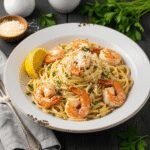
Creamy Lemon Garlic Shrimp Pasta – Ready in 20 Minutes!
- Total Time: 20 minutes
- Yield: 4 servings 1x
Description
This Creamy Lemon Garlic Shrimp Pasta is a restaurant-quality dish that comes together in just 20 minutes. Tender shrimp are tossed with al dente pasta in a luxurious garlic cream sauce brightened with fresh lemon. It’s the perfect weeknight dinner that feels special enough for company!
Ingredients
- 12 oz linguine or fettuccine pasta
- 1 lb large shrimp, peeled and deveined
- 4 tablespoons butter, divided
- 2 tablespoons olive oil
- 6 cloves garlic, minced
- ½ cup dry white wine (or chicken broth)
- 1 cup heavy cream
- ½ cup chicken or seafood broth
- Zest of 1 large lemon
- 3 tablespoons fresh lemon juice
- ½ cup freshly grated Parmesan cheese
- ¼ cup fresh parsley, chopped
- ¼ teaspoon red pepper flakes (optional)
- Salt and black pepper to taste
- Extra Parmesan and lemon wedges for serving
Instructions
- Cook the pasta: Bring a large pot of salted water to a boil. Add the pasta and cook according to package directions until al dente (usually 8-10 minutes). Reserve 1 cup of pasta water before draining. Drain the pasta and set aside.
- Prepare the shrimp: While the pasta cooks, pat the shrimp completely dry with paper towels. Season both sides generously with salt and pepper. This helps them develop a beautiful golden exterior.
- Sear the shrimp: Heat olive oil and 1 tablespoon of butter in a large skillet over medium-high heat. Once hot and the butter has melted, add the shrimp in a single layer. Cook for 2 minutes per side until pink and just cooked through with golden edges. Don’t overcrowd the pan – work in batches if needed. Transfer shrimp to a plate and set aside.
- Build the sauce base: Reduce heat to medium. Add remaining 3 tablespoons of butter to the same skillet. Once melted, add minced garlic and red pepper flakes (if using). Sauté for 30-60 seconds until fragrant but not browned – watch carefully as garlic burns quickly!
- Deglaze with wine: Pour in the white wine, scraping up any browned bits from the bottom of the pan with a wooden spoon. Let it simmer for 2-3 minutes until reduced by half.
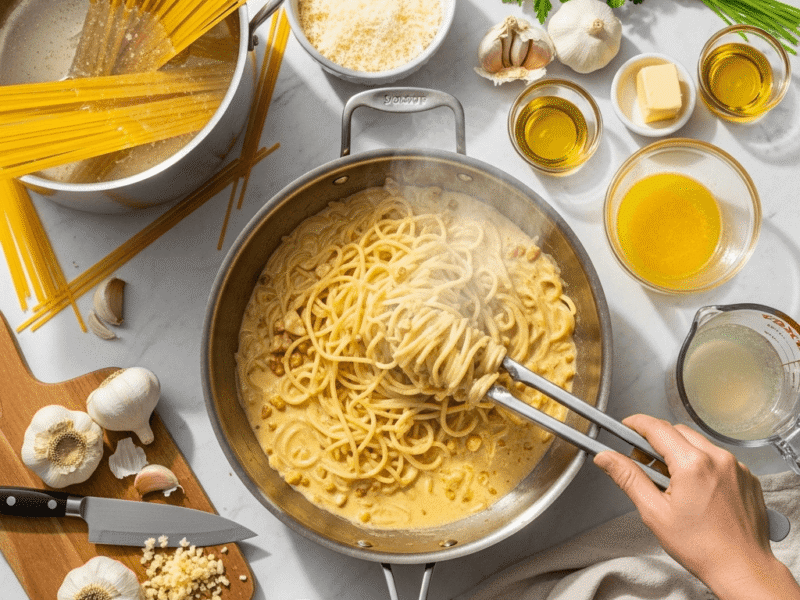
- Create the cream sauce: Stir in the heavy cream and broth. Bring to a gentle simmer and cook for 3-4 minutes, stirring occasionally, until the sauce thickens slightly and coats the back of a spoon.
- Add lemon and cheese: Remove from heat and stir in lemon zest, lemon juice, and Parmesan cheese. Stir until the cheese melts and the sauce is smooth. Taste and adjust seasoning with salt and pepper.
- Combine everything: Add the drained pasta to the skillet and toss to coat with the sauce. If the sauce seems too thick, add reserved pasta water a few tablespoons at a time until you reach desired consistency. Return the cooked shrimp to the pan and toss gently to combine. Sprinkle with fresh parsley.
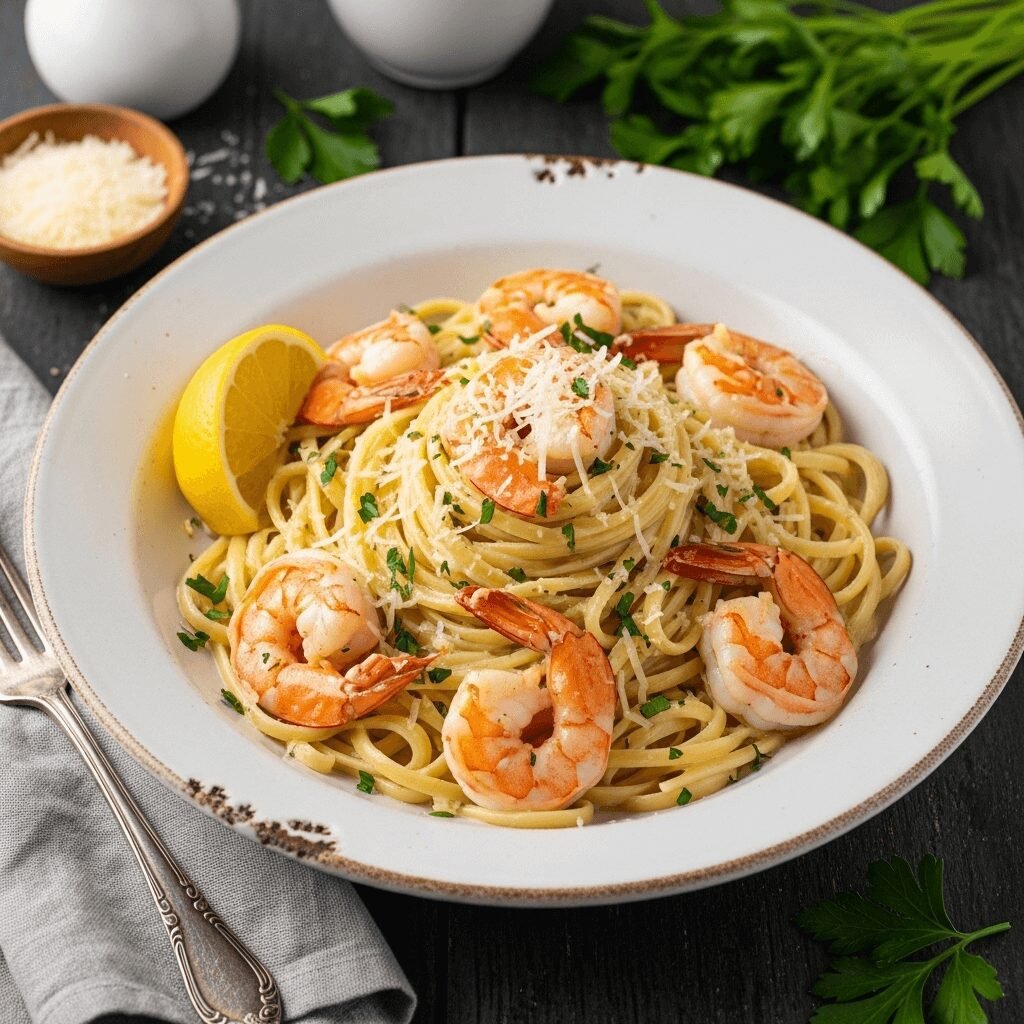
- Serve immediately: Transfer to serving plates or a large platter. Garnish with extra Parmesan cheese, additional fresh parsley, and lemon wedges on the side. Serve while hot!
Notes
- Don’t overcook the shrimp! They continue cooking from residual heat, so slightly undercook them initially. Overcooked shrimp become rubbery.
- Pasta water is magic: The starchy water helps the sauce cling to the pasta and creates a silkier texture. Always reserve some before draining!
- Fresh lemon is crucial: Bottled lemon juice lacks the bright, fresh flavor needed for this dish.
- Make it lighter: Substitute half the heavy cream with half-and-half or use all broth for a lighter sauce (it won’t be as thick).
- Wine substitute: If you don’t use wine, replace it with equal parts chicken broth plus an extra tablespoon of lemon juice for acidity.
- Spice it up: Add more red pepper flakes or a dash of cayenne for extra heat.
- Best when fresh: This dish is best enjoyed immediately as cream sauces can thicken when stored.
- Prep Time: 10 minutes
- Cook Time: 10 minutes
- Category: Dinner
- Method: Stovetop
- Cuisine: Italian-American
Nutrition
- Serving Size: 1 serving (¼ of recipe)
- Calories: 628
- Sugar: 3g
- Sodium: 487mg
- Fat: 32g
- Saturated Fat: 17g
- Unsaturated Fat: 12g
- Trans Fat: 0g
- Carbohydrates: 54g
- Fiber: 3g
- Protein: 31g
- Cholesterol: 248mg
Nutrition information is approximate and calculated based on the ingredients listed. Values may vary based on specific brands and modifications.
Tips & Variations
One of the best things about this creamy lemon garlic shrimp pasta is how easily you can make it your own! Here are some delicious ways to customize this recipe:
Make it spicier: Add extra red pepper flakes, a pinch of cayenne pepper, or even some diced jalapeños with the garlic for a kick that’ll wake up your taste buds.
Add vegetables: Sauté baby spinach, halved cherry tomatoes, asparagus tips, or sun-dried tomatoes along with the garlic. This adds color, nutrition, and extra flavor while keeping the dish light and fresh.
Try different proteins: Swap shrimp for scallops, chunks of salmon, or even chicken breast cut into bite-sized pieces. Adjust cooking times accordingly – chicken will take longer than seafood.
Make it lighter: Use half-and-half instead of heavy cream, or replace half the cream with additional broth for fewer calories while maintaining great flavor. You can also use whole wheat pasta for added fiber.
Herb variations: Experiment with fresh basil, oregano, or dill instead of (or in addition to) parsley. Each herb brings its own unique personality to the dish.
Cheese options: Try Pecorino Romano for a sharper, saltier flavor, or add a bit of cream cheese for extra richness and tang.
Cajun twist: Season the shrimp with Cajun seasoning before cooking for a Louisiana-inspired version with extra spice and depth.
Mediterranean style: Add capers, olives, and extra lemon for a brighter, more Mediterranean flavor profile.
Extra garlic: Love garlic? Double it! You can never have too much garlic in my opinion (though your dinner companions might disagree).
Pro Chef Tips
These professional techniques will take your creamy lemon garlic shrimp pasta from great to absolutely phenomenal:
Dry your shrimp thoroughly: This is the single most important step for getting that gorgeous golden sear. Wet shrimp will steam instead of sear, and you’ll miss out on that delicious caramelized flavor. Pat them completely dry with paper towels before seasoning.
Salt your pasta water generously: It should taste like the sea! This is your only opportunity to season the pasta itself. Properly salted pasta water makes a huge difference in the final dish. Use about 1-2 tablespoons of salt per gallon of water.
Don’t rinse your pasta: After draining, never rinse pasta that’s going into a sauce. The starchy coating helps the sauce cling beautifully. Rinsing washes away that precious starch.
Use room temperature cream: Cold cream can cause the sauce to break or take longer to come together. Pull your cream from the fridge 20-30 minutes before cooking, or give it a quick 10-second microwave zap to take the chill off.
Finish cooking the pasta in the sauce: Your pasta should be just shy of al dente when you drain it. It will finish cooking in the sauce, absorbing all those incredible flavors while the starch helps thicken the sauce naturally.
Zest before juicing: Always zest your lemon before you juice it – it’s nearly impossible to zest a juiced lemon! The zest contains aromatic oils that add incredible depth to the sauce.
Add Parmesan off the heat: This prevents the cheese from clumping or becoming grainy. The residual heat is enough to melt it perfectly into a smooth, creamy sauce.
Invest in good Parmesan: Real Parmigiano-Reggiano makes a noticeable difference. It melts smoother, tastes better, and contains no fillers or anti-caking agents like pre-grated cheese.
Taste and adjust: Always taste your sauce before serving. The lemon and salt levels can vary, so adjust to your preference. Sometimes a dish needs just a pinch more salt or a squeeze more lemon to really sing.
Serve immediately: Cream-based pasta dishes are best enjoyed right away. The sauce can thicken as it sits, and the pasta can absorb liquid. If needed, loosen with a splash of reserved pasta water or broth when reheating.
Common Mistakes to Avoid
Even simple recipes can go wrong if you’re not careful. Here are the most common pitfalls and how to avoid them:
Overcooking the shrimp: Rubbery shrimp are the biggest complaint with seafood pasta dishes. Shrimp cook incredibly fast – usually just 2 minutes per side. They’re done when they turn pink and opaque. Remember, they’ll continue cooking from residual heat, so pull them off slightly early. If they curl into tight circles, they’re overcooked.
Breaking the cream sauce: Adding cold cream to a very hot pan or boiling the cream sauce can cause it to break and look curdled. Always use medium heat, let the cream come to a gentle simmer (not a rolling boil), and consider bringing cream to room temperature first.
Burning the garlic: Garlic goes from perfectly golden to bitter and burned in seconds. Always cook garlic over medium heat (not high), keep stirring, and add it after you’ve reduced the heat from cooking the shrimp. If your garlic starts to brown too much, remove the pan from heat immediately.
Using pre-grated Parmesan: Those shelf-stable containers of pre-grated Parmesan contain cellulose (wood pulp) to prevent caking, which means it doesn’t melt smoothly. Always grate fresh Parmesan from a block for the silkiest sauce.
Skipping the pasta water: That starchy, salty water is liquid gold! It helps the sauce emulsify, creates a silkier texture, and helps the sauce cling to the pasta. Always reserve at least a cup before draining, even if you don’t think you’ll need it – you probably will!
Not seasoning in layers: Season the shrimp before cooking, season the sauce, and taste before serving. Building flavor at each step creates a more complex, delicious final dish than just salting at the end.
Overcrowding the pan: If your shrimp are touching or overlapping, they’ll steam instead of sear. Work in batches if necessary to ensure each shrimp gets that golden, caramelized exterior.
Storage & Meal Prep
While this creamy lemon garlic shrimp pasta is absolutely best enjoyed fresh, I understand that leftovers happen – and sometimes you want to prep ahead for busy weeks!
Storing leftovers: Transfer any leftover pasta to an airtight container and refrigerate within 2 hours of cooking. It will keep for up to 2 days in the refrigerator. The sauce will thicken considerably as it sits (the pasta absorbs liquid), so you’ll need to add moisture when reheating.
Reheating instructions: The best way to reheat this dish is gently on the stovetop. Place the pasta in a skillet over medium-low heat and add 2-3 tablespoons of chicken broth, cream, or even just water to loosen the sauce. Stir frequently until heated through, about 5-7 minutes. You can also microwave individual portions in 30-second intervals, stirring between each, and adding a splash of liquid to prevent drying out. Be careful not to overheat, or the shrimp will become rubbery.
Not recommended for freezing: Unfortunately, cream-based sauces and cooked shrimp don’t freeze well. The cream can separate when thawed, and shrimp becomes unpleasantly rubbery with a mushy texture after freezing and reheating. If you must freeze it, expect texture changes, though the flavor will still be decent.
How long it lasts: In the refrigerator, this pasta is best consumed within 1-2 days for optimal quality. After that, the pasta becomes mushy, the shrimp texture degrades, and the cream sauce can start to separate. Always smell and examine leftovers before reheating – if anything seems off, discard it.
Food safety note: Seafood is more perishable than other proteins, so don’t leave this dish at room temperature for more than 2 hours (1 hour if it’s hot outside). Refrigerate promptly and reheat thoroughly to 165°F before consuming.
Make-Ahead & Freezer Notes
While this recipe comes together so quickly that make-ahead isn’t usually necessary, here are some tips if you want to prep portions in advance:
Prepping ingredients ahead: You can definitely prep your ingredients the morning of or even the night before. Peel and devein shrimp, store covered in the fridge. Mince garlic and chop parsley, storing each in separate airtight containers. Zest and juice your lemon, keeping them separate. Having everything ready to go makes the actual cooking process even faster.
Partial prep method: If you want to get a head start, you can cook the shrimp and prepare the sauce base (everything except adding the pasta), then refrigerate separately for up to 1 day. When ready to eat, cook fresh pasta, reheat the sauce gently, add the pasta and shrimp, and toss to combine. This gives you the convenience of prep work with the quality of fresh-cooked pasta.
Why this isn’t ideal for full make-ahead: Cream sauces and pasta don’t hold well once combined. The pasta continues to absorb the liquid, becoming mushy, while the sauce thickens into a paste. If you must make it ahead completely, expect to add significant amounts of broth or cream when reheating to restore the proper consistency.
Freezing the components: While the finished dish doesn’t freeze well, you can freeze just the cooked, seasoned shrimp separately. Cool completely, arrange in a single layer on a baking sheet, freeze until solid, then transfer to a freezer bag. These will keep for up to 2 months and can be thawed in the fridge overnight before adding to freshly made sauce and pasta.
Best approach for busy weeks: Instead of making the full dish ahead, keep the ingredients on hand and take advantage of the 20-minute cook time. With minimal prep, you can have this on the table faster than takeout delivery!
Serving Suggestions
This creamy lemon garlic shrimp pasta is a showstopper on its own, but pairing it with the right sides transforms it into a complete, memorable meal. Here are my favorite accompaniments:
Bread options: A crusty baguette, garlic bread, or homemade dinner rolls are perfect for soaking up every last drop of that incredible cream sauce. I love brushing thick slices of Italian bread with olive oil, rubbing them with a cut garlic clove, and toasting them until golden – pure heaven!
Salad pairings: Keep it simple with a crisp Caesar salad (the garlicky dressing echoes the flavors in the pasta), or go for a light mixed green salad with lemon vinaigrette. An arugula salad with shaved Parmesan and a balsamic glaze adds peppery freshness that cuts through the richness. A classic Caprese salad with fresh mozzarella, tomatoes, and basil also works beautifully.
Vegetable sides: Roasted asparagus with lemon, sautéed broccolini, roasted Brussels sprouts, or green beans almandine all complement this pasta wonderfully. Roasted cherry tomatoes bring sweetness and acidity that balance the cream.
Wine pairings: A crisp, acidic white wine is your best friend here. Try Pinot Grigio, Sauvignon Blanc, or a dry Riesling. The acidity cuts through the cream while complementing the lemon and seafood. Champagne or Prosecco also works beautifully if you’re celebrating!
Complete meal ideas: For a dinner party, serve this pasta as the main course with garlic bread, a simple arugula salad, and roasted asparagus. Finish with a light dessert like lemon sorbet or tiramisu. For a romantic date night, dim the lights, light some candles, serve with Champagne and a Caesar salad, and end with chocolate mousse.
Presentation tips: Serve in shallow bowls or on wide pasta plates to show off the gorgeous sauce. Garnish each serving with a lemon wedge, fresh parsley sprigs, and a final grating of Parmesan. A drizzle of quality olive oil on top adds restaurant-level polish.
FAQs Section
Can I use frozen shrimp for this recipe?
Absolutely! Frozen shrimp works perfectly well. Just make sure to thaw them completely before cooking – the easiest method is to place them in a colander and run cold water over them for 5-10 minutes. Pat them completely dry with paper towels before seasoning and cooking. Wet shrimp won’t sear properly and will steam instead.
What can I substitute for heavy cream to make this lighter?
You have several options! Half-and-half will work but produces a thinner sauce. For best results when using half-and-half, add 1 tablespoon of flour to the butter when making the sauce to help it thicken. You can also use a mixture of whole milk and a couple tablespoons of cream cheese for richness with fewer calories. Greek yogurt stirred in at the end (off heat) adds creaminess and tang with a protein boost, though it won’t be as rich as traditional cream.
My sauce is too thin – how do I thicken it?
First, let it simmer a bit longer to reduce and thicken naturally. If you’re in a hurry, you can add more grated Parmesan cheese (which also adds flavor), or mix 1 teaspoon of cornstarch with 2 teaspoons of cold water and stir it into the sauce. Let it simmer for another minute to thicken. The pasta water you reserved also helps – the starch will thicken the sauce while adding silkiness.
Can I make this recipe without wine?
Yes! Simply replace the white wine with an equal amount of chicken or seafood broth. To compensate for the acidity the wine provides, add an extra tablespoon of fresh lemon juice. You won’t miss the wine at all!
How do I know when my shrimp are perfectly cooked?
Shrimp cook very quickly – usually 2 minutes per side. They’re done when they turn from translucent gray to opaque pink throughout, and form a loose “C” shape. Overcooked shrimp curl into tight circles or “O” shapes and have a rubbery texture. When in doubt, pull them off slightly early – they’ll continue cooking from residual heat.
Can I use a different type of pasta?
Definitely! While linguine and fettuccine are ideal because their shape holds the sauce well, you can use spaghetti, angel hair, penne, rigatoni, or even shells. Just adjust the cooking time according to the package directions for your chosen pasta shape.
Why is my sauce looking grainy or separated?
This usually happens if the sauce gets too hot (above a simmer) or if you added the Parmesan while the sauce was boiling. To fix it, remove from heat immediately and whisk in a tablespoon of cold cream or a splash of pasta water. For future prevention, always add cheese off the heat and avoid boiling cream sauces – keep them at a gentle simmer.
Conclusion
And there you have it – the ultimate guide to making the most incredible Creamy Lemon Garlic Shrimp Pasta right in your own kitchen! This recipe has everything you could want in a weeknight meal: it’s quick, it’s elegant, it’s bursting with flavor, and it comes together with simple, accessible ingredients. Whether you’re making it for a busy Tuesday dinner or a special Saturday night date, this pasta delivers every single time.
The beauty of this dish is in its simplicity and versatility. Once you’ve mastered the basic recipe, you can customize it endlessly to suit your tastes, dietary needs, or whatever ingredients you have on hand. Don’t be afraid to experiment and make it your own!
I’d absolutely love to hear how this recipe turns out for you! Did you add extra garlic? Throw in some vegetables? Make any creative substitutions? Drop a comment below and let me know – I read every single one and love hearing about your cooking adventures. And if you loved this recipe (which I’m confident you will!), please share it with your friends and family who appreciate good food.
Don’t forget to save this recipe to your Pinterest boards so you can find it easily next time the craving strikes! Take a photo of your beautiful creation and tag me on social media – I love seeing your versions of my recipes. Happy cooking, friends, and enjoy every delicious, creamy, lemony bite! 🍋🍤🍝