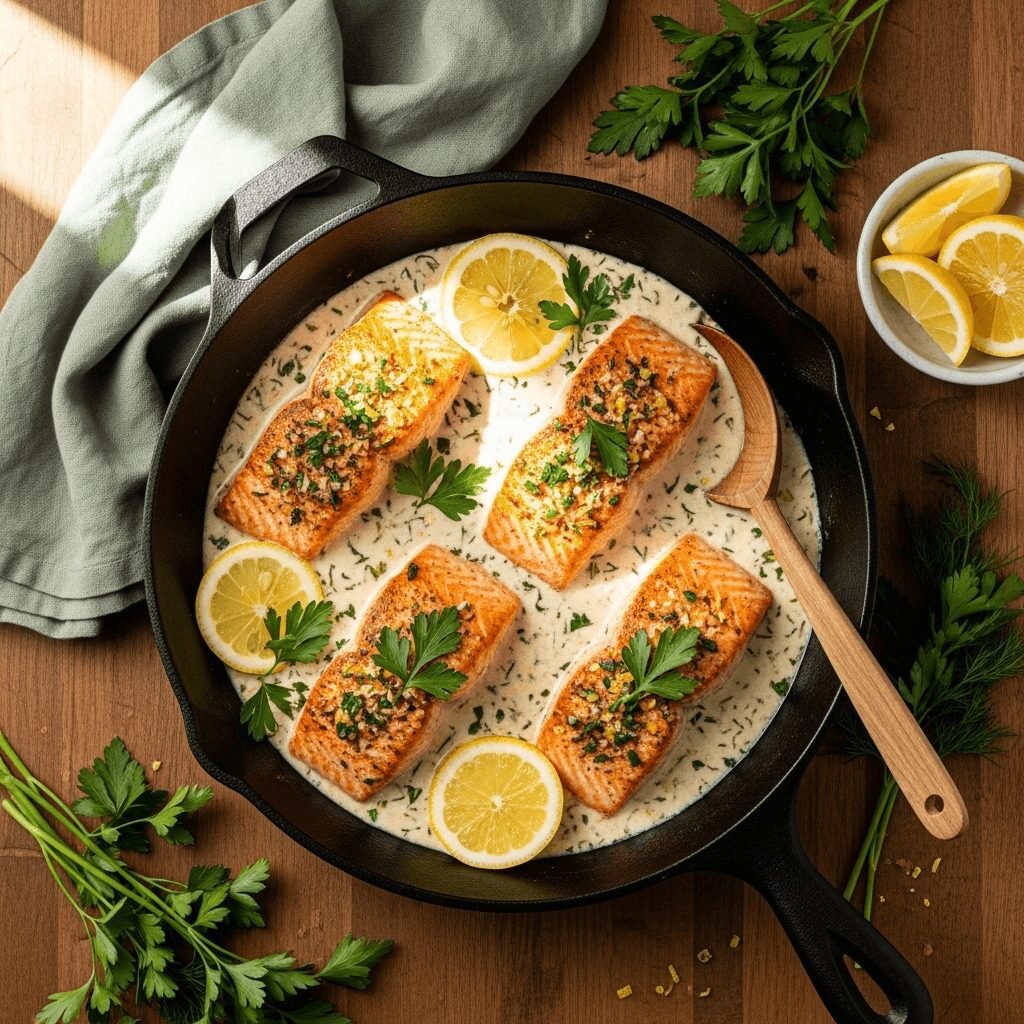
There’s something absolutely magical about perfectly cooked salmon draped in a velvety, tangy lemon garlic cream sauce. This creamy lemon garlic salmon recipe transforms simple ingredients into an elegant, restaurant-worthy meal that’s ready in just 20 minutes. Whether you’re planning a romantic dinner for two, hosting a dinner party, or simply craving something special on a weeknight, this recipe delivers impressive results without the stress.
The combination of buttery, flaky salmon with a luxurious cream sauce infused with bright lemon and aromatic garlic creates a flavor profile that’s both sophisticated and comforting. The best part? You only need one pan, making cleanup a breeze. This dish works beautifully for special occasions yet remains simple enough for busy weeknights when you want something that feels indulgent without requiring hours in the kitchen.
Serve this gorgeous salmon over rice, pasta, or alongside roasted vegetables for a complete meal that will have everyone asking for seconds. The creamy lemon garlic sauce is so delicious, you’ll want to spoon it over everything on your plate!
History / Background
While salmon has been a dietary staple for coastal communities around the world for thousands of years, the preparation of salmon with cream-based sauces has particularly strong roots in European cuisine, especially in French and Scandinavian cooking traditions. The French have long been masters of cream sauces, creating classic preparations like beurre blanc and various velouté sauces that pair beautifully with delicate fish.
The addition of lemon and garlic to cream sauces became particularly popular in the Mediterranean region, where these ingredients grow abundantly and have been culinary staples for centuries. Italian cuisine, in particular, celebrates the marriage of seafood with garlic and citrus, creating bright, flavorful dishes that allow the natural taste of the fish to shine through.
In modern American cooking, creamy lemon garlic salmon represents the beautiful fusion of classic French technique with Mediterranean flavors and our love for quick, accessible weeknight dinners. This recipe gained massive popularity through social media platforms like Pinterest and Instagram, where home cooks discovered they could recreate restaurant-quality salmon dishes without culinary school training or expensive ingredients.
The rise of this recipe also coincides with growing awareness about the health benefits of salmon, which is rich in omega-3 fatty acids, protein, and essential nutrients. Home cooks wanted preparations that were both healthy and indulgent, and this creamy lemon garlic version strikes that perfect balance.
Why You’ll Love This Recipe
This creamy lemon garlic salmon isn’t just another fish recipe—it’s a game-changer for weeknight dinners and special occasions alike. The combination of convenience, flavor, and visual appeal makes it a recipe you’ll return to again and again.
Here’s why this recipe deserves a permanent spot in your dinner rotation:
- Ready in 20 minutes – Perfect for busy weeknights when you want something impressive without the time commitment
- One-pan cooking – Less mess means less stress and minimal cleanup
- Restaurant-quality results – Impress your family and guests with professional-looking, delicious salmon
- Beginner-friendly – Simple techniques that anyone can master, even if you’ve never cooked salmon before
- Versatile and adaptable – Easy to customize with your favorite herbs or spice level
- Healthy and nutritious – Packed with protein and omega-3s while still feeling indulgent
- Budget-conscious – Costs less than dining out while delivering better flavor
- Perfect for meal prep – Makes excellent leftovers for lunch the next day
- Crowd-pleaser – Even picky eaters love the mild, creamy sauce that complements the salmon
- Pinterest-worthy presentation – Looks as beautiful as it tastes, perfect for sharing
The silky cream sauce with bright lemon notes and aromatic garlic creates a flavor profile that’s sophisticated yet comforting, making this dish suitable for everything from a quiet Tuesday dinner to your next dinner party.
Ingredient Notes
Understanding your ingredients helps you make better cooking decisions and achieve the best results. Here’s what you need to know about each component:
Salmon Fillets: Choose fresh, wild-caught salmon when possible for the best flavor and nutritional value. Look for fillets with vibrant color and firm texture. Skin-on or skinless both work—skin-on helps the fish hold together better during cooking. Farm-raised salmon is a more budget-friendly option and works perfectly well. Each fillet should be about 6 ounces for proper portion sizes.
Heavy Cream: This creates the luxurious, velvety sauce base. Heavy cream (also called heavy whipping cream) has the highest fat content and won’t separate when heated. For a lighter version, you can use half-and-half, though the sauce will be slightly thinner. Avoid regular milk as it will curdle.
Garlic: Fresh garlic is essential for the best flavor. Minced garlic from a jar can work in a pinch, but fresh cloves provide that aromatic, pungent quality that makes this dish special. Plan on 4-5 large cloves for robust garlic flavor.
Lemon: Both the juice and zest are used to create layers of bright, citrusy flavor. Always use fresh lemons rather than bottled juice. The zest contains aromatic oils that add incredible depth to the sauce.
Butter and Olive Oil: This combination provides the perfect cooking medium—butter for rich flavor and olive oil to prevent burning. Use unsalted butter so you can control the salt level in your dish.
White Wine: Adds acidity and depth to the sauce. A dry white wine like Sauvignon Blanc or Pinot Grigio works best. If you prefer not to use wine, substitute with additional chicken broth and an extra squeeze of lemon juice.
Chicken Broth: Helps thin the sauce to the perfect consistency and adds savory flavor. Low-sodium broth is best so you can control seasoning. Vegetable broth works as a substitute.
Parmesan Cheese: Freshly grated Parmesan adds a subtle nutty, salty flavor that rounds out the sauce beautifully. Pre-grated cheese doesn’t melt as smoothly, so grate it yourself from a block for best results.
Fresh Herbs: Parsley, dill, or basil make excellent garnishes and add a fresh, bright finish. Choose whichever herb you prefer or have on hand.
Seasonings: Salt, black pepper, and paprika season the salmon. Smoked paprika adds a wonderful depth, but regular paprika works fine too.
Equipment Needed
Having the right tools makes cooking easier and more enjoyable. Here’s what you’ll need for this recipe:
- Large skillet or sauté pan (12-inch works best) – Stainless steel or non-stick; needs to be large enough to fit all salmon fillets without crowding
- Fish spatula – The thin, flexible edge is perfect for flipping delicate salmon without breaking it
- Measuring cups and spoons – For accurate ingredient measurements
- Microplane or zester – For zesting the lemon (a fine grater works too)
- Citrus juicer – Makes extracting lemon juice easier (optional but helpful)
- Garlic press or sharp knife – For mincing garlic finely
- Whisk – To blend the cream sauce smoothly
- Tongs – For handling salmon fillets carefully
- Instant-read thermometer – Optional but helpful for ensuring salmon reaches the perfect internal temperature (145°F)
- Cutting board – For prep work
- Small bowl – For mixing seasonings
You don’t need any fancy equipment—just basic kitchen tools that most home cooks already own. The most important thing is a good-quality skillet that distributes heat evenly.
Print
Creamy Lemon Garlic Salmon Recipe
- Total Time: 22 minutes Yield:
- Yield: 4 servings 1x
- Diet: Gluten Free
Description
This restaurant-quality creamy lemon garlic salmon features perfectly seared salmon fillets swimming in a luxurious cream sauce infused with bright lemon, aromatic garlic, and white wine. Ready in just 20 minutes, this one-pan wonder delivers impressive flavor with minimal effort, making it perfect for both weeknight dinners and special occasions.
Ingredients
For the Salmon:
- 4 salmon fillets (6 ounces each, skin-on or skinless)
- 1 tablespoon olive oil
- 2 tablespoons butter, divided
- 1 teaspoon salt
- ½ teaspoon black pepper
- ½ teaspoon paprika (smoked or regular)
For the Creamy Lemon Garlic Sauce:
- 5 cloves garlic, minced
- ⅓ cup dry white wine (Sauvignon Blanc or Pinot Grigio)
- 1 cup heavy cream
- ½ cup chicken broth (low-sodium)
- Juice of 1 large lemon (about 3 tablespoons)
- Zest of 1 lemon
- ⅓ cup freshly grated Parmesan cheese
- ½ teaspoon salt (or to taste)
- ¼ teaspoon black pepper
- 2 tablespoons fresh parsley, chopped (plus extra for garnish)
- Fresh dill or basil (optional, for garnish)
Instructions
Step 1: Prepare the Salmon
Pat the salmon fillets completely dry with paper towels. This is crucial for getting a good sear. Season both sides generously with salt, black pepper, and paprika. Let the salmon sit at room temperature for 5-10 minutes while you prepare other ingredients.
Step 2: Sear the Salmon
Heat olive oil and 1 tablespoon of butter in a large skillet over medium-high heat until the butter melts and begins to shimmer. Place salmon fillets in the pan skin-side up (if using skin-on salmon) and sear for 4-5 minutes without moving them. The salmon should develop a beautiful golden-brown crust. Carefully flip using a fish spatula and cook for another 3-4 minutes until the salmon is cooked through but still slightly translucent in the very center. Transfer salmon to a plate and tent loosely with foil to keep warm.
Step 3: Make the Aromatic Base
Reduce heat to medium and add the remaining tablespoon of butter to the same skillet. Add minced garlic and sauté for 30-45 seconds until fragrant but not browned. Be careful not to burn the garlic as it will become bitter.
Step 4: Deglaze with Wine
Pour in the white wine and use a wooden spoon to scrape up any browned bits from the bottom of the pan (this is where tons of flavor lives!). Let the wine simmer for 2-3 minutes until reduced by about half.
Step 5: Create the Cream Sauce
Pour in the heavy cream and chicken broth, stirring to combine. Add the lemon juice, lemon zest, salt, and pepper. Bring the mixture to a gentle simmer and let it cook for 3-4 minutes, stirring occasionally, until it begins to thicken slightly.
Step 6: Add Cheese and Finish
Reduce heat to low and whisk in the freshly grated Parmesan cheese until melted and smooth. Stir in the chopped fresh parsley. Taste and adjust seasoning with additional salt, pepper, or lemon juice if needed. The sauce should coat the back of a spoon nicely.
Step 7: Combine and Serve
Return the salmon fillets to the skillet, nestling them into the creamy sauce. Spoon sauce over the top of each fillet. Let everything warm together for 1-2 minutes. Garnish with additional fresh parsley and lemon slices if desired. Serve immediately while hot.
Notes
- Salmon doneness: Salmon is perfectly cooked when it reaches an internal temperature of 145°F. It should flake easily with a fork but still be slightly moist in the center. Overcooking will make it dry.
- Wine substitution: If you don’t cook with wine, use additional chicken broth plus an extra tablespoon of lemon juice for acidity.
- Thicker sauce: If you prefer a thicker sauce, let it simmer a bit longer or add an extra tablespoon of Parmesan cheese.
- Thinner sauce: If the sauce becomes too thick, thin it with a splash of chicken broth or cream.
- Skin removal: If your salmon has skin and you prefer to remove it, it peels off easily after cooking.
- Scaling the recipe: This recipe easily doubles for larger gatherings. Use two skillets or cook in batches to avoid overcrowding.
- Prep Time: 10 minutes
- Cook Time: 12 minutes
- Category: Dinner, Main Course
- Method: Stovetop, Pan-Seared
- Cuisine: American, Mediterranean-Inspired
Nutrition
- Serving Size: salmon fillet with sauce (approximately 8 ounces total)
- Calories: 548
- Sugar: 2g
- Sodium: 785mg
- Fat: 39g
- Saturated Fat: 20g
- Unsaturated Fat: 16g
- Trans Fat: 0g
- Carbohydrates: 6g
- Fiber: 0g
- Protein: 38g
- Cholesterol: 165mg
Note: Nutrition information is calculated using standard ingredient amounts and may vary based on specific brands used, portion sizes, and preparation methods.
Tips & Variations
One of the best things about this creamy lemon garlic salmon is how easily you can customize it to suit your taste preferences or dietary needs.
Spicy Kick: Add ½ teaspoon of red pepper flakes to the garlic while sautéing, or stir in a pinch of cayenne pepper to the cream sauce for a subtle heat that complements the lemon beautifully.
Herb Variations: While parsley is classic, fresh dill transforms this into a more Scandinavian-inspired dish. Basil adds an Italian twist, and tarragon brings a sophisticated French flair. Try chives for a mild onion flavor.
Capers Addition: Stir in 2 tablespoons of drained capers to the sauce for a briny, Mediterranean touch that pairs wonderfully with salmon.
Sun-Dried Tomatoes: Add ⅓ cup of chopped sun-dried tomatoes (oil-packed and drained) to the sauce for extra flavor and a pop of color.
Lighter Version: Use half-and-half instead of heavy cream and reduce the butter to 1 tablespoon total. The sauce will be lighter but still delicious. You can also use light cream cheese (2 ounces) whisked in instead of some of the heavy cream.
Dairy-Free Option: Substitute full-fat coconut cream for the heavy cream and use nutritional yeast instead of Parmesan. The flavor profile changes but remains delicious.
Vegetable Additions: Sauté baby spinach, asparagus tips, or cherry tomatoes in the pan before making the sauce for a complete one-pan meal with built-in vegetables.
Different Fish: This sauce works beautifully with other fish too. Try it with halibut, cod, sea bass, or even large shrimp for variety.
Mushroom Enhancement: Add 8 ounces of sliced mushrooms (cremini or button) to the pan after searing the salmon. Sauté until golden before proceeding with the garlic.
Pro Chef Tips
These professional techniques will elevate your salmon from good to absolutely spectacular.
Bring Salmon to Room Temperature: Take salmon out of the refrigerator 15-20 minutes before cooking. Cold fish won’t cook evenly and is more likely to stick to the pan. Room temperature salmon sears better and cooks more uniformly throughout.
The Dry Surface Secret: This cannot be stressed enough—completely dry salmon is the key to a beautiful crust. Use paper towels to pat every surface bone-dry. Any moisture will cause steaming instead of searing, resulting in gray, unappetizing fish.
Don’t Move the Salmon: Once you place the salmon in the hot pan, resist the urge to peek, poke, or move it. Let it sit undisturbed for the full 4-5 minutes. The fish will naturally release from the pan when it’s properly seared. If it’s sticking, it’s not ready to flip.
Use Medium-High Heat, Not High: While you want a good sear, excessive heat will burn the outside before the inside cooks through. Medium-high heat (around 375-400°F pan temperature) is the sweet spot for salmon.
The Sauce Temperature Matters: When adding Parmesan to the cream sauce, make sure the heat is reduced to low. High heat can cause the cheese to clump or the sauce to separate. Low, gentle heat creates a smooth, silky sauce.
Fresh Lemon Juice at the Right Time: Add half the lemon juice during cooking and reserve the other half to add right before serving. This creates layers of brightness—cooked lemon flavor in the sauce and fresh, zesty punch from the raw juice added at the end.
Quality Parmesan Makes a Difference: Freshly grated Parmigiano-Reggiano melts smoothly and adds rich, nutty flavor. Pre-grated or canned Parmesan contains anti-caking agents that prevent smooth melting and can make the sauce grainy.
Check for Doneness, Don’t Guess: The salmon is perfectly cooked when it reaches 145°F in the thickest part. It should be opaque throughout but still moist. Slightly undercooked salmon (around 125-130°F) is preferred by many as it’s more tender and juicy—the residual heat will continue cooking it as it rests.
Common Mistakes to Avoid
Learning what not to do is just as important as following the recipe. Here are the most common pitfalls and how to avoid them:
Overcooking the Salmon: This is the number one mistake home cooks make. Overcooked salmon becomes dry, chalky, and loses its delicate texture. Remember that salmon continues cooking after you remove it from heat. Aim for slightly translucent in the very center when you take it off the heat—it will reach perfect doneness as it rests.
Overcrowding the Pan: If your salmon fillets touch each other or fill the pan completely, they’ll steam rather than sear. This creates gray, mushy fish instead of a beautiful golden crust. Use a large enough skillet (12-inch is ideal for 4 fillets) or cook in batches if necessary. There should be at least an inch of space between each fillet.
Burning the Garlic: Garlic goes from perfectly aromatic to acrid and bitter in seconds. Always add garlic to medium (not high) heat and watch it carefully. If you see it browning, immediately add your wine to stop the cooking. Burned garlic will ruin the entire sauce.
Using Too Much Heat: While you need good heat for searing, cranking your burner to maximum will burn the butter, scorch the salmon’s exterior before the inside cooks, and potentially break your cream sauce. Medium-high heat is your friend for this recipe.
Adding Cream Too Early or on High Heat: When heavy cream is exposed to high heat, it can curdle or break, creating an unappetizing grainy texture. Always reduce your heat before adding cream and let it warm gradually. Once you add the cream, keep the temperature at a gentle simmer, never a rolling boil.
Skipping the Wine Deglazing Step: Those browned bits stuck to the pan aren’t burnt food—they’re concentrated flavor! The wine loosens them and incorporates all that deliciousness into your sauce. Don’t skip this step, and make sure to scrape thoroughly with a wooden spoon.
Not Tasting and Adjusting Seasoning: Every lemon has different acidity, every chef has different salt preferences. Always taste your sauce before serving and adjust. Need more brightness? Add lemon. Too acidic? A tiny pinch of sugar balances it. Not enough depth? Add more salt or Parmesan.
Storage & Meal Prep
Proper storage ensures your leftovers taste nearly as good as the fresh dish.
Refrigerator Storage: Store leftover salmon and sauce in an airtight container in the refrigerator for up to 3 days. Keep the salmon and sauce together to prevent the fish from drying out. Make sure everything is completely cooled before sealing the container to prevent condensation.
Reheating Instructions: The key to reheating salmon is using gentle heat to avoid overcooking. The best method is to reheat in a covered skillet over low heat with a splash of chicken broth or cream to refresh the sauce. Heat for 3-5 minutes until just warmed through. Alternatively, reheat in a microwave at 50% power in 30-second intervals, covering the dish with a damp paper towel to maintain moisture.
Shelf Life: Cooked salmon should be consumed within 3 days for best quality and safety. The cream sauce may thicken considerably when refrigerated—this is normal. Simply thin it with a little broth or cream when reheating.
Food Safety Tip: Never leave cooked salmon at room temperature for more than 2 hours (1 hour if the room is warmer than 90°F). Bacteria multiply rapidly in the “danger zone” between 40°F and 140°F.
Packed Lunch Idea: This salmon works beautifully for meal prep! Pack it with rice or quinoa and steamed vegetables for a restaurant-quality work lunch. Store the components separately if possible and combine when reheating.
Make-Ahead & Freezer Notes
Planning ahead can make weeknight dinners even easier with this recipe.
Advance Preparation: While this dish is best served fresh, you can prepare components ahead. Season the salmon fillets and keep them refrigerated for up to 4 hours before cooking. Mince the garlic, grate the lemon zest, and juice the lemon up to a day ahead—store each in separate small containers. Having your mise en place ready makes the actual cooking take just 15 minutes.
Sauce Make-Ahead: You can make the cream sauce up to 2 days ahead and store it separately in the refrigerator. Reheat gently over low heat, whisking in a splash of cream or broth to restore the consistency. Then simply sear fresh salmon and combine.
Freezing Cooked Salmon: While possible, freezing cooked salmon in cream sauce is not ideal. The cream sauce may separate upon thawing, and the salmon’s texture becomes less appealing. If you must freeze, do so in an airtight, freezer-safe container for up to 2 months. Thaw overnight in the refrigerator and reheat very gently, whisking the sauce to bring it back together.
Better Freezer Option: Instead of freezing the completed dish, freeze the cream sauce separately (it freezes beautifully for up to 3 months). Then you can cook fresh salmon any night, reheat the frozen sauce, and have dinner ready in 15 minutes. Thaw sauce overnight in the fridge or gently in a saucepan over low heat.
Raw Salmon Storage: Fresh salmon should be cooked within 1-2 days of purchase for best quality. If you’re not cooking right away, freeze raw salmon tightly wrapped in plastic wrap and then foil for up to 3 months. Thaw in the refrigerator overnight before cooking—never at room temperature.
Serving Suggestions
The right accompaniments turn this delicious salmon into a complete, memorable meal.
Best Side Dishes: This rich, creamy salmon pairs beautifully with lighter, fresh sides that balance the decadence. Consider fluffy white rice, buttery mashed potatoes, creamy risotto, or garlic butter pasta to soak up every drop of that incredible sauce. For a lower-carb option, cauliflower rice or zucchini noodles work wonderfully.
Vegetable Pairings: Roasted asparagus with lemon zest, steamed green beans with almonds, sautéed spinach with garlic, roasted Brussels sprouts, or honey-glazed carrots all complement this dish perfectly. The key is choosing vegetables that won’t compete with the bold flavors of the salmon but will provide textural contrast.
Bread Options: A warm, crusty baguette or garlic bread is essential for mopping up the leftover sauce (trust me, you won’t want to waste a single drop). Focaccia, ciabatta, or even simple dinner rolls work beautifully.
Salad Ideas: Balance the richness with a light, refreshing salad. An arugula salad with lemon vinaigrette, a simple mixed greens salad with cucumber and tomatoes, or a classic Caesar salad all work well. Keep the dressing light and citrus-based to complement the lemon in the salmon.
Wine Pairing: A crisp, acidic white wine cuts through the cream beautifully. Try Sauvignon Blanc, Pinot Grigio, unoaked Chardonnay, or a dry Riesling. If you prefer red wine, choose a light-bodied, chilled Pinot Noir.
Complete Menu Idea: Start with a simple caprese salad or tomato bruschetta, serve the salmon over angel hair pasta with roasted asparagus on the side, and finish with lemon panna cotta or sorbet for a restaurant-quality dinner party menu.
Meal Prep Combo: Pair this salmon with roasted vegetables and quinoa or brown rice for a balanced, protein-rich meal prep that tastes gourmet even on your busiest weekday.
FAQs Section
Q: Can I use frozen salmon for this recipe?
A: Absolutely! Just make sure to thaw it completely first. The best method is to thaw salmon overnight in the refrigerator on a plate to catch any drips. In a pinch, you can seal it in a plastic bag and submerge in cold water for 30-40 minutes, changing the water every 10 minutes. Never thaw salmon at room temperature or in warm water. Once thawed, pat it completely dry with paper towels before seasoning and cooking.
Q: What if I don’t have white wine?
A: No problem! You can substitute with additional chicken broth (½ cup total) plus an extra tablespoon of fresh lemon juice to maintain the acidity that balances the cream. Dry vermouth also works wonderfully as a wine substitute. Some cooks successfully use a splash of white wine vinegar diluted with broth, though this creates a sharper flavor profile.
Q: How do I know when my salmon is done?
A: The most reliable method is using an instant-read thermometer—salmon is perfectly cooked at 145°F in the thickest part. Visually, it should be opaque throughout with a slightly darker outer edge. When you gently press the top, it should feel firm but still have some give, not mushy or rock-hard. The salmon should flake easily when tested with a fork. Many chefs prefer salmon slightly underdone (125-135°F) for a more tender, moist texture—it’s a matter of personal preference.
Q: Can I make this recipe dairy-free?
A: Yes, with some substitutions. Use full-fat coconut cream (the thick part from a can of coconut milk) instead of heavy cream. The flavor will have a subtle coconut note that actually pairs nicely with lemon and garlic. Replace the butter with olive oil or vegan butter. Instead of Parmesan, use nutritional yeast (about ¼ cup) for a cheesy, savory flavor, or simply omit it and add a bit more salt to taste.
Q: My sauce is too thin. How can I thicken it?
A: Let the sauce simmer a bit longer to reduce and naturally thicken—this concentrates the flavors too. You can also add more Parmesan cheese, which acts as a natural thickener. For a quick fix, mix 1 teaspoon of cornstarch with 1 tablespoon of cold water, then whisk this slurry into the simmering sauce and cook for 1-2 minutes until thickened. Alternatively, you can remove the salmon, increase the heat slightly, and reduce the sauce for 2-3 more minutes.
Q: Can I use skin-on salmon?
A: Definitely! Skin-on salmon actually holds together better during cooking. Place the salmon skin-side up when you first add it to the pan (you’re searing the flesh side first). When you flip it, the skin will crisp up beautifully. If you or your guests don’t enjoy eating the skin, it peels off easily after cooking. Some people love crispy salmon skin—if that’s you, make sure to pat the skin extra dry and season it well.
Q: What can I do with leftover sauce?
A: This versatile sauce is amazing on so many things! Toss it with pasta for a quick lunch, spoon it over chicken breasts or pork chops, use it as a dipping sauce for crusty bread, drizzle it over roasted vegetables, or mix it into risotto. The sauce keeps well in the fridge for 3-4 days. You can also freeze the sauce separately for up to 3 months and use it as a quick weeknight sauce whenever you need an elegant meal in minutes.
Conclusion
This creamy lemon garlic salmon proves that restaurant-quality meals don’t require professional training or hours of preparation. With just 20 minutes and simple ingredients, you can create a dish that looks stunning, tastes incredible, and nourishes your body with healthy omega-3s and protein.
The beauty of this recipe lies in its versatility and reliability. Whether you’re cooking for a quiet Tuesday dinner, hosting friends, or preparing meal prep for the week ahead, this salmon delivers consistent, delicious results every single time. The velvety cream sauce with bright lemon and aromatic garlic creates flavors that feel both indulgent and balanced, making this a dish everyone will love.
I hope this recipe becomes one of your go-to favorites! If you try it, I’d absolutely love to hear about your experience. Did you add any fun variations? What did you serve alongside it? Drop a comment below and let me know! And if you loved it as much as my family does, please pin it to your favorite Pinterest board so you can find it easily next time—and help other home cooks discover this delicious recipe too.
Happy cooking, and enjoy every buttery, lemony, garlicky bite! 🍋✨