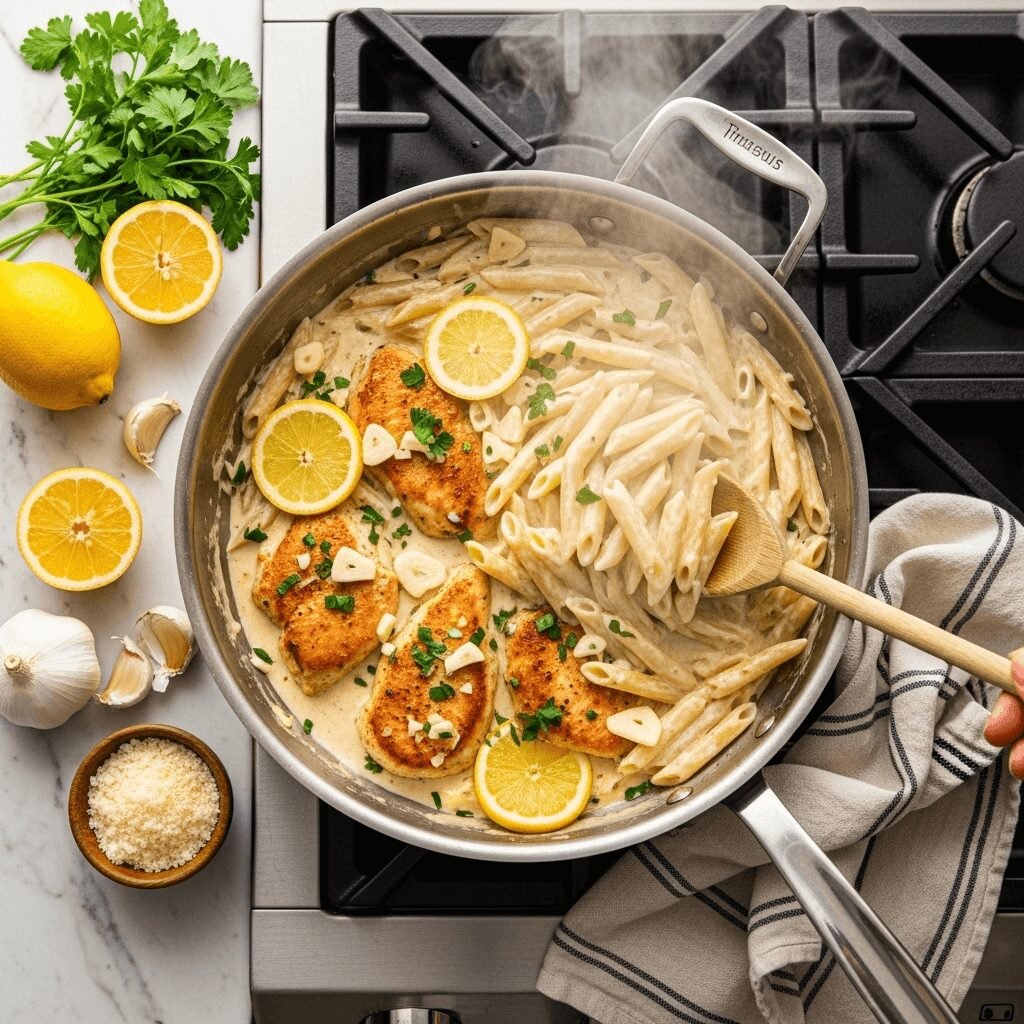
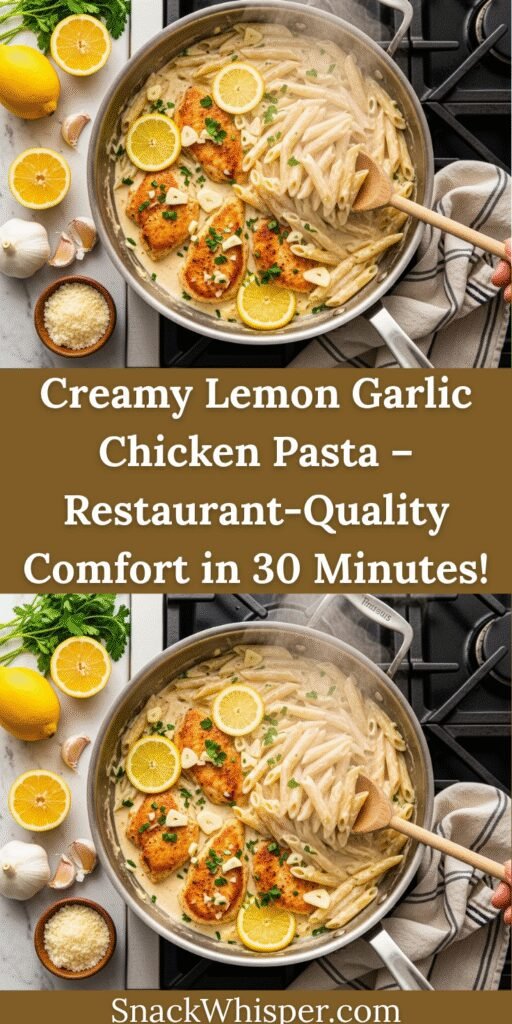
Creamy Lemon Garlic Chicken Pasta is the ultimate weeknight dinner that tastes like it came straight from an upscale Italian restaurant. This luxurious one-pot meal features tender, juicy chicken breast pieces nestled in perfectly cooked pasta, all coated in a velvety, dreamy cream sauce infused with bright lemon zest, aromatic garlic, and fresh herbs. It’s the kind of dish that makes you close your eyes with the first bite and wonder how something so impressive could possibly be this easy to make.
What makes this creamy lemon chicken pasta so universally beloved is its perfect balance of rich and bright flavors. The cream creates that indulgent, comforting base we all crave, while the fresh lemon juice cuts through the richness, adding a refreshing brightness that keeps you coming back for more. The garlic adds depth and aromatic warmth, and the tender chicken makes it a complete, protein-packed meal. Whether you’re cooking for a busy weeknight family dinner, impressing guests at a dinner party, or meal prepping for the week ahead, this recipe delivers restaurant-quality results every single time. It’s fancy enough for date night but simple enough for a Tuesday, making it the perfect addition to your regular dinner rotation!
History / Background
The combination of lemon, garlic, and cream in pasta dishes has deep roots in both Italian and French culinary traditions. In Italy, pasta al limone (lemon pasta) has been a beloved dish in Southern Italian coastal regions for generations, particularly in Amalfi and along the Sorrentine Peninsula where lemons grow abundantly. The original versions were simple – just pasta tossed with lemon zest, olive oil, Parmesan, and sometimes cream. The addition of chicken and the more substantial cream sauce represents an Americanized evolution of this classic Italian preparation.
French cuisine has long celebrated the pairing of chicken with lemon and cream in dishes like Poulet au Citron, where chicken is braised in a lemony cream sauce. This technique of combining citrus with dairy might seem counterintuitive – we’re taught that acid curdles cream – but when done properly with the right ratios and temperatures, it creates magic. The acid from the lemon brightens the rich cream while the cream tempers the tartness of the lemon, creating perfect harmony.
The modern Creamy Lemon Garlic Chicken Pasta we know today emerged in American restaurants during the 1980s and 1990s when “fusion” cooking became popular. Chefs began combining Italian pasta traditions with French sauce techniques and adding substantial proteins to create complete one-dish meals that American diners loved. The recipe gained massive popularity on Pinterest and food blogs in the 2010s as home cooks discovered they could recreate these restaurant favorites in their own kitchens with minimal effort.
Today, this dish represents the best of modern American home cooking – taking inspiration from multiple culinary traditions and adapting them to suit busy lifestyles while never compromising on flavor. It’s become a comfort food staple that bridges the gap between weeknight convenience and special occasion elegance, proving that you don’t need hours in the kitchen or complicated techniques to create something truly spectacular.
Why You’ll Love This Recipe
Creamy Lemon Garlic Chicken Pasta is one of those rare recipes that checks every single box. It’s quick enough for weeknights but impressive enough for company, and it tastes like you’ve been cooking all day when really it takes less time than ordering takeout.
Here’s why this recipe is about to become your new obsession:
- Ready in 30 Minutes – From start to finish, you’re looking at just half an hour for a complete, restaurant-quality meal that feeds the whole family
- One-Pot Wonder – Everything cooks in a single skillet, meaning minimal cleanup and maximum flavor as everything mingles together beautifully
- Restaurant-Quality at Home – This tastes like a $25 dish from an upscale Italian restaurant, but costs a fraction of the price to make
- Perfectly Balanced Flavors – The bright lemon cuts through the rich cream, creating a sauce that’s indulgent but never heavy or cloying
- Crowd-Pleaser Guaranteed – Even picky eaters love this dish – the creamy sauce makes it comforting and familiar while the lemon keeps it interesting
- Budget-Friendly – Uses simple, affordable ingredients you can find at any grocery store, with most pantry staples you probably already have
- Meal Prep Champion – Scales beautifully and reheats wonderfully, making it perfect for Sunday meal prep or feeding a crowd
- Customizable – Easy to adapt with different proteins, pasta shapes, or vegetables based on what you have on hand
- Impressive Presentation – The glossy cream sauce and bright pops of lemon and herbs look absolutely stunning on the plate
- Comfort Food with a Twist – Delivers all the cozy satisfaction of traditional pasta but with a bright, fresh element that makes it feel lighter and more sophisticated
Ingredient Notes
Let’s break down what makes this Creamy Lemon Garlic Chicken Pasta so incredibly delicious. Understanding your ingredients helps you make smart substitutions and adjustments.
Chicken Breast (1½ pounds) – Boneless, skinless chicken breasts are lean, cook quickly, and absorb the flavors of the sauce beautifully. Cut them into bite-sized pieces for even cooking and maximum sauce coverage. You can substitute with chicken thighs for a richer flavor and more forgiving texture (they’re harder to overcook), or use rotisserie chicken for the ultimate shortcut.
Pasta (12 ounces) – Fettuccine is traditional and perfect for this creamy sauce, but penne, linguine, rigatoni, or even bow-tie pasta work beautifully. The key is choosing a shape with enough surface area to hold that luscious sauce. For gluten-free, use your favorite gluten-free pasta brand. Whole wheat pasta adds fiber and a nutty flavor.
Heavy Cream (1½ cups) – This creates that luxuriously rich, velvety sauce we’re after. Heavy cream (also called heavy whipping cream) has the highest fat content and won’t curdle when combined with lemon. Half-and-half can work but may be less stable. For a lighter version, you can use half cream and half whole milk, though the sauce will be thinner.
Fresh Lemons (2-3 large) – You’ll need both zest and juice. Fresh is absolutely non-negotiable here – bottled lemon juice simply doesn’t have the bright, complex flavor of fresh. The zest contains essential oils that add incredible aromatic depth. Always zest before juicing!
Garlic (6-8 cloves, minced) – Fresh garlic is essential for that aromatic, slightly sweet depth that defines this dish. As it cooks in butter, it becomes mellow and fragrant rather than harsh. Don’t even think about using jarred garlic here – it won’t give you the same flavor or that gorgeous way fresh garlic mellows when sautéed.
Butter (4 tablespoons) – Adds richness and helps create a silky sauce. Real butter is important for flavor – don’t substitute with margarine. For dairy-free, use a high-quality vegan butter.
Chicken Broth (1 cup) – Adds depth and helps create the right sauce consistency. Low-sodium gives you better control over seasoning. You can substitute with white wine for extra sophistication or vegetable broth if that’s what you have.
Parmesan Cheese (¾ cup, freshly grated) – Freshly grated Parmesan melts smoothly and adds nutty, salty, umami depth. Pre-shredded Parmesan has anti-caking agents that prevent smooth melting. Pecorino Romano works as a substitute and adds a slightly sharper flavor.
Fresh Herbs – Italian parsley and fresh basil add brightness and color. They’re not just garnish – they contribute real flavor to the finished dish.
Flour (2 tablespoons) – Helps thicken the sauce and prevents the cream from breaking. All-purpose flour works best. For gluten-free, use cornstarch mixed with water as a slurry instead.
Olive Oil – For searing the chicken. Extra virgin adds more flavor, but regular olive oil works fine too.
Equipment Needed
The beauty of this one-pot pasta dish is that you need very minimal equipment – most of which you already have in your kitchen:
- Large Deep Skillet or Sauté Pan (12-inch with high sides or a 5-6 quart pan) – This is your workhorse for the entire recipe. Deep sides are important to contain the pasta and sauce. Cast iron, stainless steel, or non-stick all work beautifully.
- Large Pot (for boiling pasta separately if preferred) – Optional, but some cooks prefer to boil pasta separately and add it to the sauce at the end.
- Sharp Chef’s Knife – For cutting chicken and mincing garlic.
- Cutting Board – Preferably one designated for raw poultry.
- Wooden Spoon or Silicone Spatula – For stirring the sauce and scraping up those flavorful browned bits.
- Tongs – Perfect for tossing the pasta with the sauce and serving.
- Measuring Cups and Spoons – For accurate measurements of liquids, cream, and seasonings.
- Microplane or Fine Grater – Essential for zesting lemons and grating fresh Parmesan cheese.
- Citrus Juicer (optional) – Makes getting fresh lemon juice much easier.
- Whisk – For combining the cream and flour smoothly without lumps.
- Paper Towels – For patting chicken dry before cooking.
- Colander (if cooking pasta separately) – For draining the pasta.
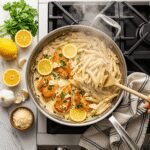
Creamy Lemon Garlic Chicken Pasta Recipe
- Total Time: 30 minutes
- Yield: 6 servings 1x
- Diet: Gluten Free
Description
Creamy Lemon Garlic Chicken Pasta is a luxurious one-pot meal featuring tender chicken and pasta in a velvety lemon cream sauce with garlic and fresh herbs. Ready in just 30 minutes, this restaurant-quality dish is perfect for weeknight dinners or special occasions.
Ingredients
For the Chicken:
- 1½ pounds boneless, skinless chicken breasts, cut into bite-sized pieces
- 1 teaspoon salt
- ½ teaspoon black pepper
- ½ teaspoon Italian seasoning
- 2 tablespoons olive oil
For the Pasta and Sauce:
- 12 ounces fettuccine pasta (or pasta of choice)
- 4 tablespoons unsalted butter, divided
- 6-8 cloves garlic, minced
- 2 tablespoons all-purpose flour
- 1 cup low-sodium chicken broth
- 1½ cups heavy cream
- Zest of 2 large lemons
- ¼ cup fresh lemon juice (from 2-3 lemons)
- ¾ cup freshly grated Parmesan cheese
- 1 teaspoon salt (or to taste)
- ½ teaspoon black pepper
- ¼ teaspoon red pepper flakes (optional)
For Garnish:
- ¼ cup fresh parsley, chopped
- 2 tablespoons fresh basil, chopped
- Extra lemon zest
- Additional Parmesan cheese
- Lemon slices
Instructions
- Prepare the Chicken: Pat the chicken pieces completely dry with paper towels (this is crucial for a good sear). Season generously on all sides with 1 teaspoon salt, ½ teaspoon black pepper, and Italian seasoning.
- Sear the Chicken: Heat a large, deep skillet over medium-high heat. Add 2 tablespoons olive oil and let it get hot until shimmering. Add the seasoned chicken pieces in a single layer, being careful not to overcrowd (work in batches if necessary). Cook for 3-4 minutes per side until golden brown and cooked through (internal temperature should reach 165°F). The chicken doesn’t need to be completely cooked through at this point as it will continue cooking in the sauce. Remove chicken to a plate and set aside.
- Cook the Pasta: While the chicken is cooking or immediately after, cook the pasta according to package directions until al dente (firm to the bite). Reserve 1 cup of pasta cooking water before draining. Drain the pasta and set aside.
- Make the Garlic Base: In the same skillet (don’t wipe it out – those browned bits add flavor!), reduce heat to medium and add 2 tablespoons of butter. Once melted, add the minced garlic and sauté for 60-90 seconds until fragrant and just beginning to turn golden. Watch carefully so it doesn’t burn.
- Create the Roux: Sprinkle the flour over the garlic and butter, whisking constantly for about 1 minute. This creates a roux that will thicken your sauce and prevent the cream from separating.
- Build the Sauce: Slowly pour in the chicken broth while whisking constantly to prevent lumps. Let it bubble for 1-2 minutes until slightly thickened. Reduce heat to medium-low and gradually add the heavy cream, whisking continuously. Let the sauce simmer gently for 2-3 minutes, stirring occasionally, until it thickens enough to coat the back of a spoon.
- Add Lemon and Cheese: Remove from heat and stir in the lemon zest, lemon juice, and remaining 2 tablespoons of butter. The sauce may look slightly thin – that’s okay! Gradually add the freshly grated Parmesan cheese, stirring until melted and smooth. Season with salt, pepper, and red pepper flakes if using. Taste and adjust seasonings.
- Combine Everything: Add the cooked pasta and chicken back to the skillet, tossing everything together until the pasta is evenly coated with the creamy lemon sauce. If the sauce seems too thick, add reserved pasta water a few tablespoons at a time until you reach your desired consistency. The pasta will absorb sauce as it sits, so err on the side of slightly saucier.
- Garnish and Serve: Remove from heat and stir in half of the fresh parsley and basil. Transfer to a serving platter or serve directly from the skillet. Garnish with remaining fresh herbs, extra lemon zest, additional Parmesan, and lemon slices. Serve immediately while hot and creamy.
Notes
- Pasta Water is Magic: Don’t skip reserving pasta water! The starchy water helps the sauce cling to the pasta and can thin a too-thick sauce while maintaining creaminess.
- Don’t Boil the Cream: Once you add the cream, keep the heat at medium-low. Boiling can cause the cream to break or curdle, especially with the lemon juice.
- Fresh Lemon is Key: The bright, fresh flavor of real lemons makes this dish special. Bottled juice simply won’t deliver the same results.
- Cheese Temperature: Add Parmesan off the heat to prevent it from becoming grainy or stringy.
- Adjusting Consistency: The sauce will thicken as it cools and as the pasta absorbs it. If reheating leftovers, add a splash of cream, milk, or pasta water to restore creaminess.
- Prep Time: 10 minutes
- Cook Time: 20 minutes
- Category: Dinner, Main Course
- Method: Stovetop, One-Pot
- Cuisine: Italian-American
Nutrition
- Serving Size: About 1½ cups (⅙ of recipe)
- Calories: 645
- Sugar: 3g
- Sodium: 780mg
- Fat: 35g
- Saturated Fat: 19g
- Unsaturated Fat: 14g
- Trans Fat: 0g
- Carbohydrates: 48g
- Fiber: 2g
- Protein: 38g
- Cholesterol: 165mg
Nutrition information is approximate and will vary based on specific brands and ingredient choices used.
Tips & Variations
Lighter Version: Replace half the heavy cream with half-and-half or whole milk, and use only half the butter. You’ll sacrifice some richness but save significant calories and fat.
Vegetable Additions: Add fresh spinach, sun-dried tomatoes, cherry tomatoes, asparagus, or broccoli for extra nutrition and color. Stir in spinach at the end so it just wilts, or sauté heartier vegetables with the garlic.
Protein Swaps: Try this with shrimp (cook for 2-3 minutes per side), salmon chunks, or Italian sausage. For vegetarian, use chickpeas or white beans and vegetable broth.
Spicy Kick: Increase the red pepper flakes, add a splash of hot sauce, or include sliced fresh jalapeños for heat lovers.
Herb Variations: Fresh dill, tarragon, or oregano all work beautifully in place of or in addition to the basil and parsley.
Wine Addition: Replace half the chicken broth with dry white wine (Sauvignon Blanc or Pinot Grigio) for a more sophisticated, restaurant-style sauce.
Gluten-Free: Use gluten-free pasta and replace the flour with cornstarch (use 1 tablespoon cornstarch mixed with 2 tablespoons water as a slurry, added after the broth).
Keto/Low-Carb: Replace pasta with zucchini noodles, shirataki noodles, or spaghetti squash. Add them at the very end just to warm through.
Sun-Dried Tomato Version: Add ¼ cup chopped sun-dried tomatoes (oil-packed) with the garlic for a sweet-tart element that pairs beautifully with the lemon.
Pro Chef Tips
Dry Your Chicken Thoroughly: Moisture is the enemy of a good sear. Pat chicken pieces completely dry with paper towels before seasoning. Wet chicken steams instead of browning, resulting in tough, gray meat instead of golden, caramelized pieces.
Don’t Overcook the Chicken: Chicken breasts can go from perfectly juicy to dry and rubbery in seconds. Cook just until the internal temperature reaches 165°F, or even pull them at 160°F since they’ll continue cooking in the residual heat and again in the sauce.
Use Fresh Parmesan: Pre-shredded cheese contains anti-caking agents (usually cellulose or potato starch) that prevent it from melting smoothly. Buy a block and grate it yourself for a silky-smooth sauce.
Add Lemon Off Heat: Adding lemon juice while the sauce is actively simmering increases the risk of curdling. Remove from heat, let it cool for 30 seconds, then add your citrus for best results.
Layer Your Seasonings: Season the chicken before cooking, taste and season the sauce before adding the pasta, then taste the finished dish. Building seasoning in layers creates deeper, more complex flavor than adding it all at once.
Save That Pasta Water: The starchy pasta cooking water is liquid gold. It helps the sauce adhere to the pasta and can rescue a sauce that’s too thick or broken, all while maintaining a silky texture.
Finish with Fresh Butter: Adding a tablespoon or two of cold butter at the very end (called “mounting” in French cooking) gives the sauce an incredibly luxurious, glossy finish and helps emulsify everything together.
Work Quickly After Combining: Once you add the pasta to the sauce, work relatively quickly. The pasta absorbs sauce rapidly, so you want to serve it while it’s still saucy and creamy rather than thick and stodgy.
Use a Wide Pan: A wider pan with more surface area allows liquid to evaporate faster, helping your sauce thicken properly. It also gives you more room to toss the pasta without making a mess.
Common Mistakes to Avoid
Boiling the Cream Sauce: Once you add the heavy cream, never let it come to a rolling boil. High heat can cause the cream to break, curdle, or develop an unpleasant texture. Keep it at a gentle simmer and reduce heat if it starts bubbling too vigorously.
Overcrowding the Chicken: If chicken pieces are touching each other in the pan, they’ll steam instead of sear. This results in gray, unappetizing meat instead of golden-brown, caramelized pieces. Cook in batches if necessary – it’s worth the extra time.
Adding Lemon Too Early: If you add lemon juice while the sauce is boiling hot, the acid can cause the dairy to curdle and break. Always add lemon juice off the heat or when the sauce has cooled to a gentle simmer.
Using Pre-Grated Parmesan: Those convenient bags of pre-shredded Parmesan contain cellulose (wood pulp) to prevent clumping, which also prevents smooth melting. Your sauce will be grainy and may even separate. Always grate fresh Parmesan from a block.
Not Reserving Pasta Water: Many home cooks forget this step and regret it when their sauce is too thick. That starchy water is your secret weapon for adjusting consistency while maintaining a silky texture. Always reserve at least a cup before draining.
Rinsing the Pasta: Never rinse cooked pasta unless you’re making a cold pasta salad. Rinsing washes away the surface starch that helps sauce cling to the noodles. Drain it and immediately add it to your sauce.
Overcooking Garlic: Burnt garlic tastes bitter and acrid, and it will ruin your entire sauce. Watch garlic carefully – it should be fragrant and just barely golden, which happens in 60-90 seconds. If it starts browning too quickly, reduce your heat immediately.
Storage & Meal Prep
Refrigerator Storage: Store leftover Creamy Lemon Garlic Chicken Pasta in an airtight container in the refrigerator for up to 3-4 days. The sauce will thicken considerably as it cools and the pasta absorbs liquid – this is completely normal and easy to fix when reheating.
Reheating Instructions: The best way to reheat is on the stovetop. Place the pasta in a skillet over medium-low heat and add 2-4 tablespoons of heavy cream, milk, chicken broth, or even just water. Stir gently and frequently, adding more liquid as needed until the sauce returns to its original creamy consistency and the pasta is heated through. This takes about 5-7 minutes. You can microwave individual portions (add a splash of liquid, cover, and heat in 60-second intervals, stirring between each), but stovetop reheating yields the best texture.
Meal Prep Strategy: This recipe is fantastic for meal prep! Make a full batch on Sunday and portion into meal prep containers for easy lunches or dinners throughout the week. The flavors actually deepen and improve after a day in the refrigerator as everything marinates together. Store the pasta and sauce together – there’s no need to separate components.
Preventing Dryness: When meal prepping, slightly under-cook the pasta (1-2 minutes less than al dente) and keep the sauce a bit thinner than you normally would. As the pasta sits, it continues absorbing sauce, so starting with extra liquid ensures your leftovers won’t be dry.
Portioning for Singles: This recipe serves 6 generously, which is perfect for families or meal prep. If you’re cooking for one or two, you can easily halve the recipe, or make the full batch and freeze portions for future easy meals.
Make-Ahead & Freezer Notes
Make-Ahead Components: You can prep several elements in advance to make dinner even faster. Cut and season the chicken up to 24 hours ahead, storing covered in the refrigerator. Mince garlic and zest lemons, storing separately in small airtight containers. Grate Parmesan cheese ahead and refrigerate. When ready to cook, everything comes together in minutes.
Fully Make-Ahead: You can make the entire dish up to 2 days ahead. Prepare through step 8 but keep the sauce slightly thinner than normal, and slightly undercook the pasta. Cool completely, then store in the refrigerator. When ready to serve, reheat gently on the stovetop with additional cream or broth to restore the creamy consistency.
Freezing Cooked Pasta: Cream-based pasta dishes can be frozen, though the texture won’t be quite as perfect as fresh. The cream sauce may separate slightly when thawed. To freeze, cool completely and store in freezer-safe containers for up to 2 months. Thaw overnight in the refrigerator.
Best Freezing Method: For best results when freezing, slightly undercook the pasta and make the sauce a bit thinner than normal. Freeze in portion-sized containers. When reheating from frozen, add extra cream or broth and reheat very gently, stirring frequently. The texture won’t be exactly like fresh, but it’s still delicious and incredibly convenient.
Freezing Sauce Separately: An alternative approach is to freeze just the sauce (without pasta and chicken) in ice cube trays or small containers. When you want dinner, cook fresh pasta and chicken, then add as many sauce cubes as needed. This gives you maximum freshness while still having convenience.
Best Reheating After Freezing: Thaw completely in the refrigerator overnight. Reheat gently in a covered saucepan over medium-low heat, stirring frequently and adding cream, milk, or broth as needed to restore the silky consistency. Be patient – gentle, slow reheating prevents the sauce from breaking.
Serving Suggestions
Creamy Lemon Garlic Chicken Pasta is substantial enough to be a complete meal on its own, but these accompaniments make it even more special:
Bread Options: Serve with warm, crusty garlic bread, cheesy breadsticks, or a rustic Italian loaf for soaking up every drop of that incredible sauce. Garlic knots or rosemary focaccia also pair beautifully.
Salad Pairings: A simple arugula salad with lemon vinaigrette provides peppery contrast to the rich cream sauce. Caesar salad is classic and always crowd-pleasing. A Mediterranean salad with cucumbers, tomatoes, olives, and feta adds freshness and crunch.
Vegetable Sides: Roasted asparagus with Parmesan, sautéed green beans with garlic, or roasted broccoli complement the pasta without competing with it. Keep vegetables simple so they don’t clash with the lemon-garlic flavors.
Wine Pairings: This dish pairs beautifully with crisp white wines like Sauvignon Blanc, Pinot Grigio, or unoaked Chardonnay. The acidity in these wines complements the lemon and cuts through the cream. For non-alcoholic options, try sparkling water with lemon or Italian lemon soda.
Complete Dinner Menu: Start with a simple bruschetta or Caprese salad appetizer, serve the pasta as the main course with garlic bread and a green salad, and finish with lemon sorbet or tiramisu for a restaurant-worthy Italian-inspired dinner at home.
Casual Family Dinner: Keep it simple with just the pasta, garlic bread, and a bagged salad mix. Sometimes easy is best, especially on busy weeknights.
Lunch Ideas: Leftovers make an incredible lunch served cold as a pasta salad (add some cherry tomatoes and extra lemon juice), or reheated with a side of fruit and a dinner roll.
FAQs Section
Can I use chicken thighs instead of breasts? Absolutely! Boneless, skinless chicken thighs are actually more forgiving than breasts because they have more fat and are harder to overcook. They’ll also add richer flavor to the dish. Cut them into similar bite-sized pieces and cook the same way. The cooking time may be 1-2 minutes longer.
Why did my cream sauce curdle or separate? This usually happens for one of three reasons: the sauce was boiling too vigorously when you added the cream, you added lemon juice while the sauce was too hot, or you used low-fat cream or milk which is more prone to breaking. Always add cream at a gentle simmer (not a rolling boil), add lemon off heat, and use heavy cream for most stable results.
Can I make this dairy-free? It’s challenging to make this dairy-free while maintaining the same creamy texture, but you can try using coconut cream (full-fat, from a can) and nutritional yeast in place of Parmesan. Dairy-free butter works fine. The flavor will be different but still delicious. Cashew cream is another option that’s more neutral-flavored than coconut.
What pasta shapes work best? Any pasta shape that can hold sauce works beautifully. Fettuccine is classic, but penne, rigatoni, farfalle (bow ties), linguine, or even spaghetti are great choices. Short, tubular pasta like penne catches the sauce inside, while long pasta like fettuccine allows the sauce to cling along the length.
Can I use bottled lemon juice? Technically yes, but I really don’t recommend it. Fresh lemon juice has a bright, complex flavor that bottled juice simply can’t match. The bottled stuff tastes flat and slightly bitter in comparison. Since this is a lemon-forward dish where the citrus really shines, fresh lemons make a huge difference.
How do I keep the pasta from absorbing all the sauce? This is common with cream-based pasta dishes. Keep the sauce slightly thinner than you think it should be when combining with the pasta – it will thicken as it sits. Reserve pasta water and add it as needed. When storing leftovers, expect the sauce to thicken and plan to add liquid when reheating.
Can I add vegetables to this dish? Definitely! Spinach, sun-dried tomatoes, cherry tomatoes, asparagus, peas, or broccoli all work wonderfully. Add heartier vegetables like broccoli when sautéing the garlic so they have time to cook. Add delicate greens like spinach or peas at the very end, stirring until just wilted or heated through.
Why is my sauce too thin/thick? Sauce thickness depends on several factors: how much liquid evaporated during cooking, how much pasta water you added, and how long it’s been sitting. Too thin? Let it simmer longer or add a bit more Parmesan. Too thick? Add reserved pasta water, cream, or broth a splash at a time until you reach desired consistency.
Conclusion
There you have it – everything you need to make absolutely perfect Creamy Lemon Garlic Chicken Pasta that rivals any restaurant version! This recipe proves that you don’t need culinary school training or hours of prep time to create something truly spectacular. With just 30 minutes and one pan, you can have a luxurious, restaurant-quality dinner on your table that will have everyone asking for seconds (and the recipe!).
The magic of this dish lies in its beautiful balance – rich yet bright, comforting yet fresh, impressive yet approachable. It’s become one of my most-made recipes because it works for literally any occasion. Monday night dinner with the kids? Check. Romantic date night at home? Perfect. Meal prep Sunday? Absolutely. Dinner party for friends? They’ll be blown away. This recipe adapts to whatever you need it to be, and it delivers delicious results every single time.
I absolutely can’t wait to hear how your Creamy Lemon Garlic Chicken Pasta turns out! Did the sauce turn out perfectly silky? Did your family ask you to make it again next week? Did you add any creative twists or variations? Take a gorgeous photo of your creation and share it on Pinterest – tag me so I can see your beautiful work and cheer you on! Drop a comment below telling me all about your experience, any modifications you made, and what you served alongside it. Your feedback helps other home cooks and creates such a wonderful community of food lovers.
If this recipe made your weeknight dinner dreams come true, please save it to your favorite Pinterest boards so you can find it whenever that craving hits (and trust me, it will hit often!). Share it with your friends who are always asking for easy dinner ideas – they’ll thank you forever for introducing them to this creamy, dreamy pasta perfection.
Here’s to restaurant-quality dinners that don’t require a reservation or a second mortgage! Happy cooking, friends!