Imagine a dish so luxurious, so creamy and packed with flavor, that it tastes like it came straight from an upscale Italian restaurant—yet you made it in your own kitchen on a weeknight. That’s exactly what this creamy garlic shrimp risotto delivers! This elegant comfort food combines plump, succulent shrimp with perfectly cooked Arborio rice that’s been slowly coaxed into creamy perfection with white wine, butter, and an abundance of aromatic garlic.
Risotto often gets a reputation for being intimidating or labor-intensive, but I’m here to tell you it’s absolutely doable for home cooks! Yes, it requires some stirring and attention, but the process is actually quite meditative, and the results are so worth those 25 minutes at the stove. This creamy garlic shrimp risotto is perfect for date nights at home when you want to impress your partner, special occasion dinners with family, or even elegant dinner parties where you want to serve something memorable without spending all day in the kitchen.
The combination of tender shrimp, aromatic garlic, rich Parmesan cheese, and that signature creamy texture makes this dish irresistible. It’s comfort food elevated to gourmet status, and once you master the technique, you’ll find yourself making it again and again. Whether you’re craving something special on a Tuesday night or planning a weekend celebration, this garlic shrimp risotto is your answer to restaurant-quality dining at home.
History / Background
Risotto is one of the most iconic dishes of Northern Italy, with its origins deeply rooted in the Lombardy region, particularly around Milan. The dish emerged in the 18th century when rice cultivation became widespread in the Po Valley, an area with the perfect climate and irrigation for growing short-grain rice varieties. The word “risotto” comes from “riso,” the Italian word for rice, and the cooking technique that transforms these grains into a creamy, luxurious dish has been perfected over centuries.
Traditional risotto alla milanese—made with saffron, butter, and Parmesan—is considered the mother of all risottos. From this foundation, countless regional variations developed throughout Northern Italy, each showcasing local ingredients and culinary traditions. Seafood risottos became particularly popular in coastal regions like Venice and the Italian Riviera, where fresh catches from the Adriatic Sea inspired dishes combining rice with shrimp, scallops, clams, and other seafood treasures.
The key to authentic risotto lies in the rice variety—Arborio, Carnaroli, or Vialone Nano—all short-grain rices with high starch content that release gradually during cooking, creating that signature creamy texture without the need for cream. The traditional cooking method, called “tostatura,” involves toasting the rice in butter or oil before gradually adding hot broth, one ladle at a time, while stirring almost constantly. This patient process allows the rice to release its starches slowly, resulting in grains that are tender yet still have a slight bite (al dente) suspended in a creamy, flowing sauce.
The combination of garlic and shrimp in risotto represents a beautiful marriage of Italian technique with universal flavors that appeal to palates worldwide. Garlic has been a cornerstone of Italian cuisine since ancient Roman times, while shrimp have been harvested from Italian waters for millennia. This particular variation gained popularity in Italian-American restaurants throughout the 20th century and has become a beloved standard on menus worldwide, proving that simple, quality ingredients treated with respect and proper technique can create something truly extraordinary.
Why You’ll Love This Recipe
This creamy garlic shrimp risotto is about to become your go-to recipe when you want to feel like a culinary superstar! It strikes that perfect balance between approachable home cooking and impressive restaurant-quality results. The rich, velvety texture combined with plump, garlicky shrimp creates a symphony of flavors and textures that will have everyone at your table asking for seconds.
- Surprisingly Manageable: Despite its gourmet reputation, this risotto is totally doable for home cooks with clear, step-by-step guidance
- Restaurant-Quality Results: Achieve that creamy, luxurious texture and sophisticated flavor without leaving your kitchen
- Ready in 35 Minutes: From start to finish, you’ll have an elegant dinner on the table in just over half an hour
- Impressively Elegant: Perfect for date nights, dinner parties, or anytime you want to wow your guests
- Customizable: Easy to adjust the garlic level, add vegetables, or switch up the protein to suit your preferences
- Gluten-Free Naturally: Made with rice, this dish is naturally gluten-free (just check your broth labels)
- One-Pot Wonder: Everything comes together in one pan, meaning less cleanup and more time enjoying your meal
- Flavor-Packed: Garlic, white wine, Parmesan, butter, and shrimp create layers of complex, satisfying flavor
- Perfect for Special Occasions: Fancy enough for celebrations but easy enough for weeknight indulgence
- Makes You Feel Like a Chef: The stirring process is actually quite therapeutic, and the transformation is magical to watch
Ingredient Notes
Arborio Rice: This Italian short-grain rice is the star of the show! Arborio has a high starch content and a firm texture that holds up to the constant stirring while releasing enough starch to create that signature creamy consistency. The grains should be plump with a visible white dot in the center. Don’t substitute with long-grain rice like basmati or jasmine—they won’t give you the right texture. If you can’t find Arborio, Carnaroli or Vialone Nano rice are excellent alternatives.
Shrimp: Use large or jumbo shrimp (16-20 count or 21-25 count per pound) for the best results. Fresh or frozen shrimp both work beautifully—if using frozen, thaw them completely and pat very dry. Deveined and peeled shrimp save time, but leave the tails on if you want a more elegant presentation. For the best flavor, look for wild-caught shrimp when possible. The shrimp should be pink and firm when cooked, never gray or mushy.
Garlic: Fresh garlic is non-negotiable here! You’ll want a generous amount—6-8 cloves—to infuse the dish with that beautiful aromatic flavor. Mince it finely so it distributes evenly throughout the risotto. Don’t substitute with garlic powder; the fresh stuff makes all the difference in this recipe.
Chicken or Seafood Broth: The broth is what slowly cooks your rice and adds depth of flavor. Seafood broth (sometimes called fish stock) gives the most authentic coastal Italian flavor, but chicken broth works beautifully too and is easier to find. Use low-sodium broth so you can control the salt level. You’ll need about 5-6 cups kept warm on the stove—warm broth is crucial because cold broth will shock the rice and slow down the cooking process.
White Wine: A dry white wine like Pinot Grigio, Sauvignon Blanc, or Chardonnay adds acidity and complexity to the risotto. The wine must be something you’d drink—cooking wine from the grocery store won’t cut it. The alcohol cooks off, leaving behind bright, nuanced flavor. If you prefer not to use alcohol, substitute with additional broth plus a tablespoon of fresh lemon juice for acidity.
Parmesan Cheese: Use freshly grated Parmigiano-Reggiano, not the pre-grated stuff in a can. Fresh Parmesan melts smoothly and adds a nutty, salty richness that’s essential to authentic risotto. Grate it yourself right before adding to the risotto. You’ll need about 1 cup, plus extra for serving.
Butter: Unsalted butter is preferred so you can control the salt content. Butter adds richness and helps create that glossy, creamy finish. The final addition of cold butter at the end (a technique called “mantecatura”) is what gives risotto its luxurious, flowing consistency.
Olive Oil: Use a good-quality extra virgin olive oil for sautéing the shrimp and aromatics. It adds flavor and prevents sticking.
Onion or Shallots: Finely diced onion or shallots create the aromatic base for your risotto. Shallots are more traditional and have a sweeter, more delicate flavor, but yellow onion works perfectly well.
Fresh Herbs: Fresh parsley is traditional, but basil or a combination of parsley and basil adds wonderful freshness to the finished dish. Chop them right before serving for maximum flavor and vibrant color.
Equipment Needed
- Large, Heavy-Bottomed Saucepan or Dutch Oven: A wide, heavy pan (at least 4-quart capacity) distributes heat evenly and gives you room to stir. Avoid thin pans that create hot spots.
- Separate Medium Saucepan: For keeping your broth warm on a back burner throughout the cooking process.
- Wooden Spoon or Heat-Resistant Spatula: For the constant stirring. Wooden spoons are traditional and won’t scratch your pan.
- Ladle: Makes adding broth in controlled amounts much easier than pouring from the pot.
- Sharp Chef’s Knife: For mincing garlic and chopping onions, shallots, and herbs.
- Cutting Board: Preferably one for seafood and one for vegetables.
- Measuring Cups and Spoons: For accurate measurements, especially important for rice and liquids.
- Fine Grater or Microplane: For grating fresh Parmesan cheese.
- Large Plate or Bowl: For holding cooked shrimp while you finish the risotto.
- Colander or Strainer: If you need to rinse rice (though usually not necessary with Arborio).
- Kitchen Timer: Helpful for tracking cooking times.
- Paper Towels: For patting shrimp dry before cooking.
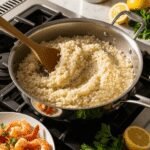
Creamy Garlic Shrimp Risotto Recipe
- Total Time: 35 minutes
- Yield: 4 servings 1x
- Diet: Gluten Free
Description
Luxuriously creamy risotto infused with garlic and white wine, topped with perfectly seared shrimp. This restaurant-quality dish is surprisingly easy to make at home and ready in just 35 minutes!
Ingredients
For the Shrimp:
- 1 pound large shrimp, peeled and deveined (16-20 count)
- 2 tablespoons olive oil
- 3 cloves garlic, minced
- ½ teaspoon salt
- ¼ teaspoon black pepper
- Pinch of red pepper flakes (optional)
For the Risotto:
- 5-6 cups chicken or seafood broth, warmed
- 3 tablespoons olive oil, divided
- 2 tablespoons butter, divided
- 1 small onion or 2 shallots, finely diced
- 4-5 cloves garlic, minced
- 1½ cups Arborio rice
- ½ cup dry white wine
- 1 cup freshly grated Parmesan cheese, plus more for serving
- Salt and black pepper to taste
- 2 tablespoons fresh parsley, chopped
- 1 tablespoon fresh lemon juice (optional)
- Lemon wedges for serving
Instructions
- Prep the Shrimp: Pat shrimp completely dry with paper towels. Season with salt, pepper, and red pepper flakes if using. Set aside.
- Warm the Broth: In a medium saucepan, bring the broth to a gentle simmer over medium-low heat. Keep it warm throughout the cooking process—this is crucial for proper risotto texture.
- Cook the Shrimp: Heat 2 tablespoons olive oil in a large, heavy-bottomed saucepan or Dutch oven over medium-high heat. Add shrimp in a single layer and cook for 2 minutes per side until pink and just cooked through. Add 3 cloves minced garlic during the last 30 seconds. Transfer shrimp to a plate and set aside.
- Start the Risotto Base: In the same pan, reduce heat to medium. Add 2 tablespoons olive oil and 1 tablespoon butter. Once butter melts, add diced onion or shallots. Sauté for 3-4 minutes until softened and translucent. Add remaining 4-5 cloves minced garlic and cook for 1 minute until fragrant.
- Toast the Rice: Add Arborio rice to the pan and stir constantly for 2-3 minutes until the edges become translucent and the rice smells slightly nutty. This toasting step is essential for developing flavor and texture.
- Add the Wine: Pour in white wine and stir constantly until the wine is almost completely absorbed by the rice, about 2 minutes. You should hear the sizzle quiet down as the wine evaporates.
- Begin Adding Broth: Add one ladle (about ½ cup) of warm broth to the rice. Stir frequently until the liquid is almost completely absorbed. The rice should never be swimming in liquid, but should also never look completely dry.
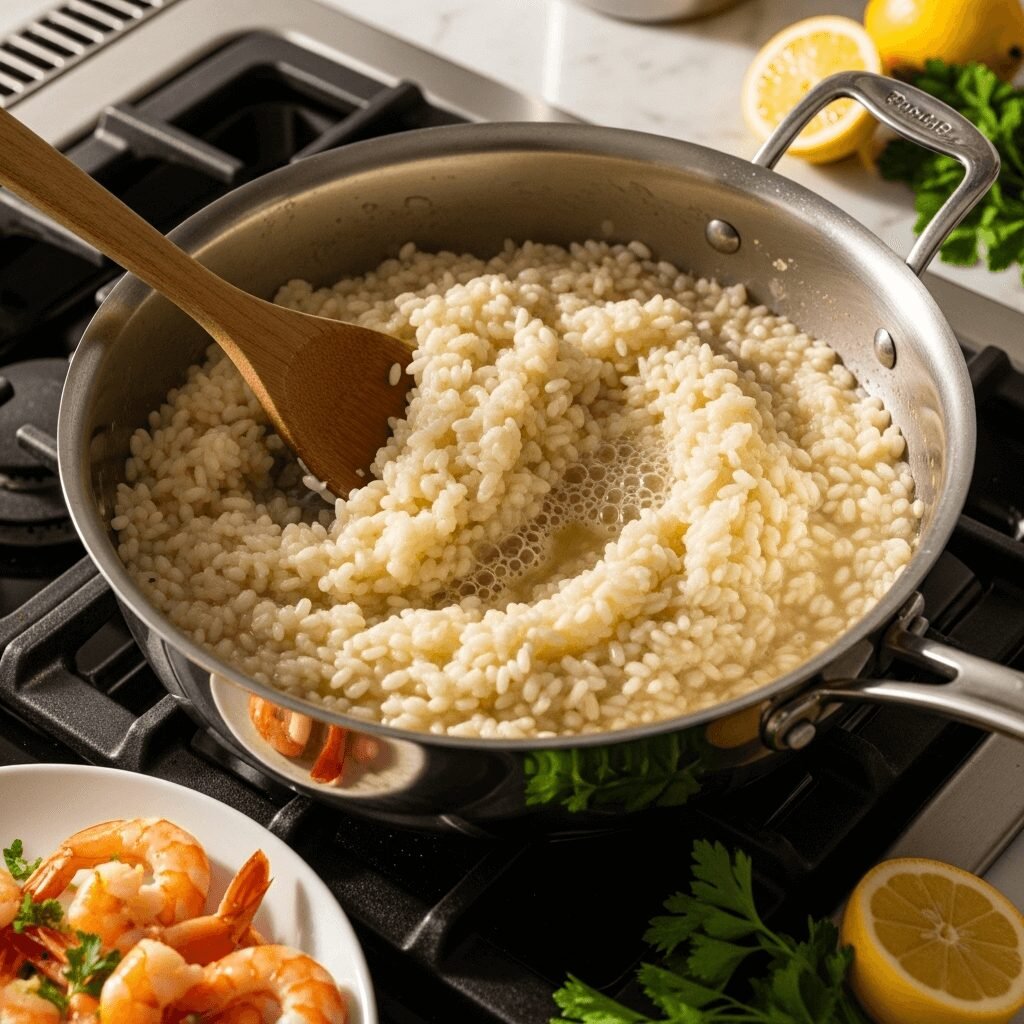
- Continue the Process: Keep adding broth one ladle at a time, stirring frequently and allowing each addition to be absorbed before adding the next. This process takes about 18-22 minutes. Stir gently but consistently to encourage starch release. The rice is done when grains are tender but still have a slight firmness in the center (al dente) and the mixture is creamy and flows when you shake the pan.
- Finish the Risotto: When rice is al dente, remove from heat. Stir in remaining 1 tablespoon butter, Parmesan cheese, and lemon juice if using. Season with salt and pepper to taste. The risotto should be creamy and flow slightly when spooned onto a plate—if it’s too thick, stir in a bit more warm broth.
- Add Shrimp and Serve: Gently fold cooked shrimp back into the risotto, or arrange them on top for a prettier presentation. Garnish with fresh parsley and additional Parmesan. Serve immediately with lemon wedges on the side.
Notes
- Stirring Frequency: You don’t need to stir constantly the entire time—frequent stirring (every 30-60 seconds) is sufficient. Save constant stirring for when you first add liquid.
- Rice Texture: Properly cooked risotto should be creamy and slightly loose, not stiff. It should flow when tilted on the plate. Italians call this consistency “all’onda” (like a wave).
- Wine Substitute: If avoiding alcohol, use additional broth plus 1 tablespoon lemon juice for acidity.
- Broth Amount: You may not need all 6 cups of broth, or you might need a bit more. It depends on your rice and cooking speed. Start with 5 cups and add more as needed.
- Timing: Risotto must be served immediately after cooking. It continues to absorb liquid as it sits and will become thick and gummy.
- Scaling: This recipe serves 4 as a main course or 6 as a starter. Don’t try to double the recipe in the same pan—risotto cooks best in smaller batches.
- Prep Time: 10 minutes
- Cook Time: 25 minutes
- Category: Dinner
- Method: Stovetop
- Cuisine: Italian
Nutrition
- Serving Size: 1¼ cups (approximately)
- Calories: 520
- Sugar: 3g
- Sodium: 890mg
- Fat: 18g
- Saturated Fat: 6g
- Unsaturated Fat: 11g
- Trans Fat: 0g
- Carbohydrates: 58g
- Fiber: 2g
- Protein: 28g
- Cholesterol: 165mg
Nutrition information is calculated based on the ingredients and provided as a courtesy. Values may vary based on specific brands and preparation methods.
Tips & Variations
Spicy Kick: Add ½ teaspoon red pepper flakes when cooking the garlic, or finish with a drizzle of chili oil for heat lovers.
Vegetable Additions: Stir in fresh baby spinach, roasted asparagus tips, or sun-dried tomatoes during the last few minutes of cooking for extra nutrition and color.
Different Proteins: Swap shrimp for sea scallops, chunks of lobster tail, or even grilled chicken breast for variety. Adjust cooking times accordingly.
Lighter Version: Use half-and-half instead of heavy cream, reduce butter by half, and use just ½ cup Parmesan for a lighter (but still delicious) version.
Spring Version: Add fresh or frozen peas in the last 5 minutes of cooking and finish with fresh mint and lemon zest for a bright, seasonal twist.
Mushroom Addition: Sauté sliced mushrooms (cremini or shiitake) with the shallots for an earthy depth of flavor that pairs wonderfully with seafood.
Herb Variations: Try fresh basil, tarragon, or dill instead of parsley for different flavor profiles. Each brings its own unique character to the dish.
Dairy-Free Option: Use nutritional yeast instead of Parmesan and coconut cream instead of heavy cream for a surprisingly good dairy-free version.
Pro Chef Tips
Temperature control is key: Keep your heat at medium to medium-low throughout cooking. Too high and the liquid evaporates too quickly; too low and the rice won’t cook properly. You want a gentle, consistent simmer.
The “wave” test: Professional chefs test risotto by shaking the pan—it should flow in waves across the surface, not sit in a stiff mound. This indicates perfect consistency.
Season as you go: Don’t wait until the end to season. Add small pinches of salt during cooking to build layers of flavor. Taste frequently in the last 5 minutes and adjust.
Reserve some pasta water—I mean, stock: Keep about ½ cup of warm stock reserved even after the risotto is done. You may need it to loosen the risotto before serving if it thickens while you plate.
Quality ingredients matter more here: Since risotto has so few ingredients, each one really shines through. Invest in good Parmesan, real butter, and fresh garlic. You’ll taste the difference.
The wrist technique: Professional risotto makers use a specific wrist-flicking motion when stirring—a gentle, circular motion that agitates the rice without being aggressive. This releases starch gradually and evenly.
Mise en place is crucial: Have everything measured, chopped, and ready before you start. Once you begin adding stock, you can’t walk away. Being organized makes the process stress-free.
Trust your senses: Use cooking times as guidelines, but trust what you see, smell, and taste. Every stove is different. The rice should taste creamy, not chalky, with just slight resistance when you bite into a grain.
Common Mistakes to Avoid
Using cold stock: This is the number one mistake home cooks make. Cold stock drops the temperature of the rice, causing uneven cooking and a gluey texture. Always keep your stock gently simmering in a separate pot.
Overcooking the shrimp: Shrimp cooks incredibly fast—just 2 minutes per side. Overcooked shrimp becomes rubbery and tough. Cook them until just pink and opaque, then immediately remove from heat. They’ll finish cooking from residual heat.
Adding too much liquid at once: Patience is key. Adding stock gradually and waiting for absorption is what creates the creamy texture. Dumping in lots of stock at once makes the rice bloated and mushy rather than creamy.
Not stirring enough (or stirring too much): You want to stir frequently—about every 30-60 seconds—but not constantly. Constant stirring can break the rice grains, while not stirring enough means uneven cooking and stuck-on rice.
Letting the risotto sit: Risotto begins to thicken and congeal within minutes of being done. Serve it immediately for the best texture. If you must wait, keep it loose with extra warm stock and reheat gently, adding liquid as needed.
Skipping the final butter and cheese: The “mantecatura” (vigorous stirring in butter and cheese at the end) is what transforms good risotto into great risotto. Don’t skip this crucial finishing step—it creates silky, restaurant-quality texture.
Using pre-grated Parmesan: Those anti-caking agents in pre-grated cheese prevent smooth melting. Grate fresh Parmesan yourself for proper texture and maximum flavor.
Storage & Meal Prep
Refrigerator Storage: Transfer leftover risotto to an airtight container and refrigerate for up to 3 days. Keep in mind that risotto continues to absorb liquid as it sits, so leftovers will be thicker than when freshly made. Store the shrimp separately if possible to prevent them from overcooking during reheating.
Reheating Instructions: The best way to reheat risotto is on the stovetop. Place it in a saucepan with a splash of chicken stock, white wine, or even just water (about ¼ cup per serving). Heat over medium-low, stirring frequently, until warmed through and creamy again. You can also microwave individual portions in 30-second intervals, stirring between each, and adding a tablespoon of liquid to restore creaminess. Don’t expect reheated risotto to be quite as perfect as fresh, but it can still be delicious.
Texture After Storage: Understand that risotto will never be exactly the same after refrigeration. The rice continues to absorb liquid, and the texture becomes more compact. This is normal and expected. Adding liquid while reheating helps restore some of that signature creaminess.
Repurposing Leftovers: Cold risotto actually makes fantastic arancini (Italian rice balls). Form the cold risotto into balls, stuff with mozzarella if desired, bread them, and fry until golden and crispy. It’s like getting a completely new dish from your leftovers!
Make-Ahead & Freezer Notes
Partial Make-Ahead Option: You can cook the risotto about 75% of the way through (before adding the final butter, cream, and Parmesan), then spread it on a baking sheet to cool quickly. Refrigerate for up to 24 hours. When ready to serve, return to the pot with warm stock and finish cooking, then add the final enrichments. This is how restaurants prep risotto for busy service.
Freezing Considerations: Honestly, I don’t recommend freezing finished risotto. The texture changes significantly upon thawing, becoming grainy and separated. The rice releases too much starch during freezing, and you’ll end up with something more like rice pudding than risotto. However, if you must freeze it, use it within 1 month and plan to repurpose it into arancini or rice cakes rather than serving it as traditional risotto.
Shrimp Freezing: The cooked shrimp can be frozen separately in an airtight container for up to 2 months. Thaw in the refrigerator overnight and reheat gently, being careful not to overcook them further.
Best Strategy: Risotto truly is a dish best enjoyed fresh. If you’re meal prepping, I’d recommend preparing all your ingredients ahead (stock made, shrimp peeled, vegetables chopped, cheese grated) so the actual cooking goes quickly. The active cooking time is only about 30 minutes, which is manageable even on a weeknight.
Stock Prep: One thing you absolutely CAN make ahead is the stock. Make a big batch of homemade seafood or chicken stock and freeze it in 1-cup portions. Having quality stock ready to go makes risotto night so much easier.
Serving Suggestions
This creamy garlic shrimp risotto is rich and satisfying enough to serve as a complete meal, but these accompaniments take it to the next level:
Salads: A simple arugula salad with lemon vinaigrette cuts through the richness perfectly. The peppery bite of arugula and bright acidity of lemon provide wonderful contrast. You could also try a classic Caesar salad or a light mixed green salad with balsamic dressing.
Vegetables: Roasted asparagus with lemon zest, sautéed broccolini with garlic, or roasted cherry tomatoes on the vine make elegant vegetable sides that complement the seafood without overwhelming it.
Bread: Serve with crusty Italian bread, garlic bread, or focaccia for soaking up every last bit of that creamy risotto. Warm bread is essential for the full Italian dining experience.
Wine Pairings: Since you’re cooking with white wine, serve the same wine alongside dinner. A crisp Pinot Grigio, Sauvignon Blanc, or Vermentino pairs beautifully with the garlic and shrimp. If you prefer red, go for something light like Pinot Noir.
Appetizers: Start the meal with bruschetta, caprese skewers, or a simple antipasto platter with olives, roasted peppers, and cured meats.
Dessert: Keep dessert light after this rich main course. Lemon sorbet, panna cotta, or tiramisu would be perfect Italian endings to the meal.
Table Setting: Make it special with cloth napkins, wine glasses, and a simple centerpiece. Risotto deserves to be savored slowly, so create an atmosphere that encourages lingering over the meal.
FAQs Section
Q: Can I make risotto without wine?
A: Absolutely! Simply replace the wine with the same amount of chicken or vegetable stock plus 1 tablespoon of lemon juice and 1 teaspoon of white wine vinegar. This provides the acidity that wine normally contributes without the alcohol. The flavor will be slightly different but still delicious.
Q: Why is my risotto gummy or mushy instead of creamy?
A: This usually happens when you’ve added too much liquid too quickly, used cold stock, or overcooked the rice. Remember to add stock gradually, keep it warm, and start tasting after 18 minutes of cooking. You want the rice al dente with a slight bite, not soft all the way through. Also, make sure you’re stirring frequently to release starch gradually rather than aggressively breaking down the grains.
Q: Can I use a different type of rice?
A: Arborio is really best for authentic risotto texture, but in a pinch, you can use other short-grain rices like Carnaroli (actually preferred by many Italian chefs) or Vialone Nano. Regular long-grain rice or jasmine rice won’t work—they don’t have enough starch to create that signature creaminess. Don’t attempt risotto with these varieties.
Q: How do I know when the risotto is done?
A: Taste it! The rice should be tender but still have a slight firmness at the very center of each grain—this is “al dente.” The mixture should be creamy and flow easily when you shake the pan, not stiff or dry. It typically takes 18-22 minutes of adding stock, but cooking times vary, so trust your taste buds more than the clock.
Q: Can I use frozen shrimp?
A: Yes! Frozen shrimp works perfectly well. Thaw them overnight in the refrigerator, or for a quick thaw, place them in a colander under cold running water for about 10 minutes. Pat them completely dry before cooking to ensure they sear properly rather than steam. Frozen shrimp are often flash-frozen on the boat, making them fresher than some “fresh” options at the store.
Q: My risotto turned out too thick. How do I fix it?
A: Simply add more warm stock or even hot water, a little at a time, stirring until you reach the desired consistency. Risotto should flow like lava, not sit in a mound. If serving leftovers, you’ll definitely need to add liquid when reheating. Keep extra stock warm on the side just in case.
Q: Can I double this recipe?
A: I don’t recommend it. Risotto is tricky to scale up because you need the liquid to evaporate at the right rate, and a larger batch in the same pan doesn’t evaporate evenly. If cooking for a crowd, it’s better to make two separate batches, or cook it 75% of the way through, spread on baking sheets to cool, then finish in smaller batches when ready to serve (the restaurant method).
Q: Is there a way to make this dairy-free?
A: Yes! Replace the butter with olive oil or vegan butter, use nutritional yeast instead of Parmesan cheese (about ⅓ cup), and substitute full-fat coconut cream for the heavy cream. The flavor will be different but still rich and satisfying. Nutritional yeast provides a nice umami depth that mimics the savory quality of Parmesan.
Conclusion
There you have it—your complete guide to creating restaurant-quality creamy garlic shrimp risotto right in your own kitchen! While risotto might seem intimidating at first, I promise that once you make it a few times, the process becomes second nature. There’s something wonderfully meditative about standing at the stove, ladling in warm stock, and stirring while the rice transforms into something silky and spectacular.
This dish is perfect for impressing dinner guests, treating yourself to something special, or creating a romantic date-night meal at home. The combination of tender shrimp, rich garlic, and that impossibly creamy Parmesan risotto is pure comfort and elegance in a bowl. Plus, you’ll feel like a total culinary rockstar when you pull this off!
I’d love to hear how your creamy garlic shrimp risotto turns out! Did you add any fun variations? Was this your first time making risotto? Drop a comment below and let me know. And if you loved this recipe, please consider sharing it on Pinterest—your fellow home cooks will thank you! Don’t forget to pin it to your dinner ideas board so you can find it again when you’re ready to impress.
Happy cooking, and enjoy every creamy, garlicky, utterly delicious bite!