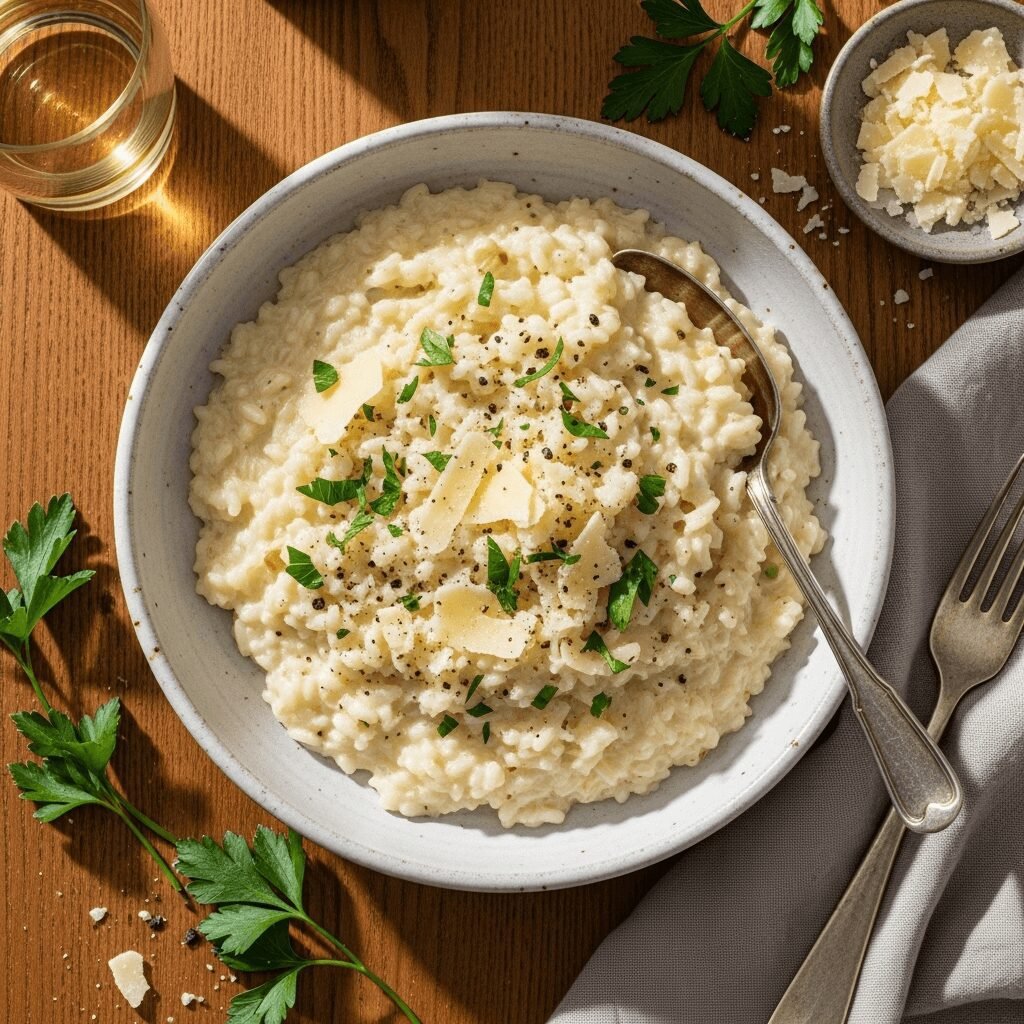

There’s something truly magical about a perfectly cooked risotto. This Creamy Garlic Parmesan Risotto is the ultimate Italian comfort food that transforms simple pantry ingredients into an elegant, restaurant-worthy dish. With its velvety texture, rich garlic flavor, and generous coating of real Parmesan cheese, this creamy garlic risotto delivers luxury in every spoonful.
Whether you’re planning a romantic date night at home, hosting a dinner party, or simply craving something incredibly satisfying, this homemade Parmesan risotto recipe is your answer. It’s surprisingly approachable for home cooks, requires no fancy equipment, and delivers that coveted creamy consistency that makes Italian risotto so beloved worldwide. The gentle stirring, the gradual addition of warm broth, and the final mantecatura (that beautiful moment when butter and cheese are stirred in) create a dish that’s both meditative to make and absolutely divine to eat.
This easy garlic risotto recipe serves as a fantastic main course or an impressive side dish alongside grilled chicken, seared salmon, or roasted vegetables. It’s comfort food elevated—proof that simple ingredients, when treated with care and attention, can create something truly extraordinary.
History / Background
Risotto originated in Northern Italy, particularly in the Lombardy region where rice cultivation flourished in the Po Valley’s fertile plains. The dish dates back to the late 19th century, though rice had been growing in Italy since the Middle Ages, introduced by Arab traders and later cultivated extensively by Italian farmers.
The word “risotto” comes from “riso,” meaning rice in Italian, and the cooking technique that defines it—slowly adding warm liquid to arborio or carnaroli rice while stirring constantly—creates the signature creamy texture without any cream. This method releases the rice’s natural starches, creating that luxurious, velvety consistency that makes risotto so distinctive.
Traditional risotto alla Milanese, one of the most famous versions, features saffron and was allegedly created in 1574 during the construction of the Milan Cathedral. Our Creamy Garlic Parmesan Risotto takes inspiration from classic Italian technique while incorporating the beloved flavors of garlic and Parmigiano-Reggiano cheese, which has been produced in the Emilia-Romagna region for over 900 years.
Risotto became a symbol of Italian culinary excellence—a dish that requires patience, attention, and respect for quality ingredients. It’s not fast food; it’s slow food at its finest. The gentle rhythm of stirring, the gradual transformation from hard grains to creamy perfection, and the final taste that rewards your effort make risotto a meditation on cooking itself.
Today, risotto has traveled far beyond Italy’s borders, appearing on menus worldwide and in home kitchens across America. While purists might insist on traditional methods, this garlic Parmesan version has become a beloved variation that honors Italian technique while celebrating flavors that American home cooks adore.
Why You’ll Love This Recipe
This Creamy Garlic Parmesan Risotto will quickly become your go-to recipe for when you want to impress without stress. Yes, risotto requires attention, but it’s actually much simpler than its fancy reputation suggests. The process is straightforward, almost rhythmic, and the results are consistently spectacular.
Here’s why this recipe deserves a permanent spot in your dinner rotation:
- Restaurant-quality results at home – Achieve that signature creamy texture and sophisticated flavor without leaving your kitchen
- Surprisingly simple ingredients – No exotic items needed; just pantry staples transformed through technique
- Impressive but approachable – Looks and tastes gourmet, but the method is straightforward enough for beginners
- Versatile for any occasion – Perfect as a main dish, elegant side, or base for proteins like shrimp or mushrooms
- Naturally gluten-free – Made with rice, broth, and cheese—no wheat flour involved
- Budget-friendly elegance – Uses affordable ingredients to create an upscale dining experience
- Customizable flavor profile – Easy to adapt with your favorite herbs, vegetables, or proteins
- One-pot wonder – Everything happens in a single pan, making cleanup refreshingly easy
- Comforting and satisfying – That creamy, cheesy goodness hits all the right comfort food notes
- Fun cooking experience – The stirring process is actually quite therapeutic and rewarding
Whether you’re a risotto novice or a seasoned cook, this recipe delivers consistent, delicious results every single time. The rich garlic flavor combined with nutty Parmesan creates a taste that’s both familiar and special—comfort food that feels celebratory.
Ingredient Notes
Let’s talk about the stars of this creamy Parmesan risotto and why each one matters:
Arborio Rice: This short-grain Italian rice is the foundation of great risotto. Its high starch content creates that signature creaminess as you stir. Arborio rice has a firm, chewy texture even when fully cooked, with a slight bite in the center (al dente). You can substitute with Carnaroli rice (considered superior by some Italian chefs) or Vialone Nano rice. Don’t use long-grain rice like basmati or jasmine—they won’t release enough starch for that creamy consistency.
Chicken or Vegetable Broth: The liquid that slowly cooks your rice and builds flavor throughout. Always use warm or hot broth—adding cold liquid will shock the rice and slow cooking. Low-sodium broth gives you better control over salt levels. Homemade broth is wonderful, but quality store-bought works perfectly. Vegetable broth keeps it vegetarian; chicken broth adds deeper savory notes.
Fresh Garlic: The aromatic backbone of this dish. Fresh garlic cloves provide the best flavor—avoid pre-minced jarred garlic here. The garlic is sautéed gently in butter and oil to release its sweetness without burning. Use 4-6 cloves depending on your garlic love level.
Parmesan Cheese: Use real Parmigiano-Reggiano, freshly grated, for the best flavor and texture. The pre-grated stuff in cans contains anti-caking agents that prevent smooth melting. Fresh Parmesan brings nutty, complex flavor and melts beautifully into the risotto. Aged Parmesan (18-24 months) offers the most intense flavor.
Butter: Both for sautéing aromatics and the final mantecatura (that last addition of butter that makes risotto glossy and rich). Unsalted butter lets you control salt levels. European-style butter with higher fat content creates extra richness.
Dry White Wine: Adds acidity and depth of flavor. Use something you’d actually drink—Pinot Grigio, Sauvignon Blanc, or Chardonnay work beautifully. The alcohol cooks off, leaving bright, complex notes. You can substitute with extra broth plus a splash of lemon juice if needed.
Olive Oil: Combined with butter for sautéing (prevents butter from burning). Extra virgin olive oil adds fruity notes, but regular olive oil works fine too.
Onion or Shallots: Shallots provide a sweeter, more delicate flavor that’s traditional in risotto, but yellow onion works perfectly well. Finely diced, they create the aromatic base.
Fresh Herbs: Fresh parsley brightens the dish at the end. Thyme, basil, or chives also work beautifully. Dried herbs won’t provide the same fresh pop.
Equipment Needed
You don’t need a lot of fancy tools to make incredible risotto—just a few kitchen essentials:
- Heavy-bottomed saucepan or Dutch oven (3-4 quarts) – Distributes heat evenly and prevents scorching
- Medium saucepan – For keeping your broth warm
- Wooden spoon or silicone spatula – For constant stirring without scratching your pan
- Sharp knife and cutting board – For prepping garlic, onions, and herbs
- Box grater or microplane – For freshly grating Parmesan cheese
- Ladle or measuring cup – For adding broth gradually
- Measuring cups and spoons – For accurate ingredient amounts
That’s it! No stand mixers, food processors, or specialty equipment required. Just good technique and a little patience.
Print
Creamy Garlic Parmesan Risotto Recipe
- Total Time: 40 minutes
- Yield: 4-6 servings 1x
- Diet: Vegetarian
Description
This Creamy Garlic Parmesan Risotto is restaurant-quality Italian comfort food made easy at home. With its velvety texture, rich garlic flavor, and generous Parmesan coating, this classic risotto recipe transforms simple ingredients into an elegant dish perfect for weeknight dinners or special occasions.
Ingredients
- 6 cups chicken or vegetable broth (low-sodium)
- 3 tablespoons unsalted butter, divided
- 2 tablespoons olive oil
- 1 small onion or 2 shallots, finely diced
- 5-6 garlic cloves, minced
- 1½ cups Arborio rice
- ½ cup dry white wine
- 1 cup freshly grated Parmesan cheese, plus more for serving
- 2 tablespoons fresh parsley, chopped
- Salt and black pepper to taste
- Extra Parmesan and parsley for garnish
Instructions
- Warm the broth: In a medium saucepan, bring the chicken or vegetable broth to a gentle simmer over medium-low heat. Keep it warm throughout the cooking process—this is crucial for even cooking.
- Start the soffritto: In a large, heavy-bottomed saucepan or Dutch oven, heat 2 tablespoons of butter and the olive oil over medium heat. Once the butter melts and begins to foam, add the diced onion or shallots. Sauté for 3-4 minutes until softened and translucent but not browned.
- Add the garlic: Stir in the minced garlic and cook for 1 minute until fragrant. Be careful not to let it burn—garlic turns bitter when overcooked.
- Toast the rice: Add the Arborio rice to the pan, stirring to coat every grain with the butter-oil mixture. Toast for 2-3 minutes, stirring constantly, until the edges of the grains become slightly translucent and you can smell a light, nutty aroma. This step is important for flavor development.
- Deglaze with wine: Pour in the white wine and stir continuously until it’s almost completely absorbed by the rice. This should take about 2 minutes. The wine adds brightness and acidity to balance the richness.
- Begin adding broth: Using a ladle, add about ¾ cup of warm broth to the rice. Stir frequently (but not constantly) until the liquid is almost completely absorbed. You’ll know it’s time to add more when you can drag your spoon through the rice and see the bottom of the pan for a moment.
- Continue the process: Keep adding broth, about ¾ cup at a time, stirring frequently and allowing each addition to be absorbed before adding more. This gradual process releases the rice’s starches, creating that signature creamy texture. The entire process will take 18-22 minutes.
- Test for doneness: After about 18 minutes, start tasting the rice. It should be tender with just a slight bite in the center (al dente)—not mushy or crunchy. You may not need all the broth, or you might need a bit more. Trust your taste.
- Finish with mantecatura: Once the rice is perfectly cooked, remove the pan from heat. Stir in the remaining tablespoon of butter, the freshly grated Parmesan cheese, and chopped parsley. Stir vigorously for 30 seconds—this is the mantecatura, which makes the risotto incredibly creamy and glossy.
- Season and serve: Taste and adjust seasoning with salt and black pepper. The risotto should be creamy and flow slightly when plated—not stiff or dry. If it’s too thick, stir in a splash of warm broth. Serve immediately in warm bowls, topped with extra Parmesan cheese and fresh parsley.
Notes
- The stirring myth: While you should stir frequently, you don’t need to stir constantly. Stirring every 30 seconds or so is perfectly fine—this gives you time to sip wine and relax.
- Broth temperature matters: Always use warm broth. Cold liquid will slow cooking and prevent proper starch release.
- Don’t rush: Risotto can’t be hurried. The gradual addition of liquid is what creates that creamy texture.
- Consistency check: Proper risotto should be all’onda (flowing like a wave) when you shake the pan. It should spread slightly on the plate, not sit in a stiff mound.
- Serve immediately: Risotto continues to absorb liquid as it sits. It’s best enjoyed right away, though leftovers can be repurposed (see storage section).
- Parmesan quality: This recipe really showcases the cheese, so use the best Parmigiano-Reggiano you can find.
- Prep Time: 10 minutes
- Cook Time: 30 minutes
- Category: Dinner, Main Course, Side Dish
- Method: Stovetop
- Cuisine: Italian
Nutrition
- Serving Size: 1 cup (approximately)
- Calories: 385
- Sugar: 2g
- Sodium: 680mg
- Fat: 16g
- Saturated Fat: 8g
- Unsaturated Fat: 7g
- Trans Fat: 0g
- Carbohydrates: 45g
- Fiber: 2g
- Protein: 13g
- Cholesterol: 35mg
Nutrition information is approximate and based on a 6-serving yield. Values may vary based on specific ingredients used and serving sizes.
Tips & Variations
Make it your own with these delicious variations:
- Mushroom Risotto: Sauté 8 oz sliced mushrooms (cremini, shiitake, or mixed wild) until golden before starting the rice. Add them back in at the end.
- Lemon Herb: Add lemon zest and fresh thyme with the parmesan for a bright, spring-like flavor.
- Protein boost: Top with grilled chicken, pan-seared shrimp, seared scallops, or crispy pancetta.
- Veggie-loaded: Stir in roasted butternut squash, peas, asparagus, or sun-dried tomatoes.
- Truffle risotto: Finish with a drizzle of truffle oil for luxurious earthy flavor.
- Spicy kick: Add red pepper flakes with the garlic or stir in a spoonful of calabrian chili paste.
- Butternut squash version: Roast cubed butternut squash and fold in at the end with sage instead of parsley.
- Spinach addition: Wilt fresh spinach into the risotto just before adding cheese.
- Sun-dried tomato: Chop sun-dried tomatoes and add with fresh basil for an Italian twist.
- Lighter version: Use half the butter and skip the final butter addition—it’ll still be creamy from the rice’s natural starches.
Pro Chef Tips
Want to make risotto like the professionals? Here are insider secrets from Italian kitchens:
Toast the rice properly: This step develops flavor and helps the grains maintain structure. You should hear a gentle sizzling and smell a nutty aroma—that’s when you know it’s ready for wine.
Use a wide pan: A saucepan with a wide surface area allows for better evaporation and more even cooking. The larger surface contact also helps release starches more efficiently.
Quality broth is everything: Since broth is the primary liquid, it becomes the backbone of your dish. Homemade or high-quality store-bought makes a noticeable difference. If using store-bought, choose low-sodium so you can control salt levels.
The mantecatura technique: This final vigorous stirring of butter and cheese off the heat is what makes Italian risotto so incredibly creamy and glossy. Use a wooden spoon and stir with energy—really beat it for 30-60 seconds.
Add Parmesan off heat: Adding cheese while the pan is still on the stove can make it grainy. Always remove from heat first, then stir in cheese.
Master the consistency: Risotto should be all’onda (wavy). When you tilt the pan, it should flow slowly across the surface. If you can stand a spoon up in it, it’s too thick.
Save some pasta water (sort of): Keep extra warm broth handy. You can loosen risotto that’s too thick by stirring in a few tablespoons of warm broth.
Room temperature cheese: Take your Parmesan out of the fridge 15 minutes before finishing the dish. Room temperature cheese melts more smoothly into the hot rice.
Don’t fear the wine: That splash of white wine isn’t optional—it adds acidity that balances the richness and prevents the dish from tasting flat or one-dimensional.
Warm your serving bowls: This restaurant trick keeps your risotto at the perfect temperature from kitchen to table. Just run bowls under hot water and dry before plating.
Common Mistakes to Avoid
Even experienced cooks can stumble with risotto. Here’s how to sidestep the most common pitfalls:
Adding cold broth: This is mistake number one. Cold liquid shocks the rice, slows cooking, and prevents proper starch release. Always keep your broth at a gentle simmer in a separate pot.
Drowning the rice: Adding too much broth at once or not letting each addition absorb before adding more creates soupy, mushy risotto. Be patient—add gradually and wait for absorption.
Not stirring enough (or stirring too much): While you don’t need to stir constantly, neglecting your risotto will cause it to stick and cook unevenly. Stir every 30 seconds or so—frequently but not obsessively.
Using the wrong rice: Long-grain rice varieties won’t work. You need the high starch content of Arborio, Carnaroli, or Vialone Nano. These special rices create that signature creaminess.
Overcooking the garlic: Burned garlic tastes bitter and acrid. Add it after the onions have softened, cook just until fragrant (about 1 minute), then add the rice. If garlic browns, start over—there’s no recovering from burned garlic.
Skipping the wine: While you can make risotto without wine, it adds important acidity and depth. If you must skip it, add a tablespoon of lemon juice to brighten the flavors.
Adding cheese too early or on heat: Parmesan added while the pan is still on the stove can become grainy and stringy. Always remove from heat first, then stir in cheese vigorously.
Making it ahead: Unlike many dishes, risotto doesn’t improve with time. It continues absorbing liquid as it sits, becoming thick and gluey. Make it fresh and serve immediately for best results.
Not tasting as you go: The doneness window for risotto is narrow. Start tasting after 18 minutes—you want tender grains with a slight al dente bite in the center, not mushy or crunchy.
Storage & Meal Prep
Refrigerating leftovers: Transfer cooled risotto to an airtight container and refrigerate for up to 3 days. Note that risotto will thicken considerably as it sits—the rice continues absorbing moisture.
Reheating risotto: Add leftover risotto to a saucepan with 2-3 tablespoons of warm broth or water per cup of risotto. Heat over medium-low, stirring gently until warmed through and creamy again. You can also reheat in the microwave—add a splash of liquid, cover, and heat in 30-second intervals, stirring between each.
The texture challenge: Honestly, reheated risotto never quite matches freshly made. The rice continues absorbing liquid, and while you can revive it somewhat, the texture changes. Don’t let this discourage you from making risotto—it’s still delicious the next day, just different.
Better uses for leftovers: Instead of trying to recreate fresh risotto, transform leftovers into arancini (Italian rice balls), risotto cakes, or fritters. Mix cold risotto with a beaten egg and additional Parmesan, form into patties, and pan-fry until golden and crispy on both sides. These are arguably even better than the original risotto!
Room temperature limit: Don’t leave risotto at room temperature for more than 2 hours. Rice can harbor bacteria that produce toxins resistant to reheating.
Make-Ahead & Freezer Notes
Can you make risotto ahead?: Risotto is really best made fresh and served immediately. However, if you need to prep ahead, you can par-cook the risotto to about 75% done, spread it on a baking sheet to cool quickly, then refrigerate. When ready to serve, reheat it gently with warm broth, adding more liquid as needed to finish cooking.
The par-cooking method: Make risotto through step 7, stopping when the rice is still quite firm. Spread it on a parchment-lined baking sheet to stop the cooking process, then refrigerate covered for up to 24 hours. To finish, return to a pan with warm broth and continue cooking 5-8 minutes until tender.
Freezing risotto: While you can freeze risotto, the texture suffers significantly. The rice releases liquid as it thaws, becoming mushy. If you must freeze it, use frozen risotto for arancini, rice pudding, or soup rather than trying to serve it as traditional risotto.
Freezer instructions: Freeze in portioned amounts in freezer bags or airtight containers for up to 2 months. Thaw overnight in the refrigerator. Reheat gently on the stovetop with extra broth, or repurpose into fried risotto cakes.
Best reheating method: Whether using refrigerated or frozen risotto, the stovetop method works best. Add it to a pan with warm broth (start with ¼ cup and add more as needed), heat over medium-low, and stir gently until hot and creamy. This gives you much better control over texture than the microwave.
Prep ahead alternatives: Instead of making the risotto ahead, prep your ingredients—dice the onions, mince the garlic, grate the Parmesan, measure the rice—and store everything in the fridge. When you’re ready to cook, you can make fresh risotto in about 30 minutes with minimal active prep time.
Serving Suggestions
Creamy Garlic Parmesan Risotto is wonderfully versatile—it shines as a main dish or a sophisticated side. Here’s how to round out your meal:
As a main course: Serve the risotto as the star of the show with a simple side salad. A crisp arugula salad with lemon vinaigrette, Caesar salad, or mixed greens with balsamic dressing provides fresh contrast to the rich, creamy rice.
With proteins: Top or serve alongside grilled chicken breasts, pan-seared salmon, seared scallops, grilled shrimp, roasted lamb chops, or osso buco. The neutral, creamy risotto complements nearly any protein beautifully.
Side dish pairings:
- Garlic bread or crusty Italian bread for soaking up every bit of creaminess
- Roasted vegetables like asparagus, broccolini, or Brussels sprouts
- Simple green beans with almonds
- Caprese salad with fresh mozzarella, tomatoes, and basil
- Sautéed mushrooms or roasted cherry tomatoes
- Grilled or roasted vegetables like zucchini and bell peppers
Wine pairings: The wine you cooked with is often perfect for drinking too! Try Pinot Grigio, Sauvignon Blanc, unoaked Chardonnay, or for red wine lovers, a light Pinot Noir complements without overwhelming.
Italian dinner party: Make it part of a multi-course Italian feast—serve risotto as the primo (first course) after antipasti and before a meat or fish secondo. Follow with a simple salad and finish with tiramisu or panna cotta.
Vegetarian feast: Pair with roasted seasonal vegetables, a fresh burrata appetizer, and crusty bread for a satisfying meatless meal.
Garnishing ideas: Fresh parsley, extra shaved Parmesan, cracked black pepper, microgreens, crispy prosciutto crumbles, truffle shavings, or a drizzle of quality olive oil elevate the presentation beautifully.
FAQs Section
Q: Do I really need to stir risotto constantly?
A: Not constantly, but frequently! Stirring every 30-45 seconds is sufficient. Constant stirring is a myth that intimidates people. You should stir regularly to prevent sticking and encourage even starch release, but you don’t need to stand frozen at the stove for 25 minutes. Feel free to sip your wine, prep garnishes, or chat with dinner guests between stirs.
Q: Can I make risotto without wine?
A: Yes, though wine adds wonderful depth and acidity. If you prefer not to use wine, substitute with equal parts broth plus a tablespoon of fresh lemon juice or white wine vinegar to add that brightness. The risotto will still be delicious—just slightly different in flavor profile.
Q: Why is my risotto gummy or mushy?
A: This usually happens from overcooking the rice or adding too much liquid too quickly. Arborio rice should be cooked al dente—tender but with a slight bite in the center. Start testing after 18 minutes and stop as soon as it reaches that perfect texture. Also, make sure you’re adding broth gradually and letting each addition absorb before adding more.
Q: Can I use pre-shredded Parmesan cheese?
A: While you technically can, freshly grated Parmesan melts much better and tastes significantly better. Pre-shredded cheese contains anti-caking agents (usually cellulose) that prevent smooth melting and can make your risotto grainy. For the best results, buy a block of real Parmigiano-Reggiano and grate it yourself—it only takes a few minutes and makes a noticeable difference.
Q: What can I do with leftover risotto?
A: Leftover risotto is perfect for arancini (Italian fried rice balls)! Mix cold risotto with beaten egg, form into balls with a cube of mozzarella in the center, bread them, and fry until golden. You can also form leftover risotto into patties and pan-fry them into crispy risotto cakes. Both are delicious ways to give new life to day-old risotto.
Q: How do I know when the risotto is done?
A: Taste it! The rice should be tender throughout but still have a slight firmness in the very center (al dente)—similar to properly cooked pasta. The consistency should be creamy and flow slightly when plated (all’onda), not stiff or dry. If you can stand a spoon up in it, it’s too thick. The entire cooking process typically takes 20-25 minutes from the first addition of broth.
Q: Can I make this risotto vegan?
A: Absolutely! Use vegetable broth, replace butter with vegan butter or extra olive oil, and substitute the Parmesan with nutritional yeast (start with ½ cup and adjust to taste) or a quality vegan Parmesan alternative. The texture won’t be quite as rich, but it’ll still be creamy and delicious thanks to the rice’s natural starches.
Q: Why does my risotto turn out watery?
A: Either you’ve added too much broth without letting it properly absorb, or you haven’t cooked it long enough for the starches to release and thicken the liquid. Make sure you’re adding broth gradually (about ¾ cup at a time) and waiting until each addition is almost completely absorbed before adding more. Also, stir frequently to encourage starch release, which naturally thickens the dish.
Conclusion
There you have it—everything you need to make restaurant-quality Creamy Garlic Parmesan Risotto right in your own kitchen! This Italian classic might have an intimidating reputation, but as you can see, it’s really just about patience, quality ingredients, and a little technique. The rhythmic stirring, the gradual transformation from hard grains to velvety perfection, and that final moment when you fold in the Parmesan—it’s all part of the magic.
Whether you’re making this garlic Parmesan risotto for a special date night, a family dinner, or just because you’re craving something incredibly comforting and delicious, I promise you’ll love how it turns out. Yes, it requires 30 minutes of attention, but isn’t it nice to slow down sometimes and really engage with what you’re cooking? Plus, the results are so worth it—that creamy, garlicky, cheesy bite is pure comfort food luxury.
I’d love to hear how your risotto turns out! Did you try any of the variations? Did you add mushrooms or protein? What did you serve it with? Drop a comment below and let me know. And if you loved this recipe (which I’m betting you will), please share it on Pinterest so other home cooks can discover it too. Your support helps me keep creating detailed, tested recipes like this one.
Now grab that wooden spoon, pour yourself a glass of wine (you’ll need it for the recipe and for sipping while you cook), and get ready to make the most amazing risotto of your life. You’ve got this! 🧄🧈🧀