Get ready to transform ordinary broccoli into something absolutely extraordinary with this Cheesy Roasted Broccoli Casserole! This isn’t your typical steamed broccoli side dish—it’s a golden, bubbling casserole featuring perfectly roasted broccoli florets coated in a rich, creamy cheese sauce, topped with a crispy breadcrumb and cheese crust that’s utterly irresistible. Every bite delivers the perfect combination of tender-crisp broccoli, velvety cheese sauce, and that addictive crunchy topping that makes this dish disappear faster than you’d believe.
What makes this roasted broccoli casserole so special is how it elevates a simple vegetable into something that even the pickiest eaters request by name. The roasting step before assembling the casserole is key—it caramelizes the broccoli edges, bringing out natural sweetness and creating depth of flavor that steamed broccoli simply can’t achieve. The creamy cheese sauce (made with real cheddar, not canned soup!) coats every floret, while the crispy, golden topping adds textural contrast that makes each forkful exciting.
This recipe is perfect for holiday gatherings when you need a crowd-pleasing side dish that looks impressive, weeknight family dinners when you want to make vegetables more appealing to kids, potlucks and church dinners where you need something that travels well and feeds a crowd, or meal prep when you want healthy, delicious sides ready for the week. It’s the kind of dish that converts broccoli skeptics into believers and has people asking for seconds before they’ve finished their firsts. Whether you’re serving it alongside roasted chicken, grilled steak, holiday ham, or as part of a vegetarian spread, this cheesy roasted broccoli casserole delivers comfort, nutrition, and pure deliciousness.
History & Background: America’s Love Affair with Veggie Casseroles
The vegetable casserole is a cornerstone of American home cooking, with roots stretching back to the mid-20th century when convenience cooking revolutionized American kitchens. The rise of casseroles coincided with the proliferation of new kitchen appliances, standardized recipes, and the food industry’s push for convenient, shelf-stable products that made home cooking faster and more accessible.
Broccoli itself has an interesting journey to American tables. While cultivated in Italy for over 2,000 years, broccoli wasn’t widely eaten in America until Italian immigrants introduced it in the early 20th century. For decades, many Americans viewed it with suspicion—it was considered exotic and unfamiliar. The turning point came in the 1920s when commercial farming began in California, and by the 1970s, health consciousness brought cruciferous vegetables into the spotlight as nutritional powerhouses.
The classic “broccoli casserole” emerged during the 1950s-60s golden age of American casserole cooking. Original versions typically relied on canned cream of mushroom soup, which Campbell’s heavily promoted as a versatile base for countless casseroles. These recipes were designed for busy homemakers who wanted nutritious, economical meals with minimal prep and easy cleanup. Adding cheese sauce and crunchy toppings transformed plain vegetables into comfort food that children would actually eat—a crucial concern for post-war families focused on good nutrition.
The specific tradition of roasting broccoli before casserole assembly is a more modern evolution, reflecting contemporary cooking trends that favor developing deeper flavors through proper technique rather than masking vegetables with heavy sauces. Professional chefs and food bloggers in the 2000s-2010s began sharing methods that treated vegetables with more respect—roasting to caramelize natural sugars, making homemade cheese sauces from scratch, and using fresh ingredients over canned. This approach maintains the comfort food appeal while elevating the quality and nutrition.
Today’s cheesy roasted broccoli casserole represents the best of both worlds: the nostalgic comfort of traditional American casserole cooking updated with modern techniques and fresh ingredients. It’s become a Pinterest favorite and holiday table staple because it successfully bridges the gap between wholesome vegetable side and indulgent comfort food—proving that healthy and delicious aren’t mutually exclusive.
Why You’ll Love This Cheesy Roasted Broccoli Casserole
This casserole checks every box for the perfect side dish—it’s easy enough for weeknight cooking yet impressive enough for special occasions, packed with vegetables but indulgent enough to satisfy comfort food cravings, and universally loved by both kids and adults. The combination of roasted broccoli with creamy cheese sauce creates something magical that transcends typical vegetable sides.
Here’s why this easy broccoli casserole will become your go-to recipe:
- Kid-Approved Veggie Dish: The cheese sauce and crispy topping make broccoli irresistible even to picky eaters
- Naturally Gluten-Free Option: Easily adapted with gluten-free breadcrumbs or crushed crackers
- Perfect for Holidays: Feeds a crowd and holds beautifully on a buffet table
- Make-Ahead Friendly: Assemble hours or even a day ahead, then bake when ready
- Budget-Friendly: Uses affordable, everyday ingredients to feed 8-10 people
- Healthier Than Traditional: Real ingredients and roasted broccoli mean actual nutrition
- Crowd-Pleaser: Everyone from toddlers to grandparents loves this dish
- Versatile: Works as a side dish or vegetarian main course
- Great for Potlucks: Travels well and reheats beautifully
- Comfort Food: Creamy, cheesy, and utterly satisfying
- Customizable: Easy to add bacon, adjust cheese types, or modify toppings
- Meal Prep Champion: Makes excellent leftovers for healthy lunches all week
Ingredient Notes: Building Layers of Flavor
Understanding your ingredients helps you achieve the best results and make smart substitutions. Here’s what goes into this delicious cheesy roasted broccoli casserole and why each component matters:
Fresh Broccoli: Use 2-2½ pounds of fresh broccoli crowns, cut into large florets. Fresh broccoli roasts better than frozen, developing those caramelized edges that add flavor. If using frozen, thaw completely and squeeze out excess moisture, or the casserole will be watery.
Sharp Cheddar Cheese: The star of the cheese sauce! Sharp or extra-sharp cheddar provides bold flavor that stands up to the broccoli. Always shred from a block—pre-shredded cheese contains anti-caking agents that prevent smooth melting and create grainy sauce. For extra depth, mix in some Gruyère or smoked cheddar.
Butter: Unsalted butter for both roasting the broccoli and creating the cheese sauce base (roux). Butter adds richness and helps vegetables caramelize. European-style butter with higher fat content is even better if available.
All-Purpose Flour: Creates the roux that thickens the cheese sauce. For gluten-free, substitute with gluten-free all-purpose flour blend or cornstarch (use 2 tablespoons cornstarch instead of 3 tablespoons flour).
Whole Milk: Creates the creamy sauce base. Whole milk provides the best texture and flavor. You can use 2% milk in a pinch, but the sauce will be thinner. Half-and-half makes it extra rich. Avoid skim milk—it’s too thin and won’t create proper sauce consistency.
Garlic: Fresh minced garlic adds aromatic depth to the cheese sauce. Don’t skip it—garlic and cheese are best friends! Use 2-3 cloves for subtle flavor or 4-5 for garlic lovers.
Dijon Mustard: A secret ingredient that adds tangy depth without making the dish taste “mustardy.” It enhances the cheese flavor and adds complexity. Trust me on this one!
Panko Breadcrumbs: Creates that irresistible crispy topping. Panko breadcrumbs are larger and crispier than regular breadcrumbs, providing superior crunch. For gluten-free, use gluten-free panko or crushed gluten-free crackers.
Parmesan Cheese: Freshly grated Parmesan adds nutty, salty complexity to the topping and helps it crisp up beautifully. The pre-grated stuff in shakers doesn’t compare—use the real thing!
Seasonings: Salt, black pepper, and a pinch of nutmeg (traditional in cheese sauces—it enhances cheese flavor subtly without being identifiable). Optional cayenne adds gentle warmth.
Optional Add-ins: Crispy bacon crumbles, sautéed mushrooms, caramelized onions, or red pepper flakes for heat all complement this dish beautifully.
Equipment Needed
You’ll need these basic kitchen tools to create this delicious cheesy roasted broccoli casserole:
- Large baking sheet (for roasting broccoli)
- Parchment paper or aluminum foil (to line baking sheet)
- 9×13-inch baking dish (or 3-quart casserole dish)
- Medium saucepan (for making cheese sauce)
- Whisk (for smooth cheese sauce)
- Sharp knife and cutting board (for cutting broccoli)
- Large mixing bowl (for tossing broccoli with oil)
- Measuring cups and spoons
- Wooden spoon or silicone spatula
- Box grater or food processor (for shredding cheese)
- Small bowl (for mixing breadcrumb topping)

Cheesy Roasted Broccoli Casserole Recipe
- Total Time: 1 hour
- Yield: 8-10 servings 1x
- Diet: Gluten Free
Description
This Cheesy Roasted Broccoli Casserole transforms simple broccoli into an irresistible side dish! Roasted broccoli florets are smothered in homemade creamy cheese sauce and topped with a crispy, golden breadcrumb and cheese crust. Perfect for holidays, potlucks, or any time you want to make vegetables exciting!
Ingredients
For the Roasted Broccoli:
- 2½ lbs fresh broccoli crowns, cut into large florets
- 2 tablespoons olive oil
- ½ teaspoon salt
- ¼ teaspoon black pepper
- 2 cloves garlic, minced
For the Cheese Sauce:
- 3 tablespoons butter
- 3 tablespoons all-purpose flour
- 2 cups whole milk, warmed
- 2 cups sharp cheddar cheese, freshly shredded
- ½ cup Parmesan cheese, freshly grated
- 1 teaspoon Dijon mustard
- ½ teaspoon salt
- ¼ teaspoon black pepper
- Pinch of nutmeg
- Pinch of cayenne pepper (optional)
For the Crispy Topping:
- 1 cup panko breadcrumbs
- ½ cup Parmesan cheese, freshly grated
- 3 tablespoons butter, melted
- ¼ teaspoon garlic powder
- Pinch of salt
Instructions
- Preheat and Prep: Preheat your oven to 425°F (220°C). Line a large baking sheet with parchment paper. Cut broccoli into large, bite-sized florets (about 2-inch pieces). You want them substantial—they’ll shrink slightly during roasting.
- Roast the Broccoli: In a large bowl, toss broccoli florets with olive oil, minced garlic, salt, and pepper until evenly coated. Spread in a single layer on the prepared baking sheet—don’t overcrowd or they’ll steam instead of roast. Roast for 20-25 minutes, tossing halfway through, until florets are tender and edges are golden brown and slightly crispy. Remove from oven and reduce temperature to 350°F (175°C).
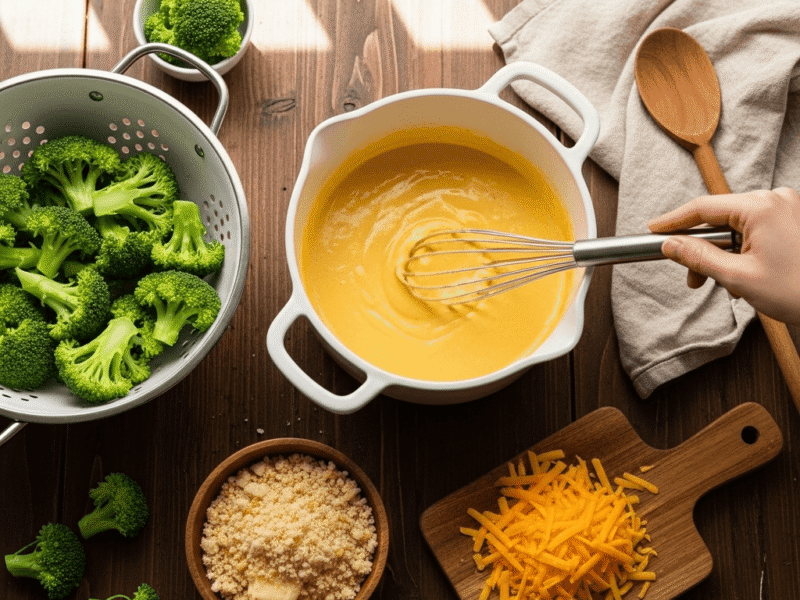
- Make the Cheese Sauce: While broccoli roasts, prepare the sauce. In a medium saucepan, melt butter over medium heat. Add flour and whisk constantly for 1-2 minutes to create a roux—it should smell slightly nutty but not brown. Gradually add warm milk, whisking constantly to prevent lumps. Continue whisking and cook for 4-5 minutes until the mixture thickens and coats the back of a spoon.
- Add the Cheese: Remove saucepan from heat. Add shredded cheddar cheese, Parmesan cheese, Dijon mustard, salt, pepper, nutmeg, and cayenne if using. Whisk until cheese melts completely and sauce is smooth and creamy. Taste and adjust seasoning if needed—the sauce should be well-seasoned and flavorful.
- Combine Broccoli and Sauce: Place roasted broccoli in a greased 9×13-inch baking dish. Pour the cheese sauce evenly over the broccoli, gently stirring to coat all the florets. The broccoli should be generously coated but still visible—not swimming in sauce.
- Prepare the Topping: In a small bowl, combine panko breadcrumbs, Parmesan cheese, melted butter, garlic powder, and a pinch of salt. Mix with a fork until the breadcrumbs are evenly coated with butter and resemble wet sand.
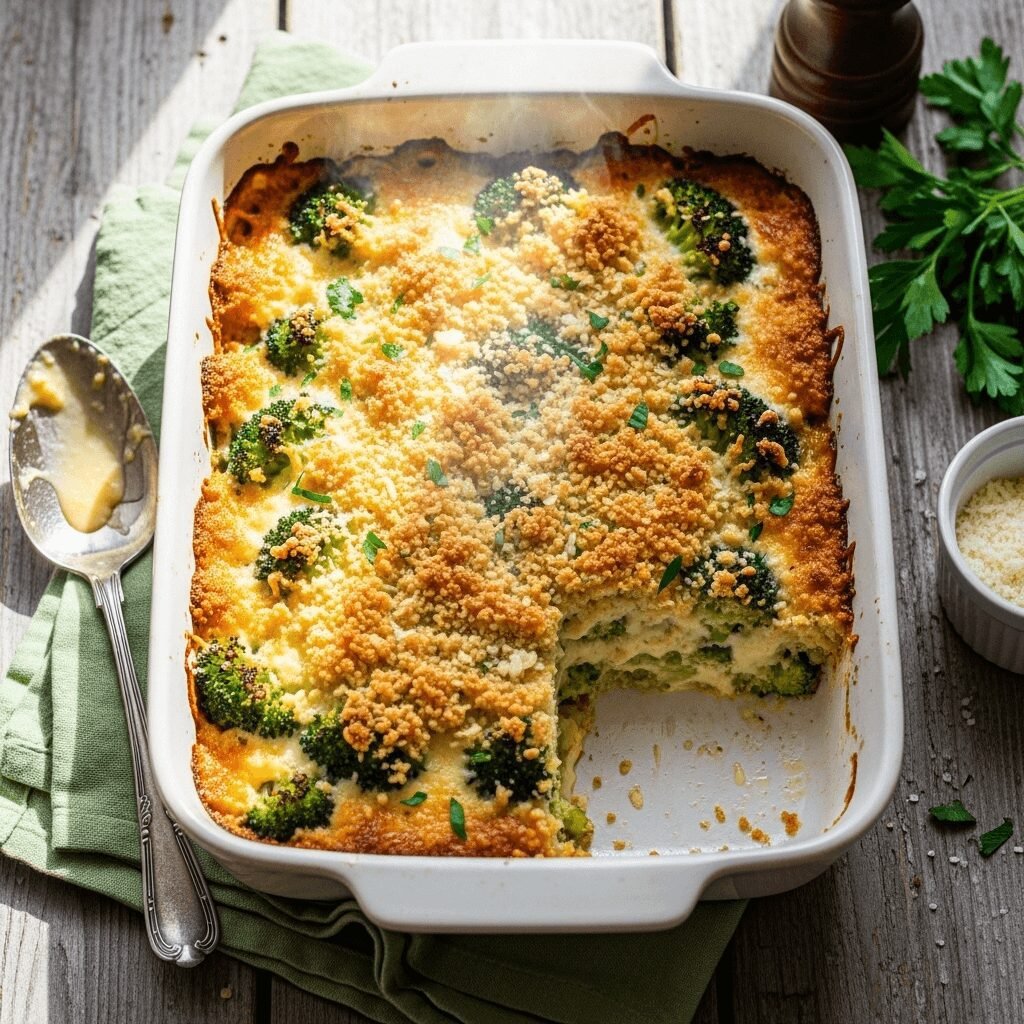
- Top and Bake: Sprinkle the breadcrumb mixture evenly over the sauced broccoli, covering the entire surface. Bake at 350°F for 20-25 minutes, or until the topping is golden brown and crispy, and the cheese sauce is bubbling around the edges.
- Rest and Serve: Remove from oven and let rest for 5-10 minutes before serving. This allows the sauce to set slightly, making serving easier. Garnish with fresh parsley if desired and serve hot.
Notes
🥦 Cheesy Roasted Broccoli Casserole Recipe (Easy & Irresistible!)
Introduction: The Ultimate Veggie Side That Everyone Loves
Get ready to transform ordinary broccoli into something absolutely extraordinary with this Cheesy Roasted Broccoli Casserole! This isn’t your typical steamed broccoli side dish—it’s a golden, bubbling casserole featuring perfectly roasted broccoli florets coated in a rich, creamy cheese sauce, topped with a crispy breadcrumb and cheese crust that’s utterly irresistible. Every bite delivers the perfect combination of tender-crisp broccoli, velvety cheese sauce, and that addictive crunchy topping that makes this dish disappear faster than you’d believe.
What makes this roasted broccoli casserole so special is how it elevates a simple vegetable into something that even the pickiest eaters request by name. The roasting step before assembling the casserole is key—it caramelizes the broccoli edges, bringing out natural sweetness and creating depth of flavor that steamed broccoli simply can’t achieve. The creamy cheese sauce (made with real cheddar, not canned soup!) coats every floret, while the crispy, golden topping adds textural contrast that makes each forkful exciting.
This recipe is perfect for holiday gatherings when you need a crowd-pleasing side dish that looks impressive, weeknight family dinners when you want to make vegetables more appealing to kids, potlucks and church dinners where you need something that travels well and feeds a crowd, or meal prep when you want healthy, delicious sides ready for the week. It’s the kind of dish that converts broccoli skeptics into believers and has people asking for seconds before they’ve finished their firsts. Whether you’re serving it alongside roasted chicken, grilled steak, holiday ham, or as part of a vegetarian spread, this cheesy roasted broccoli casserole delivers comfort, nutrition, and pure deliciousness.
History & Background: America’s Love Affair with Veggie Casseroles
The vegetable casserole is a cornerstone of American home cooking, with roots stretching back to the mid-20th century when convenience cooking revolutionized American kitchens. The rise of casseroles coincided with the proliferation of new kitchen appliances, standardized recipes, and the food industry’s push for convenient, shelf-stable products that made home cooking faster and more accessible.
Broccoli itself has an interesting journey to American tables. While cultivated in Italy for over 2,000 years, broccoli wasn’t widely eaten in America until Italian immigrants introduced it in the early 20th century. For decades, many Americans viewed it with suspicion—it was considered exotic and unfamiliar. The turning point came in the 1920s when commercial farming began in California, and by the 1970s, health consciousness brought cruciferous vegetables into the spotlight as nutritional powerhouses.
The classic “broccoli casserole” emerged during the 1950s-60s golden age of American casserole cooking. Original versions typically relied on canned cream of mushroom soup, which Campbell’s heavily promoted as a versatile base for countless casseroles. These recipes were designed for busy homemakers who wanted nutritious, economical meals with minimal prep and easy cleanup. Adding cheese sauce and crunchy toppings transformed plain vegetables into comfort food that children would actually eat—a crucial concern for post-war families focused on good nutrition.
The specific tradition of roasting broccoli before casserole assembly is a more modern evolution, reflecting contemporary cooking trends that favor developing deeper flavors through proper technique rather than masking vegetables with heavy sauces. Professional chefs and food bloggers in the 2000s-2010s began sharing methods that treated vegetables with more respect—roasting to caramelize natural sugars, making homemade cheese sauces from scratch, and using fresh ingredients over canned. This approach maintains the comfort food appeal while elevating the quality and nutrition.
Today’s cheesy roasted broccoli casserole represents the best of both worlds: the nostalgic comfort of traditional American casserole cooking updated with modern techniques and fresh ingredients. It’s become a Pinterest favorite and holiday table staple because it successfully bridges the gap between wholesome vegetable side and indulgent comfort food—proving that healthy and delicious aren’t mutually exclusive.
Why You’ll Love This Cheesy Roasted Broccoli Casserole
This casserole checks every box for the perfect side dish—it’s easy enough for weeknight cooking yet impressive enough for special occasions, packed with vegetables but indulgent enough to satisfy comfort food cravings, and universally loved by both kids and adults. The combination of roasted broccoli with creamy cheese sauce creates something magical that transcends typical vegetable sides.
Here’s why this easy broccoli casserole will become your go-to recipe:
- Kid-Approved Veggie Dish: The cheese sauce and crispy topping make broccoli irresistible even to picky eaters
- Naturally Gluten-Free Option: Easily adapted with gluten-free breadcrumbs or crushed crackers
- Perfect for Holidays: Feeds a crowd and holds beautifully on a buffet table
- Make-Ahead Friendly: Assemble hours or even a day ahead, then bake when ready
- Budget-Friendly: Uses affordable, everyday ingredients to feed 8-10 people
- Healthier Than Traditional: Real ingredients and roasted broccoli mean actual nutrition
- Crowd-Pleaser: Everyone from toddlers to grandparents loves this dish
- Versatile: Works as a side dish or vegetarian main course
- Great for Potlucks: Travels well and reheats beautifully
- Comfort Food: Creamy, cheesy, and utterly satisfying
- Customizable: Easy to add bacon, adjust cheese types, or modify toppings
- Meal Prep Champion: Makes excellent leftovers for healthy lunches all week
Ingredient Notes: Building Layers of Flavor
Understanding your ingredients helps you achieve the best results and make smart substitutions. Here’s what goes into this delicious cheesy roasted broccoli casserole and why each component matters:
Fresh Broccoli: Use 2-2½ pounds of fresh broccoli crowns, cut into large florets. Fresh broccoli roasts better than frozen, developing those caramelized edges that add flavor. If using frozen, thaw completely and squeeze out excess moisture, or the casserole will be watery.
Sharp Cheddar Cheese: The star of the cheese sauce! Sharp or extra-sharp cheddar provides bold flavor that stands up to the broccoli. Always shred from a block—pre-shredded cheese contains anti-caking agents that prevent smooth melting and create grainy sauce. For extra depth, mix in some Gruyère or smoked cheddar.
Butter: Unsalted butter for both roasting the broccoli and creating the cheese sauce base (roux). Butter adds richness and helps vegetables caramelize. European-style butter with higher fat content is even better if available.
All-Purpose Flour: Creates the roux that thickens the cheese sauce. For gluten-free, substitute with gluten-free all-purpose flour blend or cornstarch (use 2 tablespoons cornstarch instead of 3 tablespoons flour).
Whole Milk: Creates the creamy sauce base. Whole milk provides the best texture and flavor. You can use 2% milk in a pinch, but the sauce will be thinner. Half-and-half makes it extra rich. Avoid skim milk—it’s too thin and won’t create proper sauce consistency.
Garlic: Fresh minced garlic adds aromatic depth to the cheese sauce. Don’t skip it—garlic and cheese are best friends! Use 2-3 cloves for subtle flavor or 4-5 for garlic lovers.
Dijon Mustard: A secret ingredient that adds tangy depth without making the dish taste “mustardy.” It enhances the cheese flavor and adds complexity. Trust me on this one!
Panko Breadcrumbs: Creates that irresistible crispy topping. Panko breadcrumbs are larger and crispier than regular breadcrumbs, providing superior crunch. For gluten-free, use gluten-free panko or crushed gluten-free crackers.
Parmesan Cheese: Freshly grated Parmesan adds nutty, salty complexity to the topping and helps it crisp up beautifully. The pre-grated stuff in shakers doesn’t compare—use the real thing!
Seasonings: Salt, black pepper, and a pinch of nutmeg (traditional in cheese sauces—it enhances cheese flavor subtly without being identifiable). Optional cayenne adds gentle warmth.
Optional Add-ins: Crispy bacon crumbles, sautéed mushrooms, caramelized onions, or red pepper flakes for heat all complement this dish beautifully.
Equipment Needed
You’ll need these basic kitchen tools to create this delicious cheesy roasted broccoli casserole:
- Large baking sheet (for roasting broccoli)
- Parchment paper or aluminum foil (to line baking sheet)
- 9×13-inch baking dish (or 3-quart casserole dish)
- Medium saucepan (for making cheese sauce)
- Whisk (for smooth cheese sauce)
- Sharp knife and cutting board (for cutting broccoli)
- Large mixing bowl (for tossing broccoli with oil)
- Measuring cups and spoons
- Wooden spoon or silicone spatula
- Box grater or food processor (for shredding cheese)
- Small bowl (for mixing breadcrumb topping)
📋 Recipe Card
Prep Time: 20 minutes
Cook Time: 40 minutes
Total Time: 1 hour
Yield: 8-10 servings
Category: Side Dish
Method: Roasting + Baking
Cuisine: American
Diet: Gluten-Free (with modification), Vegetarian
Description: This Cheesy Roasted Broccoli Casserole transforms simple broccoli into an irresistible side dish! Roasted broccoli florets are smothered in homemade creamy cheese sauce and topped with a crispy, golden breadcrumb and cheese crust. Perfect for holidays, potlucks, or any time you want to make vegetables exciting!
Ingredients
For the Roasted Broccoli:
- 2½ lbs fresh broccoli crowns, cut into large florets
- 2 tablespoons olive oil
- ½ teaspoon salt
- ¼ teaspoon black pepper
- 2 cloves garlic, minced
For the Cheese Sauce:
- 3 tablespoons butter
- 3 tablespoons all-purpose flour
- 2 cups whole milk, warmed
- 2 cups sharp cheddar cheese, freshly shredded
- ½ cup Parmesan cheese, freshly grated
- 1 teaspoon Dijon mustard
- ½ teaspoon salt
- ¼ teaspoon black pepper
- Pinch of nutmeg
- Pinch of cayenne pepper (optional)
For the Crispy Topping:
- 1 cup panko breadcrumbs
- ½ cup Parmesan cheese, freshly grated
- 3 tablespoons butter, melted
- ¼ teaspoon garlic powder
- Pinch of salt
Instructions
- Preheat and Prep: Preheat your oven to 425°F (220°C). Line a large baking sheet with parchment paper. Cut broccoli into large, bite-sized florets (about 2-inch pieces). You want them substantial—they’ll shrink slightly during roasting.
- Roast the Broccoli: In a large bowl, toss broccoli florets with olive oil, minced garlic, salt, and pepper until evenly coated. Spread in a single layer on the prepared baking sheet—don’t overcrowd or they’ll steam instead of roast. Roast for 20-25 minutes, tossing halfway through, until florets are tender and edges are golden brown and slightly crispy. Remove from oven and reduce temperature to 350°F (175°C).
- Make the Cheese Sauce: While broccoli roasts, prepare the sauce. In a medium saucepan, melt butter over medium heat. Add flour and whisk constantly for 1-2 minutes to create a roux—it should smell slightly nutty but not brown. Gradually add warm milk, whisking constantly to prevent lumps. Continue whisking and cook for 4-5 minutes until the mixture thickens and coats the back of a spoon.
- Add the Cheese: Remove saucepan from heat. Add shredded cheddar cheese, Parmesan cheese, Dijon mustard, salt, pepper, nutmeg, and cayenne if using. Whisk until cheese melts completely and sauce is smooth and creamy. Taste and adjust seasoning if needed—the sauce should be well-seasoned and flavorful.
- Combine Broccoli and Sauce: Place roasted broccoli in a greased 9×13-inch baking dish. Pour the cheese sauce evenly over the broccoli, gently stirring to coat all the florets. The broccoli should be generously coated but still visible—not swimming in sauce.
- Prepare the Topping: In a small bowl, combine panko breadcrumbs, Parmesan cheese, melted butter, garlic powder, and a pinch of salt. Mix with a fork until the breadcrumbs are evenly coated with butter and resemble wet sand.
- Top and Bake: Sprinkle the breadcrumb mixture evenly over the sauced broccoli, covering the entire surface. Bake at 350°F for 20-25 minutes, or until the topping is golden brown and crispy, and the cheese sauce is bubbling around the edges.
- Rest and Serve: Remove from oven and let rest for 5-10 minutes before serving. This allows the sauce to set slightly, making serving easier. Garnish with fresh parsley if desired and serve hot.
Notes
- Don’t Skip Roasting: Roasting the broccoli first adds crucial flavor and prevents the casserole from being watery. This step is worth the extra time!
- Fresh Cheese is Key: Pre-shredded cheese won’t melt as smoothly due to anti-caking agents. Always shred from blocks for silky sauce.
- Warm Your Milk: Adding cold milk to the roux can cause lumps. Warm it gently in the microwave (1-2 minutes) before adding.
- Adjust Consistency: If your cheese sauce is too thick, whisk in a bit more milk. If too thin, simmer for another minute to reduce.
- Make it Gluten-Free: Use gluten-free flour blend for the roux and gluten-free panko or crushed gluten-free crackers for the topping.
- Extra Crispy Topping: For maximum crunch, broil for the last 1-2 minutes of baking, watching carefully to prevent burning.
- Prep Time: 20 minutes
- Cook Time: 40 minutes
- Category: Side Dish
- Method: Roasting + Baking
- Cuisine: American
Nutrition
- Serving Size: Approximately 1 cup
- Calories: 285
- Sugar: 5g
- Sodium: 520mg
- Fat: 19g
- Saturated Fat: 11g
- Unsaturated Fat: 7g
- Trans Fat: 0g
- Carbohydrates: 7g
- Fiber: 3g
- Protein: 13g
- Cholesterol: 50mg
Nutrition information is approximate and calculated based on standard ingredient measurements for 10 servings. Values will vary based on specific brands and modifications made to the recipe.
Tips & Variations: Make It Your Own
Protein Additions:
- Crumble 6-8 slices of crispy bacon and fold into the casserole before baking
- Add diced cooked ham for a heartier side dish
- Mix in cooked, shredded chicken for a complete one-dish meal
- Top with crispy prosciutto for Italian flair
Vegetable Variations:
- Mix in roasted cauliflower along with the broccoli for variety
- Add sautéed mushrooms for earthiness
- Include roasted red peppers for sweetness and color
- Fold in caramelized onions for depth
- Mix in frozen peas for pops of sweetness
Cheese Combinations:
- Use half cheddar and half Gruyère for sophisticated flavor
- Try smoked cheddar for deeper, smokier taste
- Mix in cream cheese (4 oz) for extra richness
- Add crumbled blue cheese for bold flavor
- Use pepper jack for spicy kick
Topping Variations:
- Crush Ritz crackers instead of panko for buttery crunch
- Use crushed cornflakes for gluten-free option
- Add crushed French fried onions for extra crunch
- Mix in chopped pecans or walnuts for nutty flavor
- Top with crispy fried shallots for gourmet touch
Make It Lighter:
- Use 2% milk instead of whole milk
- Reduce cheese to 1½ cups total
- Use cooking spray instead of butter for roasting
- Skip the buttered breadcrumb topping or use less
- Add extra broccoli and reduce sauce slightly
Spice It Up:
- Increase cayenne pepper to ¼ teaspoon
- Add diced jalapeños to the cheese sauce
- Mix red pepper flakes into the breadcrumb topping
- Stir in a tablespoon of hot sauce
- Top with sliced fresh jalapeños before baking
Pro Chef Tips: Restaurant-Quality Results
- Roast, Don’t Steam: The roasting step is non-negotiable! It caramelizes the broccoli’s natural sugars, creating nutty, sweet flavors that steamed broccoli can’t achieve. Those crispy, golden edges add textural contrast and depth. Plus, roasting drives off excess moisture, preventing a watery casserole.
- Cut Broccoli Uniformly: Large, evenly-sized florets (about 2 inches) ensure even cooking during roasting and create an attractive presentation. Too-small pieces become mushy; too-large pieces don’t cook through properly. Aim for consistency so everything finishes at the same time.
- Make a Proper Roux: Cook the butter and flour mixture for 1-2 minutes before adding milk. This cooking time eliminates the raw flour taste and creates a nutty aroma that adds depth to your sauce. The roux should be golden and smell slightly toasted, not white and pasty.
- Warm Your Milk: Adding cold milk to a hot roux causes lumps and requires more whisking to smooth out. Warming the milk (just 1-2 minutes in the microwave) ensures it incorporates smoothly and quickly, creating silky sauce with minimal effort.
- Remove from Heat Before Adding Cheese: When your sauce is hot, remove it from the heat before adding cheese. Direct heat can cause cheese proteins to separate and become grainy or stringy. The residual heat is perfect for melting cheese smoothly without breaking the sauce.
- Don’t Overbake: The casserole is done when the topping is golden brown and the sauce bubbles around the edges. Overbaking dries out the broccoli and makes the sauce thick and pasty. Watch it during the last 10 minutes and remove as soon as the topping achieves that perfect golden color.
- Let It Rest: Allow the casserole to rest for 5-10 minutes after removing from the oven. This brief resting period lets the sauce thicken slightly and reabsorb into the broccoli, making serving much neater and preventing it from being soupy.
- Season Boldly: Broccoli and cheese sauce both need generous seasoning to taste their best. The sauce should taste slightly over-seasoned on its own—the mild broccoli will balance it out. Always taste and adjust salt, pepper, and mustard before assembling.
Common Mistakes to Avoid
Using Frozen Broccoli Without Proper Draining: Frozen broccoli contains significant moisture that releases during baking, creating a watery, soupy casserole instead of creamy. If using frozen, thaw completely, squeeze out ALL excess moisture using paper towels or a clean kitchen towel, and pat bone-dry before proceeding.
Skipping the Roasting Step: It’s tempting to skip roasting to save time, but this creates bland, one-dimensional flavor. Raw or simply blanched broccoli lacks the caramelized sweetness and depth that roasting provides. Those crispy edges also add crucial textural contrast. The 25 minutes of roasting is absolutely worth it!
Adding Cheese to Boiling Sauce: If your sauce is still on direct heat when you add cheese, the high temperature causes the cheese proteins to separate and become grainy, stringy, or oily instead of smooth and creamy. Always remove from heat, let it cool for 30 seconds, then add cheese and whisk until melted from residual heat only.
Using Pre-Shredded Cheese: Pre-shredded cheese contains cellulose (wood pulp) and potato starch to prevent clumping in the bag. These additives prevent smooth melting and create grainy, separated sauce instead of silky smoothness. Block cheese takes 2 extra minutes to shred but makes a world of difference in texture.
Overcrowding the Baking Sheet: When broccoli florets are piled on top of each other, they steam instead of roast, staying pale and bland without any caramelized edges. Spread florets in a single layer with space between them, using two baking sheets if necessary. Proper spacing creates that golden, crispy texture that makes roasted vegetables irresistible.
Storage & Meal Prep: Keeping It Delicious
Refrigerator Storage: Store leftover cheesy roasted broccoli casserole in an airtight container in the refrigerator for up to 4 days. The topping will soften as it sits—this is normal and expected. The casserole actually tastes great as leftovers as the flavors continue to meld!
Reheating Instructions:
- Oven Method (Best for Crispiness): Preheat oven to 350°F. Place casserole in an oven-safe dish, cover with foil, and heat for 15-20 minutes until warmed through. Remove foil for the last 5 minutes to re-crisp the topping slightly.
- Microwave Method (Quick but Softer): Transfer portion to a microwave-safe dish, cover loosely, and heat in 1-minute intervals, stirring gently between, until hot throughout. The topping won’t be crispy but the casserole will still taste great.
- Stovetop Method: For small portions, reheat in a covered skillet over medium-low heat with a splash of milk, stirring gently until heated through.
Meal Prep Tips: This casserole is PERFECT for meal prep:
- Portion into individual containers for easy grab-and-go lunches
- Pairs beautifully with meal-prepped proteins like grilled chicken or baked salmon
- Stores well for 4 days, making Sunday prep a breeze
- Reheats beautifully, maintaining good texture and flavor
- Can be enjoyed hot or at room temperature in packed lunches
Make-Ahead & Freezer Notes
Make-Ahead Instructions (Best Method):
Option 1 – Assemble Fully, Bake Later: Complete the recipe through step 7 (assembled with topping but unbaked). Cover tightly with plastic wrap, then aluminum foil, and refrigerate for up to 24 hours. When ready to bake, remove from refrigerator and let sit at room temperature for 20-30 minutes while the oven preheats. Remove plastic wrap (leave foil), and bake as directed, adding 5-10 extra minutes to account for the cold start.
Option 2 – Prep Components Separately:
- Roast broccoli up to 2 days ahead; store in airtight container in refrigerator
- Make cheese sauce up to 2 days ahead; store in airtight container (reheat gently before using)
- Prepare breadcrumb topping and store in airtight container at room temperature for up to 3 days
- Assemble and bake when ready to serve
Freezer Instructions: This casserole freezes reasonably well, though the texture changes slightly:
To Freeze Unbaked (Best Method):
- Assemble completely in a freezer-safe, oven-safe dish
- Do NOT add the breadcrumb topping yet
- Wrap tightly with plastic wrap, then heavy-duty aluminum foil
- Label with date and baking instructions
- Freeze for up to 3 months
To Bake from Frozen:
- Thaw overnight in refrigerator
- Let sit at room temperature for 30 minutes
- Add fresh breadcrumb topping
- Bake as directed, adding 10-15 extra minutes
To Freeze Already Baked:
- Cool completely
- Wrap tightly and freeze for up to 2 months
- Thaw overnight in refrigerator
- Reheat at 350°F for 20-25 minutes until hot throughout
Note on Texture: Frozen and reheated broccoli casserole may be slightly softer and the sauce may separate slightly, but it still tastes delicious. The topping won’t be quite as crispy after freezing. For best results, freeze before baking rather than after.
Serving Suggestions: Complete Your Meal
This hearty cheesy roasted broccoli casserole pairs beautifully with virtually any protein and makes a complete meal with just a few simple accompaniments:
Perfect Protein Pairings:
- Roasted or grilled chicken (whole bird, breasts, or thighs)
- Beef roast, prime rib, or steak
- Baked or grilled salmon
- Pork chops or pork tenderloin
- Glazed ham (perfect for holidays!)
- Turkey (Thanksgiving or Christmas dinner)
- Lamb chops or roasted leg of lamb
Complete Holiday Spread:
- Honey-glazed ham
- This cheesy broccoli casserole
- Garlic mashed potatoes or sweet potato casserole
- Dinner rolls or cornbread
- Cranberry sauce
- Green salad with vinaigrette
Weeknight Dinner Ideas:
- Rotisserie chicken + this casserole + simple salad = easy dinner
- Grilled steak + roasted broccoli casserole + baked potatoes
- Baked salmon + this side + crusty bread
- Sheet pan chicken thighs + this casserole (prep together!)
Other Side Dishes:
- Simple green salad with lemon vinaigrette
- Roasted Brussels sprouts
- Garlic bread or dinner rolls
- Mashed potatoes or rice pilaf
- Cranberry sauce or applesauce
- Glazed carrots
Beverage Pairings:
- White wine (Chardonnay or Sauvignon Blanc)
- Light red wine (Pinot Noir)
- Beer (pale ales or wheat beers)
- Sparkling water with lemon
- Sweet iced tea
- Apple cider (hot or cold)
Perfect Occasions:
- Thanksgiving dinner
- Christmas or Easter dinner
- Sunday family dinners
- Potluck contributions
- Church dinners
- Holiday parties
- Casual weeknight meals
- Meal prep for the week
Frequently Asked Questions
Can I use frozen broccoli instead of fresh? Yes, but with important modifications! Frozen broccoli contains much more moisture, which will make your casserole watery if not handled properly. Thaw the broccoli completely, then squeeze out ALL excess moisture using paper towels or a clean kitchen towel—really wring it out! Skip the roasting step (frozen broccoli is pre-blanched) and proceed directly to assembling the casserole. Expect slightly softer texture than fresh roasted broccoli.
Why is my cheese sauce grainy? Grainy cheese sauce results from either: 1) Adding cheese while the sauce is too hot (remove from heat first), 2) Using pre-shredded cheese with anti-caking agents (always shred from a block), or 3) Overheating the sauce after adding cheese (gentle heat only). To fix grainy sauce, try whisking in a tablespoon of warm milk or cream—sometimes this brings it back together.
Can I make this ahead for Thanksgiving? Absolutely! This is one of the BEST make-ahead sides for holiday dinners. Assemble completely (without the topping) up to 24 hours ahead, cover tightly, and refrigerate. Before baking, let it sit at room temperature for 20-30 minutes, add the fresh breadcrumb topping, and bake as directed (adding 5-10 extra minutes). This frees up oven space and reduces day-of stress!
How do I make this gluten-free? Easy! Substitute the all-purpose flour in the sauce with a gluten-free all-purpose flour blend (Bob’s Red Mill or King Arthur work great—use the same amount). For the topping, use gluten-free panko breadcrumbs or crushed gluten-free crackers like Glutino. Everything else is naturally gluten-free!
Can I make this dairy-free? Dairy-free is challenging since cheese sauce is the star, but possible with modifications. Use dairy-free butter (Earth Balance), dairy-free milk (unsweetened cashew or oat milk work best), and dairy-free cheese shreds. The texture and flavor will be different from traditional cheese sauce—not as rich or tangy—but can still be tasty. Nutritional yeast adds cheesy flavor if you’re okay without melty cheese.
My casserole is watery. What went wrong? Watery casserole typically comes from: 1) Not roasting the broccoli first (raw broccoli releases moisture), 2) Using frozen broccoli without thoroughly draining it, 3) Too much milk in the cheese sauce making it too thin, or 4) Not letting the casserole rest after baking (the sauce needs 5-10 minutes to thicken). Next time, ensure broccoli is roasted until edges are crispy, make sure sauce is thick enough to coat a spoon, and let it rest before serving.
Can I double this recipe? Yes! Double all ingredients and use either a very large casserole dish or two 9×13-inch dishes. The baking time will likely increase by 5-10 minutes since there’s more volume—watch for bubbling edges and golden brown topping as your indicators of doneness.
Conclusion: Transform Broccoli into Everyone’s Favorite
This Cheesy Roasted Broccoli Casserole proves that vegetables can be just as exciting and crave-worthy as any comfort food classic! By roasting the broccoli first to bring out its natural sweetness, making a rich homemade cheese sauce from scratch, and topping it with a crispy, golden crust, you’ve elevated humble broccoli into something truly special. It’s the kind of dish that converts vegetable skeptics, delights cheese lovers, and disappears quickly from every dinner table.
What makes this recipe invaluable is its versatility—it works beautifully as a holiday side dish that feeds a crowd, a weeknight family dinner addition that makes vegetables exciting, a potluck contribution that always gets requests for the recipe, or meal prep that provides delicious, nutritious sides all week long. Whether you’re serving it alongside Thanksgiving turkey, Sunday pot roast, or simple grilled chicken, this cheesy broccoli casserole delivers comfort, flavor, and satisfaction.
Ready to make the most irresistible broccoli casserole ever? Try this recipe today! Your family will be amazed at how delicious vegetables can be, and you’ll love how easy it is to create something this impressive. Don’t forget to snap a photo of your beautiful casserole and share it on Pinterest—I’d love to see your creation! Drop a comment below with your favorite variation or how you served it, and save this recipe so you can make it again and again. Happy cooking!