There’s something absolutely magical about twirling creamy, cheese-coated pasta around your fork while tender pieces of garlicky chicken make every bite utterly irresistible. This Cheesy Garlic Chicken Pasta is the kind of comfort food that transforms an ordinary Tuesday night into something special—without requiring hours in the kitchen or a culinary degree.
If you’re searching for a recipe that checks all the boxes—quick, delicious, family-approved, and made with ingredients you probably already have—you’ve just found your new go-to dinner. This one-pan wonder combines juicy chicken breast, al dente pasta, a velvety garlic cream sauce, and plenty of melted cheese into a restaurant-quality meal that’ll have everyone asking for seconds. Whether you’re feeding picky kids, impressing dinner guests, or simply treating yourself after a long day, this recipe delivers every single time.
History & Background: The Evolution of Creamy Pasta Perfection
While this particular recipe doesn’t have ancient roots like traditional Italian pasta dishes, it represents the beautiful evolution of Italian-American cuisine—a culinary tradition that’s become beloved in its own right. Creamy garlic pasta dishes gained massive popularity in American households during the 1980s and 1990s, when Italian restaurants were bringing sophisticated flavors to suburban communities across the United States.
The combination of chicken, garlic, and cream sauce draws inspiration from Italian classics like Fettuccine Alfredo (created in Rome in 1914) and Chicken Piccata, but it’s been adapted to suit American tastes and cooking styles. Home cooks discovered that by simplifying techniques and combining elements from multiple Italian dishes, they could create something entirely new—something that captured that restaurant elegance while being practical for busy weeknights.
This recipe embodies the spirit of modern American home cooking: taking the best elements from traditional cuisines and making them accessible, customizable, and family-friendly. It’s become a Pinterest sensation and social media favorite precisely because it delivers gourmet flavor without the fuss, proving that you don’t need expensive ingredients or complicated techniques to create something truly delicious. The garlic-forward profile speaks to America’s growing love affair with bold, aromatic flavors, while the creamy cheese sauce provides that comforting richness we all crave.
Why You’ll Love This Cheesy Garlic Chicken Pasta
This recipe has earned its place as a weeknight staple in thousands of kitchens, and once you make it, you’ll understand why. It’s the perfect marriage of convenience and indulgence, delivering restaurant-quality results with minimal effort.
Imagine tender, perfectly seasoned chicken pieces nestled in a silky garlic cream sauce that clings to every strand of pasta. The cheese adds a luxurious richness that makes each bite feel special, while the garlic infuses everything with incredible aromatic depth. This isn’t just dinner—it’s the kind of meal that makes ordinary evenings feel a little more extraordinary.
Here’s why this recipe will become your new favorite:
- Ready in 30 Minutes: From start to finish, you’ll have dinner on the table in half an hour—faster than ordering takeout!
- One-Pan Wonder: Minimal cleanup means more time to relax after dinner instead of scrubbing pots and pans.
- Budget-Friendly: Uses affordable, everyday ingredients that won’t break the bank.
- Kid-Approved: Creamy, cheesy, and delicious—even picky eaters ask for seconds.
- Easily Customizable: Add vegetables, swap cheeses, or adjust the garlic level to suit your family’s preferences.
- Impressive Enough for Guests: Looks and tastes like you spent hours in the kitchen.
- Comfort Food at Its Finest: Satisfying, warming, and absolutely crave-worthy.
- Perfect for Meal Prep: Makes great leftovers that taste even better the next day.
Ingredient Notes: Building Blocks of Flavor
Understanding your ingredients helps you make smart substitutions and adjustments. Here’s what makes this dish so delicious:
Chicken Breast: Boneless, skinless chicken breast is lean, cooks quickly, and absorbs the garlic flavors beautifully. Cut it into bite-sized pieces for faster, more even cooking. You can substitute chicken thighs for a richer, more forgiving option that stays juicy even if slightly overcooked.
Pasta: Penne, rigatoni, or farfalle work best because their shapes hold the creamy sauce perfectly. Choose a short pasta with ridges or tubes that can trap that delicious garlic cream. Regular or whole wheat both work great—just follow package directions for cooking time.
Garlic: Fresh garlic is non-negotiable here—it’s the star of the show! You’ll need 5-6 cloves, minced finely. Pre-minced jarred garlic can work in a pinch, but fresh delivers superior flavor. Don’t skip this ingredient or reduce the amount; the garlic is what makes this recipe special.
Heavy Cream: Creates that luxurious, velvety sauce that coats the pasta beautifully. Half-and-half can work if you want something lighter, though the sauce will be slightly thinner. For the richest result, stick with heavy cream.
Parmesan Cheese: Freshly grated Parmesan adds nutty, salty depth and helps thicken the sauce naturally. Pre-grated works, but freshly grated melts more smoothly. Don’t use the shelf-stable powdered variety for this recipe.
Mozzarella Cheese: Provides that gorgeous melty, stretchy texture everyone loves. Shredded mozzarella from a block melts better than pre-shredded, which contains anti-caking agents.
Chicken Broth: Adds savory depth and helps create the perfect sauce consistency. Low-sodium gives you better control over the final seasoning. You can substitute with vegetable broth if needed.
Butter & Olive Oil: The combination prevents burning while adding rich flavor. Butter brings richness, while olive oil raises the smoke point.
Italian Seasoning: A blend of herbs (oregano, basil, thyme) that adds complexity without requiring multiple spice jars. You can make your own blend or use individual dried herbs.
Equipment Needed
You don’t need a fancy kitchen to make this recipe—just a few basic tools:
- Large Skillet or Sauté Pan (12-inch works best for cooking everything in one pan)
- Large Pot (for boiling pasta)
- Sharp Knife and Cutting Board (for prepping chicken and garlic)
- Wooden Spoon or Spatula (for stirring and combining)
- Measuring Cups and Spoons (for accurate ingredients)
- Colander (for draining pasta)
- Cheese Grater (if using block cheese)
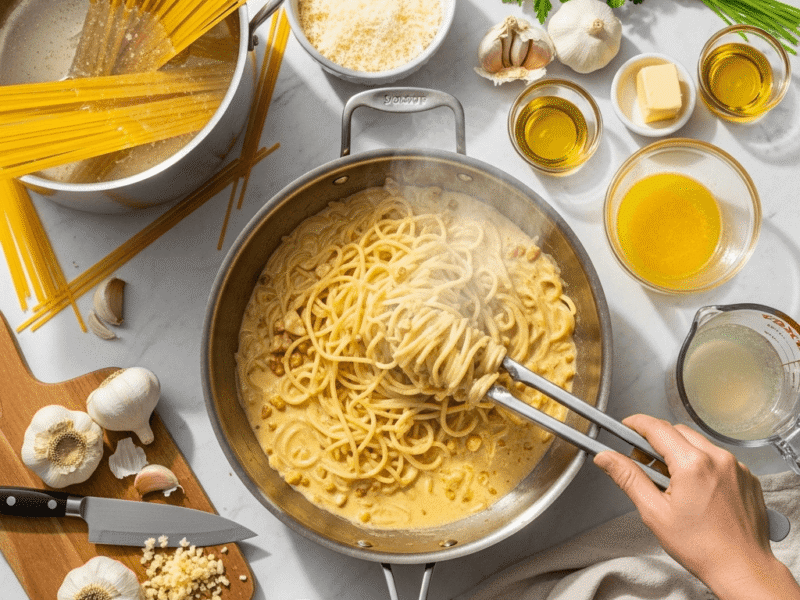
- Tongs (helpful for tossing pasta with sauce)
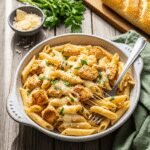
Cheesy Garlic Chicken Pasta Recipe
- Total Time: 30 minutes
- Yield: 6 servings 1x
- Diet: Vegetarian
Description
This creamy Cheesy Garlic Chicken Pasta is a restaurant-quality dinner that comes together in just 30 minutes. Tender chicken, perfectly cooked pasta, and a rich garlic cream sauce loaded with melted cheese make this the ultimate comfort food for busy weeknights.
Ingredients
- 1 lb boneless, skinless chicken breast, cut into 1-inch pieces
- 12 oz pasta (penne, rigatoni, or farfalle)
- 5-6 cloves garlic, minced
- 1 cup heavy cream
- 1 cup chicken broth
- 1 cup freshly grated Parmesan cheese
- 1½ cups shredded mozzarella cheese
- 2 tablespoons butter
- 2 tablespoons olive oil
- 2 teaspoons Italian seasoning
- 1 teaspoon salt (plus more for pasta water)
- ½ teaspoon black pepper
- ½ teaspoon red pepper flakes (optional, for heat)
- Fresh parsley, chopped (for garnish)
- Extra Parmesan for serving
Instructions
- Cook the Pasta: Bring a large pot of salted water to a boil. Add pasta and cook according to package directions until al dente. Reserve 1 cup of pasta water before draining. Set pasta aside.
- Season and Cook the Chicken: Pat chicken pieces dry with paper towels and season with salt, pepper, and 1 teaspoon Italian seasoning. Heat olive oil in a large skillet over medium-high heat. Add chicken in a single layer and cook for 5-6 minutes, turning occasionally, until golden brown and cooked through (internal temperature should reach 165°F). Remove chicken from skillet and set aside on a plate.
- Build the Garlic Base: In the same skillet, reduce heat to medium and add butter. Once melted, add minced garlic and remaining 1 teaspoon Italian seasoning. Sauté for 60-90 seconds until fragrant, stirring constantly to prevent burning.
- Create the Cream Sauce: Pour in chicken broth, scraping up any browned bits from the bottom of the pan (that’s flavor!). Add heavy cream and bring to a gentle simmer. Let it bubble for 3-4 minutes, stirring occasionally, until slightly thickened.
- Add the Cheese: Reduce heat to low. Gradually stir in Parmesan cheese, allowing it to melt completely before adding mozzarella. Stir until smooth and creamy. If the sauce seems too thick, add reserved pasta water a few tablespoons at a time until you reach desired consistency.
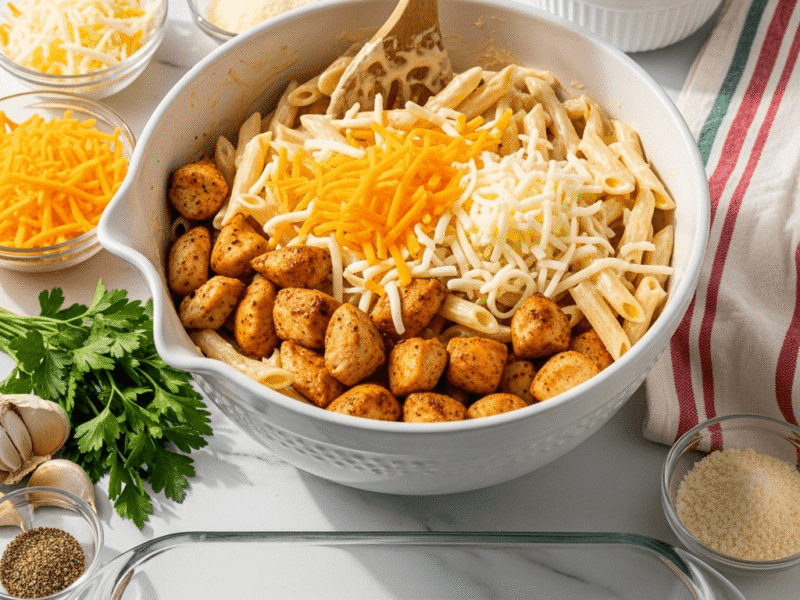
- Combine Everything: Return cooked chicken to the skillet along with any accumulated juices. Add drained pasta and toss everything together using tongs, ensuring every piece is coated in that gorgeous creamy sauce. Let it all heat through for 2-3 minutes, stirring occasionally.
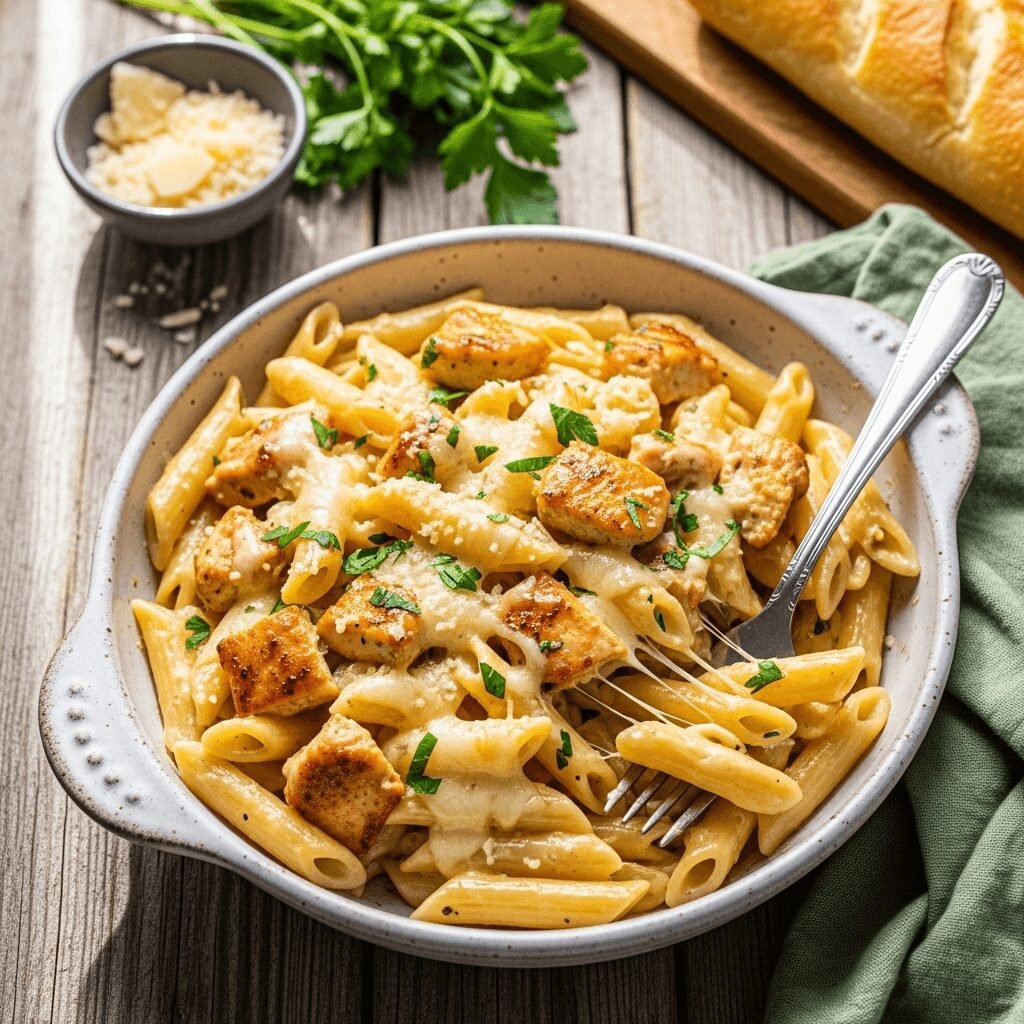
- Finish and Serve: Remove from heat. Taste and adjust seasoning with additional salt and pepper if needed. Garnish with fresh chopped parsley and extra Parmesan cheese. Serve immediately while hot and creamy.
Notes
- Pasta Water is Magic: The starchy pasta water helps thin the sauce while making it silkier. Don’t skip reserving it!
- Don’t Overcook the Chicken: Use a meat thermometer to ensure it reaches 165°F, then remove it promptly to avoid dry, rubbery chicken.
- Fresh Garlic Matters: Jarred minced garlic can become bitter when sautéed. Fresh garlic delivers the best flavor.
- Control the Heat: Keep the heat at medium-low when adding cheese to prevent the sauce from breaking or becoming grainy.
- Customize Your Spice Level: Add red pepper flakes for heat, or omit them for a milder version kids will love.
1⅓ cups (approximately)
- Prep Time: 10 minutes
- Cook Time: 20 minutes
- Category: Dinner
- Method: Stovetop
- Cuisine: Italian-American
Nutrition
- Serving Size: 1⅓ cups (approximately)
- Calories: 612
- Sugar: 3g
- Sodium: 748mg
- Fat: 31g
- Saturated Fat: 16g
- Unsaturated Fat: 12g
- Trans Fat: 0g
- Carbohydrates: 45g
- Fiber: 2g
- Protein: 38g
- Cholesterol: 142mg
Nutrition information is approximate and calculated per serving based on the ingredients listed.
Tips & Variations: Make It Your Own
One of the best things about this recipe is how easily it adapts to your preferences and what you have on hand.
Vegetable Additions: Boost nutrition by adding spinach, sun-dried tomatoes, broccoli florets, or mushrooms. Add hearty vegetables like broccoli with the chicken; stir in spinach at the very end so it just wilts into the sauce.
Spice It Up: If you love heat, increase the red pepper flakes, add a pinch of cayenne, or drizzle with hot sauce before serving. For a smoky kick, try adding a teaspoon of smoked paprika to the chicken seasoning.
Lighter Version: Substitute half-and-half for heavy cream and reduce the cheese by one-third. You’ll still get great flavor with fewer calories. Greek yogurt (stirred in at the end off heat) can also add creaminess with extra protein.
Different Proteins: This recipe works beautifully with shrimp, Italian sausage, or even leftover rotisserie chicken. Adjust cooking times accordingly—shrimp only needs 3-4 minutes, while sausage should be fully cooked through.
Cheese Variations: Experiment with different cheese combinations like Gruyère, fontina, or white cheddar. Each brings its own unique flavor profile to the dish.
Herb Swap: Fresh basil, thyme, or oregano can replace or complement the Italian seasoning. Add fresh herbs at the end for the brightest flavor.
Make It Gluten-Free: Simply use your favorite gluten-free pasta and ensure your chicken broth is certified gluten-free.
Pro Chef Tips: Restaurant-Quality Results
These professional techniques will take your pasta from good to absolutely incredible:
Room Temperature Chicken: Take chicken out of the refrigerator 15-20 minutes before cooking. Room temperature protein cooks more evenly and develops better color.
Don’t Crowd the Pan: If your skillet isn’t large enough, cook the chicken in two batches. Overcrowding creates steam instead of that beautiful golden sear.
Low and Slow for Cheese: Always add cheese over low heat and stir constantly. High heat causes proteins in cheese to seize up, creating a grainy, separated sauce instead of silky smoothness.
Finish Pasta in the Sauce: Professional chefs always finish cooking pasta directly in the sauce for 1-2 minutes. This allows the pasta to absorb flavors and helps the sauce cling better.
Season in Layers: Don’t just season at the end. Season the chicken, taste the sauce before adding pasta, then do a final seasoning adjustment. This builds complex, well-rounded flavor.
The Butter Finish: For restaurant-level richness, stir in an extra tablespoon of cold butter at the very end, off heat. This creates a glossy, luxurious finish (this technique is called “mounting” the sauce).
Grate Your Own Cheese: Pre-shredded cheese contains cellulose (an anti-caking agent) that prevents smooth melting. Spending two extra minutes grating your own makes a noticeable difference.
Common Mistakes to Avoid
Learn from these frequent pitfalls to ensure perfect results every time:
Overcooking the Chicken: Dry, rubbery chicken ruins the dish. Use a meat thermometer and remove chicken the moment it reaches 165°F. Carryover cooking will bring it to perfect doneness while it rests.
Adding Cheese to Boiling Sauce: High heat causes cheese to break and become grainy or stringy. Always reduce to low heat before adding any cheese, and stir constantly while it melts.
Not Reserving Pasta Water: That starchy water is your secret weapon for perfect sauce consistency. Always save at least a cup before draining—you can’t add it back later!
Skipping the Pasta Water Salt: Underseasoned pasta tastes bland even with a flavorful sauce. Your pasta water should taste like the sea—generously salted.
Using Pre-Minced Garlic: While convenient, jarred garlic can taste bitter and harsh when cooked, especially in a garlic-forward recipe like this. Fresh garlic takes minutes to mince and delivers incomparably better flavor.
Letting the Sauce Sit Too Long: Cream-based pasta sauces thicken considerably as they cool. Serve immediately, or thin with a splash of pasta water or broth when reheating.
Storage & Meal Prep: Keeping It Fresh
Refrigerator Storage: Transfer cooled leftovers to an airtight container and refrigerate for up to 3-4 days. The pasta will absorb sauce as it sits, which actually makes the flavors even more intense.
Reheating Instructions: The microwave works, but stovetop reheating gives better results. Place pasta in a skillet over medium-low heat, add 2-3 tablespoons of chicken broth, cream, or milk, and stir gently until heated through. The added liquid brings back that creamy consistency.
Avoiding Dry Leftovers: Pasta naturally absorbs moisture as it sits. When storing, slightly undercook your pasta (by about 1 minute) if you know you’ll have leftovers. Add extra sauce if possible, or toss with a little olive oil before storing.
Portion Control: Store in individual portions for quick grab-and-go lunches. Single servings reheat more evenly and make meal planning effortless.
Make-Ahead & Freezer Notes
Make-Ahead Strategy: You can prep components ahead to speed up weeknight cooking. Cut and season chicken, store refrigerated for up to 24 hours. Mince garlic and grate cheese, storing separately. When ready to cook, everything comes together quickly.
Partial Make-Ahead: Cook the chicken completely, then refrigerate. When ready to serve, make fresh sauce and pasta, adding the pre-cooked chicken at the end. This gives you fresher flavor than freezing the complete dish.
Freezer Instructions: While cream-based pasta dishes can be frozen, the texture may change slightly. If freezing, slightly undercook the pasta and use less cream initially. Freeze in airtight containers for up to 2 months. Thaw overnight in refrigerator.
Best Reheating from Frozen: Thaw completely, then reheat on the stovetop over medium-low heat, adding ¼ cup of cream or milk to refresh the sauce. Stir frequently and be patient—rushing with high heat will break the sauce.
Honest Assessment: This dish truly tastes best when freshly made, but it’s absolutely acceptable for meal prep. The convenience often outweighs minor texture changes, especially for busy weeks.
Serving Suggestions: Complete the Meal
This rich, creamy pasta pairs beautifully with lighter, fresher accompaniments:
Salads: A crisp Caesar salad, simple arugula salad with lemon vinaigrette, or classic Italian chopped salad provides refreshing contrast to the creamy pasta.
Garlic Bread: You can never have too much garlic! Crusty garlic bread or cheesy garlic knots are perfect for soaking up every drop of that delicious sauce.
Roasted Vegetables: Roasted broccoli, asparagus, or Brussels sprouts add color, nutrition, and a slight char that complements the creamy richness.
Wine Pairing: A crisp white wine like Pinot Grigio or Sauvignon Blanc cuts through the richness beautifully. For red wine lovers, a light Pinot Noir works wonderfully.
Simple Sides: Steamed green beans with lemon, roasted cherry tomatoes, or sautéed zucchini keep things simple while adding vegetables to your plate.
Bread Options: Italian ciabatta, focaccia, or a rustic baguette are perfect for wiping your plate clean (no judgment—we all do it!).
FAQs: Your Questions Answered
Can I use chicken thighs instead of breast?
Absolutely! Boneless, skinless chicken thighs are more forgiving and stay juicy even if slightly overcooked. They add richer flavor too. Use the same quantity and cooking method, though thighs may need an extra minute or two to reach 165°F internal temperature.
What if I don’t have heavy cream?
Half-and-half works but creates a thinner sauce—you may need to simmer it longer or add extra cheese to thicken. In a pinch, whole milk mixed with 2 tablespoons of cream cheese can approximate heavy cream’s richness.
Can I make this with leftover rotisserie chicken?
Yes! This is a fantastic way to use rotisserie chicken. Skip step 2 and add shredded rotisserie chicken (about 3 cups) when you return the cooked chicken to the skillet. It just needs to heat through.
Why is my sauce grainy or separated?
This happens when cheese is added over too-high heat. Always reduce to low heat before adding cheese, and stir constantly. If it does separate, try whisking in a tablespoon of cream off heat—sometimes you can bring it back together.
Can I add vegetables to this recipe?
Definitely! Spinach, sun-dried tomatoes, broccoli, mushrooms, or peas all work wonderfully. Add heartier vegetables like broccoli with the chicken; stir in delicate greens like spinach at the very end.
How do I prevent the pasta from being too dry?
Reserve pasta water before draining—it’s your insurance policy! Add it tablespoon by tablespoon if the sauce seems too thick. When storing leftovers, toss with a little extra sauce or olive oil.
Is this recipe kid-friendly?
Very! The creamy, cheesy sauce appeals to most children. Omit the red pepper flakes for sensitive palates, and consider cutting the chicken into smaller pieces for younger kids. Many parents report this becoming a family favorite that even picky eaters request.
Conclusion: Your New Family Favorite Awaits
There’s a reason this Cheesy Garlic Chicken Pasta has become such a beloved recipe—it delivers everything you want in a weeknight dinner without any of the stress. In just 30 minutes, using one pan and everyday ingredients, you can create a restaurant-quality meal that brings smiles to everyone at your table.
The combination of tender, garlicky chicken, perfectly cooked pasta, and that luxuriously creamy cheese sauce is pure comfort food magic. Whether you’re cooking for picky kids, impressing dinner guests, or treating yourself after a long day, this recipe rises to every occasion. And the best part? Once you make it a few times, you’ll have it memorized—no recipe card needed!
So grab your skillet, heat up that stove, and get ready to create something absolutely delicious. Your family is going to love you even more than they already do (if that’s even possible). And don’t forget to take a photo before everyone digs in—this dish is definitely Pinterest-worthy!