
There’s something absolutely magical about a bubbling, golden-brown casserole fresh from the oven, and this Cheesy Broccoli Casserole is the ultimate crowd-pleaser that never goes out of style. This creamy, comforting side dish combines tender broccoli florets with a rich, velvety cheese sauce, all topped with buttery breadcrumbs or crispy fried onions that add the perfect crunch. It’s the kind of recipe that makes vegetables taste so indulgent, even the pickiest eaters will ask for seconds!
Perfect for holiday gatherings, Sunday dinners, potlucks, or even a cozy weeknight meal, this casserole bridges the gap between wholesome and downright delicious. Whether you’re serving it alongside roasted turkey at Thanksgiving, pairing it with grilled steak for a family dinner, or bringing it to a neighborhood potluck, this dish consistently steals the show. The best part? It comes together in under an hour with simple ingredients you probably already have in your kitchen. This is comfort food that feels like a warm hug on a plate, and once you make it, it’ll become a regular in your recipe rotation.
History / Background
Broccoli casserole has deep roots in American comfort food culture, particularly in the Southern United States where casseroles reign supreme as the ultimate potluck and church supper staple. The concept of vegetable casseroles became increasingly popular in the 1950s and 1960s when convenience cooking took center stage in American kitchens. Home cooks were discovering creative ways to make vegetables more appealing to their families, and what better way than smothering them in creamy, cheesy sauces?
The classic broccoli casserole we know and love today likely evolved from earlier “cream of” casserole recipes that utilized Campbell’s condensed soups – a revolutionary product that simplified home cooking. As food trends progressed, cooks began creating homemade cheese sauces using basic ingredients like butter, flour, milk, and cheese, elevating these simple vegetable bakes into restaurant-quality side dishes.
Interestingly, broccoli itself wasn’t widely consumed in America until Italian immigrants introduced it in the early 20th century. By the 1920s, it was being commercially grown in California, and by mid-century, it had become a household staple. The marriage of broccoli with cheese sauce was a match made in culinary heaven – the mild, slightly bitter notes of broccoli perfectly balanced by rich, salty cheese.
Today, cheesy broccoli casserole represents nostalgic comfort food for many Americans. It’s the dish that reminds us of grandmother’s Sunday dinners, holiday tables surrounded by family, and the simple pleasure of home-cooked meals. Regional variations exist across the country – some families swear by Ritz cracker toppings, others prefer French fried onions, and some add rice or chicken to make it a complete meal. But the heart of the recipe remains the same: tender broccoli enveloped in a luxurious cheese sauce that makes everyone at the table smile.
Why You’ll Love This Recipe
This Cheesy Broccoli Casserole isn’t just another side dish – it’s the recipe that will have your family requesting it by name at every gathering. The combination of creamy, cheesy goodness with the satisfying crunch of the topping creates textural perfection in every bite. What makes this version truly special is the balance between indulgence and substance – you’re getting real vegetables in a preparation that feels like a treat, not a chore.
Here’s why this recipe deserves a permanent spot in your collection:
- Incredibly Easy – No complicated techniques required; if you can stir and bake, you can master this dish
- Family-Friendly – Even vegetable skeptics will clean their plates when broccoli is this delicious
- Make-Ahead Magic – Assemble hours or even a day in advance, then simply pop it in the oven before serving
- Budget-Friendly – Uses affordable, everyday ingredients without sacrificing flavor
- Crowd-Pleaser – Perfect for feeding a group; easily doubles or triples for larger gatherings
- Versatile – Works beautifully as a side dish or add protein to make it a main course
- Customizable – Endless variations to suit dietary preferences and taste preferences
- Reliable Results – This recipe works perfectly every single time, making you look like a kitchen superstar
- Comfort Food Excellence – Delivers that cozy, homestyle satisfaction we all crave
- Quick Prep – Only about 15 minutes of hands-on work before the oven does the rest
Ingredient Notes
Let’s break down what makes this casserole absolutely irresistible and talk about how each ingredient contributes to the final masterpiece:
Broccoli: Fresh or frozen both work beautifully here. Fresh broccoli gives you slightly more control over texture, while frozen is incredibly convenient and often more budget-friendly. If using frozen, there’s no need to thaw – just drain well. Look for bright green florets without yellowing.
Cheese: Sharp cheddar is the classic choice and provides robust flavor, but feel free to experiment with Gruyère for sophistication, Monterey Jack for creaminess, or a Mexican blend for a southwestern twist. Pre-shredded cheese works in a pinch, but freshly grated melts more smoothly and tastes infinitely better.
Butter: Creates the base of our cheese sauce (the roux) and adds rich flavor. Unsalted butter lets you control the salt level, but salted works if that’s what you have.
All-Purpose Flour: Thickens the cheese sauce to perfect creamy consistency. For gluten-free needs, substitute with cornstarch or a gluten-free flour blend.
Milk or Cream: The liquid base of your sauce. Whole milk creates a nice balance, while heavy cream makes it extra indulgent. For lighter versions, 2% milk works, though the sauce will be slightly thinner.
Sour Cream or Cream Cheese: Adds tangy richness and helps create that signature creamy texture. Either works wonderfully – cream cheese makes it slightly thicker and richer.
Seasonings: Garlic powder, onion powder, salt, pepper, and a pinch of nutmeg elevate the flavors. Don’t skip the nutmeg – it’s the secret ingredient that adds mysterious depth!
Topping: Panko breadcrumbs mixed with melted butter create incredible crunch. Ritz crackers, French fried onions, or even crushed cornflakes make excellent alternatives.
Substitutions: For dairy-free, use plant-based butter, milk, and cheese. For low-carb, skip the topping or use crushed pork rinds. Add cooked chicken or ham to make it a complete meal.
Equipment Needed
You don’t need a fancy kitchen to make this showstopping casserole. Here’s what you’ll want to have on hand:
- Large pot or Dutch oven – For blanching fresh broccoli or cooking frozen broccoli
- Medium saucepan – For making the cheese sauce from scratch
- Whisk – Essential for creating a smooth, lump-free sauce
- 9×13-inch baking dish – The perfect size for this recipe; ceramic, glass, or metal all work
- Colander or strainer – For draining cooked broccoli thoroughly
- Measuring cups and spoons – For accurate ingredient measurements
- Mixing bowl – For combining the topping ingredients
- Box grater – If grating cheese from a block (highly recommended!)
- Wooden spoon or silicone spatula – For stirring the sauce
- Aluminum foil – For covering the casserole if the top browns too quickly
- Oven mitts – Because safety first when handling hot dishes!

Cheesy Broccoli Casserole Recipe
- Total Time: 50 minutes
- Yield: 8 servings 1x
- Diet: Gluten Free
Description
This creamy, cheesy broccoli casserole is the ultimate comfort food side dish featuring tender broccoli smothered in a rich homemade cheese sauce and topped with golden, buttery breadcrumbs. Perfect for holidays, potlucks, or weeknight dinners!
Ingredients
For the Casserole:
- 6 cups fresh broccoli florets (about 2 large heads) or 2 pounds frozen broccoli
- 4 tablespoons unsalted butter
- 3 tablespoons all-purpose flour
- 2 cups whole milk, warmed
- 1/2 cup sour cream or softened cream cheese
- 2 1/2 cups sharp cheddar cheese, freshly grated (divided)
- 1 teaspoon garlic powder
- 1/2 teaspoon onion powder
- 1/4 teaspoon ground nutmeg
- 1 teaspoon salt (adjust to taste)
- 1/2 teaspoon black pepper
- 1/4 teaspoon paprika (optional, for color)
For the Topping:
- 1 1/2 cups panko breadcrumbs (or crushed Ritz crackers)
- 3 tablespoons unsalted butter, melted
- 1/4 cup grated Parmesan cheese
- 1/4 teaspoon garlic powder
- Fresh parsley for garnish (optional)
Instructions
- Preheat and Prepare: Preheat your oven to 350°F (175°C). Lightly grease a 9×13-inch baking dish with butter or cooking spray and set aside.
- Cook the Broccoli: Bring a large pot of salted water to a rolling boil. Add broccoli florets and cook for 3-4 minutes until bright green and just tender-crisp (they’ll continue cooking in the oven). If using frozen broccoli, cook according to package directions. Drain thoroughly in a colander and press gently to remove excess moisture. Pat dry with paper towels if needed. Set aside.
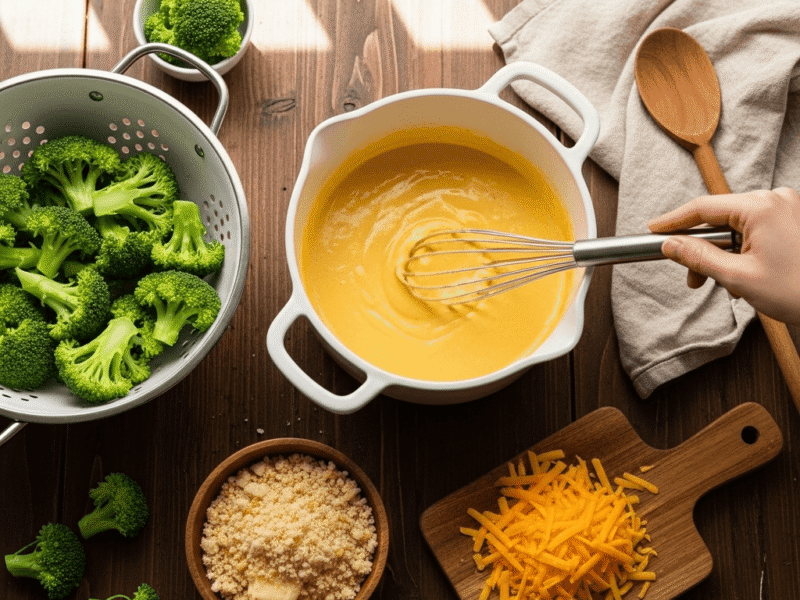
- Make the Cheese Sauce: In a medium saucepan over medium heat, melt the 4 tablespoons of butter. Once melted and bubbling, whisk in the flour to create a roux. Cook for 1-2 minutes, whisking constantly, until the mixture is golden and smells slightly nutty. This removes the raw flour taste.
- Add the Milk: Gradually pour in the warmed milk while whisking continuously to prevent lumps. Keep whisking until the mixture is completely smooth. Continue cooking, stirring frequently, for 4-5 minutes until the sauce thickens enough to coat the back of a spoon.
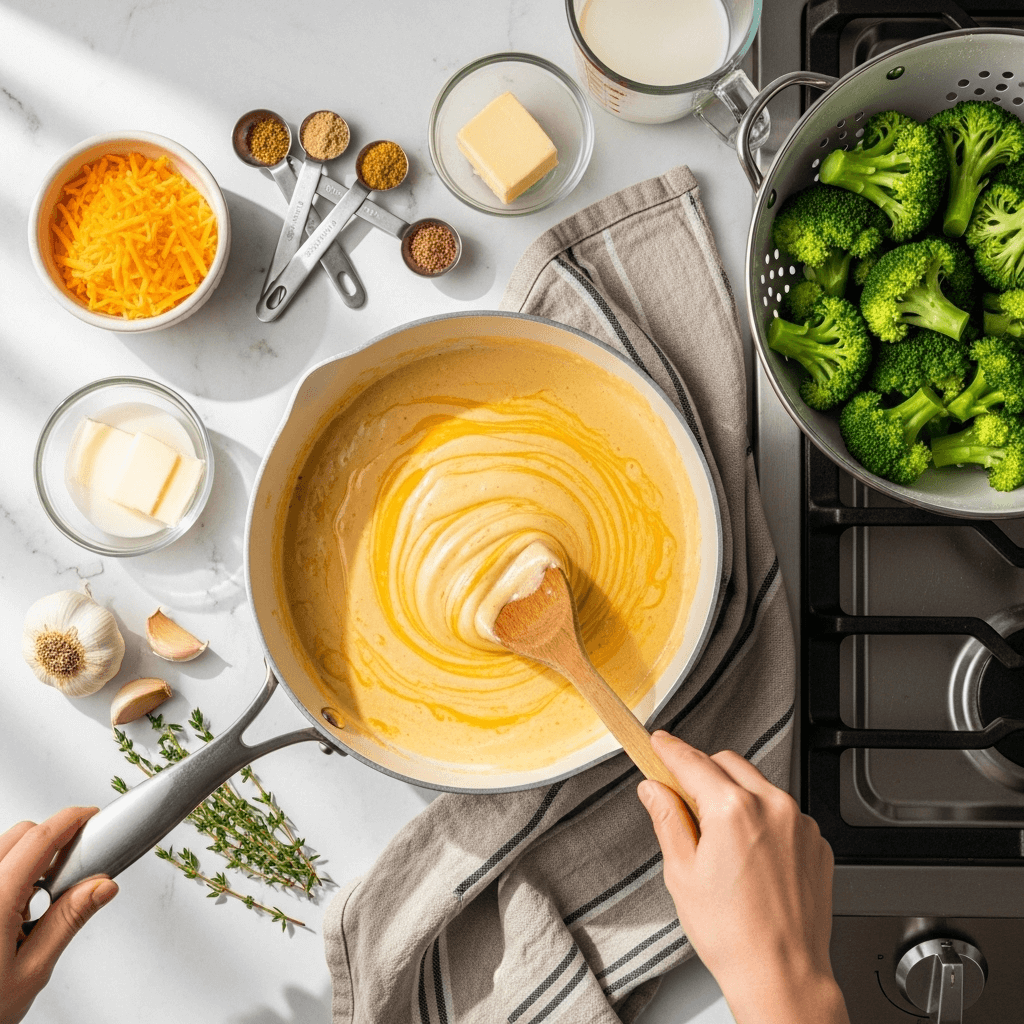
- Create Creamy Perfection: Reduce heat to low. Stir in the sour cream (or cream cheese) until fully incorporated and smooth. Add 2 cups of the grated cheddar cheese, reserving 1/2 cup for later. Stir until the cheese is completely melted and the sauce is velvety smooth.
- Season to Perfection: Add garlic powder, onion powder, nutmeg, salt, pepper, and paprika (if using) to the cheese sauce. Taste and adjust seasonings as needed. The sauce should be well-seasoned and flavorful.
- Combine: Add the drained broccoli to the cheese sauce and gently fold until every piece is coated with the creamy mixture. Transfer to your prepared baking dish, spreading evenly. Sprinkle the reserved 1/2 cup of cheddar cheese over the top.
- Prepare the Topping: In a small bowl, combine panko breadcrumbs, melted butter, Parmesan cheese, and garlic powder. Mix until the breadcrumbs are evenly coated with butter and resemble wet sand.
- Top and Bake: Evenly distribute the breadcrumb mixture over the broccoli and cheese layer, creating a uniform coating. Bake uncovered for 25-30 minutes until the casserole is hot and bubbling around the edges and the topping is golden brown and crispy.
- Rest and Serve: Remove from the oven and let rest for 5 minutes before serving. This allows the sauce to set slightly for easier serving. Garnish with fresh parsley if desired and serve hot.
Notes
- Broccoli Prep: Don’t overcook the broccoli in step 2 – it should still have a slight bite since it continues cooking in the oven. Mushy broccoli makes for a watery casserole.
- Sauce Thickness: If your sauce seems too thick, add milk a tablespoon at a time. Too thin? Let it simmer a bit longer or add more cheese.
- Cheese Options: Mix different cheeses for complex flavor – try half cheddar and half Gruyère, or add a handful of Parmesan for extra depth.
- Make It Gluten-Free: Use gluten-free flour for the roux and gluten-free breadcrumbs (or crushed gluten-free crackers) for the topping.
- Preventing Burning: If the topping browns too quickly, tent loosely with aluminum foil for the remaining baking time.
- Extra Veggies: Add sautéed mushrooms, diced bell peppers, or cauliflower florets for variety.
- Prep Time: 15 minutes
- Cook Time: 35 minutes
- Category: Side Dish
- Method: Baking
- Cuisine: American
Nutrition
- Serving Size: 1 cup (1/8 of recipe)
- Calories: 342
- Sugar: 5g
- Sodium: 587mg
- Fat: 24g
- Saturated Fat: 14g
- Unsaturated Fat: 8g
- Trans Fat: 0g
- Carbohydrates: 20g
- Fiber: 3g
- Protein: 14g
- Cholesterol: 68mg
Nutrition information is approximate and will vary based on specific ingredients used and portion sizes.
Tips & Variations
Spicy Kick: Add 1/2 teaspoon cayenne pepper to the cheese sauce or sprinkle red pepper flakes on top before baking. Diced jalapeños mixed into the broccoli add fresh heat.
Loaded Casserole: Stir in cooked, crumbled bacon, diced ham, or shredded rotisserie chicken to transform this side dish into a hearty main course. Add cooked rice for even more substance.
Healthier Version: Use low-fat milk and reduced-fat cheese. Replace half the breadcrumb topping with crushed almonds or walnuts for healthy fats and extra crunch. Greek yogurt can substitute for sour cream.
Different Vegetables: Mix in cauliflower florets, carrots, or green beans. You can also make this entirely with cauliflower for a different twist on the classic.
Extra Creamy: Add an extra 1/4 cup of cream cheese or substitute half the milk with heavy cream for ultra-rich, restaurant-quality sauce.
Crunchy Toppings: Try French fried onions, crushed cornflakes, or crushed potato chips instead of breadcrumbs. Each provides a different flavor profile and texture.
Herb Enhancement: Fresh thyme, dill, or chives mixed into the cheese sauce add bright, fresh notes. A teaspoon of Dijon mustard adds tangy complexity.
Southwestern Style: Use pepper jack cheese, add corn and black beans, season with cumin and chili powder, and top with crushed tortilla chips.
Make It Fancy: Use Gruyère and fontina cheeses, add sautéed shallots, and top with homemade herbed breadcrumbs for an elegant dinner party version.
Pro Chef Tips
Temperature Matters: Warm your milk before adding it to the roux. Cold milk causes the butter to solidify and creates lumps that are difficult to smooth out. Thirty seconds in the microwave makes all the difference.
Proper Roux Technique: Cook your butter and flour mixture for the full 1-2 minutes. This not only removes the raw flour taste but also develops a subtle nutty flavor that adds depth to your sauce. The roux should smell slightly toasty and look like wet sand.
Cheese Melting Secret: Always add cheese off the heat or on very low heat. High temperatures cause cheese proteins to separate, resulting in a grainy, broken sauce. Remove from heat, add cheese, stir until just melted, and you’ll get silky perfection every time.
Moisture Control: This is critical for casserole success. After draining your broccoli, spread it on a clean kitchen towel or paper towels and pat completely dry. Excess moisture dilutes your beautiful cheese sauce and creates a watery casserole. For frozen broccoli, squeeze out moisture in a kitchen towel.
Layering for Even Cooking: Cut broccoli florets into similar-sized pieces (about 1-2 inches) so everything cooks evenly. Larger pieces will be undercooked while smaller ones turn mushy.
Grate Your Own Cheese: Pre-shredded cheese contains anti-caking agents (usually cellulose) that prevent smooth melting. Spend three extra minutes grating a block of cheese for dramatically better results – your sauce will be silkier and more flavorful.
Season in Layers: Salt your blanching water, season your cheese sauce, and season your topping. This builds complex flavor throughout the dish rather than relying on one blast of salt at the end.
The Nutmeg Secret: Professional chefs use nutmeg in cheese sauces and creamy dishes because it enhances and deepens the flavor of dairy without being identifiable. Just a pinch transforms your sauce from good to extraordinary.
Common Mistakes to Avoid
Overcooking the Broccoli: The number one mistake! Broccoli that’s boiled too long becomes mushy and waterlogged. Remember, it continues cooking in the oven, so keep it bright green and slightly firm during the initial cooking. Overcooked broccoli also releases more moisture, leading to a soupy casserole.
Lumpy Cheese Sauce: This usually happens from adding cold milk to the roux too quickly or not whisking enough. Always warm your milk, add it gradually while whisking constantly, and be patient. If lumps do form, an immersion blender can save the day, or strain the sauce through a fine-mesh sieve.
Skipping the Roux Cooking Time: Adding liquid before your flour is properly cooked leaves a raw, pasty flour taste in your sauce. Give that butter-flour mixture the full 1-2 minutes over medium heat until it smells nutty and toasty.
Using Too High Heat: High heat causes cheese sauces to break and become grainy or oily. Keep your heat at medium when making the sauce and reduce to low when adding cheese. Patience equals perfect texture.
Not Draining Broccoli Thoroughly: Wet broccoli equals watery casserole. Take the extra minute to really dry your broccoli after cooking. This simple step prevents that pool of liquid that sometimes forms under the casserole.
Overbaking: Once the topping is golden brown and the edges are bubbling, it’s done. Continuing to bake dries out the sauce and makes the broccoli mushy. Set a timer and check at 25 minutes.
Forgetting to Let It Rest: Cutting into the casserole immediately after removing from the oven causes the sauce to run everywhere. That 5-minute rest allows everything to set up for neat, beautiful servings.
Storage & Meal Prep
Refrigerator Storage: Let the casserole cool completely to room temperature, then cover tightly with plastic wrap or aluminum foil. Store in the refrigerator for up to 4 days. The flavors actually deepen and meld beautifully over the first day, making leftovers incredibly delicious.
Reheating from Refrigerated: Preheat your oven to 350°F. Cover the casserole with foil to prevent the topping from burning and bake for 20-25 minutes until heated through. For individual portions, microwave on medium power in 1-minute intervals, stirring between, until hot. The microwave won’t keep the topping as crispy, but it’s quick and convenient.
Portioning for Easy Leftovers: After the casserole cools, cut it into individual portions and store in airtight containers. This makes weekday lunches or quick dinners a breeze. Each portion reheats in about 2 minutes in the microwave.
Maintaining Texture: The topping will soften during storage as it absorbs moisture from the casserole. For maximum crispness in leftovers, remove the top layer before reheating and add fresh breadcrumb topping, then broil for 2-3 minutes until golden.
Reviving Leftovers: If the casserole seems a bit dry after storage, drizzle a tablespoon or two of milk over each portion before reheating. This restores creaminess. Alternatively, top with a little extra shredded cheese before reheating for added richness.
Make-Ahead & Freezer Notes
Advance Preparation (Recommended Method): This casserole is a make-ahead champion! Assemble completely through step 7 (before adding the topping), cover tightly with plastic wrap and then foil, and refrigerate for up to 24 hours. When ready to bake, let it sit at room temperature for 20-30 minutes, add the topping, and bake as directed, adding 5-10 extra minutes to the baking time since it’s starting cold.
Freezing Unbaked: Assemble the casserole (without the topping) in a freezer-safe, oven-safe dish. Wrap tightly with plastic wrap and then two layers of heavy-duty aluminum foil. Label with the date and freeze for up to 3 months. To bake, thaw completely in the refrigerator overnight (this takes 24 hours), prepare the topping, and bake as directed.
Freezing Individual Portions: After baking and cooling, cut into portions and wrap each piece individually in plastic wrap, then place in a freezer bag. Freeze for up to 2 months. Reheat individual portions straight from frozen in the microwave (4-5 minutes, checking and stirring halfway) or covered in a 350°F oven (about 30 minutes).
Freezing Baked Casserole: While you can freeze the fully baked casserole, the texture of the broccoli may become slightly softer after freezing and reheating. The cheese sauce holds up beautifully, but vegetables lose some structural integrity. For best results, freeze unbaked.
Best Reheating Method from Frozen: Thaw completely in the refrigerator overnight, then reheat covered at 350°F for 25-30 minutes until hot throughout. Remove the cover for the last 5 minutes if you want to re-crisp the topping, or add fresh breadcrumb topping and broil for 2-3 minutes.
Holiday Prep Strategy: Make this casserole two days before your big dinner. Assemble completely, refrigerate, and simply pop it in the oven while your main dish rests. This frees up valuable stovetop space and reduces day-of stress significantly.
Serving Suggestions
This versatile casserole pairs beautifully with just about any main course, making it perfect for various occasions:
Holiday Dinners: Serve alongside roasted turkey, honey-glazed ham, prime rib, or herb-crusted pork loin. It’s a Thanksgiving and Christmas table staple that complements rich, savory main courses perfectly.
Weeknight Proteins: Pairs wonderfully with simple grilled chicken breasts, pan-seared salmon, baked cod, pork chops, or even meatloaf. The creamy richness balances lighter proteins beautifully.
Complementary Sides: Round out your meal with garlic mashed potatoes, buttery dinner rolls, cranberry sauce, a crisp green salad with vinaigrette, roasted carrots, or wild rice pilaf. For a carb-conscious meal, pair with cauliflower mash and a simple protein.
Beverages: This rich, creamy dish pairs nicely with crisp white wines like Chardonnay or Sauvignon Blanc, light beers, sparkling water with lemon, or sweet tea for a Southern touch.
Making It a Main Course: Add 2-3 cups of cooked, diced chicken, ham, or turkey to the casserole before baking. Serve with crusty bread and a simple salad for a complete, satisfying meal.
Potluck Presentation: Transport in the baking dish wrapped in a towel to keep warm. Bring extra cheese and breadcrumbs in case you need to refresh the topping after reheating at your destination.
Brunch Addition: This casserole makes a surprising but delightful addition to brunch spreads. Serve alongside quiche, breakfast casseroles, fresh fruit, and pastries for a veggie option that’s more interesting than standard breakfast sides.
FAQs Section
Can I use frozen broccoli instead of fresh?
Absolutely! Frozen broccoli works perfectly and is often more convenient and budget-friendly. There’s no need to thaw it first – just cook according to package directions and drain thoroughly, pressing out excess moisture with paper towels or a clean kitchen towel. The key is removing as much water as possible to prevent a watery casserole. Frozen broccoli may result in a slightly softer texture than fresh, but the flavor is just as delicious.
Why is my cheese sauce grainy or separated?
This typically happens when cheese is added to sauce that’s too hot or cooked at too high a temperature. Cheese proteins tighten and separate when overheated, causing that unpleasant grainy texture. Always remove your sauce from heat or reduce to the lowest setting before adding cheese, then stir gently until just melted. Using freshly grated cheese instead of pre-shredded also helps significantly, as pre-shredded contains anti-caking agents that interfere with smooth melting.
Can I make this casserole dairy-free?
Yes! Use plant-based butter (like Earth Balance), your favorite non-dairy milk (oat milk or cashew milk work especially well for creaminess), and dairy-free cheese shreds. Nutritional yeast can also add cheesy flavor. The texture will be slightly different from traditional cheese sauce, but it can still be delicious. Some dairy-free cheeses melt better than others, so choose a brand specifically labeled as “melts” or “shreds” for best results.
How do I prevent the top from burning?
If your topping is browning too quickly while the casserole is still heating through, tent it loosely with aluminum foil for the remainder of the baking time. You can also place the baking dish on a lower oven rack. If you know your oven runs hot, reduce the temperature to 325°F and bake for a few extra minutes. Alternatively, bake covered for 20 minutes, then uncover for the final 10-15 minutes.
Can I prepare this casserole in a slow cooker?
While not traditional, you can adapt this recipe for the slow cooker. Combine cooked broccoli with cheese sauce in a greased slow cooker, cover, and cook on LOW for 2-3 hours or HIGH for 1-1.5 hours. Add the breadcrumb topping during the last 30 minutes with the lid slightly ajar, or for a crispy topping, transfer to a baking dish and broil for 3-4 minutes before serving. The slow cooker method works well for potlucks and parties.
What’s the best cheese to use?
Sharp cheddar provides the best flavor and is traditional, but the beauty of this recipe is its versatility. Extra-sharp cheddar offers even more robust flavor. Gruyère adds sophistication and melts beautifully. Fontina is creamy and mild. Pepper jack adds spicy kick. Combining cheeses creates complex flavor – try a mix of sharp cheddar and Gruyère, or cheddar and Monterey Jack. Avoid cheeses that don’t melt well, like fresh mozzarella or aged Parmesan as the primary cheese.
My casserole came out watery. What went wrong?
The most common culprit is not draining the broccoli thoroughly enough. Broccoli holds a lot of water, especially frozen broccoli. After cooking, drain it in a colander, then press it with paper towels or a clean kitchen towel to remove excess moisture. Other causes include using milk that’s too thin (skim milk makes a thinner sauce), not cooking the roux long enough to thicken properly, or overbaking which causes the sauce to break and release moisture.
Conclusion
There you have it – the ultimate Cheesy Broccoli Casserole that’s guaranteed to become your go-to side dish for every occasion! This recipe combines simplicity with incredible flavor, making vegetables something everyone at your table will actually look forward to eating. The creamy, cheesy sauce, tender broccoli, and crispy golden topping create a trifecta of textures and flavors that’s simply irresistible.
Whether you’re preparing this for a weeknight dinner, bringing it to your next potluck, or serving it as part of your holiday feast, you can count on this casserole to deliver comfort, satisfaction, and compliments every single time. The make-ahead convenience means you can check one dish off your to-do list while still serving something that tastes homemade and special.