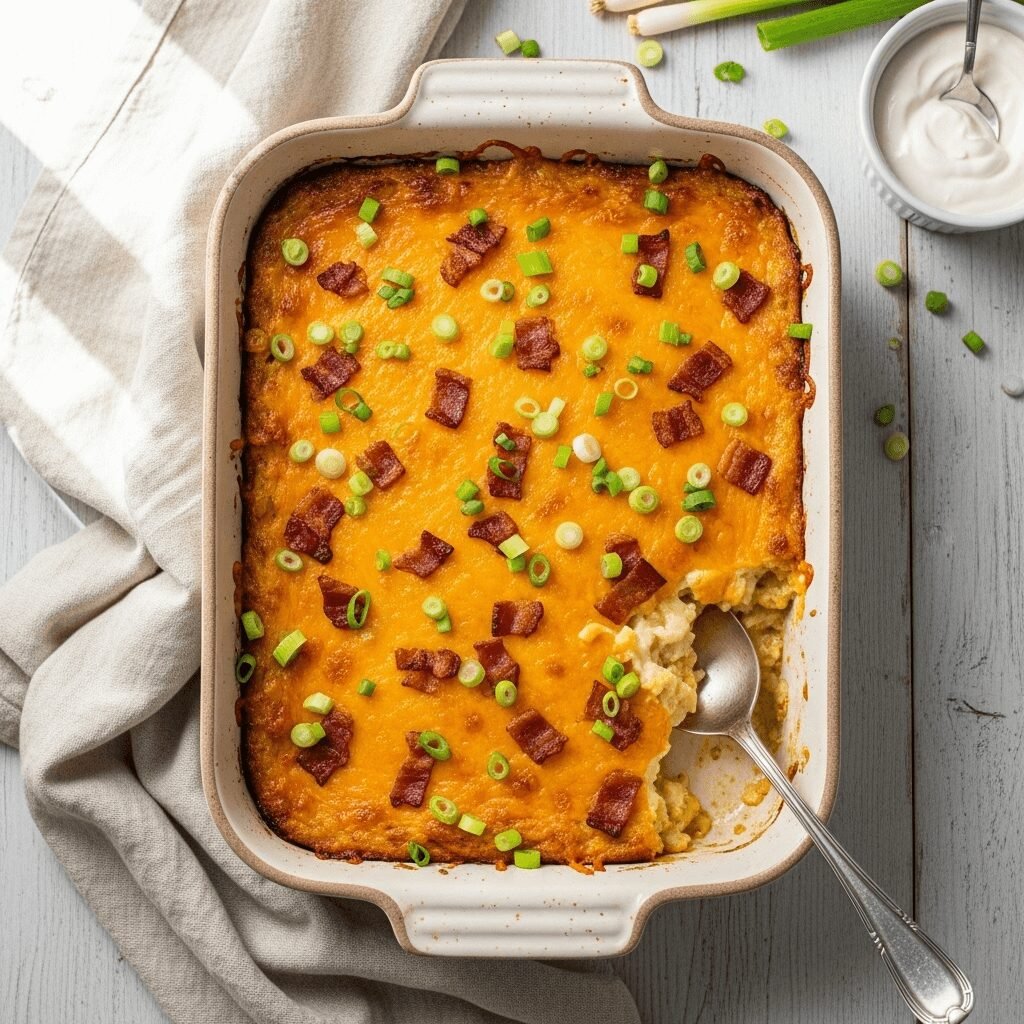
There’s something magical about the combination of fluffy potatoes, melted cheese, and crispy bacon all baked together in one glorious dish. This Cheesy Baked Potato Casserole takes everything you love about a classic loaded baked potato and transforms it into a crowd-pleasing casserole that’s perfect for potlucks, holiday gatherings, Sunday dinners, or any time you’re craving serious comfort food.
This easy baked potato casserole is essentially a deconstructed loaded baked potato transformed into a shareable dish that feeds a crowd. Imagine tender potato chunks enveloped in a creamy, cheesy sauce, topped with crispy bacon bits, fresh green onions, and even more cheese. It’s the kind of dish that disappears fast at gatherings and has everyone asking for the recipe.
Whether you’re planning a family dinner, hosting a holiday feast, bringing a dish to a potluck, or simply meal prepping for the week ahead, this cheesy potato casserole recipe delivers every single time. It’s budget-friendly, uses simple ingredients you probably already have on hand, and requires minimal prep work. Best of all, it tastes like you spent hours in the kitchen when the actual hands-on time is surprisingly minimal.
History / Background
The baked potato casserole has deep roots in American comfort food culture, particularly in the Southern and Midwestern United States. While the exact origin is difficult to pinpoint, this dish evolved from the tradition of “funeral potatoes” or “party potatoes” that became popular in the mid-20th century, especially in Mormon communities and across the American heartland.
The concept of transforming individual baked potatoes into a casserole format emerged from practical necessity. Home cooks wanted to serve the beloved flavors of loaded baked potatoes to large groups without the hassle of individually preparing dozens of potatoes. The casserole format allowed for easier preparation, consistent portions, and the ability to keep the dish warm for extended periods during gatherings.
During the 1950s and 1960s, as casseroles became increasingly popular in American home cooking, creative cooks began experimenting with potato-based versions. The addition of sour cream, cheese, and bacon reflected the growing popularity of “loaded” or “stuffed” baked potatoes in steakhouses and restaurants during this era. What started as a practical solution for feeding crowds quickly became a beloved comfort food classic in its own right.
Today, the cheesy baked potato casserole has earned its place as a staple at church potlucks, holiday tables, family reunions, and weeknight dinners across America. It represents the best of American comfort food: hearty, satisfying, and designed for sharing. Regional variations exist throughout the country, with some cooks adding corn flakes for crunch, others incorporating ham instead of bacon, and some making it even more indulgent with multiple cheese varieties.
Why You’ll Love This Recipe
This cheesy baked potato casserole recipe strikes the perfect balance between impressive presentation and effortless preparation. It’s the kind of dish that looks like you fussed over it for hours, but secretly comes together with minimal effort and simple techniques that even beginner cooks can master confidently.
Here’s why this recipe will become your new favorite:
- Crowd-pleasing comfort food – Everyone loves loaded baked potatoes, and this casserole version is even better
- Budget-friendly ingredients – Uses affordable staples like potatoes, cheese, and sour cream
- Easy make-ahead option – Assemble hours or even a day ahead, then bake when needed
- Perfect for gatherings – Feeds 8-10 people easily and transports well to potlucks
- Customizable recipe – Easily adapt to dietary needs or personal taste preferences
- Minimal hands-on time – Most of the cooking happens in the oven while you relax
- Freezer-friendly – Make double batches and freeze portions for quick future meals
- Kid-approved – Even picky eaters can’t resist this cheesy, creamy combination
- One-dish wonder – Everything bakes together in a single casserole dish for easy cleanup
- Leftover magic – Tastes even better the next day and reheats beautifully
Ingredient Notes
Understanding your ingredients helps you make smart substitutions and achieve the best possible results. Here’s what you need to know about each component:
Russet Potatoes – These starchy potatoes are ideal for this casserole because they become wonderfully fluffy when baked and absorb the creamy sauce beautifully. Yukon Gold potatoes work well too and add a buttery flavor. Avoid waxy red potatoes, which won’t break down properly.
Sour Cream – Provides tanginess and creaminess that’s essential to authentic loaded potato flavor. Full-fat sour cream yields the best texture, but Greek yogurt can substitute for a lighter version. Avoid fat-free versions as they can become watery when baked.
Cream Cheese – Adds richness and helps create that ultra-creamy texture. Make sure it’s softened to room temperature for easy mixing. Neufchâtel (⅓ less fat cream cheese) works in a pinch.
Cheddar Cheese – Sharp cheddar provides the best flavor, but medium cheddar works too. Freshly shredded cheese melts better than pre-shredded (which contains anti-caking agents). A combination of cheddar and Monterey Jack creates amazing flavor depth.
Bacon – Thick-cut bacon offers the best texture and smokiness. You can substitute turkey bacon, or leave it out for a vegetarian version. Pre-cooked bacon bits save time but lack the fresh-cooked flavor.
Green Onions – Add freshness and color. Regular onions are too strong, while chives work as a substitute. The green parts are milder than the white parts.
Butter – Adds richness throughout. Use real butter, not margarine, for authentic flavor. Salted or unsalted both work fine.
Milk or Heavy Cream – Thins the creamy mixture to the perfect consistency. Heavy cream makes it more indulgent, while whole milk keeps it lighter. Avoid skim milk, which can make the sauce thin.
Seasonings – Garlic powder, onion powder, salt, and pepper form the flavor base. Fresh garlic can substitute for garlic powder (use 2-3 cloves, minced). Paprika adds color and subtle smokiness.
Equipment Needed
Having the right tools makes preparation smoother and more enjoyable. Here’s what you’ll need:
- Large pot or Dutch oven – For boiling potatoes
- 9×13-inch baking dish – Standard casserole size that feeds 8-10 people
- Large mixing bowl – For combining the creamy cheese mixture
- Colander – For draining boiled potatoes
- Sharp knife and cutting board – For chopping potatoes, bacon, and green onions
- Large skillet – For cooking bacon until crispy
- Potato masher or fork – Optional, for breaking up potatoes slightly
- Measuring cups and spoons – For accurate ingredient amounts
- Rubber spatula or wooden spoon – For mixing ingredients together
- Aluminum foil – For covering during baking to prevent over-browning
- Oven mitts – For safe handling of hot dishes

Cheesy Baked Potato Casserole Recipe
- Total Time: 1 hour 5 minutes
- Yield: 8-10 servings 1x
- Diet: Gluten Free
Description
This Cheesy Baked Potato Casserole is the ultimate comfort food, combining tender potatoes with a rich, creamy cheese sauce, crispy bacon, and green onions. Perfect for potlucks, holidays, or family dinners, this easy casserole brings all the flavors of a loaded baked potato to your table in one convenient dish.
Ingredients
- 5 pounds russet potatoes, peeled and cut into 1-inch cubes
- 8 slices thick-cut bacon, cooked crispy and crumbled
- 16 ounces sour cream (2 cups)
- 8 ounces cream cheese, softened
- 3 cups sharp cheddar cheese, shredded (divided)
- ½ cup milk or heavy cream
- ½ cup butter, melted
- 1 cup green onions, chopped (divided)
- 3 cloves garlic, minced (or 1 teaspoon garlic powder)
- 1 teaspoon onion powder
- 1 teaspoon salt (adjust to taste)
- ½ teaspoon black pepper
- ½ teaspoon paprika (optional, for color)
- Fresh parsley for garnish (optional)
Instructions
- Preheat and Prep: Preheat your oven to 350°F (175°C). Grease a 9×13-inch baking dish with butter or cooking spray and set aside.
- Cook the Potatoes: Place cubed potatoes in a large pot and cover with cold water. Add 1 tablespoon of salt to the water. Bring to a boil over high heat, then reduce to medium and cook for 12-15 minutes until potatoes are fork-tender but not falling apart. Drain thoroughly in a colander and let steam dry for 2-3 minutes.
- Cook the Bacon: While potatoes are cooking, cook bacon in a large skillet over medium heat until crispy, about 8-10 minutes. Transfer to paper towels to drain, then crumble once cooled. Reserve some for topping.
- Make the Creamy Mixture: In a large mixing bowl, combine softened cream cheese, sour cream, melted butter, and milk. Mix with a hand mixer or whisk until smooth and creamy with no lumps.
- Add Flavorings: Stir in 2 cups of shredded cheddar cheese, ¾ cup of green onions, minced garlic, onion powder, salt, pepper, and paprika. Mix until well combined. Fold in most of the crumbled bacon, reserving some for topping.
- Combine with Potatoes: Gently fold the drained potatoes into the creamy cheese mixture. Stir carefully to coat all potatoes evenly without mashing them completely. Some potatoes can break apart slightly, which is fine and adds to the creaminess.
- Transfer to Baking Dish: Pour the potato mixture into your prepared baking dish and spread evenly. Top with remaining 1 cup of cheddar cheese, reserved bacon crumbles, and remaining green onions.
- Bake: Cover with aluminum foil and bake for 30 minutes. Remove foil and bake for an additional 15 minutes until the cheese on top is melted and bubbly, and edges are golden brown.
- Rest and Serve: Let the casserole rest for 5-10 minutes before serving. This allows the sauce to thicken slightly. Garnish with fresh parsley if desired and serve hot.
Notes
- For a crunchier topping, add ½ cup crushed cornflakes or French fried onions during the last 10 minutes of baking.
- The casserole can be assembled completely up to 24 hours ahead. Cover and refrigerate, then add 10-15 extra minutes to the covered baking time.
- If your mixture seems too thick, add 2-3 tablespoons more milk. If too thin, add an extra ½ cup shredded cheese.
- For best results, use freshly shredded cheese rather than pre-shredded, which doesn’t melt as smoothly.
- Leftovers keep well for 3-4 days in the refrigerator and reheat beautifully.
- Prep Time: 20 minutes
- Cook Time: 45 minutes
- Category: Side Dish, Dinner
- Method: Baking
- Cuisine: American
Nutrition
- Serving Size: 1 cup (approximately 1/10 of recipe)
- Calories: 485
- Sugar: 4g
- Sodium: 685mg
- Fat: 32g
- Saturated Fat: 18g
- Unsaturated Fat: 11g
- Trans Fat: 0g
- Carbohydrates: 36g
- Fiber: 3g
- Protein: 16g
- Cholesterol: 95mg
Nutrition information is approximate and based on standard ingredient measurements. Actual values may vary based on specific brands and substitutions used.
Tips & Variations
Make It Lighter: Use Greek yogurt instead of sour cream, reduced-fat cream cheese, turkey bacon, and 2% milk. You’ll save calories while maintaining great flavor.
Add Vegetables: Fold in steamed broccoli florets, sautéed mushrooms, diced bell peppers, or frozen corn for added nutrition and texture.
Spicy Version: Add diced jalapeños, pepper jack cheese instead of cheddar, hot sauce, or a pinch of cayenne pepper to the cheese mixture.
Loaded Supreme: Add extra toppings like diced tomatoes, black olives, avocado slices, or additional sour cream when serving.
Vegetarian Option: Simply omit the bacon or substitute with vegetarian bacon bits, or add smoked paprika for that smoky flavor without meat.
Different Cheese Blends: Try combinations like cheddar and Gruyère, or use Mexican cheese blend for a Tex-Mex twist.
Herb Enhancement: Fresh herbs like chives, dill, or thyme add wonderful freshness. Stir them into the mixture or use as garnish.
Make It Creamy: Add an extra 4 ounces of cream cheese or ½ cup of heavy cream for an ultra-indulgent version.
Pro Chef Tips
Uniform Potato Size: Cut all potato cubes to the same size (about 1 inch) so they cook evenly. Unevenly sized pieces lead to some being mushy while others remain undercooked.
Don’t Overcook Potatoes: They should be fork-tender but still hold their shape. Overcooked potatoes become mushy and waterlogged, making your casserole watery instead of creamy.
Dry the Potatoes Well: After draining, let potatoes sit in the colander for a few minutes to steam dry. Excess water dilutes the creamy sauce and affects texture.
Room Temperature Dairy: Bring cream cheese, sour cream, and milk to room temperature before mixing. Cold dairy doesn’t blend smoothly and can create lumps.
Layer Your Flavors: Season each component separately – salt the potato water, season the bacon while cooking, and taste the cheese mixture before combining.
Save Some Toppings: Reserve about one-third of your bacon, cheese, and green onions for the top. This creates visual appeal and ensures every bite has those delicious toppings.
Don’t Overmix: Fold ingredients together gently. Overmixing breaks down potatoes too much, creating a gluey texture instead of creamy with distinct potato pieces.
Proper Baking Temperature: Starting with foil-covered baking prevents the top from browning before the inside is heated through. Removing the foil at the end creates that perfect golden, bubbly cheese top.
Common Mistakes to Avoid
Using the Wrong Potatoes: Waxy potatoes like red or fingerling varieties don’t absorb the creamy sauce well and can taste dense. Stick with starchy russets or all-purpose Yukon Golds.
Skipping the Pre-Cooking: Raw potatoes won’t cook properly in the oven in the time given. Always boil them first until just tender.
Adding Cold Ingredients: Cold cream cheese creates lumps that won’t smooth out, even with vigorous mixing. Let dairy ingredients sit at room temperature for 30 minutes before starting.
Overbaking Uncovered: If you bake the entire time without foil, the top will burn before the inside is properly heated. Always cover for at least the first half of baking time.
Not Seasoning Enough: Potatoes need generous seasoning. Taste your cheese mixture before combining with potatoes and adjust salt and pepper as needed. It should taste slightly over-seasoned on its own.
Using Pre-Shredded Cheese: The anti-caking agents in pre-shredded cheese prevent smooth melting and can create a grainy texture. Shred block cheese yourself for best results.
Serving Immediately: Letting the casserole rest for 5-10 minutes allows the sauce to thicken and makes serving much neater. Cutting into it immediately results in a runny mess.
Storage & Meal Prep
Refrigerator Storage: Store leftover cheesy baked potato casserole in an airtight container or cover the baking dish tightly with plastic wrap or aluminum foil. It will keep fresh in the refrigerator for 3-4 days.
Reheating Instructions: For best results, reheat portions in the microwave at 50% power for 2-3 minutes, stirring halfway through. For larger portions, reheat covered in a 350°F oven for 20-25 minutes until warmed through. Add a splash of milk if the mixture seems dry.
Freezing Portions: While this casserole can be frozen, the texture of potatoes changes slightly upon thawing (they can become slightly grainy). If you do freeze leftovers, portion into individual servings, wrap tightly in plastic wrap then aluminum foil, and freeze for up to 2 months.
Maintaining Freshness: The casserole tends to thicken as it sits in the refrigerator. When reheating, stir in 2-3 tablespoons of milk or cream to restore the original creamy consistency.
Best Practices: Cool the casserole completely before refrigerating to prevent condensation, which makes it watery. Don’t leave at room temperature for more than 2 hours to ensure food safety.
Make-Ahead & Freezer Notes
Day-Before Assembly: This casserole is perfect for making ahead. Prepare the entire recipe through step 7 (before baking), cover tightly with plastic wrap and refrigerate for up to 24 hours. When ready to bake, remove from refrigerator 30 minutes before baking to take off the chill, then bake as directed, adding 10-15 extra minutes to the covered baking time.
Freezing Before Baking: Assemble the casserole completely in a freezer-safe baking dish, but don’t bake it. Cover tightly with plastic wrap, then aluminum foil, and freeze for up to 1 month. To bake from frozen, thaw completely in the refrigerator overnight, then bake as directed.
Quick Assembly Tips: Cook and crumble bacon up to 3 days ahead. Shred cheese and chop green onions 1-2 days in advance. Store each in separate airtight containers in the refrigerator.
Freezing Cooked Casserole: If you’ve already baked the casserole, cool it completely, then wrap individual portions or the entire dish in plastic wrap and aluminum foil. Freeze for up to 2 months. Thaw in the refrigerator overnight before reheating.
Best Reheating from Frozen: For best texture, always thaw frozen casserole in the refrigerator rather than trying to bake from frozen. This prevents the edges from overcooking while the center is still cold.
Serving Suggestions
This cheesy baked potato casserole is incredibly versatile and pairs beautifully with numerous main dishes and sides:
Perfect Main Dish Pairings: Serve alongside grilled steak, roasted chicken, baked ham, pork chops, BBQ ribs, or meatloaf for a complete comfort food meal. It’s also excellent with lighter proteins like grilled salmon or lemon herb chicken to balance the richness.
Complete the Meal: Round out your dinner with a fresh green salad with balsamic vinaigrette, steamed green beans with garlic butter, roasted Brussels sprouts, glazed carrots, or coleslaw. The fresh vegetables provide nice contrast to the rich, creamy casserole.
Bread Options: Serve with warm dinner rolls, garlic bread, buttermilk biscuits, or cornbread to soak up every bit of the cheesy goodness.
Holiday Table: This casserole fits perfectly on Thanksgiving, Christmas, or Easter dinner tables alongside traditional favorites. It’s often requested as an alternative to traditional mashed potatoes.
Potluck Perfection: Transport in the baking dish wrapped in towels to keep warm. Bring serving spoons and consider setting out additional toppings like extra sour cream, bacon bits, and green onions so guests can customize their portions.
Brunch Option: Believe it or not, this casserole makes an excellent addition to brunch spreads, especially when served alongside scrambled eggs, fresh fruit, and breakfast meats.
FAQs Section
Can I use different types of potatoes? Yes, but results will vary. Russet potatoes are best because they’re starchy and become fluffy. Yukon Gold potatoes work well and add buttery flavor. Avoid waxy red potatoes or fingerlings, which stay too firm and don’t absorb the creamy sauce properly.
Can I make this casserole vegetarian? Absolutely! Simply omit the bacon or substitute with vegetarian bacon bits. You can also add a teaspoon of smoked paprika to the cheese mixture to mimic that smoky flavor. The casserole is naturally gluten-free and can easily be made vegetarian.
Why is my casserole watery? This usually happens when potatoes aren’t drained well enough or are overcooked and release too much moisture. Make sure to let boiled potatoes steam dry in the colander for a few minutes. If your mixture seems thin before baking, add an extra ½ cup of shredded cheese to help thicken it.
Can I add other ingredients to this casserole? Definitely! Steamed broccoli, sautéed mushrooms, diced bell peppers, corn, or diced ham are all excellent additions. Just make sure any vegetables are pre-cooked and well-drained so they don’t release water into the casserole during baking.
How do I prevent the top from burning? Always cover the casserole with aluminum foil for the first 30 minutes of baking. This allows the inside to heat through without over-browning the top. Remove the foil for the last 15 minutes to achieve that perfect golden, bubbly cheese top.
Can I use a different size baking dish? A 9×13-inch dish is ideal for this recipe. An 8×11-inch dish will work but the casserole will be thicker and may need slightly longer baking time. If using a larger dish, the casserole will be shallower and may need 5-10 minutes less baking time.
How do I know when the casserole is done? The casserole is ready when it’s heated through completely (about 165°F in the center), the cheese on top is melted and bubbly, and the edges are starting to turn golden brown. A knife inserted in the center should come out hot to the touch.
Conclusion
This Cheesy Baked Potato Casserole truly embodies everything we love about comfort food – it’s warm, satisfying, indulgent, and brings people together around the dinner table. Whether you’re preparing it for a special holiday gathering, a weekend family dinner, or making it ahead for easy weeknight meals, this recipe delivers consistent, crowd-pleasing results every single time.
The beauty of this casserole lies in its simplicity and versatility. With basic ingredients transformed into something extraordinary, you’ll find yourself making this dish again and again. The combination of creamy potatoes, sharp cheddar cheese, smoky bacon, and fresh green onions creates layers of flavor that keep everyone coming back for seconds.
I’d love to hear how this recipe works for you! Did you add your own special twist? Serve it at a memorable gathering? Drop a comment below and share your experience. And if you love this recipe as much as I do, please consider pinning it to your favorite Pinterest boards so you can find it easily and share it with other home cooks who appreciate delicious, no-fuss comfort food.
Happy cooking, and enjoy every cheesy, comforting bite of this amazing casserole!