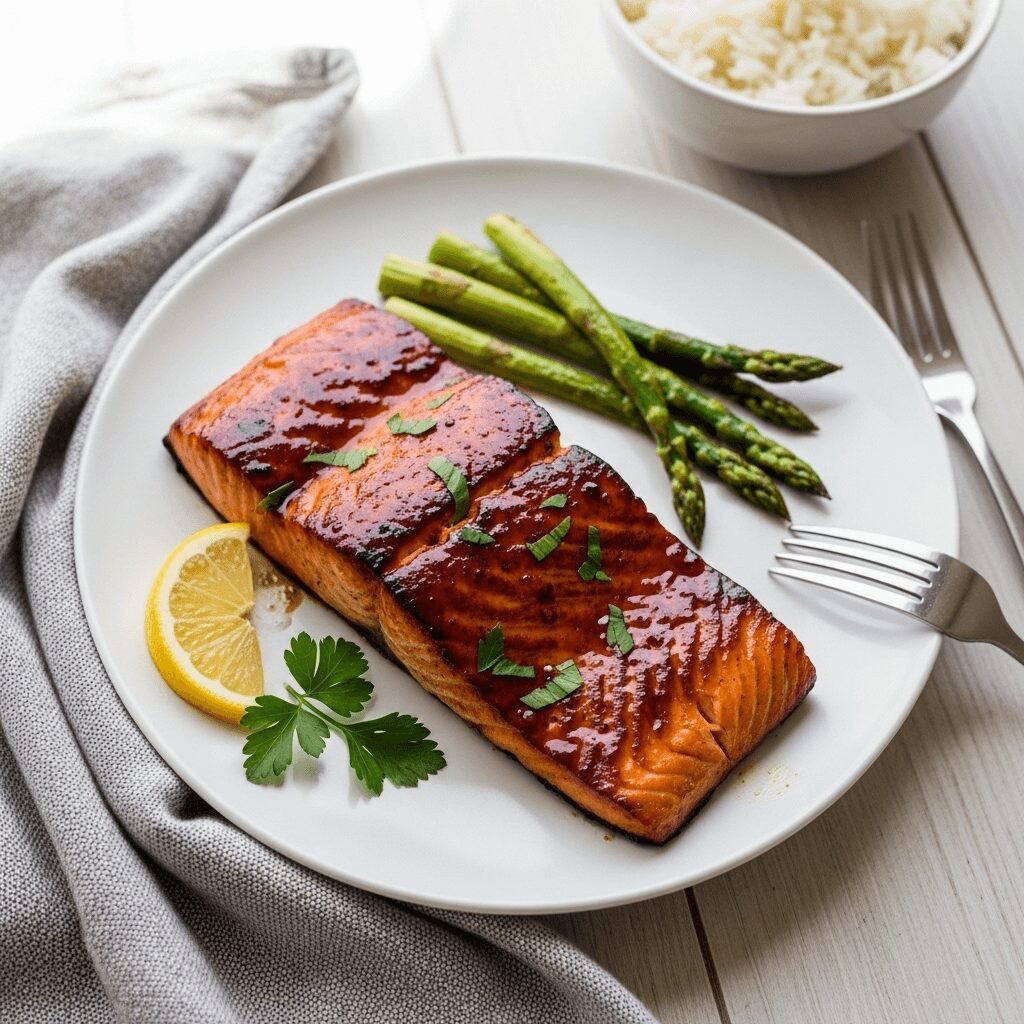
There’s something absolutely magical about salmon with a perfectly caramelized sweet glaze that makes every bite feel like a restaurant-quality experience right at home. This Brown Sugar Glazed Salmon recipe combines tender, flaky salmon fillets with a luscious sweet and savory glaze that creates the most beautiful golden crust you’ve ever seen.
What makes this recipe an absolute winner for home cooks is how deceptively simple it is. You get restaurant-worthy results with just a handful of pantry staples and about 20 minutes from start to finish. The brown sugar creates this incredible caramelization on the surface while keeping the salmon moist and tender inside. It’s the kind of dish that looks fancy enough for date night but easy enough for a busy Tuesday evening.
This glazed salmon is perfect for weeknight dinners when you want something special without the fuss, impressive enough for dinner parties, and healthy enough to feel good about serving your family regularly. Whether you’re cooking for picky eaters who think they don’t like fish or seafood lovers who appreciate a good salmon dish, this sweet and savory combination wins everyone over.
History / Background
Glazed salmon dishes have deep roots in both Asian and Pacific Northwestern cuisine, where salmon has been a dietary staple for centuries. The tradition of using sweet glazes on fish comes primarily from Japanese teriyaki-style cooking and Chinese sweet-and-sour preparations that date back hundreds of years. These cooking methods were developed to enhance the natural richness of fatty fish like salmon while creating a beautiful presentation.
In North America, particularly in the Pacific Northwest where wild salmon runs have sustained indigenous communities for thousands of years, the combination of salmon with sweet maple syrup or brown sugar became popular as European settlers brought their own cooking traditions. The marriage of Native American smoking and cooking techniques with European sweetening methods created a unique culinary fusion.
Brown sugar specifically became a popular choice for glazing salmon in American home cooking during the late 20th century as people began experimenting with Asian-inspired flavors in their kitchens. The molasses content in brown sugar adds a deeper, more complex sweetness compared to white sugar, and it caramelizes beautifully under high heat, creating that coveted crispy-tender contrast.
Today, brown sugar glazed salmon represents the perfect example of fusion cooking – taking the best elements from different culinary traditions and creating something that feels both familiar and exciting. It’s become a staple in American home cooking because it delivers on taste, presentation, and convenience all at once.
Why You’ll Love This Recipe
This Brown Sugar Glazed Salmon isn’t just another fish recipe – it’s the answer to your weeknight dinner prayers and your special occasion centerpiece all rolled into one gorgeous dish. The combination of sweet caramelized crust and tender, flaky salmon creates texture and flavor that’ll have everyone asking for seconds.
Here’s why this recipe will become your go-to:
- Lightning fast – Ready in just 20 minutes from prep to plate, perfect for busy weeknights
- Foolproof technique – Even if you’ve never cooked salmon before, you’ll nail this on the first try
- Minimal ingredients – Uses pantry staples you probably already have on hand
- Kid-approved – The sweet glaze makes this fish irresistible even to picky eaters
- Impressive presentation – Looks like something from a fancy restaurant with minimal effort
- Healthy and nutritious – Packed with omega-3s and protein without feeling heavy
- Budget-friendly – Salmon is an investment, but this recipe makes the most of every bite
- Versatile pairing options – Works with endless side dish combinations
- Meal prep friendly – Makes great leftovers and reheats beautifully
- No fishy taste – The glaze balances the salmon perfectly for those sensitive to strong fish flavors
Ingredient Notes
Understanding your ingredients makes all the difference in creating the perfect glazed salmon. Here’s what you need to know about each component:
Salmon Fillets – Choose fresh or thawed salmon fillets with the skin on or off based on preference. Skin-on helps hold the fillet together during cooking and gets wonderfully crispy. Look for bright, firm flesh without any strong fishy smell. Wild-caught salmon has more flavor, while farm-raised tends to be fattier and more affordable. Both work beautifully here.
Brown Sugar – The star of the glaze! Dark brown sugar has more molasses content and creates a deeper, more complex flavor, while light brown sugar is milder and sweeter. Either works, but dark brown sugar gives you that restaurant-quality depth. The sugar caramelizes under heat to create that gorgeous golden crust.
Soy Sauce – Adds the essential savory element that balances the sweetness. Use regular soy sauce, low-sodium if you’re watching salt intake, or tamari for a gluten-free option. The umami from soy sauce enhances the salmon’s natural richness.
Garlic – Fresh minced garlic brings aromatic depth to the glaze. Garlic powder can substitute in a pinch (use 1/2 teaspoon per clove), but fresh is always better for maximum flavor.
Olive Oil or Butter – Used for searing the salmon and creating richness in the glaze. Olive oil has a higher smoke point for searing, while butter adds incredible flavor. You can also use a combination of both.
Lemon Juice – Fresh lemon juice brightens the entire dish and cuts through the richness of the salmon and sweetness of the glaze. Bottled lemon juice works, but fresh-squeezed tastes noticeably better.
Ginger (Optional) – Fresh grated ginger adds a subtle spicy warmth that complements the sweet glaze beautifully. Ground ginger can substitute but use sparingly as it’s more concentrated.
Red Pepper Flakes (Optional) – A pinch adds just enough heat to create complexity without making the dish spicy. Perfect for adults who enjoy a little kick.
Equipment Needed
Getting your equipment ready before you start makes the cooking process smooth and stress-free. Here’s everything you’ll need:
- Large oven-safe skillet or cast iron pan – Essential for searing the salmon and finishing in the oven if needed
- Small saucepan or mixing bowl – For preparing the brown sugar glaze
- Whisk or fork – To combine glaze ingredients smoothly
- Spatula – A wide, sturdy spatula helps flip salmon without breaking
- Measuring cups and spoons – For accurate ingredient portions
- Baking sheet with foil – Alternative cooking method if you prefer baking
- Instant-read thermometer – Optional but helpful for checking doneness
- Paper towels – For patting salmon dry before cooking
- Small brush – For basting salmon with glaze if desired
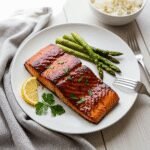
Brown Sugar Glazed Salmon Recipe
- Total Time: 20 minutes
- Yield: 4 servings 1x
Description
This Brown Sugar Glazed Salmon features tender, flaky salmon fillets coated in a sweet and savory caramelized glaze that creates the perfect balance of flavors. Ready in just 20 minutes, it’s an easy yet impressive dish perfect for weeknight dinners or special occasions.
Ingredients
For the Salmon:
- 4 salmon fillets (6 oz each), skin-on or skinless
- 2 tablespoons olive oil or melted butter
- Salt and black pepper to taste
- Fresh lemon wedges for serving
- Chopped fresh parsley for garnish
For the Brown Sugar Glaze:
- 1/3 cup packed brown sugar (light or dark)
- 3 tablespoons soy sauce (or tamari for gluten-free)
- 3 cloves garlic, minced
- 2 tablespoons fresh lemon juice
- 1 teaspoon fresh grated ginger (optional)
- 1/4 teaspoon red pepper flakes (optional)
- 1 tablespoon water
Instructions
- Prepare the salmon: Remove salmon from refrigerator 15 minutes before cooking to bring to room temperature. Pat fillets completely dry with paper towels and season both sides lightly with salt and pepper. Removing excess moisture ensures better searing and glaze adherence.
- Make the glaze: In a small bowl or saucepan, whisk together brown sugar, soy sauce, minced garlic, lemon juice, ginger if using, red pepper flakes if using, and water until the sugar begins to dissolve. Set aside. The water helps thin the glaze just enough to coat the salmon beautifully.
- Heat the pan: Place a large oven-safe skillet over medium-high heat. Add olive oil or butter and let it heat until shimmering but not smoking. The pan should be hot enough that a drop of water sizzles immediately.
- Sear the salmon: Place salmon fillets in the hot pan, skin-side up if using skin-on salmon. Let them cook undisturbed for 4-5 minutes until a golden-brown crust forms on the bottom. Resist the urge to move them around – this is how you get that perfect sear.
- Flip and glaze: Carefully flip the salmon fillets using a wide spatula. Immediately spoon or brush the brown sugar glaze generously over the top of each fillet, reserving some glaze for later.
- Finish cooking: Reduce heat to medium and continue cooking for another 4-5 minutes, basting with additional glaze every minute or so. The glaze will bubble and caramelize, creating a beautiful sticky coating. Cook until salmon reaches an internal temperature of 145°F or flakes easily with a fork.
- Optional broiler finish: For extra caramelization, transfer the skillet to a preheated broiler for 1-2 minutes. Watch carefully to prevent burning. This step creates that restaurant-quality lacquered appearance.
- Rest and serve: Remove from heat and let salmon rest for 2-3 minutes. The glaze will thicken as it cools. Transfer to serving plates, drizzle with any remaining glaze from the pan, garnish with fresh parsley and lemon wedges.
Notes
- Doneness check: Salmon is perfectly cooked when it reaches 145°F internal temperature or when it flakes easily with a fork but still looks slightly translucent in the very center. It will continue cooking from residual heat after removing from pan.
- Glaze consistency: If your glaze seems too thick, add a tablespoon of water. If too thin, let it simmer for 30 seconds to reduce.
- Skin crispiness: If using skin-on salmon and want crispy skin, start with the skin-side down and let it get very crispy before flipping.
- Scaling recipe: This recipe easily doubles or halves. Just ensure your pan isn’t overcrowded for proper searing.
- Prep Time: 5 minutes
- Cook Time: 12-15 minutes
- Category: Dinner
- Method: Pan-seared
- Cuisine: American, Asian-Fusion
Nutrition
- Serving Size: 1 salmon fillet with glaze (6 oz)
- Calories: 385
- Sugar: 17g
- Sodium: 680mg
- Fat: 18g
- Saturated Fat: 3g
- Unsaturated Fat: 14g
- Trans Fat: 0g
- Carbohydrates: 19g
- Fiber: 0g
- Protein: 35g
- Cholesterol: 95mg
Nutrition information is approximate and will vary based on exact ingredients used and portion sizes.
Tips & Variations
Make this brown sugar glazed salmon your own with these creative twists and helpful modifications:
Spicy Version: Add an extra 1/2 teaspoon of red pepper flakes to the glaze or stir in a teaspoon of sriracha for serious heat lovers. You can also add a pinch of cayenne pepper.
Asian-Inspired: Add 1 teaspoon of sesame oil to the glaze and garnish with toasted sesame seeds and sliced green onions instead of parsley. This gives it an authentic teriyaki-style finish.
Maple Glazed Alternative: Replace half the brown sugar with pure maple syrup for a more subtle, complex sweetness with hints of caramel.
Citrus Twist: Use orange juice instead of lemon juice and add a teaspoon of orange zest to the glaze for a sweeter, more aromatic version.
Honey Brown Sugar: Swap 2 tablespoons of the brown sugar with honey for a different type of sweetness and even better caramelization.
Bourbon Glaze: Add 2 tablespoons of bourbon to the glaze for a sophisticated, slightly smoky flavor profile perfect for dinner parties.
Healthier Option: Use coconut sugar instead of brown sugar and reduce the amount to 1/4 cup. Add extra lemon juice to compensate for the reduced sweetness.
Baked Version: If you prefer not to pan-sear, place salmon on a foil-lined baking sheet, brush with glaze, and bake at 400°F for 12-15 minutes, basting twice during cooking.
Pro Chef Tips
Take your brown sugar glazed salmon from good to absolutely phenomenal with these professional techniques:
Dry equals crispy: The number one secret to restaurant-quality seared salmon is patting it completely dry before it hits the pan. Any moisture will steam the fish instead of searing it, preventing that beautiful crust.
Room temperature matters: Letting salmon sit at room temperature for 15-20 minutes before cooking ensures even cooking throughout. Cold fish from the fridge will be overdone on the outside and undercooked in the center.
Don’t move it: When you place salmon in the hot pan, leave it alone for the full searing time. Moving it around prevents proper crust formation and can cause the fish to stick and tear.
Glaze in stages: Apply glaze in layers rather than all at once. This builds up that beautiful lacquered coating and prevents burning. Start with a light coating, let it caramelize, then add more.
Control your heat: If the glaze starts smoking or burning, immediately reduce the heat. Brown sugar burns quickly, and you want caramelization, not carbonization.
Use the right spatula: A wide, thin, flexible spatula makes flipping salmon much easier and reduces the chance of breaking the fillet. Slide it gently under the entire piece before lifting.
Check for doneness early: Salmon continues cooking after you remove it from heat. Pull it when it’s slightly underdone in the center – about 140°F internal temperature if you want it medium.
Deglaze the pan: After removing salmon, add a splash of water or white wine to the hot pan to dissolve all those caramelized bits. This creates an extra sauce that’s absolutely incredible.
Common Mistakes to Avoid
Learn from these common pitfalls to ensure perfect glazed salmon every time:
Overcooking the salmon: This is the biggest mistake home cooks make. Overcooked salmon becomes dry and chalky. Remember, salmon continues cooking after leaving the heat, so remove it when it’s just barely done. It should still be slightly translucent in the very center.
Using a cold pan: Starting with a properly heated pan is crucial for getting that beautiful sear and preventing sticking. Wait until the oil is shimmering before adding salmon. If the pan isn’t hot enough, the salmon will stick and the skin won’t crisp up.
Applying glaze too early: If you add the sweet glaze too early in the cooking process, it will burn before the salmon is cooked through. Always sear first, then glaze during the last few minutes of cooking.
Overcrowding the pan: Give each fillet space in the pan. Overcrowding creates steam instead of a proper sear and makes it impossible to flip the fish properly. Cook in batches if necessary.
Skipping the rest time: Letting salmon rest for 2-3 minutes after cooking allows the juices to redistribute throughout the fish, keeping it moist and tender when you cut into it.
Storage & Meal Prep
Refrigerator Storage: Store leftover glazed salmon in an airtight container in the refrigerator for up to 3 days. Place parchment paper between fillets to prevent sticking. The glaze may soften slightly during storage but will still taste delicious.
Reheating Tips: The best way to reheat glazed salmon is gently in a 275°F oven for 10-12 minutes until just warmed through. Cover loosely with foil to prevent drying out. You can also reheat individual portions in the microwave at 50% power for 1-2 minutes, though this may soften the glaze more. Avoid high heat which will dry out the salmon.
Leftover Ideas: Flake leftover salmon and use it in salads, grain bowls, tacos, or pasta. The sweet glaze adds amazing flavor to Buddha bowls with rice, vegetables, and avocado. You can also make salmon fried rice or add it to scrambled eggs for a protein-packed breakfast.
Glaze Storage: The brown sugar glaze can be made ahead and stored separately in an airtight container in the refrigerator for up to 1 week. Bring to room temperature and whisk before using.
Make-Ahead & Freezer Notes
Make-Ahead Preparation: You can prepare the brown sugar glaze up to 3 days in advance and store it in the refrigerator. The salmon is best cooked fresh, but you can season it and have it ready in the fridge up to 4 hours before cooking. Pat dry again before cooking if any moisture has accumulated.
Freezing Raw Salmon: Fresh salmon can be frozen with the glaze for easy meal prep. Place raw salmon fillets in a freezer bag, pour the glaze over them, remove air, and freeze flat for up to 3 months. Thaw in the refrigerator overnight, then cook as directed. The glaze acts as a marinade during thawing.
Freezing Cooked Salmon: While possible, freezing cooked glazed salmon is not ideal as the texture becomes slightly mushy upon thawing. If you must freeze cooked salmon, wrap tightly in plastic wrap, then foil, and freeze for up to 2 months. Thaw in the refrigerator overnight.
Best Reheating from Frozen: If you’ve frozen cooked salmon, thaw completely in the refrigerator first, then reheat gently in a 275°F oven until warmed through. Never reheat from frozen as it will result in unevenly heated, rubbery salmon.
Serving Suggestions
This brown sugar glazed salmon pairs beautifully with countless side dishes. Here are some winning combinations:
Classic Pairings: Serve with steamed jasmine rice or coconut rice to soak up the extra glaze, roasted asparagus or broccolini for a pop of green, and a simple cucumber salad with rice vinegar dressing for freshness.
Low-Carb Options: Pair with cauliflower rice, zucchini noodles, or a large mixed green salad with Asian-style dressing. Roasted Brussels sprouts or green beans also complement the sweet glaze perfectly.
Comfort Food Style: Serve over creamy mashed potatoes or mashed sweet potatoes, alongside roasted root vegetables, with dinner rolls for soaking up the sauce.
Asian-Fusion Bowl: Create a restaurant-style bowl with sticky rice, edamame, shredded carrots, sliced cucumber, avocado, and the glazed salmon on top. Drizzle with extra glaze and sprinkle with sesame seeds.
Light and Fresh: Pair with quinoa pilaf, roasted cherry tomatoes, steamed snow peas, and a wedge of grilled lemon for squeezing over everything.
Beverage Pairings: This dish pairs wonderfully with a crisp Sauvignon Blanc, Pinot Grigio, or a light Pinot Noir. For non-alcoholic options, try sparkling water with lemon, iced green tea, or a light lager-style beer.
FAQs Section
Q: Can I use frozen salmon for this recipe?
A: Yes, but make sure to thaw it completely in the refrigerator overnight first. Pat it very dry with paper towels before cooking, as frozen salmon tends to release more moisture. Never cook salmon directly from frozen for this recipe as it won’t sear properly and the glaze will burn before the fish cooks through.
Q: What if I don’t have brown sugar?
A: You can substitute with white sugar mixed with a tablespoon of molasses, or use coconut sugar for a slightly different flavor profile. Pure maple syrup or honey can also work, though the glaze texture will be slightly different. Use about 3-4 tablespoons if substituting with liquid sweeteners.
Q: How do I know when the salmon is done?
A: Perfectly cooked salmon should reach an internal temperature of 145°F when measured with an instant-read thermometer in the thickest part. Visually, it should be opaque throughout with just a hint of translucency in the very center, and it should flake easily when gently pressed with a fork. The flesh should look moist, not dry or chalky.
Q: Can I make this without soy sauce?
A: Absolutely! Substitute with coconut aminos for a soy-free option, Worcestershire sauce for a different umami flavor, or simply use extra lemon juice plus a pinch of salt. Tamari works if you’re just avoiding gluten but can still have soy.
Q: Why does my glaze burn?
A: The most common reason is too-high heat. Brown sugar caramelizes quickly, so use medium to medium-high heat and reduce if you see smoking. Also, apply the glaze during the last 5-6 minutes of cooking rather than at the beginning, and keep basting rather than applying one thick layer.
Q: Can I grill this salmon instead?
A: Yes! Preheat your grill to medium-high (about 400°F), oil the grates well, and grill salmon skin-side down for 6-8 minutes. Brush with glaze during the last 3-4 minutes, closing the lid between bastings. Be careful as the sugar can cause flare-ups.
Q: What’s the best type of salmon to use?
A: Any salmon variety works beautifully. King (Chinook) salmon is the richest and fattiest, Sockeye has the deepest color and robust flavor, Coho is mild and versatile, and Atlantic (usually farm-raised) is affordable and widely available. Choose what fits your budget and preferences – the glaze makes any variety taste amazing.
Conclusion
This Brown Sugar Glazed Salmon truly is everything you want in a weeknight dinner recipe – quick, easy, healthy, and absolutely delicious. The combination of that caramelized sweet and savory glaze with perfectly cooked, tender salmon creates a meal that feels special without requiring hours in the kitchen or complicated techniques.
Whether you’re cooking for your family on a busy Tuesday, impressing dinner guests, or meal prepping for the week ahead, this recipe delivers every single time. The best part is how adaptable it is to your tastes and dietary needs while still maintaining that restaurant-quality appeal that’ll have everyone thinking you’re a kitchen wizard.
I’d love to hear how your Brown Sugar Glazed Salmon turns out! Drop a comment below with your experience, any variations you tried, or questions you have. And if you love this recipe as much as I do, please share it on Pinterest so other home cooks can discover this gem too. Don’t forget to snap a photo of your beautiful glazed salmon and tag me – I genuinely love seeing your creations!
Happy cooking, and here’s to making weeknight dinners feel a little more special! 🐟✨