
Get ready to fall in love with the most incredible pancakes you’ll ever make! These Lemon Ricotta Pancakes are light, fluffy, and absolutely cloud-like in texture, with a delicate citrus brightness that makes every bite feel special. Imagine biting into a pancake that’s so tender it practically melts in your mouth, with creamy pockets of ricotta cheese throughout and that gorgeous hint of fresh lemon that wakes up your taste buds without being overpowering.
What makes these pancakes truly extraordinary is the ricotta cheese. It adds moisture, richness, and creates the most amazing tender crumb that traditional pancakes just can’t match. The lemon zest brings a bright, fresh flavor that cuts through the richness perfectly, making these pancakes feel elegant yet comforting at the same time. They’re like having a little taste of Italy right at your breakfast table!
These pancakes are perfect for lazy weekend mornings when you want to make breakfast feel special, Mother’s Day or Father’s Day brunch celebrations, Easter or spring gatherings when you’re craving something fresh and seasonal, or anytime you want to treat yourself or your loved ones to something beyond ordinary pancakes. Trust me, once you make these lemon ricotta pancakes, regular pancakes will seem so boring in comparison! They’re destined to become your new favorite weekend breakfast tradition.
History / Background
While pancakes have been around for thousands of years in various forms across different cultures, the lemon ricotta pancake is a relatively modern creation that beautifully marries Italian ingredients with American breakfast traditions. Ricotta, which literally means “recooked” in Italian, has been a staple in Italian cuisine since Roman times. This creamy, mild cheese was traditionally made from the whey left over from making other cheeses, demonstrating the Italian commitment to using every part of their ingredients.
The concept of adding ricotta to pancakes likely emerged from Italian-American communities, where home cooks began incorporating their beloved Italian ingredients into American classics. This fusion cooking created something entirely new and wonderful – pancakes that had the familiar comforting appeal of the American breakfast staple but with the sophisticated touch of Italian ingredients.
Lemon and ricotta is actually a classic Italian flavor pairing that appears in many traditional desserts like lemon ricotta cake, lemon ricotta cookies, and cannoli fillings. Italian cuisine has long celebrated the marriage of creamy ricotta with bright citrus, as the combination creates perfect balance. The richness of the cheese needs the acidity and brightness of the lemon to cut through it, while the lemon’s tartness is softened by the mild, creamy cheese.
These pancakes gained popularity in upscale brunch restaurants and cafes during the early 2000s when brunch culture was exploding in major cities across America. Chefs were looking for ways to elevate classic breakfast dishes, and adding ricotta to pancakes was a game-changer. The result was so delicious that home cooks quickly caught on, and now lemon ricotta pancakes are a beloved weekend breakfast treat in kitchens across the country.
What’s beautiful about this recipe is how it represents the best of both culinary worlds – the comforting, familiar appeal of American pancakes with the sophisticated flavors and quality ingredients that Italian cooking is known for. It’s food that feels both special and approachable, fancy enough for company but easy enough to make any weekend morning.
Why You’ll Love This Recipe
These aren’t just another pancake recipe – they’re truly something special that will transform your breakfast game! The texture alone is worth making them, but there’s so much more to love.
The ricotta cheese creates an incredibly moist, tender crumb that stays fluffy even as the pancakes cool. Unlike regular pancakes that can become dense or dry, these maintain their light, airy texture. The lemon adds a fresh, bright flavor that makes these pancakes feel light and sophisticated rather than heavy and overly sweet. They’re indulgent without being overwhelming, which means you can enjoy a hearty breakfast without feeling weighed down.
Here’s why you’ll absolutely love making these pancakes:
- Restaurant-Quality at Home – These taste like something you’d order at an upscale brunch spot, but you can make them in your own kitchen for a fraction of the cost
- Incredibly Fluffy Texture – The ricotta creates the lightest, most tender pancakes with an almost souffle-like quality
- Not Too Sweet – The bright lemon flavor means these aren’t overly sweet, making them perfect for those who prefer balanced flavors
- Simple Ingredients – Made with basic pantry staples plus ricotta and fresh lemon – nothing fancy or hard to find
- Quick to Make – From mixing bowl to breakfast table in about 30 minutes, including cooking time
- Impressive but Easy – Looks and tastes fancy enough to serve to guests, but the technique is simple enough for beginners
- Family-Friendly – Even kids who think they don’t like “fancy” food love these pancakes – the lemon is subtle and the texture is irresistible
- Customizable – Easy to add berries, chocolate chips, or other mix-ins to suit everyone’s preferences
- Perfect for Meal Prep – Make a big batch and freeze them for easy weekday breakfasts that still feel special
- Naturally Vegetarian – A great option for vegetarian guests or family members
Whether you’re a pancake purist looking to upgrade your breakfast game or someone who loves trying new flavor combinations, these lemon ricotta pancakes deliver on every level. They’re comforting yet refined, simple yet impressive, and absolutely delicious!
Ingredient Notes
Let’s break down what makes these pancakes so incredibly special. Each ingredient plays an important role in creating that perfect fluffy texture and bright flavor.
Ricotta Cheese – This is the star ingredient! Whole milk ricotta creates the signature tender, moist texture that makes these pancakes extraordinary. The cheese adds richness and creates tiny pockets of creaminess throughout. Look for high-quality ricotta – it makes a difference! Substitution: Cottage cheese blended until smooth can work, though the texture will be slightly different. Mascarpone creates even richer pancakes but use half the amount mixed with milk.
Fresh Lemons – You’ll need both lemon zest and lemon juice. The zest contains aromatic oils that provide the most intense lemon flavor without adding acidity, while the juice adds brightness and helps activate the leavening. Always use fresh lemons – bottled lemon juice can’t compare! Tip: Zest the lemons before juicing them; it’s much easier.
All-Purpose Flour – Provides structure to the pancakes. Don’t overmix the batter or you’ll develop too much gluten, resulting in tough pancakes. Substitution: For gluten-free pancakes, use a 1-to-1 gluten-free baking flour blend.
Eggs – The eggs are separated in this recipe, which is key to the fluffy texture. The yolks add richness and help bind everything together, while the whipped egg whites create lift and airiness. Tip: Room temperature eggs separate more easily and whip better.
Milk – Whole milk is best for rich, tender pancakes, but any milk works. It helps thin the batter to the right consistency. Substitution: Use any dairy or non-dairy milk you prefer.
Sugar – Just a touch of granulated sugar adds subtle sweetness without making the pancakes taste like dessert. The sugar also helps with browning.
Baking Powder – This is your main leavening agent, creating those lovely air pockets that make the pancakes fluffy. Make sure yours is fresh – old baking powder loses effectiveness!
Baking Soda – Works with the acidic lemon juice to create additional lift. The combination of baking powder and baking soda ensures maximum fluffiness.
Salt – A small amount enhances all the other flavors and balances the sweetness. Never skip the salt in baking!
Butter – Melted butter in the batter adds richness and flavor, plus you’ll need more for greasing the griddle. Use unsalted butter so you can control the salt level. Substitution: Melted coconut oil or vegetable oil works, though butter tastes best.
Vanilla Extract – A splash of pure vanilla extract adds warmth and depth to the flavor profile, complementing both the lemon and ricotta beautifully.
Equipment Needed
You don’t need any special equipment to make perfect lemon ricotta pancakes – just some basic kitchen tools that most home cooks already have:
- Large Mixing Bowl – For combining the wet ingredients and ricotta
- Medium Mixing Bowl – For mixing the dry ingredients separately
- Small Mixing Bowl – For whipping the egg whites
- Electric Mixer or Whisk – Essential for beating the egg whites to stiff peaks. A hand mixer works great, or you can use a whisk if you’ve got strong arms!
- Microplane or Fine Grater – For zesting the lemons. A microplane creates the finest zest with the best texture.
- Citrus Juicer (Optional) – Makes juicing lemons easier, though you can squeeze by hand
- Measuring Cups and Spoons – For accurate measurements. Baking requires precision!
- Rubber Spatula – For gently folding the egg whites into the batter without deflating them
- Whisk – For mixing the dry ingredients and the wet ingredients
- Large Non-Stick Skillet or Griddle – A good non-stick surface ensures easy flipping. An electric griddle makes cooking multiple pancakes at once easier.
- ¼-Cup Measuring Cup or Ladle – For portioning consistent-sized pancakes
- Wide Spatula – A thin, flexible spatula makes flipping delicate pancakes easier
- Wire Cooling Rack (Optional) – For keeping cooked pancakes warm and crispy in the oven
- Paper Towels – For wiping the pan between batches to prevent burning
Lemon Ricotta Pancakes Recipe
- Total Time: 30 minutes
- Yield: 12-14 pancakes (4-6 servings) 1x
- Diet: Vegetarian
Description
These fluffy Lemon Ricotta Pancakes are incredibly light and tender with a delicate citrus flavor. Made with creamy ricotta cheese and fresh lemon zest, they’re the most delicious elevated breakfast you can make at home!
Ingredients
- 1½ cups all-purpose flour
- 2 tablespoons granulated sugar
- 2 teaspoons baking powder
- ½ teaspoon baking soda
- ½ teaspoon salt
- 1 cup whole milk ricotta cheese (room temperature)
- ¾ cup whole milk
- 3 large eggs, separated (room temperature)
- 4 tablespoons unsalted butter, melted and slightly cooled
- 2 tablespoons fresh lemon juice
- 2 tablespoons lemon zest (about 2 large lemons)
- 1 teaspoon pure vanilla extract
- Additional butter or cooking spray for the griddle
Instructions
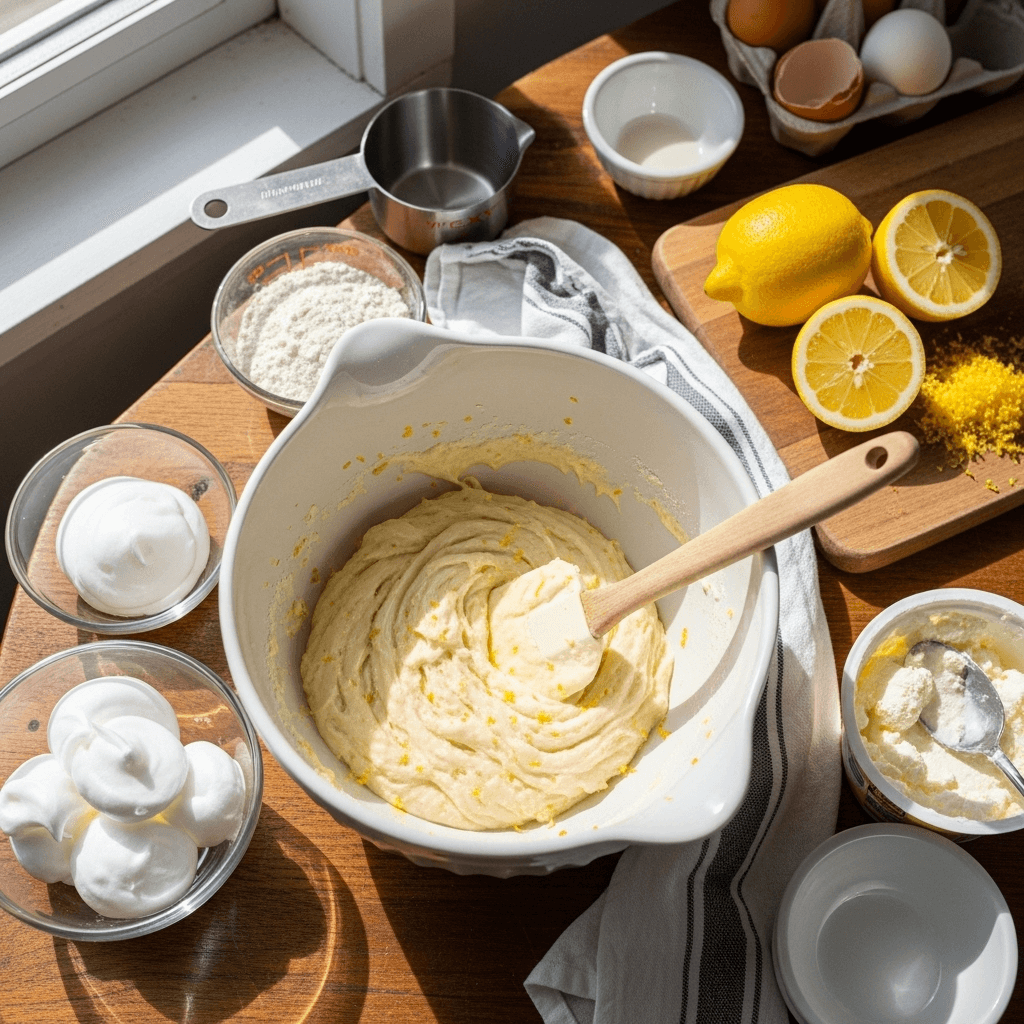
- Prepare Your Ingredients – Separate the eggs, placing the whites in a clean, grease-free bowl and the yolks in your large mixing bowl. Let the ricotta, eggs, and milk come to room temperature for best results. Zest and juice your lemons.
- Mix the Dry Ingredients – In a medium bowl, whisk together the flour, sugar, baking powder, baking soda, and salt. Set aside.
- Beat the Egg Whites – Using an electric mixer or a whisk, beat the egg whites on medium-high speed until stiff peaks form, about 3-4 minutes. The whites should be glossy and hold their shape when you lift the beaters. Set aside.
- Combine the Wet Ingredients – In your large mixing bowl with the egg yolks, add the ricotta cheese and whisk until smooth and well combined. Add the milk, melted butter, lemon juice, lemon zest, and vanilla extract. Whisk until everything is well incorporated and smooth.
- Add Dry to Wet – Pour the dry ingredient mixture into the wet ingredients. Gently whisk or fold until just combined. The batter will be thick and slightly lumpy – that’s perfect! Don’t overmix or you’ll develop gluten and create tough pancakes.
- Fold in Egg Whites – Using a rubber spatula, gently fold the beaten egg whites into the batter in three additions. Use a light hand and fold just until no white streaks remain. The batter should be thick, fluffy, and airy. A few lumps are fine!
- Heat Your Griddle – Preheat a large non-stick skillet or griddle over medium heat (about 325°F if using an electric griddle). Lightly grease with butter or cooking spray. The pan is ready when a drop of water sizzles and evaporates quickly.
- Cook the Pancakes – Using a ¼-cup measure, pour batter onto the hot griddle, spacing pancakes about 2 inches apart. Cook until bubbles form on the surface and the edges look slightly dry, about 2-3 minutes. The bottoms should be golden brown.
- Flip and Finish – Carefully flip the pancakes using a wide spatula. Cook for another 2-3 minutes on the second side until golden brown and cooked through. The pancakes should spring back lightly when touched.
- Keep Warm and Serve – Transfer cooked pancakes to a wire rack set over a baking sheet in a 200°F oven to keep warm while you cook the remaining batter. Wipe the pan with a paper towel between batches if needed to prevent burning. Serve immediately with your favorite toppings!
Notes
- Room Temperature Ingredients: This is crucial for proper mixing and texture. Cold ricotta won’t blend smoothly, and cold eggs won’t whip as well.
- Don’t Overmix: Once you add the flour, mix just until combined. Overmixing creates tough, dense pancakes.
- Gentle Folding: When incorporating the egg whites, use a light touch. Fold gently to maintain all that wonderful airiness.
- Heat Control: Medium heat is key. Too hot and the outsides burn before the insides cook; too low and they won’t brown properly.
- Batter Consistency: The batter should be thick but pourable. If it’s too thick, add a tablespoon of milk at a time until you reach the right consistency.
- Fresh Lemon: Don’t substitute bottled lemon juice or dried zest. Fresh is essential for the best flavor!
- Prep Time: 15 minutes
- Cook Time: 15 minutes
- Category: Breakfast
- Method: Stovetop
- Cuisine: Italian-American
Nutrition
- Serving Size: 3-4 pancakes
- Calories: 385
- Sugar: 8g
- Sodium: 445mg
- Fat: 17g
- Saturated Fat: 10g
- Unsaturated Fat: 6g
- Trans Fat: 0g
- Carbohydrates: 42g
- Fiber: 1g
- Protein: 14g
- Cholesterol: 155mg
Nutrition information is estimated and will vary based on cooking methods, specific brands of ingredients used, and individual portion sizes.
Tips & Variations
These lemon ricotta pancakes are wonderfully versatile! Here are some delicious ways to customize them to your taste:
Berry Lemon Pancakes – Gently fold ½ cup fresh blueberries, raspberries, or sliced strawberries into the batter after adding the egg whites. The berries and lemon are a match made in heaven!
Lemon Poppy Seed – Add 2 tablespoons of poppy seeds to the dry ingredients for that classic lemon-poppy combination and a subtle crunch.
Chocolate Chip Twist – Fold in ½ cup mini chocolate chips for a kid-friendly version. The lemon and chocolate combo is surprisingly delicious!
Extra Lemony – If you’re a serious lemon lover, increase the zest to 3 tablespoons and add an extra tablespoon of lemon juice.
Almond Variation – Replace the vanilla extract with almond extract for a different flavor profile that pairs beautifully with the lemon.
Lighter Version – Use part-skim ricotta and 2% milk instead of whole milk versions. You can also use 2 whole eggs plus 2 egg whites instead of 3 whole eggs.
Gluten-Free – Use a high-quality 1-to-1 gluten-free flour blend in place of all-purpose flour. The texture will be slightly different but still delicious.
Whole Wheat – Replace up to half the all-purpose flour with whole wheat pastry flour for added nutrition and a slightly nuttier flavor.
Orange Ricotta – Substitute orange zest and juice for the lemon for a different citrus twist.
Lavender Lemon – Add 1 teaspoon of culinary lavender to the batter for an elegant, floral note that pairs wonderfully with lemon.
Buttermilk Style – Replace the regular milk with buttermilk for extra tang and tenderness.
Pro Chef Tips
These professional techniques will help you create the absolute best lemon ricotta pancakes every single time:
Room Temperature is Non-Negotiable – This is the most important tip! Room temperature eggs separate more easily, beat to greater volume, and incorporate better into the batter. Room temperature ricotta mixes smoothly without lumps. Take everything out of the fridge 30-60 minutes before starting.
Zest Before You Juice – Always zest your lemons before cutting and juicing them. It’s much easier to zest a whole lemon than trying to zest halves, and you’ll get more zest with less effort.
Separate Carefully – When separating eggs, even a tiny bit of yolk in the whites will prevent them from whipping properly. Separate each egg over a small bowl first, then add the white to your mixing bowl. This way, if you break a yolk, you’ve only ruined one egg, not the whole batch.
Beat Egg Whites Properly – Use a completely clean, grease-free bowl for beating egg whites. Even a trace of oil or fat will prevent them from forming stiff peaks. Stainless steel or glass bowls work best. Beat until you have stiff, glossy peaks that hold their shape – this creates maximum lift.
Fold, Don’t Stir – When incorporating the egg whites, use a rubber spatula and fold gently from the bottom of the bowl up and over. Rotate the bowl as you fold. This technique maintains all those air bubbles you worked hard to create. The batter should look light and fluffy, not deflated.
Test Your Pan Temperature – The pan is at the perfect temperature when a drop of water sizzles and evaporates within a few seconds. If it evaporates instantly, the pan is too hot. If it just sits there, it’s not hot enough.
Don’t Press Down – When flipping pancakes, resist the urge to press them down with your spatula. This deflates all the air and creates dense pancakes instead of fluffy ones.
Consistent Sizing – Use a measuring cup or ladle for portioning to ensure all your pancakes are the same size. This means they’ll all cook at the same rate and look professional on the plate.
Watch for Bubbles – Pancakes are ready to flip when bubbles form across the entire surface and begin to pop, leaving little holes. The edges should also look slightly dry and set.
One Flip Only – Flip your pancakes only once! Multiple flips create tough, dense pancakes. Get it right the first time and leave them alone.
Keep Them Warm Properly – Place finished pancakes on a wire rack (not directly on a plate where they’ll steam and get soggy) set over a baking sheet in a 200°F oven. This keeps them warm and crispy while you finish the batch.
Common Mistakes to Avoid
Even experienced cooks can run into issues with pancakes. Here are the most common mistakes and how to prevent them:
Using Cold Ingredients – This is the biggest mistake! Cold ricotta doesn’t blend smoothly and creates a lumpy batter. Cold eggs don’t whip properly and won’t incorporate well. Cold ingredients also lower the temperature of your batter, affecting how the pancakes cook. Always bring everything to room temperature first, even if it means waiting 30 minutes. It’s worth it!
Overmixing the Batter – Once you add the flour, mix only until just combined. You should still see some small lumps – that’s perfect! Overmixing develops gluten strands, which create tough, chewy pancakes instead of tender, fluffy ones. When you fold in the egg whites, be especially gentle to maintain that airy texture.
Deflating the Egg Whites – Beating egg whites to stiff peaks takes time and effort, but all that work is wasted if you stir them in roughly. Always fold gently using a light hand and a “lift and turn” motion. The batter should look fluffy and airy, not flat. If you’ve stirred too aggressively, your pancakes will be dense instead of cloud-like.
Cooking at the Wrong Temperature – Too hot, and your pancakes will burn on the outside while staying raw in the center. Too cool, and they’ll cook too slowly, becoming pale, tough, and dense. Medium heat (around 325°F on an electric griddle) is the sweet spot. If your first pancake browns too quickly or too slowly, adjust the heat and test again.
Flipping Too Soon or Too Late – Flip too early and your pancakes will fall apart; flip too late and they’ll be overdone and dry. Wait for bubbles to form across the entire surface and start popping, leaving little holes. The edges should look slightly dry and set. This timing creates perfectly cooked pancakes with golden-brown exteriors and fluffy interiors.
Not Cleaning the Pan Between Batches – Butter and tiny bits of cooked batter can burn on the pan between batches, creating dark specks on your pancakes and a bitter taste. Wipe the pan with a paper towel between batches, then re-grease lightly. This keeps every batch looking and tasting perfect.
Pressing Down After Flipping – Resist the temptation to press down on your pancakes with the spatula! This squeezes out all the air you worked so hard to incorporate, resulting in flat, dense pancakes. Let them be and they’ll stay wonderfully fluffy.
Storage & Meal Prep
These pancakes are fantastic fresh, but they also store beautifully, making them perfect for meal prep and busy mornings!
Refrigerator Storage – Let leftover pancakes cool completely to room temperature, then stack them with small pieces of parchment paper between each pancake to prevent sticking. Store in an airtight container or zip-top bag in the refrigerator for up to 4 days. The lemon flavor actually develops and gets even better after a day!
Reheating from the Fridge – The best method is to reheat in a 350°F oven for 5-7 minutes until warmed through. This keeps them crispy on the outside and fluffy inside. You can also reheat in a toaster or toaster oven on medium setting until warm. The microwave works in a pinch (30-45 seconds on high), though they won’t be quite as crispy.
Freezer Storage – These pancakes freeze beautifully! Let them cool completely, then arrange in a single layer on a baking sheet and freeze for 1-2 hours until solid. This prevents them from sticking together. Once frozen solid, transfer to a freezer-safe zip-top bag or container, placing parchment or wax paper between layers. They’ll keep for up to 3 months.
Reheating from Frozen – No need to thaw! Pop frozen pancakes directly into the toaster or toaster oven on medium-high setting, or reheat in a 350°F oven for 8-10 minutes until heated through. You can also microwave from frozen for 45-60 seconds, flipping halfway through.
Make-Ahead Batter Note – Unfortunately, you can’t make the batter ahead of time. The beaten egg whites will deflate if left to sit, resulting in dense pancakes. However, you can measure out your dry ingredients the night before and have your wet ingredients ready to go for quick mixing in the morning.
Meal Prep Strategy – Make a double or triple batch on the weekend and freeze individual portions. You’ll have delicious, homemade pancakes ready for busy weekday mornings that taste way better than anything from a box mix!
Make-Ahead & Freezer Notes
Planning ahead makes busy mornings so much easier! Here’s everything you need to know about preparing these pancakes in advance:
Can You Make the Batter Ahead? – Unfortunately, no. The egg whites are beaten separately and folded in just before cooking to create that signature fluffy texture. If the batter sits, the egg whites deflate and you’ll lose all that wonderful airiness. The pancakes need to be cooked shortly after mixing for the best results.
What You CAN Do Ahead – Measure and mix all your dry ingredients the night before and store in an airtight container at room temperature. Zest and juice your lemons and store covered in the refrigerator. This prep work makes morning cooking much faster – you can have pancakes on the table in about 15 minutes!
Freezing Cooked Pancakes – This is where make-ahead magic happens! Cook a big batch of pancakes, let them cool completely, and freeze using the method described in the Storage section. They freeze beautifully and taste amazing when reheated, making them perfect for meal prep.
Best Freezing Method – The flash-freeze method (freezing individually on a baking sheet first) is crucial for preventing the pancakes from sticking together in one giant mass. Once frozen solid, transfer to freezer bags and press out as much air as possible to prevent freezer burn.
How Long They Last – Properly frozen pancakes maintain their quality for up to 3 months. After that, they’re still safe to eat but may develop freezer burn or lose some flavor. Label your containers with the date so you can use the oldest ones first.
Thawing vs. Reheating from Frozen – There’s no need to thaw! Reheating from frozen actually works better, as thawed pancakes can become slightly soggy. Pop them straight from the freezer into your toaster or oven.
Pack for On-the-Go – Freeze pancakes individually, then grab one or two in the morning. They’ll thaw by the time you’re ready to eat them, or you can reheat quickly at work if you have access to a microwave or toaster. Add a small container of syrup and you have a delicious portable breakfast!
Holiday or Brunch Prep – When hosting brunch, make the pancakes the day before, store in the refrigerator, and reheat all at once in a 350°F oven. This lets you enjoy your guests instead of being stuck at the stove!
Serving Suggestions
These beautiful lemon ricotta pancakes deserve some equally delicious accompaniments! Here are the best ways to serve them:
Classic Maple Syrup – Pure maple syrup is always a winner. The rich, caramel-like sweetness complements the bright lemon flavor perfectly. Warm it slightly for the best experience.
Fresh Berries – Blueberries, raspberries, strawberries, or blackberries are natural partners for lemon. The fresh fruit adds color, nutrition, and a burst of freshness. Macerate the berries with a little sugar for extra juice!
Whipped Cream – A dollop of fresh whipped cream (or whipped mascarpone for extra indulgence) makes these pancakes feel even more special. Add a touch of vanilla or a tiny pinch of lemon zest to the cream.
Lemon Curd – For serious lemon lovers, a spoonful of tangy lemon curd takes these pancakes over the top. The sweet-tart spread is absolutely divine with the creamy pancakes.
Honey and Butter – Warm honey drizzled over butter-topped pancakes creates a simple but luxurious combination. Try using local honey for the best flavor.
Berry Compote – Make a quick berry compote by simmering mixed berries with a little sugar and lemon juice until thick and jammy. It’s like upgraded syrup!
Powdered Sugar and Lemon – Keep it simple with a dusting of powdered sugar and thin lemon slices for garnish. This classic presentation is beautiful and lets the pancake flavor shine.
Greek Yogurt – A spoonful of tangy Greek yogurt adds protein and creates a delicious sweet-tart contrast to the pancakes.
Side of Bacon or Sausage – The savory-sweet combination is classic breakfast perfection. Crispy bacon or breakfast sausage links complement the sweet pancakes beautifully.
Fresh Fruit Salad – Serve alongside a colorful fruit salad made with seasonal fruits for a complete, balanced breakfast.
Eggs Your Way – Round out the meal with scrambled eggs, fried eggs, or a simple omelet for added protein.
Breakfast Beverages – These pancakes pair wonderfully with fresh-squeezed orange juice, a cappuccino, cold brew coffee, hot tea (especially herbal or green tea), or even champagne or mimosas for a special brunch!
Restaurant-Style Presentation – Stack 3-4 pancakes, add a pat of butter on top, drizzle with warm syrup, arrange fresh berries around the stack, dust with powdered sugar, and garnish with a sprig of fresh mint and a lemon slice.
FAQs Section
Can I use low-fat or fat-free ricotta?
You can, but I don’t recommend it for the best results. Whole milk ricotta creates the most tender, moist pancakes with the best flavor. Low-fat versions contain more moisture and less fat, which can make your pancakes slightly denser and less rich. If you do use low-fat ricotta, you might want to add an extra tablespoon of melted butter to compensate for the reduced fat content.
Why are my pancakes dense instead of fluffy?
Dense pancakes usually result from one of three issues: not beating the egg whites to stiff peaks (they should hold their shape and look glossy), deflating the egg whites when folding them into the batter (fold gently!), or overmixing the batter after adding the flour. The beaten egg whites are what create that incredible fluffy texture, so treat them with care!
Can I make these without separating the eggs?
Technically yes, but I don’t recommend it. The whole point of this recipe is the amazing fluffy texture that comes from beating and folding in the egg whites separately. If you just add whole eggs, you’ll end up with regular pancakes – still tasty, but not the special cloud-like texture that makes these lemon ricotta pancakes so incredible. The extra few minutes to separate eggs is absolutely worth it!
My batter is really thick. Is that normal?
Yes! The batter should be quite thick and fluffy after you fold in the egg whites. It should be spoonable but not pourable like regular pancake batter. This thick consistency is what creates those wonderfully tall, fluffy pancakes. If your batter seems too thick to spread at all, you can thin it with a tablespoon of milk, but err on the side of thick rather than thin.
Can I double this recipe?
Absolutely! This recipe doubles beautifully. Use two mixing bowls for the egg whites if needed, and beat them in separate batches (it’s hard to beat 6 egg whites efficiently in one bowl unless you have a stand mixer). Mix everything else as directed, then gently fold in all the beaten egg whites. You’ll have plenty of pancakes for a crowd or for freezing!
What if I don’t have fresh lemons?
Fresh lemons really are essential for this recipe. The zest contains aromatic oils that provide the signature lemon flavor, and bottled lemon juice just can’t compare in taste or brightness. If you absolutely must substitute, use 1 tablespoon of bottled lemon juice and ½ teaspoon of lemon extract, but know that the flavor won’t be quite as bright and fresh. It’s worth running to the store for fresh lemons!
How do I know when to flip the pancakes?
Watch for two signs: bubbles should form across the entire surface of the pancake and begin to pop, leaving little holes behind, and the edges should look slightly dry and set. When you see both of these things, it’s time to flip! This usually takes 2-3 minutes on the first side. The second side cooks faster, usually just 2 minutes.
Conclusion
There you have it – everything you need to know to make the most incredible, fluffy, restaurant-quality Lemon Ricotta Pancakes right in your own kitchen! These aren’t your ordinary pancakes. They’re special enough for a celebration but simple enough to make any weekend morning feel like a treat.
The combination of creamy ricotta, bright fresh lemon, and that cloud-like texture created by the whipped egg whites makes these pancakes absolutely irresistible. I promise that once you try them, your family will be requesting them every weekend! There’s just something magical about biting into a pancake that’s so light and tender it practically melts in your mouth, with those delicate pockets of creamy ricotta and that gorgeous hint of citrus.
The best part? While they taste fancy and impressive, they’re actually quite simple to make. Yes, there’s the extra step of beating and folding in the egg whites, but trust me – those few extra minutes create pancakes that are truly extraordinary. And if you’re worried about the technique, don’t be! Follow the steps, fold gently, and you’ll be amazed at how easy it is to create something so delicious.
Don’t forget to make extra and freeze them for busy mornings when you want something special but don’t have time to cook. Having homemade lemon ricotta pancakes in your freezer is like having a little luxury ready to go whenever you need it!