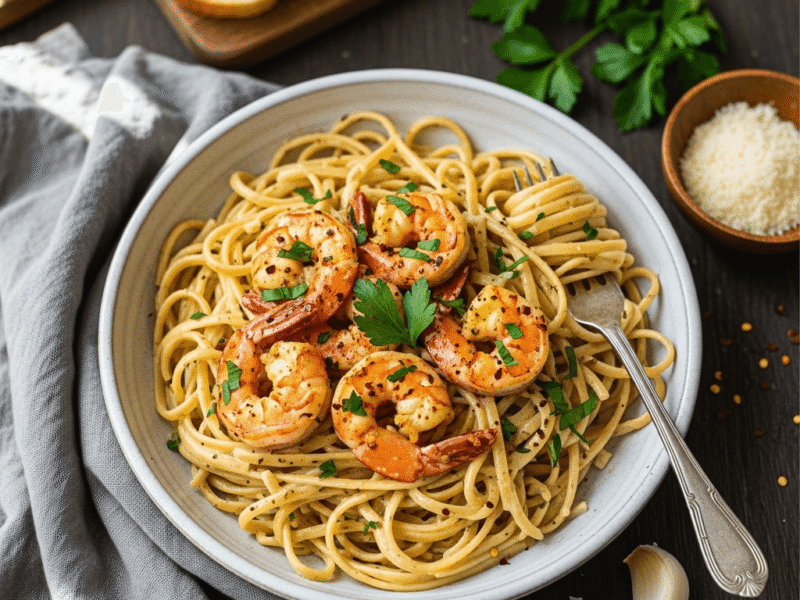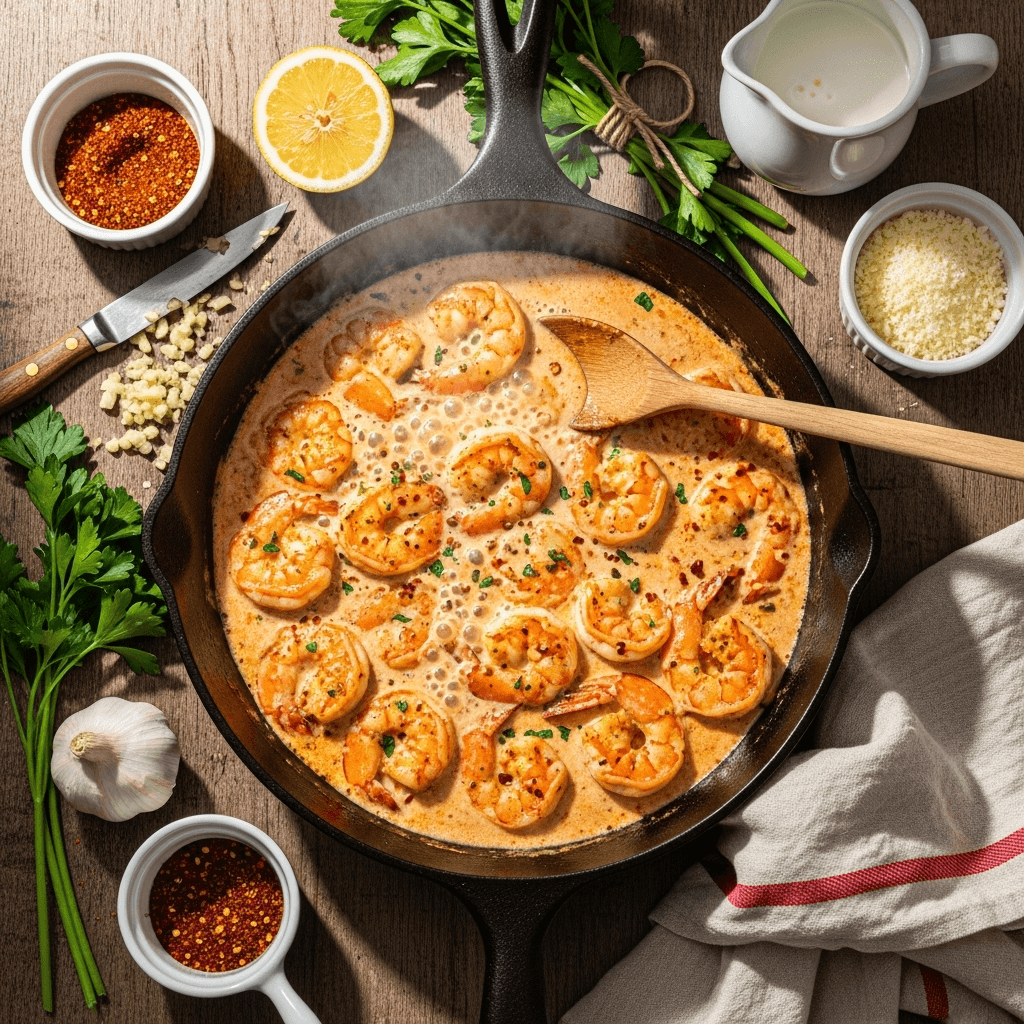

If you’re craving a restaurant-quality meal that’s bursting with bold, spicy flavors and ready in just 15 minutes, this Creamy Cajun Shrimp is about to become your new obsession. This dish features plump, juicy shrimp coated in a luscious, spicy cream sauce that’s perfectly balanced with Cajun seasonings, garlic, and a hint of brightness. It’s the kind of meal that looks and tastes like you spent hours in the kitchen, but the secret is it comes together faster than ordering takeout.
What makes this Creamy Cajun Shrimp truly special is the way the bold, smoky Cajun spices meld with the rich, velvety cream sauce to create layers of complex flavor in every bite. We’re talking about tender shrimp with a beautiful sear, swimming in a sauce that’s spicy but not overwhelming, creamy but not heavy, and absolutely irresistible when served over pasta, rice, or with crusty bread for soaking up every last drop. The best part? You only need one skillet, which means minimal cleanup and maximum flavor as everything comes together in perfect harmony.
This recipe is incredibly versatile and works beautifully for so many occasions. It’s perfect for impressive date nights at home when you want something special but don’t have hours to cook, ideal for weeknight dinners when you need something quick but exciting, fantastic for entertaining because it always wows guests, and elegant enough for special celebrations. Whether you’re cooking for seafood lovers, spice enthusiasts, or anyone who appreciates bold Southern flavors, this Creamy Cajun Shrimp delivers consistently delicious results that’ll have everyone asking for the recipe.
The Rich History Behind Cajun Cuisine and Creamy Shrimp Dishes
To understand this recipe, we need to travel to the heart of Louisiana, where Cajun cuisine was born from necessity, creativity, and cultural fusion. Cajun cooking originated with the Acadians, French colonists who were expelled from Nova Scotia in the 18th century and settled in the bayous and swamps of Southern Louisiana. Cut off from their traditional French ingredients, these resourceful people adapted their cooking techniques to use local ingredients—shrimp, crawfish, alligator, rice, and an abundance of fresh produce and spices.
Cajun cuisine is distinct from its cousin, Creole cooking, though they often overlap. While Creole food evolved in New Orleans with more European and African influences and access to expensive ingredients, Cajun food was the “country” cooking of rural Louisiana—practical, bold, and built on making the most of what was available. The “holy trinity” of Cajun cooking—onions, bell peppers, and celery—became the foundation of countless dishes, much like the French mirepoix.
The Cajun seasoning blend we know today, with its distinctive combination of paprika, cayenne, garlic powder, onion powder, oregano, thyme, and black pepper, evolved as Cajun cooks experimented with the spices available through trading ports. These bold seasonings helped preserve food in the humid Louisiana climate and added incredible flavor to simple ingredients.
Shrimp has always been abundant in Louisiana’s coastal waters and bayous, making it a staple protein in Cajun cooking. Traditional preparations included étouffée, gumbo, jambalaya, and simple pan-fried shrimp. The addition of cream to create rich, sauce-based shrimp dishes is actually a more modern adaptation—a fusion of traditional Cajun flavors with contemporary American tastes for creamy, indulgent sauces.
This Creamy Cajun Shrimp recipe represents that beautiful evolution of Cajun cuisine—honoring the traditional bold spice blends and cooking techniques while incorporating modern elements like heavy cream to create something that feels both authentic and accessible to home cooks everywhere. It’s comfort food with a kick, Southern hospitality on a plate, and a testament to how great cooking traditions continue to evolve while staying true to their roots.
Why You’ll Love This Creamy Cajun Shrimp
This recipe is an absolute showstopper that checks every box for what makes a great meal. Once you taste that first bite of tender shrimp coated in that spicy, creamy sauce, you’ll understand why this dish has become such a beloved favorite. The combination of succulent seafood, bold seasonings, and luxurious cream creates something truly special.
Here’s why this Creamy Cajun Shrimp will become your go-to recipe:
- Lightning Fast: Ready in just 15 minutes from start to finish—perfect for those nights when you want something special but don’t have much time
- Restaurant-Quality at Home: Tastes like a $25 entrée from a fancy Cajun restaurant but costs a fraction to make
- One-Pan Wonder: Everything cooks in a single skillet, making cleanup incredibly easy
- Bold, Complex Flavors: The Cajun spice blend creates layers of flavor that taste like you’ve been cooking for hours
- Naturally Low-Carb: Perfect for keto and low-carb diets without any modifications needed
- Impressive but Simple: Looks and tastes impressive enough to serve to guests, but easy enough for a weeknight
- Versatile Serving Options: Serve over pasta, rice, cauliflower rice, zucchini noodles, or with crusty bread
- Customizable Heat Level: Easy to adjust the spice level to suit your family’s preferences
- Budget-Friendly Luxury: Shrimp is affordable, especially when bought frozen, making this an accessible luxury meal
- Meal Prep Friendly: Makes great leftovers and can be prepped ahead for busy weeks
Ingredient Notes: What You’ll Need and Why
Understanding your ingredients helps you make the best choices and achieve restaurant-quality results at home. Let’s break down what makes this dish so delicious.
Shrimp: The star of the show! I recommend large or jumbo shrimp (21-25 count per pound or 16-20 count) for the best presentation and texture. Buy them peeled and deveined to save time—fresh or frozen both work perfectly. If using frozen, thaw completely and pat very dry before cooking. You’ll need about 1½ pounds to serve 4 people generously.
Cajun Seasoning: This spice blend is essential for authentic flavor. Store-bought Cajun seasoning works great (Tony Chachere’s, Slap Ya Mama, or Zatarain’s are popular brands), or make your own blend. You’ll need about 2-3 tablespoons total. Check the sodium level—some brands are very salty, which affects how much additional salt you need.
Heavy Cream: Creates that luscious, velvety sauce that coats the shrimp beautifully. You’ll need about 1 cup. Heavy whipping cream works best, though half-and-half can be substituted for a lighter version (the sauce won’t be quite as thick). Don’t use milk—it’s too thin and may curdle.
Butter: Adds richness and helps create the sauce base. You’ll need about 3 tablespoons. Use real butter, not margarine, for the best flavor. Unsalted butter gives you better control over the salt level.
Garlic: Fresh garlic is essential here—it adds aromatic depth that garlic powder can’t replicate. You’ll need 4-6 large cloves, minced. Don’t be shy with the garlic; it’s a key flavor component in Cajun cooking.
Chicken Broth: Adds savory depth and helps create the right sauce consistency. You’ll need about ½ cup. Use good-quality low-sodium broth so you can control the salt level. Seafood stock makes an excellent substitute for even more flavor.
Tomato Paste: Just 1-2 tablespoons adds depth, slight acidity, and a beautiful color to the sauce. It’s a small but important ingredient that creates complexity.
Lemon Juice: Fresh lemon juice brightens the rich sauce and balances the cream. You’ll need about 1-2 tablespoons. Always use fresh-squeezed, never bottled—the difference is noticeable.
Parmesan Cheese: Optional but highly recommended! About ¼ cup of freshly grated Parmesan adds nutty, salty depth to the sauce. Always use freshly grated, not the pre-grated kind.
Fresh Parsley: For garnish and a pop of fresh flavor and color. Cilantro also works beautifully if you prefer it.
Equipment Needed
Having the right tools makes this recipe even easier. Here’s what you’ll need:
- Large skillet or sauté pan (12-inch is ideal, preferably stainless steel or cast iron)
- Sharp knife and cutting board for prepping garlic and herbs
- Wooden spoon or spatula for stirring
- Measuring cups and spoons
- Tongs for flipping shrimp
- Microplane or garlic press for mincing garlic (optional but helpful)
- Paper towels for patting shrimp dry
- Small bowl for mixing Cajun seasoning with shrimp
- Serving plates or bowls
- Pasta pot or rice cooker (if serving over pasta or rice)
Creamy Cajun Shrimp Recipe
- Total Time: 15 minutes
- Yield: 4 servings 1x
- Diet: Gluten Free
Description
This Creamy Cajun Shrimp features tender, juicy shrimp coated in a rich, spicy cream sauce with bold Cajun flavors. Ready in just 15 minutes, it’s a restaurant-quality meal perfect for busy weeknights or special occasions. Serve over pasta, rice, or with crusty bread.
Ingredients
For the Shrimp:
- 1½ pounds large shrimp (21-25 count), peeled and deveined
- 2 tablespoons Cajun seasoning, divided
- 2 tablespoons butter
- 1 tablespoon olive oil
For the Creamy Cajun Sauce:
- 3 tablespoons butter
- 6 cloves garlic, minced
- 2 tablespoons tomato paste
- ½ cup chicken broth (or seafood stock)
- 1 cup heavy cream
- 1 tablespoon Cajun seasoning (adjust to taste)
- ¼ cup freshly grated Parmesan cheese (optional)
- 2 tablespoons fresh lemon juice
- Salt and black pepper to taste
- ¼ teaspoon red pepper flakes (optional, for extra heat)
- 2 tablespoons fresh parsley, chopped (for garnish)
Instructions
- Prepare the Shrimp: Pat shrimp completely dry with paper towels—this is crucial for getting a good sear. Place shrimp in a bowl and toss with 1 tablespoon of Cajun seasoning until evenly coated. Let sit while you prepare other ingredients.
- Heat the Pan: Place a large skillet over medium-high heat. Add 2 tablespoons butter and 1 tablespoon olive oil. Heat until butter melts and foam subsides, indicating the pan is ready.
- Sear the Shrimp: Add seasoned shrimp to the hot pan in a single layer, making sure not to overcrowd (work in batches if necessary). Sear for 1-2 minutes per side until shrimp turn pink and develop a nice golden crust. Don’t overcook—shrimp cook quickly! Remove shrimp to a plate and set aside.
- Start the Sauce: Reduce heat to medium. In the same skillet, add 3 tablespoons butter. Once melted and foaming, add minced garlic. Sauté for 30-45 seconds, stirring constantly, until fragrant but not burned.
- Add Tomato Paste: Add the tomato paste and remaining 1 tablespoon Cajun seasoning. Stir constantly for about 1 minute, letting the tomato paste caramelize slightly and the spices bloom. This step builds incredible depth of flavor.
- Deglaze: Pour in the chicken broth, scraping up any browned bits from the bottom of the pan with a wooden spoon. These flavorful bits (called fond) add incredible taste to your sauce. Let simmer for 1-2 minutes until slightly reduced.
- Create the Cream Sauce: Reduce heat to medium-low. Pour in the heavy cream, stirring constantly. Let the sauce simmer gently for 2-3 minutes until it thickens slightly and coats the back of a spoon. Don’t let it boil vigorously, or the cream may break.
- Add Cheese and Lemon: Stir in the Parmesan cheese (if using) until melted and incorporated. Add the lemon juice. Taste and adjust seasoning with salt, pepper, and additional Cajun seasoning if needed. The sauce should be well-seasoned, creamy, and have a nice kick.
- Finish the Dish: Return the cooked shrimp and any accumulated juices to the skillet. Toss gently to coat with sauce and warm through for 1-2 minutes. The shrimp should be just heated through—don’t overcook them.
- Serve Immediately: Transfer to serving plates or bowls. Garnish generously with fresh chopped parsley and serve immediately while hot. Spoon extra sauce over the top for maximum deliciousness.
Notes
- Shrimp Size Matters: Larger shrimp are easier to cook without overdoing them. Avoid tiny shrimp, which cook too quickly and can become rubbery.
- Don’t Overcook: Shrimp are done when they turn pink and form a “C” shape. If they curl into a tight “O,” they’re overcooked.
- Adjust Heat Level: If your Cajun seasoning is very spicy, start with less and add more to taste. You can always add heat, but you can’t take it away.
- Sauce Consistency: If sauce is too thick, thin with a splash of broth. If too thin, simmer longer to reduce.
- Make It Dairy-Free: Substitute heavy cream with full-fat coconut cream for a dairy-free version with a subtle tropical note.
- Serving Suggestions: This is excellent over pasta (linguine or fettuccine), rice, cauliflower rice, or with crusty bread for dipping.
- Prep Time: 5 minutes
- Cook Time: 10 minutes
- Category: Dinner, Main Course, Seafood
- Method: Stovetop, Pan-Seared
- Cuisine: Cajun, Southern, American
Nutrition
- Serving Size: About 6 oz shrimp with ¾ cup sauce
- Calories: 398
- Sugar: 3g
- Sodium: 1,247mg
- Fat: 28g
- Saturated Fat: 16g
- Unsaturated Fat: 9g
- Trans Fat: 0g
- Carbohydrates: 7g
- Fiber: 1g
- Protein: 31g
- Cholesterol: 312mg
Nutrition information is calculated automatically and should be used as an estimate only. Values may vary based on specific ingredients and brands used.
Tips & Variations to Make It Your Own
One of the best features of this recipe is how easily you can customize it. Here are some delicious variations:
Extra Vegetables: Add sliced bell peppers, cherry tomatoes, or spinach to the sauce for added nutrition and color. Sauté vegetables before adding the cream.
Spice Level Adjustments: For milder heat, reduce Cajun seasoning to 1 tablespoon total and omit red pepper flakes. For extra spice, add cayenne pepper or hot sauce to taste.
Protein Variations: This sauce is amazing with chicken breast (sliced thin and cooked similarly), scallops, or even firm white fish like mahi-mahi or cod.
Cajun Shrimp Pasta: Toss with cooked fettuccine, linguine, or penne for a complete meal. Reserve some pasta water to thin the sauce if needed.
Lighter Version: Use half-and-half instead of heavy cream and reduce butter by half. The sauce won’t be as rich but will still be delicious.
Blackened Shrimp Style: Increase the Cajun seasoning on the shrimp and sear in a very hot cast iron skillet for a more intensely spiced, slightly charred exterior.
Creamy Cajun Shrimp and Sausage: Add sliced andouille or smoked sausage for a heartier meal with even more authentic Cajun flavor.
Wine Addition: Deglaze with ¼ cup white wine before adding broth for extra sophistication and depth.
Pro Chef Tips for Restaurant-Quality Results
Want to elevate this dish from delicious to absolutely extraordinary? Here are professional techniques:
Dry Your Shrimp Thoroughly: Moisture is the enemy of a good sear. Pat shrimp completely dry with paper towels, even pressing down firmly to remove all surface moisture. This creates that beautiful golden crust.
Room Temperature Shrimp: Let shrimp sit at room temperature for 10 minutes before cooking for more even cooking and better searing.
High Heat for Searing: Don’t be afraid of high heat when searing shrimp. A hot pan creates that gorgeous caramelized exterior while keeping the inside tender and juicy.
Don’t Crowd the Pan: Leave space between each shrimp when searing. Overcrowding causes steaming instead of searing. Cook in batches if your pan isn’t large enough.
Toast Your Spices: When you add the Cajun seasoning to the tomato paste, let it cook for a full minute. This “blooming” process releases essential oils and intensifies flavors dramatically.
Use Quality Cajun Seasoning: Not all Cajun seasonings are created equal. Invest in a good brand or make your own blend for the best, most authentic flavor.
Fresh Garlic is Essential: Don’t substitute garlic powder here. Fresh garlic provides aromatic complexity that’s crucial to the dish’s success.
Finish with Fresh Lemon: Add lemon juice at the very end to preserve its bright, fresh flavor. Cooking it too long makes it bitter and dull.
Baste While Finishing: When you return shrimp to the sauce, use a spoon to continuously baste them with the hot sauce for maximum flavor absorption.
Common Mistakes to Avoid
Even simple recipes can go wrong without proper technique. Here’s what to watch out for:
Overcooking the Shrimp: This is the #1 mistake! Shrimp cook in just 2-3 minutes total. They’re done when they turn pink and form a “C” shape. Overcooked shrimp become rubbery and tough. When in doubt, undercook slightly—they’ll finish cooking in the hot sauce.
Not Drying the Shrimp: Wet shrimp won’t brown properly. They’ll steam instead of sear, resulting in a gray, unappetizing appearance and no caramelized flavor.
Boiling the Cream: Never let cream boil vigorously—it can break and separate, creating a grainy texture. Keep heat at medium-low once cream is added and simmer gently.
Burning the Garlic: Garlic burns quickly and turns bitter. Add it after reducing heat slightly, and stir constantly for only 30-45 seconds before adding liquid.
Using Pre-Cooked Shrimp: Pre-cooked shrimp will become rubbery when reheated. Always use raw shrimp for this recipe for the best texture and flavor.
Skipping the Deglazing Step: Those browned bits on the pan bottom contain concentrated flavor. Don’t skip scraping them up when you add the broth—they’re essential for a deeply flavorful sauce.
Storage & Meal Prep
This Creamy Cajun Shrimp stores well, though it’s definitely best enjoyed fresh. Here’s how to handle leftovers:
Refrigerator Storage: Store cooled shrimp and sauce together in an airtight container in the refrigerator for up to 2 days. Note that seafood doesn’t keep as long as other proteins, so consume within this timeframe for best quality and safety.
Reheating Instructions: Reheat gently in a skillet over medium-low heat with a splash of cream or broth to refresh the sauce, about 3-4 minutes until warmed through. Avoid microwaving if possible, as it can make shrimp rubbery, but if you must, use 50% power and heat in 30-second intervals.
Meal Prep Considerations: While this dish is best fresh, you can prep ingredients ahead: measure and mix Cajun seasoning, mince garlic, grate cheese, and have shrimp thawed and ready. Then cooking takes just 15 minutes when you’re ready to eat.
Separate Storage: For best texture, store shrimp and sauce separately if possible, then combine when reheating. This prevents shrimp from becoming too soft from sitting in sauce.
Sauce Separation: The cream sauce may separate slightly when refrigerated. Simply whisk or stir vigorously while reheating to re-emulsify.
Make-Ahead & Freezer Notes
While this dish is so quick that make-ahead prep isn’t usually necessary, here are your options:
Ingredient Prep: Prepare all ingredients up to 24 hours ahead: season shrimp and refrigerate covered, mince garlic, measure spices, and grate cheese. Store everything separately, then cook when ready.
Freezing Raw Shrimp: If you buy fresh shrimp, you can season them and freeze in a single layer on a baking sheet, then transfer to a freezer bag. Freeze up to 2 months. Cook directly from frozen, adding 1-2 extra minutes to cooking time.
Freezing Cooked Dish: I don’t recommend freezing the finished dish. Cream-based sauces can separate when frozen and thawed, and shrimp texture suffers. If you must freeze, freeze for no more than 1 month, thaw in refrigerator overnight, and reheat very gently.
Best Practice: Given the 15-minute cooking time, this recipe is best made fresh rather than frozen. Keep frozen raw shrimp on hand for convenience—you can go from freezer to table in about 25 minutes.
Sauce Only: You can make the Cajun cream sauce ahead and freeze it separately (up to 2 months). Thaw, reheat gently, and cook fresh shrimp when ready to serve.
Serving Suggestions: Complete Your Meal
This Creamy Cajun Shrimp is incredibly versatile. Here are the best ways to serve it:
Over Pasta: Serve over linguine, fettuccine, penne, or angel hair pasta for a complete Cajun pasta dish. Toss pasta with a bit of the sauce before plating for even distribution.
With Rice: Serve over white rice, brown rice, jasmine rice, or cauliflower rice (for low-carb). The rice soaks up that incredible sauce beautifully.
With Bread: Serve with crusty French bread, garlic bread, or Texas toast for soaking up every drop of sauce—this is essential!
Over Grits: For true Southern comfort, serve over creamy cheese grits or polenta. The combination is absolutely divine.
Zucchini Noodles: For a lighter, low-carb option, serve over spiralized zucchini or yellow squash noodles.
Side Vegetables: Pair with roasted asparagus, sautéed green beans, steamed broccoli, or a fresh green salad with tangy vinaigrette to balance the richness.
Complete Meal Ideas: Serve with garlic bread and Caesar salad, over pasta with roasted vegetables, or with rice and southern-style collard greens.
Wine Pairing: A crisp Sauvignon Blanc, unoaked Chardonnay, or dry Riesling pairs beautifully with the spicy, creamy flavors. For beer lovers, a crisp lager or wheat beer works great.
Frequently Asked Questions
Can I use frozen shrimp?
Absolutely! Frozen shrimp work perfectly. Thaw completely in the refrigerator overnight or under cold running water for 15-20 minutes. Pat completely dry before cooking for the best sear.
What if I don’t have Cajun seasoning?
Make your own! Combine 2 teaspoons paprika, 1 teaspoon garlic powder, 1 teaspoon onion powder, ½ teaspoon cayenne pepper, ½ teaspoon dried oregano, ½ teaspoon dried thyme, ½ teaspoon black pepper, and ¼ teaspoon salt.
Can I make this less spicy?
Yes! Use only 1 tablespoon total of Cajun seasoning, omit cayenne or red pepper flakes, and choose a mild Cajun seasoning blend. You can always add hot sauce at the table for those who want extra heat.
Why is my sauce too thin?
Continue simmering to reduce the sauce, which concentrates flavors and thickens it naturally. You can also add a bit more Parmesan cheese, which helps thicken. Make sure you’re using heavy cream, not milk or light cream.
Can I use a different protein?
Definitely! Chicken breast (sliced thin), chicken thighs, scallops, or white fish like cod or mahi-mahi all work wonderfully with this sauce. Adjust cooking times accordingly.
How do I know when shrimp are done?
Shrimp are perfectly cooked when they turn pink, are opaque (not translucent), and form a loose “C” shape. If they’re tightly curled into an “O” shape, they’re overcooked.
Can I make this dairy-free?
Yes! Substitute heavy cream with full-fat coconut cream (the thick part from a can of coconut milk). Use dairy-free butter or olive oil. The flavor will have a subtle coconut note but will still be delicious.
Conclusion: Your New Favorite Seafood Recipe
There you have it—the ultimate Creamy Cajun Shrimp that’s about to transform your weeknight dinners and wow everyone at your table! This recipe perfectly balances bold Cajun flavors with luxurious creaminess, delivering restaurant-quality results in just 15 minutes using simple ingredients and straightforward techniques. The magic happens when tender, perfectly seared shrimp meets that incredible spicy cream sauce that makes every bite absolutely irresistible.
What I love most about this dish is how it manages to be both quick enough for busy weeknights and impressive enough for special occasions. Whether you’re serving it over pasta for a comforting dinner, with rice and vegetables for a complete meal, or alongside crusty bread for a date night at home, it consistently delivers satisfaction and flavor that’ll have everyone reaching for seconds.
I truly hope this Creamy Cajun Shrimp becomes a cherished recipe in your home, just as it has in mine. If you make this recipe, I’d absolutely love to hear about your experience! Leave a comment below sharing how it turned out, any creative variations you tried, or what you served it with. Did you adjust the spice level? Add vegetables? Serve it over pasta or rice? Your feedback and tips help our cooking community grow, and I genuinely enjoy reading your stories!