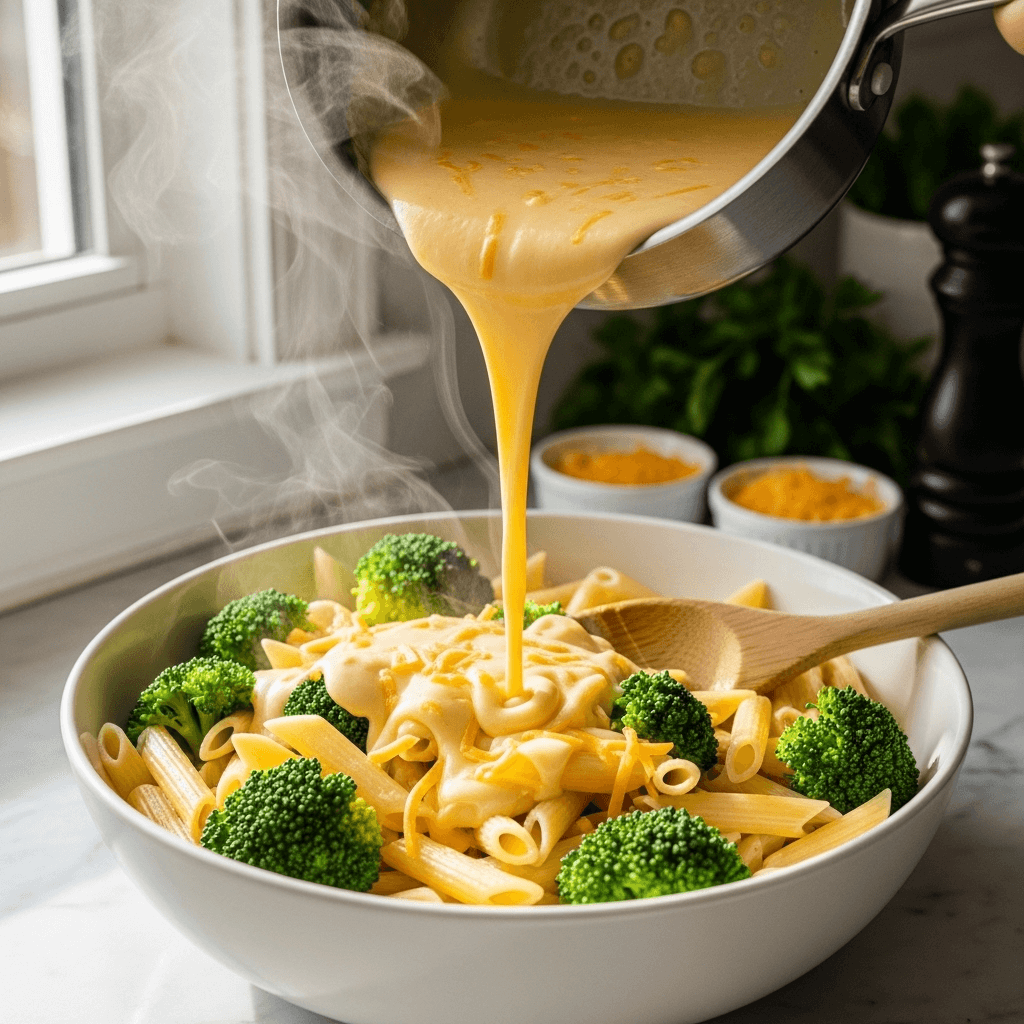

If you’re looking for a comforting, veggie-packed pasta dish that the whole family will actually enjoy, this Cheesy Broccoli Pasta is about to become your new weeknight hero. Imagine tender pasta coated in a velvety cheese sauce with perfectly cooked broccoli florets throughout—it’s comfort food that sneaks in the vegetables without anyone complaining!
This recipe is incredibly popular among busy parents and home cooks because it delivers on every front: it’s ready in just 30 minutes, uses simple pantry ingredients, and transforms plain broccoli into something kids actually get excited about. The creamy cheese sauce is so good that even the pickiest eaters won’t notice they’re eating their greens.
It’s perfect for those chaotic weeknights when you need something satisfying on the table fast, but it’s also nice enough to serve when you have guests over for a casual dinner. Whether you’re feeding toddlers, teenagers, or adults, this dish has universal appeal. Plus, it’s endlessly customizable—add chicken for extra protein, swap in different vegetables, or adjust the cheese blend to suit your family’s preferences. This is the kind of recipe that home cooks make over and over again because it just works.
History / Background
While broccoli and cheese might seem like a modern comfort food pairing, the combination actually has interesting culinary roots. Broccoli itself was first cultivated in Italy over 2,000 years ago and has been a staple of Italian cuisine ever since. The Romans particularly loved this cruciferous vegetable, and it eventually spread throughout Europe.
The marriage of broccoli with cheese sauce, however, is largely an American innovation. During the mid-20th century, as broccoli became more widely available in American grocery stores, home cooks needed creative ways to make this sometimes-bitter vegetable more appealing to their families. The solution? Smother it in cheese! The famous “broccoli and cheese” pairing emerged in the 1950s and 60s, showing up in casseroles, soups, and side dishes across American dinner tables.
Cheesy Broccoli Pasta as we know it today evolved from this tradition, combining the American love for cheese sauce with Italian pasta cooking techniques. It’s essentially a fusion dish that takes the best of both culinary worlds. The recipe gained massive popularity in the 1980s and 90s when quick, family-friendly one-pot meals became essential for dual-income households.
Today, this dish remains a beloved comfort food staple, frequently appearing in meal prep plans, family dinner rotations, and Pinterest boards. It represents practical home cooking at its finest—taking simple, affordable ingredients and transforming them into something everyone genuinely enjoys eating. The recipe has been adapted countless times over the years, with home cooks adding their own touches, but the core concept remains the same: tender pasta, nutritious broccoli, and plenty of melty cheese.
Why You’ll Love This Recipe
This Cheesy Broccoli Pasta is the definition of a crowd-pleaser that doesn’t require hours in the kitchen. It’s one of those magical recipes that tastes indulgent and comforting while still managing to pack in a healthy serving of vegetables. The creamy cheese sauce clings to every piece of pasta and coats the broccoli florets, making each bite absolutely irresistible.
What makes this recipe truly special is how it solves the eternal struggle of getting vegetables on the dinner table in a way that everyone actually enjoys. The broccoli isn’t just an afterthought here—it’s an integral part of the dish, soaking up all that cheesy goodness. Even notorious veggie-avoiders tend to clean their plates when this pasta is on the menu.
Here’s why this will become a regular in your meal rotation:
- Ready in 30 minutes – Perfect for busy weeknights when time is limited
- One-pot wonder – Cook the pasta and broccoli together, then add the sauce. Minimal cleanup!
- Kid-approved – Cheesy pasta is always a winner with children, and this sneaks in vegetables
- Budget-friendly – Uses affordable, everyday ingredients you probably already have
- Vegetarian-friendly – Easily adaptable for vegetarian diets
- Comfort food at its best – Creamy, cheesy, and incredibly satisfying
- Versatile base recipe – Add chicken, bacon, or other veggies to customize
- Great for meal prep – Makes excellent leftovers that reheat beautifully
- Pantry-friendly – No specialty ingredients or trips to gourmet stores required
- Balanced meal – Carbs, protein from cheese, and plenty of vegetables in one bowl
- Always a hit – Consistently delivers on flavor without any fussiness
Ingredient Notes
Let’s break down what goes into this delicious dish and why each component matters. Understanding your ingredients helps you make smart choices and successful substitutions.
Pasta: Short pasta shapes work best here because they hold the cheese sauce beautifully and mix well with broccoli florets. Penne, rigatoni, shells, farfalle (bow ties), or cavatappi are all excellent choices. Use regular, whole wheat, or even chickpea pasta for extra protein. You’ll need about 12 ounces (3/4 pound), which serves 4-6 people generously.
Broccoli: Fresh broccoli florets are ideal—you’ll need about 3-4 cups, which is roughly one large head or two smaller ones. Cut them into bite-sized pieces so they cook evenly with the pasta. Frozen broccoli works too, though it may release more water. If using frozen, don’t thaw it first; just add it directly to the boiling pasta water.
Butter: Unsalted butter gives you control over the salt level and helps create a smooth, rich sauce base. It’s also essential for making the roux that thickens the cheese sauce. Don’t use margarine as it won’t provide the same flavor or texture.
Flour: All-purpose flour thickens the sauce when combined with butter to make a roux. This is what prevents the sauce from being thin and watery. For gluten-free, use a 1:1 gluten-free flour blend or cornstarch (use half the amount).
Milk: Whole milk creates the creamiest sauce, but 2% works fine too. Avoid skim milk as the sauce won’t be as rich. You can also use half-and-half for an extra-luxurious version, or unsweetened almond milk for dairy-free (though the flavor will differ).
Cheese: This is where the magic happens! A combination works best: sharp cheddar for flavor, plus cream cheese or mozzarella for extra creaminess. Use freshly shredded cheese rather than pre-shredded bags, which contain anti-caking agents that prevent smooth melting. You’ll need about 2 cups total.
Garlic: Fresh minced garlic adds aromatic depth that elevates the dish from basic to beautiful. Garlic powder works in a pinch (use 1/2 teaspoon), but fresh is always better.
Seasonings: Salt, black pepper, and a pinch of nutmeg (optional but traditional in cheese sauces) round out the flavors. Garlic powder, onion powder, or Italian seasoning are nice additions too.
Optional Add-ins: Cream cheese makes the sauce extra silky, Parmesan adds nutty depth, and a splash of chicken or vegetable broth can thin the sauce if needed.
Equipment Needed
You won’t need any fancy equipment to make this recipe. Here’s what to gather before you start:
- Large pot (at least 6 quarts) – For boiling pasta and broccoli together
- Medium saucepan – For making the cheese sauce
- Colander or strainer – For draining the pasta and broccoli
- Whisk – Essential for making a smooth, lump-free sauce
- Wooden spoon or silicone spatula – For stirring and combining everything
- Sharp knife – For cutting broccoli into florets
- Cutting board – For prep work
- Measuring cups and spoons – For accurate ingredient portions
- Box grater or food processor – For shredding cheese (if not using pre-shredded)
- Garlic press or microplane – Makes mincing garlic quick and easy
- Serving bowl or individual bowls – For presenting your delicious creation
Cheesy Broccoli Pasta Recipe
- Total Time: 30 minutes
- Yield: 6 servings 1x
- Diet: Vegetarian
Description
Creamy, cheesy pasta loaded with tender broccoli florets in a rich homemade cheese sauce. This easy one-pot dinner comes together in just 30 minutes and is perfect for busy weeknights when you want comfort food that includes vegetables.
Ingredients
For the Pasta:
- 12 ounces penne pasta (or pasta shape of choice)
- 4 cups fresh broccoli florets (about 1 large head)
- 1 tablespoon salt (for pasta water)
For the Cheese Sauce:
- 3 tablespoons unsalted butter
- 3 tablespoons all-purpose flour
- 2 cups whole milk, warmed
- 2 cups shredded sharp cheddar cheese
- 1/2 cup shredded mozzarella cheese
- 3 cloves garlic, minced
- 1/2 teaspoon salt
- 1/4 teaspoon black pepper
- 1/4 teaspoon garlic powder
- Pinch of nutmeg (optional)
- 1/4 cup grated Parmesan cheese (optional, for extra flavor)
Optional Add-ins:
- 4 ounces cream cheese for extra creaminess
- Red pepper flakes for heat
- 1/2 cup pasta water (reserved) to adjust consistency
Instructions
- Cook pasta and broccoli: Bring a large pot of salted water to a rolling boil. Add pasta and cook according to package directions minus 2 minutes. Add broccoli florets to the pot and cook for the remaining 2 minutes until pasta is al dente and broccoli is tender-crisp. Reserve 1 cup of pasta water before draining. Drain pasta and broccoli in a colander and set aside.
- Make the roux: While pasta cooks, melt butter in a medium saucepan over medium heat. Add minced garlic and sauté for 30 seconds until fragrant. Sprinkle in the flour and whisk constantly for 1-2 minutes until the mixture forms a paste and turns light golden. This is your roux—it should smell slightly nutty but not burned.
- Add milk gradually: Slowly pour in the warm milk while whisking continuously to prevent lumps. Start with about 1/4 cup, whisking until smooth, then gradually add the rest. Continue whisking as the mixture comes to a gentle simmer. Cook for 3-4 minutes, stirring frequently, until the sauce thickens enough to coat the back of a spoon.
- Melt in the cheese: Reduce heat to low. Add the shredded cheddar and mozzarella cheese in handfuls, stirring after each addition until completely melted and smooth. Stir in salt, pepper, garlic powder, and nutmeg if using. If the sauce seems too thick, add reserved pasta water 2 tablespoons at a time until you reach desired consistency. For extra creaminess, stir in cream cheese until melted.
- Combine everything: Add the drained pasta and broccoli to the cheese sauce. Toss gently but thoroughly until everything is evenly coated. If the sauce is too thick, add more reserved pasta water to loosen it. The pasta will absorb some sauce as it sits, so err on the side of slightly saucier.
- Taste and adjust: Sample the pasta and adjust seasonings as needed. Add more salt, pepper, or garlic powder to taste. For extra richness, stir in Parmesan cheese.
- Serve immediately: Transfer to a serving bowl or individual plates. Garnish with extra shredded cheese, black pepper, or red pepper flakes if desired. Serve hot and enjoy!
Notes
- Pasta water is your friend: The starchy pasta water helps the sauce cling to the pasta and can thin out a too-thick sauce without diluting flavor.
- Shred your own cheese: Pre-shredded cheese contains anti-caking agents that prevent smooth melting. Always shred from a block for best results.
- Don’t overcook broccoli: You want tender-crisp broccoli, not mushy. Adding it for just the last 2 minutes of pasta cooking is perfect.
- Warm your milk: Cold milk can cause the roux to seize up. Warm it in the microwave for 30-60 seconds before adding to the sauce.
- Sauce thickens as it sits: If reheating leftovers, add a splash of milk or water to bring the sauce back to a creamy consistency.
- Prep Time: 10 minutes
- Cook Time: 20 minutes
- Category: Dinner
- Method: Stovetop
- Cuisine: American
Nutrition
- Serving Size: 1 1/2 cups (about 300g)
- Calories: 445
- Sugar: 6g
- Sodium: 585mg
- Fat: 18g
- Saturated Fat: 11g
- Unsaturated Fat: 6g
- Trans Fat: 0g
- Carbohydrates: 52g
- Fiber: 4g
- Protein: 20g
- Cholesterol: 50mg
Nutrition information is approximate and will vary based on specific ingredients and portions used.
Tips & Variations
This recipe is wonderfully flexible and easy to customize. Here are some ideas to make it your own:
Add Protein: Transform this into a complete meal by adding cooked chicken breast (diced or shredded), crispy bacon crumbles, Italian sausage, or grilled shrimp. For plant-based protein, add white beans or chickpeas.
Make it Spicy: Stir in red pepper flakes, diced jalapeños, or a splash of hot sauce. Pepper jack cheese instead of mozzarella adds nice heat too.
Extra Veggies: Add cauliflower florets along with the broccoli, toss in cherry tomatoes at the end, stir in baby spinach until wilted, or add sautéed mushrooms and bell peppers.
Different Cheese Blends: Try Gruyère for sophisticated flavor, smoked cheddar for depth, or a Mexican cheese blend for a different twist. Gouda melts beautifully and adds richness.
Lighter Version: Use low-fat milk and reduced-fat cheese (results will be less creamy). Skip the roux and use Greek yogurt stirred in at the end for tanginess with less fat.
Gluten-Free: Use gluten-free pasta and substitute cornstarch (half the amount) for flour in the sauce, or use a 1:1 gluten-free flour blend.
Vegan Adaptation: Use plant-based butter, dairy-free milk, and vegan cheese. Nutritional yeast adds cheesy flavor. The texture won’t be identical but still delicious.
Baked Version: After combining everything, transfer to a greased baking dish, top with breadcrumbs and extra cheese, and bake at 375°F for 20 minutes until bubbly and golden.
Herb It Up: Fresh herbs like parsley, basil, or thyme add brightness. Stir them in at the end or use as garnish.
Lemon Twist: A squeeze of fresh lemon juice at the end brightens the rich sauce and cuts through the heaviness.
Pro Chef Tips
Want to elevate your Cheesy Broccoli Pasta from good to absolutely restaurant-quality? Here are some professional techniques:
Toast your flour: When making the roux, let the flour cook a full 2 minutes until it smells nutty. This removes the raw flour taste and adds depth to the sauce. Watch carefully so it doesn’t burn.
Use the two-cheese rule: Always use at least two types of cheese—one for flavor (like sharp cheddar) and one for texture (like mozzarella or cream cheese). This creates the perfect balance of taste and creaminess.
Temper your additions: Whether adding cold milk or room-temperature cheese, do it gradually. Shocking a hot roux with cold liquid can cause lumps, and adding all the cheese at once can make the sauce grainy.
Season the pasta water generously: It should taste like the sea. This is your only chance to season the pasta from the inside out. Under-salted pasta water means bland pasta that even the best sauce can’t fully fix.
Undercook your pasta slightly: Since it will continue cooking when you add it to the hot sauce, cook pasta 1-2 minutes less than package directions. This prevents mushy pasta.
Save that pasta water: The starchy water is liquid gold for adjusting sauce consistency. It adds body without thinning the flavor like regular water would.
Low and slow for cheese: Once you add cheese to the sauce, keep heat low. High heat can cause the proteins to seize and become grainy or stringy. Patience equals silky smoothness.
Grate cheese at room temperature: It melts faster and more evenly. Cold cheese takes longer to melt and can cool down your sauce, causing texture issues.
Bloom your garlic: Cooking garlic briefly in the butter before adding flour infuses the whole sauce with flavor. Just 30-60 seconds is perfect—any longer and it burns.
Finish with fat: A small pat of butter or drizzle of olive oil stirred in right before serving adds glossy richness and helps the sauce cling to pasta.
Common Mistakes to Avoid
Even simple recipes can go wrong. Here’s how to sidestep the most common issues:
Adding cheese to sauce that’s too hot: High heat causes cheese proteins to seize up, creating a grainy, separated sauce instead of smooth and creamy. Always reduce heat to low before adding cheese, and add it gradually while stirring constantly.
Using pre-shredded cheese: Those convenient bags contain cellulose (wood pulp) as an anti-caking agent. While fine for sprinkling on tacos, it prevents smooth melting in sauces, creating a grainy texture and potential stringiness. Always shred from a block for sauces.
Not making enough sauce: Pasta absorbs sauce as it sits, and broccoli holds onto it too. Your perfectly sauced pasta might look dry 5 minutes later. Make it slightly saucier than you think necessary, and keep some pasta water on hand to loosen it up.
Overcooking the broccoli: Mushy, olive-green broccoli isn’t appetizing. Adding it for just the last 2 minutes of pasta cooking keeps it bright green and tender-crisp with a slight bite. If you prefer softer broccoli, add it 1 minute earlier, but no more.
Rushing the roux: That flour and butter mixture needs to cook for a full 1-2 minutes to remove the raw flour taste. If you add milk too soon, your sauce will taste pasty and starchy. Look for a light golden color and nutty aroma.
Dumping cold milk into hot roux: This temperature shock can cause lumps and make it harder to achieve a smooth sauce. Warm your milk for 30-60 seconds in the microwave first, then add it gradually while whisking constantly.
Not reserving pasta water: Once you’ve dumped that liquid gold down the drain, there’s no getting it back. Always scoop out at least a cup before draining. You might not need it, but you’ll be glad it’s there if the sauce gets too thick.
Storage & Meal Prep
This Cheesy Broccoli Pasta stores beautifully, making it perfect for meal prep or enjoying leftovers throughout the week.
Refrigerator Storage: Allow the pasta to cool to room temperature (but don’t leave it out longer than 2 hours). Transfer to an airtight container and refrigerate for up to 4 days. The sauce will thicken considerably in the fridge, which is completely normal.
Reheating Instructions: The key to reheating cream-based pasta is adding liquid to loosen the sauce. For stovetop reheating (best method), place pasta in a skillet over medium-low heat. Add 2-3 tablespoons of milk, cream, or water per serving. Stir frequently until heated through, about 5-7 minutes. The sauce will loosen up and become creamy again. For microwave reheating, place a portion in a microwave-safe bowl, add a splash of milk, cover with a damp paper towel, and heat in 1-minute intervals at 70% power, stirring between intervals.
Meal Prep Tips: This is fantastic for Sunday meal prep! Cook the full recipe, let it cool, then portion into individual containers. When reheating throughout the week, the dish actually develops more flavor as the seasonings meld together. Store a small container of milk separately to add when reheating if needed.
Preventing Dryness: If you know you’ll be eating leftovers, intentionally make the sauce a bit thinner than usual. The pasta will absorb sauce over time, so starting with extra ensures it won’t be dry later.
Make-Ahead & Freezer Notes
Planning ahead? Here’s how to prep this dish in advance:
Make-Ahead Options:
- Prep vegetables: Cut broccoli into florets and store in an airtight container in the fridge for up to 3 days before cooking.
- Shred cheese: Grate all your cheese and store in the fridge up to 2 days ahead. Bring to room temperature before adding to sauce.
- Make sauce ahead: Prepare the cheese sauce up to 2 days in advance. Store in the fridge and gently reheat before tossing with freshly cooked pasta and broccoli.
- Partial cook: Make the entire dish but slightly undercook the pasta. Cool, refrigerate, and reheat in a 350°F oven for 20 minutes when ready to serve.
Freezing Instructions:
Cream-based pasta sauces can be tricky to freeze because dairy sometimes separates when thawed. However, this dish does freeze reasonably well if done correctly:
- Cook the recipe completely but keep pasta slightly firmer than usual.
- Let cool completely to room temperature.
- Transfer to freezer-safe containers or heavy-duty freezer bags, leaving 1 inch of headspace for expansion.
- Label with date and freeze for up to 2 months.
Thawing and Reheating from Frozen:
- Best method: Thaw overnight in the refrigerator, then reheat in a saucepan over medium-low heat with added milk to restore creaminess.
- Quick method: Microwave from frozen at 50% power in 2-minute intervals, stirring and adding milk as needed.
- Note: The sauce may look slightly separated when thawed, but stirring vigorously while reheating with added milk will bring it back together.
Better Freezer Alternative: Freeze the cheese sauce separately from the cooked pasta and broccoli. Thaw the sauce, reheat with a splash of milk, then toss with freshly cooked pasta and broccoli for best texture and flavor.
Serving Suggestions
This Cheesy Broccoli Pasta is hearty enough to stand alone, but here are some delicious ways to round out your meal:
Proteins to Add:
- Grilled chicken breast – Sliced and placed on top or cubed and mixed in
- Crispy bacon – Crumbled over the top for smoky crunch
- Italian sausage – Sliced and browned, adds great flavor
- Baked salmon – Flaked into the pasta for omega-3s
- Rotisserie chicken – Quick and easy protein boost
Side Dishes:
- Simple green salad – Arugula or mixed greens with lemon vinaigrette cuts the richness
- Caesar salad – A classic pairing that never disappoints
- Roasted vegetables – Carrots, zucchini, or asparagus add variety
- Garlic bread – Perfect for soaking up any extra sauce
- Breadsticks – Easy and kid-friendly
Bread Options:
- Crusty French baguette – Slice and toast with garlic butter
- Focaccia – Soft, herby Italian bread pairs beautifully
- Ciabatta rolls – Great for a complete meal
- Garlic knots – Fun and delicious
Beverages:
- White wine – A crisp Pinot Grigio or Chardonnay complements the cream sauce
- Sparkling water – With lemon or lime for a refreshing contrast
- Iced tea – Sweet or unsweetened works well
- Lemonade – Kids love this pairing
Make it a Complete Dinner: Start with a simple tomato soup or minestrone, serve the cheesy broccoli pasta as the main course with garlic bread, and finish with a light dessert like fruit sorbet or tiramisu.
FAQs Section
Can I use frozen broccoli instead of fresh? Yes! Frozen broccoli works well in this recipe. Don’t thaw it first—just add it directly to the boiling pasta water. Frozen broccoli may release more water, so be prepared to drain it well. You might need slightly less pasta water in your sauce since frozen broccoli tends to be wetter.
Why is my cheese sauce grainy or separated? This usually happens when cheese is added to sauce that’s too hot, or if you used pre-shredded cheese. Always reduce heat to low before adding cheese, and always shred from a block. Add cheese gradually while stirring constantly. If your sauce does break, try whisking in a tablespoon of cream cheese or a bit of warm milk while stirring vigorously.
Can I make this dairy-free? Yes, though the flavor will be different. Use plant-based butter, unsweetened almond or oat milk, and dairy-free cheese shreds. Nutritional yeast adds cheesy flavor. Cashew cream (soaked cashews blended with water) makes an excellent creamy base. The texture won’t be identical to dairy-based sauce but can still be delicious.
How do I prevent the pasta from getting dry when stored? The pasta absorbs sauce over time, which is normal. Prevent this by making the sauce slightly thinner than desired initially, and always reserve pasta water. When reheating, add milk or the reserved pasta water to restore creaminess. Store in an airtight container to prevent moisture loss.
Can I use different types of pasta? Absolutely! Short pasta shapes work best (penne, shells, rotini, farfalle, rigatoni, cavatappi) because they hold sauce well and are easy to eat with broccoli. Long pasta like spaghetti or fettuccine works too but is slightly less convenient with the broccoli florets. Whole wheat, chickpea, or lentil pasta are great for extra nutrition.
What’s the best cheese to use? Sharp cheddar is ideal because it provides strong flavor. Combine it with mozzarella or Monterey Jack for extra creaminess. For the best results, use a blend—something sharp for flavor and something mild and melty for texture. Gruyère, fontina, or white cheddar are excellent upgrades. Avoid using only Parmesan as it won’t create a creamy sauce on its own.
Can I add other vegetables? Yes! Cauliflower florets cook in the same time as broccoli and taste great. Frozen peas can be stirred in at the end. Sautéed mushrooms, bell peppers, or cherry tomatoes are delicious additions. Baby spinach wilts beautifully when stirred into the hot pasta. Just keep in mind that adding watery vegetables may require less pasta water in your sauce.
Is this recipe kid-friendly? Very much so! Kids love cheesy pasta, and the broccoli becomes much more appealing when coated in cheese sauce. If you have particularly picky eaters, chop the broccoli into smaller pieces so it blends in more. You can also reduce the amount of broccoli at first and gradually increase it as they get used to the dish.
Conclusion
And there you have it—a simple, delicious Cheesy Broccoli Pasta that proves vegetables can be just as crave-worthy as any indulgent comfort food! This recipe has earned its place in countless family dinner rotations for good reason: it’s quick, affordable, incredibly satisfying, and makes everyone at the table happy.
The beauty of this dish is in its simplicity and flexibility. Once you master the basic technique of making a cheese sauce, you can customize it endlessly to suit your family’s tastes and whatever ingredients you have on hand. It’s one of those reliable recipes that works every single time and tastes like you put in way more effort than you actually did.
Whether you’re feeding picky kids who “don’t like vegetables,” meal prepping for a busy week ahead, or just craving some cozy comfort food, this Cheesy Broccoli Pasta has you covered. The creamy sauce, tender pasta, and perfectly cooked broccoli come together in a way that’s simply irresistible.