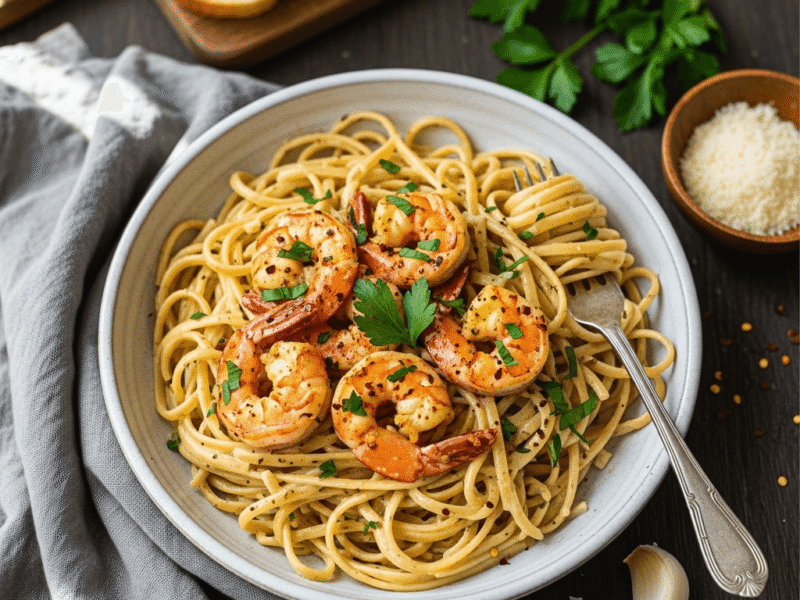

Imagine perfectly tender shrimp swimming in a pool of garlicky, buttery white wine sauce, finished with a squeeze of fresh lemon and a shower of parsley. This Garlic Butter Shrimp Scampi is the definition of elegant simplicity—it tastes like you ordered it at a fancy Italian restaurant, but it comes together in your own kitchen in just 15 minutes. The combination of succulent shrimp, aromatic garlic, rich butter, and bright lemon creates a flavor profile that’s both comforting and sophisticated.
Shrimp scampi has been a beloved classic on Italian-American restaurant menus for decades, and for good reason. It’s quick enough for a busy weeknight, impressive enough for date night, and absolutely delicious served over pasta, with crusty bread, or alongside rice. The beauty of this dish lies in its simplicity—with just a handful of quality ingredients and one pan, you can create restaurant-quality results that’ll have everyone asking for seconds. Whether you’re a seafood lover looking for a new go-to recipe or a home cook wanting to expand your repertoire, this garlic butter shrimp scampi is about to become your new favorite dinner.
History / Background
Shrimp scampi has a fascinating history that bridges Italian and American culinary traditions. The word “scampi” actually refers to a type of small lobster (Nephrops norvegicus) found in the Mediterranean and northeastern Atlantic. In Italy, these crustaceans are traditionally prepared “alla scampi”—sautéed in olive oil, garlic, white wine, and parsley. However, since actual scampi are rare and expensive in the United States, Italian immigrants adapted the preparation method to use readily available large shrimp instead.
The dish as we know it today emerged in Italian-American restaurants in the mid-20th century, particularly in New York City’s Little Italy and other Italian-American communities. Chefs took the classic Italian preparation technique and applied it to Gulf shrimp, creating something new yet familiar. The addition of butter (less common in traditional Italian cooking, which favors olive oil) is distinctly American, creating that rich, luxurious sauce that defines the dish today.
By the 1960s and 1970s, shrimp scampi had become a staple on Italian-American restaurant menus across the country. It represented sophistication and continental dining at a time when Americans were increasingly interested in international cuisine. The dish’s popularity was also driven by its theatrical presentation—often served sizzling in the pan at the table, the aroma of garlic and butter announcing its arrival.
What makes shrimp scampi special is how it exemplifies the beautiful fusion of Italian technique with American ingredients and preferences. It honors the Italian tradition of simple preparations that let quality ingredients shine, while embracing the American love of butter, generous portions, and bold flavors. Today, it remains one of the most popular seafood dishes in the United States, beloved by home cooks and professional chefs alike for its speed, elegance, and universally appealing flavor profile.
Why You’ll Love This Recipe
This Garlic Butter Shrimp Scampi is the ultimate weeknight superhero—it swoops in to save dinner with minimal effort and maximum impact. It’s the kind of recipe you’ll return to again and again because it solves so many cooking dilemmas at once: it’s fast, it’s impressive, and it requires just one pan and ingredients you probably already have.
Here’s why this recipe will become your new obsession:
- Lightning-fast cooking – From start to finish, you’re done in 15 minutes, faster than delivery
- Restaurant-quality at home – Tastes like a $25 Italian restaurant entrée but costs a fraction to make
- One-pan wonder – Everything cooks in a single skillet, minimizing cleanup
- Naturally low-carb and keto-friendly – Fits perfectly into low-carb eating plans as written
- Gluten-free option – Easily made gluten-free by serving with appropriate sides
- Impressively elegant – Perfect for date nights, dinner guests, or when you want to feel fancy
- Minimal ingredients – Just 10 simple ingredients create incredible depth of flavor
- Versatile serving options – Delicious over pasta, with bread, over rice, or with vegetables
- Healthy protein – Shrimp is lean, high in protein, and packed with nutrients
- Kid-approved – The mild, buttery flavor appeals even to picky eaters
- Foolproof technique – Hard to mess up, making it perfect for beginners
- Special occasion worthy – Elegant enough for holidays, celebrations, or romantic dinners
Ingredient Notes
Let’s talk about what makes this shrimp scampi so irresistible. Understanding each ingredient helps you achieve restaurant-quality results.
Large Shrimp: The star of the show. Use large or jumbo shrimp (16-20 count per pound) for the best presentation and texture. Pre-peeled and deveined shrimp save time, though shell-on shrimp have slightly more flavor. Fresh is ideal, but frozen works perfectly—just thaw completely and pat dry. The shrimp’s natural sweetness is enhanced by the garlic butter sauce.
Butter: Unsalted butter is essential for creating that rich, silky sauce and controlling salt levels. The butter melds with the wine and lemon juice to create an emulsified sauce that coats the shrimp beautifully. For best results, use real butter—not margarine. You can use half butter and half olive oil for a lighter version.
Garlic: Fresh garlic is non-negotiable—6-8 cloves provide that signature aromatic punch. The garlic sautés in butter until fragrant, creating the flavor foundation. Jarred minced garlic lacks the fresh, pungent complexity needed for this dish. Don’t be intimidated by the amount—it mellows as it cooks.
White Wine: Dry white wine (Pinot Grigio, Sauvignon Blanc, or Chardonnay) adds acidity, depth, and sophistication. The alcohol cooks off, leaving only complex flavor. Use a wine you’d actually drink—never “cooking wine” which contains salt and additives. If avoiding alcohol, substitute with chicken broth plus extra lemon juice.
Fresh Lemon: Both juice and zest are important. The zest contains aromatic oils that add fragrance, while the juice provides bright acidity that balances the rich butter. Always use fresh lemons—bottled lemon juice tastes flat and artificial. One large lemon should provide enough juice and zest.
Red Pepper Flakes: A small amount adds subtle warmth and complexity without making the dish spicy. This is traditional in Italian seafood preparations. Adjust to your heat preference or omit entirely for milder versions.
Fresh Parsley: Italian flat-leaf parsley is traditional and has better flavor than curly parsley. It adds a fresh, slightly peppery note and beautiful green color. While dried herbs work in some recipes, fresh parsley is really worth it here—it’s a finishing touch that makes the dish pop.
Olive Oil: Used in combination with butter for sautéing. Extra virgin olive oil adds fruity notes and can handle the high heat better than butter alone. The combination gives you the best of both worlds—butter’s richness with olive oil’s flavor and stability.
Salt and Black Pepper: Essential for seasoning the shrimp and adjusting the sauce. Use kosher salt or sea salt for best flavor, and freshly ground black pepper for more complexity than pre-ground.
Optional Pasta: Linguine, angel hair, or spaghetti are traditional choices. The pasta serves as a vehicle for that incredible sauce. You can also serve with rice, cauliflower rice, zucchini noodles, or crusty bread instead.
Equipment Needed
This recipe requires minimal equipment, making it accessible for any home cook:
- Large skillet or sauté pan (12-inch is ideal) – A wide pan with high sides works best. Stainless steel or non-stick both work beautifully.
- Tongs or slotted spoon – For handling the shrimp gently without breaking them
- Wooden spoon or spatula – For stirring and creating the sauce
- Sharp knife and cutting board – For mincing garlic and chopping parsley
- Citrus juicer – Optional but helpful for extracting lemon juice efficiently
- Microplane or zester – For getting fine lemon zest
- Measuring cups and spoons – For accurate ingredient amounts
- Paper towels – For patting shrimp dry before cooking
- Large pot – If cooking pasta to serve alongside
- Colander – For draining pasta
That’s all you need! No specialty equipment required—just basic kitchen tools that create extraordinary results.
Garlic Butter Shrimp Scampi Recipe
- Total Time: 15 minutes
- Yield: 4 servings 1x
- Diet: Gluten Free
Description
Succulent shrimp sautéed in aromatic garlic butter with white wine, fresh lemon, and herbs. This classic Italian-American dish is ready in just 15 minutes and tastes like restaurant-quality fine dining at home.
Ingredients
- 1 ½ pounds large shrimp, peeled and deveined (16-20 count)
- 6 tablespoons unsalted butter, divided
- 2 tablespoons olive oil
- 6-8 cloves garlic, minced (about 3 tablespoons)
- ½ cup dry white wine (Pinot Grigio or Sauvignon Blanc)
- Juice of 1 large lemon (about 3 tablespoons)
- Zest of 1 lemon
- ¼ teaspoon red pepper flakes (adjust to taste)
- ½ teaspoon salt (adjust to taste)
- ¼ teaspoon black pepper
- ¼ cup fresh parsley, chopped
- Lemon wedges for serving
- Optional: 12 ounces linguine or pasta of choice
Instructions
- Prep the shrimp: Pat the shrimp completely dry with paper towels—this is crucial for proper searing. Season both sides with salt and black pepper. Set aside.
- Cook pasta (if using): If serving with pasta, cook it according to package directions in salted boiling water until al dente. Reserve ½ cup pasta water before draining. Keep warm.
- Start the aromatics: Heat 2 tablespoons of butter and the olive oil in your large skillet over medium-high heat until the butter is melted and shimmering. The combination prevents the butter from burning.
- Sear the shrimp: Add the shrimp to the hot skillet in a single layer (work in batches if needed to avoid crowding). Cook for 1-2 minutes per side until pink and opaque with golden edges. Don’t overcook—shrimp cook fast! Remove shrimp to a plate and set aside.
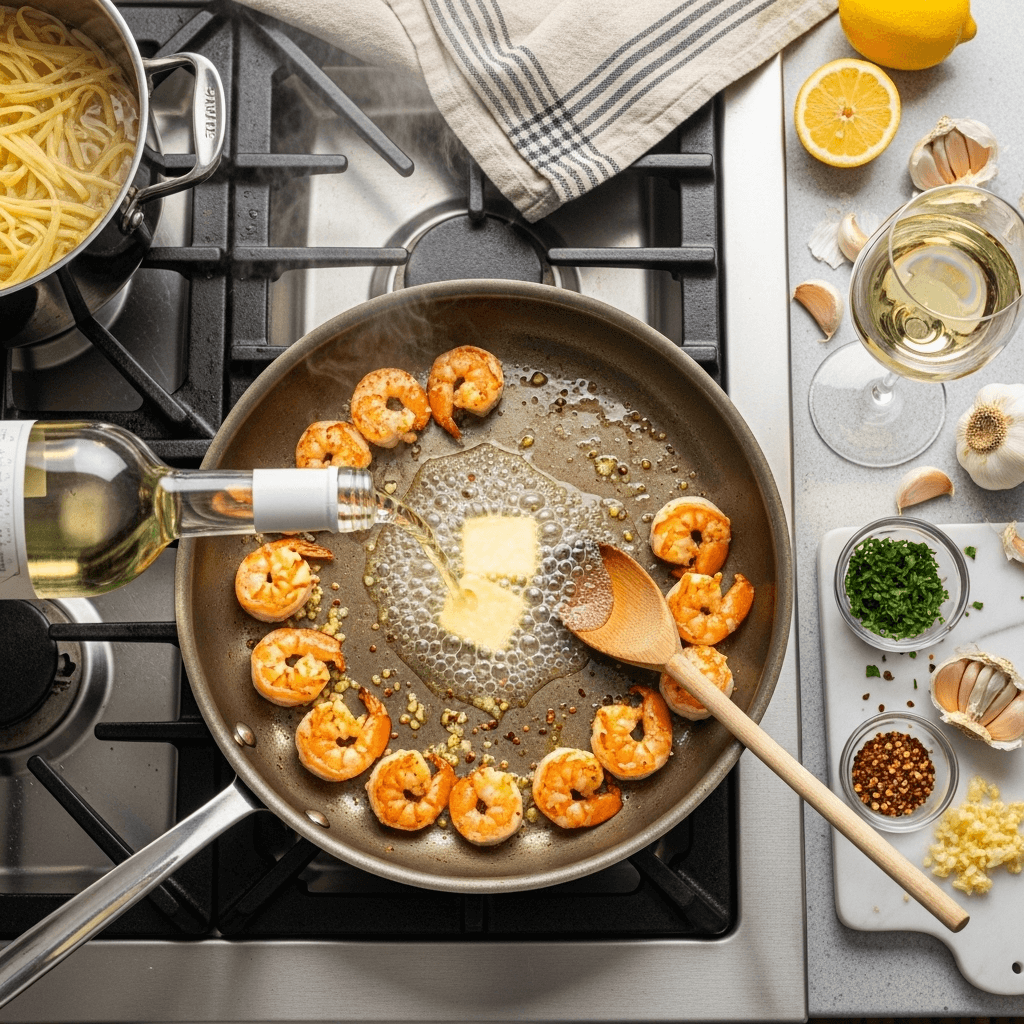
- Build the sauce: In the same skillet, reduce heat to medium. Add the remaining 4 tablespoons of butter. Once melted, add the minced garlic and red pepper flakes. Sauté for 30-45 seconds until fragrant, stirring constantly to prevent burning. The kitchen should smell amazing!
- Deglaze with wine: Pour in the white wine, scraping up any flavorful brown bits from the bottom of the pan with your wooden spoon. This is called deglazing and adds incredible depth. Let the wine simmer for 2-3 minutes until reduced by about half.
- Add lemon: Stir in the lemon juice and lemon zest. Let it simmer for another minute. The sauce should be slightly thickened and glossy. Taste and adjust seasoning with more salt if needed.
- Return the shrimp: Add the cooked shrimp back to the skillet along with any accumulated juices from the plate. Toss to coat in the sauce and cook for just 1 minute to heat through. Don’t overcook or the shrimp will become rubbery.
- Finish with herbs: Remove from heat and stir in the chopped fresh parsley. If the sauce seems too thick, add a splash of pasta water or chicken broth to thin it to your desired consistency.
- Serve immediately: If serving with pasta, toss the drained pasta directly into the skillet with the shrimp and sauce, adding reserved pasta water as needed to help the sauce coat the noodles. Serve immediately with lemon wedges and extra parsley.
Notes
- Wine substitute: Replace wine with ½ cup chicken broth plus 1 tablespoon extra lemon juice for alcohol-free version.
- Shrimp size: If using smaller shrimp, reduce cooking time to 1 minute per side. Larger shrimp may need an extra 30 seconds per side.
- Make it spicy: Double the red pepper flakes or add a pinch of cayenne for more heat.
- Gluten-free: Use gluten-free pasta or serve over cauliflower rice, zucchini noodles, or with gluten-free bread.
- Sauce consistency: The sauce should be light and slightly loose, not thick. Add pasta water or broth if needed to thin.
- Butter substitute: You can use all olive oil instead of butter for dairy-free, but the flavor will be lighter and less rich.
- Fresh vs. frozen shrimp: Both work! Just ensure frozen shrimp are completely thawed and very dry.
- Prep Time: 5 minutes
- Cook Time: 10 minutes
- Category: Dinner
- Method: Stovetop
- Cuisine: Italian-American
Nutrition
- Serving Size: About 6-7 shrimp with sauce (without pasta)
- Calories: 325
- Sugar: 0g
- Sodium: 680mg
- Fat: 22g
- Saturated Fat: 11g
- Unsaturated Fat: 9g
- Trans Fat: 0g
- Carbohydrates: 4g
- Fiber: 0g
- Protein: 26g
- Cholesterol: 285mg
Nutrition information is approximate and will vary based on specific ingredients and portion sizes. Does not include pasta.
Tips & Variations
The classic recipe is fantastic, but here are ways to customize it:
Creamy Scampi: Stir in ¼ cup heavy cream or half-and-half at the end for a luscious, creamy version of the sauce.
Extra Vegetables: Add halved cherry tomatoes, baby spinach, or asparagus tips to the sauce for extra nutrition and color. Add vegetables before returning the shrimp.
Cajun Style: Season shrimp with Cajun seasoning before cooking for a spicy, Southern twist.
Mediterranean Flair: Add Kalamata olives, capers, and a pinch of oregano for Greek-inspired flavors.
Herb Variations: Try fresh basil instead of parsley, or add fresh thyme or tarragon to the butter for different flavor profiles.
Breadcrumb Topping: Top with toasted panko breadcrumbs mixed with Parmesan for crunchy texture.
Different Proteins: This preparation works beautifully with scallops, chunks of white fish, or even chicken (adjust cooking times accordingly).
Make it Lighter: Use half the butter and increase olive oil. The flavor will be lighter but still delicious.
Asian Fusion: Add fresh ginger with the garlic and finish with a splash of soy sauce for an East-meets-West version.
Spicy Lemon Version: Add extra lemon zest and increase red pepper flakes to ½ teaspoon for bright, spicy flavor.
Pro Chef Tips
Want to elevate your shrimp scampi from good to absolutely restaurant-quality? Here are professional secrets:
Dry shrimp thoroughly: The single most important step for perfectly cooked shrimp. Moisture prevents proper searing and makes shrimp release water, creating a watery sauce. Pat completely dry with paper towels and let sit for a few minutes.
Room temperature shrimp: Take shrimp out of the fridge 10-15 minutes before cooking. Cold shrimp hit a hot pan and cool it down, preventing proper searing and causing uneven cooking.
Don’t crowd the pan: Shrimp need space to sear properly. If they’re touching, they’ll steam instead of developing those beautiful golden edges. Cook in batches if necessary.
High heat for shrimp, moderate for sauce: Sear shrimp over medium-high to high heat for quick cooking and caramelization. Reduce to medium when building the sauce to prevent garlic from burning.
Fresh garlic timing: Add garlic after removing shrimp and reducing heat. Garlic burns easily and tastes bitter when burnt. Cook it just until fragrant—30-45 seconds maximum.
Quality wine matters: Use a wine you’d actually drink. Poor quality wine creates poor quality sauce. The wine’s flavor concentrates as it reduces, so flaws become more pronounced.
Emulsify the sauce: Swirl the pan while cooking to help the butter, wine, and lemon juice combine into a smooth, glossy sauce. Adding a small pat of cold butter at the very end (off heat) creates restaurant-level silkiness.
Reserve pasta water: If serving with pasta, that starchy water is liquid gold for adjusting sauce consistency and helping it cling to noodles.
Season in layers: Salt the shrimp before cooking, taste the sauce and adjust, then do a final seasoning check before serving. Building seasoning creates depth.
Fresh lemon is essential: Bottled lemon juice lacks the aromatic oils and bright flavor of fresh. Always use fresh lemons, and add the zest—it makes a difference.
Common Mistakes to Avoid
Even simple recipes can go wrong. Here’s what to watch out for:
Overcooking the shrimp: This is the #1 mistake. Overcooked shrimp are rubbery, tough, and chewy. Shrimp cook incredibly fast—2-3 minutes total. They’re done when they turn pink and opaque with a slight curl. Pull them just before they’re completely done since they’ll continue cooking from residual heat.
Burning the garlic: Garlic goes from perfect to burnt in seconds. Burnt garlic is bitter and ruins the entire dish. Always add garlic to moderate heat, stir constantly, and add liquid within a minute to stop the cooking. If you do burn it, start over—there’s no saving burnt garlic.
Using too much heat for the sauce: While high heat is great for searing shrimp, it’s too hot for building the sauce. Butter can burn, garlic will scorch, and the wine will reduce too quickly. Medium heat creates the perfect environment for sauce development.
Skipping the wine reduction: Don’t rush this step! The wine needs time to simmer and reduce by half, which concentrates flavor and cooks off the harsh alcohol taste. This creates depth and complexity.
Not seasoning properly: Unsalted butter means you control the salt. Many home cooks under-salt, resulting in bland food. Taste as you go and adjust. The sauce should taste vibrant and flavorful.
Using wet shrimp: Wet shrimp won’t sear—they’ll release water and boil instead, creating a watery sauce and rubbery texture. Always pat completely dry.
Skipping the pasta water: If serving with pasta, that starchy water helps the sauce coat the noodles and adjust consistency. Don’t dump it down the drain—save at least a cup.
Storage & Meal Prep
While shrimp scampi is best enjoyed fresh, here’s how to handle leftovers:
Refrigerator Storage: Store cooled shrimp and sauce in an airtight container in the refrigerator for up to 2 days. The garlic flavor will intensify overnight. Store pasta separately if possible, as it continues absorbing sauce.
Reheating Instructions: Gentle reheating is essential to prevent rubbery shrimp. Best method: Reheat in a skillet over low heat, adding a splash of chicken broth, white wine, or water to refresh the sauce. Heat just until warmed through, about 3-5 minutes. Microwave works but is less ideal—use 50% power in 30-second intervals, stirring between each.
Texture After Storage: The shrimp won’t have that fresh-seared exterior after refrigeration, but the flavor remains excellent if reheated gently. The butter may separate slightly when cold—this is normal and will re-emulsify when gently reheated.
Not Ideal for Meal Prep: Honestly, shrimp scampi is best enjoyed immediately. The shrimp can become rubbery when stored and reheated, and the delicate sauce doesn’t hold as well as heartier dishes. Since it only takes 15 minutes to make, cooking fresh is preferable.
Leftover Ideas: Rather than reheating as-is, repurpose leftovers into shrimp pasta salad (serve cold), shrimp tacos, or chop the shrimp and use in omelets or grain bowls.
Make-Ahead & Freezer Notes
Since this recipe is so quick, make-ahead isn’t necessary, but here’s what you can do:
Prep Ingredients Ahead: You can prep components up to 24 hours in advance—peel and devein shrimp, mince garlic, chop parsley, juice and zest lemon. Store each in separate containers in the fridge. When ready to cook, you’ll have dinner on the table in under 10 minutes.
Marinate Shrimp: You can marinate shrimp in olive oil, garlic, and lemon juice for 30 minutes to 2 hours before cooking. Pat dry before searing. Don’t marinate longer or the acid will start “cooking” the shrimp.
Freezing Cooked Scampi: Not recommended. Cooked shrimp become rubbery when frozen and thawed, and the butter sauce separates badly. The texture and quality suffer significantly.
Freezing Raw Shrimp: If you bought fresh shrimp and won’t use them right away, freeze them raw instead of cooked. Arrange in a single layer on a baking sheet, freeze until solid, then transfer to a freezer bag. Freeze for up to 3 months. Thaw in the refrigerator overnight before using.
Best Strategy: Since this recipe takes only 15 minutes from start to finish, the best “make-ahead” strategy is simply having all ingredients on hand. The cooking is so quick that preparing it fresh is the best option for quality and taste.
If You Must Freeze: If you have leftover sauce (without shrimp), it freezes reasonably well for up to 1 month. Thaw in the refrigerator and reheat gently, whisking to re-emulsify. Cook fresh shrimp and toss with the reheated sauce.
Serving Suggestions
Shrimp scampi is versatile and pairs beautifully with many sides. Here’s how to build a complete meal:
Classic Pasta: Linguine, angel hair, spaghetti, or fettuccine are traditional. Toss the hot pasta directly into the sauce—don’t serve sauce on top. The pasta should be coated, not just topped.
Bread for Dipping: Crusty Italian bread, garlic bread, or a baguette are essential for soaking up every drop of that buttery, garlicky sauce. Don’t skip this!
Rice Options: Serve over white rice, brown rice, cauliflower rice (for low-carb), or risotto. The rice absorbs the sauce beautifully.
Vegetable Noodles: Zucchini noodles (zoodles), spaghetti squash, or shirataki noodles make excellent low-carb, lighter options.
Vegetable Sides: Roasted asparagus, steamed broccoli, sautéed green beans, roasted Brussels sprouts, or a simple salad provide balance to the rich sauce.
Salads: A crisp green salad with vinaigrette, Caesar salad, Caprese salad, or arugula salad with lemon dressing complement the richness beautifully.
Polenta or Grits: Creamy polenta or cheese grits make a Southern-Italian fusion base that’s incredibly comforting.
Wine Pairing: Serve the same white wine you cooked with—Pinot Grigio, Sauvignon Blanc, or Chardonnay. For non-alcoholic options, try sparkling water with lemon or white grape juice.
Complete Dinner Ideas:
- Classic: Shrimp scampi over linguine, Caesar salad, garlic bread, white wine
- Low-Carb: Scampi over zucchini noodles, roasted asparagus, side salad
- Weeknight Simple: Scampi over rice, steamed broccoli, crusty bread
- Date Night: Scampi over angel hair pasta, arugula salad, garlic bread, wine, tiramisu for dessert
FAQs Section
Can I use frozen shrimp?
Absolutely! Frozen shrimp works perfectly—about 90% of “fresh” shrimp at grocery stores was previously frozen anyway. Thaw completely in the refrigerator overnight or place sealed bag in cold water for 20-30 minutes. Pat very dry with paper towels before cooking. Never cook from frozen or you’ll have watery, steamed shrimp.
What if I don’t have white wine?
No problem! Substitute with ½ cup chicken broth or seafood stock plus 1 tablespoon extra lemon juice to replace the wine’s acidity. Dry vermouth also works beautifully. The flavor will be slightly different but still delicious—the wine adds complexity, but it’s not essential.
How do I know when shrimp are done?
Shrimp cook very quickly and are done when they turn from gray/translucent to pink and opaque. They’ll curl into a “C” shape. If they curl into a tight “O” shape, they’re overcooked. The texture should be firm but tender, not rubbery. This usually takes 2-3 minutes total (1-2 minutes per side).
Can I make this dish without butter?
You can use all olive oil instead of butter for dairy-free or lighter versions. Use 6-8 tablespoons of good quality olive oil total. The sauce won’t be as rich and silky, but it will still be flavorful. Ghee (clarified butter) is another option that adds richness without dairy.
My sauce is too thin—how do I thicken it?
Let it simmer a bit longer to reduce and concentrate. You can also swirl in an extra tablespoon of cold butter off heat, which helps emulsify and thicken. If serving with pasta, add some of that starchy pasta water—it helps thicken the sauce naturally. Avoid adding flour or cornstarch, which would make it gloopy rather than silky.
Can I use pre-minced garlic from a jar?
While you can, I strongly recommend against it. Jarred garlic lacks the fresh, pungent flavor and aroma that defines great shrimp scampi. Fresh garlic only takes a minute to mince and makes a dramatic difference in this recipe where garlic is a star ingredient. It’s worth the small extra effort.
Is shrimp scampi supposed to have a lot of sauce?
Traditional shrimp scampi has a light, buttery sauce that coats the shrimp and pasta, not a heavy, thick sauce or soup. The sauce should be flavorful but not overly abundant—think elegant coating rather than swimming in liquid. If it seems too saucy, simmer a bit longer to reduce; if too dry, add a splash of pasta water or broth.
Conclusion
And there you have it—your ticket to restaurant-quality Italian-American dining in just 15 minutes! This Garlic Butter Shrimp Scampi proves that impressive doesn’t have to mean complicated, and delicious doesn’t have to take hours. With one pan, a handful of simple ingredients, and basic techniques, you can create something truly special that tastes like you ordered it from an upscale Italian restaurant.
The beauty of shrimp scampi lies in its perfect balance—rich yet bright, elegant yet approachable, quick yet memorable. Whether you’re rushing through a busy weeknight, planning a romantic date night at home, entertaining guests, or simply treating yourself to something special, this recipe delivers every single time. And once you’ve mastered the basic technique, you can customize it endlessly with your favorite herbs, vegetables, or spice levels.
I’d absolutely love to hear about your shrimp scampi adventures! Did you add extra garlic because you’re a garlic lover? Try it with the creamy variation? Serve it over zucchini noodles for a low-carb feast? Drop a comment below and share your experience. And if this becomes a regular in your dinner rotation (which I’m confident it will!), please pin it to your Pinterest boards so you can find it whenever that shrimp scampi craving hits. Share it with your friends who love quick, impressive dinners—they’ll be forever grateful!