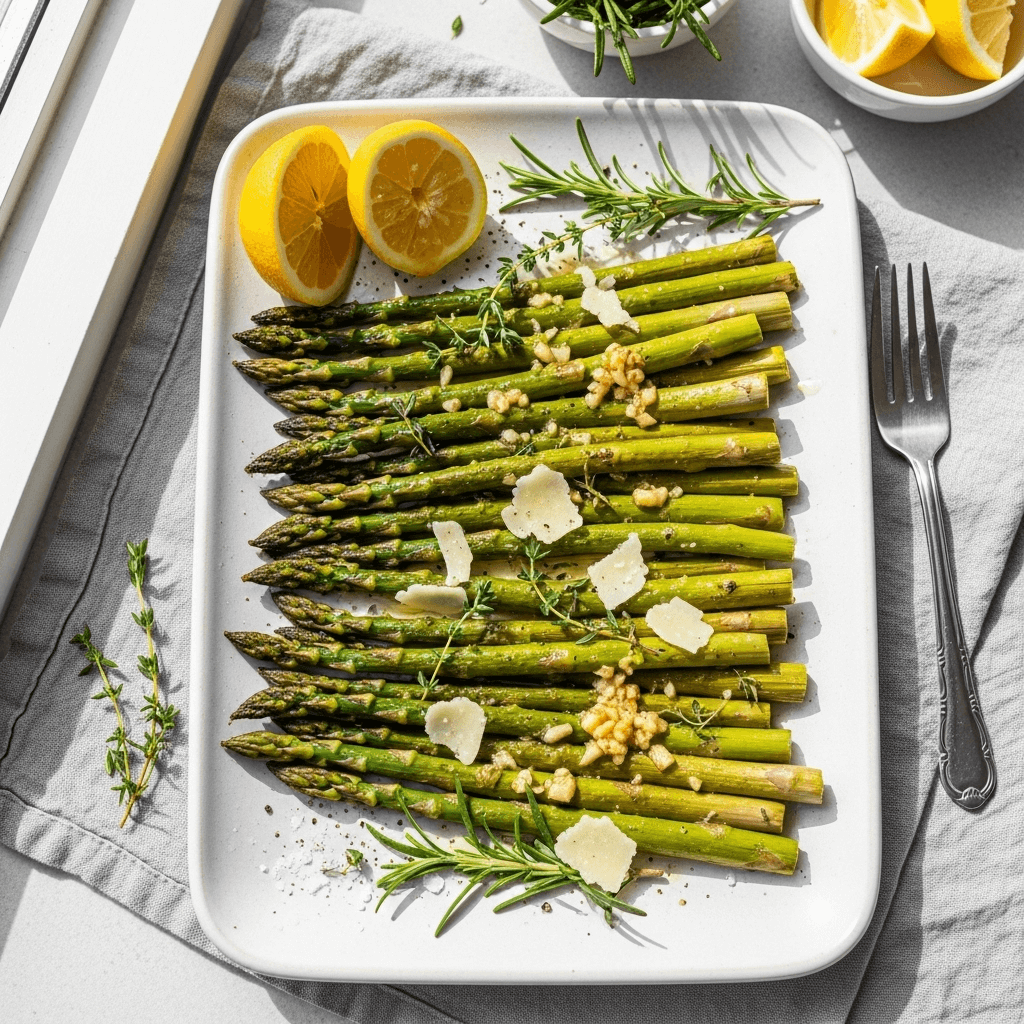

If you’re looking for a simple yet elegant side dish that takes less than 20 minutes from start to finish, this Garlic Herb Roasted Asparagus Recipe is about to become your new favorite! There’s something magical about fresh asparagus spears roasted to tender perfection with aromatic garlic and fragrant herbs. The high heat of the oven caramelizes the natural sugars in the asparagus, creating slightly crispy edges while keeping the inside beautifully tender.
This recipe is perfect for busy weeknights when you need something healthy and delicious on the table fast, but it’s also elegant enough to serve at dinner parties, holiday gatherings, or special occasions. Whether you’re planning Easter brunch, a Thanksgiving feast, or simply want to elevate your Tuesday night chicken dinner, roasted asparagus with garlic and herbs delivers restaurant-quality flavor with minimal effort. The best part? You probably already have most of the ingredients in your kitchen right now!
History / Background
Asparagus has been cultivated and treasured for over 2,000 years, dating back to ancient Egypt where it was prized for its unique flavor and supposed medicinal properties. The ancient Greeks and Romans considered asparagus a delicacy and even wrote extensively about the vegetable in their culinary texts. In fact, Roman emperor Augustus coined the phrase “velocius quam asparagi conquantur” – faster than cooking asparagus – to describe something done quickly, proving that even back then, people appreciated how fast this vegetable cooks!
Roasting vegetables, particularly asparagus, became increasingly popular in American home cooking during the late 20th century as people moved away from boiling and steaming vegetables into oblivion. The roasting method preserves more nutrients, develops deeper flavors through caramelization, and creates those delicious crispy-tender textures we all love. The combination of garlic and herbs with roasted asparagus is a classic preparation found in Italian, French, and Mediterranean cuisines, where simple, fresh ingredients are celebrated rather than masked.
In the United States, asparagus season typically runs from February through June, with peak season in April and May. California, Michigan, and Washington are the top asparagus-producing states. While you can find asparagus year-round in most grocery stores thanks to imports, spring asparagus has the best flavor, sweetness, and tender texture. This garlic herb roasted version honors the vegetable’s natural taste while enhancing it with complementary aromatics that have been paired with asparagus for centuries.
Why You’ll Love This Recipe
This garlic herb roasted asparagus is the kind of recipe that makes you look like a culinary genius with almost zero effort. It’s the perfect example of how simple ingredients, when treated right, can create something truly spectacular. The asparagus develops these beautiful caramelized edges that add a slight sweetness and nutty flavor, while the garlic becomes mellow and aromatic rather than harsh. Fresh herbs bring brightness and complexity, and a squeeze of lemon at the end ties everything together with a fresh, vibrant note.
Here’s why this recipe deserves a permanent spot in your cooking rotation:
- Lightning fast – From cutting board to table in just 15-20 minutes, making it perfect for busy weeknights
- Minimal ingredients – Just 6-7 simple ingredients you likely already have on hand
- Healthy and nutritious – Packed with vitamins A, C, E, K, and folate, plus fiber and antioxidants
- Versatile – Works with any main dish from grilled chicken to pan-seared salmon to holiday roasts
- Budget-friendly – Especially during peak season when asparagus prices drop significantly
- Impressive presentation – Looks elegant enough for company but easy enough for everyday
- Customizable – Easy to adjust herbs, add spices, or include parmesan cheese for variation
- One-pan wonder – Minimal cleanup with just a baking sheet to wash
- Foolproof method – Hard to mess up, even for beginner cooks
- Kid-friendly – The roasting method makes asparagus sweeter and more appealing to picky eaters
Ingredient Notes
Let’s talk about what makes this recipe so delicious and how each ingredient contributes to the final dish. Understanding your ingredients helps you make smart substitutions and adjustments based on what you have available.
Fresh Asparagus: Choose medium-thickness spears when possible – they’re easier to work with than thin or thick spears. Look for firm, bright green stalks with tight, compact tips. Avoid asparagus that looks dried out, wilted, or has mushy spots. The cut ends should look fresh, not dried or woody. You’ll need about 1.5 to 2 pounds for 4-6 servings. While you can use thicker or thinner asparagus, you may need to adjust cooking time accordingly.
Olive Oil: Extra virgin olive oil is ideal for its flavor and health benefits, but regular olive oil works too. The oil helps the asparagus caramelize and prevents sticking while carrying the flavors of garlic and herbs throughout the dish. Avocado oil is a great substitute if you prefer a neutral flavor or want a higher smoke point.
Fresh Garlic: Freshly minced garlic is key here – the flavor is so much better than garlic powder. You’ll need 3-4 cloves, minced finely so it distributes evenly and doesn’t burn. If you must substitute, use 1/2 teaspoon garlic powder, but add it halfway through roasting to prevent burning.
Fresh Herbs: I love using a combination of thyme and rosemary, but parsley, oregano, or basil work beautifully too. Fresh herbs provide brighter, more complex flavors than dried, though you can use 1 teaspoon of dried herbs if fresh aren’t available (use about 1/3 the amount of dried as you would fresh).
Lemon: Fresh lemon juice brightened the entire dish and cuts through the richness of the olive oil. The acidity also helps your body absorb the iron in the asparagus more effectively! Always use fresh lemon juice rather than bottled for the best flavor. Lemon zest adds an extra pop if you want more citrus flavor.
Salt and Pepper: These basics are essential for bringing out all the other flavors. Sea salt or kosher salt works best, and freshly ground black pepper adds a nice subtle heat. Don’t skip the seasoning – asparagus needs it to really shine!
Optional Parmesan: While not traditional, a sprinkle of freshly grated Parmesan cheese in the last 2-3 minutes of roasting adds a wonderful nutty, salty dimension. Pecorino Romano works great too!
Equipment Needed
One of the best things about this recipe is how little equipment you need. Here’s what you’ll use:
- Large rimmed baking sheet – A half-sheet pan (18×13 inches) works perfectly and prevents any oil from dripping into your oven
- Parchment paper or aluminum foil – Optional but makes cleanup even easier
- Sharp chef’s knife – For trimming the woody ends off the asparagus
- Cutting board – For prep work
- Small bowl – For mixing the olive oil, garlic, and herbs
- Measuring spoons – For accurate measurements
- Tongs or a spatula – For tossing the asparagus and removing it from the pan
- Microplane or zester – If you’re adding lemon zest (optional but wonderful)
- Kitchen timer – To ensure you don’t overcook your asparagus
That’s it! No fancy gadgets or special equipment required. This is truly an accessible recipe for any home cook.
Print
Garlic Herb Roasted Asparagus Recipe
- Total Time: 17 minutes
- Yield: 4-6 servings 1x
- Diet: Gluten Free
Description
Perfectly roasted asparagus with aromatic garlic and fresh herbs makes an easy, elegant side dish ready in just 15 minutes. Crispy-tender spears with caramelized edges and bright lemon finish – this healthy recipe is perfect for weeknights or special occasions!
Ingredients
- 1.5-2 pounds fresh asparagus, woody ends trimmed
- 3 tablespoons extra virgin olive oil
- 4 cloves garlic, minced
- 1 tablespoon fresh thyme leaves (or 1 teaspoon dried)
- 1 tablespoon fresh rosemary, finely chopped (or 1 teaspoon dried)
- 3/4 teaspoon sea salt
- 1/2 teaspoon freshly ground black pepper
- 1 tablespoon fresh lemon juice
- Lemon zest for garnish (optional)
- 2 tablespoons freshly grated Parmesan cheese (optional)
Instructions
- Preheat your oven to 425°F (220°C). Position the oven rack in the center of the oven. Line a large rimmed baking sheet with parchment paper or aluminum foil for easier cleanup (optional but recommended).
- Prepare the asparagus by rinsing under cold water and patting completely dry with a kitchen towel or paper towels. Snap or cut off the woody ends – simply bend each spear near the bottom and it will naturally break where the tender part begins, usually about 1-2 inches from the bottom. Discard the tough ends or save them for making vegetable stock.
- Make the garlic herb mixture by combining the olive oil, minced garlic, fresh thyme, fresh rosemary, salt, and black pepper in a small bowl. Stir well to combine all the flavors.
- Coat the asparagus by arranging the trimmed spears in a single layer on your prepared baking sheet. Pour the garlic herb oil mixture over the asparagus, then use your hands or tongs to toss and coat every spear evenly. Make sure the asparagus is spread out in a single layer without overlapping – this ensures even roasting and caramelization.
- Roast the asparagus in the preheated oven for 10-15 minutes, depending on the thickness of your spears. Thin asparagus will need closer to 10 minutes, while thicker spears may need up to 15 minutes. The asparagus is done when it’s tender-crisp and the tips are slightly browned and caramelized. You should be able to pierce the thickest part easily with a fork, but the spears should still have a slight bite – not mushy.
- Add finishing touches by removing the baking sheet from the oven. If using Parmesan cheese, sprinkle it over the hot asparagus now so it melts slightly. Drizzle the fresh lemon juice over the entire pan, then toss gently to distribute.
- Serve immediately while hot, garnished with additional lemon zest, fresh herbs, or a bit more Parmesan if desired. Transfer to a serving platter for a beautiful presentation, or serve directly from the baking sheet for a more casual meal.
Notes
- Asparagus thickness matters: Thin asparagus cooks in 8-10 minutes, medium in 10-12 minutes, and thick in 12-15 minutes. Check early to prevent overcooking.
- Don’t crowd the pan: If your asparagus spears are touching or overlapping, they’ll steam instead of roast and won’t get those delicious caramelized edges. Use two baking sheets if necessary.
- Watch the garlic: Minced garlic can burn easily at high heat. If you’re concerned, you can add the garlic halfway through roasting, or use whole smashed cloves instead of minced.
- Make it spicy: Add 1/4 teaspoon red pepper flakes to the oil mixture for a nice kick.
- Storage: Store leftovers in an airtight container in the refrigerator for up to 3 days. Reheat in a 400°F oven for 5 minutes or enjoy cold in salads.
- Prep Time: 5 minutes
- Cook Time: 12 minutes
- Category: Side Dish
- Method: Roasting
- Cuisine: American, Mediterranean
Nutrition
- Serving Size: About 6-8 asparagus spears (4-5 oz)
- Calories: 95
- Sugar: 2g
- Sodium: 290mg
- Fat: 8g
- Saturated Fat: 1g
- Unsaturated Fat: 7g
- Trans Fat: 0g
- Carbohydrates: 6g
- Fiber: 3g
- Protein: 3g
- Cholesterol: 0mg (without Parmesan; 3mg with Parmesan)
Note: Nutrition information is approximate and calculated without optional Parmesan cheese. Adding Parmesan will add approximately 20 calories, 1.5g fat, 85mg sodium, and 2g protein per serving.
Tips & Variations
The beauty of this roasted asparagus recipe is how easily you can customize it to match your preferences or what you have on hand. Here are some delicious variations to try:
Mediterranean Style: Add 1/4 cup halved cherry tomatoes and 2 tablespoons sliced kalamata olives during the last 5 minutes of roasting. Top with crumbled feta cheese instead of Parmesan.
Asian-Inspired: Replace the herbs with fresh ginger and garlic, use sesame oil instead of half the olive oil, and finish with a drizzle of soy sauce, sesame seeds, and sliced green onions.
Balsamic Roasted: Drizzle 1-2 tablespoons of balsamic glaze over the asparagus during the last 3 minutes of roasting for a sweet-tangy finish.
Bacon Lover’s: Crumble 3-4 slices of crispy cooked bacon over the finished asparagus for a smoky, savory addition that everyone will love.
Spicy Kick: Add 1/2 teaspoon red pepper flakes or a pinch of cayenne pepper to the oil mixture, or finish with a drizzle of hot honey.
Cheesy Variation: Besides Parmesan, try crumbled goat cheese, shaved Pecorino Romano, or even a sprinkle of nutritional yeast for a vegan option.
Nutty Addition: Toast 1/4 cup sliced almonds, pine nuts, or chopped walnuts and sprinkle over the finished asparagus for added texture and richness.
Mustard Glaze: Whisk together 1 tablespoon Dijon mustard with the olive oil before tossing with asparagus for a tangy, sophisticated flavor.
Pro Chef Tips
These professional insights will help you achieve restaurant-quality roasted asparagus every single time:
Choose the right temperature: 425°F is the sweet spot for roasted asparagus. Lower temperatures steam the vegetable without achieving good caramelization, while higher temperatures can burn the garlic and herbs before the asparagus cooks through.
Dry your asparagus thoroughly: This is crucial! Wet asparagus will steam instead of roast, and you’ll miss out on those beautifully caramelized edges. After washing, pat completely dry with kitchen towels or let air dry for 10 minutes.
Cut asparagus uniformly: If you have spears of varying thicknesses, separate them and roast the thinner ones for less time. Alternatively, cut thicker spears in half lengthwise so everything cooks evenly.
Use your hands to coat: Don’t be shy about getting your hands dirty! Using your hands to massage the oil and seasonings into the asparagus ensures every spear is evenly coated and seasoned.
Give them space: Overcrowding is the enemy of good caramelization. The asparagus should be in a single layer with a bit of space between spears. If you need to make a large batch, use two baking sheets rather than cramming everything onto one.
Listen for the sizzle: When you put the asparagus in the oven, you should hear a gentle sizzle. If you don’t, your oven might not be hot enough or your pan isn’t preheated properly.
Add delicate ingredients last: Ingredients that burn easily like minced garlic, lemon zest, or cheese should be added toward the end of cooking or after the asparagus comes out of the oven.
Don’t skip the acid: That squeeze of fresh lemon juice at the end isn’t just for flavor – the acidity brightens all the other flavors and makes the dish feel lighter and more balanced.
Season in stages: Season the asparagus before roasting, but taste after cooking and adjust seasoning if needed. You can always add more salt, pepper, or lemon juice at the end.
Serve immediately: Roasted asparagus is best served hot from the oven when the edges are still crispy and the interior is perfectly tender. It will soften as it sits.
Common Mistakes to Avoid
Even though this is a simple recipe, there are a few pitfalls that can prevent you from achieving perfectly roasted asparagus:
Mistake #1: Not trimming enough off the ends. Those woody bottoms are tough and fibrous – they won’t become tender no matter how long you cook them. Be generous when snapping off the ends. You’ll lose about an inch or two, but it’s worth it for tender, enjoyable asparagus throughout.
Mistake #2: Using too low of an oven temperature. Roasting at 350°F or 375°F will give you limp, steamed asparagus instead of caramelized, crispy-tender spears. You need that high heat (425°F) to drive off moisture quickly and develop those delicious browned edges.
Mistake #3: Overcrowding the pan. When asparagus spears are touching or overlapping, they trap moisture and steam rather than roast. This results in mushy, pale vegetables instead of caramelized, flavorful ones. Use two pans if you need to make a large batch.
Mistake #4: Overcooking the asparagus. Mushy, olive-green asparagus is never appetizing. Start checking thin asparagus at 8 minutes and thick asparagus at 10 minutes. The asparagus should still have a slight bite and bright green color (the tips will be slightly darker and caramelized).
Mistake #5: Using old or limp asparagus. Fresh asparagus makes all the difference in this recipe. If your asparagus is already wilted, slimy, or has dried-out ends, no amount of garlic and herbs will save it. Choose firm, bright spears with tight tips for the best results.
Mistake #6: Adding the lemon too early. If you add lemon juice before roasting, the acid can cause the asparagus to turn an unappealing grayish-green color and become mushy. Always add lemon juice after roasting for the freshest flavor and best color.
Mistake #7: Forgetting to preheat the oven. Starting with a fully preheated oven ensures the asparagus begins roasting immediately, which is essential for that quick cooking time and proper caramelization.
Storage & Meal Prep
Roasted asparagus is best enjoyed fresh from the oven, but with proper storage, you can enjoy leftovers for several days or even prepare components ahead of time for easier weeknight cooking.
Storing Leftovers: Allow roasted asparagus to cool completely to room temperature, then transfer to an airtight container. Store in the refrigerator for up to 3-4 days. The asparagus will lose some of its crispness in the fridge, but the flavor remains delicious.
Reheating Instructions: For best results, reheat in a 400°F oven for 4-5 minutes until warmed through. This helps restore some of the crispness. You can also reheat in a skillet over medium heat for 3-4 minutes. Avoid microwaving if possible, as it makes the asparagus soggy.
Using Leftovers: Cold roasted asparagus is wonderful in grain bowls, pasta salads, frittatas, or chopped into omelets. You can also puree leftover asparagus into soup or blend it into a pesto-style sauce for pasta.
Meal Prep Tips: You can trim and wash the asparagus up to 2 days ahead. Store the trimmed spears wrapped in a damp paper towel in an airtight container in the refrigerator. Mix the garlic herb oil up to 1 day ahead and store covered at room temperature. When ready to cook, simply toss and roast!
Make-Ahead & Freezer Notes
While roasted asparagus is definitely best fresh, you do have some make-ahead options if you’re planning for a big dinner or holiday meal.
Make-Ahead Instructions: You can fully prepare the asparagus (trim, coat with oil and seasonings) and arrange it on the baking sheet up to 4 hours before roasting. Cover tightly with plastic wrap and refrigerate. When ready to cook, remove from the fridge, uncover, and roast as directed, adding 2-3 extra minutes to account for the cold asparagus.
Freezing Raw Asparagus: If you have excess fresh asparagus, you can blanch and freeze it for later use. Blanch trimmed spears in boiling water for 2-3 minutes, shock in ice water, drain thoroughly, and freeze in airtight freezer bags for up to 8 months. Note that previously frozen asparagus will be softer when roasted, so this is best for soups or casseroles.
Freezing Roasted Asparagus: I don’t generally recommend freezing already roasted asparagus, as the texture becomes very soft and mushy when thawed. If you must freeze it, allow it to cool completely, then freeze in a single layer on a baking sheet before transferring to freezer bags. Use within 2-3 months and reheat in a hot oven directly from frozen.
Best Reheating Method: If you’ve made roasted asparagus ahead (within 24 hours), the best way to reheat is in a 425°F oven for 5-7 minutes. This brings back some of the caramelization and crispness. Avoid the microwave, which makes asparagus rubbery and releases an unpleasant smell.
Serving Suggestions
This garlic herb roasted asparagus pairs beautifully with just about any main dish. Here are some of my favorite combinations:
With Proteins: Serve alongside grilled chicken breasts, pan-seared salmon, herb-crusted pork tenderloin, garlic butter steak, roasted turkey, baked cod, or grilled lamb chops. The bright, herbaceous flavors complement rich proteins perfectly.
For Special Occasions: This asparagus is elegant enough for Easter dinner, Thanksgiving, Christmas, or dinner parties. Pair it with honey-glazed ham, prime rib, or herb-roasted chicken for a show-stopping meal.
Weeknight Dinners: Keep things simple with sheet pan chicken thighs, store-bought rotisserie chicken, or quick-cooking fish fillets. The asparagus roasts in less time than most proteins, making timing easy.
Vegetarian Meals: Serve with creamy risotto, stuffed portobello mushrooms, eggplant parmesan, quinoa bowls, or alongside a fresh caprese salad and crusty bread for a light, satisfying meal.
Starches & Grains: Roasted asparagus pairs wonderfully with garlic mashed potatoes, wild rice pilaf, buttery couscous, roasted fingerling potatoes, creamy polenta, or a simple pasta with olive oil and Parmesan.
Other Side Dishes: Round out your meal with Caesar salad, dinner rolls, roasted Brussels sprouts, glazed carrots, or a fresh arugula salad with lemon vinaigrette.
Wine Pairing: The herbaceous, garlicky flavors pair beautifully with Sauvignon Blanc, Pinot Grigio, or a light Chardonnay. For red wine lovers, try Pinot Noir or Beaujolais.
FAQs Section
Q: Do I need to peel asparagus before roasting?
A: No! You don’t need to peel asparagus unless you’re working with very thick, mature spears (usually thicker than your thumb). For standard grocery store asparagus, simply trimming or snapping off the woody ends is sufficient. If you do have very thick asparagus, you can lightly peel the bottom third of the stalk with a vegetable peeler to make it more tender.
Q: How do I know when roasted asparagus is done?
A: Perfectly roasted asparagus should be tender-crisp – you should be able to easily pierce it with a fork, but it should still have a slight bite and not be mushy. Visual cues include bright green color (slightly darker at the tips), slightly shriveled appearance, and browned, caramelized edges. Thin asparagus takes 8-10 minutes, medium 10-12 minutes, and thick 12-15 minutes at 425°F.
Q: Can I use frozen asparagus for this recipe?
A: While you technically can use frozen asparagus, I don’t recommend it for roasting. Frozen asparagus has much higher moisture content and won’t caramelize properly – you’ll end up with steamed, soft asparagus rather than crispy-tender roasted spears. Frozen asparagus is better suited for soups, casseroles, or stir-fries. If you must use frozen, thaw completely and pat very dry before roasting, and expect a softer texture.
Q: What’s the best way to trim asparagus?
A: There are two methods: The snap method is easiest – hold the asparagus spear with one hand near the middle and the other hand at the bottom, then bend until it naturally snaps (usually 1-2 inches from the bottom). The spear breaks exactly where the tender part begins. Alternatively, you can line up your asparagus and cut off the bottom 1-2 inches with a sharp knife. I prefer snapping because each spear is slightly different.
Q: Why does my garlic burn before the asparagus is done cooking?
A: Minced garlic can burn at high roasting temperatures. To prevent this, make sure your garlic is evenly distributed and coated in oil (not sitting in dry spots), or add the garlic halfway through roasting time. Another option is to use garlic powder (1/2 teaspoon) instead of fresh, or use whole smashed garlic cloves which are less likely to burn than minced garlic.
Q: Can I prepare this asparagus on the grill instead of the oven?
A: Absolutely! Preheat your grill to medium-high heat (about 400-425°F). Toss the asparagus with the garlic herb oil as directed, then place spears perpendicular to the grill grates (use a grill basket if you’re worried about them falling through). Grill for 6-8 minutes, turning once or twice, until tender and lightly charred. Add the lemon juice after grilling.
Q: Is asparagus healthy?
A: Yes! Asparagus is incredibly nutritious. It’s low in calories (about 20 calories per cup) but packed with vitamins A, C, E, K, and folate. It’s also high in fiber, antioxidants, and contains a good amount of protein for a vegetable. Asparagus has anti-inflammatory properties and supports digestive health. The roasting method preserves more nutrients than boiling, and the olive oil helps your body absorb the fat-soluble vitamins.
Q: What should I do if my asparagus is different thicknesses?
A: Separate your asparagus into groups by thickness. Roast the thicker spears first, then add the thinner ones partway through cooking. Or, use the same pan but remove thinner spears earlier. Another trick: cut very thick spears in half lengthwise so everything cooks evenly. This also gives you more surface area for caramelization!
Conclusion
There you have it – the ultimate guide to making perfectly roasted asparagus with garlic and herbs! This simple recipe proves that you don’t need complicated techniques or fancy ingredients to create something absolutely delicious. With just a handful of pantry staples, fresh asparagus, and about 15 minutes, you can serve up a side dish that looks and tastes like it came from a restaurant kitchen.
Whether you’re cooking for a quiet weeknight dinner at home or preparing a special holiday feast, this garlic herb roasted asparagus is sure to impress. The crispy-tender texture, caramelized edges, aromatic garlic, and bright herb and lemon flavors make it a crowd-pleaser that even veggie-skeptics will love. Plus, it’s versatile enough to pair with virtually any main dish you can imagine.
I’d love to hear how this recipe works out for you! Did you try any of the variations? Do you have a favorite way to serve roasted asparagus? Leave a comment below and let me know! And if you loved this recipe, please consider sharing it on Pinterest – your friends and followers will thank you for introducing them to this easy, delicious side dish. Don’t forget to pin it to your favorite recipe boards so you can find it again next time asparagus is on sale!
Happy cooking, and here’s to making vegetables exciting! 🌿✨