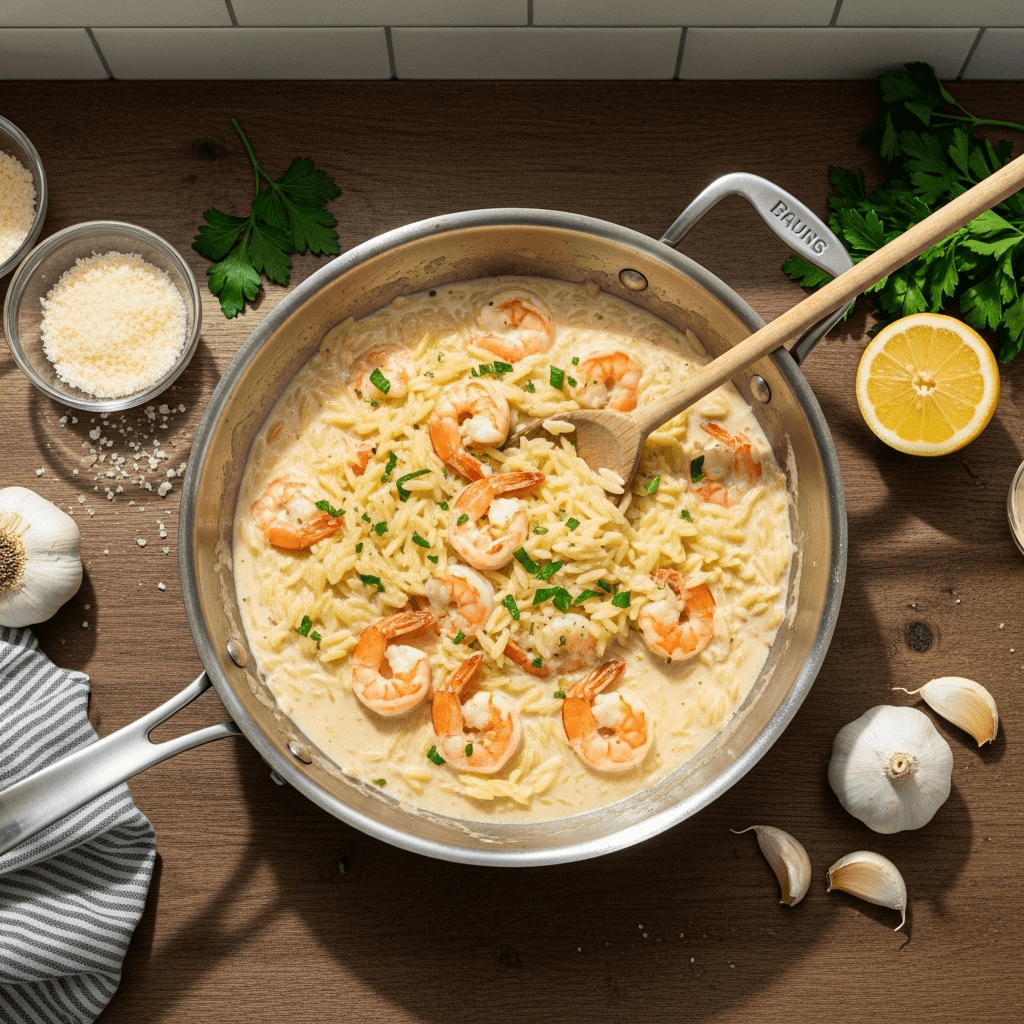

There’s something magical about a dish that looks like it took hours but comes together in less time than a sitcom episode. This Creamy Lemon Garlic Shrimp Orzo is exactly that kind of recipe—the one you’ll bookmark, make on repeat, and serve to everyone from your weeknight family dinner crew to your fanciest brunch guests. Imagine tender, juicy shrimp nestled in a cloud of creamy orzo pasta, all brightened with fresh lemon and aromatic garlic. It’s comfort food with a sophisticated twist, and it all happens in one pan.
Whether you’re a busy parent looking for a quick weeknight solution, a college student trying to impress your roommates, or simply someone who appreciates good food without the fuss, this recipe delivers on every front. The orzo cooks right in the pan with the shrimp, absorbing all those gorgeous flavors from the garlic, butter, and white wine (or broth if you prefer). The result? A restaurant-quality meal that requires minimal cleanup and maximum flavor. And let’s be honest—anything that saves you from a mountain of dishes is already winning.
History / Background
While this particular combination might feel modern and trendy, the marriage of shrimp, pasta, and creamy sauces has deep roots in both Italian and Mediterranean coastal cooking. Orzo itself—which means “barley” in Italian—has been a staple in Mediterranean cuisine for centuries, though it’s actually a rice-shaped pasta rather than an actual grain. The ancient Greeks and Romans enjoyed similar small pasta shapes, often cooking them in broths and seafood stews that fishermen would prepare right on their boats.
The concept of cooking pasta directly in a flavorful liquid, rather than boiling it separately, is a technique that Italian grandmothers have perfected over generations. This method, sometimes called “risottata,” allows the pasta to absorb maximum flavor while releasing its starches to naturally thicken the sauce. When Italian immigrants brought their cooking traditions to America, these techniques evolved and merged with local ingredients and tastes.
The addition of cream to seafood pasta dishes became particularly popular in Italian-American cuisine during the mid-20th century, creating beloved classics like Fettuccine Alfredo with shrimp. Our Creamy Lemon Garlic Shrimp Orzo takes inspiration from these traditions while streamlining the process into a modern one-pan wonder. The bright lemon element reflects the coastal Mediterranean love of citrus with seafood—a combination that’s been celebrated from the Amalfi Coast to the Greek Islands for thousands of years. Today, this dish represents the best of both worlds: time-honored flavor combinations with contemporary convenience.
Why You’ll Love This Recipe
This isn’t just another pasta recipe—it’s about to become your new weeknight hero. The beauty of this Creamy Lemon Garlic Shrimp Orzo lies in its perfect balance of elegance and ease. You get all the satisfaction of a fancy restaurant dish with the simplicity of throwing everything into one pan and letting it work its magic.
Here’s why this recipe will become your new favorite:
- Lightning-fast cooking time – From start to finish, you’re looking at just 30 minutes, making it perfect for those hectic weeknights when you still want something special
- One-pan wonder – Less cleanup means more time to actually enjoy your meal (and maybe even relax afterward)
- Budget-friendly luxury – Shrimp might feel fancy, but it’s often quite affordable, especially when you’re feeding a family with pasta as the base
- Naturally impressive – This looks and tastes like you spent hours in the kitchen, making it perfect for date nights or unexpected guests
- Customizable to your taste – Love it spicy? Add red pepper flakes. Want more veggies? Toss in spinach or cherry tomatoes
- Kid-approved yet sophisticated – The creamy sauce appeals to picky eaters while the lemon and garlic keep things interesting for adult palates
- Meal prep friendly – Makes great leftovers and can be prepped ahead for busy weeks
- Protein-packed and satisfying – The shrimp provides lean protein while the orzo keeps everyone full and happy
Ingredient Notes
Let’s talk about what makes this dish sing. Each ingredient plays a crucial role in building those layers of flavor that’ll have everyone asking for seconds.
Shrimp: The star of the show. I recommend using large or jumbo shrimp (16-20 count per pound) for the best texture and visual appeal. You can use fresh or frozen—just make sure frozen shrimp is completely thawed and patted dry before cooking. Pre-peeled and deveined shrimp saves precious time, though buying shell-on is often more economical if you don’t mind the extra prep. The shrimp’s natural sweetness balances beautifully with the tangy lemon.
Orzo: This rice-shaped pasta is perfect because it cooks quickly and absorbs flavors like a dream. Regular orzo works wonderfully, but you can also find whole wheat or gluten-free versions. Look for it in the pasta aisle—sometimes it’s shelved near rice since it resembles grains.
Garlic: Fresh is essential here. We’re using a generous amount (4-5 cloves), but don’t be intimidated—cooking it mellows the sharpness into sweet, aromatic deliciousness. Pre-minced jarred garlic won’t give you the same depth of flavor.
Lemon: Both juice and zest are important. The zest contains aromatic oils that add incredible fragrance, while the juice provides that bright acidity that cuts through the cream. Always use fresh lemons, not bottled juice.
Heavy Cream: This is what creates that luxurious, velvety sauce. For a lighter version, you can substitute half-and-half, though the sauce won’t be quite as thick. Some folks use a combination of cream and cream cheese for extra richness.
Chicken or Vegetable Broth: The liquid that cooks the orzo. Low-sodium is best so you can control the saltiness. Vegetable broth keeps things lighter, while chicken broth adds more depth.
White Wine: Optional but recommended. A dry white wine like Pinot Grigio or Sauvignon Blanc adds complexity and acidity. If you skip the wine, just use extra broth and add a splash more lemon juice.
Parmesan Cheese: Freshly grated is a must. The pre-shredded stuff has anti-caking agents that prevent it from melting smoothly. Real Parmigiano-Reggiano is worth the investment, but any quality parmesan works.
Butter: Adds richness and helps create a silky sauce. Use unsalted so you can control the sodium level.
Olive Oil: For sautéing the shrimp and garlic. Extra virgin has the best flavor.
Fresh Herbs: Parsley is traditional and adds a fresh pop of color and flavor. Basil or dill also work beautifully.
Seasonings: Salt, black pepper, and optional red pepper flakes for heat. Keep it simple and let the main ingredients shine.
Equipment Needed
One of the beauties of this recipe is that you don’t need fancy equipment. Here’s what you’ll want to have on hand:
- Large, deep skillet or sauté pan with lid (12-inch is ideal) – This is your workhorse. Make sure it’s deep enough to hold the orzo and liquid comfortably. A lid is essential for simmering the pasta evenly.
- Wooden spoon or silicone spatula – For stirring without scratching your pan
- Sharp knife and cutting board – For mincing garlic and chopping herbs
- Microplane or zester – For getting that beautiful lemon zest
- Citrus juicer – Optional but makes juicing lemons easier
- Measuring cups and spoons – For accurate ingredient amounts
- Tongs – Helpful for tossing the shrimp
- Large plate or bowl – To temporarily hold the cooked shrimp
- Colander or strainer – Only if you need to rinse your shrimp
- Cheese grater – If you’re grating your own Parmesan (which you should be!)
That’s it! No food processor, no specialty gadgets—just basic kitchen tools that you probably already own.
Print
Creamy Lemon Garlic Shrimp Orzo Recipe
- Total Time: 30 minutes
- Yield: 4 servings 1x
Description
A luxurious one-pan dinner featuring succulent shrimp and tender orzo pasta in a creamy lemon garlic sauce. This restaurant-quality meal comes together in just 30 minutes with minimal cleanup, making it perfect for busy weeknights or special occasions.
Ingredients
- 1 ½ pounds large shrimp, peeled and deveined
- 1 ½ cups orzo pasta (uncooked)
- 4-5 cloves garlic, minced
- 2 tablespoons olive oil, divided
- 3 tablespoons unsalted butter, divided
- ½ cup dry white wine (or substitute with extra broth)
- 2 ½ cups chicken or vegetable broth (low-sodium)
- 1 cup heavy cream
- Zest of 1 large lemon
- 3 tablespoons fresh lemon juice (about 1 lemon)
- ½ cup freshly grated Parmesan cheese
- ¼ cup fresh parsley, chopped
- ½ teaspoon salt (plus more to taste)
- ¼ teaspoon black pepper
- ¼ teaspoon red pepper flakes (optional, for heat)
- Additional lemon wedges for serving
Instructions
- Prep your shrimp: Pat the shrimp completely dry with paper towels. Season both sides with salt and pepper. Set aside. Having dry shrimp is crucial for getting a nice sear rather than steaming them.
- Sear the shrimp: Heat 1 tablespoon of olive oil and 1 tablespoon of butter in your large skillet over medium-high heat. Once the butter is melted and the pan is hot, add the shrimp in a single layer (work in batches if needed to avoid crowding). Cook for 1-2 minutes per side until they just turn pink and opaque. Don’t overcook—they’ll cook more later. Remove shrimp to a plate and set aside.
- Sauté the aromatics: In the same skillet, reduce heat to medium and add the remaining 1 tablespoon of olive oil and 1 tablespoon of butter. Add the minced garlic and red pepper flakes (if using). Sauté for about 30-45 seconds until fragrant, stirring constantly so the garlic doesn’t burn.
- Deglaze with wine: Pour in the white wine, scraping up any browned bits from the bottom of the pan with your wooden spoon. Let it simmer for about 2 minutes until reduced by half. This concentrates the flavor and cooks off the alcohol.
- Add orzo and liquids: Stir in the uncooked orzo, making sure it’s coated in the garlic mixture. Pour in the chicken broth and bring everything to a boil. Once boiling, reduce heat to medium-low, cover with your lid, and let it simmer for about 8-10 minutes, stirring occasionally to prevent sticking. The orzo should absorb most of the liquid and become tender.
- Create the creamy sauce: Once the orzo is tender and most of the liquid is absorbed, stir in the heavy cream, lemon zest, and lemon juice. Let it simmer uncovered for 2-3 minutes, stirring frequently, until the sauce thickens slightly. The orzo will continue releasing starch, naturally thickening your sauce.
- Add cheese and butter: Remove from heat and stir in the remaining 1 tablespoon of butter and the grated Parmesan cheese. Stir until everything is melted and creamy. Taste and adjust seasoning with more salt, pepper, or lemon juice if needed.
- Return the shrimp: Nestle the cooked shrimp back into the orzo, gently stirring to combine and heat them through for about 1-2 minutes.
- Finish and serve: Remove from heat, sprinkle with fresh parsley, and serve immediately with additional lemon wedges on the side. A little extra Parmesan on top never hurts either!
Notes
- Wine substitute: If you don’t want to use wine, replace it with an additional ½ cup of broth plus 1 tablespoon of lemon juice for acidity.
- Orzo consistency: If your orzo absorbs all the liquid but still seems undercooked, add broth ¼ cup at a time until it reaches your desired tenderness.
- Shrimp size matters: Larger shrimp work best as they don’t overcook as easily. If using smaller shrimp, reduce their initial cooking time to 1 minute per side.
- Making it lighter: You can replace half the heavy cream with half-and-half or even whole milk, though the sauce won’t be as thick. Add an extra tablespoon of Parmesan to help with thickness.
- Dairy-free option: Use coconut cream instead of heavy cream and nutritional yeast instead of Parmesan for a dairy-free version.
- Prep Time: 10 minutes
- Cook Time: 20 minutes
- Category: Dinner
- Method: Stovetop
- Cuisine: Italian-American
Nutrition
- Serving Size: 1 ¼ cups
- Calories: 625
- Sugar: 3g
- Sodium: 720mg
- Fat: 28g
- Saturated Fat: 15g
- Unsaturated Fat: 11g
- Trans Fat: 0g
- Carbohydrates: 52g
- Fiber: 2g
- Protein: 38g
- Cholesterol: 310mg
Nutrition information is approximate and will vary based on specific ingredients used and portion sizes.
Tips & Variations
The beauty of this recipe is how easily you can adapt it to your preferences or what you have in your pantry. Here are some fantastic ways to make it your own:
Spicy Kick: Double the red pepper flakes or add a dash of cayenne pepper. You can also drizzle some hot honey over the top before serving for sweet-heat perfection.
Veggie-Packed Version: Stir in fresh baby spinach, arugula, or kale during the last 2 minutes of cooking. Cherry tomatoes (halved) add beautiful color and a burst of freshness. Asparagus tips or frozen peas also work wonderfully.
Protein Swaps: Not a shrimp fan? This works beautifully with scallops, chunks of firm white fish like cod or halibut, or even chicken breast cut into bite-sized pieces. Adjust cooking times accordingly—chicken will need longer.
Herb Variations: While parsley is classic, try using fresh basil for an Italian twist, dill for something more Mediterranean, or a combination of fresh herbs. Chives add a mild oniony flavor that’s lovely too.
Extra Garlic Lovers: If you’re a garlic fanatic like me, bump it up to 6-7 cloves. Roasted garlic also adds a sweet, mellow depth if you have time to prepare it in advance.
Sun-Dried Tomato Addition: Chop up some oil-packed sun-dried tomatoes and add them when you add the cream for a tangy, slightly sweet element.
Cheese It Up: Mix in some cream cheese along with the Parmesan for extra creaminess, or top with crumbled feta for a Mediterranean flair.
Make It Lighter: Use half-and-half or a mixture of Greek yogurt and milk instead of heavy cream. The sauce won’t be as rich, but it’ll still be delicious and significantly lighter.
Pro Chef Tips
Want to take this dish from great to absolutely spectacular? Here are some professional techniques that’ll elevate your Creamy Lemon Garlic Shrimp Orzo:
Toast your orzo first: Before adding any liquid, toast the dry orzo in the garlic butter for 1-2 minutes. This adds a subtle nutty flavor and helps the pasta maintain better texture. It’s a technique borrowed from making risotto and truly makes a difference.
Use cold butter at the end: Adding cold butter just before serving (a technique called “mounting” in French cooking) creates an incredibly silky, glossy sauce. The cold butter emulsifies perfectly with the hot liquid, giving you restaurant-quality texture.
Don’t skip the wine: Even if you’re not a wine drinker, that wine adds acidity and depth that balances the cream beautifully. The alcohol cooks off, leaving only complex flavor. It’s the difference between a good dish and a great one.
Season in layers: Salt your shrimp, then season the garlic, taste and adjust after adding broth, and do a final seasoning check at the end. Building seasoning throughout the cooking process creates more complex, well-rounded flavor than dumping it all in at once.
Reserve some pasta cooking liquid: If you accidentally cook your orzo too long and it gets too thick, thin it out with a splash of warm broth or even pasta water if you have it. This maintains the silky consistency without diluting flavor.
Let the shrimp rest: After you remove the shrimp from the pan initially, tent them loosely with foil. This carries over cooking gently finishes them without making them rubbery, and any juices that collect on the plate can be poured back into your sauce for extra flavor.
Zest before juicing: Always zest your lemon before cutting and juicing it. It’s nearly impossible to zest a lemon half, and you want to capture all those aromatic oils that cling to the zest.
Bloom your spices: If using red pepper flakes or any dried herbs, add them to the hot oil before the garlic. This “blooms” the spices, releasing their essential oils and intensifying their flavor throughout the dish.
Common Mistakes to Avoid
Even simple recipes can go wrong if you’re not careful. Here are the pitfalls to watch out for:
Overcooking the shrimp: This is the number one mistake. Shrimp cook incredibly fast—we’re talking 2-3 minutes total. Overcooked shrimp become rubbery and tough. They should be opaque and just barely cooked through when you remove them the first time, as they’ll cook more when added back at the end.
Burning the garlic: Garlic goes from perfectly golden to burnt and bitter in seconds. Always add it to medium heat (not high), stir constantly, and add your liquid within a minute. If you do burn it, unfortunately, you’ll need to start over—burnt garlic will ruin the entire dish.
Not stirring the orzo enough: Orzo can stick to the bottom of the pan and scorch, creating a burnt taste and making cleanup a nightmare. Stir it every couple of minutes while it’s simmering. If you notice it sticking, reduce your heat slightly.
Adding cheese to boiling sauce: If your sauce is still boiling vigorously when you add the Parmesan, it can break and become grainy. Remove from heat or reduce to the lowest simmer before stirring in cheese for a smooth, creamy result.
Using pre-grated Parmesan: Those convenient shaker bottles contain anti-caking agents that prevent proper melting. Invest a few extra minutes in grating fresh Parmesan—the difference in both flavor and texture is enormous.
Crowding the shrimp: If you pile all your shrimp in the pan at once, they’ll steam instead of sear. This means no delicious browning and less flavor. Give them space, cook in batches if necessary, and resist the urge to flip them too early.
Skipping the dry-off step: Wet shrimp will not sear properly. Those paper towels are essential for getting a nice golden color on your shrimp. Yes, it’s an extra step, but it’s worth it.
Storage & Meal Prep
Good news for leftovers lovers—this dish stores beautifully and makes fantastic meal prep!
Refrigerator Storage: Store leftover Creamy Lemon Garlic Shrimp Orzo in an airtight container in the refrigerator for up to 3 days. The orzo will continue to absorb the sauce as it sits, so it may thicken considerably. This is totally normal and easy to fix when reheating.
Reheating Instructions: The best way to reheat this is on the stovetop in a skillet over medium-low heat. Add a splash of broth, water, or even a little extra cream to loosen the sauce back up. Stir frequently and heat until warmed through, about 5-7 minutes. You can also microwave it in 30-second intervals, stirring between each, and adding liquid as needed. Avoid high heat, which can make the shrimp rubbery.
Meal Prep Tips: If you’re prepping this for the week ahead, slightly undercook the shrimp and orzo by about 1-2 minutes. This prevents them from becoming overcooked and mushy when you reheat. Portion into individual containers and refrigerate immediately once cooled. When ready to eat, reheat gently with a splash of liquid to refresh the sauce.
Texture Changes: The creamy sauce may separate slightly when cold—this is normal with dairy-based sauces. Stirring while reheating will bring everything back together. The lemon flavor may intensify over time, which most people actually enjoy, but you can add a small pat of butter when reheating to mellow it if needed.
Food Safety Note: Because shrimp is seafood, don’t let this dish sit at room temperature for more than 2 hours. Cool it quickly after cooking if you’re meal prepping by spreading it in a shallow container, and refrigerate promptly.
Make-Ahead & Freezer Notes
Planning ahead? Here’s how to prep this recipe in advance:
Make-Ahead Option: You can prep all your ingredients ahead of time—peel and devein shrimp, mince garlic, zest and juice lemons, grate cheese, and chop parsley. Store each in separate airtight containers in the fridge for up to 24 hours before cooking. This makes the actual cooking process lightning-fast when you’re ready. However, I don’t recommend cooking the entire dish ahead and reheating, as the shrimp and orzo are best served fresh.
Partial Make-Ahead: If you want to get a jump start, you can cook the orzo in the broth until about 80% done, then cool and refrigerate. When ready to serve, reheat with the cream and continue from there with fresh shrimp. This cuts your dinner prep down to about 15 minutes.
Freezer-Friendly?: Honestly, this is one of the few recipes I don’t recommend freezing. Cream-based sauces can separate and become grainy when frozen and thawed, and seafood doesn’t freeze well after cooking—it tends to become rubbery and releases excess moisture. If you do decide to freeze it despite this warning, freeze in an airtight container for up to 1 month. Thaw overnight in the refrigerator and reheat very gently on the stovetop with extra cream or broth to help bring the sauce back together.
Best Reheating from Frozen: If you’ve frozen it, thaw completely in the refrigerator overnight. Reheat in a skillet over low heat, stirring frequently. Add 2-3 tablespoons of heavy cream or broth to help emulsify the sauce again. Be patient—slow and low is key.
Better Freezer Alternative: If you love this recipe and want to meal prep for the freezer, consider freezing just the cooked orzo portion without the shrimp or most of the cream. Then when ready to serve, thaw the orzo, add fresh shrimp, and finish with fresh cream and lemon. You’ll get much better results this way.
Serving Suggestions
This Creamy Lemon Garlic Shrimp Orzo is hearty enough to be a complete meal on its own, but pairing it with the right sides can turn dinner into something truly special. Here are my favorite accompaniments:
Salads: A crisp, fresh salad is the perfect counterpoint to the rich, creamy pasta. Try a simple arugula salad with lemon vinaigrette, a classic Caesar salad, or a Mediterranean cucumber and tomato salad. The acidity and crunch provide balance to the dish.
Bread: You’ll want something to soak up every drop of that incredible sauce. Crusty French baguette, garlic bread, focaccia, or even simple buttered dinner rolls work beautifully. Make it extra special with homemade garlic knots or cheesy breadsticks.
Vegetables: Roasted asparagus, sautéed green beans with garlic, roasted Brussels sprouts, or grilled zucchini all pair wonderfully. Roasted broccoli or broccolini with lemon also echoes the citrus notes in the main dish beautifully.
Wine Pairing: Since we cooked with white wine, serving the same wine alongside is a natural choice. A crisp Pinot Grigio, Sauvignon Blanc, or unoaked Chardonnay complements the shrimp and lemon beautifully. If you prefer red, go with something light like Pinot Noir.
Non-Alcoholic Drinks: Sparkling water with lemon, iced green tea, or a light lemonade work nicely. The key is something refreshing that won’t compete with the delicate flavors of the dish.
For a Complete Meal: Start with a light soup like Italian wedding soup or a simple tomato basil soup. Follow with the shrimp orzo, a side salad, and crusty bread. Finish with a light dessert like lemon sorbet, panna cotta, or Italian lemon cookies (pizzelle).
Casual Family Dinner: Keep it simple with just a green salad and garlic bread. Add some steamed broccoli if you want extra veggies for the kids.
Date Night Presentation: Serve the orzo in shallow bowls, garnished with fresh herbs, lemon wedges, and a drizzle of good olive oil. Pair with a nice white wine, crusty bread, and a simple arugula salad. Finish with tiramisu or cannoli for dessert.
FAQs Section
Can I use a different type of pasta instead of orzo?
Absolutely! Small pasta shapes work best since they cook quickly and absorb sauce well. Try ditalini, small shells, or even broken-up angel hair pasta. Keep in mind that cooking times may vary—follow the package directions and add liquid as needed. Larger pasta shapes won’t work as well with this one-pan method since they require more liquid and longer cooking times.
My sauce is too thick/thin—how do I fix it?
Too thick? Simply stir in a few tablespoons of chicken broth, pasta water, or even warm water until you reach your desired consistency. Too thin? Let it simmer uncovered for a few more minutes—the orzo releases starch as it cooks, which naturally thickens the sauce. You can also stir in an extra tablespoon of Parmesan or cream cheese to help thicken things up.
Can I make this recipe gluten-free?
Yes! Simply substitute gluten-free orzo or another small gluten-free pasta shape. Brown rice orzo works particularly well. Keep an eye on cooking times as gluten-free pasta can sometimes cook faster or slower than traditional pasta. Everything else in the recipe is naturally gluten-free.
What if I don’t have heavy cream?
You have several options. Half-and-half works but creates a thinner sauce (you may want to add an extra tablespoon of Parmesan to thicken). For a lighter version, combine ¾ cup whole milk with ¼ cup Greek yogurt (add the yogurt off heat to prevent curdling). Coconut cream is a great dairy-free alternative that maintains the richness.
Can I use frozen shrimp?
Absolutely—frozen shrimp often has better texture than “fresh” shrimp at the grocery store, which has usually been previously frozen anyway. Just thaw completely in the refrigerator overnight or under cold running water for 15-20 minutes. Pat completely dry with paper towels before cooking. Never cook shrimp from frozen for this recipe as they’ll release too much water and won’t sear properly.
How do I know when the shrimp are done?
Shrimp cook very quickly and are done when they turn from gray/translucent to pink and opaque. They’ll curl into a “C” shape. If they curl into a tight “O” shape, they’re overcooked. Look for that loose “C” curve as your visual cue. The entire process should take 2-3 minutes total per batch.
Is there a dairy-free version of this recipe?
Yes! Use coconut cream instead of heavy cream (it provides similar richness), replace the butter with olive oil or vegan butter, and substitute the Parmesan with nutritional yeast (use about ⅓ cup for cheesy flavor). The result won’t taste exactly the same but will still be delicious and creamy with that wonderful lemon-garlic flavor.
Conclusion
There you have it—your new go-to recipe for Creamy Lemon Garlic Shrimp Orzo! This dish truly has it all: impressive presentation, incredible flavor, and the kind of simplicity that makes weeknight cooking feel less like a chore and more like a treat. Whether you’re cooking for picky kids, sophisticated dinner guests, or just yourself after a long day, this one-pan wonder delivers every single time.
The beauty of this recipe is that once you’ve made it a few times, it becomes second nature. You’ll start experimenting with your own variations, maybe adding those cherry tomatoes you picked up at the farmer’s market or that fresh basil growing on your windowsill. That’s the joy of home cooking—making recipes your own and creating memories around the dinner table.
I’d love to hear how your Creamy Lemon Garlic Shrimp Orzo turns out! Did you add extra garlic? Throw in some spinach? Make it spicy? Drop a comment below and let me know what you think. And if you loved this recipe as much as I do, please share it with your friends and pin it to your Pinterest boards so you can find it again when you need that perfect weeknight dinner solution.
Happy cooking, and here’s to more delicious meals made with love (and minimal cleanup)!