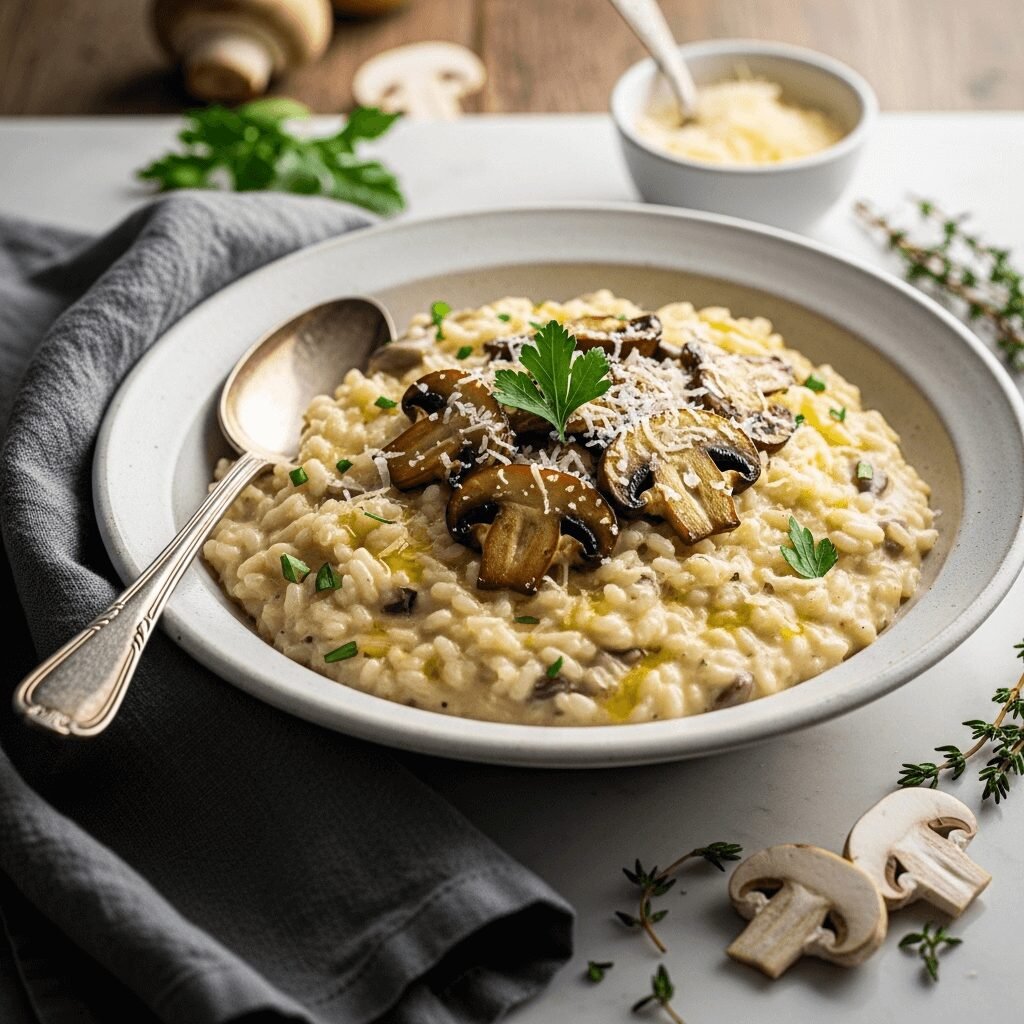

There’s something truly magical about a perfectly made risotto. This Creamy Parmesan Risotto with Mushrooms is the kind of dish that transforms an ordinary weeknight into something special, yet it’s surprisingly achievable for home cooks of all skill levels. While risotto has a reputation for being finicky and time-consuming, I’m here to show you that with the right technique and a little patience, you can create a restaurant-quality dish that’s creamy, luxurious, and absolutely delicious.
This Italian classic combines tender Arborio rice with earthy sautéed mushrooms, rich Parmesan cheese, and a velvety texture that comes from slowly coaxing the starches out of the rice. It’s comfort food at its finest—warm, satisfying, and elegant enough to serve at a dinner party but cozy enough for a quiet evening at home. Whether you’re looking to impress guests or simply treat yourself to something special, this mushroom risotto delivers every single time.
The beauty of this recipe lies in its versatility. Serve it as a main course with a crisp green salad, offer it as a sophisticated side dish alongside roasted chicken or grilled steak, or even present it as an elegant first course for a multi-course Italian feast. No matter how you choose to enjoy it, this creamy Parmesan risotto with mushrooms will quickly become a staple in your cooking repertoire.
History & Background: The Story Behind Italy’s Beloved Rice Dish
Risotto has its roots deep in Northern Italy, particularly in the Lombardy region where rice cultivation has flourished for centuries. The dish dates back to the late 19th century, with the first documented risotto recipe appearing around 1809. The Po Valley, with its abundant water supply and ideal climate, became Italy’s rice bowl, making risotto a natural evolution of the region’s agricultural bounty.
The technique of slowly adding liquid to rice while constantly stirring was revolutionary at the time. This method, known as “tostatura” (toasting) followed by gradual liquid absorption, creates the signature creamy texture that defines authentic risotto. Unlike other rice dishes where the grain remains separate and fluffy, risotto celebrates the starch, coaxing it out to create a naturally creamy, almost sauce-like consistency without the need for heavy cream.
Mushroom risotto, or “Risotto ai Funghi,” became particularly popular in regions where wild mushrooms like porcini were abundant. Autumn was traditionally the season for this dish, when foragers would return from the forests with baskets full of fresh funghi. Today, while we might use cultivated cremini or button mushrooms, the spirit of the dish remains the same—celebrating the earthy, umami-rich flavor of mushrooms combined with the luxurious texture of properly made risotto.
The addition of Parmesan cheese, specifically Parmigiano-Reggiano from the Emilia-Romagna region, adds another layer of authenticity and flavor. This “King of Cheeses” has been produced using traditional methods for over 900 years, and its nutty, salty complexity is essential to achieving that perfect risotto finish. The dish represents the Italian philosophy of “cucina povera”—peasant cooking that transforms simple, quality ingredients into something extraordinary.
Why You’ll Love This Recipe
This Creamy Parmesan Risotto with Mushrooms strikes the perfect balance between impressive and approachable. While it looks and tastes like something you’d order at an upscale Italian restaurant, it’s made with everyday ingredients you can find at any grocery store. The process is meditative and rewarding—there’s something deeply satisfying about standing at the stove, stirring and watching the rice gradually transform into something creamy and beautiful.
Here’s why this recipe will become one of your favorites:
- Restaurant-quality results at home – Impress your family and guests with a dish that tastes like it came from a professional kitchen
- Simple ingredient list – No hard-to-find specialty items required; just quality basics that work together beautifully
- Naturally gluten-free – Perfect for those avoiding gluten, without any substitutions needed
- Customizable and versatile – Easily adapted with different mushroom varieties, herbs, or add-ins based on your preferences
- Perfect for date night or entertaining – Elegant enough for special occasions but easy enough for a cozy night in
- One-pot wonder – Minimal cleanup with maximum flavor payoff
- Teaches valuable cooking technique – Master risotto-making and you’ll have a skill that impresses for life
- Comfort food with sophistication – Warm, creamy, and satisfying while still feeling refined and special
- Budget-friendly luxury – Tastes expensive but costs a fraction of restaurant prices
- Ready in under 45 minutes – From start to finish, you’ll have dinner on the table in less than an hour
Ingredient Notes: What You’ll Need and Why
Arborio Rice – This short-grain Italian rice is non-negotiable for authentic risotto. Its high starch content is what creates that signature creamy texture. You can substitute Carnaroli or Vialone Nano rice if you find them, but avoid long-grain rice like basmati or jasmine, which won’t give you the proper consistency.
Mushrooms – I recommend a mix of cremini (baby bella) and button mushrooms for accessibility and flavor. If you want to elevate the dish, add some shiitake, oyster, or dried porcini mushrooms that you’ve rehydrated. The key is to sauté them separately until they’re golden brown—this concentrates their flavor and prevents them from making the risotto watery.
Chicken or Vegetable Broth – The foundation of your risotto’s flavor. Use low-sodium broth so you can control the salt level. Keep it warm throughout the cooking process; adding cold broth will shock the rice and slow down the cooking. Homemade stock is wonderful, but quality store-bought works perfectly.
Parmigiano-Reggiano Cheese – Freshly grated is essential here. Pre-grated cheese contains anti-caking agents that prevent it from melting smoothly. Look for authentic Parmigiano-Reggiano with the pin-dot rind markings. Grana Padano is an acceptable substitute, but avoid using generic “parmesan” in a shaker.
Dry White Wine – Adds acidity and depth of flavor. Use something you’d actually drink—Pinot Grigio, Sauvignon Blanc, or unoaked Chardonnay all work beautifully. If you prefer not to cook with alcohol, substitute with additional broth plus a squeeze of lemon juice for brightness.
Shallots and Garlic – These aromatic vegetables form the flavor base. Shallots are sweeter and more delicate than onions, perfect for risotto’s refined taste. Yellow onions can substitute in a pinch.
Butter – Used both for sautéing and finishing the dish. The final addition of cold butter, called “mantecatura,” gives risotto its glossy, luxurious finish.
Olive Oil – Extra-virgin olive oil adds fruity notes and helps prevent the butter from burning during the initial cooking.
Fresh Herbs – Thyme pairs beautifully with mushrooms during cooking, while fresh parsley adds brightness at the end. Fresh herbs make a noticeable difference over dried.
Equipment Needed
- Large, heavy-bottomed saucepan or Dutch oven (4-quart capacity minimum)
- Medium saucepan (for keeping broth warm)
- Large skillet (for sautéing mushrooms separately)
- Wooden spoon or heat-resistant spatula (for stirring)
- Ladle (for adding broth gradually)
- Sharp chef’s knife (for slicing mushrooms and chopping aromatics)
- Cutting board
- Measuring cups and spoons
- Box grater or microplane (for fresh Parmesan)
- Serving bowls (warmed, if possible, for better presentation)

Creamy Parmesan Risotto with Mushrooms Recipe
- Total Time: 45 minutes
- Yield: 4-6 servings 1x
- Diet: Gluten Free
Description
This restaurant-quality Creamy Parmesan Risotto with Mushrooms features tender Arborio rice cooked to perfection with earthy sautéed mushrooms, rich Parmigiano-Reggiano, and a velvety texture that melts in your mouth. A classic Italian dish that’s surprisingly easy to master at home.
Ingredients
For the Risotto:
- 1½ cups Arborio rice
- 6 cups chicken or vegetable broth (low-sodium, kept warm)
- ½ cup dry white wine
- 1 cup freshly grated Parmigiano-Reggiano cheese
- 3 tablespoons butter, divided
- 2 tablespoons extra-virgin olive oil
- 2 medium shallots, finely diced
- 3 cloves garlic, minced
- Salt and freshly ground black pepper, to taste
- ¼ cup fresh parsley, chopped (for garnish)
For the Mushrooms:
- 1 pound mixed mushrooms (cremini, button, shiitake), sliced
- 2 tablespoons butter
- 1 tablespoon olive oil
- 2 sprigs fresh thyme
- Salt and pepper, to taste
Instructions
- Prepare the broth: Pour the chicken or vegetable broth into a medium saucepan and bring to a gentle simmer over low heat. Keep it warm throughout the cooking process—this is crucial for proper risotto texture.
- Sauté the mushrooms: In a large skillet over medium-high heat, add 2 tablespoons butter and 1 tablespoon olive oil. Once the butter melts and foams, add the sliced mushrooms in a single layer (work in batches if needed to avoid overcrowding). Let them cook undisturbed for 3-4 minutes until golden brown on the bottom. Stir, add thyme, and season with salt and pepper. Continue cooking for another 3-4 minutes until mushrooms are tender and deeply browned. Set aside and keep warm.
- Start the risotto base: In a large, heavy-bottomed saucepan or Dutch oven, heat 2 tablespoons olive oil and 1 tablespoon butter over medium heat. Add the diced shallots and cook for 2-3 minutes until softened and translucent but not browned. Add the minced garlic and cook for 30 seconds until fragrant.
- Toast the rice: Add the Arborio rice to the pan and stir constantly for 2-3 minutes. The grains should become slightly translucent around the edges and smell lightly nutty. This toasting step is essential for flavor development and helps the rice maintain some texture.
- Deglaze with wine: Pour in the white wine and stir continuously until it’s almost completely absorbed by the rice, about 2 minutes. The alcohol will cook off, leaving behind wonderful flavor.
- Begin adding broth: Using a ladle, add one cup of warm broth to the rice. Stir frequently (not constantly) until the liquid is almost completely absorbed. The mixture should bubble gently. Adjust the heat as needed to maintain a steady simmer.
- Continue the gradual addition: Continue adding broth one ladle at a time (about ¾ cup), stirring frequently and waiting until each addition is absorbed before adding the next. This process takes about 20-25 minutes total. You want the rice to be creamy but still have a slight al dente bite in the center of each grain.
- Test for doneness: After about 20 minutes, start tasting the rice. It should be tender but with a slight firmness in the center—not mushy or crunchy. You may not need all the broth, or you might need a bit more. Trust your taste and texture judgment.
- Finish the risotto: When the rice reaches the perfect texture, remove from heat. Stir in the remaining 2 tablespoons of cold butter and the freshly grated Parmesan cheese. Stir vigorously for 1-2 minutes—this “mantecatura” creates the final creamy, glossy texture. The risotto should flow like lava when you tilt the pan. If it’s too thick, add a splash more broth.
- Combine with mushrooms: Gently fold in three-quarters of the sautéed mushrooms, reserving some for garnish. Taste and adjust seasoning with salt and freshly ground black pepper.
- Serve immediately: Divide the risotto among warmed serving bowls. Top each portion with the reserved mushrooms, a sprinkle of fresh parsley, and additional Parmesan if desired. Risotto waits for no one—serve immediately while it’s hot and creamy!
Notes
- Stirring frequency: You don’t need to stir constantly, but do stir frequently enough to prevent sticking and encourage even cooking. Every 30-45 seconds is about right.
- Broth amount: The 6 cups is approximate. You might use slightly more or less depending on your rice, pan, and heat level.
- Wine substitute: If avoiding alcohol, use extra broth plus 1 tablespoon lemon juice for acidity.
- Make it richer: For extra indulgence, stir in 2-3 tablespoons of heavy cream along with the final butter and cheese.
- Leftovers: Risotto is best fresh, but leftovers can be transformed into arancini (fried rice balls) the next day.
- Prep Time: 15 minutes
- Cook Time: 30 minutes
- Category: Main Dish / Side Dish
- Method: Stovetop
- Cuisine: Italian
Nutrition
- Serving Size: 1 cup (approximately 250g)
- Calories: 385
- Sugar: 4g
- Sodium: 520mg
- Fat: 16g
- Saturated Fat: 8g
- Unsaturated Fat: 7g
- Trans Fat: 0g
- Carbohydrates: 45g
- Fiber: 2g
- Protein: 13g
- Cholesterol: 35mg
Tips & Variations
Protein additions: Transform this into a heartier main course by adding grilled chicken breast, pan-seared scallops, crispy pancetta, or Italian sausage. Add proteins at the end so they stay tender and don’t overcook.
Vegetable variations: Beyond mushrooms, try stirring in roasted butternut squash, fresh asparagus, sweet peas, sun-dried tomatoes, or baby spinach. Add delicate vegetables in the last few minutes of cooking.
Truffle luxury: For a truly decadent version, finish with a drizzle of white or black truffle oil and shaved fresh truffle if you can find it. A little goes a long way!
Lighter version: Use vegetable broth instead of chicken, reduce the butter by half, and use only half the Parmesan while stirring in some nutritional yeast for extra savory flavor.
Seasonal twist: In spring, add fresh peas and lemon zest. In fall, incorporate roasted pumpkin and sage. Winter calls for caramelized onions and rosemary, while summer benefits from fresh corn and basil.
Vegan adaptation: Use vegetable broth, replace butter with vegan butter or olive oil, and substitute the Parmesan with nutritional yeast (about ½ cup) plus a tablespoon of white miso paste for umami depth.
Spicy kick: Add red pepper flakes when sautéing the shallots, or finish with a dash of hot sauce or cayenne pepper for warmth.
Mixed mushroom upgrade: Use a combination of exotic mushrooms like oyster, maitake, chanterelle, or morel when in season. Rehydrated dried porcini mushrooms add incredible depth—save the soaking liquid to use as part of your broth.
Pro Chef Tips
Room temperature cheese: Take your Parmesan out of the refrigerator 20 minutes before using. Cold cheese doesn’t incorporate as smoothly and can cause the risotto to seize up or become grainy.
The wave test: Professional chefs use the “wave test” to check if risotto is done. When you shake the pan, the risotto should flow in waves across the surface like lava. If it’s too stiff, add a bit more broth and stir vigorously.
Double butter finish: Use the “double butter” technique—add half the final butter first, stir until incorporated, then add the remaining butter for an extra silky, glossy finish that’s restaurant-worthy.
Toast your rice properly: Don’t rush the toasting step. The rice should smell nutty and look slightly translucent around the edges. This step creates a protective coating that helps maintain the rice’s structure during cooking.
Save pasta water technique: Just like pasta water helps finish pasta dishes, reserve a cup of the warm broth even after the risotto is done. You can use it to loosen the texture just before serving if needed.
The resting trick: Let the finished risotto rest off the heat for 1-2 minutes before serving. This allows the starches to fully hydrate and the texture to stabilize perfectly.
Mushroom browning secret: The key to deeply flavored mushrooms is moisture evaporation. Don’t salt them until they’re browned (salt draws out moisture), and make sure your pan is hot enough that they sizzle when they hit the surface.
Layered seasoning: Season at multiple stages—the mushrooms, the rice during cooking, and taste again before serving. This builds complexity rather than just salting at the end.
Common Mistakes to Avoid
Using cold broth: Adding cold broth shocks the rice and stops the cooking process, leading to uneven texture and longer cooking times. Always keep your broth at a gentle simmer throughout the process.
Not stirring enough (or stirring too much): Under-stirring leads to stuck, burned rice on the bottom. Over-stirring can break the grains and make the risotto gluey. Aim for frequent but not constant stirring—about every 30-45 seconds is perfect.
Adding too much liquid at once: Patience is key. Adding broth in small increments and waiting for absorption is what creates the creamy texture. Dumping in too much liquid makes rice soup, not risotto.
Using pre-grated cheese: The anti-caking agents in pre-shredded cheese prevent smooth melting and can make your risotto grainy or clumpy. Always grate fresh Parmesan just before using.
Overcooking the rice: Mushy risotto has lost its soul. The rice should be al dente—tender with a slight firmness in the very center of each grain. Start tasting at 18 minutes and stop as soon as it’s right.
Letting it sit before serving: Risotto waits for no one! It continues to absorb liquid and thicken as it sits. Serve immediately, or if you must wait, keep it slightly looser than ideal and add a splash of warm broth when ready to serve.
Skipping the mantecatura: This final vigorous stirring with cold butter and cheese is essential. It emulsifies everything together, creating that glossy, creamy finish. Don’t skip this step or add the butter too early when the risotto is still on the heat.
Storage & Meal Prep
Refrigeration: Transfer leftover risotto to an airtight container and refrigerate for up to 3 days. It will thicken considerably as it cools, which is normal.
Reheating: The best way to reheat risotto is on the stovetop. Place it in a saucepan with a splash of broth, wine, or water (about ¼ cup per cup of risotto). Heat over medium-low, stirring frequently, until warmed through and creamy again. You can also reheat in the microwave in 30-second intervals, stirring between each, with added liquid to restore creaminess.
Texture restoration: Reheated risotto will never be quite as perfect as freshly made, but you can get close. Add butter and a bit more grated Parmesan when reheating to refresh the richness.
Not ideal for freezing: While technically you can freeze risotto, I don’t recommend it. The texture changes significantly, becoming grainy and separated. If you do freeze it (up to 2 months in a freezer-safe container), plan to use it for arancini or risotto cakes rather than serving it as traditional risotto.
Portion planning: If you know you’ll have leftovers, slightly undercook the risotto and keep it a bit looser than ideal. This gives you more control when reheating, as it will continue to cook and thicken during storage.
Make-Ahead & Freezer Notes
Partial make-ahead method: You can cook the risotto about three-quarters of the way through (until it’s still quite al dente), then spread it on a baking sheet to cool quickly. Refrigerate for up to 24 hours. When ready to serve, return it to a pan with warm broth and finish cooking, adding the final butter and cheese.
Prep work ahead: Chop the shallots, slice the mushrooms, and grate the cheese up to a day ahead. Store each separately in airtight containers in the refrigerator. Keep the warm broth in a thermal container if prepping just before cooking.
Mushroom prep: Sauté the mushrooms up to 2 days ahead and store refrigerated. Reheat gently before folding into the finished risotto.
Freezer transformation: While I don’t recommend freezing traditional risotto, cooled leftover risotto makes excellent arancini (Italian rice balls). Form the cold risotto into balls with a cube of mozzarella in the center, bread them, and freeze for up to 3 months. Fry from frozen for a delicious appetizer.
Restaurant trick: Some restaurants par-cook risotto and finish individual portions to order. While this works in a professional kitchen with high-volume cooking, it’s not necessary for home cooks. The effort of par-cooking doesn’t save much time and results in less flavorful risotto.
Serving Suggestions
As a main course: Serve generous portions (about 1½ cups per person) with a simple arugula salad dressed with lemon vinaigrette and a glass of the same white wine you used for cooking.
As a side dish: Smaller portions (about ¾ cup) pair beautifully with:
- Grilled or roasted chicken with herbs
- Pan-seared salmon or cod
- Braised short ribs or osso buco
- Roasted pork tenderloin
- Grilled ribeye or filet mignon
Italian feast: Make it part of a multi-course Italian dinner with:
- Antipasto platter (cured meats, marinated vegetables, olives)
- Caprese salad or bruschetta as a starter
- Risotto as the primi course
- Grilled Italian sausages or chicken piccata as the secondi
- Tiramisu or panna cotta for dessert
Wine pairings: The same dry white wine you cooked with works perfectly—try Pinot Grigio, Vermentino, or Soave. For red wine lovers, a light Pinot Noir or Barbera won’t overpower the delicate flavors.
Bread accompaniment: While not traditional with risotto (since you’re already getting starch from the rice), a warm baguette or ciabatta for sopping up any remaining sauce is never a bad idea.
Seasonal additions: In fall and winter, serve alongside roasted root vegetables or sautéed greens like Swiss chard or kale. In spring and summer, fresh steamed asparagus or grilled zucchini make lovely companions.
Garnish ideas: Beyond the classic Parmesan and parsley, try finishing with:
- Drizzle of aged balsamic vinegar
- Toasted pine nuts or walnuts
- Crispy fried sage leaves
- Lemon zest for brightness
- Microgreens for an elegant touch
Frequently Asked Questions
Q: Can I use long-grain rice instead of Arborio?
A: Unfortunately, no. Long-grain rice like basmati or jasmine doesn’t contain enough starch to create the signature creamy texture. You need short-grain Italian rice varieties like Arborio, Carnaroli, or Vialone Nano. These high-starch rices are essential for authentic risotto.
Q: Do I really need to stir constantly?
A: This is a myth that intimidates many home cooks! You don’t need to stir constantly—just frequently. Stirring every 30-45 seconds is sufficient. Constant stirring can actually over-agitate the rice and make it gluey. Frequent, gentle stirring encourages the rice to release its starches while preventing sticking.
Q: Why is my risotto gluey or gummy?
A: This usually happens from over-stirring, overcooking, or using the wrong type of rice. Make sure you’re using proper short-grain rice, stirring frequently (not constantly), and stopping cooking when the rice still has a slight firmness in the center. Also ensure you’re adding liquid gradually, not all at once.
Q: Can I make risotto without wine?
A: Absolutely! Simply omit the wine and use an extra ½ cup of broth. Add a tablespoon of lemon juice or white wine vinegar at the end to provide the acidity that wine would have contributed. The risotto will still be delicious.
Q: How do I know when the risotto is done?
A: The rice should be tender but still have a slight firmness (al dente) when you bite into a grain. The overall texture should be creamy and flow slowly across the plate when you tilt it. It should be loose enough to spread slightly but not soupy. Start tasting at 20 minutes and trust your palate.
Q: Can I double this recipe?
A: Yes, but use a larger, wider pan to ensure even cooking. The timing might increase slightly (by 5-7 minutes) due to the increased volume. It’s harder to control texture with very large batches, so I’d recommend making two separate batches if cooking for a crowd rather than tripling or quadrupling the recipe.
Q: What’s the difference between Arborio, Carnaroli, and Vialone Nano rice?
A: All three are Italian short-grain rice varieties suitable for risotto. Arborio is the most common and has a creamy texture but can become sticky if overcooked. Carnaroli has a firmer texture and is more forgiving—it’s what many chefs prefer. Vialone Nano has smaller grains and creates a looser, brothier risotto that’s traditional in Venice. All work beautifully; use what you can find.
Q: Why do restaurants serve risotto so much faster than it takes at home?
A: Many restaurants par-cook their risotto about three-quarters of the way, then cool and store it. When an order comes in, they finish cooking that portion to order, which only takes 5-7 minutes. This technique works in high-volume kitchens but isn’t necessary for home cooking where fresh is always best.
Conclusion
Making Creamy Parmesan Risotto with Mushrooms at home is one of those cooking experiences that’s as rewarding as it is delicious. Yes, it requires a bit of attention and patience, but the process is meditative and the results are absolutely worth it. There’s something deeply satisfying about standing at the stove, gradually coaxing simple ingredients into something creamy, luxurious, and restaurant-worthy.
This recipe proves that you don’t need complicated techniques or expensive ingredients to create something truly special. With quality Arborio rice, fresh mushrooms, good Parmesan, and a little love, you’ll have a dish that impresses everyone at your table. Whether you’re cooking for a special date night, hosting friends, or simply treating yourself to something comforting and elegant, this mushroom risotto delivers every time.
I hope this recipe inspires you to embrace risotto-making and discover just how achievable it is. Once you’ve mastered the basic technique, you’ll find endless ways to customize it with seasonal vegetables, different proteins, and creative flavor combinations. But honestly, this classic mushroom version is perfection all on its own.
Now it’s your turn! Give this Creamy Parmesan Risotto with Mushrooms a try and let me know how it turns out. I’d love to hear about your experience in the comments below. Did you try any variations? What did you serve alongside it? And if you love this recipe as much as I do, please share it with your friends and save it to your Pinterest boards so you can make it again and again!
Happy cooking, and may your risotto always be creamy and perfectly al dente!