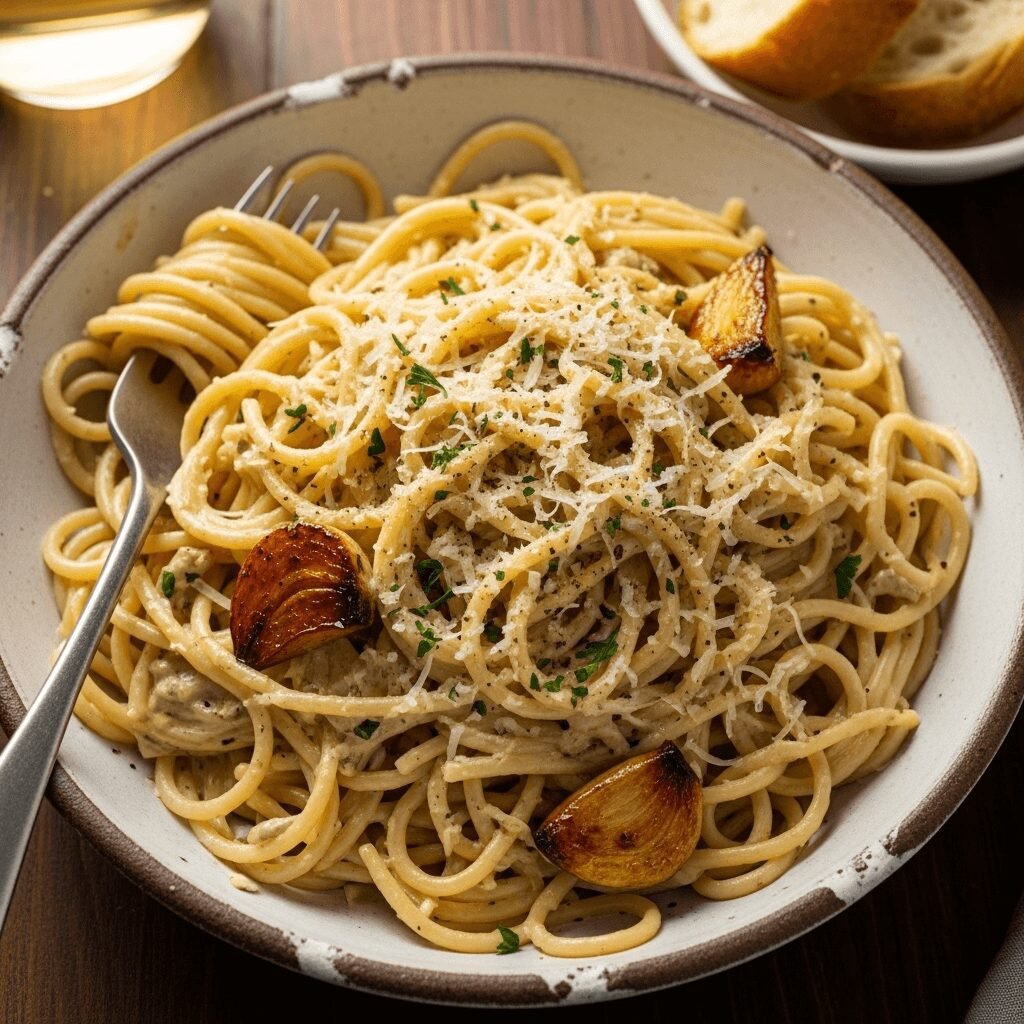

There’s something absolutely magical about the combination of sweet, caramelized roasted garlic swimming in a velvety cream sauce, clinging to perfectly cooked pasta. This Creamy Roasted Garlic Pasta is one of those deceptively simple recipes that tastes like it came straight from an Italian trattoria, but it’s actually incredibly easy to make at home with just a handful of ingredients.
What makes this pasta truly special is the roasted garlic. When you roast whole heads of garlic until they’re soft and golden, something transformative happens – the sharp, pungent bite mellows into something sweet, nutty, and almost buttery. Mixed into a luxurious cream sauce with Parmesan cheese and fresh herbs, it creates a dish that’s elegant enough for date night yet comforting enough for a cozy weeknight dinner.
This recipe is perfect for those evenings when you want something that feels indulgent without spending hours in the kitchen. It’s also incredibly versatile – serve it as a main course with a simple side salad, or use it as a sophisticated side dish for grilled chicken, shrimp, or steak. Whether you’re cooking for your family or entertaining guests, this creamy roasted garlic pasta never fails to impress.
History / Background
While pasta with garlic and oil (aglio e olio) has been a staple of Italian cuisine for centuries, the creamy roasted garlic pasta we know today is actually a more modern American-Italian fusion creation. Traditional Italian pasta dishes tend to be lighter, relying on olive oil, butter, and pasta water to create silky sauces. However, American home cooks fell in love with the richness of cream-based pasta sauces, leading to the popularization of dishes like fettuccine Alfredo and carbonara variations.
The technique of roasting garlic, however, has much older roots. Roasting garlic mellows its flavor and brings out natural sugars, a method that Mediterranean cooks have employed for generations. In the 1980s and 1990s, roasted garlic experienced a culinary renaissance in American restaurants and home kitchens. Chefs began incorporating whole heads of roasted garlic into everything from spreads and dips to sophisticated pasta dishes.
This particular recipe represents the beautiful marriage of Italian pasta-cooking techniques with American comfort food sensibilities. It takes the soul-warming satisfaction of a cream sauce and elevates it with the sophisticated, nuanced flavor of roasted garlic. The result is a dish that feels both familiar and special – comfort food with a gourmet twist that has become a beloved staple in home kitchens across the United States.
Why You’ll Love This Recipe
This Creamy Roasted Garlic Pasta strikes that perfect balance between impressive and achievable. It’s the kind of recipe that makes you look like a culinary genius while requiring minimal actual effort – and that’s exactly the kind of cooking win we all need in our lives.
Here’s why this recipe deserves a permanent spot in your dinner rotation:
- Restaurant-quality flavor at home – Tastes like something from an upscale Italian restaurant, but costs a fraction of the price
- Simple ingredients, stunning results – You probably have most of what you need already in your pantry
- Make-ahead friendly – Roast the garlic in advance to cut down on weeknight prep time
- Customizable and versatile – Easily adapt it with your favorite proteins, vegetables, or dietary preferences
- Crowd-pleaser guaranteed – Even picky eaters love the mellow, sweet flavor of roasted garlic
- Ready in under an hour – Including the roasting time, you’ll have dinner on the table quickly
- Budget-friendly elegance – Whole heads of garlic are inexpensive, and the rest of the ingredients are basic staples
- Perfect for any occasion – Works beautifully for date nights, family dinners, or entertaining guests
- Minimal cleanup – One pot for pasta, one pan for sauce – that’s it!
Ingredient Notes
Let’s talk about what makes this dish so incredible, ingredient by ingredient. Understanding your ingredients helps you make smart substitutions and get the best possible results.
Garlic Heads: The star of the show! You’ll need 2-3 whole heads of garlic (not cloves, but entire heads). When roasted, they become sweet, spreadable, and utterly irresistible. Look for heads that are firm with tight, papery skin.
Pasta: Long pasta shapes work best here – fettuccine, linguine, spaghetti, or pappardelle are all excellent choices. The creamy sauce needs something to cling to! For a gluten-free version, use your favorite gluten-free pasta variety.
Heavy Cream: This creates the rich, velvety base of your sauce. For a lighter version, you can substitute half-and-half, though the sauce won’t be quite as thick. Avoid using milk alone as it’s too thin and may curdle.
Parmesan Cheese: Freshly grated Parmigiano-Reggiano is absolutely worth it here. Pre-shredded cheese contains anti-caking agents that prevent smooth melting. The real deal adds a nutty, salty depth that takes this sauce to the next level.
Butter & Olive Oil: This combination adds richness and helps prevent the garlic from burning. Use good quality olive oil for the best flavor.
Fresh Herbs: Parsley or basil add a fresh, bright note that cuts through the richness. Fresh herbs are highly recommended, but in a pinch, you can use dried Italian seasoning (use about 1/3 of the amount).
Chicken or Vegetable Broth: This helps thin the sauce to the perfect consistency and adds another layer of savory flavor. Low-sodium versions give you better control over the salt level.
Seasoning: Kosher salt, black pepper, and a pinch of red pepper flakes (optional) for a subtle kick.
Equipment Needed
You don’t need any fancy equipment for this recipe – just a few basic kitchen tools that most home cooks already have:
- Aluminum foil – For wrapping the garlic heads while roasting
- Small baking dish or sheet pan – To hold the garlic while it roasts in the oven
- Large pot – For boiling the pasta (at least 6-quart capacity)
- Large skillet or sauté pan – A 12-inch pan works perfectly for making the sauce
- Colander – For draining the pasta
- Chef’s knife and cutting board – For prepping herbs and trimming garlic
- Wooden spoon or silicone spatula – For stirring the sauce
- Measuring cups and spoons – For accurate ingredient measurements
- Cheese grater – If you’re grating fresh Parmesan (which you absolutely should!)
- Tongs or pasta fork – For tossing the pasta with the sauce
Creamy Roasted Garlic Pasta Recipe
- Total Time: 55 minutes
- Yield: 4-6 servings 1x
- Diet: Vegetarian
Description
This luxurious Creamy Roasted Garlic Pasta features sweet, caramelized roasted garlic folded into a rich Parmesan cream sauce. It’s an easy yet elegant dinner that tastes like restaurant-quality Italian cuisine but comes together in under an hour with simple pantry ingredients.
Ingredients
- 2-3 whole heads of garlic
- 3 tablespoons olive oil, divided
- 1 pound pasta (fettuccine, linguine, or your favorite long pasta)
- 3 tablespoons unsalted butter
- 1½ cups heavy cream
- ½ cup chicken or vegetable broth
- 1 cup freshly grated Parmesan cheese, plus more for serving
- ¼ teaspoon red pepper flakes (optional)
- ½ teaspoon salt, plus more to taste
- ½ teaspoon black pepper, plus more to taste
- ¼ cup fresh parsley, chopped
- 2 tablespoons fresh basil, chopped (optional)
- Pasta cooking water (reserve 1 cup before draining)
Instructions
- Roast the Garlic: Preheat your oven to 400°F (200°C). Slice off the top ¼ inch of each garlic head to expose the cloves. Place the garlic heads on a piece of aluminum foil, drizzle with 1 tablespoon of olive oil, and wrap tightly. Place on a baking sheet and roast for 40-45 minutes until the cloves are soft, golden, and caramelized. Let cool slightly, then squeeze the roasted cloves out of their skins into a small bowl. Mash with a fork into a paste.
- Cook the Pasta: While the garlic roasts, bring a large pot of salted water to a boil. Cook pasta according to package directions until al dente (usually 8-10 minutes). Before draining, reserve 1 cup of the starchy pasta cooking water. Drain the pasta and set aside.
- Start the Sauce: In a large skillet over medium heat, melt the butter with the remaining 2 tablespoons of olive oil. Add the roasted garlic paste and cook for 1-2 minutes, stirring constantly, until fragrant. Be careful not to let it burn.
- Build the Cream Sauce: Pour in the heavy cream and broth, stirring to combine with the garlic. Bring to a gentle simmer and cook for 3-4 minutes, stirring occasionally, until the sauce begins to thicken slightly.
- Add the Cheese: Reduce heat to low and gradually add the Parmesan cheese, stirring constantly until melted and smooth. If the sauce seems too thick, add a splash of the reserved pasta water. Season with salt, black pepper, and red pepper flakes (if using).
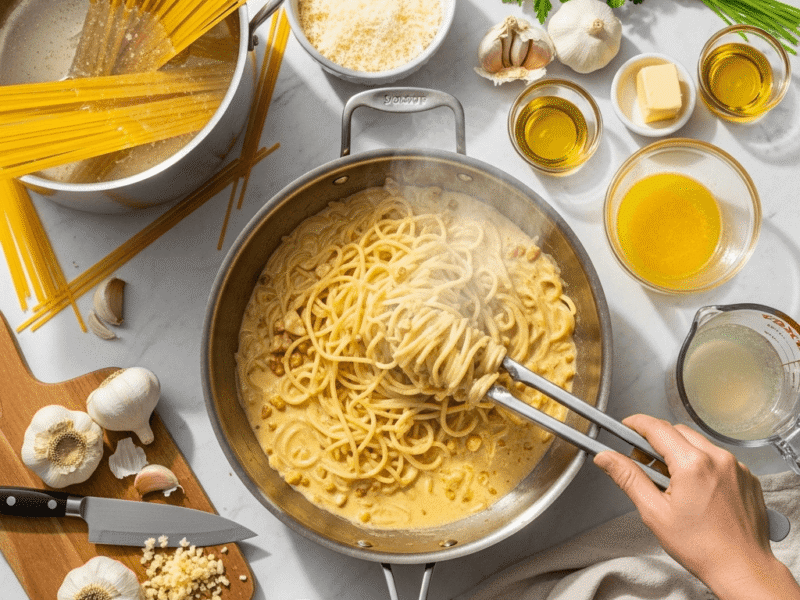
- Combine Pasta and Sauce: Add the cooked pasta to the skillet, tossing to coat every strand in the creamy garlic sauce. Add pasta water a little at a time if needed to reach your desired consistency. The starchy water helps the sauce cling beautifully to the pasta.
- Finish and Serve: Remove from heat and stir in the fresh parsley and basil. Taste and adjust seasoning as needed. Serve immediately with extra Parmesan cheese, a drizzle of olive oil, and freshly cracked black pepper.
Notes
- Make-Ahead Tip: Roast the garlic up to 3 days in advance and store the mashed paste in an airtight container in the refrigerator.
- Consistency: If your sauce breaks or looks grainy, add pasta water gradually while stirring over low heat to bring it back together.
- Dairy-Free Option: Substitute coconut cream for heavy cream and nutritional yeast for Parmesan cheese (the flavor will be different but still delicious).
- Add Protein: This pasta pairs beautifully with grilled chicken, sautéed shrimp, or pan-seared scallops.
- Leftovers: Store in an airtight container in the refrigerator for up to 3 days. Reheat gently with a splash of cream or milk.
- Prep Time: 10 minutes
- Cook Time: 45 minutes
- Category: Dinner, Main Course
- Method: Roasting, Stovetop
- Cuisine: Italian-American
Nutrition
- Serving Size: 1 serving (about 1½ cups)
- Calories: 680
- Sugar: 4g
- Sodium: 520mg
- Fat: 38g
- Saturated Fat: 21g
- Unsaturated Fat: 15g
- Trans Fat: 0g
- Carbohydrates: 65g
- Fiber: 3g
- Protein: 20g
- Cholesterol: 105mg
Note: Nutrition information is approximate and may vary based on specific ingredients used and portion sizes.
Tips & Variations
One of the best things about this recipe is how easily you can customize it to suit your tastes or whatever you have on hand in your kitchen.
Protein Additions:
- Add grilled or pan-seared chicken breast for a complete meal
- Toss in cooked shrimp during the last minute of cooking
- Crumbled Italian sausage adds a savory, hearty element
- For vegetarians, add white beans or chickpeas for protein
Vegetable Boost:
- Stir in fresh spinach or arugula just before serving – it wilts perfectly in the warm sauce
- Roasted cherry tomatoes add a beautiful pop of color and acidity
- Sautéed mushrooms contribute an earthy, umami depth
- Sun-dried tomatoes bring a sweet-tart complexity
- Steamed broccoli or broccolini makes it a more complete dinner
Spice It Up:
- Increase the red pepper flakes for more heat
- Add a dash of hot sauce or calabrian chili paste
- Stir in some spicy Italian sausage
Lighter Version:
- Use half-and-half instead of heavy cream (sauce will be thinner)
- Replace half the cream with chicken or vegetable broth
- Use whole wheat or legume-based pasta for extra fiber
Herbs and Aromatics:
- Fresh thyme or oregano add an earthy note
- A squeeze of lemon juice brightens the rich sauce
- Try adding caramelized onions along with the roasted garlic
Pro Chef Tips
These professional techniques will take your pasta from good to absolutely extraordinary:
Roast Extra Garlic: Since you’re going through the effort of roasting garlic anyway, roast 4-5 heads at once. The extras can be stored in the fridge in olive oil for up to 2 weeks and used in so many ways – spread on crusty bread, stirred into mashed potatoes, mixed into salad dressings, or added to soups.
Don’t Skip the Pasta Water: That starchy, salty water is liquid gold. It helps emulsify the sauce, making it silky and helping it cling to the pasta. Always reserve at least a cup before draining, even if you think you won’t need it.
Temperature Control Matters: When adding the Parmesan cheese, make sure your heat is on low. High heat can cause the cheese to become grainy and stringy instead of melting smoothly into the sauce.
Salt Your Pasta Water Generously: The water should taste like the sea. This is your opportunity to season the pasta itself, not just the sauce. Use about 1-2 tablespoons of salt per gallon of water.
Undercook Your Pasta Slightly: Cook it about 1-2 minutes less than the package directions suggest. The pasta will continue cooking in the hot sauce, and you want it to reach perfect al dente texture at the moment of serving, not before.
Finish Cooking in the Sauce: Instead of just tossing drained pasta with sauce, let it simmer in the sauce for 1-2 minutes. This allows the pasta to absorb flavor and helps the sauce adhere better.
Serve Immediately: Cream sauces don’t hold well. This pasta tastes best when served fresh and hot. If you must wait, keep it warm over very low heat, stirring occasionally and adding pasta water as needed to maintain consistency.
Common Mistakes to Avoid
Even a simple recipe can go wrong if you’re not careful. Here are the most common pitfalls and how to avoid them:
Burning the Garlic: Raw garlic burns easily and becomes bitter. When sautéing the roasted garlic paste, use medium-low heat and stir constantly. It only needs 1-2 minutes to become fragrant.
Overheating the Cream Sauce: High heat can cause cream to curdle or separate. Keep your heat at medium-low when building the sauce, and never let it come to a rolling boil. A gentle simmer is all you need.
Adding Cheese Too Quickly: Dumping all the Parmesan in at once can create clumps. Add it gradually, stirring constantly, and make sure your heat is low. If the sauce looks grainy, it’s too hot – remove from heat and stir in a splash of pasta water.
Rinsing the Pasta: Never rinse your pasta after draining unless you’re making a cold pasta salad. The starchy coating helps the sauce stick. Plus, you’ve seasoned that water, and rinsing washes away that seasoning.
Making the Sauce Too Thick: A sauce that’s perfect in the pan will thicken as it sits and as the pasta absorbs liquid. Make your sauce slightly thinner than you think it should be, knowing it will tighten up. You can always thicken it by cooking longer, but thin it out with pasta water if needed.
Storage & Meal Prep
Proper storage keeps your leftovers tasting nearly as good as fresh-made pasta.
Refrigerator Storage: Transfer cooled pasta to an airtight container and refrigerate for up to 3 days. The sauce will thicken considerably in the fridge, which is normal.
Reheating Instructions: The key to reheating cream pasta is low heat and added moisture. Place pasta in a skillet over medium-low heat and add 2-3 tablespoons of milk, cream, or chicken broth. Stir gently and heat until warmed through, about 5-7 minutes. You can also microwave in 30-second intervals, stirring between each and adding a splash of liquid to refresh the sauce.
Not Recommended for Freezing: Cream-based sauces don’t freeze particularly well – they tend to separate and become grainy when thawed. If you must freeze it, expect texture changes. Thaw overnight in the refrigerator and reheat very gently with extra cream or milk, whisking to bring it back together.
Make-Ahead & Freezer Notes
While this pasta is best enjoyed fresh, there are definitely ways to prep ahead and save time on busy nights.
Roast the Garlic in Advance: This is the biggest time-saver. Roast your garlic up to 3 days ahead, squeeze out the cloves, mash them, and store in an airtight container in the refrigerator. When you’re ready to make dinner, you’ll save 45 minutes of roasting time.
Prep Your Ingredients: Grate your Parmesan, chop your herbs, and measure out your cream and broth ahead of time. Store everything in the fridge, and the actual cooking comes together in about 15 minutes.
Partial Freezing Option: If you want to freeze components, make just the roasted garlic cream sauce (without the pasta), let it cool completely, and freeze in a freezer-safe container for up to 1 month. Thaw in the refrigerator overnight, then reheat gently in a skillet with a splash of broth or cream. Cook fresh pasta and toss with the reheated sauce.
Best Method for Make-Ahead: If you’re entertaining, roast the garlic earlier in the day (or the day before), prep all your ingredients, and then cook the pasta and sauce fresh when you’re ready to serve. This ensures the best flavor and texture while still reducing your active cooking time significantly.
Serving Suggestions
This rich, creamy pasta pairs beautifully with lighter sides that provide contrast and balance to the meal.
Salads:
- Simple arugula salad with lemon vinaigrette and shaved Parmesan
- Classic Caesar salad with homemade croutons
- Caprese salad with fresh mozzarella, tomatoes, and basil
- Mixed greens with balsamic vinaigrette
Bread:
- Crusty Italian bread or ciabatta for soaking up every drop of sauce
- Garlic bread (because you can never have too much garlic!)
- Focaccia with rosemary and sea salt
- Warm dinner rolls
Vegetables:
- Roasted asparagus with lemon zest
- Sautéed green beans with almonds
- Roasted Brussels sprouts with balsamic glaze
- Grilled zucchini and summer squash
Protein (if not adding to the pasta):
- Grilled chicken breast with herbs
- Pan-seared salmon
- Garlic butter shrimp
- Italian-seasoned meatballs
Wine Pairings:
- Chardonnay (the creaminess of the wine complements the sauce beautifully)
- Pinot Grigio (provides a crisp contrast to the richness)
- Sauvignon Blanc (the acidity cuts through the cream)
- For red wine lovers: a light Pinot Noir
FAQs Section
Can I use pre-minced garlic instead of roasting whole heads? While you technically could, I don’t recommend it. The roasting process is what transforms the garlic from sharp and pungent to sweet and mellow. Jarred minced garlic won’t give you that caramelized, nutty flavor that makes this dish special. If you’re really in a pinch, you could sauté a lot of fresh minced garlic very gently in butter until golden, but it’s not quite the same.
My sauce is too thick/too thin – what do I do? Too thick? Gradually stir in reserved pasta cooking water, a tablespoon at a time, until you reach your desired consistency. The starch in the pasta water also helps the sauce cling better to the noodles. Too thin? Let it simmer a bit longer to reduce, or add a little more Parmesan cheese to thicken it up. You can also toss the pasta in the sauce and let it sit for a minute – the pasta will absorb some of the excess liquid.
Can I make this recipe dairy-free? Yes! Use full-fat coconut cream instead of heavy cream (the kind from a can, not the carton), dairy-free butter, and nutritional yeast in place of Parmesan cheese. The flavor will be different – more tropical and nutty rather than cheesy – but it’s still delicious. You’ll need to adjust the seasonings, adding extra salt and perhaps a squeeze of lemon juice for that tangy, cheesy flavor.
How do I know when my garlic is done roasting? The cloves should be soft, golden brown, and easily squeezable from their skins. When you open the foil packet, you should smell a sweet, caramelized aroma (not sharp or pungent). If you poke a clove with a knife, it should be completely tender. If they’re still firm, wrap them back up and roast for another 5-10 minutes.
Why did my sauce separate or look grainy? This usually happens when the heat is too high when adding the cheese, causing the proteins to seize up. It can also happen if the sauce boils hard after the cream is added. To fix it, remove from heat immediately and whisk in a few tablespoons of pasta water. The starch helps bring it back together. Prevention is key: keep your heat low when adding cheese and maintain a gentle simmer, never a rolling boil.
Can I use other types of pasta shapes? Absolutely! While long pasta shapes (fettuccine, linguine, spaghetti, pappardelle) are traditional and work beautifully with cream sauces, you can use whatever you like. Short pastas like penne, rigatoni, or orecchiette work well too – the sauce gets into all the nooks and crannies. Just make sure to use a pound of whatever shape you choose.
What’s the best way to reheat leftovers? Reheat gently in a skillet over medium-low heat, adding 2-3 tablespoons of milk, cream, or chicken broth to loosen the sauce. Stir frequently until heated through. Microwaving works in a pinch – use 50% power and stir every 30 seconds, adding a splash of liquid. Never reheat over high heat, as it can cause the cream to break and become oily.
Conclusion
And there you have it – the creamiest, most flavorful, absolutely swoon-worthy Creamy Roasted Garlic Pasta that’s about to become your new favorite comfort food! This recipe proves that you don’t need a long list of exotic ingredients or complicated techniques to create something truly spectacular. Just a few quality ingredients, a little patience while that garlic roasts to golden perfection, and you’ve got a restaurant-worthy dish right in your own kitchen.
The beauty of this pasta is that it’s as appropriate for a quiet Tuesday night dinner as it is for impressing dinner guests on Saturday evening. It’s the kind of recipe that makes you feel like a culinary rockstar while secretly being wonderfully straightforward to execute. Plus, once you master the technique of roasting garlic and building a cream sauce, you’ll find yourself applying these skills to countless other dishes.
I hope this recipe brings as much joy to your dinner table as it has to mine. There’s something truly special about twirling that first forkful of creamy, garlicky pasta and watching everyone’s faces light up. Whether you’re cooking for picky kids, a significant other, or just treating yourself to something delicious, this pasta delivers every single time.
Now it’s your turn! I’d absolutely love to hear how your Creamy Roasted Garlic Pasta turns out. Did you add any creative twists? Pair it with a particular wine that was perfect? Snap a photo and share it on Pinterest or Instagram – and don’t forget to tag me so I can see your beautiful creations! If you loved this recipe, please leave a comment below and give it a five-star rating. Your feedback helps other home cooks find these recipes and inspires me to keep creating and sharing.
Save this recipe to your Pinterest boards so you can find it easily next time that pasta craving hits. And if you know someone who would love this recipe, share it with them – delicious food is meant to be shared with the people we love!
Happy cooking, friends! Here’s to many cozy, creamy, garlic-filled dinners ahead. 🍝✨