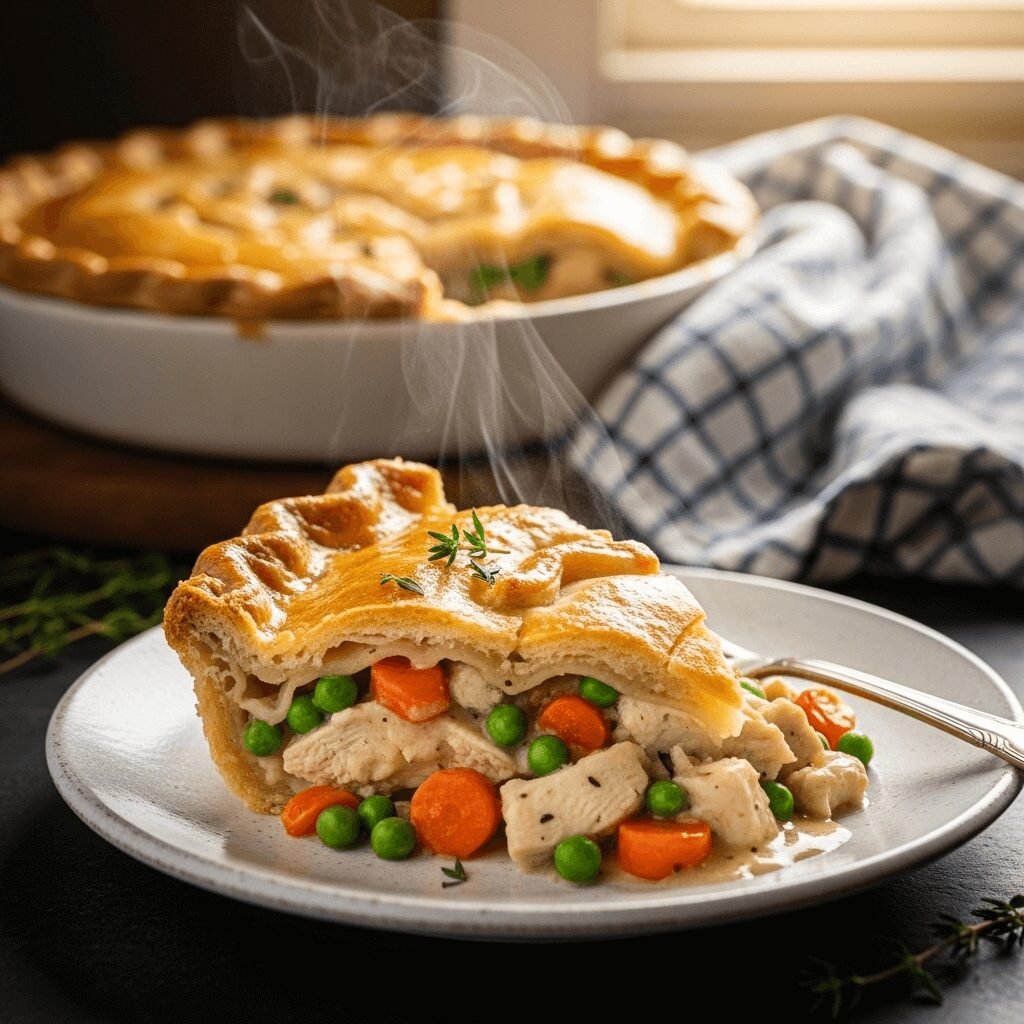

There’s something magical about a classic chicken pot pie that brings the whole family running to the dinner table. This iconic American comfort dish features tender chunks of chicken, colorful vegetables, and a velvety cream sauce, all nestled beneath a golden, flaky crust that shatters perfectly with each forkful. Whether you’re looking for a cozy weeknight dinner, a dish to bring to a potluck, or something special to serve guests on a chilly evening, this homemade chicken pot pie delivers every single time.
This recipe strikes the perfect balance between being completely achievable for home cooks while still delivering that restaurant-quality taste and presentation you crave. The creamy filling is packed with flavor, the vegetables retain just the right amount of bite, and that buttery crust? It’s absolutely divine. Best of all, this classic chicken pot pie recipe uses straightforward ingredients you likely already have in your kitchen, and the step-by-step instructions make the whole process feel surprisingly simple—even if you’ve never made pot pie from scratch before.
History / Background
Chicken pot pie has deep roots in American culinary history, though its origins trace back even further to medieval Europe. The concept of encasing savory fillings in pastry dates back to ancient Rome, but the pot pie as we know it today evolved from British meat pies that colonists brought to America in the 1600s. These early versions were practical dishes designed to stretch limited ingredients—a flaky crust could turn modest portions of meat and vegetables into a complete, satisfying meal.
The term “pot pie” likely comes from the pot or deep dish in which these pies were traditionally baked. In early American kitchens, housewives would use whatever meat was available—chicken became particularly popular in Pennsylvania Dutch country, where chicken pot pie (sometimes made with square noodles instead of a top crust) became a regional specialty.
The modern chicken pot pie we love today—with its creamy sauce, mixed vegetables, and double crust—really came into its own in the 20th century. The frozen food revolution of the 1950s made chicken pot pie a household staple, with brands like Swanson popularizing the convenient frozen version. But as much as we appreciate those nostalgic freezer meals, nothing compares to a homemade chicken pot pie made with love, fresh ingredients, and that made-from-scratch magic that turns a simple dinner into a cherished memory.
Today, chicken pot pie represents the very essence of American comfort food—it’s the dish we turn to when we need warmth, nourishment, and a taste of home.
Why You’ll Love This Recipe
This classic chicken pot pie recipe is about to become your new favorite comfort food for so many reasons. It’s the kind of dish that makes your house smell absolutely incredible while it bakes, and the first bite delivers that perfect combination of creamy, savory, and buttery that makes comfort food so irresistible.
Here’s why this recipe is a total winner:
- Restaurant-quality results at home – This tastes like something from a cozy bistro, but you made it in your own kitchen
- Family-friendly perfection – Even picky eaters love this creamy, mild-flavored dish
- Make-ahead friendly – Assemble it hours (or even a day) ahead and just pop it in the oven when you’re ready
- Budget-friendly comfort – Uses affordable, everyday ingredients to create something truly special
- Customizable to your tastes – Easily adapt the vegetables, herbs, or crust to suit your preferences
- Perfect for feeding a crowd – One pie serves 6-8 people generously, making it ideal for gatherings
- Uses up leftover chicken – Rotisserie chicken or Thanksgiving leftovers work beautifully here
- Freezer-friendly – Make two and freeze one for an easy future dinner
- Classic technique you’ll use again – Once you master this cream sauce and pastry method, you’ll use it for dozens of other recipes
Ingredient Notes
Understanding your ingredients is the secret to pot pie success. Here’s what you need to know about the key players in this recipe:
Chicken – You’ll need about 3 cups of cooked, diced chicken. Rotisserie chicken is a huge time-saver and adds great flavor, but leftover roasted chicken, poached chicken breasts, or even turkey work wonderfully. For the best texture, cut the chicken into bite-sized cubes rather than shredding it.
Butter – Unsalted butter gives you control over the saltiness and creates the base for your roux (the flour-butter mixture that thickens your sauce). Don’t substitute margarine here—real butter makes a noticeable difference in flavor.
All-Purpose Flour – This thickens your cream sauce to that perfect, spoonable consistency. Make sure to whisk it constantly to avoid lumps.
Chicken Broth – Low-sodium broth is best so you can control seasoning. The broth adds depth of flavor that water simply can’t provide. Homemade stock is fantastic if you have it.
Heavy Cream or Whole Milk – Heavy cream creates the richest, most luxurious sauce, but whole milk works well too for a slightly lighter version. Half-and-half is a nice middle ground.
Mixed Vegetables – Classic pot pie uses carrots, celery, peas, and onions. Frozen mixed vegetables work in a pinch, but fresh vegetables give better texture. Parsnips, corn, or green beans are great additions or substitutions.
Pie Crust – You can use homemade, store-bought refrigerated dough, or frozen pie crusts. Store-bought is perfectly acceptable and saves significant time—no one will judge! You’ll need two crusts for a traditional double-crust pie.
Seasonings – Garlic powder, thyme, salt, and pepper are the basics. Fresh thyme is even better if you have it. A bay leaf in the sauce adds wonderful depth.
Equipment Needed
Gathering your equipment before you start makes the cooking process so much smoother. Here’s what you’ll need:
- Large skillet or sauté pan – For making the cream sauce and cooking vegetables
- 9-inch deep-dish pie plate – Standard pie plates are too shallow; you need the depth for all that delicious filling
- Medium saucepan (optional) – If you need to cook chicken from scratch
- Whisk – Essential for a lump-free cream sauce
- Wooden spoon or spatula – For stirring vegetables and combining ingredients
- Measuring cups and spoons – Accurate measurements ensure consistent results
- Sharp knife and cutting board – For prepping vegetables and chicken
- Rolling pin (if using homemade crust) – To roll out your pastry dough
- Fork – For crimping edges and creating steam vents in the top crust
- Pastry brush (optional) – For applying egg wash for that gorgeous golden finish
- Baking sheet – Place under your pie to catch any drips in the oven

Classic Chicken Pot Pie Recipe
- Total Time: 1 hour 10 minutes
- Yield: 6-8 servings 1x
- Diet: Gluten Free
Description
This homemade classic chicken pot pie features tender chicken and vegetables in a rich, creamy sauce, all baked inside a golden, flaky crust. It’s the ultimate comfort food dinner that’s surprisingly easy to make from scratch.
Ingredients
For the Filling:
- 3 cups cooked chicken, diced into bite-sized pieces
- 4 tablespoons unsalted butter
- 1 medium onion, diced
- 2 medium carrots, peeled and diced
- 2 celery stalks, diced
- 3 cloves garlic, minced
- 1/3 cup all-purpose flour
- 2 cups low-sodium chicken broth
- 1 cup heavy cream (or whole milk)
- 1 cup frozen peas
- 1 teaspoon dried thyme (or 1 tablespoon fresh)
- 1/2 teaspoon garlic powder
- 1 teaspoon salt (adjust to taste)
- 1/2 teaspoon black pepper
- 1 bay leaf
- 2 tablespoons fresh parsley, chopped (optional)
For the Crust:
- 2 prepared pie crusts (homemade or store-bought)
- 1 egg, beaten (for egg wash)
- 1 tablespoon water
Instructions
- Preheat your oven to 425°F (220°C). If using store-bought refrigerated pie crust, let it sit at room temperature for 15 minutes to make it easier to work with.
- Prepare the bottom crust. Roll out one pie crust and carefully fit it into your 9-inch deep-dish pie plate, letting the excess hang over the edges. Place in the refrigerator while you make the filling.
- Cook the vegetables. In a large skillet over medium heat, melt the butter. Add the diced onion, carrots, and celery. Cook for 6-8 minutes, stirring occasionally, until the vegetables are tender but still have a slight bite. Add the minced garlic and cook for an additional minute until fragrant.
- Make the roux. Sprinkle the flour over the vegetables and stir constantly for 2 minutes. This cooks the raw flour taste out and creates the base for your creamy sauce. The mixture will look paste-like—this is perfect.
- Add the liquids gradually. Slowly pour in the chicken broth while whisking constantly to prevent lumps from forming. The mixture will be very thick at first. Continue whisking until smooth, then add the heavy cream, still whisking. Add the bay leaf, thyme, garlic powder, salt, and pepper.
- Simmer the sauce. Bring the mixture to a gentle simmer, stirring frequently. Cook for 4-5 minutes until the sauce thickens to a gravy-like consistency that coats the back of a spoon. It should be thick but still pourable.
- Add chicken, peas, and parsley. Stir in the cooked chicken, frozen peas, and fresh parsley if using. Remove the bay leaf. Taste and adjust seasoning with more salt and pepper as needed. Remove from heat and let cool for 5-10 minutes while you prepare the top crust.
- Assemble the pie. Pour the filling into your prepared pie crust in the pie plate. The filling should come nearly to the top. Roll out the second pie crust and place it over the filling. Trim any excess dough, leaving about 1/2 inch of overhang. Fold the edges of the top crust under the bottom crust and crimp with a fork or your fingers to seal.
- Create steam vents. Use a sharp knife to cut 4-5 small slits in the top crust to allow steam to escape during baking. This prevents a soggy bottom crust.
- Apply egg wash. In a small bowl, whisk together the egg and water. Brush this mixture over the entire top of the pie crust for a beautiful golden-brown finish.
- Bake the pot pie. Place the pie on a baking sheet (to catch drips) and bake at 425°F for 15 minutes. Then reduce the temperature to 350°F (175°C) and continue baking for 30-35 minutes, until the crust is deep golden brown and the filling is bubbling through the vents.
- Cool before serving. Let the pot pie rest for 10-15 minutes before cutting. This allows the filling to set up slightly so it doesn’t run all over the plate.
Notes
- Make it extra flaky: Brush the pie crust with melted butter before adding the filling for an extra buttery, crispy bottom crust.
- Tent with foil: If the crust edges brown too quickly, cover them loosely with aluminum foil strips.
- Thicker filling: If you prefer an even thicker filling, increase the flour to 1/2 cup.
- Using raw chicken: If starting with raw chicken, season and cook 1.5 pounds of chicken breast in the skillet first, then set aside and proceed with the recipe.
- Leftover turkey: This recipe is fantastic for using up Thanksgiving turkey leftovers.
- Prep Time: 25 minutes
- Cook Time: 45 minutes
- Category: Dinner, Main Course
- Method: Baking
- Cuisine: American
Nutrition
- Serving Size: 1/8 of pie
- Calories: 485
- Sugar: 4g
- Sodium: 620mg
- Fat: 28g
- Saturated Fat: 14g
- Unsaturated Fat: 12g
- Trans Fat: 0g
- Carbohydrates: 35g
- Fiber: 3g
- Protein: 22g
- Cholesterol: 95mg
Note: Nutrition information is approximate and will vary based on specific ingredients used.
Tips & Variations
Vegetable Variations: Switch up the vegetables based on what you have or what’s in season. Diced potatoes, parsnips, mushrooms, corn kernels, or green beans all work beautifully. Just make sure to dice everything to a similar size for even cooking.
Herby Upgrade: Add fresh herbs for a more sophisticated flavor profile. Try adding 1 tablespoon of fresh sage, rosemary, or tarragon along with the thyme. Fresh herbs make such a difference!
Cheesy Pot Pie: Stir in 1/2 cup of shredded sharp cheddar or Gruyère cheese into the cream sauce for an extra layer of richness and flavor.
Biscuit Topping: Skip the top pie crust and instead drop biscuit dough over the filling for a rustic, easier version. Use refrigerated biscuits or homemade buttermilk biscuit dough.
Individual Pot Pies: Divide the filling among ramekins or small oven-safe bowls, top each with a circle of pie crust, and bake for 25-30 minutes for adorable individual servings.
Lighter Version: Use milk instead of cream, increase the vegetables, and use a single bottom crust only to cut calories and fat while keeping the comfort factor.
Spicy Kick: Add a pinch of cayenne pepper, red pepper flakes, or a diced jalapeño to the filling for those who like a little heat with their comfort food.
Pro Chef Tips
Don’t skip cooling the filling: Letting your filling cool for 10 minutes before adding it to the crust prevents the bottom from becoming soggy. Hot filling melts the butter in the crust too quickly, leading to a gummy texture instead of flaky layers.
Use cold butter in your roux: If making a homemade roux, cold butter straight from the fridge incorporates better with the flour and creates a smoother, more stable base for your cream sauce.
Toast your flour: Cooking the flour with the butter for a full 2 minutes eliminates that raw, pasty flour taste and gives your sauce a slightly nutty, developed flavor that makes a huge difference in the final dish.
Season in layers: Don’t just add all your seasoning at once. Salt the vegetables while they cook, season the sauce, then taste and adjust at the end. This layered approach builds more complex, well-rounded flavor.
Chill your assembled pie: If you have time, refrigerate the assembled (unbaked) pie for 30 minutes before baking. This helps the crust hold its shape and prevents shrinking during baking.
Start hot, finish moderate: Beginning at a high temperature (425°F) sets the crust and creates initial browning, while reducing to 350°F allows the filling to heat through without burning the pastry.
Test for doneness: Your pot pie is ready when you can see the filling actively bubbling through the steam vents and the crust is a deep golden brown—not pale yellow, but truly golden.
Common Mistakes to Avoid
Mistake #1: Watery filling – This happens when you don’t cook the roux long enough or don’t simmer the sauce to thicken it properly. Make sure your sauce coats the back of a spoon before adding the chicken and peas. If your filling seems thin, simmer it a bit longer before assembling the pie.
Mistake #2: Undercooked vegetables – Raw or crunchy carrots in pot pie are no fun. Make sure to sauté your vegetables until they’re tender before adding the flour. They’ll cook a bit more in the oven, so aim for just tender, not mushy.
Mistake #3: Soggy bottom crust – Prevent this by cooling your filling before adding it to the crust, making sure your oven is fully preheated, and baking on the lower rack where heat is most direct. You can also blind-bake the bottom crust for 10 minutes before adding filling.
Mistake #4: Pale, under-baked crust – Don’t pull your pot pie out too early. It needs that full baking time to develop the golden color and crispy texture. If the edges brown too quickly, cover them with foil but keep baking until the center is golden too.
Mistake #5: Forgetting steam vents – Those little slits in the top crust aren’t just decorative—they’re essential. Without vents, steam builds up inside, making the crust soggy and sometimes causing the pie to crack or bubble over dramatically.
Storage & Meal Prep
Refrigerator Storage: Store leftover chicken pot pie covered in the refrigerator for up to 4 days. Cover the pie plate tightly with plastic wrap or aluminum foil, or transfer individual portions to airtight containers. The filling will thicken as it cools, which is completely normal.
Reheating Instructions: Reheat individual slices in the microwave for 1-2 minutes, though the crust won’t be as crispy. For best results, reheat portions in a 350°F oven for 15-20 minutes until heated through. Cover loosely with foil to prevent over-browning. You can also use an air fryer at 350°F for 8-10 minutes for the crispiest crust.
Freezer Storage (Baked): Cooled, baked pot pie freezes beautifully for up to 3 months. Wrap the entire pie plate tightly in plastic wrap, then aluminum foil, or slice into portions and store in freezer-safe containers. Thaw overnight in the refrigerator before reheating at 350°F for 30-40 minutes.
Make-Ahead & Freezer Notes
Prepare Filling in Advance: Make the filling up to 2 days ahead and store it in an airtight container in the refrigerator. When ready to bake, bring the filling to room temperature (30 minutes on the counter), assemble the pie, and bake as directed. This is perfect for holiday meal planning when oven space is limited.
Freeze Unbaked for Best Results: For the absolute best texture, freeze your pot pie BEFORE baking. Assemble completely in a freezer-safe pie plate, wrap tightly with plastic wrap and foil, and freeze for up to 3 months. Do not thaw—bake directly from frozen at 425°F for 20 minutes, then reduce to 350°F and bake for 60-75 minutes until the filling bubbles and the crust is golden.
Freezer-to-Oven Preparation: When baking from frozen, cover the edges with foil for the first 30 minutes to prevent over-browning. Remove foil and continue baking. The pie is done when a knife inserted into the center comes out hot to the touch and you can see bubbling through the vents.
Perfect for Meal Prep: Double this recipe and make two pies—serve one fresh and freeze one for a future busy weeknight. Having a homemade pot pie in your freezer is like having a warm hug waiting for you when life gets hectic.
Serving Suggestions
Chicken pot pie is hearty enough to stand alone, but these sides complement it beautifully:
Fresh Green Salad – A simple mixed greens salad with a tangy vinaigrette cuts through the richness of the pot pie perfectly. Add cranberries, walnuts, and goat cheese for a restaurant-worthy presentation.
Roasted Vegetables – Brussels sprouts, asparagus, or green beans roasted with olive oil and garlic add color and nutrition to your plate without competing with the pot pie’s flavors.
Crusty Bread – A warm baguette or dinner rolls are perfect for soaking up any extra creamy sauce. Garlic bread is especially delicious here.
Cranberry Sauce – A small spoonful of cranberry sauce on the side adds a sweet-tart contrast that really elevates the meal, especially if you’re using leftover turkey.
Soup – For a real comfort food feast, start the meal with a simple tomato soup or butternut squash soup before serving the pot pie as the main course.
Wine Pairing – A buttery Chardonnay or light Pinot Noir pairs beautifully with the creamy, savory flavors of chicken pot pie.
Drinks – For non-alcoholic options, try sparkling apple cider, iced tea, or even cold milk for a nostalgic, cozy dinner vibe.
FAQs Section
Q: Can I make chicken pot pie without a bottom crust?
A: Absolutely! This is actually called a “chicken pot pie casserole” and it’s delicious. Simply pour the filling into a greased baking dish and top with pie crust, puff pastry, or even biscuit dough. Bake at 375°F for 35-40 minutes until the topping is golden and the filling bubbles.
Q: What’s the best way to prevent a soggy bottom crust?
A: There are several tricks: blind-bake your bottom crust for 10 minutes before filling, let your filling cool before adding it to the crust, brush the bottom crust with beaten egg white as a moisture barrier, or bake your pie on the lowest oven rack where heat is most direct. Combining these methods gives you the crispiest bottom crust.
Q: Can I use puff pastry instead of pie crust?
A: Yes! Puff pastry makes a wonderfully flaky, impressive top crust. Just be aware it will puff up significantly and may bake faster than traditional pie crust. You typically only use puff pastry on top, not as a bottom crust. Bake at 400°F and watch carefully after 25 minutes.
Q: My filling is too thin—how do I thicken it?
A: If you’ve already assembled the pie and it seems thin, it will thicken as it bakes, so don’t worry too much. If the filling is too thin before assembly, make a slurry of 1 tablespoon cornstarch mixed with 2 tablespoons cold water, stir it into the simmering filling, and cook for 2-3 more minutes until thickened.
Q: Can I make this dairy-free?
A: Yes! Use dairy-free butter (or olive oil), substitute the cream with full-fat coconut milk or cashew cream, and use dairy-free pie crust (many store-bought crusts are naturally dairy-free). The flavor will be slightly different but still delicious.
Q: How do I know when my pot pie is done baking?
A: Look for these signs: the crust is deep golden brown (not pale), the filling is actively bubbling through the steam vents, and when you insert a knife into the center, it feels hot to the touch when you carefully test it against your wrist. If the crust browns before the filling bubbles, cover loosely with foil and continue baking.
Q: Can I add other proteins besides chicken?
A: Definitely! Turkey, ham, and beef all work well in pot pie. For turkey, use the exact same recipe. For ham, reduce the salt slightly as ham is already salty. For beef, use beef broth instead of chicken broth and consider adding Worcestershire sauce for depth. Shrimp or salmon also make wonderful seafood pot pies with similar cream sauces.
Conclusion
There you have it—the ultimate classic chicken pot pie recipe that will fill your home with the most incredible aromas and your family with pure comfort food happiness. This recipe proves that homemade pot pie isn’t complicated or intimidating; it’s actually a straightforward, deeply satisfying project that delivers massive flavor rewards.
Whether you’re making this for a cozy family dinner, meal prepping for the week ahead, using up leftover chicken or turkey, or looking for something special to serve guests, this pot pie checks all the boxes. The creamy, well-seasoned filling, the tender vegetables, the juicy chicken, and that golden, flaky crust create a combination that’s simply unbeatable.
I hope you’ll give this recipe a try and experience the magic of homemade pot pie. Once you make it yourself, you’ll understand why this classic American dish has stood the test of time. It’s comfort, nostalgia, and deliciousness all wrapped up in one beautiful, bubbling pie.
Have you made this recipe? I’d love to hear how it turned out! Leave a comment below with your tips, variations, or just to let me know you loved it. And if you’re feeling the pot pie love, please share this recipe on Pinterest so other home cooks can discover it too. Happy baking, friends! 🥧