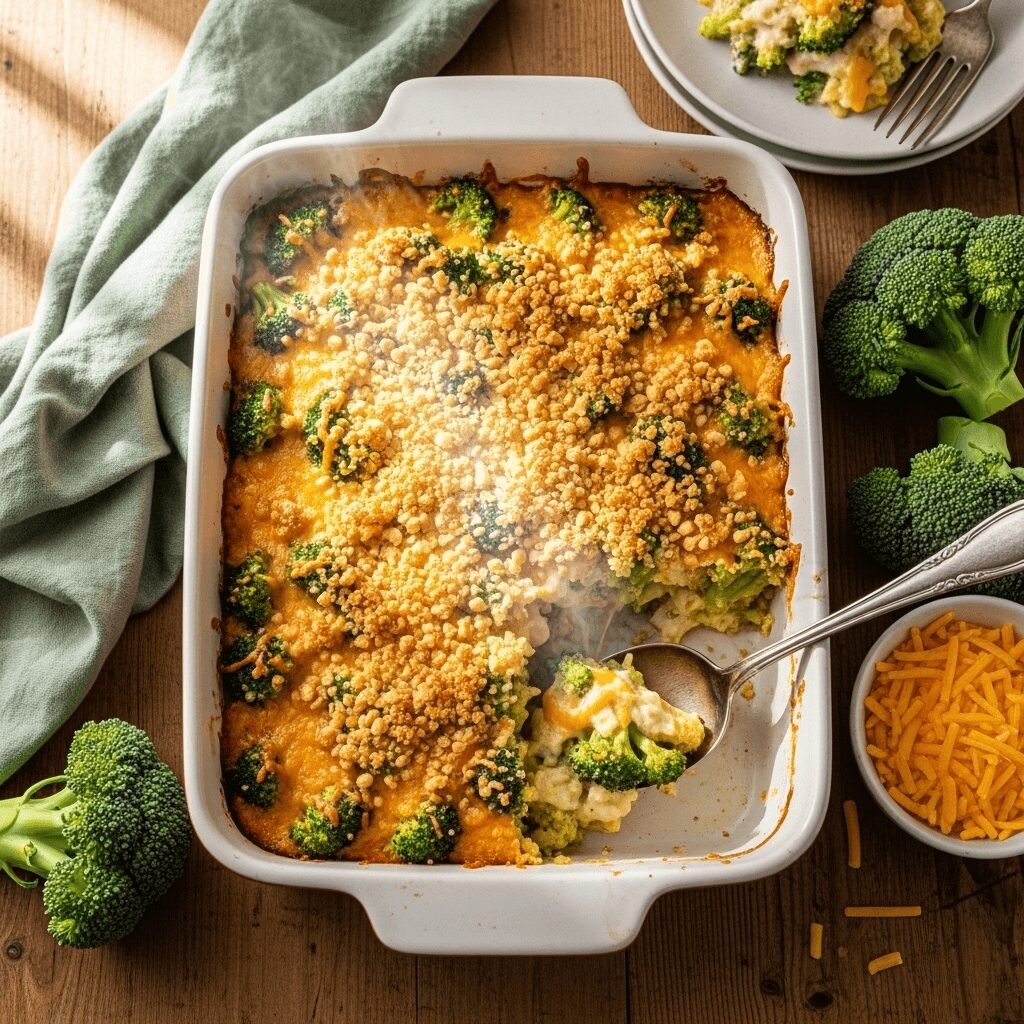

There’s something undeniably comforting about a bubbling hot casserole fresh from the oven, and this Creamy Broccoli Cheddar Casserole is the definition of cozy home cooking. Imagine tender broccoli florets nestled in a velvety cheese sauce, topped with a golden, crispy breadcrumb crust that adds the perfect textural contrast to every creamy bite.
This beloved side dish has graced dinner tables across America for generations, transforming simple broccoli into something everyone—even the pickiest eaters—will happily devour. Whether you’re planning a weeknight family dinner, preparing dishes for a holiday feast, or looking for the perfect potluck contribution, this casserole delivers every single time. It’s versatile enough to serve alongside roasted chicken, grilled steak, or baked ham, yet substantial enough to stand on its own as a satisfying vegetarian main course when paired with a fresh salad.
The beauty of this recipe lies in its simplicity and reliability. With just a handful of everyday ingredients and about 45 minutes from start to finish, you’ll have a crowd-pleasing dish that looks impressive but requires minimal effort. The combination of sharp cheddar cheese, tender broccoli, and a hint of garlic creates a flavor profile that’s both sophisticated and comfortingly familiar—the kind of dish that makes people ask for seconds and request the recipe.
History / Background
The broccoli cheddar casserole has its roots firmly planted in mid-20th century American home cooking, emerging during the 1950s and 1960s when casseroles became the cornerstone of family meals. This era, often called the “Golden Age of Casseroles,” saw homemakers embracing convenient one-dish meals that could feed large families without requiring constant attention or fancy cooking techniques.
Broccoli itself wasn’t always a staple in American kitchens. Italian immigrants brought broccoli to the United States in the early 1900s, but it didn’t gain widespread popularity until the 1920s when it began being commercially grown in California. By the post-World War II era, broccoli had become a common vegetable in grocery stores nationwide, coinciding perfectly with America’s growing love affair with casseroles.
The pairing of broccoli with cheddar cheese was a natural evolution. Cheese sauces, or “mornay” sauces in classical French cooking, had long been used to make vegetables more appealing, especially to children. American cooks embraced this technique, creating dishes that disguised healthy vegetables in rich, creamy cheese sauces that everyone would eat without complaint.
This particular casserole also owes a debt to the rise of Campbell’s condensed soups in the 1930s and 1940s, which popularized the concept of cream-based casseroles. While our recipe uses a homemade cheese sauce for superior flavor and texture, many vintage versions relied on canned cream of mushroom or cream of chicken soup as a shortcut—a testament to the ingenuity of busy homemakers who needed to get dinner on the table quickly.
Today, the broccoli cheddar casserole remains a beloved comfort food that bridges generations. It appears at church potlucks, Thanksgiving tables, and Tuesday night dinners with equal frequency, proving that some recipes become classics for good reason.
Why You’ll Love This Recipe
This isn’t just another vegetable side dish—it’s the casserole that converts broccoli skeptics into enthusiasts and makes everyone at your table reach for seconds. The secret lies in the perfect balance of creamy, cheesy goodness with the fresh, slightly nutty flavor of properly cooked broccoli.
Here’s why this recipe will become your go-to:
- Kid-Approved Veggie Dish: The creamy cheese sauce makes broccoli irresistible even to vegetable-resistant children, sneaking nutrients into their diet without any complaints
- Make-Ahead Friendly: Assemble the entire casserole hours or even a day in advance, then simply pop it in the oven when you’re ready to eat
- Budget-Friendly: Uses affordable, everyday ingredients that you probably already have in your kitchen, making it perfect for feeding a crowd without breaking the bank
- Versatile for Any Occasion: Works equally well as a holiday side dish, weeknight dinner component, or potluck contribution that’ll have people requesting your recipe
- Customizable: Easily adapt to dietary preferences by using different cheeses, adding proteins, or incorporating your favorite vegetables
- Crowd-Pleasing: That golden, bubbly cheese and crispy topping creates an irresistible presentation that looks as good as it tastes
- One-Dish Wonder: Minimal cleanup means more time enjoying your meal and less time scrubbing pots and pans
Ingredient Notes
Understanding your ingredients helps you make smart substitutions and ensures the best possible results every time you make this casserole.
Fresh Broccoli: The star of our dish provides not just nutrition but a pleasant texture and slightly earthy flavor. Fresh broccoli florets work best, but frozen broccoli is perfectly acceptable—just make sure to thaw and drain it thoroughly to avoid a watery casserole. Look for bright green florets without yellowing for the freshest flavor.
Sharp Cheddar Cheese: The foundation of our creamy sauce, sharp cheddar brings bold flavor that stands up to the broccoli. Block cheese that you shred yourself melts more smoothly than pre-shredded varieties, which contain anti-caking agents. You can substitute mild cheddar for a gentler flavor or mix in Gruyère or fontina for a more sophisticated taste.
Butter: Creates the base for our roux (the flour-butter mixture that thickens the sauce) and adds richness. Unsalted butter gives you better control over the final seasoning. If needed, you can use olive oil, though the flavor will be slightly different.
All-Purpose Flour: Works with butter to create the roux that thickens our cheese sauce to the perfect creamy consistency. For a gluten-free version, substitute with a gluten-free flour blend or cornstarch (use half the amount).
Whole Milk: Provides creaminess without being too heavy. Whole milk creates the best texture, but you can use 2% milk if that’s what you have. Avoid skim milk as it won’t create as rich a sauce. For extra decadence, replace half the milk with heavy cream.
Garlic: Just a couple of cloves add aromatic depth that elevates the entire dish from good to exceptional. Fresh garlic is always best, but in a pinch, use 1/2 teaspoon of garlic powder.
Panko Breadcrumbs: Creates that irresistible golden, crunchy topping that contrasts beautifully with the creamy interior. Panko (Japanese-style breadcrumbs) stays crispier than regular breadcrumbs. For gluten-free, use gluten-free panko or crushed rice crackers.
Seasonings: Salt, black pepper, and a pinch of nutmeg enhance all the flavors. Nutmeg is a traditional pairing with cheese sauces and adds subtle warmth without being identifiable.
Equipment Needed
Having the right tools makes cooking easier and more enjoyable. Here’s what you’ll need for this recipe:
- Large Pot or Dutch Oven (for blanching broccoli)
- 9×13-inch Baking Dish (or 2-quart casserole dish)
- Medium Saucepan (for making the cheese sauce)
- Whisk (for creating a smooth, lump-free sauce)
- Box Grater or Food Processor (for shredding cheese)
- Colander (for draining broccoli)
- Sharp Knife and Cutting Board (for prep work)
- Measuring Cups and Spoons
- Mixing Bowl (for breadcrumb topping)
- Wooden Spoon or Spatula (for stirring)
- Aluminum Foil (optional, for preventing over-browning)

Creamy Broccoli Cheddar Casserole Recipe
- Total Time: 45 minutes
- Yield: 8 servings 1x
- Diet: Vegetarian
Description
This Creamy Broccoli Cheddar Casserole features tender broccoli florets smothered in a rich, homemade cheese sauce and topped with a golden, crispy breadcrumb crust. It’s the ultimate comfort food side dish that turns simple vegetables into something everyone will love.
Ingredients
For the Casserole:
- 6 cups fresh broccoli florets (about 2 large heads)
- 4 tablespoons unsalted butter
- 3 cloves garlic, minced
- 1/4 cup all-purpose flour
- 2 1/2 cups whole milk, warmed
- 3 cups sharp cheddar cheese, shredded (divided)
- 1 teaspoon salt
- 1/2 teaspoon black pepper
- 1/4 teaspoon ground nutmeg
- 1/4 teaspoon onion powder
For the Topping:
- 1 cup panko breadcrumbs
- 2 tablespoons melted butter
- 1/4 cup grated Parmesan cheese
- 1/4 teaspoon garlic powder
Instructions
- Preheat and Prep: Preheat your oven to 375°F (190°C). Lightly grease a 9×13-inch baking dish with butter or cooking spray and set aside.
- Blanch the Broccoli: Bring a large pot of salted water to a boil. Add broccoli florets and cook for 3-4 minutes until bright green and slightly tender but still crisp. Drain immediately and rinse with cold water to stop the cooking process. Set aside to drain thoroughly.
- Start the Cheese Sauce: In a medium saucepan over medium heat, melt 4 tablespoons of butter. Add minced garlic and sauté for 30-60 seconds until fragrant but not browned.
- Create the Roux: Sprinkle flour over the melted butter and garlic, whisking constantly. Cook for 1-2 minutes, stirring continuously, until the mixture becomes slightly golden and smells nutty. This cooks out the raw flour taste.
- Add Milk Gradually: Slowly pour in the warm milk while whisking constantly to prevent lumps. Continue whisking until the mixture is smooth. Bring to a gentle simmer and cook for 3-4 minutes, stirring frequently, until the sauce thickens enough to coat the back of a spoon.
- Incorporate Cheese: Remove the saucepan from heat. Add 2 1/2 cups of shredded cheddar cheese (reserving 1/2 cup for later), salt, pepper, nutmeg, and onion powder. Stir until the cheese melts completely and the sauce is smooth and creamy. Taste and adjust seasonings if needed.
- Combine Broccoli and Sauce: Add the blanched broccoli to the cheese sauce and gently fold together until all florets are well coated. Pour the mixture into your prepared baking dish, spreading it evenly.
- Prepare the Topping: In a small bowl, combine panko breadcrumbs, melted butter, Parmesan cheese, and garlic powder. Mix until the breadcrumbs are evenly coated with butter.
- Top and Finish: Sprinkle the remaining 1/2 cup of cheddar cheese over the broccoli mixture, then evenly distribute the breadcrumb topping over everything.
- Bake: Place the casserole in the preheated oven and bake for 25-30 minutes, until the top is golden brown and the sauce is bubbling around the edges. If the top browns too quickly, loosely tent with aluminum foil for the last 10 minutes.
- Rest and Serve: Remove from the oven and let the casserole rest for 5 minutes before serving. This allows the sauce to set slightly, making it easier to serve.
Notes
- Broccoli Size: Cut florets into similar sizes (about 1-1.5 inches) to ensure even cooking.
- Cheese Quality: Shred cheese from a block for the smoothest sauce. Pre-shredded cheese contains anti-caking agents that can make the sauce grainy.
- Sauce Thickness: If your sauce seems too thick, add milk a tablespoon at a time. If too thin, simmer longer to reduce.
- Avoid Overcooking Broccoli: The blanching step plus baking time will fully cook the broccoli. Overcooking makes it mushy and releases an unpleasant sulfur smell.
- Crispy Topping: For extra crunch, broil for 1-2 minutes at the end of baking, watching carefully to prevent burning.
- Prep Time: 15 minutes
- Cook Time: 30 minutes
- Category: Side Dish
- Method: Baking
- Cuisine: American
Nutrition
- Serving Size: 1 cup (approximately 1/8 of recipe)
- Calories: 342
- Sugar: 5g
- Sodium: 612mg
- Fat: 23g
- Saturated Fat: 14g
- Unsaturated Fat: 7g
- Trans Fat: 0g
- Carbohydrates: 19g
- Fiber: 3g
- Protein: 16g
- Cholesterol: 68mg
Note: Nutrition information is calculated using standard ingredient measurements and is approximate. Values may vary based on specific brands and ingredient substitutions.
Tips & Variations
Protein Additions: Transform this side dish into a hearty main course by adding 2 cups of cooked, diced chicken breast, crispy bacon pieces, or cooked ground turkey mixed in with the broccoli. This makes it substantial enough for a complete meal.
Vegetable Mix-Ins: Don’t limit yourself to just broccoli! Add 1 cup of cauliflower florets, diced bell peppers, or mushrooms for more variety and nutrition. Frozen mixed vegetables work well too—just thaw and drain thoroughly first.
Spicy Version: Give your casserole a kick by adding 1/2 teaspoon of cayenne pepper to the cheese sauce, mixing in diced jalapeños, or topping with a sprinkle of red pepper flakes before baking. A few dashes of hot sauce in the cheese sauce also works beautifully.
Lighter Option: Reduce calories by using 2% milk instead of whole milk, decreasing cheese to 2 cups total, and using cooking spray instead of butter for greasing. You can also increase the broccoli ratio for more vegetables and less sauce.
Gourmet Upgrade: Elevate this casserole by using a blend of cheeses like Gruyère, white cheddar, and fontina. Add a tablespoon of Dijon mustard to the sauce for depth, and top with toasted sliced almonds instead of breadcrumbs for an elegant presentation.
Gluten-Free Adaptation: Replace all-purpose flour with your favorite gluten-free flour blend or cornstarch (use 2 tablespoons), and use gluten-free panko breadcrumbs or crushed gluten-free crackers for the topping.
Pro Chef Tips
Blanch for Best Results: Don’t skip blanching the broccoli before baking. This pre-cooking step ensures the broccoli reaches perfect tenderness without overcooking during the baking time, preventing that mushy, sulfurous outcome that can happen when broccoli is overcooked.
Room Temperature Cheese: Let your cheese sit at room temperature for 20-30 minutes before shredding. This helps it melt more smoothly into the sauce and prevents clumping or separation. Cold cheese takes longer to melt and can cause your sauce temperature to drop too quickly.
Warm Your Milk: Using cold milk directly from the refrigerator can cause your roux to seize up and form lumps. Warm the milk in the microwave for 30-60 seconds before adding it to your roux for the smoothest possible sauce.
Layer Your Flavors: The garlic should be sautéed until just fragrant (about 30 seconds) but not browned—burnt garlic turns bitter and will negatively impact your entire dish. Similarly, cooking the roux for a full 1-2 minutes develops a nutty flavor that adds complexity to the final dish.
The Secret to Crispy Topping: Mixing melted butter with your breadcrumbs before sprinkling them on top ensures every crumb gets coated, resulting in an evenly golden, crunchy crust. For extra insurance, give the casserole a quick 1-2 minute broil at the end for maximum crispiness.
Resting Time Matters: Allowing the casserole to rest for 5 minutes after removing it from the oven lets the sauce thicken slightly as it cools, making serving much neater and ensuring each portion holds together beautifully on the plate.
Common Mistakes to Avoid
Watery Casserole: This usually happens when frozen broccoli isn’t properly thawed and drained, or when the broccoli isn’t dried after blanching. Always pat your broccoli completely dry with paper towels before adding it to the cheese sauce to prevent excess moisture from diluting your creamy sauce.
Grainy Cheese Sauce: Using pre-shredded cheese (which contains anti-caking agents) or adding cheese while the sauce is at a rolling boil can cause the proteins to separate, creating a grainy texture. Always remove the sauce from heat before adding cheese and use freshly shredded cheese from a block for silky smooth results.
Lumpy Sauce: Lumps form when you add cold milk too quickly to hot roux, or when you don’t whisk constantly. Add warm milk gradually while whisking vigorously, and you’ll get a perfectly smooth sauce every time.
Soggy Breadcrumb Topping: If you add the breadcrumb topping to a wet surface or don’t mix it with enough butter, it will steam instead of crisp up. Make sure the butter-to-breadcrumb ratio is sufficient (about 2 tablespoons per cup), and sprinkle the topping on just before baking for maximum crunch.
Overcooked Broccoli: Broccoli that’s cooked too long turns mushy and releases unpleasant sulfur compounds. Since it cooks twice (blanching and baking), keep the initial blanch time brief—just 3-4 minutes until bright green. The florets should still have some bite when they go into the oven.
Storage & Meal Prep
Refrigerator Storage: Store leftover broccoli cheddar casserole in an airtight container or cover the baking dish tightly with plastic wrap or aluminum foil. It will keep well in the refrigerator for 3-4 days. The flavors often meld and improve slightly the next day, making leftovers especially delicious.
Reheating Instructions: For best results, reheat portions in a 350°F oven for 15-20 minutes until warmed through and the top crisps up again. You can also microwave individual portions on high for 1-2 minutes, though the topping won’t be as crispy. If reheating the entire casserole, cover with foil to prevent over-browning and bake at 350°F for 25-30 minutes.
Maintaining Texture: The sauce may thicken considerably after refrigeration. If needed, stir in a tablespoon or two of milk when reheating to restore the creamy consistency. The breadcrumb topping will soften during storage, but reheating in the oven helps re-crisp it somewhat.
Portioning for Convenience: Consider dividing leftovers into individual serving-size containers for quick grab-and-go lunches or easy weeknight side dishes. This method also allows you to reheat only what you need without repeatedly warming the entire dish.
Make-Ahead & Freezer Notes
Advance Preparation: This casserole is ideal for make-ahead cooking. Assemble the entire dish up to 24 hours before baking, stopping just before adding the breadcrumb topping. Cover tightly with plastic wrap and refrigerate. When ready to bake, let it sit at room temperature for 20-30 minutes, add the breadcrumb topping, then bake as directed, adding an extra 5-10 minutes to the baking time since it’s starting cold.
Freezing Unbaked: For maximum freshness, freeze the casserole before baking. Assemble everything except the breadcrumb topping in a freezer-safe baking dish. Cover tightly with plastic wrap, then aluminum foil, and freeze for up to 3 months. Thaw completely in the refrigerator overnight (this takes about 24 hours), add the breadcrumb topping, then bake as directed.
Freezing Baked Casserole: You can also freeze the fully baked casserole, though the texture won’t be quite as perfect as freezing it unbaked. Cool completely, wrap tightly, and freeze for up to 2 months. Thaw overnight in the refrigerator and reheat covered at 350°F for 30-35 minutes.
Freezing Individual Portions: After baking, cool the casserole completely and cut it into individual portions. Wrap each portion in plastic wrap, then place in freezer bags. These individual servings can go straight from freezer to microwave for quick meals, making them perfect for busy weeknights.
Best Reheating Method: For frozen unbaked casserole, thaw completely before baking. For frozen baked casserole, you can reheat from frozen at 350°F for 60-75 minutes (covered for the first 45 minutes), though thawing overnight produces better results with more even heating.
Serving Suggestions
This creamy broccoli cheddar casserole is incredibly versatile and pairs beautifully with numerous main courses and complementary sides.
Main Dish Pairings: Serve alongside classic roasted chicken, herb-crusted pork tenderloin, grilled ribeye steak, baked ham, or pan-seared salmon. The rich, cheesy casserole complements simple, well-seasoned proteins perfectly, letting both dishes shine without competing flavors.
Complete Your Plate: Balance the richness of this casserole with fresh, bright side dishes like a crisp garden salad with vinaigrette, roasted Brussels sprouts with balsamic glaze, garlic green beans, or honey-glazed carrots. The lighter, fresh vegetables provide a nice textural and flavor contrast.
Holiday Feast Addition: This casserole is a natural fit for holiday tables. Include it alongside traditional Thanksgiving turkey, Christmas ham, or Easter dinner spreads. It’s substantial enough to satisfy vegetarians at your holiday gathering while being crowd-pleasing enough that meat-eaters will load their plates too.
Bread Accompaniments: Soak up every bit of that creamy cheese sauce with warm, crusty French bread, buttery dinner rolls, garlic breadsticks, or flaky buttermilk biscuits. Bread isn’t just for wiping your plate—it’s essential for capturing all that delicious sauce.
Beverage Pairings: For a family dinner, serve with iced tea, lemonade, or sparkling water with lemon. If serving at an adult gathering, pair with crisp white wines like Chardonnay or Sauvignon Blanc, or a light-bodied red like Pinot Noir that won’t overpower the cheese.
As a Main Course: Transform this side into a complete vegetarian meal by serving generous portions with a hearty whole grain like quinoa or wild rice, a fresh arugula salad, and perhaps some crusty bread. Add a cup of soup like tomato bisque or butternut squash soup for an extra-satisfying meal.
FAQs Section
Can I use frozen broccoli instead of fresh?
Absolutely! Frozen broccoli works wonderfully in this casserole. Use 16-20 ounces of frozen broccoli florets. Make sure to thaw them completely (either overnight in the refrigerator or quickly in the microwave), then squeeze out as much excess moisture as possible using paper towels or a clean kitchen towel. You can skip the blanching step with frozen broccoli since it’s already been blanched before freezing. Just drain it well and proceed with making the cheese sauce.
Why is my cheese sauce grainy or separated?
A grainy cheese sauce typically results from one of two issues: using pre-shredded cheese with anti-caking agents, or adding cheese when the sauce is too hot. Always shred cheese from a block for the smoothest results, and remove your saucepan from the heat before stirring in the cheese. Add cheese gradually and stir gently until melted. If your sauce does separate, try whisking in a tablespoon of cold milk or running an immersion blender through it to bring it back together.
Can I make this casserole dairy-free or vegan?
Yes, with some substitutions. Use plant-based butter, your favorite non-dairy milk (unsweetened almond, oat, or cashew work well), and dairy-free cheddar cheese. Be aware that dairy-free cheeses don’t always melt as smoothly as dairy cheese, so your sauce may have a slightly different texture. Nutritional yeast added to the sauce (about 2 tablespoons) can boost the cheesy flavor. The breadcrumb topping can use olive oil instead of melted butter.
How do I prevent my casserole from being watery?
Watery casserole is almost always caused by excess moisture from the broccoli. Whether using fresh or frozen, make sure your broccoli is thoroughly dried before mixing it with the sauce. For fresh broccoli, drain it well after blanching and pat completely dry with paper towels. For frozen, thaw completely and squeeze out all moisture. Also, don’t skip cooking the roux for a full 1-2 minutes—this develops its thickening power and ensures your sauce sets properly.
Can I add other vegetables to this casserole?
Definitely! This recipe is very forgiving and welcomes additions. Cauliflower florets, diced bell peppers, sliced mushrooms, or even frozen mixed vegetables work beautifully. Just keep the total vegetable amount around 6-7 cups so there’s enough sauce to coat everything. If adding watery vegetables like mushrooms or zucchini, sauté them first to remove excess moisture before adding to the casserole.
What’s the best way to reheat leftovers without drying them out?
The key is low and slow with added moisture. Cover your casserole portion with foil or a microwave-safe lid to trap steam. In the oven, reheat at 325°F for 15-20 minutes. In the microwave, use 50% power for 2-3 minutes rather than full power for a shorter time. You can also stir in a splash of milk before reheating to restore creaminess. For the crispiest top, finish with 1-2 minutes under the broiler (watch carefully).
Can I prepare this in a slow cooker or Instant Pot?
While this recipe is designed for oven baking to achieve that crispy top, you can adapt it for a slow cooker. Make the cheese sauce on the stovetop, combine with blanched broccoli, and cook on low for 2-3 hours. However, you’ll miss out on the crispy breadcrumb topping (though you could toast breadcrumbs separately and add before serving). The Instant Pot isn’t ideal for this dish since casseroles need dry heat for the best texture, but you could use it on sauté mode to make the cheese sauce before transferring to a baking dish.
Conclusion
There’s something magical about a dish that brings everyone together around the table, and this Creamy Broccoli Cheddar Casserole does exactly that. It’s the kind of recipe that becomes a family favorite—requested for Sunday dinners, holiday gatherings, and those nights when you just want something comforting and delicious without spending hours in the kitchen.
What makes this casserole truly special is how it transforms humble broccoli into something extraordinary. The velvety cheese sauce, tender florets, and golden crispy topping create layers of flavor and texture that satisfy on every level. Plus, knowing you’re serving a dish packed with nutritious vegetables makes it even better—this is comfort food you can feel good about eating.
Whether you’re a seasoned home cook or just starting your culinary journey, this recipe will serve you well. It’s forgiving, adaptable, and practically foolproof when you follow the tips we’ve outlined. Make it your own by trying different cheese combinations, adding proteins, or experimenting with vegetable mix-ins.
Now it’s your turn to create this delicious casserole in your own kitchen! Your family and friends will be asking for seconds, and you’ll love how easy it is to prepare. When you make this recipe, I’d love to hear how it turned out—leave a comment below sharing your experience, any creative variations you tried, or upload a photo of your beautiful creation!